

P0137 on 2018-2020 Ford F-150 5.0L: O2 Sensor Low Voltage Causes and Fixes
This code means the downstream oxygen sensor on the passenger side is reading low voltage. In most cases, the fix is simply replacing the faulty Bank 1, Sensor 2 O2 sensor. Expect to pay $40-$80 for an aftermarket sensor or $90-$120 for an OEM Motorcraft part. It's a DIY-friendly job for most home mechanics.
- P0137 on your F-150 points to the downstream oxygen sensor on the passenger side.
- The most probable cause is a failed O2 sensor, which is a standard maintenance item.
- Before replacing the sensor, always perform a quick visual inspection of the wiring and exhaust for obvious damage.
- This is a DIY-friendly repair; you'll need a special O2 sensor socket to make the job easier.
- Do not ignore the code, as it will cause an automatic emissions test failure and can mask other engine problems.
What's Unique About the 2018-2020 Ford F-150
For the 2018-2020 F-150 with the 5.0L V8, the P0137 code is a straightforward diagnostic issue that rarely points to complex system failures. Unlike some platforms where this code can be triggered by PCM software glitches, on this truck it almost always indicates a real hardware fault. While Ford has issued numerous TSBs for PCM software updates causing false catalyst efficiency codes (like P0420) on other engines, there are no widespread TSBs for the 5.0L V8 causing a false P0137. A TSB from 2015 (TSB 15-0073) did list P0137 for the 3.5L EcoBoost, but this is not applicable to the 5.0L in the 2018-2020 range. The most common culprits are the sensor itself failing from age or contamination, or physical damage to the wiring, which is a higher risk on a truck used in harsh conditions. While exhaust leaks are a possible cause, the primary failure point is the sensor or its immediate wiring.
Symptoms You May Notice
- Check Engine Light (Malfunction Indicator Lamp) is illuminated.
- Possible slight decrease in fuel economy.
- Vehicle will automatically fail an emissions/smog test.
- In some cases, a rough or unstable idle may be noticeable.
- Possible hesitation or lack of power during acceleration, though this is less common for a downstream sensor fault.
- Replacing the catalytic converter. A P0137 code indicates a problem with the sensor monitoring the converter, not necessarily the converter itself. A faulty sensor can sometimes trigger other codes like P0420, but P0137 on its own points to the sensor circuit.
- Replacing the wrong sensor. Ensure you are replacing Bank 1 (passenger side), Sensor 2 (downstream/post-cat). The upstream and downstream sensors are different parts and not interchangeable.
Most Likely Causes
- Failed Bank 1, Sensor 2 Oxygen Sensor 🔴 High Probability Oxygen sensors are wear items with a finite lifespan, often degrading after 60,000-100,000 miles. Contamination from exhaust gases, oil, or fuel additives and constant heat cycles cause them to fail and stop producing a correct voltage signal.
How to confirm: Use an OBD-II scanner with live data to monitor the B1S2 voltage. If the voltage is stuck low (e.g., <0.2V) and does not fluctuate as expected when the engine is revved, the sensor has likely failed. A visual inspection may also show a physically fouled, contaminated, or damaged sensor.
Typical fix: Replace the Bank 1, Sensor 2 (passenger side, downstream) oxygen sensor.
Est. part cost: $40-$120 - Damaged O2 Sensor Wiring or Connector 🟡 Medium Probability As a truck, the F-150's underbody wiring is exposed to road debris, water, and off-road hazards. The harness can get too close to the hot exhaust and melt. Rodents are also known to chew on the soy-based wiring insulation used in modern vehicles. Corrosion in the connector is also a common failure point.
How to confirm: Visually inspect the entire wiring harness from the O2 sensor to where it connects to the main loom. Check for frayed wires, melted insulation, and corrosion or moisture inside the connector pins. A multimeter can be used to check for continuity and voltage at the connector.
Typical fix: Repair the damaged section of wire or clean/replace the connector. In some cases, re-pinning the connector is necessary.
Est. part cost: $5-$50 - Exhaust Leak ⚪ Low Probability Exhaust manifold gaskets and flange connections can develop leaks over time due to heat cycles and corrosion. A leak before the O2 sensor allows outside oxygen to enter the exhaust stream, which fools the sensor into reading a lean (low voltage) condition.
How to confirm: Listen for a ticking or hissing sound from the exhaust, especially when the engine is cold. A visual inspection may reveal black soot trails around a gasket or flange, indicating a leak. A shop can perform a smoke test to pinpoint the leak's exact location.
Typical fix: Replace the leaking gasket or repair the cracked exhaust component.
Est. part cost: $20-$200
Rare But Worth Checking
- Powertrain Control Module (PCM) Fault: This is extremely rare. The PCM is the last component to suspect. All other possibilities, including the sensor, wiring, and exhaust system, must be definitively ruled out before considering a PCM issue. A user on an F-150 forum was trying to diagnose P0137 and needed to check PCM pinouts, highlighting the complexity of this step.
Diagnosis Steps
- Connect an OBD-II scanner and confirm that P0137 is the active code. Note any other codes present, especially heater circuit codes (P0141, P0036).
- Using the scanner's live data function, monitor the voltage for 'O2S12' (Bank 1, Sensor 2). On a fully warmed-up engine at idle, a healthy downstream sensor should show a relatively steady voltage, typically between 0.5V and 0.8V. If the voltage is stuck low (e.g., <0.2V) and doesn't respond when the engine is revved, this confirms the fault condition.
- Perform a thorough visual inspection. With the engine off and cool, get under the truck on the passenger side. Locate the rear oxygen sensor after the catalytic converter.
- Inspect the sensor's wiring harness for any signs of melting, chafing, or physical damage. Follow the harness to the electrical connector and check for corrosion, bent pins, or a loose connection. Pay close attention to where the harness might contact the exhaust or frame.
- Inspect the exhaust system around the sensor for any signs of leaks, such as black soot stains or audible hissing/ticking when the engine is running.
- If the wiring and exhaust system appear intact, the most likely cause is a failed oxygen sensor.
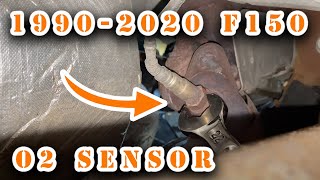
- To be certain, you can use a multimeter to test the sensor. Check the heater circuit resistance (if a heater code like P0141 is also present) and check for voltage at the connector harness coming from the PCM. However, for most DIY mechanics, replacing the sensor is the next logical step 🎬 See this easy walkthrough for replacing your O2 sensors. given its high failure rate and affordability.
Parts You'll Likely Need
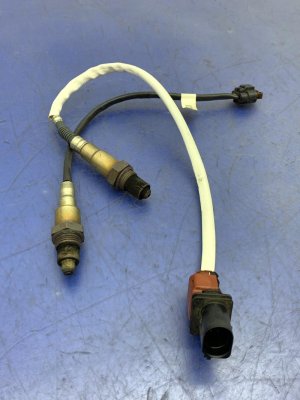
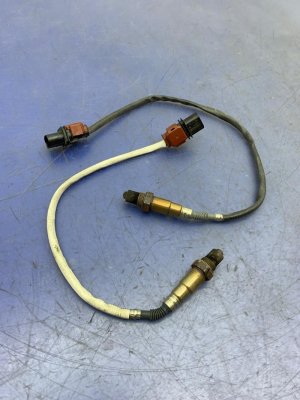
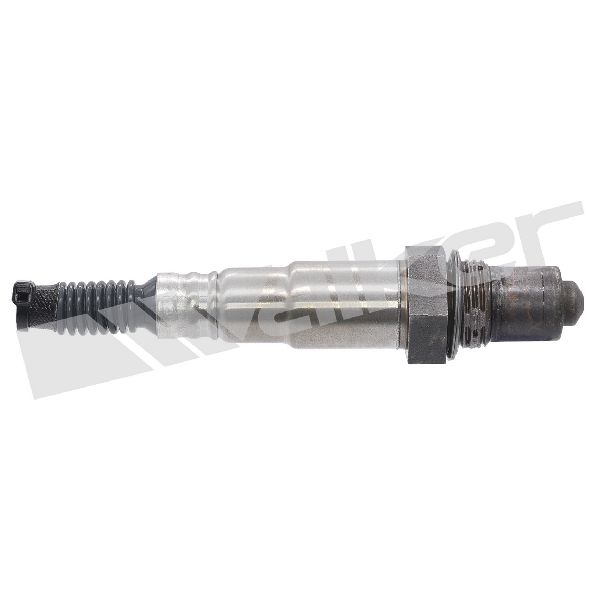
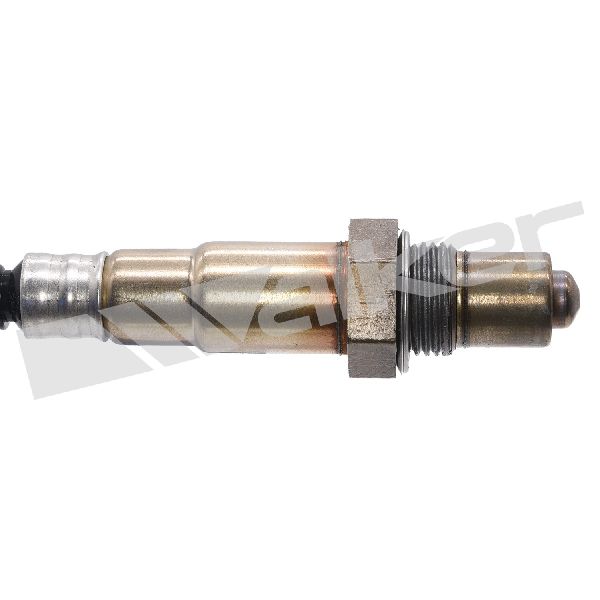
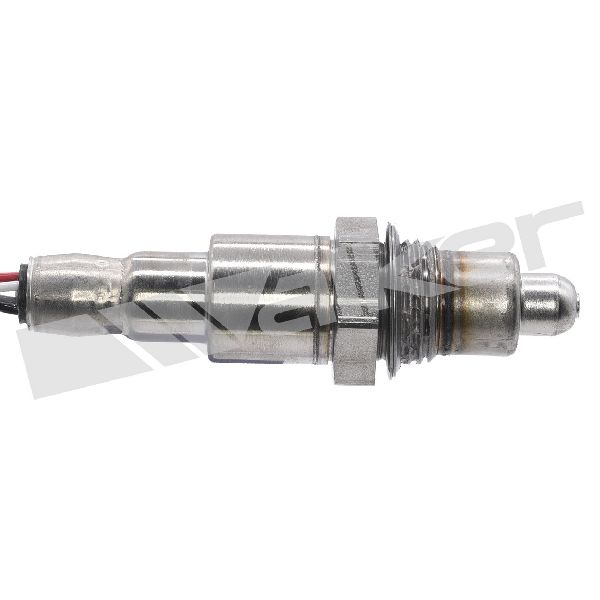
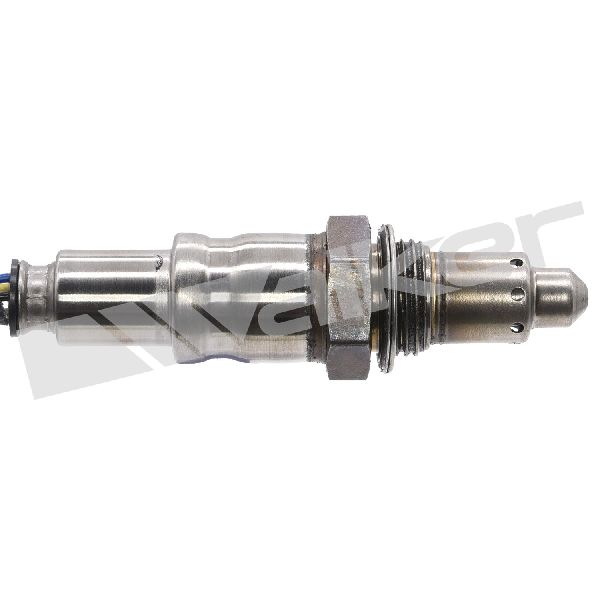
- Oxygen Sensor (Bank 1, Sensor 2)
(OEM #JL3Z-9G444-B)— This is the most common failure point for a P0137 code. The sensor degrades over time and stops sending a correct voltage signal. The OEM part number is well-documented for this application.
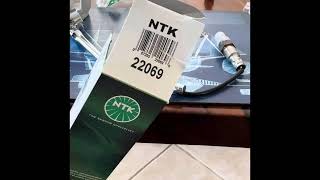
Trusted brands: Motorcraft (OEM), NTK (Often the original equipment manufacturer), Denso, Bosch
OEM price range: $55-$120
Aftermarket price range: $40-$80
Related Codes That Often Appear With This One
- P0141 — P0141 indicates a fault in the heater circuit for the same O2 sensor (Bank 1, Sensor 2). These sensors have an internal heater to get them to operating temperature quickly. A failure within the sensor can often trigger both a circuit low voltage code (P0137) and a heater circuit code (P0141). Seeing them together strongly points to a failed sensor or a wiring/fuse issue.
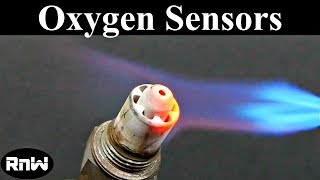
- P0036 — Similar to P0141, P0036 is another code for the O2 sensor heater control circuit for Bank 1, Sensor 2. Forum users on f150forum.com frequently report seeing P0137 and P0036 together, with the fix being a new sensor. 🎬 Watch: How to fix P0036 and P0137 codes together.
- P0430 — While P0137 points to the sensor, it can sometimes appear with P0430 (Catalyst System Efficiency Below Threshold Bank 2). This combination can be confusing, as they point to different banks. It could indicate separate issues or a widespread wiring problem. One user on an F-150 forum reported this combination. It's critical to diagnose each code independently.
Technical Service Bulletins (TSBs) & Recalls
- While no TSB directly addresses P0137 on the 2018-2020 5.0L F-150, related bulletins exist. For example, TSB 22-2260 addresses P0420/P0430 on 2.7L EcoBoost F-150s due to sulfur in fuel, showing a precedent for emissions codes being caused by factors other than component failure. TSB 15-0073 from 2015 also listed P0137, but for the 3.5L EcoBoost, not the 5.0L.
Platform-Specific Known Issues
- Wiring Harness Damage: A known issue on F-150s is the O2 sensor wiring harness being improperly routed from the factory, allowing it to touch hot exhaust components and melt. Another common issue is rodent damage to the soy-based wire insulation. Before replacing a sensor, always inspect the full length of the harness for damage.
- Repeated Sensor Failures: One owner on f150forum.com reported repeated failures of the Bank 2 Sensor 2 (P0056), where the dealer replaced the sensor three times. The issue persisted until the connector was re-pinned, suggesting the underlying problem was in the wiring or connector, not the sensor itself. This highlights the importance of diagnosing the entire circuit, not just swapping the part.
Mechanic-Grade Diagnostic Values
- Downstream O2 Sensor (B1S2) Live Data Voltage — expected: Relatively steady voltage between 0.5V and 0.8V on a warm engine at idle.. Failure: Voltage is stuck below 0.2V, or even 0.1V, and does not respond to changes in engine RPM.
- O2 Sensor Heater Circuit Resistance — expected: Typically 6-20 ohms, but should be verified with vehicle-specific service data.. Failure: An open circuit (infinite resistance) or a reading far outside the specified range confirms a failed heater element within the sensor.
- Wiring Continuity from Sensor Connector to PCM — expected: Less than 1 Ω (ohm) of resistance.. Failure: Resistance above 1 Ω indicates a compromised wire (corrosion, partial break) in the harness.
- Signal Wire Integrity Test (Ford non-bias system) — expected: With the sensor unplugged and key on, probing the signal wire pin on the harness side with a test light connected to battery positive should drive the voltage high on a scan tool (e.g., to 1.0V or higher). The test light should NOT illuminate.. Failure: If the scan tool voltage does not change, there is an open or short to ground in the signal wire between the connector and the PCM. If the test light illuminates, there is a short to ground.
Scan Tool Commands That Help
- Ford IDS (Integrated Diagnostic System): Datalogger - monitoring O2 sensor PIDs (O2S12) — This is the primary function used to view the live voltage data from the Bank 1 Sensor 2 to confirm if it is stuck in a low state, which is the trigger for P0137.
- Ford IDS (Integrated Diagnostic System) or equivalent high-level scanner: KOER (Key On, Engine Running) Self-Test — This test commands the PCM to run a series of system checks, including the O2 sensor circuits, and can help confirm if the fault is currently active.
Wiring & Ground Locations
- Main Battery Ground — On the body structure just in front of the washer fluid reservoir in the engine bay.. A poor main battery ground can cause a multitude of floating voltages and unpredictable electrical issues across the vehicle, potentially affecting sensor readings. While not a direct cause, it's a foundational check for any electrical fault.
- Frame to Body Ground Strap — Underneath the truck, there are multiple ground straps connecting the main frame to the body. One key location is under the passenger side door area.. These grounds are highly susceptible to corrosion and rot, especially in salt-belt regions. A failing body ground can create a poor ground reference for the PCM and sensors, leading to incorrect voltage readings like P0137.
- PCM Connector C1381E — The center connector of the three large PCM connectors located on the firewall.. The 'E' stands for Engine, and this connector carries most of the engine sensor signals, including the O2 sensor signal and ground wires. Testing for continuity or voltage drop requires probing specific pins at this connector.
- Cylinder Head Ground Strap — Attaches from the firewall to the rear of the driver's side cylinder head.. A loose or corroded engine-to-chassis ground can cause issues with sensor signals that use the engine block as a ground path. A forum user with a 2019 5.0L found this strap completely disconnected.
Real Owner Repair Stories
- f150forum.com user RussellRego (2019 Ford F-150 5.0L) — Check Engine Light with multiple permanent DTCs: P0036, P0137 (Bank 1 Sensor 2 codes), and P0430 (Bank 2 catalyst code).
❌ Tried (didn't work) Replacing the Bank 1 Sensor 2 O2 sensor with an OEM part did not clear the codes., Clearing codes with a standard scanner did not remove the 'permanent' DTCs., Checking for continuity on the O2 sensor harness wires to the PCM connector showed no breaks.
✅ What actually fixed it The user found a loose Black/Yellow wire in the passenger side tail light harness connector. After tightening this seemingly unrelated wire, the P2243 code disappeared, and they were able to proceed with a drive cycle to clear the remaining permanent codes. This highlights how CAN bus issues can sometimes manifest as sensor codes.
OEM Part Supersession History
JL3Z-9G444-B→No supersession found. This remains the current OEM part number for the Bank 1, Sensor 2 (and Bank 2, Sensor 2) on the 2018-2020 F-150 5.0L.— N/A
Heads up: The Bank 1 (passenger side) and Bank 2 (driver side) downstream sensors use the same part number, JL3Z-9G444-B. However, be aware that the Bank 1 Sensor 1 (upstream) is a different part number (HC3Z-9G444-B). Ordering the wrong position will lead to a failed repair.
Model Year Variations Within This Range
- 2018-2020: The 2018-2020 5.0L V8 uses conventional 4-wire Zirconia downstream oxygen sensors. This is important because some other Ford engines (like EcoBoost) may use wideband (UEGO) sensors, which have 5 or 6 wires and are tested differently. For P0137 on this specific truck, standard voltage and resistance tests apply.
Diagnostic Flowchart
Real Owner Stories
Aggregated from forums and TSBs cited above. Mileages and costs reflect what owners reported in those sources.
2019 Ford F-150 5.0L
Symptoms: Experienced codes P0036 and P0137 simultaneously.
What fixed it: Sought PCM pinout diagrams to diagnose and repair a wiring issue, demonstrating a diagnostic path beyond simple sensor replacement.
Source hint: f150forum.com thread titled 'pcm-pinout-5-0-a-554189/'
2019 Ford F-150 5.0L
Symptoms: Dealt with permanent codes P0137, P0036, and P0430 simultaneously. Live data readings showed B1S2 voltage fluctuating abnormally from 0.045V to 0.460V.
What fixed it: Used live data voltage fluctuations to diagnose the underlying fault.
Source hint: f150forum.com thread titled '2019-coyote-permanent-codes-p0430-p0137-p0036-559648/'
Ford F-150
Symptoms: Repeated failures of the Bank 2 Sensor 2 (P0056), where the dealer replaced the sensor three times without resolving the issue.
What fixed it: The issue persisted until the connector was re-pinned, proving the underlying problem was in the wiring or connector, not the sensor itself.
Source hint: f150forum.com user report cited in vehicle-specific issues
Ford F-150
Symptoms: Multiple O2 sensor heater codes appeared all at once.
What fixed it: Identified that the wiring harnesses were mis-routed from the factory and melted on the exhaust, or chewed by rodents.
Source hint: f150forum.com thread titled 'all-my-o2-sensors-suddenly-bad-515403/'
Related OBD-II Codes
Frequently Asked Questions
Are there any TSBs for P0137 on my 2018-2020 5.0L F-150?
What brand of oxygen sensor should I use for my F-150 Coyote V8?
I replaced the Bank 1 Sensor 2 O2 sensor on my F-150, but P0137 came back. What else could it be?
Can an exhaust leak cause the P0137 code on my 5.0L F-150?
How do I test the Bank 1 Sensor 2 on my 2019 F-150 using a scanner?
Helpful Videos
Used OEM Parts in Stock
New Aftermarket Parts Available

The information in this article is provided for general reference and educational purposes only. Vehicle specifications, procedures, and part compatibility can vary by production date, trim level, and region. Always consult your vehicle's factory service manual and verify part numbers before purchasing or performing repairs. Safety-critical components such as airbags, seat belts, and braking systems should be installed by a qualified professional.
- Ford F-150:
- 🎬 Helpful Videos
- 🛍️ Shop This Part
- What's Unique About the 2018-2020 Ford F-150
- Symptoms You May Notice
- Most Likely Causes
- Rare But Worth Checking
- Diagnosis Steps
- Parts You'll Likely Need
- Related Codes That Often Appear With This One
- Technical Service Bulletins (TSBs) & Recalls
- Platform-Specific Known Issues
- Mechanic-Grade Diagnostic Values
- Scan Tool Commands That Help
- Wiring & Ground Locations
- Real Owner Repair Stories
- OEM Part Supersession History
- Model Year Variations Within This Range
- Diagnostic Flowchart
- Real Owner Stories
- 2019 Ford F-150 5.0L
- 2019 Ford F-150 5.0L
- Ford F-150
- Ford F-150
- Related OBD-II Codes
- Frequently Asked Questions
- 🎟️ Get 5% Off