

P0136 on 2007-2011 Toyota Camry Hybrid: O2 Sensor Circuit Fixes
This code points to the downstream oxygen sensor (Bank 1, Sensor 2). While the sensor itself can fail, a common cause on this vehicle is a damaged wiring harness near the exhaust. A Technical Service Bulletin (TSB-0072-12) also notes that an ECU software update may be required along with sensor replacement for a permanent fix. Always inspect wiring before replacing parts.
- P0136 on this Camry Hybrid points to the downstream oxygen sensor (Bank 1, Sensor 2).
- Always inspect the wiring harness for heat damage before replacing the sensor, as this is a very common issue and often the true cause.
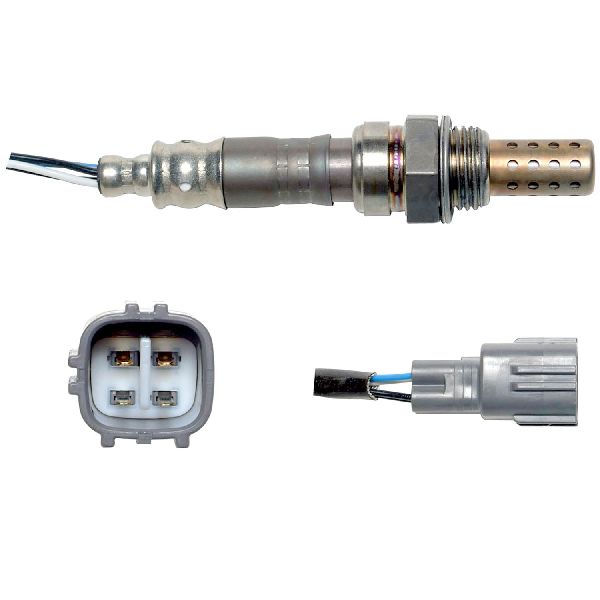
- Use a high-quality Denso (OEM) replacement sensor (e.g., #234-4064), as the vehicle's computer is sensitive to the sensor's specific characteristics.
- Be aware that a Toyota TSB (T-SB-0072-12) exists for this exact problem, and a complete fix may require an ECU software update after the sensor is replaced.
What's Unique About the 2007-2011 Toyota Camry Hybrid
For the 2007-2011 Camry Hybrid, the P0136 code is a known issue addressed by Toyota Technical Service Bulletin (TSB) T-SB-0072-12. This TSB indicates that in addition to a potentially faulty sensor, the Hybrid Vehicle ECU logic was modified to prevent this code from recurring. This means that simply replacing the sensor might not be a permanent fix; a dealership or a properly equipped independent shop may need to perform a software update to the HV ECU using Toyota's Techstream software. Furthermore, the wiring harness for this sensor is notoriously prone to heat damage from the hot exhaust system, which can cause the insulation to become brittle and crack, leading to high resistance or shorts in the circuit and triggering the code even if the sensor itself is good.
Symptoms You May Notice
- Check Engine Light is on
- Vehicle Stability Control (VSC) and/or Traction Control light may be on
- Significant decrease in fuel economy
- Failure to pass an emissions inspection
- Engine may misfire or run rough in some cases
- Replacing the oxygen sensor without checking the wiring first. Heat damage to the harness is a very common cause, and a new sensor will not fix a wiring problem.
- Using a generic or non-Denso brand oxygen sensor. The Toyota ECU is calibrated for the specific heater resistance of the OEM Denso sensor, and some aftermarket parts (e.g., Bosch) may not heat up correctly or have the right response characteristics, causing the code to return.
- Replacing the ECM when P0606 appears alongside P0136. The P0606 is often a phantom code triggered by the faulty sensor data, and replacing the sensor and fixing any wiring issues will typically resolve both codes.
Most Likely Causes
- Failed Downstream Oxygen Sensor (Bank 1, Sensor 2) 🔴 High Probability Sensors wear out over time. Toyota also modified the sensor design and ECU logic for this specific issue, as noted in TSB T-SB-0072-12, suggesting the original parts were prone to setting this code. The ECM determines failure by monitoring the sensor's impedance and voltage response during active air-fuel ratio tests.
How to confirm: Use a scan tool to observe live data for O2 Sensor B1S2. A healthy sensor on a warm engine at steady RPM should show a relatively stable voltage between 0.6-0.8V. If the voltage is stuck (e.g., flatlined at 0V), erratic, or does not respond correctly during active tests, it has likely failed. The TSB procedure involves checking for DTCs, and if only P0136 is present, proceeding with sensor replacement and a potential reflash.
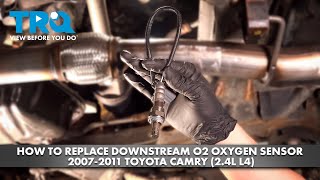
Typical fix: Replace the oxygen sensor. 🎬 See this walkthrough for replacing the downstream oxygen sensor An ECU reflash may also be necessary per TSB T-SB-0072-12. 🎬 Watch: Real fix for P0136 slow response on Camry Hybrids Using an OEM Denso sensor is critical, as the ECU is calibrated to its specific heater resistance.
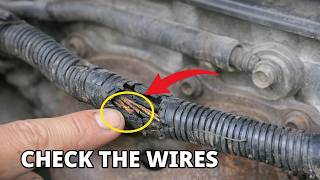
Est. part cost: $60-$180 - Damaged Wiring Harness or Connector 🔴 High Probability The sensor wiring runs very close to the hot exhaust system. Over time, the intense heat bakes the plastic insulation, making it brittle and cracked. This allows moisture to enter, corroding the copper wire and creating high electrical resistance or short circuits. This is a very common point of failure for this code on this model.
How to confirm: Visually inspect the wiring harness from the sensor connector back towards the main loom. Look for cracked, melted, or burnt plastic loom. Feel the wires; if they are stiff and hard instead of flexible, that's a sign of heat damage. Perform a voltage drop test with a multimeter on the signal and ground wires to check for high resistance. You should also confirm the heater circuit receives a full 12V with the key on.
Typical fix: Repair the damaged section of the wiring harness. This involves splicing in new wire, soldering the connections, and using heat-shrink tubing to protect the repair. Ensure the repaired harness is routed as far from the exhaust heat as possible.
Est. part cost: $10-$30 - Exhaust Leak ⚪ Low Probability While not specific to this platform, any exhaust leak between the catalytic converter and the B1S2 sensor can introduce outside oxygen, causing incorrect sensor readings and triggering the code.
How to confirm: Listen for hissing or ticking sounds from the exhaust system, especially when the engine is cold. Look for black soot marks around exhaust pipe connections or flanges, which indicate a leak. A shop can perform a smoke test to pinpoint the leak's location.
Typical fix: Replace the leaking gasket or tighten the exhaust component flanges. Small cracks or holes can sometimes be repaired with exhaust putty or a heat wrap kit as a temporary solution.
Est. part cost: $10-$50
Rare But Worth Checking
- Faulty Engine Control Module (ECM): This is very rare. Before condemning the ECM, all other possibilities, including wiring, the sensor itself, and the TSB-recommended software update, must be thoroughly ruled out. Often, when P0136 is accompanied by P0606 (ECM/PCM Processor Malfunction), the root cause is still the O2 sensor or its circuit, not the ECM itself.
Diagnosis Steps
- Check for any Technical Service Bulletins (TSBs). T-SB-0072-12 is directly related to this code on this vehicle and outlines the official repair procedure.
- Thoroughly inspect the Bank 1, Sensor 2 oxygen sensor's wiring harness and connector for any signs of melting, cracking, brittleness, or physical damage. This is a critical step.
- Inspect the exhaust system for any leaks between the catalytic converter and the downstream O2 sensor.
- Use an OBD-II scanner to monitor the live voltage data from Bank 1, Sensor 2. On a fully warmed-up engine at a steady cruise, the voltage should be relatively stable (e.g., 0.6-0.8V). If it's stuck at 0V, near 1V, or fluctuating rapidly like the upstream sensor, the sensor or its circuit is faulty.
- Perform a voltage drop test on the sensor's signal and ground wires to rule out high resistance from a damaged harness.
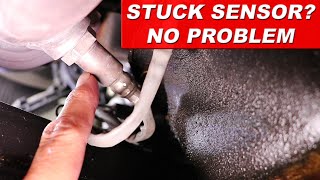
- If wiring is confirmed to be good, replace the oxygen sensor. Using an OEM-spec Denso sensor (Part No. 234-4064 is a common equivalent 🎬 Watch: Step-by-step guide for oxygen sensor removal and installation) is highly recommended.
- If the code returns after replacing the sensor with a known-good OEM part, the Hybrid Vehicle ECU requires the software update as described in TSB T-SB-0072-12. This requires a trip to a dealer or a shop with Toyota's Techstream software.
Parts You'll Likely Need
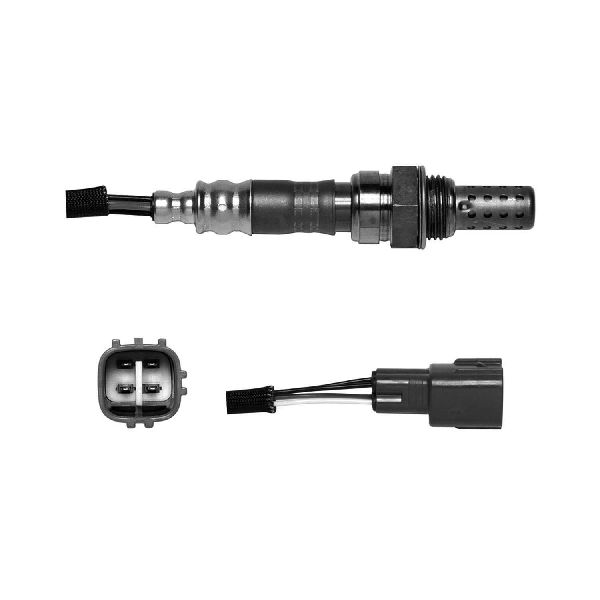
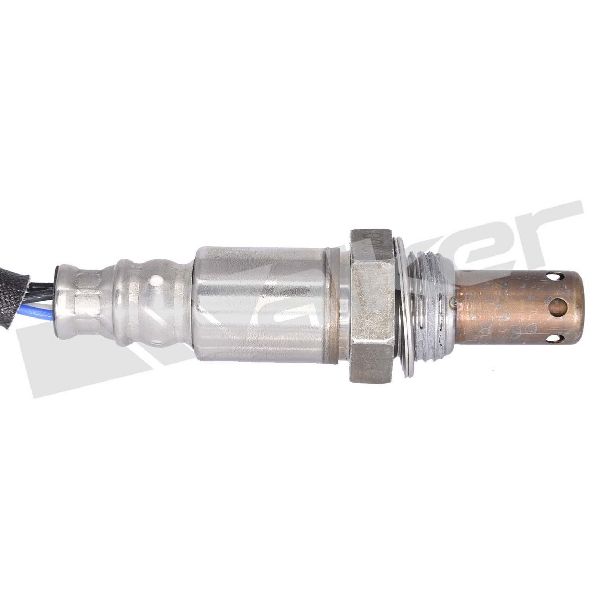
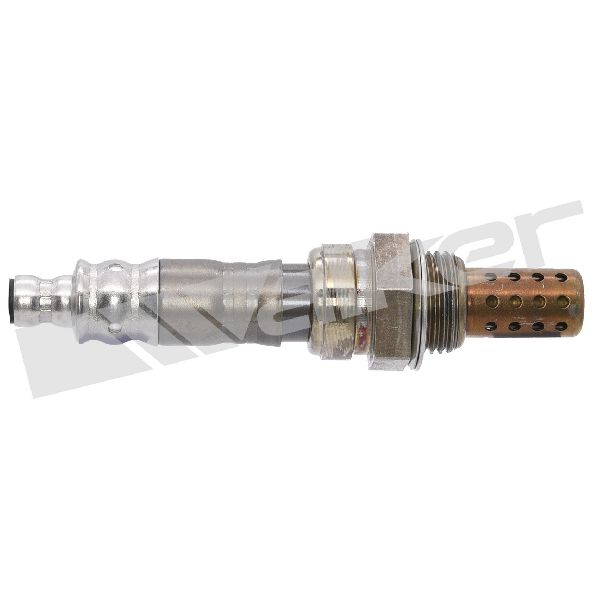
- Downstream Oxygen Sensor (Bank 1, Sensor 2)
(OEM #89465-06150)— This is the primary component identified by the code and is a common failure point. A TSB was issued that involves an updated sensor and/or ECU logic.
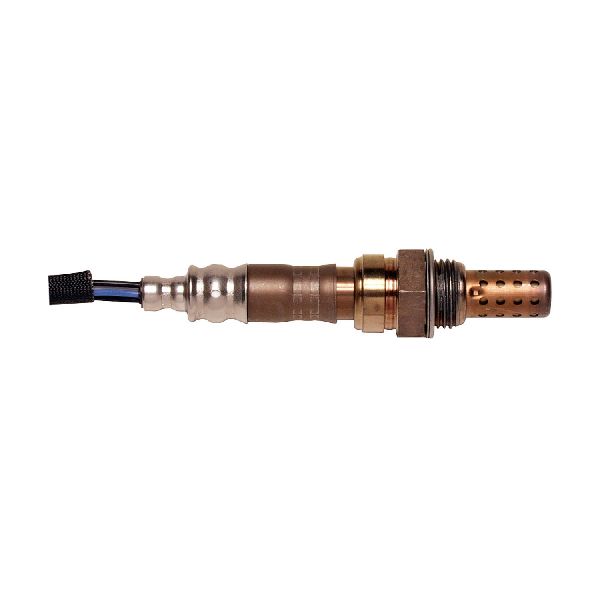
Trusted brands: Denso (OEM supplier, Part #234-4064)
OEM price range: $120-$180
Aftermarket price range: $60-$110
Related Codes That Often Appear With This One
- P0606 — If P0606 (ECM/PCM Processor Malfunction) appears with P0136, it strongly points towards an issue with the oxygen sensor circuit rather than an actual ECM failure. The erratic data from the failing O2 sensor circuit can confuse the ECM, causing it to self-diagnose a processor fault. The fix is to address the P0136 cause.
- P0137 — P0137 (O2 Sensor Circuit Low Voltage) can appear with P0136 as it indicates a specific type of circuit failure, such as an open or short to ground in the signal wire, which is a possible outcome of a heat-damaged harness.
- P0138 — P0138 (O2 Sensor Circuit High Voltage) can also accompany P0136, pointing to a short to voltage in the wiring harness, another potential result of heat damage.
Technical Service Bulletins (TSBs) & Recalls
- T-SB-0072-12: Issued May 9, 2012, for 2007-2011 Camry Hybrids. Addresses a MIL ON with DTC P0136. The procedure involves replacing the B1S2 oxygen sensor and, if necessary, reprogramming the HV ECU.
Platform-Specific Known Issues
- Toyota issued TSB T-SB-0072-12 for the 2007-2011 Camry Hybrid, which states that the oxygen sensor and the Hybrid Vehicle ECU logic were modified to reduce the occurrence of P0136. The fix involves replacing the sensor and reprogramming the HV ECU with an updated calibration file.
- The repair may be covered under the Toyota Hybrid Vehicle System Warranty, which is in effect for 96 months or 100,000 miles from the vehicle's in-service date.
Mechanic-Grade Diagnostic Values
- Heated Oxygen Sensor (B1S2) Heater Resistance — expected: 11 to 16 Ω at 20°C (68°F). Failure: Resistance outside this range, or over 10 kΩ when measured between heater terminal and ground terminal, indicates a faulty sensor.
- ECM Active Air-Fuel Ratio Control Test Thresholds (via Techstream) — expected: Voltage should switch above 0.59V when forced rich and below 0.21V when forced lean.. Failure: If the sensor voltage fails to cross these thresholds during the active test, the ECM determines the sensor output is abnormal and sets P0136.
- O2 Sensor Heater Circuit Current (Monitored by ECM) — expected: Between 0.3 A and 2.0 A. Failure: Current less than 0.3 A will trigger a heater circuit low code (like P0037), and current over 2.0 A will trigger a heater circuit high code (like P0038). While not P0136, this shows how the ECM monitors the circuit.
- O2 Sensor Heater Power Supply Voltage — expected: Full battery voltage (approx. 12V-13.5V) at the sensor connector with the key on.. Failure: Voltage significantly less than battery voltage indicates high resistance or a problem in the power supply circuit (EFI relay, fuse, or wiring).
Scan Tool Commands That Help
- Toyota Techstream: Active Test: 'Control the Injection Volume A/F sensor' — This function allows a technician to force the air-fuel ratio rich (+25%) or lean (-12.5%) and observe the B1S2 voltage response on a graph. It is a definitive way to test if the sensor is responding correctly to changes in exhaust oxygen content. A healthy sensor will show a voltage over 0.55V on rich command and under 0.4V on lean command.
- Toyota Techstream: Utility: 'Check for HV ECU Calibration Updates' — As per TSB T-SB-0072-12, after replacing the O2 sensor, this function must be used to check if the Hybrid Vehicle ECU has the latest software calibration. If not, the ECU must be flash reprogrammed to prevent the P0136 code from returning.
Wiring & Ground Locations
- Engine Room R/B (Relay Block) — In the engine bay, on the driver's side near the fender.. This fuse and relay box contains the EFI (Electronic Fuel Injection) relay and fuse, which supply power to the oxygen sensor's heater circuit. A fault in the relay or a blown fuse would cause heater circuit codes and could contribute to a P0136 by preventing the sensor from reaching operating temperature.
- O2 Sensor Connector (B1S2) — The connector for the downstream sensor is located up above the exhaust pipe, requiring you to follow the wire from the sensor itself.. This connector is a common point for inspection. The terminals can corrode, and the wiring near the connector is the most susceptible to heat damage from the exhaust system. Testing for voltage and resistance should be done at this connector's pins.
- ECM Connector — On the Camry Hybrid, the engine computer (ECM) is located on the firewall behind the engine.. This is the termination point for the O2 sensor circuit. A voltage drop test requires checking for voltage differences between the sensor connector and the corresponding pins at the ECM connector to find high resistance in the harness.
Real Owner Repair Stories
- Tacoma World forum user 'eon_blue' (2002 Toyota Tacoma 2.7L (Different vehicle, but same code and principle)) — Check Engine Light with code P0136.
❌ Tried (didn't work) The original poster replaced both catalytic converters and both O2 sensors, but the code returned.
✅ What actually fixed it The user 'eon_blue' noted that when they had the same code, using a Denso (OEM) sensor solved it, implying the original poster may have used an aftermarket sensor which are known not to work well with Toyota ECUs. - NHTSA ODI #10194123 — An owner reported that their check engine light came on and a dealer diagnostic report confirmed a failure code of P0136 for an oxygen sensor malfunction, with a replacement cost estimated at $230.00.
- NHTSA ODI #11377970 — A driver of a similar Toyota hybrid model reported persistent P0136 Bank 1 Sensor 2 error codes even after several mechanics attempted to switch the downstream O2 sensor.
OEM Part Supersession History
89465-33440→89465-06150— The oxygen sensor and HV ECU logic were modified to reduce the occurrence of P0136, as stated in TSB T-SB-0072-12. The new part number corresponds to this updated design.
Heads up: While the old part number may physically fit, using the superseded part (89465-33440) or a non-Denso aftermarket equivalent is likely to cause the P0136 code to return, as the ECU calibration update is designed to work with the revised sensor (89465-06150).
Model Year Variations Within This Range
- 2007-2011: Unlike the non-hybrid Camry which received a new 2.5L (2AR-FE) engine for 2010-2011, the Camry Hybrid continued to use the 2.4L (2AZ-FXE) engine for the entire 2007-2011 generation. This means the P0136 issue and its associated TSB apply consistently across all years of this model.
Diagnostic Flowchart
Real Owner Stories
Aggregated from forums and TSBs cited above. Mileages and costs reflect what owners reported in those sources.
2010 Lexus HS 250h 2.4L
Symptoms: Experienced a P0136 code and attempted to fix it with an aftermarket sensor, which immediately triggered a new P0141 heater code.
What fixed it: Replacing the aftermarket unit with an OEM Denso sensor, as recommended by forum members to match the ECU's heater resistance calibration.
Source hint: ClubLexus - O2 Sensor thread for HS 250h
2011 Toyota Camry
Symptoms: Scanner showed a P0136 code, and both the check engine light and traction control lights were illuminated on the dash.
What fixed it: Confirmed the common Toyota behavior of disabling traction control when an engine code is set; requires addressing the root P0136 sensor/wiring fault to clear the dash lights.
Source hint: Reddit r/Cartalk - P0136 on 2011 Camry
Toyota Camry Hybrid
Symptoms: Vehicle presented with a P0136 code, along with a phantom P0606 code.
What fixed it: Replaced the oxygen sensor with OEM part 89465-06150 and applied the new ECU calibration as outlined in TSB T-SB-0072-12.
Source hint: CARspec Blog - Toyota Camry Hybrid P0136
Related OBD-II Codes
Frequently Asked Questions
Does TSB T-SB-0072-12 apply to my 2007-2011 Camry Hybrid for code P0136?
Why are my VSC and Traction Control lights on along with the Check Engine Light?
Is the P0136 repair covered under warranty for my Camry Hybrid?
Can I use an aftermarket oxygen sensor to fix P0136 on my 2AZ-FXE engine?
I replaced the O2 sensor but the P0136 code came back. What should I do?
Why is the wiring harness a common cause for P0136 on this specific model?
Helpful Videos
We Have This Part in Stock


The information in this article is provided for general reference and educational purposes only. Vehicle specifications, procedures, and part compatibility can vary by production date, trim level, and region. Always consult your vehicle's factory service manual and verify part numbers before purchasing or performing repairs. Safety-critical components such as airbags, seat belts, and braking systems should be installed by a qualified professional.
- Toyota Camry Hybrid:
- 🎬 Helpful Videos
- 🛍️ Shop This Part
- What's Unique About the 2007-2011 Toyota Camry Hybrid
- Symptoms You May Notice
- Most Likely Causes
- Rare But Worth Checking
- Diagnosis Steps
- Parts You'll Likely Need
- Related Codes That Often Appear With This One
- Technical Service Bulletins (TSBs) & Recalls
- Platform-Specific Known Issues
- Mechanic-Grade Diagnostic Values
- Scan Tool Commands That Help
- Wiring & Ground Locations
- Real Owner Repair Stories
- OEM Part Supersession History
- Model Year Variations Within This Range
- Diagnostic Flowchart
- Real Owner Stories
- 2010 Lexus HS 250h 2.4L
- 2011 Toyota Camry
- Toyota Camry Hybrid
- Related OBD-II Codes
- Frequently Asked Questions
- 🎟️ Get 5% Off