

P0136 on 2010-2012 Lexus HS 250h: O2 Sensor Circuit Malfunction Causes and Fixes
This code almost always points to a failed downstream oxygen sensor (Bank 1, Sensor 2). On the HS 250h, expect to pay around $145 for an OEM sensor and about an hour of labor. Using a quality OEM-brand sensor like Denso is highly recommended to avoid compatibility issues that can trigger new codes, such as P0141. In some cases, an ECM software update may be required to resolve the code after sensor replacement.
- P0136 on your HS 250h almost certainly means the rear oxygen sensor (Bank 1, Sensor 2) has failed.
- This is a DIY-friendly repair for those with basic tools; the sensor is located in the exhaust underneath the car, after the catalytic converter.
- To avoid problems, it is highly recommended to use an OEM (89465-75010) or a reputable OEM-supplier brand like Denso (e.g., #234-4509) for the replacement part.
- If a quality new sensor does not fix the code, an ECM software update from a Lexus dealer may be the final solution.
What's Unique About the 2010-2012 Lexus HS 250h
The Lexus HS 250h uses the common 2AZ-FXE hybrid engine, also found in the Toyota Camry Hybrid. While the P0136 code is standard, owner experiences show that using non-OEM sensors can sometimes lead to new trouble codes, like P0141 for the heater circuit, due to differences in internal resistance. Additionally, a Technical Service Bulletin (TSB T-SB-0072-12) for the related Camry Hybrid notes that some models require an ECM software update to work correctly with a newly designed replacement sensor, even if the part number is the same. This suggests that for a persistent P0136, a dealer-level software reflash should be considered after confirming the sensor and wiring are good.
Symptoms You May Notice
- Check Engine Light is on.
- Possible decrease in fuel economy.
- Failure to pass an emissions/smog test.
- In some cases, the engine may misfire or run rough.
- Replacing the upstream Air/Fuel Ratio Sensor (Bank 1, Sensor 1) instead of the downstream Oxygen Sensor (Bank 1, Sensor 2).
- Replacing the catalytic converter when only the monitoring sensor is faulty.
- Using a cheap, universal oxygen sensor that is not fully compatible, leading to persistent or new codes like P0141 (Heater Circuit Malfunction).
Most Likely Causes
- Failed Downstream Oxygen Sensor (Bank 1, Sensor 2) 🔴 High Probability Oxygen sensors are wear-and-tear items that degrade over time from heat and contaminants. A failure around 60,000 miles or more is not uncommon, as seen in a ClubLexus forum thread where a 2010 HS 250h owner experienced the code at 58,000 miles.
How to confirm: Use a scan tool to monitor the live voltage data from 'O2S B1S2' (Bank 1, Sensor 2). A healthy downstream sensor should show a relatively steady voltage (typically 0.6V-0.8V) when the engine is warm and at a steady speed. If the voltage is stuck low (near 0V), high (near 1V), or fluctuating rapidly like the upstream sensor, it has likely failed. A specific fault condition is logged if the sensor output remains at less than 0.05 V for more than 126 seconds.
Typical fix: Replace the rear oxygen sensor. Ensure you are replacing Sensor 2 (downstream), not the upstream Air/Fuel Ratio Sensor. Using an OEM (part #89465-75010) or Denso direct-fit sensor is strongly recommended.
Est. part cost: $50-$180 - Damaged Wiring or Connector 🟡 Medium Probability The sensor is located under the vehicle and is exposed to road debris, moisture, and extreme exhaust heat, which can damage the wiring harness or corrode the connector pins over time.
How to confirm: Visually inspect the entire wiring harness from the oxygen sensor to where it connects to the main loom. Look for any signs of melting, chafing, breaks, or corrosion inside the connector. Use a multimeter to check for continuity and proper voltage at the connector. The signal wire for B1S2, often colored Black-Brown, can be checked at the ECM connector E6, pin 29.
Typical fix: Repair the damaged section of wire or clean/replace the connector.
Est. part cost: $5-$50 - Exhaust System Leak ⚪ Low Probability
How to confirm: With the engine running, carefully inspect and feel for air leaks from the exhaust manifold, gaskets, and pipes located before the downstream O2 sensor. A shop can perform a smoke test to find small leaks. An exhaust leak can introduce outside oxygen, causing the sensor to send incorrect lean readings.
Typical fix: Replace the leaking gasket or repair the cracked exhaust component.
Est. part cost: $20-$200
Rare But Worth Checking
- Faulty Engine Control Module (ECM) or Outdated Software: This is very rare. Before condemning the ECM, a Lexus dealer should check for available software updates. A TSB for the platform-mate Toyota Camry Hybrid (T-SB-0072-12) confirms that an updated calibration was released to address this specific code, which makes a software issue a real possibility if a new, quality sensor doesn't resolve the problem. The original TSB mention (L-TCI-3140) could not be verified and may be an internal reference.
Diagnosis Steps
- Connect an OBD-II scanner and confirm that P0136 is the primary code present. Note any other codes like P0141 or P0420.
- Visually inspect the downstream oxygen sensor's wiring harness and connector for any obvious damage, melting, or corrosion. The sensor is located on the exhaust pipe after the catalytic converter.
- Check for any exhaust leaks between the engine and the downstream O2 sensor. Listen for hissing sounds or use a smoke machine for a more thorough check.
- Use the scanner's live data function to observe the voltage of 'O2S B1S2' (Bank 1, Sensor 2) with the engine fully warmed up and held at a steady 2,500 RPM. The voltage should be relatively stable and above 0.5V. If it's stuck near 0V, near 1V, or switching rapidly like the upstream sensor, the sensor is the likely culprit. According to Lexus technical documents, a fault is stored if the sensor output remains below 0.05V for over 126 seconds.
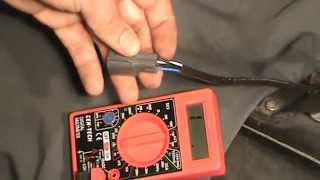
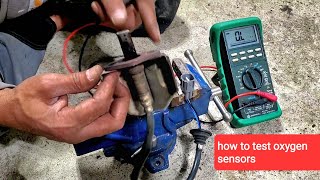
- If the sensor and wiring appear good, test the sensor's internal heater circuit with a multimeter for proper resistance. An open or shorted heater circuit will require sensor replacement and may also set a P0141 code. The resistance must match the OEM specification precisely.
- If a new, high-quality (OEM/Denso) sensor does not resolve the code, contact a Lexus dealership to inquire about an ECM software update, referencing TSB T-SB-0072-12 for the related Camry Hybrid as a precedent.
Parts You'll Likely Need
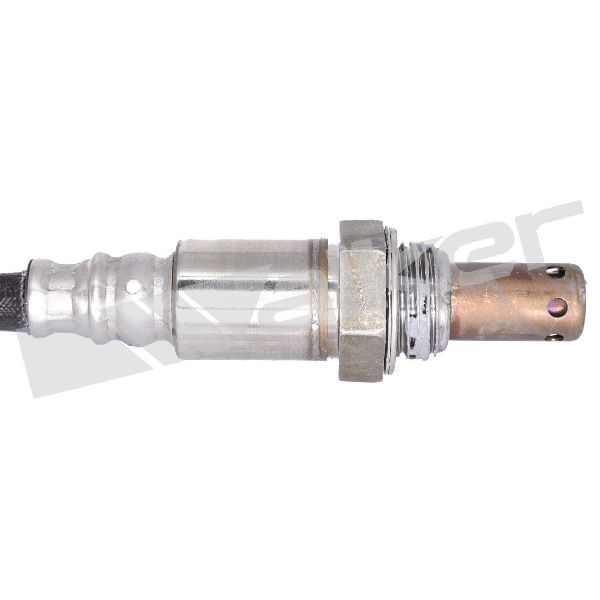
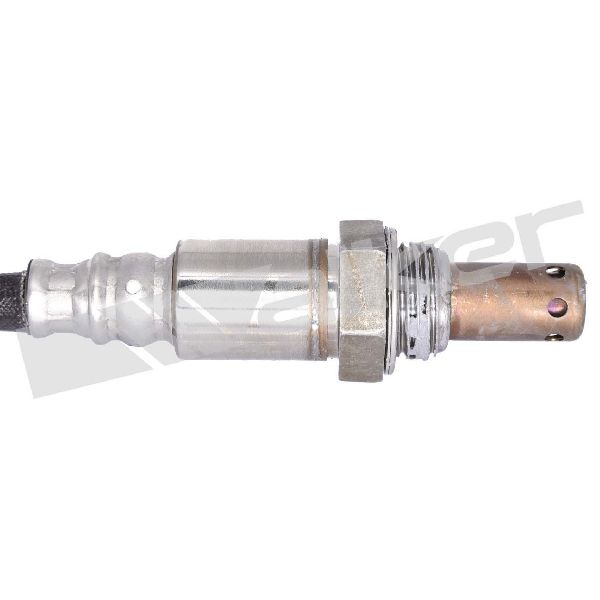
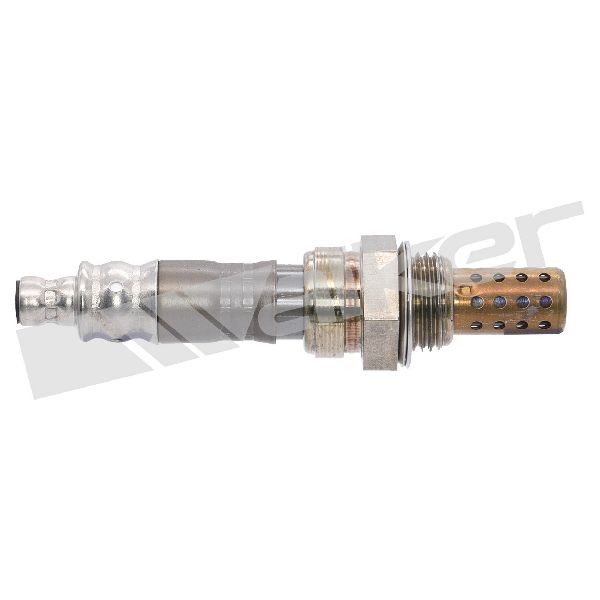
- Rear Oxygen Sensor
(OEM #89465-75010)— This is the most common failure point for code P0136. It is a standard maintenance item that wears out over time.
Trusted brands: Lexus (OEM), Denso (OEM Supplier, Part #234-4509 is a common direct fit)
OEM price range: $140-$202
Aftermarket price range: $50-$120
Related Codes That Often Appear With This One
- P0141 — This code indicates a malfunction in the sensor's heater circuit. It can appear alongside P0136 if the sensor has multiple internal faults, or it may appear after replacing the sensor with a low-quality aftermarket part that has a different heater resistance than the OEM spec.
- P0420 — This code means 'Catalyst System Efficiency Below Threshold'. A faulty P0136 sensor can sometimes provide incorrect data that falsely triggers a P0420 code. Conversely, if the P0136 code has been ignored for a long time, the catalytic converter may have actually failed, causing both codes to appear.
- P0606 — This code for 'ECM/PCM Processor Malfunction' has been noted to appear alongside P0136 on related Toyota models. TSB T-SB-0072-12 suggests investigating the O2 sensors before replacing the computer when these codes appear together.
Technical Service Bulletins (TSBs) & Recalls
- T-SB-0072-12: For the Toyota Camry Hybrid with the same 2AZ-FXE engine, this TSB addresses a P0136 code by replacing the rear O2 sensor and performing an ECM software update. This is a strong indicator that a similar fix may apply to the HS 250h.
- L-TCI-3140: A potential TSB mentioned by a mechanic for an ECM software update when code P0136 is set. This TSB number could not be publicly verified and may be an internal dealer reference number.
Platform-Specific Known Issues
- Some owners have reported that after replacing the original sensor with an aftermarket one, they immediately get a P0141 heater circuit code. This suggests a potential incompatibility with some aftermarket brands due to different heater resistance values, making an OEM or Denso-branded sensor a safer choice.
- A Technical Service Bulletin for the platform-mate Camry Hybrid (T-SB-0072-12) indicates that an ECM software update may be required to correctly interpret the signal from a newly designed replacement sensor.
Mechanic-Grade Diagnostic Values
- Downstream O2 Sensor (B1S2) Voltage — expected: Relatively stable between 0.5V and 0.9V when engine is warm and at steady RPM.. Failure: Stuck below 0.4V (lean) or above 0.5V (rich) without appropriate switching. A fault is set if voltage remains below 0.05V for more than 126 seconds.
- O2 Sensor Heater Circuit Resistance — expected: Must match the specific resistance of the original OEM sensor. While values for other Toyotas range from 1.8 ohms to 14.5 ohms, the exact spec for the HS 250h is not published, making it critical to use an OEM or Denso part.. Failure: An open circuit (infinite resistance), a short circuit (near zero resistance), or a resistance value that differs from the original part, which will often trigger a P0141 code.
Hidden / Shadow Codes Worth Checking
- Mode 6, Test ID $07: Monitors the minimum voltage reached by the rear O2 sensor during a test cycle. (see via Advanced OBD-II scan tool capable of displaying Mode $06 data.)
- Mode 6, Test ID $08: Monitors the maximum voltage reached by the rear O2 sensor during a test cycle. (see via Advanced OBD-II scan tool capable of displaying Mode $06 data.)
- Mode 6, Test ID $81: Measures the percentage of monitoring time when the HO2S (O2 sensor) voltage is less than 0.05V. Exceeding the threshold can indicate a sensor or circuit fault. (see via Advanced OBD-II scan tool capable of displaying Mode $06 data.)
Scan Tool Commands That Help
- Toyota Techstream / Professional Hand-held Tester: ACTIVE TEST -> A/F CONTROL — To verify sensor functionality after checking wiring. This command allows the technician to manually adjust the fuel injection volume by +25% (rich) or -12.5% (lean) at idle. A good B1S2 sensor will show a delayed voltage change (up to 20 seconds) in response to these commands, confirming it can read rich/lean conditions.
Wiring & Ground Locations
- ECM Connector E6, Pin 29 (OX1B) — At the Engine Control Module (ECM). The ECM is located in the engine compartment.. This is the specific pin for the Bank 1 Sensor 2 signal wire at the ECM. It allows a technician to test for signal continuity and voltage directly at the computer, bypassing the entire vehicle harness to isolate a wiring fault from a sensor or ECM fault. The wire color is typically Black-Brown (B-BR).
- ECM Connector E7, Pin 1 (E1) — At the Engine Control Module (ECM).. This is a sensor ground pin shared by multiple oxygen sensors. A problem at this pin or its associated ground point could affect the B1S2 sensor and cause a P0136 code.
Real Owner Repair Stories
- ClubLexus user 'jgrgnt' (2010 Lexus HS 250h, failure at 58,000 miles) — Check Engine Light with code P0136.
❌ Tried (didn't work) Replaced the original sensor with an aftermarket O2 sensor. This cleared P0136 but immediately caused a P0141 (Heater Circuit Malfunction)., Replaced the first aftermarket sensor with a second, different aftermarket sensor. The P0141 code returned again.
✅ What actually fixed it Replaced the aftermarket sensor with a genuine Lexus/Toyota OEM part. This cleared all codes (P0136 and P0141) and resolved the issue permanently.
Diagnostic Flowchart
Other Known Issues on This Vehicle
Issues unrelated to this code that are worth knowing about as an owner of this generation:
- Excessive Engine Oil Consumption 🔴 High — Very common across the 2AZ-FE/FXE engine family for these model years. Can start as early as 60,000 miles but may appear at any time. (Ref: Toyota issued TSBs (e.g., T-SB-0094-11, T-SB-0158-14) and a warranty enhancement program (ZE7) to address this by replacing pistons and piston rings.)
- Brake Actuator Assembly Failure 🔴 High — A widely reported issue where the brake actuator fails, leading to a loss of braking efficiency, warning lights, and a loud buzzing/beeping noise. Repair is very expensive. (Ref: Toyota issued a warranty extension (program ZJB) for some related models, but HS 250h owner reports of costly out-of-pocket repairs are common.)
- Hybrid Transaxle Failure 🔴 High — A recall was issued for 2010 models due to a manufacturing defect that could cause components to wear and short circuit, leading to a total loss of motive power. (Ref: NHTSA Campaign Number: 17V631000 (Lexus Recall HLG))
- Melting/Sticky Dashboard 🟡 Low — Common in vehicles exposed to high heat and humidity. The dashboard material can become soft, sticky, and shiny. (Ref: Lexus initiated a Warranty Enhancement Program (ZLD) for this issue on many other models of the era, and it is a known complaint for the HS 250h as well.)
Used vs. New Parts: Buying Guide for This Vehicle
When a used part is the smart pick: For this specific repair, a used part is NOT recommended. Oxygen sensors are wear-and-tear items with a finite lifespan, similar to spark plugs or filters. The risk of purchasing a used sensor that is already near the end of its life or has an incompatible internal resistance is very high.
What to inspect on the donor part:
- Not applicable as used parts are not advised.
OEM-only on this vehicle (don't cheap out):
- Oxygen Sensor (Bank 1, Sensor 2)
Aftermarket brands forum-validated for this vehicle:
- Denso (is the OEM supplier; ensure it is the 'direct-fit' model, not 'universal')
Brands owners have reported issues with on this vehicle:
- Unbranded or generic 'universal' oxygen sensors have a high probability of causing heater circuit codes (P0141) on this vehicle due to incorrect internal resistance.
Real Owner Stories
Aggregated from forums and TSBs cited above. Mileages and costs reflect what owners reported in those sources.
2010 Lexus HS 250h 2AZ-FXE — 58000 miles
Symptoms: Check Engine Light on with code P0136. After replacing with two different aftermarket sensors, the car immediately threw a P0141 heater circuit code.
What fixed it: Replacing the aftermarket units with a high-quality OEM or Denso-branded sensor to match the required heater resistance.
Source hint: ClubLexus.com thread titled 'o2 sensor' (https://www.clublexus.com/forums/hs-250h-model-2010-2012/726891-o2-sensor.html)
Related OBD-II Codes
Frequently Asked Questions
Does TSB T-SB-0072-12 apply to my 2010-2012 Lexus HS 250h?
Which specific oxygen sensor should I replace for a P0136 code on my HS 250h?
What is the recommended replacement part number for the HS 250h downstream O2 sensor?
Why did I get a P0141 code immediately after replacing my sensor to fix P0136?
Can excessive oil consumption on my 2AZ-FXE engine cause the P0136 code?
Is there a specific voltage threshold that triggers P0136 on this vehicle?
Helpful Videos
We Have This Part in Stock



The information in this article is provided for general reference and educational purposes only. Vehicle specifications, procedures, and part compatibility can vary by production date, trim level, and region. Always consult your vehicle's factory service manual and verify part numbers before purchasing or performing repairs. Safety-critical components such as airbags, seat belts, and braking systems should be installed by a qualified professional.
- Lexus HS 250h:
- 🎬 Helpful Videos
- 🛍️ Shop This Part
- What's Unique About the 2010-2012 Lexus HS 250h
- Symptoms You May Notice
- Most Likely Causes
- Rare But Worth Checking
- Diagnosis Steps
- Parts You'll Likely Need
- Related Codes That Often Appear With This One
- Technical Service Bulletins (TSBs) & Recalls
- Platform-Specific Known Issues
- Mechanic-Grade Diagnostic Values
- Hidden / Shadow Codes Worth Checking
- Scan Tool Commands That Help
- Wiring & Ground Locations
- Real Owner Repair Stories
- Diagnostic Flowchart
- Other Known Issues on This Vehicle
- Used vs. New Parts: Buying Guide for This Vehicle
- Real Owner Stories
- 2010 Lexus HS 250h 2AZ-FXE — 58000 miles
- Related OBD-II Codes
- Frequently Asked Questions
- 🎟️ Get 5% Off