

P0136 on 2010-2015 Hyundai Tucson 2.4L: O2 Sensor Circuit Malfunction Causes and Fixes
This code indicates a problem with the downstream oxygen sensor (Bank 1, Sensor 2). Most often, the fix is to replace the sensor itself, which is located after the catalytic converter. Before replacing, check for a blown 'Sensor' fuse and inspect the wiring harness for melting. Expect to pay between $50 and $120 for an aftermarket sensor.
- P0136 points to the downstream oxygen sensor (Bank 1, Sensor 2), located after the catalytic converter.
- The most common fix is replacing the oxygen sensor itself (OEM part # 39210-2G200).
- Before buying parts, check the 'SENSOR 1' fuse and thoroughly inspect the sensor's wiring for obvious damage, especially for melting on the exhaust pipe.
- A special 22mm slotted socket is highly recommended for removing the old sensor.
- Driving with this code active can lead to poor fuel mileage and may eventually damage your catalytic converter.
What's Unique About the 2010-2015 Hyundai Tucson
For the 2010-2015 Tucson with the 2.4L engine, this code is a straightforward emissions fault. While the causes are typical, this model is noted for having the O2 sensor wiring harness routed in a way that if the retaining clips fail, the harness can fall onto the hot exhaust pipe and melt, causing a short. Otherwise, the causes are typical for most vehicles: the sensor fails from age and heat, wiring gets damaged, or an exhaust leak throws off the readings. The diagnostic process is standard, focusing on the sensor and its immediate wiring.
Symptoms You May Notice
- Check Engine Light is on
- Potential for reduced fuel economy
- Rough idle or engine hesitation in some cases
- Failure to pass an emissions test
- Strong 'rotten egg' or sulfur smell from the exhaust, especially if the catalytic converter is being affected
- Replacing the upstream oxygen sensor (Bank 1, Sensor 1) instead of the downstream one (Bank 1, Sensor 2).
- Replacing the catalytic converter when the actual fault is just the monitoring sensor.
- Replacing the O2 sensor multiple times without checking for a blown fuse or a shorted wire that is causing the new sensors to fail or the code to persist.
Most Likely Causes
- Failed Downstream Oxygen Sensor (Bank 1, Sensor 2) 🔴 High Probability Oxygen sensors are wear-and-tear items that operate in a high-heat environment. They have a finite lifespan and failure is common on higher-mileage vehicles. Premature failure is also noted on this engine platform.
How to confirm: Use an OBD-II scanner to observe the live data for 'O2S B1S2'. A healthy downstream sensor should show a relatively stable voltage (e.g., 0.6V-0.8V) when the engine is warm and at a steady speed. If the voltage is stuck low (near 0V), high (near 1V), or fluctuating rapidly like the upstream sensor, it has likely failed. The ECM may set P0136 if the sensor output is stuck between 0.4V and 0.52V for an extended period (e.g., 600 seconds).
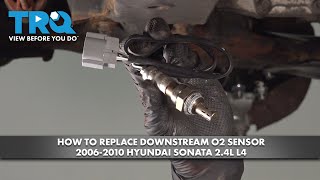
Typical fix: Replace the Bank 1, Sensor 2 oxygen sensor. This requires a special 22mm oxygen sensor socket. 🎬 See this step-by-step guide for replacing the downstream sensor.
Est. part cost: $50-$120 - Damaged Wiring or Connector 🟡 Medium Probability The sensor wiring runs underneath the vehicle near the hot exhaust system. Specifically on the Tucson, the plastic clips holding the wiring harness can become brittle and break, allowing the harness to make contact with the exhaust pipe and melt, causing a short circuit.
How to confirm: Visually inspect the entire wiring harness from the O2 sensor to its connector. Pay close attention to the area above the exhaust pipe for signs of melting, chafing, or broken wires. Unplug the connector and check for corrosion, moisture, or bent pins.
Typical fix: Repair the damaged section of the wiring harness or clean/replace the connector. Secure the harness away from the exhaust with high-temperature zip ties if the original clips are broken.
Est. part cost: $5-$50 - Exhaust System Leak ⚪ Low Probability Rust can cause leaks at exhaust pipe flanges or create pinholes in the pipes. A leak anywhere between the upstream and downstream O2 sensors can allow outside oxygen to enter the exhaust stream, causing incorrect sensor readings and triggering the code.
How to confirm: With the engine running, carefully listen and feel for air escaping from the exhaust system between the engine and the downstream O2 sensor. A shop may use a smoke machine to pinpoint the leak.
Typical fix: Replace the leaking gasket or section of exhaust pipe.
Est. part cost: $20-$200 - Blown O2 Sensor Fuse ⚪ Low Probability A short in the sensor's heater element or its wiring can blow the corresponding fuse, cutting power to the circuit and triggering a malfunction code.
How to confirm: Check the fuse box in the engine compartment. On many Hyundais, the fuse is labeled 'SENSOR 1' or similar. Consult your owner's manual for the exact location and check if the fuse is blown.
Typical fix: Replace the blown fuse. If the new fuse blows immediately, it indicates a short circuit in the wiring or the sensor itself that must be found and repaired.
Est. part cost: $1-$5
Rare But Worth Checking
- Faulty Powertrain Control Module (PCM): This is very uncommon. Before suspecting the PCM, all other possibilities (sensor, wiring, exhaust leaks) must be thoroughly ruled out.
- Burnt PCM/ECM Sensor Driver: Extremely rare, but documented. If the original O2 sensor fails by shorting out, it can damage the driver circuit within the PCM. This results in a persistent P0136 or related code (like P0141) even after replacing the sensor multiple times. Diagnosis involves checking for a proper ground signal at the sensor connector; a floating ground may indicate a bad PCM driver. 🎬 Watch: Real case of persistent codes after multiple sensor replacements. This is an advanced diagnosis and repair that may require professional help.
Diagnosis Steps
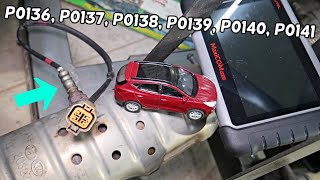
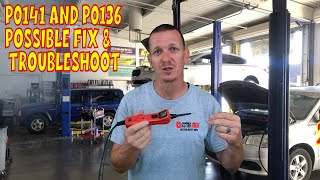
- Read the code with an OBD-II scanner to confirm P0136 is present. 🎬 Watch: Diagnostic overview for Tucson P0136 and related O2 codes.
- Check the fuse for the oxygen sensors in the under-hood fuse box (often labeled 'SENSOR 1' or similar). Replace if blown and re-test.
- Visually inspect the downstream O2 sensor, which is located on the exhaust pipe after the catalytic converter. Check for physical damage.
- Carefully inspect the sensor's wiring harness for any signs of melting, chafing, or breaks. On this vehicle, pay special attention to the area directly above the exhaust pipe.
- Disconnect the sensor and inspect the electrical connector for corrosion, moisture, or damaged pins.
- Use a scan tool to monitor live data for the Bank 1 Sensor 2 voltage. With the engine fully warmed up and held at a steady 2,500 RPM, the voltage should be relatively stable (typically 0.6V-0.8V). If it's stuck near 0V, near 1V, or fluctuating wildly, the sensor is the primary suspect.
- Check for exhaust leaks between the engine and the downstream sensor. Listen for hissing sounds or use a smoke machine for a more definitive test.
- If the sensor and wiring appear good, test the sensor's heater circuit for proper resistance. An internal resistance over 40 Ohms may trigger the code.
- If the code persists after replacing the sensor, perform advanced diagnostics on the wiring harness to check for a proper ground signal from the PCM to rule out a rare burnt PCM driver.
- If all other tests pass, the final, though very rare, possibility is a fault within the Engine Control Module (ECM).
Parts You'll Likely Need
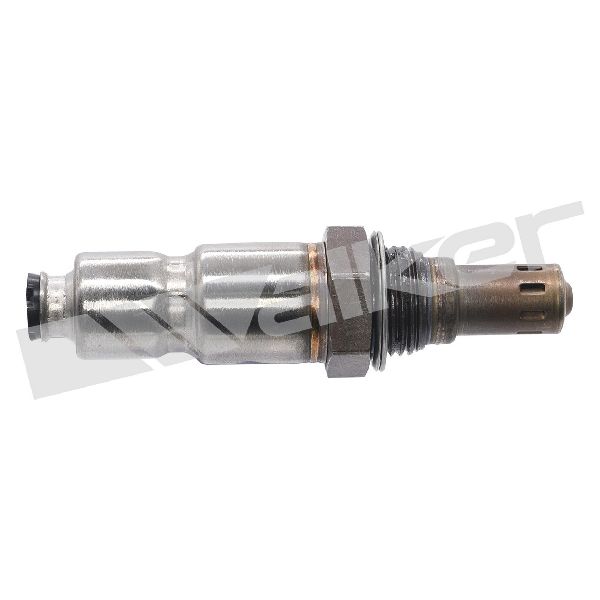
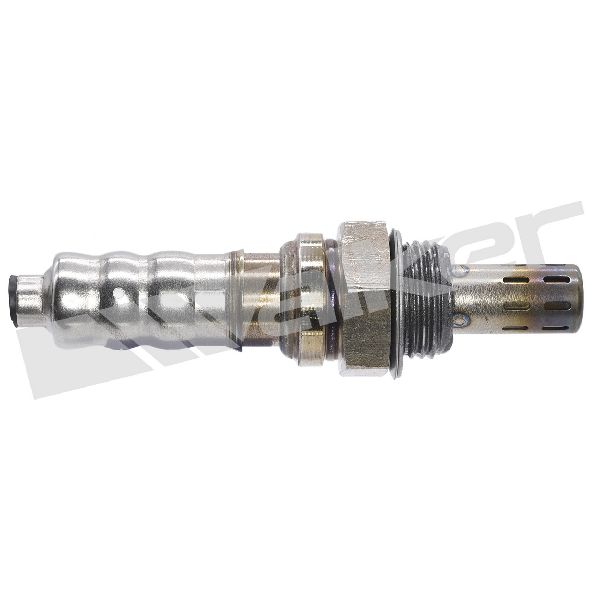
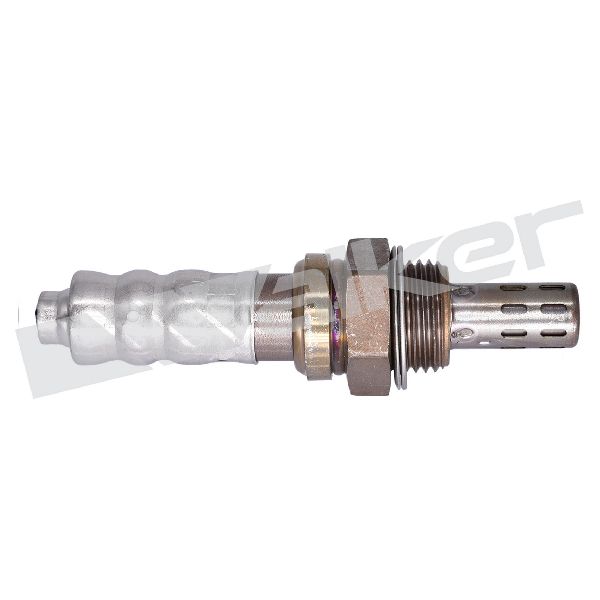
- Downstream Oxygen Sensor (Bank 1, Sensor 2)
(OEM #39210-2G200)— This sensor is the most common point of failure for a P0136 code due to its exposure to high heat and exhaust gases over its service life.
Trusted brands: Denso (OEM quality, part # 234-4238), NGK/NTK, Bosch
OEM price range: $150-$250
Aftermarket price range: $50-$120
Related Codes That Often Appear With This One
- P0036 — This code indicates a fault in the heater circuit of the same O2 sensor. They often appear together when the sensor fails internally.
- P0137 — This code indicates that the sensor circuit voltage is too low, which is a more specific version of the general circuit malfunction indicated by P0136.
- P0138 — This code indicates that the sensor circuit voltage is too high, another specific fault related to the same sensor.
- P0141 — This is another code for the heater circuit performance of the same sensor (Bank 1, Sensor 2). It is very common to see P0136 and P0141 together when the sensor's internal heater fails or there is a wiring issue.
Technical Service Bulletins (TSBs) & Recalls
- No specific Technical Service Bulletins (TSBs) were found for the 2010-2015 Tucson 2.4L that call for a software update to correct P0136. The lack of a TSB reinforces that the root cause is almost always a hardware failure (sensor, wiring, fuse) rather than a PCM logic issue.
Platform-Specific Known Issues
- The wiring harness for the downstream O2 sensor has plastic retaining clips that can become brittle and break. This can cause the harness to fall onto the hot exhaust pipe, melting the wire insulation and leading to a short circuit that triggers P0136 and related codes.
Mechanic-Grade Diagnostic Values
- Downstream O2 Sensor (B1S2) Heater Circuit Resistance — expected: Less than 40 Ω. Failure: A resistance value over 40 Ω can trigger a P0136 code, indicating a fault in the heater element.
- Downstream O2 Sensor (B1S2) Voltage at Steady State — expected: Relatively stable voltage around 0.5V to 0.8V when engine is warm and at steady RPM.. Failure: The ECM may set P0136 if the voltage is stuck in a narrow range of 0.4V to 0.52V for an extended time (e.g., 600 seconds).
- Downstream O2 Sensor (B1S2) Voltage during Deceleration — expected: Voltage should drop to 0.2V or lower when suddenly releasing the accelerator from high RPM (e.g., 4000 RPM) due to fuel cut.. Failure: If the voltage does not drop significantly, it indicates a lazy or non-responsive sensor.
- Downstream O2 Sensor (B1S2) Voltage during Hard Acceleration — expected: Voltage should rise to between 0.6V and 1.0V when the accelerator is suddenly pressed, indicating a rich condition.. Failure: Failure to rise into this range suggests the sensor is not responding correctly to changes in the air-fuel mixture.
Scan Tool Commands That Help
- Hyundai GDS / Hi-Scan Pro or equivalent: Live Data / Data List: 'O2S B1S2' — This is the primary function used to monitor the real-time voltage output of the downstream oxygen sensor. It is essential for confirming if the sensor is stuck, lazy, or biased, as described in the specific diagnostic values.
Wiring & Ground Locations
- PCM (ECM) — Located in the left rear of the engine compartment.. The PCM provides the reference voltage and ground for the O2 sensor and interprets its signal. A fault in the PCM driver circuit can mimic a bad sensor.
- Downstream O2 Sensor Connector — Under the vehicle, connected to the O2 sensor which is installed in the exhaust pipe after the catalytic converter.. This connector and its wiring are exposed to road debris and heat. It's a common point for corrosion, damage, or melting, which directly causes a circuit malfunction.
- Engine/Chassis Ground — Multiple points exist. A key engine ground is often on the left side of the engine block. A common chassis ground point for many Hyundais is G05, located at the left kick panel inside the cabin, or on the strut tower in the engine bay.. A poor ground connection for the PCM or the sensor's heater circuit can introduce electrical noise or voltage drops, leading to incorrect sensor readings and fault codes.
Real Owner Repair Stories
- Racing Garage Automotriz (YouTube) (2014 Hyundai Accent (demonstrates a principle applicable to the Tucson with the same codes)) — Persistent Check Engine Light with codes P0136 and P0141.
❌ Tried (didn't work) Replaced the downstream oxygen sensor three times (including with a used OEM sensor).
✅ What actually fixed it The original O2 sensor had shorted internally, which burned out the ground driver circuit inside the PCM. The PCM was no longer providing a proper ground for the heater circuit. The final fix was to create a new, external ground for the heater circuit wire, bypassing the faulty PCM driver and avoiding a costly PCM replacement.
When the Usual Fixes Don't Work
- In cases where the P0136 code persists after replacing the O2 sensor, the fault is often not the sensor itself. One documented case showed that even after three sensor replacements, the true cause was a burnt ground driver within the PCM, damaged by the initial sensor failure. The fix was not another sensor, but bypassing the faulty PCM driver with an external ground for the heater circuit. This highlights the importance of testing the entire circuit, including the control signals from the PCM, before assuming a replacement part is defective.
OEM Part Supersession History
39210-2G200→N/A, this is the current primary number.— N/A
Heads up: Be aware of other similar part numbers like 39210-2G100 and 39210-2G600. While they may fit other Hyundai/Kia 2.4L engines, 39210-2G200 is the specified part for this application. Also, verify if your vehicle requires a Federal or California (PZEV) emissions-specific sensor, as they can differ.
Model Year Variations Within This Range
- 2014-2015: For the 2014 model year, the 2.4L Theta II engine was updated with Gasoline Direct Injection (GDI), increasing horsepower to 182 (from 176). While the O2 sensor's role is the same, the engine management software and fuel system are different, which could influence diagnostic nuances.
- 2011-2013: Some parts listings specifically mention sensors for 'California emissions' models for these years. It is critical to verify the vehicle's emissions standard (often on a sticker under the hood) before ordering a replacement sensor to ensure compatibility.
Diagnostic Flowchart
Used vs. New Parts: Buying Guide for This Vehicle
When a used part is the smart pick: A used part is generally NOT recommended for this repair. However, if the wiring connector pigtail is melted, sourcing a used pigtail from a junkyard vehicle with a clean harness is a cost-effective and viable repair option instead of replacing a larger, more expensive harness section.
Donor-vehicle mileage cap: roughly under 80000 miles for the part to have meaningful remaining life.
What to inspect on the donor part:
- For a wiring pigtail: check for flexible, non-brittle wire insulation.
- Ensure there are no signs of melting, corrosion, or previous repairs on the donor harness.
- Verify the locking tab on the connector is intact and functional.
OEM-only on this vehicle (don't cheap out):
- Powertrain Control Module (PCM) - Due to the need for VIN-specific programming, an aftermarket or incorrectly matched used PCM will not function.
Aftermarket brands forum-validated for this vehicle:
- Denso
- NGK / NTK
Brands owners have reported issues with on this vehicle:
- Unbranded, 'white-box' sensors from online marketplaces. A case study specifically noted that persistent issues can arise from low-quality Chinese sensors, making diagnosis difficult.
Real Owner Stories
Aggregated from forums and TSBs cited above. Mileages and costs reflect what owners reported in those sources.
2011 Hyundai Tucson 2.4L GDI
Symptoms: The Check Engine Light came on for codes P0136 and P0141.
What fixed it: The plastic clips holding the O2 sensor wiring harness had broken, allowing the wires to rest on the hot exhaust pipe and melt. Repairing the melted section of the harness and securing it with high-temperature zip ties resolved the codes.
Source hint: Auto Repair Guys - 'HYUNDAI TUCSON CODE P0136...'
2013 Hyundai Tucson 2.4L GDI
Symptoms: The P0136 and P0141 codes kept returning immediately, even after replacing the downstream oxygen sensor three separate times.
What fixed it: The root cause was a burnt driver circuit inside the engine computer (PCM). The original sensor had shorted out and damaged the PCM. The issue was only resolved after the PCM was repaired.
Source hint: Racing Garage Automotriz - 'P0136 AND P0141 I CHANGED 3 SENSORS AND THE FAULT CONTINUED'
Related OBD-II Codes
Frequently Asked Questions
Where exactly should I look for the melted wiring harness on my 2010-2015 Tucson?
Is there a recall or software update from Hyundai to fix the P0136 code?
I replaced the O2 sensor but the Check Engine Light with P0136 came back. What's next?
What should the downstream O2 sensor voltage look like on a scan tool for my Tucson?
Does this P0136 information also apply to my 2012 Kia Sportage 2.4L?
My mechanic says the PCM might be bad. Is this a common issue for the P0136 code?
Helpful Videos
Used OEM Parts in Stock
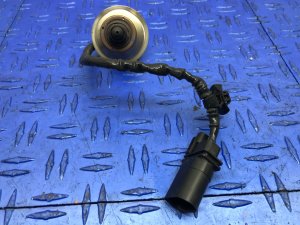
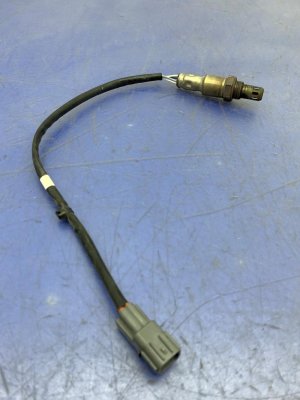
New Aftermarket Parts Available
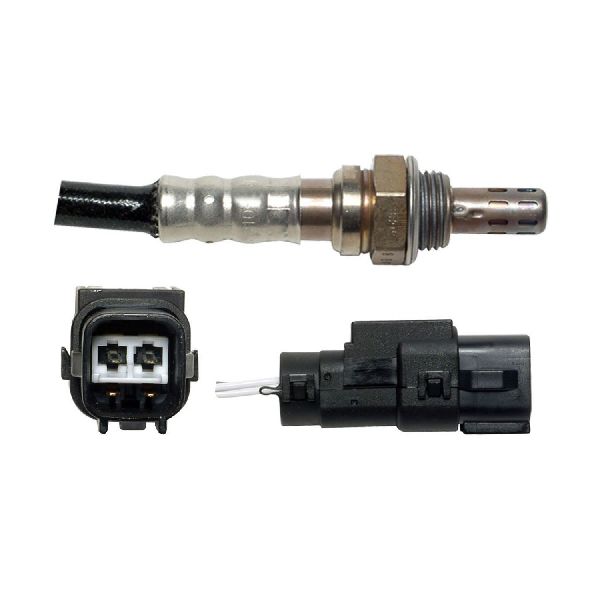

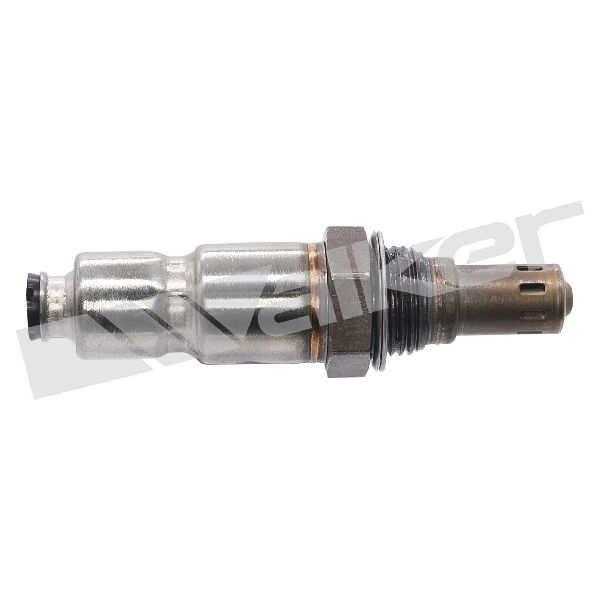

The information in this article is provided for general reference and educational purposes only. Vehicle specifications, procedures, and part compatibility can vary by production date, trim level, and region. Always consult your vehicle's factory service manual and verify part numbers before purchasing or performing repairs. Safety-critical components such as airbags, seat belts, and braking systems should be installed by a qualified professional.
- Hyundai Tucson:
- 🎬 Helpful Videos
- 🛍️ Shop This Part
- What's Unique About the 2010-2015 Hyundai Tucson
- Symptoms You May Notice
- Most Likely Causes
- Rare But Worth Checking
- Diagnosis Steps
- Parts You'll Likely Need
- Related Codes That Often Appear With This One
- Technical Service Bulletins (TSBs) & Recalls
- Platform-Specific Known Issues
- Mechanic-Grade Diagnostic Values
- Scan Tool Commands That Help
- Wiring & Ground Locations
- Real Owner Repair Stories
- When the Usual Fixes Don't Work
- OEM Part Supersession History
- Model Year Variations Within This Range
- Diagnostic Flowchart
- Used vs. New Parts: Buying Guide for This Vehicle
- Real Owner Stories
- 2011 Hyundai Tucson 2.4L GDI
- 2013 Hyundai Tucson 2.4L GDI
- Related OBD-II Codes
- Frequently Asked Questions
- 🎟️ Get 5% Off