

P0136 on 2013-2020 Ford Fusion Hybrid: O2 Sensor Circuit Causes and Fixes
This code indicates a fault with the downstream oxygen sensor (Bank 1, Sensor 2). The most common fix is replacing the sensor itself, which is a straightforward DIY job. Expect to pay $40-$90 for an aftermarket sensor or $60-$120 for an OEM Motorcraft part.
- P0136 almost always points to the downstream O2 sensor (Bank 1, Sensor 2).
- The most likely fix is replacing the sensor itself, which is an accessible DIY repair with a 22mm O2 sensor socket.
- Before buying parts, always perform a quick visual inspection of the sensor's wiring for obvious damage and check the 20A fuse (F8) in the under-hood fuse box.
- If you own a 2017-2019 model and a new sensor doesn't fix a downstream O2 code (especially P013A), the actual cause is likely a software glitch that requires a dealer PCM update per TSB 19-2158.
What's Unique About the 2013-2020 Ford Fusion Hybrid
For the Fusion Hybrid, the P0136 code is typically a straightforward issue with the sensor or its wiring. However, a notable issue for 2017-2019 models is a software glitch that can trigger a similar downstream O2 sensor code (P013A). Ford issued a Technical Service Bulletin (TSB 19-2158) to address this with a PCM software update. While the TSB is for a different code, it highlights that electrical gremlins on this platform aren't always a bad part. One owner on Reddit reported replacing the sensor three times for a P013A code before a dealer PCM update finally fixed the problem. This makes checking for software updates a crucial diagnostic step on these specific model years if a sensor replacement doesn't work.
Symptoms You May Notice
- Check Engine Light is on
- Failing a state emissions inspection
- Slightly reduced fuel economy in some cases
- Replacing the catalytic converter. P0136 points to a sensor circuit issue, not necessarily a bad converter. A failing converter typically sets a P0420 code.
- Replacing the upstream O2 sensor (Sensor 1). The code specifically identifies Sensor 2, which is located after the catalytic converter.
Most Likely Causes
- Failed Downstream Oxygen Sensor 🔴 High Probability Oxygen sensors are wear-and-tear items that fail from constant exposure to high heat and exhaust gases. This is the most frequent cause of P0136.
How to confirm: After ruling out wiring and fuse issues, the most practical step is to replace the sensor. You can also use a scan tool to watch its live data; a faulty sensor will often show a flatline voltage, a signal stuck high or low, or no signal at all.
Typical fix: Replace the Bank 1, Sensor 2 oxygen sensor. This requires a 22mm (or 7/8") O2 sensor so 🎬 See this walkthrough for replacing the downstream sensor on a second-gen Fusion.cket.
Est. part cost: $40-$120 - Wiring or Connector Damage 🟡 Medium Probability The sensor and its wiring are located under the vehicle, exposed to road debris, moisture, and heat, which can lead to corrosion, frayed wires, or a damaged connector. The connector itself is black and located near the back of the engine, accessible from the top of the engine bay.
How to confirm: Visually inspect the wiring harness from the O2 sensor up to its black connector near the firewall. Look for any signs of melting, chafing, corrosion in the connector pins, or breaks in the wire.
Typical fix: Repair the damaged section of the wiring harness or clean/replace the connector. A replacement connector pigtail is available if needed.
Est. part cost: $10-$50 - Exhaust Leak ⚪ Low Probability Rust can cause leaks at exhaust pipe flanges or weld seams. A leak before the O2 sensor can allow outside air in, skewing the sensor's readings and causing it to report an inaccurate voltage.
How to confirm: Listen for a ticking or hissing sound from the exhaust, especially when the engine is cold. You can also visually inspect for black soot marks around exhaust connections, which indicates a leak.
Typical fix: Repair the leak using exhaust putty for small holes or by replacing the leaking section of pipe or gasket.
Est. part cost: $10-$200 - Blown Fuse ⚪ Low Probability
How to confirm: The O2 sensor heater circuit is powered by a fuse, as the sensor needs to heat up to operate correctly. On the Fusion, this is typically fuse F8 (20A) in the under-hood fuse box. Check this fuse to see if it has blown. 🎬 Watch: How to locate the O2 sensor fuse in the engine bay.
Typical fix: Replace the blown fuse. If it blows again immediately, this indicates a short circuit in the heater element of the sensor or its wiring that must be found and repaired.
Est. part cost: $1-$5
Rare But Worth Checking
- Powertrain Control Module (PCM) Software Error: Ford TSB 19-2158 addresses a similar code (P013A) on 2017-2019 models caused by overly sensitive parameters in the PCM software. If you have one of these years and have replaced the sensor without success, a PCM reflash by a dealer might be the solution, as confirmed by owner experiences.
- Internal Engine Issues (Cross-Manufacturer Reference): While rare for the Fusion Hybrid, it is worth noting that on other Ford platforms, a P0136 code has been retrieved alongside codes like P1450 and P0102 in cases where a dealer determined coolant had intruded into the engine block, as described in NHTSA ODI #11539323.
- Faulty Powertrain Control Module (PCM): This is extremely rare. The PCM itself can fail, but this should only be considered after all other possibilities (sensor, wiring, fuses, software) have been exhaustively checked.
Diagnosis Steps
- Retrieve all diagnostic trouble codes (DTCs) with an OBD-II scanner.
- Visually inspect the downstream O2 sensor's wiring harness and its black connector for any signs of damage, melting, or corrosion. The connector is accessible from the top, at the back of the engine bay.
- Inspect the under-hood fuse box and check the fuse for the oxygen sensor heater circuit (typically a 20A fuse in slot F8).
- Check for exhaust leaks between the engine and the downstream O2 sensor. Listen for unusual noises or look for soot trails.
- Using a scan tool with live data capability, monitor the voltage from Bank 1 Sensor 2 ('O2S12'). A healthy downstream sensor should show a relatively stable voltage (e.g., 0.6-0.8V) when the engine is warm and at a steady RPM. If it's stuck at 0V, near 1.0V, or switching rapidly like the upstream sensor, it's likely faulty.
- If the wiring, fuse, and sensor appear good but the code persists (especially on a 2017-2019 model with a related P013A code), investigate TSB 19-2158 and the possibility of a required PCM software update.
- If all other steps fail, replace the downstream oxygen sensor.
Parts You'll Likely Need
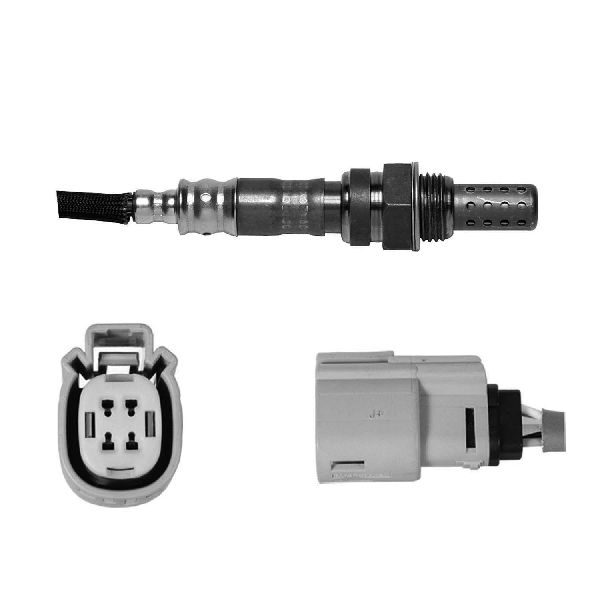
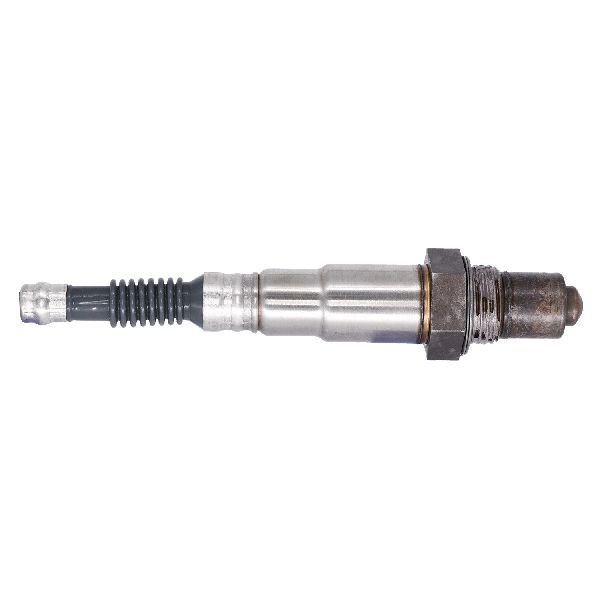
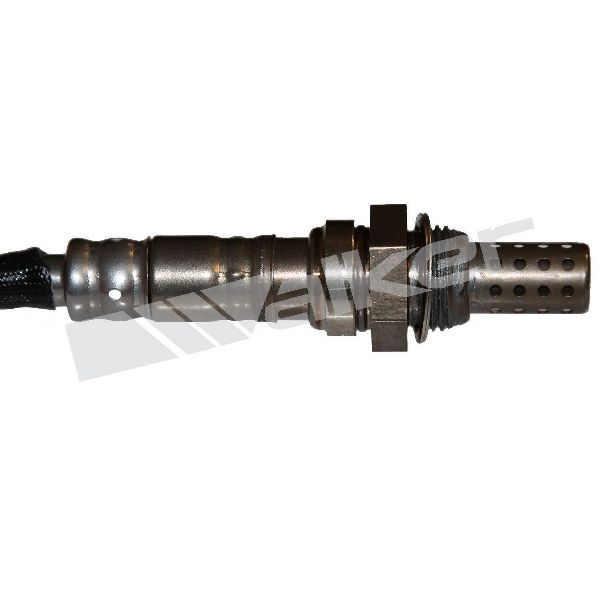
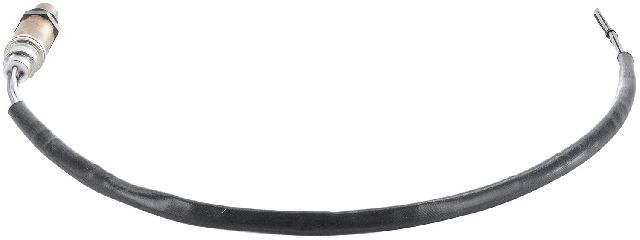
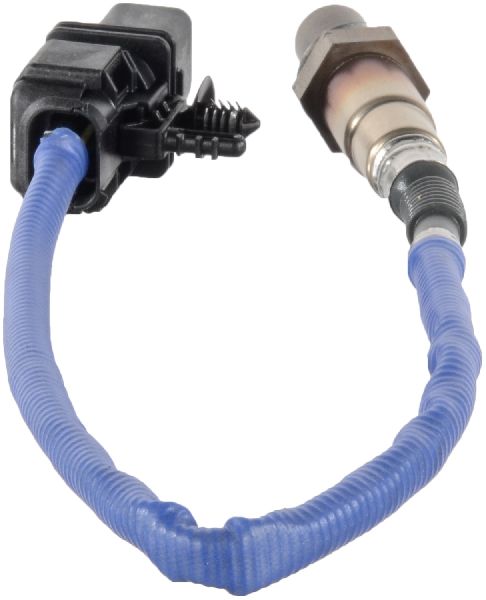
- Downstream Oxygen Sensor (Bank 1, Sensor 2)
(OEM #CJ5Z-9G444-B)— This is the most common failure point for a P0136 code. The sensor is a wear item. Part number CJ5Z-9G444-B is specified for this downstream location. Note: HS7Z-9G444-B is a different sensor and not an updated version of this part.
Trusted brands: Motorcraft (OEM), Denso, NTK, Bosch
OEM price range: $60-$120
Aftermarket price range: $40-$90
Related Codes That Often Appear With This One
- P0141 (O2 Sensor Heater Circuit Malfunction Bank 1, Sensor 2): This code is for the heater element inside the same physical sensor and often appears with P0136 if the sensor has an internal failure.
Technical Service Bulletins (TSBs) & Recalls
- 19-2158 - Illuminated MIL With DTC P013A - Built On Or Before 27-Jan-2019
- 19-2065 - Superseded by 19-2158, initial version of the P013A software issue TSB.
Platform-Specific Known Issues
- TSB 19-2158: While for code P013A, it affects 2017-2019 Fusion Hybrid models and indicates that the PCM may require a software update to correct false O2 sensor codes. This should be considered if a new sensor doesn't fix the issue on these specific years.
- Connector Location: The downstream sensor's connector is located at the top rear of the engine bay, making it accessible without lifting the vehicle, even though the sensor itself is underneath.
Mechanic-Grade Diagnostic Values
- Downstream O2 Sensor (HO2S12) Voltage - Live Data — expected: A relatively steady voltage fluctuating slowly between 0.45V and 0.8V on a warm engine.. Failure: Voltage is stuck low (e.g., <0.2V), stuck high (e.g., >0.9V), flatlined, or switching rapidly like an upstream sensor.
- O2 Sensor Heater Element Resistance — expected: Typically between 2 and 20 Ohms when measured across the two same-colored heater circuit pins on a cold sensor.. Failure: An infinite resistance (Open Loop/OL) or zero resistance (short) reading on a multimeter indicates a failed heater element.
- PCM O2 Signal Bias Voltage (Sensor Unplugged) — expected: On many Ford systems, unplugging the O2 sensor should result in a bias voltage of around 0.45V to 0.5V on the signal wire from the PCM, read by a scan tool.. Failure: A reading of 0V or a significantly different voltage could indicate a problem with the PCM or the wiring harness.
- O2 Sensor Signal Circuit Resistance (Harness) — expected: Less than 5 ohms from the sensor connector to the corresponding pin at the PCM.. Failure: Resistance values above 5 ohms suggest corrosion or a damaged wire in the harness.
Scan Tool Commands That Help
- Forscan: Live Data PID 'O2S12' — Use this to monitor the real-time voltage of the downstream O2 sensor. A healthy sensor will show a stable voltage (e.g., ~0.7V) on a warm engine at steady RPM, while a faulty one may be stuck high, low, or show no activity.
- Forscan: KOER (Key On Engine Running) Self-Test — This on-demand test runs a series of checks on various systems, including the oxygen sensor circuits. It can help confirm if the fault is currently active after a repair or during diagnosis.
Wiring & Ground Locations
- G105 — Right side of the engine compartment.. This is a primary engine bay ground point. A corroded or loose G105 can cause various sensor errors, including erratic O2 sensor readings due to an unstable ground reference for the sensor's heater circuit or signal.
- G100 / G101 / G102 — Left front of the engine compartment.. These are additional major ground points in the engine bay. While G105 is more likely, issues at these locations can also contribute to electrical noise and sensor faults. They should be checked for corrosion and tightness if electrical issues are suspected.
- Negative Jump Start Post — A specific metal post or stud near the under-hood fuse box.. While not a direct ground for the O2 sensor, this is a designated main chassis ground connection point accessible from the top of the engine bay. Its condition is a good indicator of the overall health of the chassis ground system. It can be used as a known-good ground point for multimeter testing of sensor circuits.
Real Owner Repair Stories
- Reddit r/fordfusion user (2018 Ford Fusion SE Hybrid) — Check Engine Light with an O2 sensor fault code.
❌ Tried (didn't work) Replacing the sensor with a cheap aftermarket part from Amazon.
✅ What actually fixed it The code returned shortly after replacing the sensor with a cheap one. The issue was permanently resolved by replacing it again with a high-quality brand (Bosch).
Model Year Variations Within This Range
- 2017-2020: The Ford Fusion received a mid-cycle refresh for the 2017 model year, which included revised front and rear styling and some interior updates. While the 2.0L Hybrid powertrain remained fundamentally the same, this is the period where software-related O2 sensor issues (like TSB 19-2158 for code P013A) have been documented, primarily affecting 2017-2019 models.
Diagnostic Flowchart
Other Known Issues on This Vehicle
Issues unrelated to this code that are worth knowing about as an owner of this generation:
- HF35 Transmission Grinding/Thumping Noise 🔴 High — Common enough to warrant multiple TSBs, primarily affecting 2013-2016 models built before August 15, 2015. The noise occurs while the vehicle is in motion, even in neutral. (Ref: TSB 22-2396, TSB 19-2391, TSB 17-0039)
- Electronic Throttle Body (ETB) Failure 🔴 High — A widespread issue across many Ford models of this era, causing sudden loss of power and the vehicle entering 'limp mode'. This is often due to internal electronic contamination. (Ref: Customer Satisfaction Program 16B32 (expired Sept 30, 2017) was issued for some 2016 models, but the issue is known to affect other years as well.)
- Electronic Power Assisted Steering (EPAS) Failure 🔴 High — Owners report sudden loss of power steering, sometimes intermittent, accompanied by a 'Service Power Steering Now' warning. This can be a costly repair, often requiring replacement of the entire steering rack. (Ref: Recall 15S18 was issued for 2011-2013 models for a steering motor sensor fault, but issues are reported on other years as well. A small recall also affected 23 specific 2013 Fusions for a missing clip in the steering gear.)
- Degradation of High-Voltage Battery 🟠 Medium — As the vehicles age, the high-voltage hybrid battery capacity can degrade, leading to reduced fuel economy and eventual replacement costs. Some owners also report issues with the 12V battery dying prematurely. (Ref: Recall 20V336000 for 2019-2020 Fusion PHEV models due to a separate Battery Energy Control Module (BECM) issue that could cause power loss or fire.)
Used vs. New Parts: Buying Guide for This Vehicle
When a used part is the smart pick: For this repair, buying a used oxygen sensor is NOT recommended. O2 sensors are wear-and-tear components with a finite lifespan, similar to spark plugs or brake pads. A used sensor from a junkyard has unknown remaining life and may fail shortly after installation, wasting time and money.
What to inspect on the donor part:
- Not applicable as used purchase is not recommended.
OEM-only on this vehicle (don't cheap out):
- While not strictly 'OEM-only', using a Motorcraft sensor is the safest bet to avoid compatibility issues. If going aftermarket, sticking to well-known OEM suppliers is critical.
Aftermarket brands forum-validated for this vehicle:
- Bosch
- Denso
- NTK (part of NGK)
Brands owners have reported issues with on this vehicle:
- Generic, unbranded 'economy' sensors from online marketplaces. Owners report these can be dead-on-arrival or fail very quickly, causing the code to return.
Real Owner Stories
Aggregated from forums and TSBs cited above. Mileages and costs reflect what owners reported in those sources.
2018 Ford Fusion Hybrid 2.0L
Symptoms: Recurring P013A code (related to downstream O2 sensor performance) and illuminated MIL. The owner replaced the downstream O2 sensor three times, but the code kept returning.
What fixed it: A dealership performed a PCM software update as specified in TSB 19-2158.
Source hint: Reddit r/fordfusion - User confirms TSB 19-2158 fix for P013A
Documented NHTSA Reports
Ford Platform Diagnostic Report
Symptoms: An owner reported the check engine light illuminated with multiple DTC codes retrieved, including P0756, P1450, P0136, and P0102 (NHTSA ODI #11539323).
What fixed it: In this specific instance on a related Ford platform, the dealer determined that coolant had intruded into the engine block, necessitating an engine replacement.
Related OBD-II Codes
Frequently Asked Questions
Does TSB 19-2158 apply to my 2018 Ford Fusion Hybrid if I have O2 sensor codes?
Where is the downstream oxygen sensor connector located on the Fusion Hybrid?
Which fuse should I check for a P0136 code on my Fusion Hybrid?
Can I use parts from a Lincoln MKZ Hybrid to fix my Ford Fusion Hybrid's O2 sensor issue?
What tool do I need to replace the Bank 1, Sensor 2 oxygen sensor?
Is there a software update for O2 sensor codes on the Ford C-MAX Hybrid as well?
Helpful Videos
We Have This Part in Stock

The information in this article is provided for general reference and educational purposes only. Vehicle specifications, procedures, and part compatibility can vary by production date, trim level, and region. Always consult your vehicle's factory service manual and verify part numbers before purchasing or performing repairs. Safety-critical components such as airbags, seat belts, and braking systems should be installed by a qualified professional.
- Ford Fusion Hybrid:
- 🎬 Helpful Videos
- 🛍️ Shop This Part
- What's Unique About the 2013-2020 Ford Fusion Hybrid
- Symptoms You May Notice
- Most Likely Causes
- Rare But Worth Checking
- Diagnosis Steps
- Parts You'll Likely Need
- Related Codes That Often Appear With This One
- Technical Service Bulletins (TSBs) & Recalls
- Platform-Specific Known Issues
- Mechanic-Grade Diagnostic Values
- Scan Tool Commands That Help
- Wiring & Ground Locations
- Real Owner Repair Stories
- Model Year Variations Within This Range
- Diagnostic Flowchart
- Other Known Issues on This Vehicle
- Used vs. New Parts: Buying Guide for This Vehicle
- Real Owner Stories
- 2018 Ford Fusion Hybrid 2.0L
- Documented NHTSA Reports
- Ford Platform Diagnostic Report
- Related OBD-II Codes
- Frequently Asked Questions
- 🎟️ Get 5% Off