

P0136 on 2012-2020 Chevrolet Sonic: O2 Sensor Circuit Causes and Fixes
On a 2012-2020 Chevrolet Sonic, code P0136 almost always points to a failed downstream oxygen sensor (Bank 1, Sensor 2). This sensor is located under the car, after the catalytic converter. Replacing it is a common DIY fix, with an aftermarket part costing around $40-$70. Before replacing, it's wise to inspect the wiring for any visible damage, as its under-car location makes it vulnerable.
- P0136 on your Sonic means there's a problem with the downstream oxygen sensor circuit.
- The most likely fix is to replace the downstream (Bank 1, Sensor 2) oxygen sensor.
- Before buying parts, perform a quick visual inspection of the sensor's wiring underneath the car for any obvious damage like cuts or melting.
- This is a DIY-friendly repair for most people with basic tools and an O2 sensor socket; no programming is required.
- Do not ignore this code, as it will cause you to fail an emissions test and can mask more serious problems like a failing catalytic converter.
What's Unique About the 2012-2020 Chevrolet Sonic
For the Chevrolet Sonic, whether equipped with the 1.8L or 1.4L Turbo engine, the P0136 code is a straightforward issue without major platform-specific quirks. Unlike some other GM vehicles where oil consumption is a primary driver of O2 sensor failure, on the Sonic, it's typically just a standard case of the sensor reaching the end of its service life. The diagnosis is generally not complicated by other systemic engine problems, although on 1.4L turbo models, a severe PCV system failure can lead to increased oil consumption which may eventually contaminate O2 sensors. However, this usually presents with other codes like P0171 first.
Symptoms You May Notice
- Check Engine Light is on
- Decreased fuel economy
- Rough or unstable idle
- Failing a state emissions test
- Black smoke from exhaust in some cases
- Replacing the upstream (Sensor 1) oxygen sensor. The code P0136 specifically refers to Sensor 2, which is located after the catalytic converter. The two sensors are not the same and are not interchangeable.
- Immediately replacing the catalytic converter. P0136 points to a fault in the sensor circuit, not necessarily the converter's efficiency. A bad converter usually sets a P0420 code.
Most Likely Causes
- Failed Downstream Oxygen Sensor (Bank 1, Sensor 2) 🔴 High Probability Oxygen sensors are wear-and-tear items that have a finite lifespan and fail from exposure to hot exhaust gases over many miles. This is the most common cause, with some estimates suggesting it accounts for 80% of P0136 cases.
How to confirm: After visually inspecting the wiring, this is the most likely cause. A scan tool can monitor the sensor's voltage; a Sensor 2 that is stuck at a specific voltage, shows a very low reading (near 0.1V), or doesn't fluctuate as expected is likely bad. Given the low cost, many DIYers opt to replace it as the first step after a visual check.
Typical fix: Replace the Bank 1 Sensor 2 oxygen sensor. It is located underneath the vehicle, screwed into the exhaust pipe after the catalytic converter. A 22mm or 7/8" O2 sensor socket is required.
Est. part cost: $40-$120 - Damaged Wiring or Connector 🟡 Medium Probability The sensor and its wiring are located under the car, exposed to road debris, water, and heat from the exhaust, which can cause physical damage, melting, or corrosion over time. Wires can be cut or frayed.
How to confirm: Visually inspect the entire length of the wiring harness from the O2 sensor to its connection point. Look for any breaks, melted sections, chafing, or corrosion on the connector pins. A multimeter can be used to check for continuity and proper voltage at the connector if a wiring diagram is available.
Typical fix: Repair the damaged section of wire or clean/replace the connector. Ensure the repaired wiring is secured away from the hot exhaust pipe or moving axle components.
Est. part cost: $5-$50 - Exhaust System Leak ⚪ Low Probability Rust can cause leaks at pipe seams or flanges. A leak before the downstream sensor allows outside air into the exhaust stream, which skews the sensor's readings and can trigger the code.
How to confirm: Listen for hissing or ticking noises from the exhaust, especially when the engine is cold. A visual inspection may reveal rust holes or broken flange gaskets near the O2 sensor. A shop can perform a smoke test to pinpoint the leak.
Typical fix: Repair the leak by replacing the gasket, applying exhaust putty for small holes, or welding the damaged section of the exhaust pipe.
Est. part cost: $10-$200
Rare But Worth Checking
- Faulty Engine Control Module (ECM): This is extremely rare. The ECM should only be considered after all other possibilities (sensor, wiring, exhaust leaks) have been completely ruled out by thorough testing.
- Failing Catalytic Converter: While a failing catalytic converter typically triggers code P0420, it can sometimes cause erratic readings from the downstream O2 sensor, leading to a P0136 code as well. This is less common, and P0136 usually points to the sensor circuit itself.
Diagnosis Steps
- Read the Code: Confirm P0136 is the active code using an OBD-II scanner.
- Visual Inspection: Safely raise the vehicle and secure it on jack stands. Visually inspect the downstream O2 sensor (after the catalytic converter) and its wiring harness. Look for obvious signs of damage, such as burnt or broken wires, chafing against the chassis or axle, or a corroded connector.
- Check for Exhaust Leaks: With the engine running (and cool enough to be safe), carefully check for any leaks in the exhaust system between the engine and the downstream O2 sensor. Listen for unusual noises and feel for escaping air.
- Check Sensor Voltage (Requires scan tool): Use a scan tool with live data capability to monitor the voltage of 'O2S B1S2'. A healthy downstream sensor on a warm, running engine should show a relatively stable voltage, typically between 0.5V and 0.8V. If the voltage is stuck low (near 0.1V), stuck high (near 0.9V), or is not reading at all, the sensor has likely failed.
- Test the Circuit (Optional, requires multimeter): If you suspect a wiring issue, disconnect the sensor and check for proper voltage and ground at the connector. This requires a vehicle-specific wiring diagram.
- Replace the Sensor: If the wiring and connector appear intact and there are no exhaust leaks, the most probable cause is a faulty O2 sensor. Replace it. No special programming is needed after installation.
Parts You'll Likely Need
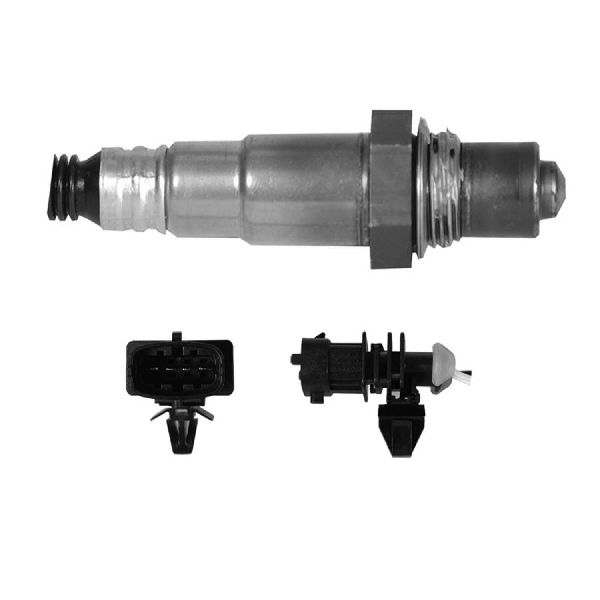
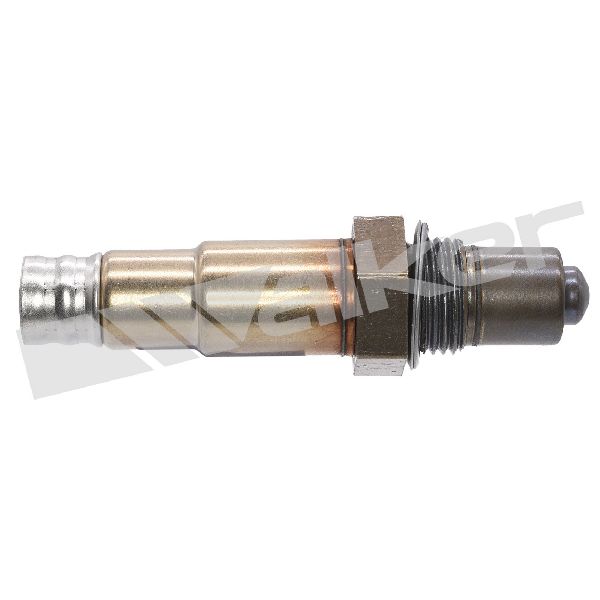
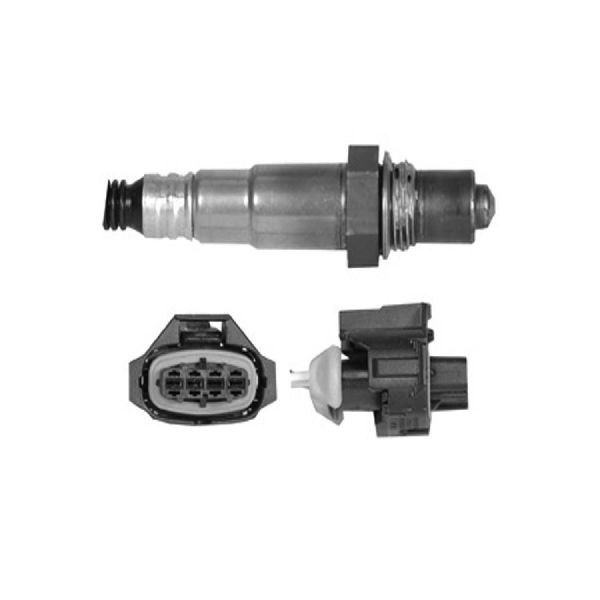
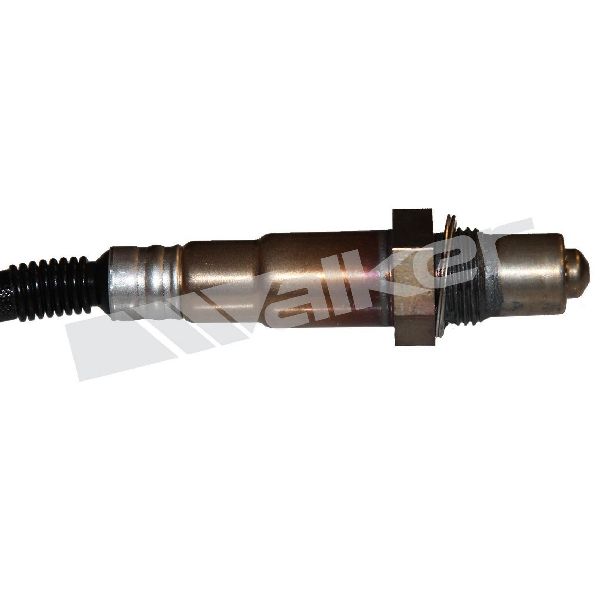
- Downstream Oxygen Sensor (Bank 1, Sensor 2)
(OEM #55562205)— This is the component that the P0136 code directly monitors. It is a wear item and the most common point of failure for this code. Part number 55562205 is listed for many Sonic, Cruze, and Trax applications. Another ACDelco cross-reference is 213-4532.
Trusted brands: ACDelco, Denso, NGK, Bosch
OEM price range: $75-$120
Aftermarket price range: $40-$70
Related Codes That Often Appear With This One
- P0137 — Indicates O2 Sensor Circuit Low Voltage, which is a more specific version of the general circuit malfunction.
- P0138 — Indicates O2 Sensor Circuit High Voltage, another specific fault within the same sensor circuit.
- P0141 — Indicates a failure in the heater circuit of the same Bank 1 Sensor 2. The heater helps the sensor get to operating temperature quickly. A failed heater often leads to replacing the entire sensor assembly.
- P0420 — This code means 'Catalyst System Efficiency Below Threshold'. Since Sensor 2's job is to monitor the catalyst, a failing catalyst can cause erratic readings from Sensor 2, sometimes triggering P0136 as well. However, P0136 is more often the sensor itself, while P0420 points more directly to the converter.
Platform-Specific Known Issues
- DIY-Friendly Replacement: Multiple owners on forums and in videos confirm that replacing the downstream O2 sensor is a straightforward job. A user on Reddit's r/ChevySonic confirmed no programming is needed after replacement, just installation. A video from TRQ shows the process takes only a few steps with basic tools plus an O2 sensor socket.
- Part Number Confusion: While 55562205 is a widely cited part number for the rear O2 sensor, some parts suppliers list it as a *front* sensor for other GM vehicles with similar engines (like Vauxhall Astra). It's critical to verify the part fitment for your specific Sonic year and engine (1.4L or 1.8L) using your VIN before purchasing.
Mechanic-Grade Diagnostic Values
- Downstream O2 Sensor (B1S2) Voltage - Live Data — expected: Relatively stable voltage between 0.5V and 0.8V on a warm, running engine at steady RPM.. Failure: Voltage is stuck low (near 0.1V), stuck high (near 0.9V), does not fluctuate, or shows no reading.
- O2 Sensor Heater Circuit Resistance — expected: Between 5 and 14 ohms when measured across the heater circuit pins on a disconnected sensor.. Failure: A reading significantly outside this range, or an open circuit (infinite resistance), indicates a failed internal heater element.
- Torque Specification for O2 Sensor — expected: 31 ft-lbs (42 Nm). Failure: Under-torquing can lead to exhaust leaks; over-torquing can damage the sensor or exhaust threads.
Scan Tool Commands That Help
- GDS2 / Tech2: A/F Control Active Test — This function allows a technician to command the fuel mixture to be rich or lean. By observing the downstream O2 sensor's reaction, a technician can determine if the sensor is responding correctly to changes in exhaust oxygen content, helping to differentiate a lazy or dead sensor from other circuit issues.
Wiring & Ground Locations
- ECM/PCM Location — In the engine bay, mounted to the front of the vehicle, just behind the grille/radiator area. It has three large multi-pin connectors.. The ECM is the computer that receives the signal from the O2 sensor. While rare to fail, knowing its location is necessary for advanced circuit testing at the connector pins.
- G104 / G105 — G104 is on the lower right rear of the engine. G105 is located on the frame rail under the battery tray.. These are major engine and chassis ground points. A loose or corroded ground at these locations can cause a host of intermittent electrical issues and fault codes, including O2 sensor circuit codes. GM issued a TSB (PIC5574A) for the 2012 Sonic regarding checking these grounds for looseness or poor connection.
- Downstream O2 Sensor Connector — Located behind the oil pan, on the back of the engine.. This is the primary connection point to inspect for corrosion, damage, or looseness when diagnosing a P0136 circuit code.
Real Owner Repair Stories
- Reddit user ColJake in r/ChevySonic (2014 Chevrolet Sonic 1.4T) — Oil leaks and unspecified trouble codes after a PCV failure.
❌ Tried (didn't work) Intake manifold swap
✅ What actually fixed it Replacing a bad check valve in the PCV tube going to the turbo finally cleared the codes. The user also had to replace the valve cover and a front crankshaft seal to stop all oil leaks caused by the PCV issue.
OEM Part Supersession History
55562205→25198484— Standard part number update by GM.
Heads up: While 55562205 is widely listed for the Sonic, it's also listed for other GM vehicles in different positions (e.g., Position 1). Always verify fitment with a VIN, as the physical connector and wire length are critical.
Model Year Variations Within This Range
- 2012-2016 (Primarily 1.4L Turbo): The early 1.4L Turbo engines are particularly known for PCV system failures, including a diaphragm in the valve cover and a check valve in the intake manifold. While P0136 is not a direct code for this, the resulting oil consumption can lead to O2 sensor failure. Later models may have revised parts.
Diagnostic Flowchart
Other Known Issues on This Vehicle
Issues unrelated to this code that are worth knowing about as an owner of this generation:
- 1.4L Turbo PCV System Failure 🔴 High — Very common. A check valve in the intake manifold fails, causing the valve cover diaphragm to rupture. Leads to a loud hiss, rough idle, and P0171 code. (Ref: GM Special Coverage Adjustment 14882 for the valve cover on some models.)
- Plastic Coolant Outlet / Thermostat Housing Leak 🔴 High — Extremely common on both 1.4L and 1.8L engines. The plastic housing cracks from heat cycles, causing coolant leaks. Upgrading to an aluminum replacement is a popular fix.
- 1.4L Water Pump Leak 🟠 Medium — Common on earlier models (2012-2014). The pump leaks from its seal or weep hole. (Ref: TSB 14371B / Special Coverage for 10 years/150,000 miles.)
- 1.8L Intake Manifold Runner Control Arm Failure 🟠 Medium — The small plastic arm that operates the tuning valve becomes brittle and breaks, often causing a P2076 code.
- Cracked Intake Manifold (1.4L & 1.8L) 🟡 Low — Less common than other issues, but the plastic manifold can develop cracks at the seams, causing vacuum leaks and oily residue on the engine.
- 1.8L Timing Belt Replacement 🔴 High — This is a required maintenance item, not a failure. The belt must be replaced at the service interval (around 97,500 miles) to prevent catastrophic engine failure.
Used vs. New Parts: Buying Guide for This Vehicle
When a used part is the smart pick: For this repair, buying used parts is not recommended. The primary failure part is the oxygen sensor itself, which is a wear-and-tear item with a finite lifespan. A used sensor from a junkyard has unknown remaining life and could fail shortly after installation.
What to inspect on the donor part:
- Not applicable as used sensors are not advised.
Aftermarket brands forum-validated for this vehicle:
- ACDelco (OEM supplier)
- Denso
- NGK/NTK
- Bosch
Brands owners have reported issues with on this vehicle:
- No-name or unbranded sensors from online marketplaces are frequently cited on forums as being unreliable or failing prematurely.
Real Owner Stories
Aggregated from forums and TSBs cited above. Mileages and costs reflect what owners reported in those sources.
Chevrolet Sonic
Symptoms: Owner confirmed the downstream O2 sensor needed replacement and sought advice on whether DIY replacement required software updates.
What fixed it: DIY replacement of the downstream O2 sensor; confirmed no programming was needed after installation.
Source hint: Reddit r/ChevySonic thread titled 'DIY O2 sensor replacement'
Chevrolet Sonic
Symptoms: The process was described as a straightforward job involving a few steps with basic tools and an O2 sensor socket.
What fixed it: Replacement of the downstream oxygen sensor.
Source hint: Video from TRQ
Related OBD-II Codes
Frequently Asked Questions
Is there a specific part number I should use for the rear O2 sensor on my Sonic?
Does the P0136 code on a Chevrolet Sonic require any special programming after replacing the sensor?
Could my Sonic's rough idle and P0136 be related to the PCV system?
What tools do I need to fix P0136 on my Sonic?
Is the P0136 code common on other similar Chevrolet models?
Can a leak in my exhaust cause this code to trigger?
We Have This Part in Stock



The information in this article is provided for general reference and educational purposes only. Vehicle specifications, procedures, and part compatibility can vary by production date, trim level, and region. Always consult your vehicle's factory service manual and verify part numbers before purchasing or performing repairs. Safety-critical components such as airbags, seat belts, and braking systems should be installed by a qualified professional.
- Chevrolet Sonic:
- 🛍️ Shop This Part
- What's Unique About the 2012-2020 Chevrolet Sonic
- Symptoms You May Notice
- Most Likely Causes
- Rare But Worth Checking
- Diagnosis Steps
- Parts You'll Likely Need
- Related Codes That Often Appear With This One
- Platform-Specific Known Issues
- Mechanic-Grade Diagnostic Values
- Scan Tool Commands That Help
- Wiring & Ground Locations
- Real Owner Repair Stories
- OEM Part Supersession History
- Model Year Variations Within This Range
- Diagnostic Flowchart
- Other Known Issues on This Vehicle
- Used vs. New Parts: Buying Guide for This Vehicle
- Real Owner Stories
- Chevrolet Sonic
- Chevrolet Sonic
- Related OBD-II Codes
- Frequently Asked Questions
- 🎟️ Get 5% Off