

P0135 on 2007-2018 Jeep Wrangler: O2 Sensor Heater Circuit Causes and Fixes
On a 2007-2018 Jeep Wrangler, code P0135 is most often caused by a failed upstream oxygen sensor on the passenger side (Bank 1, Sensor 1). Before replacing the sensor, inspect its wiring for melting near the exhaust and check the shared G104 ground on the passenger side of the engine block. A quality NTK or Denso sensor costs about $50-$90, and replacement is a DIY-friendly job.
- P0135 almost always points to the upstream O2 sensor on the passenger side (Bank 1).
- Before replacing the sensor, ALWAYS inspect the wiring for melting and check the G104 ground on the engine block for corrosion.
- Only use NTK or Denso brand replacement sensors to avoid further issues; other brands are known to be problematic on the JK Wrangler.
- If you get P0135 and P0155 (Bank 2) at the same time, the problem is very likely a shared fuse or the G104 ground, not both sensors failing simultaneously.
- The repair is straightforward for a DIYer with the right tool (an O2 sensor socket) and involves removing the inner fender liner for better access.
What's Unique About the 2007-2018 Jeep Wrangler

For the Jeep Wrangler JK, this code applies to two different engines: the 3.8L V6 (2007-2011) and the 3.6L Pentastar V6 (2012-2018). While the code's meaning is identical, the sensor part numbers differ. Wranglers are uniquely susceptible to wiring damage from off-road use, and the harness is routed close to the hot exhaust manifold. This platform also has a well-documented issue with a specific engine ground point (G104) that provides the ground for the O2 sensor heaters and can cause this code when corroded. It is also critical to use only NTK or Denso brand sensors, as the JK's PCM is notoriously sensitive to the heater circuit resistance of other brands, often causing the code to return immediately.
Generation note: This range covers the entire Jeep Wrangler JK generation (2007-2018). However, it includes two different engines: the 3.8L EGH V6 (2007-2011) and the 3.6L Pentastar V6 (2012-2018). For both engines, 'Bank 1' is the passenger side of the engine. The function of the code is identical, but the specific O2 sensor part numbers and their physical locations will differ slightly.
Symptoms You May Notice
- Check Engine Light illuminated
- Reduced fuel economy
- Failing a vehicle emissions test
- Rough or poor engine performance, especially during warm-up
- Hesitation on acceleration
- Replacing the O2 sensor without first checking for wiring damage, a bad ground at G104, or a blown fuse.
- Installing a Bosch or other non-NTK/Denso brand oxygen sensor, which often leads to the code returning or new codes appearing due to mismatched heater resistance.
- Accidentally swapping the Bank 1 and Bank 2 upstream sensor connectors during a repair. This is a common mistake that will cause P0135 and P0155 to appear together.
Most Likely Causes

- Failed Bank 1, Sensor 1 Oxygen Sensor 🔴 High Probability Oxygen sensors are wear-and-tear items operating in a harsh exhaust environment. The internal heater element is often the first part to fail, creating an open or short in the circuit.
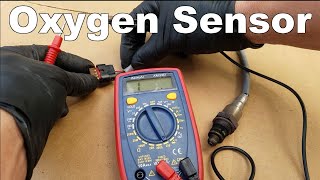
How to confirm: With the engine off, disconnect the sensor and measure the resistance between the two heater circuit pins (usually the two same-colored wires, e.g., white) using a multimeter. A good heater circuit typically has a resistance between 2 and 20 ohms, with many sources specifying a tighter range of 4-10 ohms. An open circuit (infinite resistance) or a dead short (near zero resistance) confirms the heater has failed.
Typical fix: Replace the Bank 1, Sensor 1 (upstream, passenger side) oxygen sensor. Torque the new sensor to approximately 30 ft-lb. It is strongly 🎬 See this walkthrough for replacing a JK Wrangler oxygen sensor. recommended to use an NTK or Denso brand sensor to avoid compatibility issues.
Est. part cost: $50 - $90 - Damaged O2 Sensor Wiring or Connector 🟡 Medium Probability The sensor wiring is routed close to the hot exhaust manifold, making it highly susceptible to melting or chafing. Off-road use can also lead to physical damage to the harness from debris, rocks, or suspension flexing.
How to confirm: Visually inspect the entire wiring harness from the O2 sensor's pigtail up to the main engine harness connector. Look for any signs of melting, chafing, broken wires, or corrosion in the connector pins. Pay special attention to the area where the harness passes the exhaust manifold.
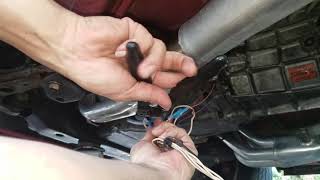
Typical fix: Repair the damaged section of the wire using solder and heat-shrink tubing. Protect the repaired area with high-temperature wire loom. If the 🎬 Watch: How to properly repair damaged oxygen sensor wiring. connector is damaged, it will need to be replaced.
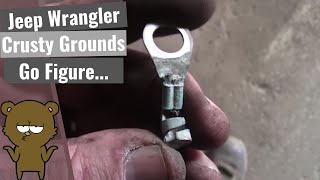
Est. part cost: $5 - $30 - Corroded or Failed G104 Ground 🟡 Medium Probability The G104 ground point, located on the passenger side of the engine block, serves as the shared ground for the O2 sensor heaters. It is a known failure point on JK Wranglers, prone to corrosion and loosening, which creates 🎬 Watch: How to find and clean a bad Jeep ground. high resistance and triggers heater codes.
How to confirm: Locate the G104 ground on the passenger side of the engine block, near the motor mount. Check for a solid ground connection at the O2 sensor's harness connector using a multimeter (check for continuity to the battery negative terminal). If ground is missing or has high resistance, inspect the G104 connection for corrosion or breakage.
Typical fix: Remove the ground bolt, clean the connection point on the block and the wire terminal eyelet with a wire brush until they are bright metal. Apply dielectric grease and securely re-fasten the bolt. If the wire or terminal is broken, it must be repaired or replaced.
Est. part cost: $0 - $15 - Blown Fuse ⚪ Low Probability
How to confirm: Check the fuse box (Totally Integrated Power Module or TIPM) under the hood. The fuse for the O2 sensor heaters is typically a 15A or 20A fuse, often labeled M28 or similar. If other O2 heater codes (like P0155, P0141, P0161) are present, a blown fuse is more likely.
Typical fix: Replace the blown fuse. If it blows again immediately, this indicates a short circuit in the wiring (likely a melted wire touching the exhaust or engine block) that must be found and repaired.
Est. part cost: $1 - $5
Rare But Worth Checking
- Faulty Thermostat: A thermostat that is stuck open or is the incorrect (lower) temperature rating can cause the engine to warm up too slowly. The PCM monitors warm-up time and may interpret this as a failure of the O2 heater circuit, triggering a P0135 code. One owner on Jeepz.com chased P0135 and P0155 for a year, replacing sensors multiple times, before discovering the actual cause was a faulty 180° thermostat instead of the factory 195° unit.
- Exhaust Leak: A significant exhaust leak from a cracked manifold or bad gasket before the O2 sensor can introduce fresh air. This skews sensor readings and, while less common for a heater code, can cause the PCM to flag related faults.
- Faulty Powertrain Control Module (PCM): This is extremely rare. The PCM's internal driver for the O2 sensor heater can fail. This is a known, though uncommon, issue on 2007-2011 Wranglers. All other possibilities, especially wiring shorts and grounds, must be exhaustively ruled out before condemning the PCM.
Diagnosis Steps

- Read the code with an OBD-II scanner to confirm P0135 is present and note any other codes.
- Visually inspect the Bank 1 Sensor 1 (passenger side, upstream) O2 sensor wiring harness for any signs of melting, chafing, or physical damage, especially where it runs near the exhaust manifold.
- Inspect the electrical connector for corrosion, moisture, or pushed-out pins.
- Check the O2 sensor heater fuse (e.g., M28) in the TIPM under the hood.
- Locate the G104 ground on the passenger side of the engine block. Disconnect, clean, and secure the connection.
- With the key on, engine off, test the harness-side connector. Use a multimeter to verify ~12V power on the heater power wire and check for a good ground on the heater ground wire.
- If power and ground are good, turn the ignition off, disconnect the sensor, and measure the resistance of the heater element on the sensor itself (between the two same-colored wires). A reading outside of the 2-20 ohm range indicates a bad sensor.
- If the sensor, wiring, and grounds are good, but the code persists, investigate less common causes like a faulty thermostat or exhaust leaks before considering a PCM fault.
Parts You'll Likely Need
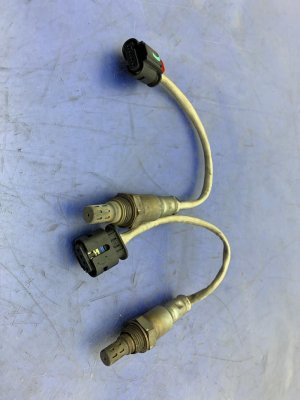
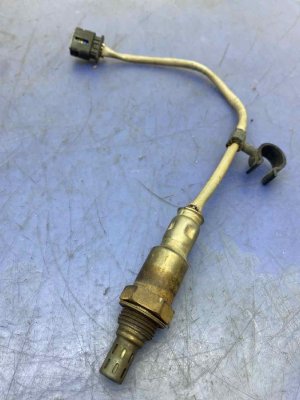
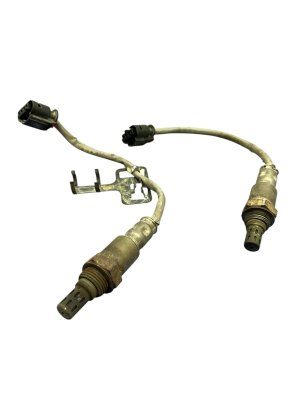
- Upstream Oxygen Sensor (Bank 1, Sensor 1)
(OEM #3.8L (2007-2011): Mopar 56029049AA, NTK 23158 | 3.6L (2012-2018): Mopar 5149171AA, NTK 23192)— This is the component identified by the code and is the most common failure point. The internal heater element burns out over time.
Trusted brands: NTK, Denso
OEM price range: $70-$130
Aftermarket price range: $50-$90 - Oxygen Sensor Socket — A special 22mm (or 7/8") socket with a slot for the wire is required to easily remove and install the sensor without damaging the wiring.
Trusted brands: Lisle, OEMTools, GearWrench
Aftermarket price range: $10-$25
Related Codes That Often Appear With This One
- P0155 — This is the identical heater circuit code for Bank 2, Sensor 1 (driver's side). If both P0135 and P0155 appear together, it strongly suggests a common cause like a blown fuse, a problem with the shared G104 ground connection, or swapped sensor connectors.
Technical Service Bulletins (TSBs) & Recalls
- TSB 18-010-05 Rev. A: While for the 2005 3.8L engine in other Chrysler vehicles, this TSB addresses P0135 caused by incorrect O2 sensors and requires a PCM software update, showing a history of this specific fault within the engine family.
Platform-Specific Known Issues
- G104 Ground Failure: The G104 ground point on the passenger side of the engine block is a common source of electrical issues, including O2 heater circuit codes. It is prone to corrosion and should be inspected and cleaned before replacing parts. A user on JK-Forum confirmed that checking for ground continuity is a key diagnostic step.
- Melted Wiring Harness: The wiring for the upstream O2 sensors is routed very close to the exhaust manifolds and is known to melt or chafe, causing a short circuit that blows the fuse or directly triggers the P0135 code. Careful inspection of the harness is critical.
Mechanic-Grade Diagnostic Values
- O2 Sensor Heater Element Resistance — expected: 2 to 20 Ohms, with a more precise OEM spec often being 2.5-4 Ohms for Chrysler vehicles.. Failure: A reading of infinity (Open Loop) or near 0 Ohms (short circuit) indicates a failed heater element.
- O2 Sensor Heater Power Supply Voltage (at harness connector) — expected: ~12 Volts (battery voltage) with Key On, Engine Off.. Failure: No voltage or significantly low voltage points to a problem with the fuse, relay (if applicable), or wiring from the TIPM.
- O2 Sensor Heater Ground Circuit (at harness connector) — expected: Near 0 Ohms of resistance to the battery negative terminal.. Failure: High resistance or an open circuit (infinity) indicates a problem with the ground wire, most commonly at the G104 ground point.
Scan Tool Commands That Help
- WiTech or other professional bidirectional scanner: O2 Heater Driver Bidirectional Control Test — Use this as a final step when the sensor, wiring, power, and ground have all tested good. It allows you to command the PCM's heater driver on and off directly. If the command fails to activate the circuit, it confirms a fault within the Powertrain Control Module itself.
Wiring & Ground Locations

- G104 — On the 3.8L V6, this critical ground is located on the rear of the engine block on the passenger side (Bank 1), underneath the exhaust heat shield and behind the B1S1 O2 sensor. The ground wires are secured to the block by the knock sensor bolt.. G104 is the shared ground point for the heater circuits of all four oxygen sensors, as well as the EGR valve and A/C compressor clutch. Corrosion or a break at this single point will cause an open circuit and trigger heater codes for one or more O2 sensors, making it a primary suspect when P0135 and P0155 appear together.
- Bank 1 Sensor 1 Connector (3.8L Engine) — On the passenger side, connecting the upstream O2 sensor to the main engine harness.. Pin 1 (Brown/Gray wire) is the heater control circuit from the PCM. Pin 2 (Black wire) is the ground circuit to G104. Testing for power and ground at these specific pins is a key diagnostic step.
Real Owner Repair Stories
- Jeepz.com forum user (2003 Jeep Wrangler 4.0L (Note: TJ model, but the principle applies directly to JK warm-up monitoring)) — Persistent P0135 and P0155 codes for over a year.
❌ Tried (didn't work) Replacing O2 sensors multiple times (using correct NTK brand), Checking all wiring
✅ What actually fixed it The root cause was an incorrect 180°F thermostat that had been installed. The PCM expects the engine to reach operating temperature (spec is 195°F) within a set time. When it didn't, the diagnostic monitor interpreted the slow warm-up as a heater circuit failure. Replacing the thermostat with the correct 195°F unit resolved the codes permanently. - Reddit r/JeepJK user (2008 Jeep Wrangler JK 3.8L) — Intermittent O2 sensor codes (sometimes Bank 1, sometimes both) after an engine swap.
❌ Tried (didn't work) Initial visual inspection of grounds.
✅ What actually fixed it The G104 ground wire cluster had broken off right at the terminal crimp, but the wire jackets were still held in place, making it look connected. The fix was to cut the wires back to clean copper, bundle them, and install a new terminal ring, which solved the intermittent codes.
"I Checked Everything" — The Actual Cause
- A case on a Jeep forum demonstrated that after all electrical tests for the O2 sensor heater circuit passed, the P0135 code persisted. The actual cause was an incorrect, lower-temperature thermostat (180°F instead of 195°F) which prevented the engine from warming up as quickly as the PCM expected. The PCM's logic falsely flagged the heater circuit as faulty because its enabling condition (engine temp over time) was not met.
OEM Part Supersession History
5149171AA→5149171AB— Standard part revision by manufacturer.
Heads up: The new part number is a direct replacement for the old one. Part number 68066160AA is also listed as a superseded part number for this sensor.
Model Year Variations Within This Range
- 2007-2011 vs 2012-2018: The primary difference is the engine: 3.8L EGH V6 for 2007-2011 and the 3.6L Pentastar V6 for 2012-2018. This change affects the specific O2 sensor part numbers, wiring harness routing, and potentially the exact location of grounds like G104.
Diagnostic Flowchart
Other Known Issues on This Vehicle
Issues unrelated to this code that are worth knowing about as an owner of this generation:
- Totally Integrated Power Module (TIPM) Failure 🔴 High — Very common on 2007-2014 models. Can cause a wide array of random electrical problems, including fuel pump failure, horn honking, and starter issues. (Ref: Subject of a class-action lawsuit, but no universal recall. Numerous TSBs exist for specific symptoms.)
- Cracked Oil Filter Housing/Cooler Assembly (3.6L Pentastar) 🔴 High — Extremely common on 2012-2017 models. The plastic housing becomes brittle from heat cycles and cracks, causing significant oil and/or coolant leaks into the engine valley.
- Excessive Oil Consumption (3.8L EGH) 🟠 Medium — Widespread on 2007-2011 models, often after 75,000 miles. Caused by piston ring design, leading to burning more than 1 quart per 1,500 miles.
- Cracked Exhaust Manifolds (3.8L EGH) 🟠 Medium — Common on the 3.8L engine due to heat cycling. Results in an exhaust leak, often heard as a ticking noise when the engine is cold.
- Cylinder Head Failure (Early 3.6L Pentastar) 🔴 High — Primarily affected the left cylinder head on 2012 and some early 2013 models, causing ticking noises and misfires. Less common than other issues. (Ref: Chrysler extended the warranty on the left cylinder head for some vehicles to 10 years/150,000 miles.)
- 'Death Wobble' Front End Oscillation 🔴 High — A characteristic issue for all solid front axle Jeeps, not engine-specific. A violent shaking of the front end triggered by bumps at speed, caused by worn steering or suspension components like the track bar or ball joints.
Used vs. New Parts: Buying Guide for This Vehicle
When a used part is the smart pick: For a P0135 repair, a used part is a smart choice for a replacement wiring harness connector (pigtail) if the original is melted or corroded. A complete engine wiring harness from a low-mileage donor can also be a cost-effective solution for widespread wiring issues.
Donor-vehicle mileage cap: roughly under 100000 miles for the part to have meaningful remaining life.
What to inspect on the donor part:
- For wiring connectors, ensure the plastic is not brittle or cracked.
- Check that the connector's locking tabs are intact.
- Inspect the metal pins inside the connector for any signs of green or white corrosion.
- Verify the donor vehicle is from a dry, non-salt-belt region if possible to minimize corrosion risk.
OEM-only on this vehicle (don't cheap out):
- Oxygen Sensor
Aftermarket brands forum-validated for this vehicle:
- NTK (who is the Original Equipment Manufacturer for Mopar)
- Denso
Brands owners have reported issues with on this vehicle:
- Bosch sensors are widely reported by Jeep owners to have incorrect heater circuit resistance, which causes the P0135 code to return immediately after installation.
Real Owner Stories
Aggregated from forums and TSBs cited above. Mileages and costs reflect what owners reported in those sources.
2007-2018 Jeep Wrangler JK
Symptoms: The owner experienced a persistent P0135 code and attempted to fix it by replacing the O2 sensors multiple times without success.
What fixed it: Replacing a faulty thermostat finally resolved the code.
Source hint: https://www.jeepz.com/forum/topic/31338-p0135/
2007-2018 Jeep Wrangler JK
Symptoms: After installing a new exhaust manifold, catalytic converters, and four new O2 sensors, the vehicle triggered both P0135 and P0155 codes.
What fixed it: The community identified that the most likely cause was swapped sensor connectors during the reinstallation of the exhaust components.
Source hint: https://www.jk-forum.com/forums/stock-jk-tech-12/installed-new-exhaust-man-cats-4o2-sensors-plugs-wires-getting-p0155-p0135-349884/
2007-2018 Jeep Wrangler JK
Symptoms: The owner was diagnosing O2 heater circuit issues and investigating the role of the ground system in sensor readings.
What fixed it: Cleaning and verifying the G104 ground connection on the passenger side of the engine block.
Source hint: https://www.jk-forum.com/forums/jk-electrical-lighting-sound-systems-13/o2-sensor-readings-any-help-diagnosing-341390/page3/
Related OBD-II Codes
Frequently Asked Questions
Where is the Bank 1 Sensor 1 oxygen sensor located on my Jeep Wrangler?
I've replaced my O2 sensor twice but P0135 keeps coming back. Could it be a ground issue?
Which brand of oxygen sensor should I use for my 3.6L or 3.8L Jeep engine?
Does TSB 18-010-05 apply to my Wrangler's P0135 code?
Could a blown fuse cause P0135 along with other O2 sensor codes?
Is there a specific torque spec for installing the new sensor?
Helpful Videos
We Have This Part in Stock


The information in this article is provided for general reference and educational purposes only. Vehicle specifications, procedures, and part compatibility can vary by production date, trim level, and region. Always consult your vehicle's factory service manual and verify part numbers before purchasing or performing repairs. Safety-critical components such as airbags, seat belts, and braking systems should be installed by a qualified professional.
- Jeep Wrangler:
- 🎬 Helpful Videos
- 🛍️ Shop This Part
- What's Unique About the 2007-2018 Jeep Wrangler
- Symptoms You May Notice
- Most Likely Causes
- Rare But Worth Checking
- Diagnosis Steps
- Parts You'll Likely Need
- Related Codes That Often Appear With This One
- Technical Service Bulletins (TSBs) & Recalls
- Platform-Specific Known Issues
- Mechanic-Grade Diagnostic Values
- Scan Tool Commands That Help
- Wiring & Ground Locations
- Real Owner Repair Stories
- "I Checked Everything" — The Actual Cause
- OEM Part Supersession History
- Model Year Variations Within This Range
- Diagnostic Flowchart
- Other Known Issues on This Vehicle
- Used vs. New Parts: Buying Guide for This Vehicle
- Real Owner Stories
- 2007-2018 Jeep Wrangler JK
- 2007-2018 Jeep Wrangler JK
- 2007-2018 Jeep Wrangler JK
- Related OBD-II Codes
- Frequently Asked Questions
- 🎟️ Get 5% Off