

P0135 on 2007-2012 Audi S5 4.2L V8: O2 Sensor Heater Circuit Fault Causes and Fixes
P0135 on the Audi S5 4.2L V8 indicates a malfunction in the heater circuit of the upstream oxygen sensor on Bank 1 (passenger side). The most common fix is to replace the sensor itself. An OEM-quality sensor from a brand like Bosch costs around $70-$150, and DIY replacement is possible but can be difficult due to tight access. Before replacing, it is crucial to check the associated fuse, as a blown fuse is a simple but often overlooked cause.
- P0135 on a 2007-2012 S5 4.2L V8 points to a bad heater in the passenger-side, pre-catalytic converter oxygen sensor.
- The most likely cause is a failed oxygen sensor, which is a common wear item. Bosch is the OEM supplier, and part number 17212 is a compatible replacement.
- Before replacing the sensor, always check the fuse (specifically SB10 in the plenum E-box) and test for power/ground at the sensor connector to rule out simpler electrical issues.
- Replacement is considered difficult for DIYers due to very tight access between the engine and firewall; special O2 sensor sockets are recommended.
- Ignoring this code will lead to poor fuel mileage, failed emissions tests, and can eventually damage the catalytic converter.
What's Unique About the 2007-2012 Audi S5
The 2007-2012 Audi S5 Coupe was fitted with the naturally aspirated CAUA 4.2L V8 engine. While the P0135 code itself is standard, the primary challenge on this specific platform is physical access to the Bank 1 Sensor 1. It is notoriously difficult to reach, tucked between the engine and the firewall on the passenger side. Many owners and technicians report that replacement requires working from the top of the engine bay, often by feel, after removing the air intake assembly. 🎬 See this walkthrough for replacing sensors on the 4.2L V8. Special tools like a crow's foot or flex-head O2 sensor wrench are often necessary to work in the tight space.
Symptoms You May Notice
- Check Engine Light (MIL) is on.
- Reduced fuel economy.
- Rough idle or hesitation, especially when the engine is cold.
- Failure to pass an emissions test.
- Noticeable jump in long-term fuel trims (e.g., +15% to +22%) when viewed with a diagnostic tool, indicating the ECM is compensating for what it perceives as a lean condition.
- Replacing the wrong oxygen sensor (e.g., the downstream Sensor 2, or the sensor on Bank 2, the driver's side). P0135 is specifically for Bank 1 (passenger side), Sensor 1 (upstream/pre-catalytic converter).
- Replacing the sensor without first checking for a blown fuse or testing for power and ground at the connector.
- Using a generic or universal-fit oxygen sensor that is not pinned correctly for the vehicle, which can lead to the code returning immediately.
Most Likely Causes
- Failed Oxygen Sensor Heater Element 🔴 High Probability The internal heating element is a wear item that is subjected to thousands of heat cycles and constant exposure to hot exhaust gases, causing it to eventually burn out. This is the most common reason for a P0135 code.
How to confirm: Disconnect the sensor and measure the resistance between the two heater pins (usually the same color wires, often pins 3 and 4 on the 6-pin connector) on the sensor side of the connector. An open circuit (infinite resistance) or a reading outside the typical range of 2-15 ohms confirms the heater has failed.
Typical fix: Replace the Bank 1, Sensor 1 oxygen sensor. The Bosch 17212 is a widely cited compatible part.
Est. part cost: $70-$150 - Damaged Wiring or Corroded Connector 🟡 Medium Probability The wiring harness for the oxygen sensor is routed close to hot exhaust components, which can cause the insulation to become brittle, melt, or fray over time. Oil leaks from valve cover gaskets, a common issue on these engines, can also saturate the wiring and connector, causing shorts or opens.
How to confirm: Visually inspect the entire length of the sensor's wiring harness and the electrical connector for any signs of melting, chafing, oil saturation, or corrosion. With the ignition on (engine off), use a multimeter to check for battery voltage and a good ground at the vehicle-side connector pins for the heater circuit.
Typical fix: Repair or replace the damaged section of the wiring harness or clean/replace the connector.
Est. part cost: $10-$50 - Blown Fuse for Heater Circuit ⚪ Low Probability A short circuit in the sensor's heater element or its wiring can cause the associated fuse to blow as a protective measure. On some Audi platforms, water ingress into the plenum chamber E-box can cause corrosion on the fuse terminals, leading to an open circuit even if the fuse isn't blown.
How to confirm: Locate the fuse for the oxygen sensor heater circuit. For the 4.2L V8, this may be fuse SB10 (15A) in the E-box in the plenum chamber (under the windshield). Visually inspect it or test for continuity. Also check for corrosion on the fuse legs and terminals.
Typical fix: Replace the blown fuse. If the new fuse blows immediately, it indicates a short circuit that must be diagnosed and repaired. If corroded, clean the terminals and replace the fuse.
Est. part cost: $1-$5
Rare But Worth Checking
- Faulty Engine Control Module (ECM): This is extremely rare. The internal driver circuit in the ECM that controls the O2 sensor heater can fail. Before condemning the ECM, all other possibilities, including the sensor, wiring, and fuses, must be exhaustively ruled out.
Diagnosis Steps
- Read the fault codes with an OBD-II scanner (like VCDS for Audis) to confirm P0135 is present.
- Locate the fuse for the O2 sensor heater circuit. On the 4.2L V8, check fuse SB10 (15A) in the electronics box in the plenum chamber. Inspect for a blown fuse and for corrosion on the terminals.
- Visually inspect the Bank 1, Sensor 1 (passenger side, upstream) oxygen sensor wiring and connector for any signs of damage, melting, oil saturation, or corrosion.
- If the fuse and wiring appear okay, disconnect the sensor's electrical connector.
- With the ignition ON and engine OFF, use a multimeter to test the vehicle-side of the connector. Verify that one pin has battery voltage and the corresponding heater circuit ground pin has continuity to ground.
- If power and ground are present, the issue is with the sensor itself. Turn the ignition OFF.
- Using a multimeter, measure the resistance across the two heater circuit pins (typically pins 3 and 4) on the O2 sensor. A reading between 2-15 ohms is generally good. An infinite reading (open circuit) or zero reading (short circuit) indicates the sensor is bad and must be replaced.
- If power or ground is missing at the connector, the wiring between the connector and the ECM/power source must be traced to find the open or short circuit.
- After replacing the part or repairing the wiring, clear the fault code and perform a drive cycle to ensure the repair was successful.
Parts You'll Likely Need
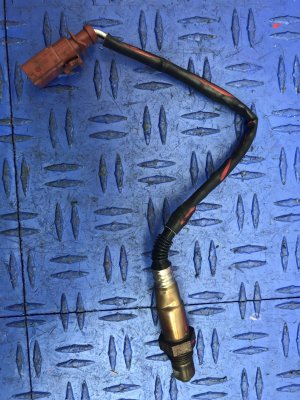
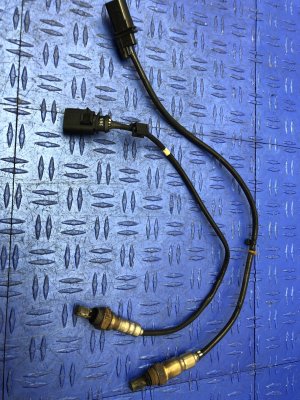
- Upstream Oxygen Sensor (Bank 1)
(OEM #07L906262K)— This is the most common cause of a P0135 code, as the internal heater element fails from age and heat cycles.
Trusted brands: Bosch (OEM supplier), NTK, Denso
OEM price range: $180-$250
Aftermarket price range: $70-$150
Related Codes That Often Appear With This One
- P0155 — This is the equivalent heater circuit fault for Bank 2, Sensor 1 (driver's side). If both P0135 and P0155 appear together, it strongly suggests a common problem like a blown fuse (e.g., SB10) that supplies power to both sensor heaters, or a systemic wiring issue.
- P0030 — This is another generic code for the same Bank 1 Sensor 1 heater circuit malfunction. Some scanners may report P0030 instead of or in addition to P0135.
Technical Service Bulletins (TSBs) & Recalls
- 01139020337671: Audi issued a Technical Service Bulletin that includes P0135, acknowledging it as a known heater circuit fault for the lambda sensor, indicating this is a recognized issue by the manufacturer. TSB Bulletin #01139020337671 specifically addresses the MIL being on with DTC P0135 and provides repair authorization for this heater circuit fault.
Platform-Specific Known Issues
- Extreme Difficulty Accessing Sensor: Multiple forum users across AudiWorld and Audizine confirm the Bank 1 Sensor 1 is extremely difficult to access, being wedged between the V8 engine and the firewall on the passenger side. Many DIY repairs require removing the airbox and working by feel from above, often taking several hours for a first-timer. Special tools like a 22mm (7/8") flex-head or crow's foot O2 sensor socket are highly recommended.
- Fuse Location in Plenum E-Box: A wiring diagram for a similar Audi A6 4.2L V8 indicates the O2 sensor heater fuse is located in the electronics box in the plenum chamber, under the windshield cowl. 🎬 Watch: How to find the O2 sensor fuse in the E-box. This area can be prone to water ingress if the cowl drains are clogged, which can lead to corrosion on the fuse terminals, causing a P0135 code even with a good fuse and sensor. This issue is well-documented on other Audi platforms.
Mechanic-Grade Diagnostic Values
- O2 Sensor Heater Element Resistance (cold) — expected: 2.5 to 15 Ohms. Failure: An open circuit (infinite resistance) or a reading significantly outside the expected range indicates a failed heater.
- O2 Sensor Heater Power Supply (at harness connector) — expected: Approximately 12V (Battery Voltage) with Key On, Engine Off.. Failure: No voltage points to an issue upstream, such as a blown fuse, faulty relay, or a break in the power wire.
- VCDS Measuring Block 041, Channel 3 (Heater Test) — expected: Resistance reading should be less than 0.02 kOhm (20 Ohms).. Failure: A reading higher than 20 Ohms indicates a fault in the heater or its circuit.
Scan Tool Commands That Help
- VCDS (VAG-COM): Engine (01) -> Measuring Blocks -> Groups 030-049 — To monitor the live status, duty cycle, and ECU-perceived resistance of the O2 sensor heaters in real-time. This helps confirm if the ECU is detecting the fault and can reveal intermittent issues.
- VCDS (VAG-COM): Basic Settings -> Group 041 (Oxygen Sensor Heater Test) — This function actively commands the O2 sensor heaters to turn on and then measures their resistance, providing a definitive pass/fail test of the entire heater circuit without needing to manually probe connectors. It's a powerful tool to confirm a failed heater element after checking fuses and wiring.
- VCDS (VAG-COM): Output Diagnostic Test Mode (DTM) / Guided Fault Finding — For a step-by-step guided diagnostic procedure. The software will walk the technician through checking components, providing instructions and expected values, which is useful for complex electrical faults.
Wiring & Ground Locations
- Bank 1 Sensor 1 Connector Heater Pins — On the 6-pin connector for the upstream oxygen sensor on the passenger side.. Pins 3 and 4 are typically the heater circuit. These are the specific pins to probe with a multimeter to measure resistance on the sensor side and to check for 12V power and ground on the harness side.
- Fuse SB10 — In the E-box (electronics box) located in the plenum chamber, under the plastic cowl at the base of the windshield on the right (passenger) side.. This 15A fuse often powers the heaters for both Bank 1 and Bank 2 O2 sensors. A failure here will cause heater codes for both banks (P0135 & P0155). The location is prone to water ingress, which can cause corrosion on the fuse terminals, creating an open circuit even if the fuse itself is not blown.
- Ground Point 12 — In the engine compartment, on the left side frame rail.. This is a primary engine ground connection. While not directly for the O2 sensor heater (which is grounded through the ECM), a poor or corroded main engine ground can cause a variety of unpredictable electrical issues and sensor faults. It should be inspected for tightness and corrosion during any electrical diagnosis.
Real Owner Repair Stories
- RANS87IROCZ on YouTube (similar Audi 4.2L platform) (2008 Audi Q7 4.2L V8) — Check engine light with heater circuit codes for both downstream O2 sensors (P0055, P0085) immediately after installing new sensors.
❌ Tried (didn't work) Replacing both oxygen sensors.
✅ What actually fixed it The fuses for the O2 sensor circuits, located in the engine compartment plenum box, were not blown but were heavily corroded on the contacts. Cleaning the corrosion from the fuse legs and terminals and reinstalling the original fuses resolved the codes.
OEM Part Supersession History
07L906262K→No direct supersession found for this specific part number in the search results.
Diagnostic Flowchart
Used vs. New Parts: Buying Guide for This Vehicle
When a used part is the smart pick: For this repair, buying a used oxygen sensor is almost never a smart choice. O2 sensors are wear-and-tear items with a finite lifespan determined by heat cycles and mileage. A used sensor from a junkyard has an unknown history and is likely to fail much sooner than a new part, if it works at all. The difficult labor involved in replacing it makes doing the job twice a significant waste of time and money.
Donor-vehicle mileage cap: roughly under 10000 miles for the part to have meaningful remaining life.
What to inspect on the donor part:
- Not applicable for oxygen sensors; buying new is strongly recommended.
Aftermarket brands forum-validated for this vehicle:
- Bosch (often the original OEM supplier for Audi)
- NTK
- Denso
Brands owners have reported issues with on this vehicle:
- Unnamed or 'white-box' generic brands from online marketplaces. These often use lower-quality heating elements and sensor materials, leading to premature failure or incorrect readings, causing the code to return.
Real Owner Stories
Aggregated from forums and TSBs cited above. Mileages and costs reflect what owners reported in those sources.
2008 Audi S5 4.2L V8
Symptoms: The car ran fine, but the Check Engine Light was on.
What fixed it: Replaced the Bank 1 Sensor 1 (passenger side, upstream) with a new Bosch sensor. After clearing the code, the problem was solved.
Source hint: Audizine forum report
Audi S5 4.2L V8
Symptoms: The P0135 code would return immediately after being cleared, indicating a hard fault rather than an intermittent issue.
What fixed it: Diagnosis confirmed the heater circuit was the culprit. The recommended fix was to replace the sensor with a quality part, as generic eBay sensors were noted to be problematic.
Source hint: AudiWorld Forums - 'O2 Sensor Heater Circuit Bank 1 Sensor 1 Location'
2009 Audi S5 4.2L V8
Symptoms: A blown fuse caused multiple codes to appear, including O2 sensor heater faults like P0030 and P0050.
What fixed it: The root cause was a short circuit in one of the components powered by the fuse. The fix required complex electrical diagnosis to trace and repair the short, followed by replacing the blown fuse.
Source hint: AudiWorld Forums - '2009 S5 blowing fuse #5 in engine fuse box'
Related OBD-II Codes
Frequently Asked Questions
Where is the fuse for the P0135 heater circuit on my 4.2L S5?
How difficult is it to replace the Bank 1, Sensor 1 oxygen sensor myself?
What is the correct replacement oxygen sensor part number for my S5?
Is P0135 a known issue that Audi has acknowledged for this engine?
Besides the sensor itself, what's another common cause for P0135 on this vehicle?
How can I test the old oxygen sensor to confirm its heater has failed?
Helpful Videos
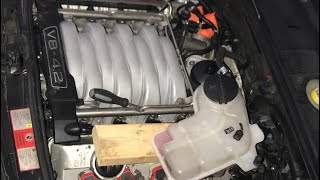


We Have This Part in Stock


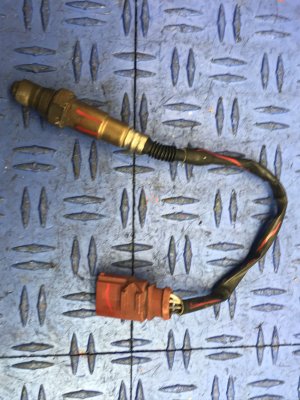
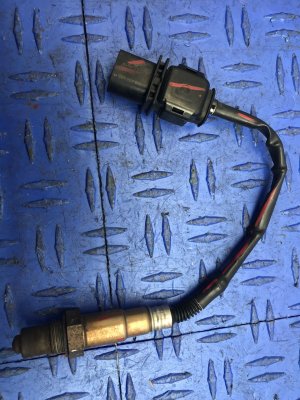

The information in this article is provided for general reference and educational purposes only. Vehicle specifications, procedures, and part compatibility can vary by production date, trim level, and region. Always consult your vehicle's factory service manual and verify part numbers before purchasing or performing repairs. Safety-critical components such as airbags, seat belts, and braking systems should be installed by a qualified professional.
- Audi S5:
- 🎬 Helpful Videos
- 🛍️ Shop This Part
- What's Unique About the 2007-2012 Audi S5
- Symptoms You May Notice
- Most Likely Causes
- Rare But Worth Checking
- Diagnosis Steps
- Parts You'll Likely Need
- Related Codes That Often Appear With This One
- Technical Service Bulletins (TSBs) & Recalls
- Platform-Specific Known Issues
- Mechanic-Grade Diagnostic Values
- Scan Tool Commands That Help
- Wiring & Ground Locations
- Real Owner Repair Stories
- OEM Part Supersession History
- Diagnostic Flowchart
- Used vs. New Parts: Buying Guide for This Vehicle
- Real Owner Stories
- 2008 Audi S5 4.2L V8
- Audi S5 4.2L V8
- 2009 Audi S5 4.2L V8
- Related OBD-II Codes
- Frequently Asked Questions
- 🎟️ Get 5% Off