

P0134 on 2006-2013 Porsche 911 Turbo: O2 Sensor No Activity Causes and Fixes
P0134 on a 997 Turbo most often means the front oxygen sensor on the passenger side (Bank 1, Sensor 1) has failed. Replacing the sensor is the typical fix. Expect to pay $100-$180 for a Bosch OEM-equivalent part. Due to notoriously tight access behind the turbochargers, professional replacement can cost between $400 and $800. DIY is possible but requires removing the rear bumper and intercooler.
- P0134 points to the front oxygen sensor on the passenger side.
- The most likely fix is replacing the sensor, but be sure to order the correct part for your specific model year (997.1 vs. 997.2).
- Bosch is the original equipment manufacturer; buying the Bosch-branded part can save money over the Porsche-branded box.
- The replacement is difficult due to tight access. Plan for removing the rear bumper and intercooler for the cleanest access.
- Before replacing the sensor, always check its fuse and inspect the wiring for heat damage, as this is a common issue in the 911 Turbo's hot engine bay.
What's Unique About the 2006-2013 Porsche 911 Turbo
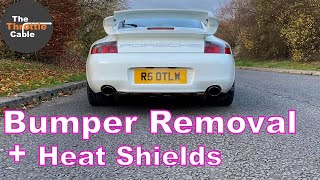
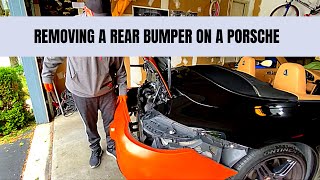
The 2006-2013 911 Turbo spans two distinct generations: the 997.1 (2006-2009) with its race-derived Mezger engine, and the 997.2 (2010-2013) with the more modern 9A1 Direct Fuel Injection (DFI) engine. This is critical because they use different front oxygen sensors and part numbers. While the cause is almost always a failed sensor, access is notoriously tight on these cars. The sensor is buried deep in the engine bay near the hot turbochargers. Forum users and mechanics confirm that the most effective way to gain access is by removing the rear bumper cover 🎬 Watch: How to safely remove the rear bumper for better access. and the passenger-side intercooler assembly, making the job significantly more involved than on a typical car.
Generation note: This guide covers two generations of the 911 Turbo, the 997.1 (2006-2009) and 997.2 (2010-2013). They are mechanically different, most notably the engine. The 997.1 uses the Mezger flat-six, while the 997.2 uses the 9A1 flat-six. This requires different part numbers for the oxygen sensors.
Symptoms You May Notice
- Check Engine Light is on
- Reduced fuel economy
- Rough or fluctuating idle, especially at cold start
- Hesitation during acceleration
- Failing an emissions test
- Noticeable fuel smell from the exhaust due to a rich condition
- Replacing the O2 sensor without checking the wiring. A melted wire or corroded connector will cause the new sensor to not work either, leading to the code returning immediately.
- Assuming the sensor is bad when an exhaust leak before the sensor is the real problem. The leak introduces unmetered air, which can cause the sensor's reading to be flat, mimicking a dead sensor.
Most Likely Causes
- Failed Bank 1, Sensor 1 Oxygen Sensor 🔴 High Probability Oxygen sensors are wear items that degrade over time from extreme heat and exhaust contaminants. They have a typical lifespan of 80,000-100,000 miles. The internal heater element, which is essential for bringing the sensor to operating temperature quickly, is a common point of failure and will trigger a 'no activity' code.
How to confirm: Using an OBD-II scanner with live data, monitor the voltage for 'B1S1'. A healthy sensor will show voltage fluctuating rapidly between approximately 0.1V and 0.9V. If the voltage is stuck at a constant value (e.g., 0.45V) or shows no reading, the sensor is inactive.
Typical fix: Replace the Bank 1, Sensor 1 oxygen sensor. This is the upstream sensor on the passenger side.
Est. part cost: $100-$180 for a Bosch sensor. - Damaged Wiring or Connector 🟡 Medium Probability The sensor wiring is routed in a very hot, tight area near the turbochargers and exhaust manifolds. Wires can become brittle, melt, or chafe against heat shields or the engine block, causing an open or short circuit. The connector pins can also corrode or become bent during other maintenance.
How to confirm: Visually inspect the entire length of the sensor's wiring harness from the sensor to the main connector for any signs of melting, chafing, or breaks. Unplug the connector and check for corrosion, moisture, or bent pins. The connector has a red locking tab that must be released carefully.
Typical fix: Repair the damaged section of wire with high-temperature-rated wire or replace the connector pigtail. In severe cases, the entire engine wiring harness could be compromised, which is a very expensive repair.
Est. part cost: $10-$50 for wiring repair supplies. - Exhaust Leak ⚪ Low Probability Aftermarket exhausts are common and can lead to leaks if not installed perfectly. More specific to the 997 platform, the exhaust manifold studs can corrode, stretch, or break, causing a leak at the gasket between the cylinder head and the manifold. This allows outside air into the exhaust stream, which makes the O2 sensor read a false lean condition that the DME can sometimes interpret as 'no activity'.
How to confirm: With the engine cold, start it and listen for a distinct 'ticking' or 'puffing' sound from the passenger-side exhaust manifold area that may quiet down as the engine warms up. A smoke machine test is the most definitive way to find leaks.
Typical fix: Replace the leaking gasket and any broken manifold studs. This often requires removing the exhaust manifold for access.
Est. part cost: $20-$100 for gaskets and hardware.
Rare But Worth Checking
- Dirty Throttle Body: A 997.1 Turbo owner on 6speedonline reported chasing a persistent P0134 code that only resolved after cleaning a very dirty throttle body. The owner had already replaced all four O2 sensors to no avail. After cleaning the 'gooey' buildup from the throttle plate and bore, the code disappeared and the engine ran smoother. While not a direct cause, incorrect airflow readings can lead to unexpected fuel trim issues that may manifest in strange O2 sensor codes.
- Blown O2 Sensor Heater Fuse: The oxygen sensor has an internal heater to get it to operating temperature quickly. This heater is on a fused circuit. If the fuse blows, the sensor will remain cold and inactive, triggering P0134. A Rennlist user with a 996 (a predecessor with similar systems) noted the fuse is located in fuse holder 'C' and is tied to the O2 relay.
- Faulty DME (Engine Computer): This is extremely rare, but it's possible for the driver circuit within the DME to fail. This should only be considered after all other possibilities (sensor, wiring, leaks, fuses) have been definitively ruled out by testing.
Diagnosis Steps
- Read the code with an OBD-II scanner to confirm P0134 is the primary fault.
- Use the scanner's live data function to observe the voltage of 'O2 Sensor Bank 1 Sensor 1'. At idle on a warm engine, it should fluctuate rapidly between ~0.1V and ~0.9V. If it is flat, stuck, or unresponsive, the 'no activity' fault is confirmed.
- Inspect the fuse for the oxygen sensor heater circuit. Consult your owner's manual or a Porsche-specific fuse diagram for the correct location (potentially in fuse holder 'C').
- Raise the vehicle safely. For best access, plan to remove the rear bumper cover and passenger-side intercooler.
- Locate the sensor on the passenger-side exhaust manifold. Visually inspect the sensor's wiring harness for any signs of melting, chafing, or physical damage all the way to its connector.
- Disconnect the sensor and inspect the connector pins for corrosion, moisture, or damage. Ensure the red locking tab is intact and releases properly.
- Check for exhaust leaks between the cylinder head and the sensor. Look for black soot trails or listen for audible ticking sounds when the engine is cold. A smoke test is the most reliable method.
- If wiring, fuses, and the exhaust path are good, the sensor itself is the most likely culprit. Apply penetrating oil to the sensor threads and let it sit before attempting removal to avoid damaging the exhaust manifold.
- Replace the Bank 1, Sensor 1 oxygen sensor using a 22mm offset O2 sensor socket.
- After replacement, clear the codes and perform a test drive, monitoring live data to ensure the new sensor is fluctuating correctly.
Parts You'll Likely Need
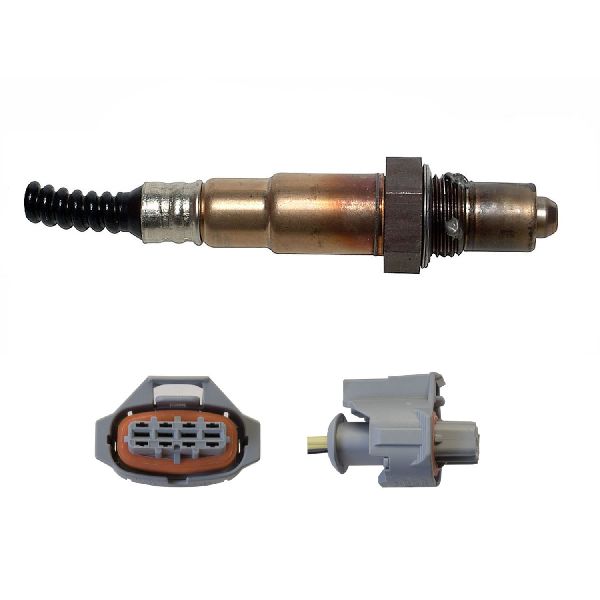
- Upstream Oxygen Sensor (Bank 1, Sensor 1) for 997.1 Turbo
(OEM #99760612802 (may be superseded by 99760612803))— This is the correct pre-catalyst sensor for the 2006-2009 911 Turbo with the Mezger engine. 🎬 Watch: Step-by-step pre-cat O2 sensor replacement for the 997.1 Turbo. It is the most common failure part for code P0134.
Trusted brands: Bosch (17310)
OEM price range: $200-$250
Aftermarket price range: $120-$180 - Upstream Oxygen Sensor (Bank 1, Sensor 1) for 997.2 Turbo
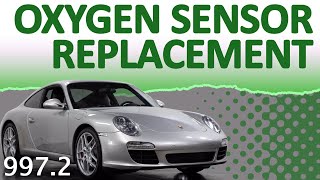
(OEM #9A160612801)— This is the correct pre-catalyst sensor for the 2010-2013 911 Turbo with the 9A1 engine. 🎬 See this walkthrough for replacing oxygen sensors on 997.2 models. It is the most common failure part for code P0134.
Trusted brands: Bosch (17211)
OEM price range: $180
Related Codes That Often Appear With This One
- P0135 — P0135 indicates a fault specifically in the heater circuit of the Bank 1 Sensor 1 O2 sensor. Since a failed heater will prevent the sensor from becoming active, it's common to see P0134 and P0135 together.
- P1115 — This is a Porsche-specific code for 'Oxygen Sensor Heating 1 Before CAT.' It is functionally very similar to P0135 and points directly to a problem with the heater element in the Bank 1 Sensor 1 O2 sensor, often appearing alongside P0134.
- P0154 — This is the equivalent 'No Activity Detected' code but for Bank 2, Sensor 1 (driver's side). If both P0134 and P0154 appear together, it could point to a common issue like a blown fuse for the O2 sensor heaters or a systemic problem rather than two simultaneous sensor failures.
Platform-Specific Known Issues
- Access for replacement is significantly more difficult than on most vehicles. DIYers on forums confirm that removing the rear bumper cover and the passenger-side intercooler assembly is the most effective way to gain proper access to the sensor and its wiring. A YouTube DIY for a 2009 Turbo shows that even with this access, the sensor is still tucked away, and removing the airbox may also be necessary to properly route the new sensor wire.
Mechanic-Grade Diagnostic Values
- Front O2 Sensor (Wideband) Live Data — expected: Lambda value should actively fluctuate around 1.0 on a warm, running engine in closed loop.. Failure: Lambda value is stuck at a default reading (e.g., 1.50) or the sensor current (mA) is flat at or near zero. This indicates the sensor is not sending a valid signal.
- O2 Sensor Heater Circuit Resistance — expected: 2.5 - 10 Ohms when measured across the two heater pins (usually same-colored wires, e.g., white) on a disconnected, cold sensor.. Failure: Infinite resistance (open circuit) or zero resistance (short circuit) indicates a failed heater element, which is the most common cause of a P0134 'no activity' code.
Scan Tool Commands That Help
- Porsche PIWIS Tester: Reset oxygen sensor adaptations / ageing values — After replacing an oxygen sensor, this function should be executed. It clears the long-term adjustments the DME has learned for the old, degraded sensor, allowing it to adapt to the new sensor's characteristics more quickly and accurately. While not always mandatory, it is a best practice to prevent potential lingering fuel trim issues.
Wiring & Ground Locations
- Bank 1 Sensor 1 Connector — On a bracket attached to the top of the engine, near the firewall, on the passenger side of the vehicle.. This is the primary connection point to test wiring to and from the sensor. It is typically a 6-pin connector and is often color-coded black for Bank 1, distinguishing it from the brown connector for Bank 2.
- Main Engine Ground Strap — Typically runs from the engine block (driver's side on a 997) to the chassis.. A corroded or loose main engine ground can cause a variety of intermittent and difficult-to-diagnose electrical faults, including erratic sensor readings. While not a direct cause of P0134 alone, poor grounding can contribute to sensor signal problems and should be inspected if multiple, seemingly unrelated electrical codes are present.
Real Owner Repair Stories
- Rennlist Forum Member (2008 Porsche 997.1 Turbo) — Check Engine Light with code P0134.
❌ Tried (didn't work) Replacing the O2 sensor.
✅ What actually fixed it After replacing the sensor did not fix the code, a more thorough inspection revealed a hairline crack in the exhaust manifold, very close to the O2 sensor bung. The crack was nearly invisible when cold. Replacing the exhaust manifold resolved the P0134 code permanently. - 6speedonline Forum Member (2007 Porsche 997.1 Turbo, ~50,000 miles) — CEL with P0134 and P0135.
❌ Tried (didn't work) Initial visual inspection showed no obvious issues.
✅ What actually fixed it Replacement of the Bank 1, Sensor 1 oxygen sensor (Bosch 17310). The owner confirmed the difficulty of the job, requiring removal of the rear bumper and intercooler for access. This was a straightforward sensor failure fixed by replacement.
"I Checked Everything" — The Actual Cause
- In a documented case on Rennlist, a 997 Turbo with P0134 passed a smoke test, which typically finds exhaust leaks. The actual cause was a hairline crack in the cast iron exhaust manifold. This type of crack may not leak enough smoke to be visible during a standard test but can open up under the heat and pressure of running conditions, allowing air to enter the exhaust stream and corrupt the O2 sensor reading. The fix required removing and replacing the manifold.
OEM Part Supersession History
99760612802→99760612803— Minor revision by Porsche/Bosch.
Heads up: The parts are fully interchangeable.
Model Year Variations Within This Range
- 2006-2009 (997.1): Uses the Mezger engine with a Bosch Motronic ME7.8 DME. The correct front O2 sensor is Porsche P/N 99760612803 (Bosch 17310).
- 2010-2013 (997.2): Uses the 9A1 DFI engine with a Siemens SDI3/SDI4 DME. The diagnostic fault-setting criteria can be slightly different. The correct front O2 sensor is Porsche P/N 9A160612801 (Bosch 17211). The two sensors are not interchangeable.
Diagnostic Flowchart
Used vs. New Parts: Buying Guide for This Vehicle
When a used part is the smart pick: Almost never for an oxygen sensor itself. They are a consumable part with a finite lifespan. The labor cost to access and replace the sensor on a 997 Turbo is very high, making it financially unwise to install a used part with an unknown history that might fail soon after. A used sensor only makes sense if it comes as part of a complete, very low-mileage used engine or exhaust system.
Donor-vehicle mileage cap: roughly under 30000 miles for the part to have meaningful remaining life.
What to inspect on the donor part:
- Verify the part number is correct for your vehicle (997.1 vs 997.2).
- Inspect the wiring harness for any signs of melting, fraying, or brittleness.
- Check the connector for corrosion or damaged pins.
- Examine the sensor tip; avoid any that are heavily coated in oil or black soot, as this indicates a problem with the donor engine.
OEM-only on this vehicle (don't cheap out):
- While not strictly 'OEM-only', using the OEM-supplier part (Bosch) is critical. Avoid unbranded, 'white-box' sensors.
Aftermarket brands forum-validated for this vehicle:
- Bosch (OEM supplier for this part)
- NTK / NGK (reputable alternative OEM supplier for many manufacturers)
Brands owners have reported issues with on this vehicle:
- Any unbranded or suspiciously inexpensive sensors from online marketplaces. These are known to have incorrect calibrations, leading to persistent codes, poor performance, and premature failure.
Real Owner Stories
Aggregated from forums and TSBs cited above. Mileages and costs reflect what owners reported in those sources.
Porsche 997 Turbo — 109000 miles
Symptoms: The P0134 code would persistently return within 100 miles of being cleared, even after disconnecting the battery and replacing all four oxygen sensors.
What fixed it: After replacing the sensors did not work, the owner found forum posts suggesting a dirty throttle body. Cleaning the 'gooey' backside of the throttle body blade and bore with MAF cleaner permanently resolved the P0134 code.
Source hint: 6speedonline - P0134 Code - Hard to Believe Fix
Related OBD-II Codes
Frequently Asked Questions
Which side is Bank 1 on my 2006-2013 Porsche 911 Turbo?
How difficult is it to replace the Bank 1 Sensor 1 oxygen sensor myself?
I replaced the O2 sensor but the P0134 code came back. What else could be the cause?
How can I confirm the oxygen sensor has actually failed before buying a new one?
What's the best way to check for an exhaust leak that might be causing this code?
Does this P0134 issue affect other Porsche models besides the 911 Turbo?
Helpful Videos
Used OEM Parts in Stock
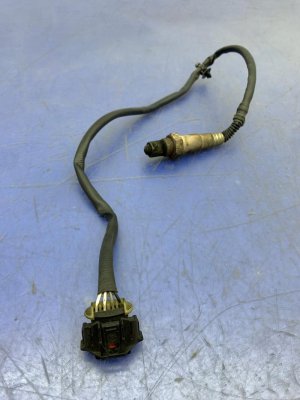
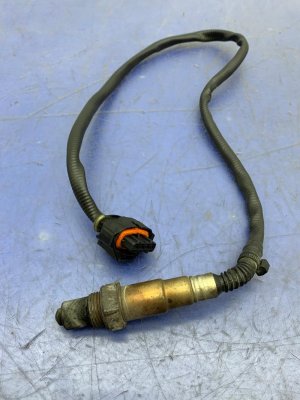
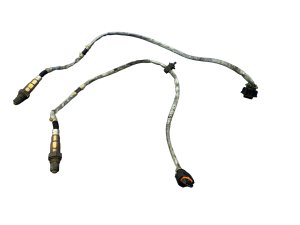

New Aftermarket Parts Available

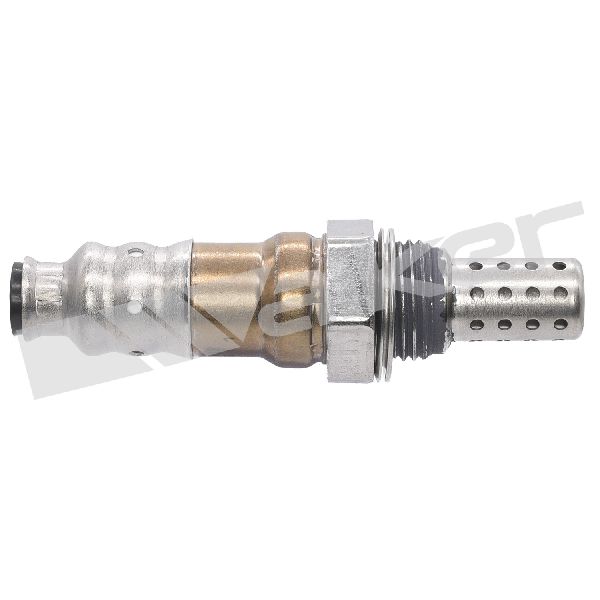

The information in this article is provided for general reference and educational purposes only. Vehicle specifications, procedures, and part compatibility can vary by production date, trim level, and region. Always consult your vehicle's factory service manual and verify part numbers before purchasing or performing repairs. Safety-critical components such as airbags, seat belts, and braking systems should be installed by a qualified professional.
- Porsche 911 Turbo:
- 🎬 Helpful Videos
- 🛍️ Shop This Part
- What's Unique About the 2006-2013 Porsche 911 Turbo
- Symptoms You May Notice
- Most Likely Causes
- Rare But Worth Checking
- Diagnosis Steps
- Parts You'll Likely Need
- Related Codes That Often Appear With This One
- Platform-Specific Known Issues
- Mechanic-Grade Diagnostic Values
- Scan Tool Commands That Help
- Wiring & Ground Locations
- Real Owner Repair Stories
- "I Checked Everything" — The Actual Cause
- OEM Part Supersession History
- Model Year Variations Within This Range
- Diagnostic Flowchart
- Used vs. New Parts: Buying Guide for This Vehicle
- Real Owner Stories
- Porsche 997 Turbo — 109000 miles
- Related OBD-II Codes
- Frequently Asked Questions
- 🎟️ Get 5% Off