

OBD-II Code P0154: Oxygen Sensor Circuit No Activity Detected
The Ultimate 2026 Guide to Diagnosing and Fixing P0154
- P0154 indicates a dead Bank 2, Sensor 1 oxygen sensor in 70% of cases, but always verify wiring integrity and check for blown heater fuses before replacing parts.
- Driving with a P0154 code forces the engine into a rich fuel loop, dropping fuel economy by 10-20% and guaranteeing an emissions test failure.
- Ignoring this code for more than 3 months causes unburned fuel to melt the catalytic converter, turning a $250 sensor replacement into a $2,000 repair.
- Confirm the diagnosis by using a scan tool to verify the sensor voltage is flatlined near 0.45V, and test the sensor's heater pins with a multimeter for a normal 2-30 ohm resistance.
What Does P0154 Mean?

P0154 means the Powertrain Control Module (PCM) detects zero voltage signal from the upstream oxygen sensor on engine Bank 2. This sensor, also known as an O2 sensor or air-fuel ratio sensor, is critical for measuring the amount of unburned oxygen in the exhaust. The PCM uses this data to make real-time adjustments to the fuel-air mixture for optimal efficiency and emissions. Without this signal, the computer cannot adjust the air-fuel mixture and defaults to a pre-programmed, fuel-rich 'open-loop' mode.
Technical definition: O2 Sensor Circuit No Activity Detected (Bank 2, Sensor 1). This diagnostic trouble code (DTC) is set when the Powertrain Control Module (PCM) detects that the upstream oxygen sensor for Bank 2 has not shown any voltage fluctuation for a predetermined period, often 60 seconds. The PCM expects to see a rapidly fluctuating voltage signal between approximately 0.1 and 0.9 volts. If the signal remains static (often stuck near 0.45V) or is absent altogether 🎬 Watch: A quick overview of fixing the P0154 code., the code is triggered.
Can I Drive With P0154?
Yes, But With Caution. You can drive for essential short trips under 50 miles, but immediate repair is required. Continuing to drive for 1-2 weeks or more forces the engine to run on a default, fuel-rich mixture, which significantly reduces fuel economy and causes irreversible damage to the catalytic converter. A catalytic converter replacement costs between $800 and $2,500, turning a minor sensor issue into a major expense.
Common Causes

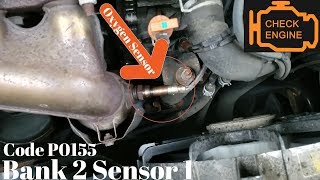
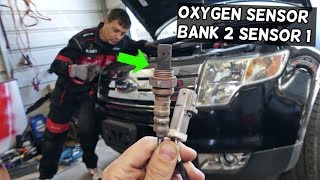
- Faulty Bank 2, Sensor 1 Oxygen Sensor (Very Common) — This is the most frequent cause. 🎬 Watch: Step-by-step guide to replacing the Bank 2 Sensor 1. The sensor's internal components fail from age, contamination, or extreme heat. The sensor's heating element, which is required to bring it to its operating temperature of over 600°F, burns out, rendering the sensor inactive.
- Wiring or Connector Issues (Common) — The sensor's wiring harness is located near the hot exhaust, making it susceptible to damage. Wires burn, melt, chafe, or break. The electrical connector also suffers from corrosion (especially in humid climates), bent pins, or moisture intrusion, all of which interrupt the signal to the PCM.
- Blown Fuse for the Sensor Heater Circuit (Less Common) — Heated O2 sensors (HO2S) have a dedicated fuse to power the internal heater. If this fuse blows due to a short in the circuit, the sensor will not warm up properly and fails to produce a voltage signal, directly causing a P0154 code.
- Exhaust Leak (Less Common) — A crack in the exhaust manifold or pipe before the O2 sensor draws outside air into the exhaust stream. This extra oxygen cools the sensor or provides skewed readings, making it appear inactive to the PCM.
- Intake Air (Vacuum) Leaks (Less Common) — A significant vacuum leak from a cracked intake hose or faulty gasket introduces unmetered air into the engine. While this typically triggers lean codes (P0171/P0174), a severe leak on one bank sometimes causes the O2 sensor's readings to fall so far out of the expected range that the PCM flags it as inactive.
- Contaminated or Fouled Sensor (Rare) — The sensor's tip becomes coated with contaminants like oil or coolant from an internal engine leak, or heavy carbon deposits. This coating insulates the sensor from the exhaust gas, preventing it from generating an accurate signal.
- Faulty Powertrain Control Module (PCM) (Very Rare) — In rare instances, the engine computer itself is the problem. A fault within the PCM's internal driver circuit for the O2 sensor prevents it from processing the signal from a perfectly good sensor. This is the last consideration after ruling out all other possibilities.
- Incorrect Engine Tune or Software (Very Rare) — On vehicles with aftermarket engine tunes, an improperly configured software map alters the expected parameters for the O2 sensor, leading the PCM to misinterpret a valid signal as 'no activity'. On some stock vehicles, a software glitch causes a false code, requiring a dealer update.
Symptoms
- Check Engine Light is On — This is the primary and often only symptom you notice. The light illuminates as soon as the PCM confirms the fault, typically after one or two drive cycles.
- Poor Fuel Economy — Without sensor input, the PCM defaults to a rich fuel mixture to protect the engine, dropping fuel economy by 10-20%.
- Rough Idle or Engine Hesitation — An incorrect air-fuel ratio causes the engine to run unevenly, shake at idle (500-1,000 RPM), or hesitate during acceleration as the combustion process is not optimized.
- Failed Emissions Test — With the O2 sensor inactive, the vehicle's emissions control system is compromised. This results in high levels of hydrocarbons (HC) and carbon monoxide (CO), causing an automatic failure of a smog check.
- Black Smoke or Rotten Egg Smell from Exhaust — The rich fuel condition leads to unburned fuel exiting as black smoke. If left unresolved, this unburned fuel overheats and damages the catalytic converter, producing a distinct sulfur or 'rotten egg' smell as it fails.
Diagnostic Flowchart
Tap your situation to follow the diagnostic path that matches what you're seeing on this code.
Common Fixes & Costs
- Replace Bank 2, Sensor 1 Oxygen Sensor — Parts: $50-$200, Labor: $100-$250, ~1.2 hr book time (DIY)
- Repair Damaged Wiring or Connector — Parts: $10-$60, Labor: $100-$300, ~2.5 hr book time (Intermediate)
- Repair Exhaust Leak — Parts: $20-$150, Labor: $150-$400, ~3.5 hr book time (Professional)
- Replace Blown Fuse — Parts: $1-$10, Labor: $0-$50, ~0.5 hr book time (DIY)
- Repair Intake Vacuum Leak — Parts: $5-$50, Labor: $50-$200, ~1.5 hr book time (Intermediate)
Used vs. New Parts: Buying Guide
When a used part is worth it: Buying a used oxygen sensor is almost never recommended. They are wear-and-tear items with a finite lifespan (typically 60,000-100,000 miles). The risk of getting a part that is already near the end of its life, or is completely faulty, is very high. The low cost of a new aftermarket sensor makes buying used an unnecessary gamble.
Donor-vehicle mileage cap: roughly under 20000 miles for the part to have meaningful remaining life.
Donor quality checklist:
- If you must buy used, source it from a very low-mileage vehicle that was wrecked for non-engine related reasons.
- Avoid sensors with any visible corrosion on the connector, or heavy carbon/oil deposits on the tip.
- Ensure the part number matches exactly, as even visually identical sensors have different internal calibrations.
Decision logic:
- If The cost of a new OEM or quality aftermarket O2 sensor is under $200. → Always buy new. The labor to install the part is the same, and a new part comes with a warranty.
- If You are in an emergency situation and a used part is the only option available immediately. → Consider it a temporary fix and plan to replace it with a new sensor as soon as possible.
- If The part is an integrated sensor/manifold assembly costing over $1,000 new. → A used assembly from a low-mileage donor might be a reasonable cost-saving measure, but the sensor itself should still be considered a wear item.
Warranty tradeoff: Used O2 sensors typically have no warranty or a 30-day max 'works on arrival' guarantee. New aftermarket sensors usually carry a 1-year to limited lifetime warranty. New OEM parts carry a 1-2 year warranty.
Worst-case if a used part fails: $150-$300. If the used sensor fails shortly after installation, you pay for the labor cost a second time, in addition to the cost of another (hopefully new) sensor.
What Happens If You Wait — Timeline
- 0-2 weeks: Code P0154 is set and the Check Engine Light is on. The PCM switches to a default 'open-loop' rich fuel map. No other symptoms may be noticeable to the driver. (MPG impact: 0-5%% · Added cost: $0-$15 in wasted fuel)
- 2 weeks - 3 months: A consistent 5-15% drop in fuel economy is noticeable. The engine exhibits a slightly rough idle, especially when cold. The vehicle automatically fails an emissions test. (MPG impact: 5-15%% · Added cost: $50-$150 in wasted fuel. The catalytic converter begins to operate at higher-than-normal temperatures due to the rich mixture.)
- 3-8 months: Engine hesitation or stumbling on acceleration becomes apparent. The rich condition starts to sinter and melt the precious metals on the catalytic converter's internal substrate, permanently reducing its efficiency. (MPG impact: 10-20%% · Added cost: $400-$1,200 (Catalytic converter is now damaged and requires replacement soon, even after the O2 sensor is fixed).)
- 8+ months: Catastrophic failure of the catalytic converter. The internal substrate breaks apart, creating an exhaust blockage. This leads to severe loss of power, a potential 'rotten egg' smell, and causes the engine to stall or not start. (MPG impact: 15-25%+% · Added cost: $1,200-$2,800 (Full replacement of the catalytic converter is now mandatory. The original O2 sensor fault is now a multi-thousand dollar repair.))
Cost of Not Fixing It

- 0-1 month: Noticeable drop in fuel economy (10-20%), leading to increased fuel costs. Vehicle automatically fails any emissions test. (Added cost: $20-$60 in wasted fuel per month, depending on mileage.)
- 1-6 months: The continuous rich fuel mixture overheats the catalytic converter. The internal honeycomb structure starts to melt, reducing its efficiency and potentially causing exhaust restrictions. (Added cost: $0 (damage is internal and not yet catastrophic).)
- 6+ months: Catastrophic failure of the catalytic converter. The melted substrate breaks apart, creating a major exhaust blockage that severely reduces engine power and even prevents the engine from running. (Added cost: $1,200-$2,800 for catalytic converter replacement.)
Diagnosis Steps

- Scan for Codes and Review Freeze Frame Data
Use an OBD-II scanner to confirm P0154. Check for related codes like P0155 (heater circuit) or P0134 (opposite bank), which pinpoint the root cause. Review the freeze frame data to see the engine conditions (speed, temperature, load) when the code was set.
Tools: OBD-II Scanner (Beginner) - Visually Inspect the Sensor, Wiring, and Exhaust
Locate Bank 2, Sensor 1 (upstream, on the engine bank without cylinder #1). Thoroughly inspect the sensor's wiring harness for melting, chafing, or corrosion. Ensure the connector is securely plugged in and the pins are clean. Inspect the exhaust manifold and downpipe for cracks or black soot trails that indicate an exhaust leak.
Tools: Flashlight, Safety Glasses (Beginner) - Analyze Live Sensor Data on a Scan Tool
With the engine fully warmed up, use a scan tool with live data capability to graph the 'O2S B2S1' voltage. A healthy sensor shows voltage rapidly switching between ~0.1V and ~0.9V. If the voltage is flat, stuck at a fixed value (e.g., 0.45V), or shows zero activity, the fault is confirmed. Compare it to the Bank 1 Sensor 1 reading, which should be active.
Tools: OBD-II Scanner with Live Data (Intermediate) - Test the Sensor's Heater Circuit Resistance
Unplug the O2 sensor with the engine off. Use a multimeter set to Ohms (Ω) to measure the resistance between the two heater circuit pins on the sensor side of the connector (often two same-colored wires). A good heater has a resistance between 2 and 30 ohms. An infinite reading (OL) means the heater is open, and the sensor must be replaced.
Tools: Multimeter, Vehicle Wiring Diagram (Intermediate) - Verify Power and Ground to the Heater Circuit
On the harness-side connector (not the sensor), use a multimeter to check for power and ground to the heater circuit. With the key on and engine off, one pin should have battery voltage (~12V) and the other should have a good ground. No voltage indicates a blown fuse or a wiring issue back to the PCM or relay.
Tools: Multimeter, Vehicle Wiring Diagram (Intermediate) - Advanced: Monitor Live Heater Data PIDs
If your scan tool supports it, monitor live data PIDs for the B2S1 heater. Key PIDs are 'O2 Sensor Heater Temperature' and 'O2 Sensor Heater Current'. A healthy sensor warms up to 600-800°F. A temperature that stays below 500°F points to a heater failure. Heater current should be between 0.5-1.5A; a reading of 0A indicates an open circuit.
Tools: Advanced OBD-II Scanner (Advanced) - Advanced: Check for Bias Voltage
Some PCMs supply a 'bias' voltage (typically around 450mV) to the sensor signal wire to check circuit integrity. Disconnect the sensor and turn the ignition on. Use a multimeter to measure the voltage on the signal wire in the harness-side connector. If you see this bias voltage, it confirms the wiring from the PCM to the connector is intact. No bias voltage points to a wiring open or a PCM issue.
Tools: Multimeter, Vehicle Wiring Diagram (Advanced) - Advanced: Test Signal Wire for Shorts
With the sensor still disconnected, set your multimeter to Ohms. Check for a short to ground by measuring the resistance between the signal wire pin on the harness connector and the negative battery terminal. The reading should be very high (over 10,000 ohms). A low reading (under 100 ohms) indicates a short to ground in the harness, which must be repaired.
Tools: Multimeter, Vehicle Wiring Diagram (Advanced) - Advanced: Induce a Rich/Lean Condition
If the sensor shows some life but is sluggish, force a reaction. With the sensor plugged in and live data graphing, briefly introduce a fuel source (like propane from an unlit torch) into the intake. The sensor voltage should spike to ~0.9V. Then, create a vacuum leak by pulling off a vacuum line; the voltage should drop to ~0.1V. A sensor that doesn't react quickly to these changes is faulty.
Tools: OBD-II Scanner with Live Data, Propane Torch (unlit), Pliers (Advanced)
When This Code Triggers (Freeze-Frame Conditions)
- Engine Coolant Temp: 180-200°F (82-93°C) (The engine must be at full operating temperature for the PCM to run the O2 sensor diagnostic test.)
- RPM: 1500-2500 RPM (The code sets during steady-state cruising, not during idle or heavy acceleration.)
- Engine Load: 20-60% (This corresponds to light to moderate throttle input, typical of maintaining speed on a level road.)
- Vehicle Speed: 35-60 mph (Steady highway or arterial road speed provides the stable conditions needed for the PCM to evaluate sensor activity.)
Related Codes
- P0134 — This is the identical 'No Activity Detected' code, but for Bank 1, Sensor 1. If you have both P0134 and P0154, it is highly unlikely both sensors failed simultaneously. Suspect a systemic issue like a blown fuse for the O2 heater circuits, a problem with the shared power or ground, or an engine-wide vacuum leak.
- P0155 — This code, 'O2 Sensor Heater Circuit Malfunction (Bank 2, Sensor 1)', points directly at the heater inside the sensor or its circuit. If you see P0154 and P0155 together, the problem is almost certainly the sensor's internal heater or the power/ground supplying it. Diagnosis must focus entirely on the heater circuit.
- P0174 — This code means 'System Too Lean (Bank 2)'. A failing O2 sensor that is getting 'lazy' or stuck at a low voltage first triggers a P0174 code. Eventually, the PCM determines the sensor is completely unresponsive and sets P0154. Seeing them together indicates the sensor is in its final stages of failure.
- P0171 — This is the lean code for Bank 1. If you see P0154 (Bank 2 No Activity) and P0171 (Bank 1 Too Lean) together, it points towards two separate issues or a very confusing diagnostic picture. Address the P0154 first, as a dead sensor on one bank sometimes causes the PCM to overcompensate and create a lean condition on the other.
Climate & Environmental Factors
- High Humidity and Road Salt: These conditions significantly accelerate corrosion of the O2 sensor's electrical connector and wiring. Moisture intrusion shorts the circuit or creates high resistance, interrupting the signal. This is a well-documented issue on vehicles like the Ford F-150 and Jeeps in the 'salt belt' and humid climates.
- Cold Weather: The O2 sensor's internal heater must bring it to an operating temperature of over 600°F to function. In cold weather, a weak or failing heater circuit struggles to warm the sensor in the time allotted by the PCM (often under 60 seconds), directly triggering a P0154 'No Activity' code during cold starts.
- Extreme Heat: The O2 sensor and its wiring live in a high-heat environment near the exhaust manifold. Prolonged exposure to extreme ambient heat accelerates the degradation of wiring insulation, making it brittle and prone to cracking or melting, which causes a short or open circuit.
How to Talk to a Mechanic About This Code
Say this: "I have a P0154 code and I'd like to schedule a diagnostic. I need you to confirm if the cause is the sensor itself, the wiring, a fuse, or an exhaust leak before replacing any parts. Please check the live data for the Bank 2 Sensor 1 voltage and test the heater circuit."
This signals you've done research and prevents a shop from just swapping the most common part (the O2 sensor) without proper diagnosis. It directs them to check the most likely failure points and shows you expect a data-driven answer, not a guess.
Avoid saying:
- 'My check engine light is on, can you just fix it?' (This is too vague and invites unnecessary, broad diagnostics or upselling).
- 'I think I need a new oxygen sensor.' (This leads them to replace the part without checking if it's the actual cause, potentially wasting your money).
- 'Just do whatever you think is best.' (This gives up your control and leads to expensive, unapproved repairs).
Questions to ask before authorizing the repair:
- Can you show me the flat-line voltage reading for Bank 2, Sensor 1 on the scan tool?
- What was the resistance reading for the sensor's heater circuit? Was there power and ground at the connector?
- Did you inspect for exhaust or vacuum leaks, and if so, how?
- What is the warranty on the recommended parts and your labor?
Where to Take It: Dealer vs Independent vs Chain
- Dealer:
Recommended only for in-warranty vehicles or confirmed software issues. Otherwise, it is not cost-effective for a common code like P0154.
Best for: Vehicles still under the 8-year/80,000-mile federal emissions warranty., Newer vehicles (less than 5 years old) where a known software bug might be the cause (e.g., some Toyota/Honda models)., Complex electrical issues or suspected PCM failure.
Downsides: Significantly higher labor and diagnostic rates, often 40-50% more than independent shops., May recommend replacing an entire assembly when a smaller component repair is possible. (Typical cost: +50% vs. baseline) - Independent Shop:
Best fit for most P0154 situations. An experienced independent technician diagnoses and repairs this code efficiently and cost-effectively.
Best for: Most out-of-warranty vehicles., Diagnosing and repairing the most common causes like a bad sensor, wiring damage, or exhaust leaks., Owners looking for better value and a direct relationship with the technician.
Downsides: Quality and diagnostic capabilities vary widely; look for ASE certifications and good reviews., May not have access to the very latest manufacturer software updates. (Typical cost: +0% vs. baseline) - Chain Shop:
Use with caution. Acceptable if you are certain the sensor is the only problem. AVOID for initial diagnosis, as a misdiagnosis leads to costly and unnecessary repairs.
Best for: Simple, straightforward O2 sensor replacement if you have already diagnosed the issue yourself.
Downsides: Technician skill varies dramatically., High pressure to upsell services; may incorrectly blame the catalytic converter., Often lack the advanced diagnostic experience for electrical or intermittent faults. (Typical cost: -10% vs. baseline)
When to Walk Away From the Repair
If the estimated repair cost exceeds 40-50% of your car's private-party value (check Kelley Blue Book or Edmunds), it's time to seriously consider selling or trading it in.
- Car worth $4000, fix is $450: Fix it. This is a standard repair cost and is well below the threshold.
- Car worth $4000, fix is $2200: Walk away. This repair cost, likely including a new catalytic converter, is over 50% of the car's value. The money is better put toward a replacement vehicle.
- Car worth $2500, fix is $1500: Walk away. The repair cost is 60% of the car's value. It is not a sound financial decision.
What Scan Tool You Need for This Code

Minimum: A scanner that can display and graph live sensor data. A simple code reader that only shows the 'P0154' number is not sufficient for proper diagnosis.
A basic $20 code reader only confirms the code. To diagnose P0154, you must see the live voltage from the Bank 2 Sensor 1 to confirm it is flat-lining. Without live data, you are just guessing at the cause and will likely waste money replacing parts that aren't broken.
Budget: BlueDriver Pro or Motopower MP69033 (~$25-120) — These tools connect to your smartphone or have a built-in screen to display and graph live O2 sensor voltage, view freeze-frame data, and clear codes. This is enough for a skilled DIYer to confirm a dead sensor versus a wiring issue.
Mid-range: Foxwell NT301 or Innova 5610 (~$150-350) — These handheld scanners offer more robust live data, access to ABS/SRS codes, and sometimes manufacturer-specific data. The Innova 5610 offers limited bidirectional tests to help verify circuit integrity.
Professional: Autel MaxiCOM MK808S or XTOOL D8S (~$500-1200) — Provides full bidirectional control to command the O2 sensor heater on/off, access to all vehicle modules, and OEM-level diagnostic information, making it possible to diagnose even the most complex wiring or PCM-related faults.
Rent vs buy: If this is a one-time fix, stores like AutoZone and O'Reilly Auto Parts offer a loaner tool program. You pay a deposit for a scanner, which is fully refunded when you return it. This is a free way to perform a proper diagnosis. Buy a scanner only if you plan to work on cars regularly.
How to Clear the Code After You Fix It
- Use an OBD-II scan tool to clear the P0154 code from the PCM's memory.
- Reconnect the battery if it was disconnected for the repair.
- Perform a specific drive cycle to allow the O2 sensor and catalyst readiness monitors to run and complete.
Drive cycle (~20 minutes): To complete the O2 sensor readiness monitor: Start the engine from cold and let it idle for 2-3 minutes. Drive at a steady speed between 40-60 mph for 5-7 minutes. Safely perform 3-5 cycles of gentle acceleration and deceleration. Let the engine idle for another 2-3 minutes before shutting it off. The full cycle may need to be repeated.
Readiness monitors affected: Oxygen (O2) Sensor Monitor, O2 Sensor Heater Monitor, Catalyst (CAT) Monitor
Before emissions retest: drive at least 50 miles to fully set monitors.
Watch out for:
- Simply disconnecting the battery clears the code but also resets all readiness monitors, guaranteeing an emissions test failure until a full drive cycle is completed.
- The code returns within one or two drive cycles if the underlying root cause of the inactivity (e.g., wiring short, exhaust leak) was not correctly repaired.
Will This Fail Emissions / State Inspection?
Yes — this code typically fails an OBD-II emissions inspection.
- California: A P0154 code is an automatic test failure. California's BAR-OIS inspection checks for DTCs and readiness monitors. After repair, all monitors must be 'Ready' before a re-test is allowed, which requires extensive driving.
- New York: The NYVIP2 inspection immediately fails a vehicle with an illuminated Check Engine Light and a P0154 code. The O2 sensor readiness monitor must also be complete to pass.
- Texas: In the 17 counties requiring emissions testing, a vehicle with P0154 fails the OBD-II portion of the test. The Check Engine Light must be off and the relevant readiness monitors must be set to 'Ready'.
Most Commonly Affected Vehicles
- Ford F-150 (2004-2024) — Very common due to sensor failure or wiring damage. On 2018-2022 models with the 3.5L V6, corroded sensor connectors are a frequent cause, especially in humid climates. Access on the passenger side (Bank 2) is challenging.
- Chevrolet Silverado (2007-2024) — On V8 models, this code is often triggered by a failed upstream O2 sensor. The PCM sets the code if it detects the sensor voltage stays between 350-550 mV for over 60 seconds. The wiring harness near the exhaust is a common failure point.
- Honda Accord (V6), Odyssey, Pilot (2003-2017) — On V6 engines, Bank 2 is the rear bank, which is harder to access. These sensors are known to fail with age. Some model years have TSBs related to ECM software updates that resolve false codes.
- Toyota Camry (V6), Highlander, Sienna (2007-2020) — Often points to a failed Air-Fuel Ratio sensor (a type of wideband O2 sensor). Some 2022 Camry Hybrids experienced P0154 due to a software bug requiring a dealer update to fix.
- BMW 3-Series, 5-Series, X3, X5 (1999-2012) — Frequently seen on E46, E39, and E60 chassis. Often caused by sensor failure, but vacuum leaks from cracked CCV systems or intake boots are a very common underlying cause that must be investigated first.
- Volkswagen/Audi Passat, Golf (V6), A4, A6 (1999-2015) — Common on V6 models. In addition to sensor failure, check for blown fuses for the heater circuit and vacuum leaks, which are prevalent on these vehicles.
- Jeep Grand Cherokee (2005-2015) — Often caused by a failed sensor or corrosion in the wiring connectors, especially in regions with high humidity or road salt usage. The wiring is also easily damaged during off-road use.
- Nissan Altima, Maxima, Murano (2013-2019) — On these models, hairline cracks in the exhaust manifold near the sensor are a known cause that mimics a failed sensor. A thorough inspection of the manifold is required before replacing parts.
Manufacturer-Specific Notes
- General Motors (GM): On some GM V6 and V8 engines, the upstream and downstream O2 sensor connectors on the same bank are identical and located near each other. It is possible to accidentally swap these connectors during a repair. This causes a P0154 code because the PCM expects a rapidly fluctuating signal from the upstream sensor but receives a steady, flat signal from the downstream sensor.
- Honda/Acura: On certain V6 models, an ECM software glitch causes P0154 to be set falsely. For example, TSB 17-047 was issued for a similar issue on other models. Before replacing a sensor, check with a dealer if any software updates (reflashes) are available for your vehicle's PCM.
- Toyota: A known software bug in some 2022 Toyota Camry Hybrid models caused P0154 to be set during cold starts. The fix was not a new sensor, but a dealer-installed software update to the ECU's adaptive learning algorithm.
- BMW: On many BMW models from the 2000s, a failing Crankcase Ventilation (CCV) system creates a significant vacuum leak. While this often sets lean codes (P0171/P0174), it is sometimes so severe that it causes erratic or seemingly inactive O2 sensor behavior, leading to a P0154 code. The health of the CCV system must always be checked when diagnosing O2 sensor faults on these cars.
- Federal Emissions Warranty: Oxygen sensors are considered emissions components and are covered under a federal warranty. While coverage varies, the performance warranty typically covers these sensors for 2 years or 24,000 miles. Major components like the PCM are covered for 8 years or 80,000 miles. If your vehicle is within these limits, diagnosis and repair is covered by the manufacturer at no cost.
Real Owner Stories
2016 Honda Accord with recurring P0154
Check engine light appeared with poor fuel economy and rough performance shortly after a routine oil change.
What they tried:
- Initially suspected a faulty O2 sensor due to the code.
Outcome: A technician discovered the O2 sensor wiring harness had been pinched and damaged during the oil change. Replacing the harness and recalibrating the system resolved the P0154 code and restored performance.
Lesson: If a code appears immediately after maintenance, first inspect the area where work was performed for accidental damage like pinched wires or disconnected hoses before replacing parts.
1999 Opel/Isuzu Frontera/Rodeo at high mileage
P0154 code present, scan tool showed B2S1 voltage stuck at 0.455V. Engine idled very roughly. CO levels were 10x the legal limit for emissions.
What they tried:
- Replaced the B2S1 O2 sensor, but the code and stuck voltage reading remained.
- Cut the old wires and wired the new sensor directly to the ECU, but the reading was still stuck at 0.455V.
- Disconnected the sensor entirely, and the scan tool *still* showed 0.455V.
Outcome: The persistent 0.455V reading, even with no sensor connected, pointed to an internal ECU/PCM fault. The ECU itself was unable to read the signal correctly, providing a default 'bias' voltage reading regardless of the sensor's status.
Lesson: If a sensor reading is completely static and does not change even when unplugged, it indicates a problem with the computer's circuit, not the sensor or wiring. This points to a much rarer PCM failure.
2018 Ford F-150 3.5L V6 in a humid climate
Check Engine Light on with code P0154. No other major symptoms were noted.
What they tried:
- The owner considered replacing the sensor as the first step.
Outcome: This is a known issue on these trucks where moisture leads to corrosion inside the O2 sensor's electrical connector, causing a loss of signal. The fix was to replace the connector pigtail and apply dielectric grease to the new connector to prevent future moisture intrusion. The sensor itself was not faulty.
Lesson: On vehicles known for specific issues (like F-150 connector corrosion), investigate common failure points first. A simple visual inspection of the connector for green or white powder saves the cost of an unnecessary sensor replacement.
2022 Toyota Camry Hybrid with P0154 on cold starts
The P0154 code would appear only during cold starts, with no other performance issues.
What they tried:
- Initial diagnosis pointed towards a failing O2 sensor heater circuit.
Outcome: The issue was traced to a software bug in the ECU's adaptive learning algorithm. The solution was a dealer-installed software update, which resolved the false code without any hardware replacement.
Lesson: For newer vehicles exhibiting specific, repeatable symptoms (like cold starts only), check for Technical Service Bulletins (TSBs) or software updates before replacing hardware. A quick search or call to a dealer prevents unnecessary repairs.
How to Prevent This Code From Triggering
- Use Top Tier certified gasoline (Every fill-up) — Top Tier fuels contain a higher concentration of detergents that prevent and clean carbon deposits from fuel injectors and intake valves. Cleaner combustion leads to less unburnt fuel and contaminants in the exhaust, extending the life of the O2 sensor and catalytic converter.
- Replace upstream O2 sensors proactively (Every 80,000-100,000 miles) — O2 sensors are wear items with a typical lifespan of 60,000 to 100,000 miles. As they age, their response slows down, leading to reduced fuel efficiency and increased strain on the catalytic converter even before a code is set. Proactive replacement maintains peak performance.
- Address engine oil and coolant leaks promptly (As they occur) — Oil or antifreeze that leaks into the combustion chamber or onto the exhaust system contaminates the O2 sensor's sensing element, a phenomenon known as 'poisoning'. This contamination is irreversible and causes the sensor to fail.
- Perform regular engine maintenance (spark plugs, filters) (Per vehicle manufacturer's schedule) — Worn spark plugs and clogged air filters lead to incomplete combustion and engine misfires. This sends unburnt fuel into the exhaust, which fouls the O2 sensor and causes the catalytic converter to overheat, significantly shortening the life of both components.
- Inspect wiring during under-vehicle service (During every oil change) — The O2 sensor wiring is vulnerable to heat, debris, and accidental damage during other repairs. A quick visual check for frayed, melted, or pinched wires catches a potential P0154 cause before it happens.
Frequently Asked Questions
What does Bank 2, Sensor 1 mean?
Bank 2 refers to the side of the engine that does not contain the #1 cylinder. On V-style engines, this is often the bank closer to the radiator. Sensor 1 is always the 'upstream' sensor, located in the exhaust manifold or downpipe before the catalytic converter.
Why did the P0154 code come back after I replaced the sensor?
If the code returns, the sensor was not the root cause. Common reasons include an overlooked wiring short, a corroded pin, an unfixed exhaust leak, or a persistent vacuum leak.
Can a vacuum leak cause a P0154 code?
Yes, although it is less common than a lean code (P0174). A large, unmetered air leak disrupts the air-fuel mixture so severely that the O2 sensor's readings fall outside the expected range, causing the PCM to flag it as inactive.
What is the most common misdiagnosis for P0154?
The most common mistake is replacing the O2 sensor without performing a full diagnosis. Always inspect the wiring, check for power, and look for exhaust or vacuum leaks first. Swapping the part without finding the root cause guarantees the code will return.
Can I just clean the O2 sensor to fix it?
Cleaning the outside of the sensor is not an effective repair because the failure is usually internal. However, cleaning corroded electrical connector pins with contact cleaner often restores a lost connection and fixes the code.
Can I fix P0154 myself?
Yes, replacing the oxygen sensor is a manageable DIY job if you have an O2 sensor socket and safe access under the vehicle. Diagnosing complex wiring or software issues requires professional tools and expertise.
Will a P0154 code clear itself?
No, the code will not clear itself. The PCM's diagnostic test runs continuously, and the Check Engine Light remains on until the PCM sees a consistent, fluctuating signal over a complete drive cycle. You must repair the underlying mechanical or electrical problem first.
Key Takeaways
- P0154 indicates a dead Bank 2, Sensor 1 oxygen sensor in 70% of cases, but always verify wiring integrity and check for blown heater fuses before replacing parts.
- Driving with a P0154 code forces the engine into a rich fuel loop, dropping fuel economy by 10-20% and guaranteeing an emissions test failure.
- Ignoring this code for more than 3 months causes unburned fuel to melt the catalytic converter, turning a $250 sensor replacement into a $2,000 repair.
- Confirm the diagnosis by using a scan tool to verify the sensor voltage is flatlined near 0.45V, and test the sensor's heater pins with a multimeter for a normal 2-30 ohm resistance.
Helpful Videos

The information in this article is provided for general reference and educational purposes only. Vehicle specifications, procedures, and part compatibility can vary by production date, trim level, and region. Always consult your vehicle's factory service manual and verify part numbers before purchasing or performing repairs. Safety-critical components such as airbags, seat belts, and braking systems should be installed by a qualified professional.
- 🎬 Helpful Videos
- What Does P0154 Mean?
- Can I Drive With P0154?
- Common Causes
- Symptoms
- Diagnostic Flowchart
- Common Fixes & Costs
- Used vs. New Parts: Buying Guide
- What Happens If You Wait — Timeline
- Cost of Not Fixing It
- Diagnosis Steps
- When This Code Triggers (Freeze-Frame Conditions)
- Related Codes
- Climate & Environmental Factors
- How to Talk to a Mechanic About This Code
- Where to Take It: Dealer vs Independent vs Chain
- When to Walk Away From the Repair
- What Scan Tool You Need for This Code
- How to Clear the Code After You Fix It
- Will This Fail Emissions / State Inspection?
- Most Commonly Affected Vehicles
- Manufacturer-Specific Notes
- Real Owner Stories
- 2016 Honda Accord with recurring P0154
- 1999 Opel/Isuzu Frontera/Rodeo at high mileage
- 2018 Ford F-150 3.5L V6 in a humid climate
- 2022 Toyota Camry Hybrid with P0154 on cold starts
- How to Prevent This Code From Triggering
- Frequently Asked Questions
- What does Bank 2, Sensor 1 mean?
- Why did the P0154 code come back after I replaced the sensor?
- Can a vacuum leak cause a P0154 code?
- What is the most common misdiagnosis for P0154?
- Can I just clean the O2 sensor to fix it?
- Can I fix P0154 myself?
- Will a P0154 code clear itself?
- Key Takeaways
- 🎟️ Get 5% Off