

P0134 on 2000-2003 Nissan Maxima: O2 Sensor No Activity Causes and Fixes
For a 2000-2003 Nissan Maxima, code P0134 almost always means the Bank 1, Sensor 1 oxygen sensor has failed. This is the upstream sensor on the rear cylinder bank (near the firewall). Replacing it is the most common fix, costing around $40-$80 for an aftermarket part or $120-$220 for an OEM sensor. Access can be difficult, often requiring a special O2 sensor socket.
- P0134 means the upstream oxygen sensor on the rear cylinder bank (Bank 1) has failed or its circuit is compromised.
- The most likely fix is to replace the Bank 1, Sensor 1 O2 sensor. Ensure you buy the correct part number for your engine (VQ30DE vs VQ35DE) and preferably use a direct-fit Denso or NGK/NTK sensor.
- Be prepared for a difficult repair due to the sensor's location against the firewall; a special O2 sensor socket is highly recommended.
- Before replacing the sensor, always check the associated fuse and inspect the wiring for visible damage.
What's Unique About the 2000-2003 Nissan Maxima
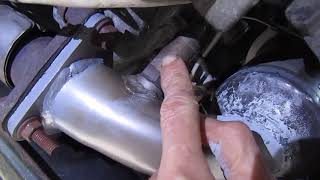
On the V6 engine in the 5th generation Maxima, 'Bank 1' is the cylinder bank closer to the firewall, which makes accessing Sensor 1 notoriously difficult. Owners report that a heat shield around the sensor can prevent standard O2 sensor sockets from fitting, sometimes requiring cutting the old sensor's wires to use a regular deep socket or even welding a lever to a socket for removal from below. 🎬 See this walkthrough for replacing the difficult Bank 1 sensor. For 2000-2001 models, Nissan TSB NTB01-034 noted that intermittent poor connections at the Engine Control Module (ECM) could trigger this code, a unique diagnostic path if a new sensor doesn't solve the issue. The 2002-2003 models with the VQ35DE engine use a more sensitive and expensive wideband Air/Fuel (A/F) ratio sensor in this position, which operates differently from the conventional O2 sensor in the 2000-2001 VQ30DE models.
Symptoms You May Notice
- Check Engine Light is on
- Decreased fuel economy
- Rough or unstable idle
- Engine hesitation or sluggishness during acceleration
- Failing an emissions test
- Engine stalling at idle
- "Rotten egg" or sulfur smell from the exhaust due to a rich fuel mixture
- Replacing the wrong oxygen sensor (e.g., Bank 2 on the front/radiator side, or the downstream Sensor 2 after the catalytic converter).
- Replacing the catalytic converter when the issue is an upstream sensor.
- Assuming the sensor is bad when the actual problem is a blown fuse or a wiring issue.
Most Likely Causes
- Failed Bank 1, Sensor 1 Oxygen Sensor 🔴 High Probability Oxygen sensors are wear-and-tear items that degrade over time, typically between 80,000-100,000 miles. The internal heating element is a common point of failure, which directly causes a 'no activity' code because the sensor cannot reach operating temperature.
How to confirm: Use a scan tool to monitor the live data for the Bank 1, Sensor 1 voltage. If the engine is warm and the voltage is flat (not fluctuating between ~0.1V and ~0.9V), the sensor is dead. 🎬 Watch: A detailed breakdown of P0134 causes and diagnostic steps. You can also test the heater circuit's resistance with a multimeter; a good sensor will have a specific resistance (e.g., ~5-15 ohms when cold), while a bad one will show an open circuit (infinite resistance).
Typical fix: Replace the Bank 1, Sensor 1 oxygen sensor. This is the upstream sensor on the rear cylinder bank (near the firewall). Using a direct-fit sensor from Denso or NGK/NTK is highly recommended by owners to avoid compatibility issues.
Est. part cost: $40-$220 - Damaged Wiring or Connector 🟡 Medium Probability The wiring harness to the rear O2 sensor is routed near hot exhaust components and can be exposed to road debris. This can cause wires to melt, fray, or the connector to become corroded or filled with debris, interrupting the signal.
How to confirm: Visually inspect the entire wiring harness from the sensor to the main engine harness. Check for melted plastic, frayed wires, or corrosion on the connector pins. Use a multimeter to check for continuity and proper voltage at the connector. A test light can also be used to verify power and ground to the heater circuit at the harness connector.
Typical fix: Repair the damaged section of the wire or clean/replace the connector.
Est. part cost: $5-$50 - Blown O2 Sensor Heater Fuse ⚪ Low Probability A short in the sensor's heating element or its wiring can cause the associated fuse to blow, cutting power to the sensor's heater circuit and preventing it from activating.
How to confirm: Locate the fuse box in the engine compartment and identify the fuse for the heated oxygen sensor (HO2S) circuit. Visually inspect the fuse to see if it has blown. The fuse is often labeled 'HEATED OXYGEN SENSOR' or similar.
Typical fix: Replace the blown fuse. If the new fuse blows immediately, there is a short circuit in the wiring or the sensor itself that must be found and fixed.
Est. part cost: $1-$5 - Exhaust Leak ⚪ Low Probability
How to confirm: Listen for ticking or hissing sounds from the exhaust manifold or pipes near the sensor, especially when the engine is cold. You can also use a smoke machine or spray soapy water on cold exhaust joints to look for leaks (bubbles will form). An exhaust leak before the sensor allows outside air in, which can make the sensor read a constant lean condition, sometimes interpreted as 'no activity'.
Typical fix: Replace the leaking exhaust gasket or repair the cracked pipe/manifold.
Est. part cost: $20-$300
Rare But Worth Checking
- Intermittent Connection at ECM: A known issue for 2000-2001 models cited in Nissan TSB NTB01-034. If other causes are ruled out, the pin connections at the engine computer itself should be inspected for looseness or corrosion.
- Dirty or Faulty Mass Airflow (MAF) Sensor: Some owners have reported that a dirty or failing MAF sensor can cause the engine to run improperly, leading to various fuel trim and O2 sensor codes, including P0134. Cleaning the MAF sensor with a dedicated cleaner is a simple, low-cost diagnostic step.
- Faulty Powertrain Control Module (PCM): This is extremely rare. The PCM should only be considered after all other possibilities, including the sensor, wiring, fuses, and exhaust system, have been thoroughly checked and ruled out.
Diagnosis Steps
- Connect an OBD-II scanner and confirm P0134 is the primary code. If other codes like P0135 (Heater Circuit) are present, it further points to the sensor or its circuit.
- Using the scanner's live data, monitor 'O2S B1S1' voltage with the engine at operating temperature. It should fluctuate rapidly between approximately 0.1V and 0.9V. If it is stuck at a fixed voltage (e.g., 0.45V) or shows 0V, the sensor is not active.
- Locate Bank 1, which is the rear cylinder bank against the firewall. Sensor 1 is the upstream sensor before the catalytic converter.
- Visually inspect the sensor's wiring harness and connector for any signs of melting, corrosion, or physical damage. The connector is located on the back of the engine, below the intake plenum. 🎬 Watch: How to locate and identify all Maxima O2 sensors.
- Check the fuse for the heated oxygen sensor (HO2S) circuit in the engine bay fuse box.
- Test the sensor's internal heater. Disconnect the sensor and measure the resistance between the two heater wires (often the same color). A good sensor should have a low resistance (e.g., ~5.5 ohms when cold), while a failed one will show infinite resistance (open circuit).
- Check for exhaust leaks between the cylinder head and the O2 sensor, as this can introduce oxygen and skew readings.
- If wiring, fuse, and exhaust are intact, and the sensor's heater circuit is open, the oxygen sensor itself is faulty and should be replaced. A special 22mm (7/8") slotted O2 sensor socket is highly recommended for removal.
- If a new sensor does not fix the issue, especially on a 2000-2001 model, investigate the wiring for an intermittent short/open and check the pin connections at the ECM as suggested by TSB NTB01-034.
Parts You'll Likely Need
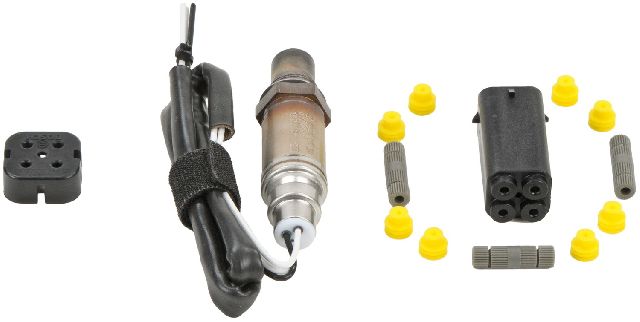
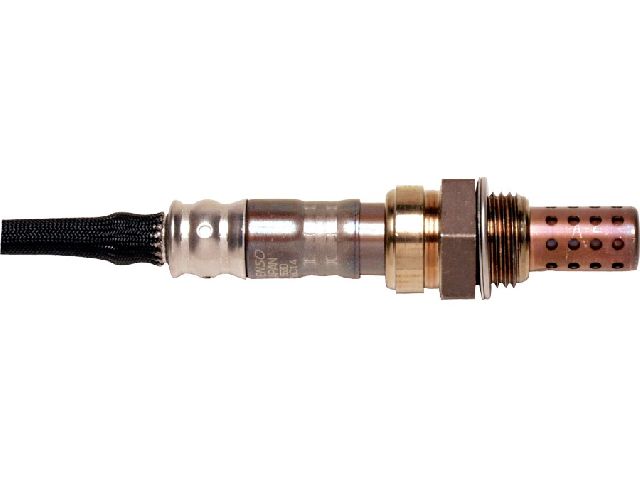
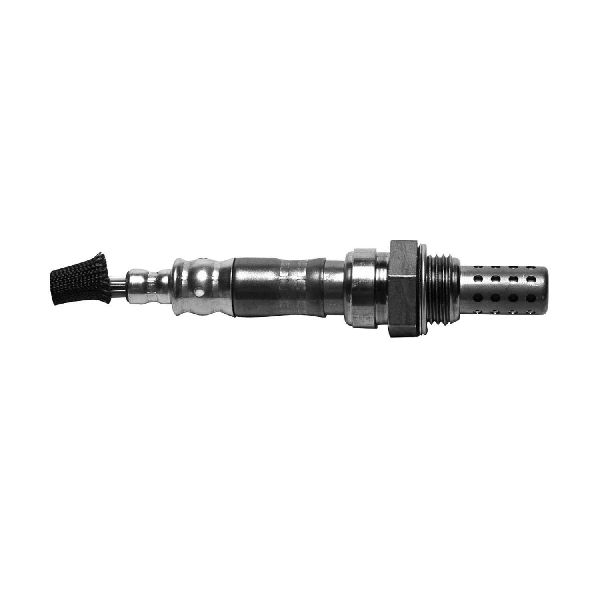
- Bank 1 Sensor 1 Oxygen Sensor (2000-2001)
(OEM #22690-2Y921 (supersedes 22690-2Y920))— This is the upstream O2 sensor for the 3.0L VQ30DE engine. It is the most common failure point for code P0134. The original part number has been replaced by an updated version.
Trusted brands: Denso (OEM supplier), NGK/NTK, Bosch (Direct-fit recommended over universal)
OEM price range: $150-$220
Aftermarket price range: $50-$90 - Bank 1 Sensor 1 Oxygen Sensor (2002-2003)
(OEM #22691-8J101)— This is the upstream Air/Fuel Ratio sensor for the 3.5L VQ35DE engine. It is the most common failure point for code P0134.
Trusted brands: Denso (OEM supplier), NGK/NTK, Bosch
OEM price range: $120-$200
Aftermarket price range: $40-$80 - Oxygen Sensor Socket Set — A specialized 22mm (7/8") slotted socket is often required to remove and install the oxygen sensor without damaging the wire, especially for the hard-to-reach rear sensor.
Trusted brands: Lisle, OEMTOOLS, GearWrench
Aftermarket price range: $15-$40
Technical Service Bulletins (TSBs) & Recalls
- NTB01-034: Mentions a possible intermittent connection at the ECM on 2000-2001 Maxima models that can cause P0134, among other codes. This suggests checking ECM connector pins for looseness or corrosion as a final diagnostic step if a new sensor and wiring check out.
Platform-Specific Known Issues
- Access to the Bank 1 (rear) sensor is extremely tight, wedged between the engine and firewall. Many owners report difficulty getting tools onto the sensor.
- A heat shield surrounding the Bank 1 sensor can interfere with O2 sensor sockets, sometimes requiring modification of tools or cutting the old sensor's wires to use a standard deep socket.
Mechanic-Grade Diagnostic Values
- O2 Sensor Heater Circuit Resistance — expected: 5-15 Ohms (Ω) at room temperature.. Failure: Infinite resistance (Open/OL) indicates a burned-out heater element. Near zero resistance indicates a shorted heater.
- Live Data - O2 Sensor Voltage (2000-2001 VQ30DE) — expected: Rapidly fluctuating between ~0.1V and ~0.9V when the engine is warm and in closed loop.. Failure: Voltage is stuck, flat-lining around 0.45V, or showing 0V.
- Live Data - A/F Sensor Current (2002-2003 VQ35DE) — expected: Fluctuating around 0 milliamps (mA) at idle.. Failure: A fixed, non-fluctuating current reading.
- Heater Circuit Power Supply — expected: Battery voltage (~12V) at the heater power wire in the harness-side connector with the key on, engine off.. Failure: No voltage, indicating a blown fuse, bad relay, or broken power wire.
Scan Tool Commands That Help
- Nissan CONSULT or advanced generic scanner: O2 Sensor Response Test / Active Test — This function allows a technician to force the engine to run rich or lean, then observe the sensor's voltage response. A healthy sensor will react quickly by spiking high (rich command) or dropping low (lean command). A slow or non-responsive sensor will fail this test, confirming it needs replacement.
Wiring & Ground Locations
- ECM Pin 50 (VQ30DE) — At the main Engine Control Module (ECM) connector.. This is the specific pin that receives the signal from the Bank 1, Sensor 1 oxygen sensor. Technicians can backprobe this pin to verify if the signal from the sensor is reaching the computer, which helps isolate a wiring break from a faulty ECM.
- O2HR1 (Pin 11 on VQ35DE) — At the main Engine Control Module (ECM) connector.. This pin on the VQ35DE's ECM controls the heater for the Bank 1 Air/Fuel sensor. A wiring diagram shows this is a Pink/Black wire, which is critical for checking continuity for the heater circuit.
- Engine Ground — Multiple points on the engine block and chassis. A key ground for the sensor circuits is often located on or near the intake manifold.. A corroded or loose engine ground can cause a floating reference voltage for multiple sensors, including the O2 sensor, leading to incorrect readings or a 'no activity' code. Verifying all main engine-to-chassis grounds are clean and tight is a crucial step.
Real Owner Repair Stories
- Maxima.org forum user (2000 Nissan Maxima GLE) — Intermittent P0134 code. The sensor would sometimes work correctly and then show no activity.
❌ Tried (didn't work) Replacing the Bank 1 Sensor 1 O2 sensor with a new Denso part., Clearing the code (it would return).
✅ What actually fixed it The user suspected a broken wire in the harness further up from the sensor connector. The intermittent nature pointed to a wiring issue rather than a completely dead sensor. - Nissan Club forum user (Nissan with VQ engine (similar to Maxima)) — P0131 and P0134 codes appearing together.
❌ Tried (didn't work) Visually checking vacuum lines., Cleaning the MAF sensor., Replacing the PCV valve.
✅ What actually fixed it Upon removing the upper intake plenum, the owner discovered a split in the gasket between two intake runners. Replacing the plenum gasket resolved the codes without ever replacing the O2 sensors that had been purchased. The theory is that the internal leak disrupted air inertia and distribution, causing a lean condition that the ECU interpreted as a sensor fault.
When the Usual Fixes Don't Work
- While the vast majority of P0134 codes are fixed by replacing the Bank 1 Sensor 1 O2 sensor, there are documented cases where this does not solve the problem. One owner on a Nissan forum replaced the sensor multiple times only to find the root cause was a split intake plenum gasket creating an internal air leak between cylinders. Another owner chased an intermittent P0134 after a sensor replacement, pointing toward a hard-to-find break in the wiring harness rather than another faulty sensor. These cases highlight the importance of following full diagnostic procedures, including checking for obscure vacuum/intake leaks and performing wiring continuity tests, before assuming a new part has failed.
OEM Part Supersession History
22690-2Y920→22690-2Y921— Standard part update/revision by Nissan.
Heads up: The new part number (22690-2Y921) is the correct and direct replacement for the 2000-2001 Maxima VQ30DE engine. There are no known incompatibility issues.
Model Year Variations Within This Range
- 2000-2001: Uses a 3.0L VQ30DE engine with a conventional (narrowband) zirconia oxygen sensor for Bank 1, Sensor 1. Diagnosis focuses on voltage switching between 0.1V and 0.9V.
- 2002-2003: Uses a 3.5L VQ35DE engine with a wideband Air/Fuel (A/F) ratio sensor for Bank 1, Sensor 1. Diagnosis focuses on a current signal that fluctuates around a baseline, not a simple voltage switch. These sensors are typically more expensive and operate on different principles.
Diagnostic Flowchart
Used vs. New Parts: Buying Guide for This Vehicle
When a used part is the smart pick: For this repair, a used part is almost never a smart choice. Oxygen sensors are wear-and-tear items with a finite lifespan. A used sensor from a junkyard has unknown mileage and life remaining, and could fail shortly after installation, wasting time and money.
Donor-vehicle mileage cap: roughly under 20000 miles for the part to have meaningful remaining life.
What to inspect on the donor part:
- If forced to use a used sensor, source it from a very low-mileage wreck.
- Inspect the sensor tip for heavy black soot (rich running), white deposits (coolant/oil contamination), or physical damage.
- Ensure the connector and wires are pristine with no cuts, melting, or corrosion.
OEM-only on this vehicle (don't cheap out):
- While not strictly 'OEM-only', sticking to the OEM supplier brands is highly recommended for sensors.
Aftermarket brands forum-validated for this vehicle:
- Denso (often the original OEM supplier)
- NGK / NTK
- Bosch (ensure it is a 'direct-fit' model with the correct connector, not a universal one that requires splicing)
Brands owners have reported issues with on this vehicle:
- Universal sensors that require cutting and splicing wires.
- Unbranded, no-name parts from online marketplaces, as their quality control and accuracy can be poor, leading to persistent codes.
Real Owner Stories
Aggregated from forums and TSBs cited above. Mileages and costs reflect what owners reported in those sources.
2000 Nissan Maxima GLE
Symptoms: Check Engine Light with code P0134. The sensor would intermittently give no reading at all when monitored on a scan tool.
What fixed it: The owner was diagnosing a recurring P0134 that returned just six months after replacing the original sensor with a new Denso unit, indicating a potential wiring or connector issue rather than another sensor failure.
Source hint: Maxima.org
2000-2003 Nissan Maxima — ~95000 miles
Symptoms: Check Engine Light on with P0134, accompanied by poor fuel economy and a rough idle.
What fixed it: Replaced the Bank 1, Sensor 1 oxygen sensor. The owner noted the repair was extremely difficult due to the sensor's location against the firewall and interference from a heat shield, which required modifying tools to remove the old sensor.
Source hint: Maxima.org forums discussing the difficulty of the Bank 1 Sensor 1 replacement
2000 Nissan Maxima
Symptoms: Engine was stalling at idle in addition to having the P0134 code present.
What fixed it: The owner was investigating a potentially faulty Mass Airflow (MAF) sensor as a contributing factor to both the stalling and the oxygen sensor code, as a bad MAF can cause a variety of fuel mixture and drivability problems.
Source hint: NICOclub.com thread discussing P0134 and stalling issues
Related OBD-II Codes
Frequently Asked Questions
Where exactly is the Bank 1, Sensor 1 oxygen sensor located on my 2000-2003 Maxima?
I'm having a lot of trouble getting a socket on the rear O2 sensor. Is this normal?
What brand of replacement oxygen sensor is best for my Maxima to avoid issues?
I replaced the O2 sensor and checked the wiring, but P0134 came back. What now?
How can I test the oxygen sensor on my Maxima before buying a new one?
Could a simple blown fuse cause the P0134 code?
Helpful Videos
We Have This Part in Stock


The information in this article is provided for general reference and educational purposes only. Vehicle specifications, procedures, and part compatibility can vary by production date, trim level, and region. Always consult your vehicle's factory service manual and verify part numbers before purchasing or performing repairs. Safety-critical components such as airbags, seat belts, and braking systems should be installed by a qualified professional.
- Nissan Maxima:
- 🎬 Helpful Videos
- 🛍️ Shop This Part
- What's Unique About the 2000-2003 Nissan Maxima
- Symptoms You May Notice
- Most Likely Causes
- Rare But Worth Checking
- Diagnosis Steps
- Parts You'll Likely Need
- Technical Service Bulletins (TSBs) & Recalls
- Platform-Specific Known Issues
- Mechanic-Grade Diagnostic Values
- Scan Tool Commands That Help
- Wiring & Ground Locations
- Real Owner Repair Stories
- When the Usual Fixes Don't Work
- OEM Part Supersession History
- Model Year Variations Within This Range
- Diagnostic Flowchart
- Used vs. New Parts: Buying Guide for This Vehicle
- Real Owner Stories
- 2000 Nissan Maxima GLE
- 2000-2003 Nissan Maxima — ~95000 miles
- 2000 Nissan Maxima
- Related OBD-II Codes
- Frequently Asked Questions
- 🎟️ Get 5% Off