

P0134 on 2011-2014 Ford Edge 3.5L: Causes and Fixes for O2 Sensor Inactivity
This code almost always means the Bank 1, Sensor 1 oxygen sensor has failed. On the 3.5L V6, this is the upstream sensor on the firewall side of the engine. Replacing the sensor is the most common fix, costing around $60-$120 for the part. Access is tight, and it's crucial to confirm the correct sensor before replacement.
- P0134 means the Bank 1, Sensor 1 oxygen sensor is not sending a signal.
- On the 2011-2014 Edge 3.5L, Bank 1 is the cylinder bank against the firewall. Sensor 1 is the 'upstream' sensor before the catalytic converter.
- The most likely fix is to replace the sensor (OEM part BL3Z-9F472-A or Motorcraft DY-1178).
- Before replacing the sensor, always perform a quick visual inspection of the wiring and connector for obvious damage and check the HEGO/O2 sensor fuse.
- Accessing the Bank 1 sensor is more difficult than Bank 2; it is typically reached from underneath the vehicle and requires a special socket.
What's Unique About the 2011-2014 Ford Edge
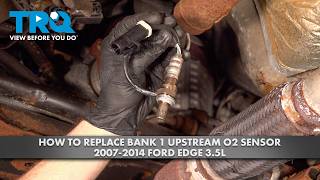
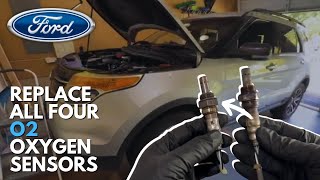
For the 2011-2014 Ford Edge with the transverse-mounted 3.5L V6, the key challenge is identifying the correct sensor. Bank 1 is the cylinder bank located against the firewall, making access to the upstream sensor (Sensor 1) more difficult than the more accessible Bank 2 sensor at the front of the vehicle near the radiator. Owners frequently misdiagnose the issue by replacing the wrong sensor. 🎬 Watch: How to identify and replace all four sensors. Otherwise, the cause is typical for many modern vehicles: the oxygen sensor simply wears out over time.
Symptoms You May Notice
- Check Engine Light is on
- Reduced fuel economy
- Rough or uneven idle
- Engine hesitation or sluggish acceleration
- Failing a vehicle emissions test
- Rotten egg smell from the exhaust (less common)
- Replacing the wrong oxygen sensor (e.g., Bank 2 Sensor 1, which is on the radiator side, or the downstream Sensor 2).
- Replacing the sensor without checking for wiring damage first.
- Assuming the sensor is bad when an exhaust leak is the true cause.
Most Likely Causes
- Failed Bank 1, Sensor 1 Oxygen Sensor 🔴 High Probability Oxygen sensors are wear-and-tear items that have a finite lifespan, typically failing from age, contamination, or internal heater circuit failure. This is the most common resolution for a P0134 code.
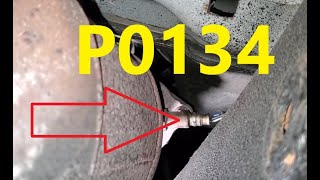
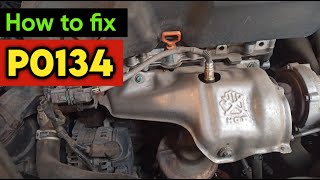
How to confirm: Use an OBD-II scanner with live data to monitor the Bank 1, Sensor 1 voltage (often labeled O2S11). A healthy upstream sensor's voltage should fluctuate rapidly between approximately 0.1 and 0.9 volts. If the voltage is flat, stuck (e.g., at 0.45V), or shows no activity, the sensor has failed. 🎬 See this video for common P0134 causes and fixes.
Typical fix: Replace the Bank 1, Sensor 1 oxygen sensor. This sensor is located on the exhaust manifold of the cylinder bank closer to the firewall. Access is typically from underneath the vehicle and may require a specialized O2 sensor socket.
Est. part cost: $60-$145 - Damaged Wiring or Connector 🟡 Medium Probability The sensor's location near hot exhaust components and its exposure under the vehicle make its wiring harness susceptible to heat damage, melting, chafing, or corrosion at the connector. The harness can sometimes contact the exhaust manifold if not properly secured.
How to confirm: Visually inspect the wiring harness leading to the Bank 1, Sensor 1 O2 sensor for any signs of melting, breaks, or frayed wires. Unplug the connector and check for corrosion, moisture, or bent pins.
Typical fix: Repair the damaged section of the wiring harness or replace the connector pigtail. Use heat-resistant loom and secure the wiring away from the exhaust.
Est. part cost: $15-$40 - Exhaust Leak ⚪ Low Probability Leaks from a cracked exhaust manifold or a bad gasket near the sensor can introduce fresh oxygen into the exhaust stream. This can cause the sensor to send an inaccurate, flat signal to the PCM, mimicking a dead sensor.
How to confirm: Listen for ticking or hissing noises from the engine bay, especially when the engine is cold. Visually inspect the exhaust manifold for cracks or black soot marks indicating a leak.
Typical fix: Replace the leaking exhaust manifold gasket or repair/replace the cracked manifold.
Est. part cost: $20-$300
Rare But Worth Checking
- Blown Fuse: The oxygen sensor's internal heater has its own circuit, which is protected by a fuse. A blown fuse will prevent the sensor from warming up and operating, causing a 'no activity' code. Check the under-hood fuse box for fuses labeled 'HEGO' or 'O2 Sensor'. On some Fords, a single fuse may protect multiple O2 sensor heaters.
- Faulty Powertrain Control Module (PCM): In very rare cases, the PCM itself may be unable to read the signal from a perfectly good sensor. This should only be considered after all other possibilities, including the sensor, wiring, and fuses have been definitively ruled out by testing.
Diagnosis Steps
- Connect an OBD-II scanner and confirm that P0134 is the primary code. Note any other codes present, especially P0135.
- Use the scanner's live data feature to observe the voltage for 'O2S11' (Oxygen Sensor, Bank 1, Sensor 1).
- Warm the engine to operating temperature. A healthy sensor will show voltage rapidly fluctuating between ~0.1V and ~0.9V. If the voltage is static (e.g., stuck at 0.45V) or shows no reading, the sensor or its circuit is faulty.
- If the signal is inactive, check the fuse for the O2 sensor heater circuit (HEGO) in the under-hood fuse box.
- If the fuse is good, safely raise and support the vehicle. Locate the Bank 1, Sensor 1 O2 sensor on the rear exhaust manifold (firewall side).
- Thoroughly inspect the sensor's wiring harness and connector for any signs of melting, chafing, corrosion, or loose pins. Pay close attention to where the harness might contact the exhaust.
- If the wiring and fuse are intact, the oxygen sensor itself is almost certainly the cause and should be replaced.
- Use a proper O2 sensor socket to remove the old sensor. It may be seized; applying penetrating oil beforehand can help.
- After replacement, clear the codes with the scanner and perform a test drive, including a mix of city and highway driving, to ensure the code does not return.
Parts You'll Likely Need
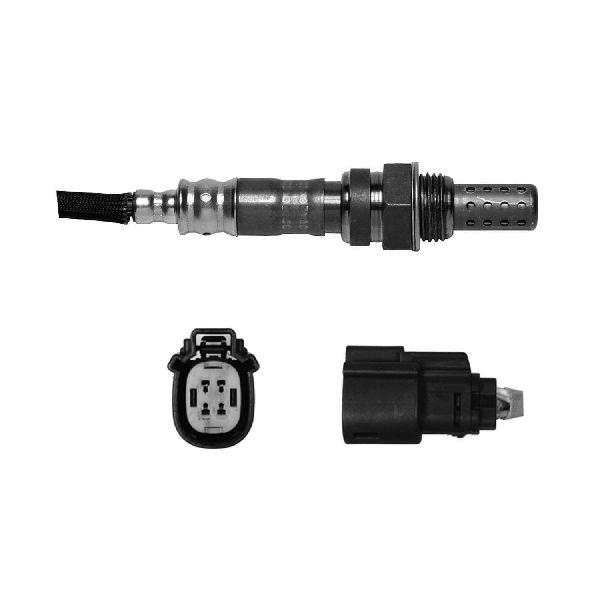
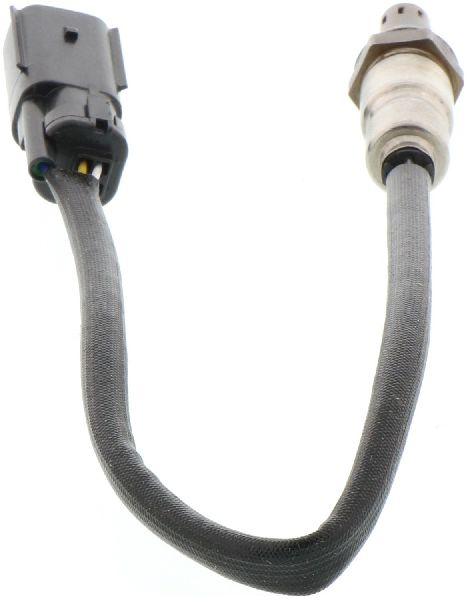
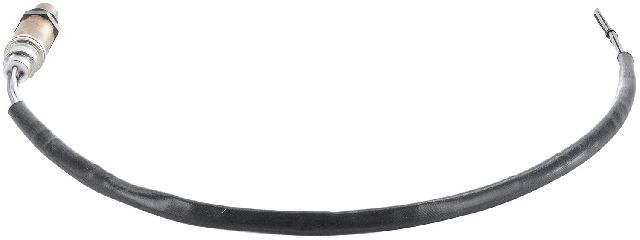
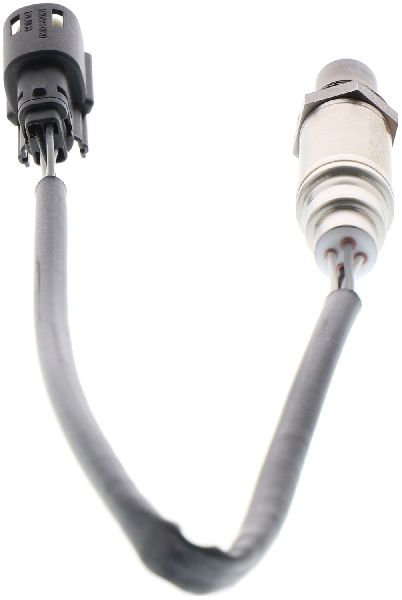
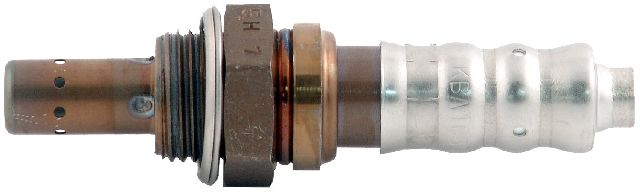
- Upstream Oxygen Sensor (Bank 1, Sensor 1)
(OEM #BL3Z-9F472-A)— This is the component that fails in the vast majority of P0134 cases. It is a wear item that eventually stops sending a signal.
Trusted brands: Motorcraft (DY-1178), Denso (234-5038), Bosch (18088), NTK (22134)
OEM price range: $110-$145
Aftermarket price range: $60-$120
Related Codes That Often Appear With This One
- P0135 — P0135 indicates a fault in the heater circuit for the same sensor (Bank 1, Sensor 1). A failed heater can prevent the sensor from becoming active, which can lead to a P0134 code being set as well. It is very common to see these two codes together.
- P0171 — If the sensor is failing and sending a false 'lean' signal (or no signal at all), the PCM might try to compensate by adding too much fuel, which can sometimes trigger other fuel trim or lean/rich condition codes.
- P2196 — This code (O2 Sensor Signal Biased/Stuck Rich Bank 1 Sensor 1) is the opposite of a lean code but can be related to a failing sensor or a significant vacuum leak, like from a faulty EVAP purge solenoid, which has been noted on these vehicles.
Platform-Specific Known Issues
- Access to Bank 1 Sensor: Owners and technicians report that accessing the Bank 1 (firewall side) upstream sensor is difficult due to tight clearance. It is typically accessed from below the vehicle. Removing the cowl is generally not necessary but can provide more room from above for those with smaller hands.
- Owner Experience: P0134 and P0171 together: A 2013 Edge owner reported getting P0134 along with P0171 (System Too Lean). Live data showed the Bank 1 Sensor 1 voltage fluctuating wildly instead of smoothly. Replacing the sensor (part CT4Z-9G444-A in this case, another compatible number) resolved both codes.
Mechanic-Grade Diagnostic Values
- O2 Sensor Heater Element Resistance — expected: 4-6 ohms at 20°C (68°F). Failure: An open circuit (infinite resistance) or a reading significantly outside the expected range indicates a failed heater element.
- O2 Sensor Signal Voltage (Live Data) — expected: Rapidly fluctuating between ~0.1V and ~0.9V when the engine is in closed loop.. Failure: A flat, unchanging voltage (often stuck around 0.45V) or no voltage reading indicates an inactive sensor.
- O2 Sensor Installation Torque — expected: 48 Nm (35 lb-ft). Failure: N/A
- O2 Sensor Signal Circuit (Unplugged) — expected: 0V. Failure: N/A. This is a characteristic, not a failure. Unlike some manufacturers (like GM), Ford systems of this era typically do not use a bias voltage on the O2 sensor signal circuit. Testing for bias voltage by unplugging the sensor and measuring the harness-side connector will show 0V, which is normal.
Scan Tool Commands That Help
- Ford IDS (Integrated Diagnostic System): Datalogger - O2S11 PID — To monitor the live voltage output of the Bank 1 Sensor 1. This is the primary method to confirm if the sensor is active or flat-lined, which is the core of the P0134 fault.
- Ford IDS (Integrated Diagnostic System): KOER (Key On Engine Running) Self-Test — To command the PCM to run a full suite of on-demand diagnostic tests while the engine is running. This can help confirm the P0134 fault and potentially flag other related issues that may not have set a code yet.
- Ford IDS (Integrated Diagnostic System): Freeze Frame Data — To review the engine operating conditions (RPM, load, temperature, etc.) at the exact moment the P0134 code was triggered. This can provide clues if the failure is intermittent or occurs under specific conditions.
Wiring & Ground Locations
- G101 — Right rear of the engine.. This is a primary engine ground. A poor connection at G101 can cause a variety of sensor and PCM-related issues, including incorrect or missing sensor readings. While not a direct cause, it should be checked if multiple, seemingly unrelated engine codes are present.
- G104 — Left front of the engine compartment.. This is a major chassis ground point in the engine bay. The O2 sensor heater circuit, among other components, relies on a solid ground path to the chassis. A corroded or loose G104 could potentially cause heater circuit faults (like P0135) which can lead to a P0134 inactivity code.
- O2 Sensor Connector (Upstream) — The connector for Bank 1 Sensor 1 is located on the back of the engine (firewall side), with the harness running up from the sensor in the exhaust manifold.. This is the most likely point of failure besides the sensor itself. The 4-pin connector and its associated wiring are prone to heat damage, melting, and corrosion. Testing for power, ground, and signal continuity should be performed at this connector.
OEM Part Supersession History
CT4Z-9G444-A→BL3Z-9F472-A— Part number consolidation and potential minor revisions by Ford.
Heads up: Both parts are generally compatible, but it is always recommended to use the latest revision (BL3Z-9F472-A / Motorcraft DY-1178) for this repair.
Model Year Variations Within This Range
- 2011: The 3.5L V6 in the 2011 model year was updated to produce 285 horsepower, up from 265 in the 2007-2010 models. This change did not significantly affect the O2 sensor diagnosis or parts for P0134, but it is a notable engine revision within the first generation.
Diagnostic Flowchart
Other Known Issues on This Vehicle
Issues unrelated to this code that are worth knowing about as an owner of this generation:
- Internal Water Pump Failure 🔴 High — Common after 80,000-120,000 miles. Failure can be catastrophic. (Ref: No recall, but subject of class-action lawsuits. The design flaw involves the pump being driven by the timing chain; when its seal fails, it leaks coolant directly into the engine oil.)
- Power Transfer Unit (PTU) Failure (AWD Models) 🔴 High — Common across all model years, often due to fluid overheating and breakdown. Preventative fluid changes (every 30k miles) are recommended.
- Electronic Throttle Body Failure 🟠 Medium — Widespread issue, often occurring without warning. (Ref: Ford Customer Satisfaction Program 13N03 (now expired) extended the warranty for this part.)
- Door Ajar Sensor Failure 🟡 Low — Very common, particularly on 2011-2013 models. (Ref: TSB 18-2013 was issued for this problem.)
Used vs. New Parts: Buying Guide for This Vehicle
When a used part is the smart pick: Using a used part for this repair is NOT recommended. Oxygen sensors are wear-and-tear items with a finite lifespan. A used sensor from a junkyard has unknown remaining life and may fail shortly after installation, causing the code to return.
What to inspect on the donor part:
- Not applicable as used sensors are not advised.
Aftermarket brands forum-validated for this vehicle:
- Motorcraft (OEM)
- Denso
- NTK
- Bosch
Brands owners have reported issues with on this vehicle:
- Unbranded, no-name sensors from online marketplaces are frequently reported to fail prematurely or be dead-on-arrival.
Real Owner Stories
Aggregated from forums and TSBs cited above. Mileages and costs reflect what owners reported in those sources.
2013 Ford Edge 3.5L V6
Symptoms: The owner observed the Check Engine Light with codes P0134 and P0171. Live data showed the Bank 1 Sensor 1 voltage fluctuating wildly instead of showing a smooth, healthy signal.
What fixed it: Replacing the Bank 1 Sensor 1 oxygen sensor (part CT4Z-9G444-A).
Source hint: vehicle_specific_issues: Owner Experience: P0134 and P0171 together
2011 Ford Edge 3.5L V6
Symptoms: General electrical and sensor issues were discussed, with users noting the difficulty of identifying and accessing the correct sensor bank.
What fixed it: Replacing the Bank 1, Sensor 1 O2 sensor is cited as the standard fix for the P0134 code on this platform.
Source hint: forum_citations: fordedgeforum.com and Reddit r/MechanicAdvice
Related OBD-II Codes
Frequently Asked Questions
Where is the Bank 1 Sensor 1 oxygen sensor located on my 2011-2014 Ford Edge 3.5L?
I have a P0134 and a P0171 code at the same time; are they related?
Is there a specific part number recommended for the Bank 1 sensor replacement?
Do I need to remove the cowl to reach the rear O2 sensor?
Could a fuse be responsible for my P0134 code?
Is the P0134 code related to the internal water pump issues on the 3.5L Duratec?
Helpful Videos
We Have This Part in Stock


The information in this article is provided for general reference and educational purposes only. Vehicle specifications, procedures, and part compatibility can vary by production date, trim level, and region. Always consult your vehicle's factory service manual and verify part numbers before purchasing or performing repairs. Safety-critical components such as airbags, seat belts, and braking systems should be installed by a qualified professional.
- Ford Edge:
- 🎬 Helpful Videos
- 🛍️ Shop This Part
- What's Unique About the 2011-2014 Ford Edge
- Symptoms You May Notice
- Most Likely Causes
- Rare But Worth Checking
- Diagnosis Steps
- Parts You'll Likely Need
- Related Codes That Often Appear With This One
- Platform-Specific Known Issues
- Mechanic-Grade Diagnostic Values
- Scan Tool Commands That Help
- Wiring & Ground Locations
- OEM Part Supersession History
- Model Year Variations Within This Range
- Diagnostic Flowchart
- Other Known Issues on This Vehicle
- Used vs. New Parts: Buying Guide for This Vehicle
- Real Owner Stories
- 2013 Ford Edge 3.5L V6
- 2011 Ford Edge 3.5L V6
- Related OBD-II Codes
- Frequently Asked Questions
- 🎟️ Get 5% Off