

P0133 on 2010-2014 Volkswagen Golf TSI: Slow O2 Sensor Causes and Fixes
For a 2010-2014 VW Golf with a TSI engine (most commonly the GTI with the 2.0T CCTA/CBFA engine), code P0133 usually means the upstream oxygen sensor (Bank 1, Sensor 1) is failing. This is a common wear item. Before replacing it, it's critical to check for exhaust leaks from the downpipe flex pipe and a failed PCV valve, which are also extremely common issues on this platform that can trigger the same code.
- P0133 on your Golf TSI means the primary O2 sensor is responding too slowly, most often due to the sensor itself failing.
- Before buying a new O2 sensor, you MUST check for two other common VW issues: exhaust leaks before the sensor (especially the downpipe flex pipe) and a failed PCV valve.
- A failed PCV valve can be quickly checked by feeling for strong suction at the oil cap with the engine running or listening for a hiss from the PCV breather port.
- When replacing parts, use the latest revised OEM part number, especially for the PCV valve (06H103495AH), to ensure a long-lasting repair.
What's Unique About the 2010-2014 Volkswagen Golf
On the Mk6 Golf GTI with the 2.0T TSI engine (CCTA/CBFA), P0133 is a very common code. While the O2 sensor itself is often the culprit, these engines are also known for two other issues that can cause this code: exhaust leaks from the downpipe flex pipe or turbocharger clamp, and failure of the PCV (Positive Crankcase Ventilation) valve. A failed PCV creates a significant unmetered vacuum leak that the ECM can misinterpret as a slow sensor. Owners often mistakenly replace the O2 sensor first, only to have the code return because the root cause was a leak.
Generation note: The 2010-2014 year range primarily covers the Golf Mk6. In North America, the GTI model used the 2.0T TSI EA888 Gen 1 engine (engine codes CCTA, CBFA). The base Golf used a 2.5L 5-cylinder engine, which has different common failure points. This guide is most applicable to the TSI-equipped models like the GTI. The CBFA engine, found in states with California emissions standards, includes a secondary air injection system and a third O2 sensor not present on the more common CCTA engine. While the causes of P0133 are similar for all EA888 engines, specific part numbers for components like the PCV valve and O2 sensor may differ.
Symptoms You May Notice
- Check Engine Light is on
- Reduced fuel economy
- Rough or unstable idle
- Engine hesitation during acceleration
- Failure to pass an emissions test
- Loud screeching or hissing noise from the engine bay (if caused by PCV failure)
- Replacing the oxygen sensor without first checking for exhaust and vacuum leaks. A leak will cause the P0133 code to return even with a new sensor.
- Replacing the downstream (Bank 1, Sensor 2) oxygen sensor. P0133 specifically refers to the upstream Sensor 1.
Most Likely Causes
- Failing Upstream Oxygen Sensor (Bank 1, Sensor 1) 🔴 High Probability Oxygen sensors are wear-and-tear items that degrade over time from intense heat and contaminants in the exhaust stream. On TSI engines, they are a frequent failure point after 60,000-100,000 miles.
How to confirm: Use a scan tool with live data (like VCDS) to graph the sensor's voltage. At a steady 2500 RPM, a healthy sensor's voltage should switch rapidly between ~0.1V and ~0.9V multiple times per second. A slow, lazy waveform that takes longer than 100ms to switch confirms the sensor is failing.
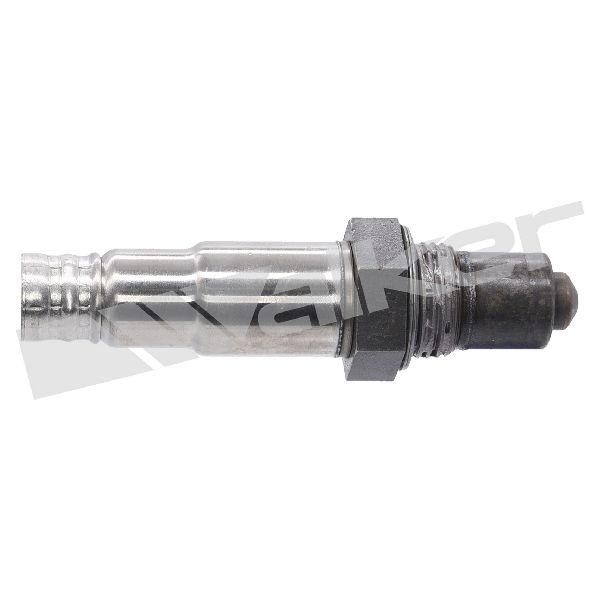
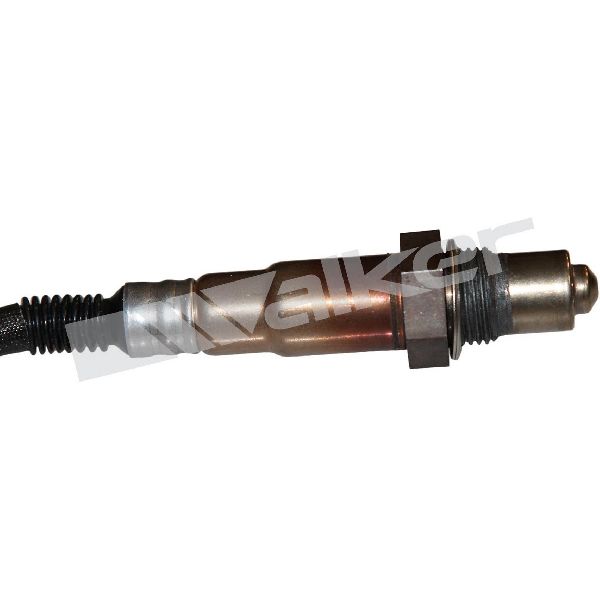
Typical fix: Replace the upstream oxygen sensor. An O2 sensor socket is highly recommended 🎬 Watch: Step-by-step guide to replacing the upstream O2 sensor. for removal. Use of an OEM-branded sensor (e.g., Bosch) is strongly advised as cheaper sensors can fail quickly or be wired incorrectly.
Est. part cost: $80-$250 - Exhaust Leak (pre-catalyst) 🟡 Medium Probability The flex pipe on the downpipe and the V-band clamp at the turbocharger are common points for leaks to develop on these cars. The constant vibration and heat cycles cause gaskets to fail and the braided flex pipe to crack.
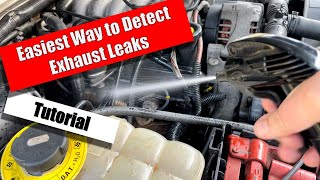
How to confirm: Visually inspect the exhaust manifold, turbocharger connections, and downpipe for black soot trails, which indicate a leak. A cold start can often make the sound of a leak more audible (a ticking or hissing sound). A professional can use a smoke machine to pressurize the exhaust and pinpoint the leak. 🎬 See this simple trick to find hidden exhaust leaks.
Typical fix: Tighten clamps or replace the leaking gasket. If the flex pipe is cracked, the downpipe section will need to be repaired or replaced.
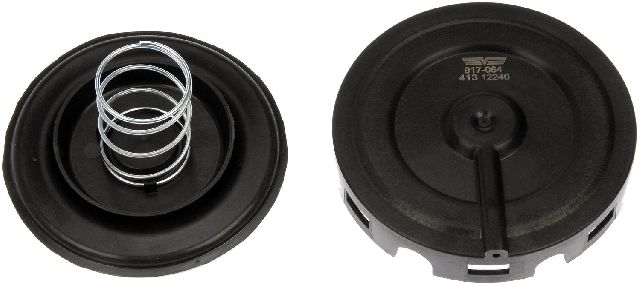
Est. part cost: $10-$300 - Failed PCV Valve 🟡 Medium Probability The diaphragm inside the PCV (Positive Crankcase Ventilation) valve is made of rubber and is known to tear on EA888 TSI engines. This creates a large, unmetered vacuum leak.
How to confirm: With the engine running at idle, try to remove the oil filler cap. If there is very strong suction holding the cap down, or if the engine stumbles or stalls when the cap is removed, the PCV diaphragm has likely failed. Another definitive test is to listen for a hissing/sucking sound from the small breather port on the top of the round PCV cap; if vacuum is present there, the diaphragm is torn. This issue is often accompanied by a P0171 (System Too Lean) code.
Typical fix: Replace the entire PCV valve assembly. VW has released several revised versions of this part. It is critical to use the latest revision to prevent premature failure.
Est. part cost: $30-$180
Rare But Worth Checking
- Damaged O2 Sensor Wiring or Connector: The wiring harness is routed near hot exhaust components and can become brittle, melt, or corroded. High resistance in the wiring can slow down the sensor's signal, triggering P0133.
- Low Fuel Pressure or Dirty MAF Sensor: While less common, issues that cause the engine to run consistently lean, like a weak fuel pump or a dirty Mass Airflow sensor, can sometimes be misinterpreted by the ECM as a slow O2 sensor.
- ECM Software Update Needed: On some related VW models, Technical Service Bulletins were issued for an ECM software update to adjust the sensitivity of the P0133 monitoring parameter, which could falsely trigger the code.
Diagnosis Steps
- Scan the vehicle for stored trouble codes. Confirm P0133 is present and note any other codes (like P0171 or P0507).
- With the engine running, perform checks for a failed PCV valve: listen for a loud hissing/squealing noise and check for strong suction at the oil filler cap or the PCV breather port.
- Perform a thorough visual and auditory inspection of the exhaust system from the engine head to the catalytic converter. Look for black soot trails and listen for hissing/ticking sounds, especially on a cold start. Pay close attention to the downpipe flex pipe.
- Inspect the O2 sensor wiring and connector for any signs of melting, chafing, or corrosion.
- If no leaks or wiring issues are found, use a scan tool (like VCDS) to observe the live data from Bank 1 Sensor 1. A healthy sensor will show voltage fluctuating rapidly. If the signal is slow (taking >100ms to switch), flat, or biased, the sensor is likely faulty.
- If the diagnosis is still unclear, a professional smoke test on the intake and exhaust systems is the definitive way to find hidden leaks.
- Only after confirming the sensor is bad and that there are no leaks, proceed with replacing the Bank 1 Sensor 1 O2 sensor. After replacement, reset the O2 sensor learned values using a capable scan tool.
Parts You'll Likely Need
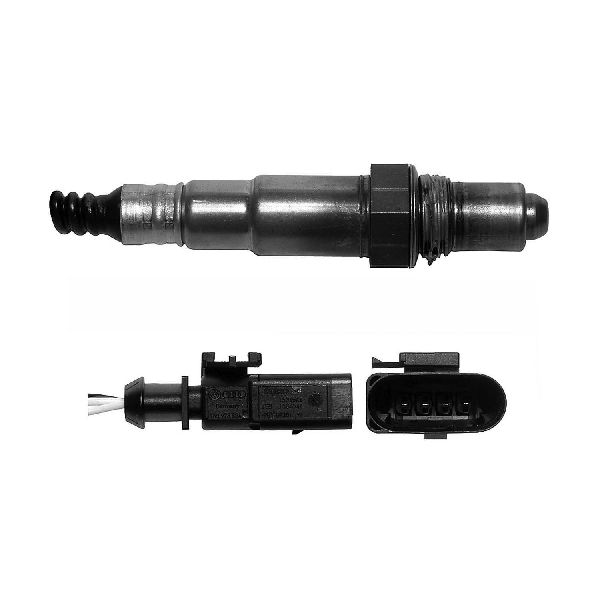
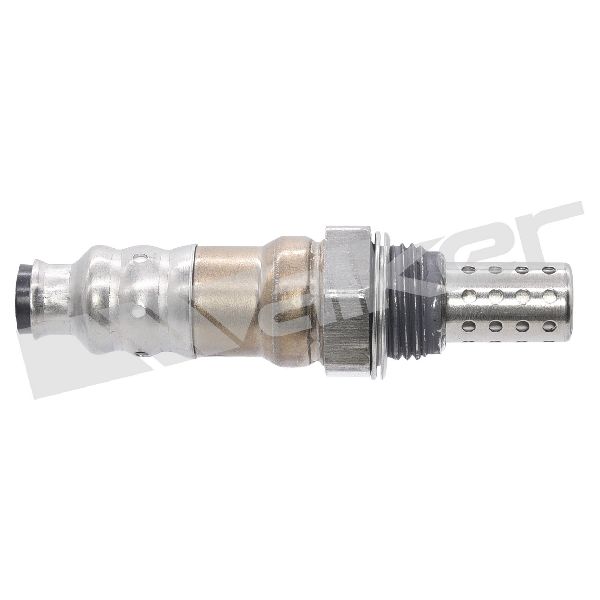
- Upstream Oxygen Sensor (Bank 1, Sensor 1)
(OEM #06J906262AA (or superseding part numbers like 1K0998262D))— This is the most common cause of P0133, as the sensor is a wear item that degrades over time.
Trusted brands: Bosch (OEM supplier, part 17097 or 17351 depending on specific application), NGK/NTK, Denso
OEM price range: $150-$250
Aftermarket price range: $80-$180 - PCV Valve Assembly
(OEM #06H103495AH (latest revision, supersedes older versions like E, A, AC, etc.))— A common failure point on TSI engines that creates a vacuum leak, which can trigger P0133. It is critical to use the latest revision.
Trusted brands: Genuine VW/Audi, Vaico, RKX (offers upgraded diaphragm repair kits)
OEM price range: $120-$180
Aftermarket price range: $30-$90
Related Codes That Often Appear With This One
- P0171 — System Too Lean (Bank 1). A vacuum leak (like a failed PCV) or an exhaust leak that causes P0133 will also allow unmetered air into the system, leading to a lean condition.
- P0507 — Idle Air Control System RPM Higher Than Expected. A significant vacuum leak from a failed PCV valve can cause the engine idle to increase, triggering this code alongside P0171 and P0133.
Technical Service Bulletins (TSBs) & Recalls
- While not for the Golf directly, VW TSB 24-16-01 (or 2044943/4) for the 2016 Jetta with a similar engine addresses an ECM software update to fix overly sensitive P0133 monitoring, indicating VW is aware of the code's sensitivity on this engine family.
- Manufacturer TSB Bulletin #VIN4APIN20200320 notes that customers may report a MIL-on with P0133, sometimes occurring alongside other codes like P06EF, P06E9, P0463, or P0496.
- Manufacturer TSB Bulletin #VIN4APIN20200124 describes instances where P0133 is present with symptoms such as low heat output or a no-crank/no-start condition.
- Manufacturer TSB Bulletin #VIN4APIN20200108 documents reports of P0133 occurring in conjunction with loose or broken High Pressure Fuel Pump (HPFP) mounting bolts and airbag light illumination.
- Manufacturer TSB Bulletin #VIN4APIN20191122 indicates that P0133 may be found alongside P1429 or P0556, as well as mechanical issues like noisy front windows.
- Manufacturer TSB Bulletin #VIN4APIN20190628 lists P0133 in a cluster of potential fault codes including P0197, P0116, and P2097, sometimes accompanied by sunshade binding or tearing.
Platform-Specific Known Issues
- PCV Revisions: The PCV valve for the EA888 engine has gone through numerous revisions (e.g., 06H103495A, E, AC, AH). Using an outdated version will likely lead to another failure. Always purchase the latest available revision, currently 06H103495AH or newer.
- Downpipe Flex Pipe: The braided flex section of the downpipe is a known failure point. It can crack from heat and vibration, causing a pre-sensor exhaust leak that directly causes P0133. A visual inspection for soot is key.
Mechanic-Grade Diagnostic Values
- Long Term Fuel Trim at Idle (Additive) & Partial Load (Multiplicative) — expected: Ideally within +/- 10%. Values are read from VCDS Measuring Block Group 032.. Failure: Consistently positive values (e.g., > +10%) indicate the ECU is adding fuel to compensate for a lean condition, which can be caused by a vacuum leak (PCV) or exhaust leak that also triggers P0133.
- P0133 Fault Trigger Condition (Delay Check) — expected: The delay between the ECU's modeled lambda signal and the actual measured signal from the O2 sensor should be less than the specified threshold.. Failure: A delay greater than 400 milliseconds will trigger the fault code.
- O2 Sensor Wiring Harness Resistance — expected: Less than 0.5 Ohms from the sensor connector to the ECM connector.. Failure: Resistance greater than 0.5 Ohms in the wiring harness can dampen the voltage signal and mimic a slow sensor, triggering a P0133 code.
Scan Tool Commands That Help
- VCDS (VAG-COM): [Engine - 01] -> [Basic Settings - 04] -> Group 'Resetting of oxygen sensor learned values' — Immediately after replacing the upstream oxygen sensor. This clears the old adaptation data from the ECU and forces it to relearn with the new sensor, which can prevent the P0133 code from returning if the ECU was over-compensating for the old, failing sensor.
- VCDS (VAG-COM): [Engine - 01] -> [Measuring Blocks - 08] -> Group 032 — To check long-term additive (idle) and multiplicative (partial load) fuel trims. High positive trims suggest a lean condition (vacuum/exhaust leak) that could be the root cause of P0133.
- ODIS (VW Dealer Software): Guided Fault Finding (GFF) — For professional diagnosis. After reading the P0133 DTC, GFF automatically generates a step-by-step test plan specific to the vehicle, guiding the technician through electrical tests, component checks, and software verification.
Wiring & Ground Locations
- Ground connection on the engine block (18) — On the engine block itself, serves as a primary ground point for engine-mounted sensors.. A corroded or loose main engine ground can introduce electrical noise and resistance into sensor circuits, including the O2 sensor, potentially causing slow or erratic readings.
- Transmission/engine ground connection (652) — A ground strap connecting the transmission housing to the vehicle's chassis.. This is a critical ground path. If this strap is frayed or has poor contact, it can lead to a variety of sensor and module communication issues, including O2 sensor faults.
- Ground connection in plenum chamber, left (607) — Located in the plenum chamber (the area below the windshield where the wipers are housed), on the driver's side.. This is a common grounding point for various engine management wiring harnesses. Corrosion in this area due to water ingress can cause intermittent sensor faults.
Real Owner Repair Stories
- Ross-Tech Forums user (Audi (with similar 2.0T engine)) — P0171 (System Too Lean) code kept returning.
❌ Tried (didn't work) Replaced PCV valve, Searched for vacuum leaks, Checked fuel pressure
✅ What actually fixed it An Audi technician advised replacing the upstream O2 sensor. The user was skeptical but this was the eventual fix, indicating that a failing sensor can sometimes manifest as a lean code before it triggers a specific sensor code like P0133.
"I Checked Everything" — The Actual Cause
- A failed PCV (Positive Crankcase Ventilation) valve is a known issue on EA888 engines that can cause P0133. The torn internal diaphragm creates a significant unmetered air (vacuum) leak *internally* within the engine's crankcase system. This leak will not be found with a standard smoke test on the intake manifold or exhaust system, leading technicians to believe there are no leaks. The tell-tale sign is a strong suction at the oil fill cap when the engine is running.
OEM Part Supersession History
06H103495A, 06H103495E, 06H103495AC→06H103495AH (and newer revisions)— The diaphragm in the PCV valve was prone to tearing. Later revisions use improved materials and design to increase longevity.
Heads up: While older revisions will physically fit, they are known to fail prematurely. It is critical to only install the latest available part number to ensure a lasting repair.
Model Year Variations Within This Range
- 2010-2014: The 2.0T engine came in two main variants: CCTA (49-state emissions) and CBFA (California PZEV emissions). The CBFA engine has a secondary air injection pump and an additional O2 sensor located on the turbocharger housing itself, whereas the CCTA's sensor is in the downpipe. This is critical when ordering parts like downpipes or turbochargers, as they are not interchangeable.
Diagnostic Flowchart
Real Owner Stories
Aggregated from forums and TSBs cited above. Mileages and costs reflect what owners reported in those sources.
Golf mk6 TSI
Symptoms: Check Engine Light with code P0133. Car works completely fine, no weird smell, no loss of power. Passed pollution indicators on technical check.
What fixed it: The user had not found a fix at the time of posting, despite replacing both O2 sensors.
Source hint: r/Volkswagen - I need help understanding this code P0133
VW Scirocco 1.4 TSI (CAVD engine)
Symptoms: Uneven engine operation at idle and low load, mixture correction jumping from -20% to +20%. After a new O2 sensor, code P0133 appeared.
What fixed it: The root cause was a stretched timing chain. Replacing the timing chain resolved the issues.
Source hint: Elektroda forum
Mk6 GTI
Symptoms: Replaced the O2 sensor, only to have the code return shortly after.
What fixed it: The eventual fix was found to be a torn PCV diaphragm (confirmed by the oil cap suction test) or a small, hard-to-find crack in the downpipe's flex pipe, discovered via a smoke test.
Source hint: vwvortex.com threads discussing P0133 on Mk6 GTI models
Related OBD-II Codes
Frequently Asked Questions
Is there a software update for the P0133 code on my 2010-2014 Golf TSI?
Which PCV valve revision should I buy for my EA888 TSI engine?
I replaced the upstream O2 sensor on my Mk6 Golf but P0133 came back. What else could it be?
How can I test if the PCV valve is causing my P0133 code?
What brand of oxygen sensor should I use for my Golf TSI?
How do I test the upstream O2 sensor using VCDS?
Helpful Videos

We Have This Part in Stock


The information in this article is provided for general reference and educational purposes only. Vehicle specifications, procedures, and part compatibility can vary by production date, trim level, and region. Always consult your vehicle's factory service manual and verify part numbers before purchasing or performing repairs. Safety-critical components such as airbags, seat belts, and braking systems should be installed by a qualified professional.
- Volkswagen Golf:
- 🎬 Helpful Videos
- 🛍️ Shop This Part
- What's Unique About the 2010-2014 Volkswagen Golf
- Symptoms You May Notice
- Most Likely Causes
- Rare But Worth Checking
- Diagnosis Steps
- Parts You'll Likely Need
- Related Codes That Often Appear With This One
- Technical Service Bulletins (TSBs) & Recalls
- Platform-Specific Known Issues
- Mechanic-Grade Diagnostic Values
- Scan Tool Commands That Help
- Wiring & Ground Locations
- Real Owner Repair Stories
- "I Checked Everything" — The Actual Cause
- OEM Part Supersession History
- Model Year Variations Within This Range
- Diagnostic Flowchart
- Real Owner Stories
- Golf mk6 TSI
- VW Scirocco 1.4 TSI (CAVD engine)
- Mk6 GTI
- Related OBD-II Codes
- Frequently Asked Questions
- 🎟️ Get 5% Off