

P0133 on 2000-2007 Ford Taurus: Slow O2 Sensor Causes and Fixes
This code almost always points to a failing upstream oxygen sensor on Bank 1 (the firewall side). An exhaust leak near the sensor is the second most likely cause. Replacing the sensor is a common DIY fix, with parts costing between $40 and $120. Before replacing, check for exhaust leaks, especially at the manifold gasket, as this is a common false trigger.
- P0133 on a 2000-2007 Taurus means the upstream O2 sensor on the firewall side (Bank 1) is slow.
- The most likely fix is replacing the Bank 1, Sensor 1 O2 sensor.
- Before replacing the sensor, always check for exhaust leaks between the engine and the sensor, as this is a common issue that can mimic a bad sensor.
- Also inspect the sensor's wiring for any melting or damage, given its location in a high-heat area.
- This is a DIY-friendly repair for those with the right tools (especially an O2 sensor socket), but access to the Bank 1 sensor can be tight.
What's Unique About the 2000-2007 Ford Taurus
On the V6 Ford Taurus, this code specifically refers to the oxygen sensor on 'Bank 1', which is the cylinder bank located against the firewall, making it harder to access than Bank 2. Both the durable 3.0L OHV Vulcan and the more complex 3.0L DOHC Duratec engines use this sensor for critical fuel trim adjustments. While the code itself is common across many vehicles, owners often find that exhaust manifold leaks, particularly around the flange or from cracked manifolds, can mimic a slow sensor and should be checked before replacing the part. The tight space for the Bank 1 sensor often requires a special tool like a 22mm (or 7/8") crow's foot or slotted O2 sensor socket for removal.
Symptoms You May Notice
- Check Engine Light is on
- Reduced fuel economy
- Rough or uneven idle
- Hesitation or sluggish acceleration
- Black smoke from the exhaust or a bad smell
- Failing an emissions test
- Replacing the catalytic converter. A P0133 code is related to the sensor's response time, not the converter's efficiency (which would typically set a P0420 or P0430 code).
- Replacing the wrong oxygen sensor. This code is for Bank 1, Sensor 1 (upstream, firewall side). Replacing the downstream sensor (Sensor 2) or the Bank 2 sensor (radiator side) will not fix the issue.
- Replacing the O2 sensor immediately after a battery disconnect. A dead battery clears the PCM's learned fuel trims, forcing it to run strict readiness tests on startup. A minor exhaust leak that was previously compensated for can now trigger a false P0133. Always diagnose for leaks first in this scenario. 🎬 Watch: Why P0133 appears after a battery disconnect.
Most Likely Causes
- Failing or Contaminated Upstream Oxygen Sensor 🔴 High Probability Oxygen sensors are consumable parts that degrade over time from extreme heat and exhaust contaminants like silicone or phosphorus from oil/coolant burn. With the age of this vehicle generation, original sensors are well past their expected service life of 60,000 to 100,000 miles.
How to confirm: Use a scan tool to graph the voltage of the Bank 1, Sensor 1 O2 sensor. A healthy sensor's voltage will fluctuate rapidly and consistently between ~0.1V and ~0.9V, crossing the 0.45V midpoint multiple times per second. 🎬 See how to test O2 sensor voltage with a scanner. A slow sensor will show lazy, rounded waves that take more than a second to complete a cycle. You can also test the sensor's internal heater circuit with a multimeter; it should read between 3 and 25 ohms.
Typical fix: Replace the Bank 1, Sensor 1 oxygen sensor. It is located on the exhaust manifold on the firewall side of the engine. Penetrating oil and a specialized O2 sensor socket are highly recommended for removal. 🎬 Watch: Step-by-step guide to replacing the upstream O2 sensor.
Est. part cost: $40-$120 - Exhaust Leak Before the O2 Sensor 🟡 Medium Probability The exhaust manifolds and connecting pipes on these vehicles can develop cracks or gasket leaks with age and heat cycles. An exhaust leak allows outside air to enter the exhaust stream, which skews the sensor's readings and makes it appear slow or biased lean. This is a very common issue that can falsely trigger a P0133 code.
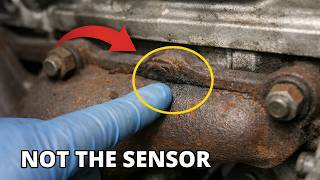
How to confirm: Visually inspect the exhaust manifold and the flange connecting to the rest of the exhaust system for black soot trails or cracks, especially when the engine is cold. You can also perform a smoke test or listen for a 'ticking' or 'puffing' sound from the engine bay that is most noticeable on a cold start.
Typical fix: Repair the leak. This may involve replacing an exhaust manifold gasket, the manifold itself, or welding a crack.
Est. part cost: $15-$250 - Damaged Wiring or Connector ⚪ Low Probability The wiring harness for the Bank 1 sensor is routed in a hot, tight area near the firewall. Over time, the plastic loom can become brittle and wires can get chafed, melted, or corroded, causing high resistance in the circuit which dampens the signal.
How to confirm: Visually inspect the O2 sensor's wiring harness from the sensor connector back as far as possible. Look for melted plastic, frayed wires, or corrosion inside the connector itself. Use a multimeter to check for continuity and resistance between the PCM and the sensor connector. Applying dielectric grease to the connector can prevent future moisture intrusion.
Typical fix: Repair the damaged section of the wiring harness or replace the connector pigtail.
Est. part cost: $10-$50
Rare But Worth Checking
- Intake or Vacuum Leak: A significant vacuum leak can lean out the air-fuel mixture to a point where the O2 sensor's readings are affected. This will usually be accompanied by other codes like P0171 or P0174 (System Too Lean).
- Low Fuel Pressure: A weak fuel pump or clogged filter can cause a lean condition, which can affect O2 sensor readings. You would likely notice other drivability issues and may have other fuel-system-related codes.
- Failing Powertrain Control Module (PCM): This is extremely rare. The internal circuits of the PCM that process the O2 sensor signal can fail. This should only be considered after all other possibilities have been exhaustively ruled out. A PCM reflash or software update might be a preceding step.
Diagnosis Steps
- Read all stored trouble codes with an OBD-II scanner. Note any other codes present and review freeze frame data to see the conditions when the code was set.
- With the engine off, visually inspect the Bank 1 O2 sensor's wiring harness and connector for any signs of melting, chafing, or corrosion. Ensure the connector is secure.
- With a cold engine, carefully inspect the Bank 1 exhaust manifold and flange for fine black soot trails, which indicate an exhaust leak. Also listen for any audible 'ticking' or 'puffing' sounds from the firewall side of the engine on startup.
- Use a scan tool with live data capabilities to graph the voltage of 'O2S11' (Oxygen Sensor Bank 1, Sensor 1).
- Warm the engine to operating temperature and hold RPMs at a steady 2,000-2,500 RPM. Observe the graph. The voltage should switch rapidly between approximately 0.1V and 0.9V. A switch time greater than 100-500 milliseconds, or a lazy, rounded waveform, indicates a slow sensor.
- If the sensor's readings are stuck low (lean) or high (rich), investigate potential exhaust leaks, vacuum leaks, or fuel delivery problems before condemning the sensor.
- If desired, test the O2 sensor's internal heater circuit. Disconnect the sensor and use a multimeter set to resistance (Ohms). A good heater circuit will read between 3-25 ohms. An infinite reading means the heater is broken.
- If the wiring and heater circuit are good and there are no leaks, the oxygen sensor itself is the most probable cause of the fault.
Parts You'll Likely Need
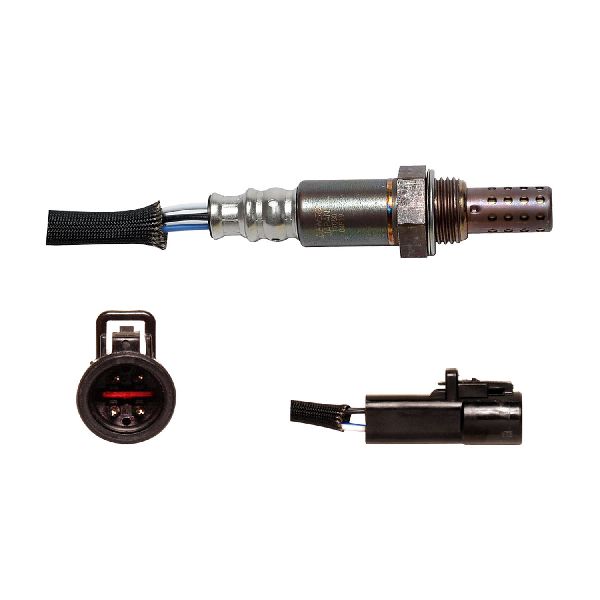
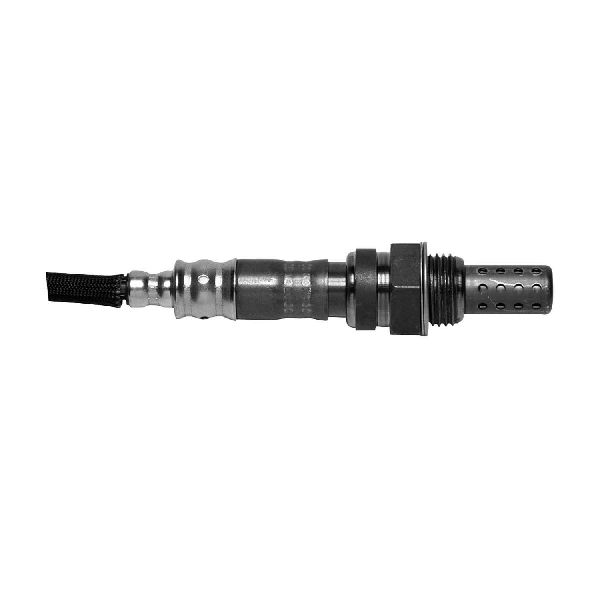
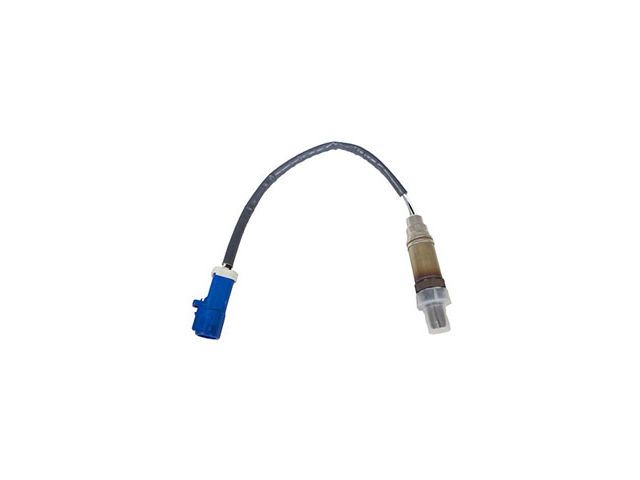
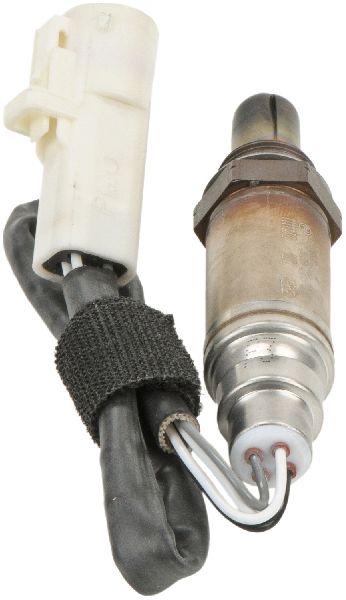
- Upstream Oxygen Sensor (Bank 1, Sensor 1)
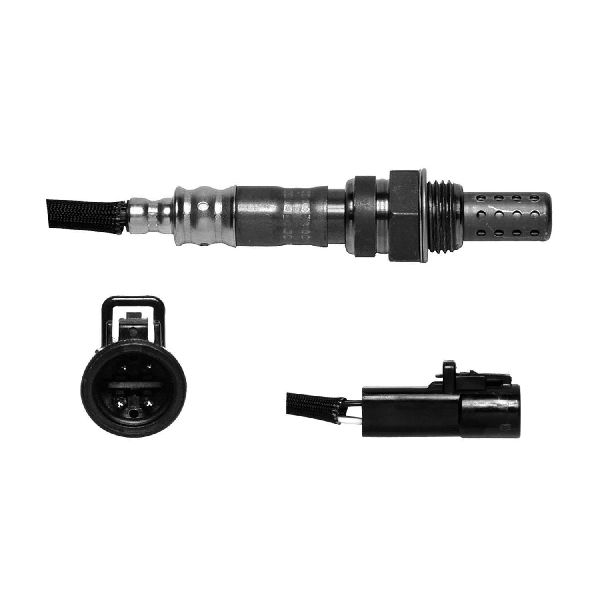
(OEM #Motorcraft DY-1092 (for 3.0L Vulcan OHV) or Motorcraft DY-1036 (for 3.0L Duratec DOHC). Always verify with VIN.)— This is the component that the code directly identifies as responding too slowly. It is a common wear-and-tear item.
Trusted brands: Motorcraft, Bosch, Denso, NTK
OEM price range: $80-$120
Aftermarket price range: $40-$90
Related Codes That Often Appear With This One
- P0171 — If an exhaust or vacuum leak is the root cause, the system will detect a lean condition on Bank 1, triggering the P0171 code alongside P0133.
- P0153 — This is the equivalent 'Slow Response' code for Bank 2. Seeing both codes together may suggest a common issue like contaminated fuel, a systemic vacuum leak, or a dirty MAF sensor rather than a single failed sensor.
- P0301, P0302, P0303 — Misfires on the cylinders of Bank 1 can send unburnt oxygen and fuel into the exhaust, which can foul the O2 sensor or cause erratic readings that the PCM interprets as a slow response.
Technical Service Bulletins (TSBs) & Recalls
- NHTSA: 04V332000 / Ford Safety Recall 04S17: While not directly for P0133, this recall addresses front coil spring fractures due to corrosion in salt-belt states. A related exhaust system inspection during such service could potentially identify leaks contributing to O2 sensor codes.
Platform-Specific Known Issues
- Access to the Bank 1 Sensor 1 is notoriously difficult due to its location on the rear exhaust manifold, tucked against the firewall. It is often necessary to access it from below the vehicle. Using a long extension, a universal joint, and a specialized 22mm (7/8") O2 sensor socket is almost mandatory for DIY replacement.
- On the 3.0L Vulcan engine, oil leaks from the rear valve cover gasket are common. This leaking oil can drip directly onto the Bank 1 O2 sensor and its wiring, contaminating the sensor and damaging the wiring insulation, which can lead to a P0133 code.
Mechanic-Grade Diagnostic Values
- O2 Sensor Heater Circuit Resistance — expected: 3 to 25 Ohms. Failure: An infinite reading (open circuit) or a reading outside this range indicates a failed heater element.
- Fuel Pressure (Key On, Engine Off - KOEO) — expected: 30-55 psi. Failure: Pressure below 30 psi can indicate a weak fuel pump or clogged filter, leading to a lean condition that affects O2 sensor readings.
- Fuel Pressure (Key On, Engine Running - KOER) — expected: 26-45 psi. Failure: Pressure dropping below 26 psi, especially under load, points to fuel delivery issues.
- O2 Sensor Signal Voltage (Unplugged, Key On) — expected: Approx. 0 Volts. Failure: Ford systems of this era typically do not use a bias voltage. Any significant voltage reading indicates a short to power in the harness.
- Mode $06, TID $01, CID $01 (O2 Sensor Response Time) — expected: Value should be below the maximum threshold specified by the PCM (varies but is often around 800-1000ms).. Failure: A reported value exceeding the PCM's limit confirms the sensor is failing the onboard diagnostic test for response time.
Scan Tool Commands That Help
- Ford IDS / FORScan: Datalogger > O2 Sensor Monitor Test — This function forces the PCM to run the specific onboard diagnostic test for the oxygen sensors, providing a more definitive pass/fail result for response time than simply observing live data during idle.
- Ford IDS / FORScan: Clear Keep Alive Memory (KAM) — After replacing the O2 sensor or fixing a related leak, clearing the KAM is crucial. This erases the old, learned fuel trim adjustments and forces the PCM to create new fuel tables based on the input from the new/repaired components, ensuring an accurate reset.
Wiring & Ground Locations
- PCM Connector C175E — Right rear corner of the engine compartment.. This is the main connector for the Powertrain Control Module. Pin 8 (GN wire) is for the Bank 1 Sensor 1 heater circuit, and other pins carry the sensor's signal. Probing here can confirm signal integrity back to the computer.
- Ground G103 — Right rear of the engine compartment.. This is a primary engine ground. A corroded or loose connection at G103 can cause erratic behavior and incorrect readings from various engine sensors, including the O2 sensors.
- Splice S119 — Located on top of the engine within the main harness.. This splice is part of the sensor signal return circuit. Corrosion or failure at this junction can introduce resistance and slow down the signal from the O2 sensor to the PCM.
Real Owner Repair Stories
- Taurus Car Club of America Forum Member (2001 Ford Taurus 3.0L Vulcan) — Persistent P0133 code, slightly rough idle.
❌ Tried (didn't work) Replaced the Bank 1 Sensor 1 O2 sensor twice with aftermarket brands., Cleaned the MAF sensor., Checked for vacuum leaks with carb cleaner.
✅ What actually fixed it The owner finally performed a smoke test and found a small crack in the rear exhaust manifold, very close to the O2 sensor bung. Replacing the exhaust manifold and gasket resolved the P0133 code permanently.
"I Checked Everything" — The Actual Cause
- In some cases for the 3.0L Vulcan, a smoke test may not reveal a leak at the PCV valve elbow, located under the upper intake manifold. This elbow is notorious for collapsing or cracking, creating a significant unmetered air leak. While this typically sets a P0171/P0174 lean code, it can sometimes affect O2 sensor switching enough to trigger a P0133 first, especially on a high-mileage engine where the sensor is already borderline slow.
Model Year Variations Within This Range
- 2000-2003 vs 2004-2007: While the engines remained largely the same, some minor wiring harness and connector changes occurred around the 2004 model year refresh. The 2004-2007 models with the Vulcan engine were also more commonly available as Flexible Fuel Vehicles (FFV), which use slightly different PCM calibrations, though the O2 sensor part numbers often remained the same. Always verify the part with the vehicle's VIN.
Diagnostic Flowchart
Other Known Issues on This Vehicle
Issues unrelated to this code that are worth knowing about as an owner of this generation:
- Automatic Transmission Failure (AX4S/AX4N) 🔴 High — Commonly occurs between 60,000 and 100,000 miles. Issues include harsh shifting, shuddering, or complete loss of forward gears. Some failures are linked to stripped splines on the torque converter pump shaft. (Ref: Ford TSB 99-18-4 addresses harsh 3-2 downshifts caused by low fluid levels.)
- Front Coil Spring Fracture 🔴 High — Prevalent in vehicles operated in regions using road salt ('Salt Belt'). Corrosion causes the spring to weaken and break, which can puncture the front tire. The issue was common enough to warrant a safety recall. (Ref: NHTSA Campaign ID: 04V332000 (Safety Recall 04S17). Ford also initiated Customer Satisfaction Program 04M04 extending warranty coverage.)
- Camshaft Synchronizer Failure (3.0L Vulcan OHV) 🟠 Medium — The synchronizer, which replaces the distributor in this engine, can wear out, causing a characteristic 'chirping' or 'squeaking' noise. If it fails completely, the oil pump drive will also fail, leading to catastrophic engine damage. It often triggers misfire codes or long crank times.
- Engine Oil Pan Gasket Leak 🟡 Low — A very common issue across this generation, leading to oil leaking onto the hot exhaust crossover pipe, causing a burning smell and smoke from the engine bay.
- Idle Air Control (IAC) Valve Malfunction 🟡 Low — A faulty IAC valve can cause rough idling, stalling at stops, or an engine that won't hold a steady RPM. It's a frequent problem but relatively inexpensive to fix.
Used vs. New Parts: Buying Guide for This Vehicle
When a used part is the smart pick: For this repair, a used exhaust manifold from a junkyard is a very sensible choice if the original is found to be cracked. It is a durable, simple piece of cast iron with no moving parts.
Donor-vehicle mileage cap: roughly under 150000 miles for the part to have meaningful remaining life.
What to inspect on the donor part:
- For an exhaust manifold, inspect carefully for hairline cracks, especially around the collector and flange.
- Ensure all mounting studs are intact and not broken off.
- Check for excessive rust or pitting on the gasket surfaces.
OEM-only on this vehicle (don't cheap out):
- While not strictly 'OEM-only', it is highly recommended to use a quality OEM (Motorcraft) or top-tier aftermarket O2 sensor. Cheaper, no-name sensors are a frequent source of repeat failures and persistent codes.
Aftermarket brands forum-validated for this vehicle:
- NTK (often the original OEM supplier)
- Denso
- Bosch
Brands owners have reported issues with on this vehicle:
- Unbranded, 'white-box' sensors from online marketplaces are frequently cited in forums as being dead-on-arrival or failing within a few months.
Real Owner Stories
Aggregated from forums and TSBs cited above. Mileages and costs reflect what owners reported in those sources.
2003 Ford Taurus 3.0L
Symptoms: The engine is completely warmed up but starts to surge when not under load.
What fixed it: The owner was investigating the issue via live data graphing to check for slow sensor response.
Source hint: Reddit r/AskAnAutoTechnician
2000-2007 Ford Taurus 3.0L Vulcan
Symptoms: P0133 code triggered by oil contamination on the sensor and wiring insulation.
What fixed it: Repairing a leaking rear valve cover gasket that was dripping oil onto the Bank 1 O2 sensor.
Source hint: vehicle_specific_issues
Related OBD-II Codes
Frequently Asked Questions
Where is the Bank 1, Sensor 1 oxygen sensor located on my 3.0L Taurus?
Can an oil leak cause my P0133 code on a 3.0L Vulcan engine?
Does the Ford Safety Recall 04S17 for front coil springs relate to my O2 sensor issues?
My Taurus has a 'ticking' sound on cold starts; could this be related to P0133?
Is the P0133 issue common on the Mercury Sable as well?
What should the voltage readings look like for a healthy Bank 1 sensor on this car?
Helpful Videos

We Have This Part in Stock


The information in this article is provided for general reference and educational purposes only. Vehicle specifications, procedures, and part compatibility can vary by production date, trim level, and region. Always consult your vehicle's factory service manual and verify part numbers before purchasing or performing repairs. Safety-critical components such as airbags, seat belts, and braking systems should be installed by a qualified professional.
- Ford Taurus:
- 🎬 Helpful Videos
- 🛍️ Shop This Part
- What's Unique About the 2000-2007 Ford Taurus
- Symptoms You May Notice
- Most Likely Causes
- Rare But Worth Checking
- Diagnosis Steps
- Parts You'll Likely Need
- Related Codes That Often Appear With This One
- Technical Service Bulletins (TSBs) & Recalls
- Platform-Specific Known Issues
- Mechanic-Grade Diagnostic Values
- Scan Tool Commands That Help
- Wiring & Ground Locations
- Real Owner Repair Stories
- "I Checked Everything" — The Actual Cause
- Model Year Variations Within This Range
- Diagnostic Flowchart
- Other Known Issues on This Vehicle
- Used vs. New Parts: Buying Guide for This Vehicle
- Real Owner Stories
- 2003 Ford Taurus 3.0L
- 2000-2007 Ford Taurus 3.0L Vulcan
- Related OBD-II Codes
- Frequently Asked Questions
- 🎟️ Get 5% Off