

P0132 on 2008-2010 Porsche Cayenne 4.8L V8: High Voltage O2 Sensor Causes and Fixes
This code indicates a high voltage signal from the Bank 1 (passenger side) upstream oxygen sensor. The most common cause is a failed O2 sensor itself. Replacement is difficult due to tight access and may cost $250-$450 per sensor at a shop.
- P0132 points to the upstream O2 sensor on the passenger side (Bank 1).
- The most likely fix is replacing the O2 sensor, but diagnosis is key to avoid replacing good parts.
- Due to extremely difficult access on the 4.8L V8, this repair is not recommended for novice DIY mechanics.
- Driving with this code active will hurt fuel economy and can eventually damage your expensive catalytic converters.
- If other codes are present, especially P0172 (System Too Rich), they must be addressed as they could be the actual cause of the problem.
What's Unique About the 2008-2010 Porsche Cayenne
On the Porsche Cayenne 4.8L V8 (957 generation), the primary challenge with this code is not diagnosis, but repair. The upstream oxygen sensors are notoriously difficult to access, tucked deep in the engine bay near the firewall and exhaust manifolds. While the cause is often a standard Bosch wideband O2 sensor failure, the labor involved in replacing it is significantly more intensive than on many other vehicles, often requiring special tools or removal of other components for access.
Symptoms You May Notice
- Check Engine Light is on
- Reduced fuel economy
- Rough or unstable idle
- Engine hesitation or reduced power
- Noticeable smell of gasoline or rich exhaust from the tailpipe
- Replacing the O2 sensor when the true fault is a rich-running condition caused by a bad MAF sensor or leaking fuel injector.
- Replacing the wrong O2 sensor (e.g., Bank 2 sensor on the driver's side, or the post-catalytic converter sensor).
Most Likely Causes
- Failed Bank 1, Sensor 1 Oxygen Sensor 🔴 High Probability Oxygen sensors are wear items that operate in a harsh exhaust environment. Contamination and age are common causes of failure on high-mileage vehicles.
How to confirm: Use an OBD-II scanner to monitor live data for the 'O2 Bank 1 Sensor 1 Voltage'. If the voltage is stuck high (e.g., >0.9V) and does not fluctuate rapidly during engine operation, the sensor has likely failed.
Typical fix: Replace the Bank 1 (passenger side), Sensor 1 (pre-catalytic converter) oxygen sensor.
Est. part cost: $70-$150 - Wiring Harness or Connector Issue 🟡 Medium Probability The engine bay heat can make wiring and connectors brittle over time. A short to power in the signal wire will cause a constant high voltage reading.
How to confirm: Visually inspect the O2 sensor's wiring harness from the sensor to the firewall connector for any signs of melting, chafing, or corrosion. Check for a short to power using a multimeter on the signal wire.
Typical fix: Repair the damaged section of the wiring harness or clean/replace the connector.
Est. part cost: $5-$50 - Engine Running Rich ⚪ Low Probability A rich condition can be caused by other failing components like MAF sensors or fuel injectors.
How to confirm: Check for other diagnostic trouble codes, specifically P0172 (System Too Rich Bank 1). A rich condition will cause the O2 sensor to correctly report high voltage. Investigate potential causes like faulty MAF sensors, leaking fuel injectors, or high fuel pressure.
Typical fix: Diagnose and repair the root cause of the rich condition, which may involve replacing a MAF sensor, fuel injector, or fuel pressure regulator.
Est. part cost: $100-$600+
Rare But Worth Checking
- Exhaust Leak: While more likely to cause a lean code, a significant exhaust leak between the cylinder head and the O2 sensor could potentially disrupt readings and trigger a fault.
- Faulty Engine Control Unit (ECU): This is extremely rare, but the ECU could be misinterpreting the sensor signal. This should only be considered after all other possibilities have been exhaustively ruled out.
Diagnosis Steps
- Read all fault codes with an OBD-II scanner. If other codes like P0172 are present, diagnose them first as they may be the root cause.
- Use the scanner's live data function to observe the voltage of 'O2 Bank 1 Sensor 1'. A healthy sensor's voltage should fluctuate rapidly between approximately 0.1V and 0.9V. If it is stuck high, proceed with diagnosis.
- Inspect the O2 sensor's wiring harness and connector for any visible damage, melting, or corrosion. The connector is located on the firewall.
- Check the fuse for the oxygen sensor heater circuit. While a heater circuit fault usually sets a different code, it's a quick and easy check.
- If the wiring appears intact, the most likely cause is the sensor itself. Proceed with replacement.
- If a new sensor does not fix the code, further investigation into the engine's fuel system (injectors, fuel pressure, MAF sensors) is required to rule out a rich-running condition.
Parts You'll Likely Need
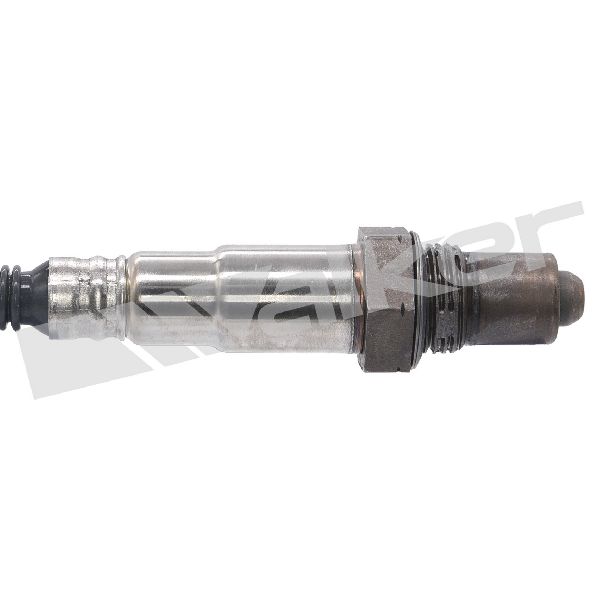
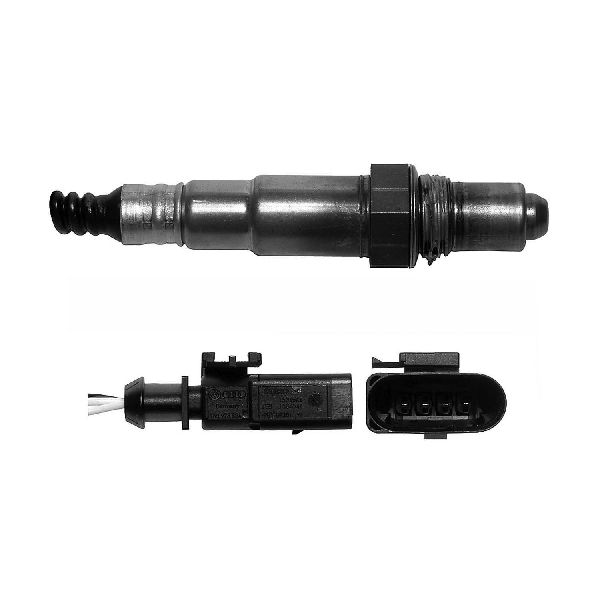
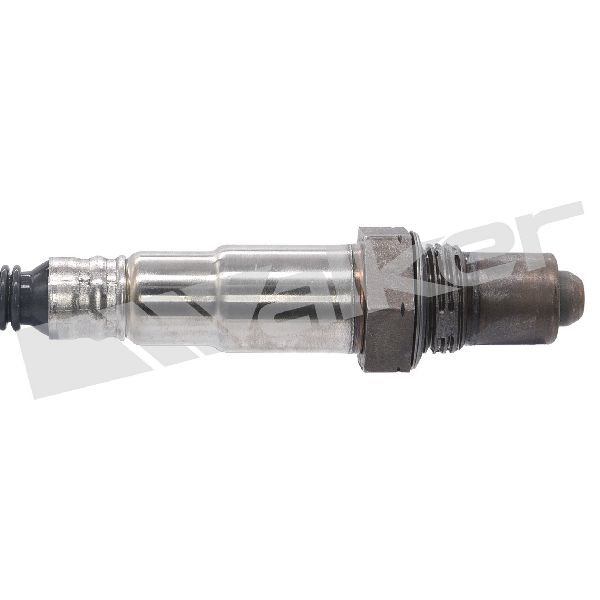
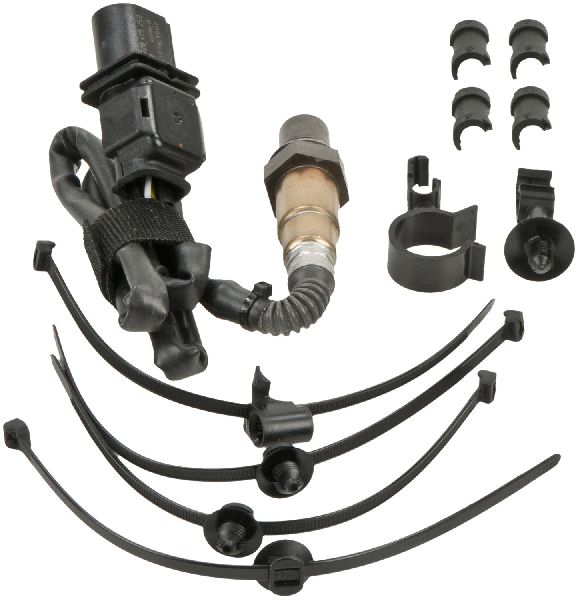
- Oxygen Sensor, Bank 1 Sensor 1 (Upstream, Passenger Side) — This is the sensor identified by the P0132 code and is the most common failure point.
Trusted brands: Bosch
OEM price range: $120-$180
Aftermarket price range: $70-$150
Related Codes That Often Appear With This One
- P0172 — If the engine is genuinely running rich on Bank 1, the O2 sensor will correctly report this high voltage condition, triggering P0132. P0172 (System Too Rich, Bank 1) often accompanies it as the ECU tries to compensate.
- P0152 — This is the equivalent code for Bank 2 (driver's side). If both appear, it may point to a systemic issue affecting both banks, like a fuel pressure problem or faulty MAF sensors.
Platform-Specific Known Issues
- The primary vehicle-specific issue is the extremely difficult access to the upstream O2 sensors on the V8 engine, making replacement a labor-intensive job.
Mechanic-Grade Diagnostic Values
- Low-Pressure Fuel System — expected: Nominal pressure of ~5.5 bar (~80 psi).. Failure: Significantly lower pressure readings.
- High-Pressure Fuel System (Direct Injection) — expected: Varies from ~40 bar (580 psi) at idle to 120 bar (1740 psi) at full throttle.. Failure: Struggling to produce pressure under load (e.g., only 20-30 bar). This would likely set other fuel pressure codes, but could contribute to a rich condition.
- O2 Sensor Heater Circuit Resistance — expected: Approximately 4-5 Ohms when tested at the sensor connector.. Failure: An open circuit (infinite resistance) or a short (near zero resistance).
Hidden / Shadow Codes Worth Checking
- Porsche-Specific Faults (e.g., P013B_005C35): While specific shadow codes for P0132 on this exact model are not documented publicly, Porsche uses extended trouble codes that provide more detail than generic OBD-II. These are often related to component aging or slow response times and can only be read by dealer-level tools like the PIWIS tester. (see via Porsche PIWIS Tester)
Scan Tool Commands That Help
- Porsche PIWIS Tester: DME Programming / Coding — In rare cases, particularly if a TSB applies or if the DME itself is replaced, the DME control unit may require re-programming or coding to correctly interpret sensor data. Some software updates specifically address non-consistent oxygen sensor diagnostics.
- Porsche PIWIS Tester: Adaptations Reset — After replacing major fuel system components or the O2 sensor itself, resetting fuel trim adaptations can help the DME learn the new component's characteristics faster.
Wiring & Ground Locations
- O2 Sensor Connectors — Mounted on the engine bay firewall, one group on the left and one on the right.. This is the primary access point for testing the sensor and harness wiring without having to physically access the sensor itself deep in the engine bay.
- Fuse F17 (Engine Bay Fuse Box) — In the under-hood fuse box, located in the plenum area (under the cowl cover near the windshield). Fuse #17 is a 15A fuse.. This fuse powers the heater circuit for both upstream (pre-cat) oxygen sensors. A blown fuse will set heater circuit codes but can be a quick check for any O2 sensor-related issue.
- DME (ECU) — Located in the plenum/cowl area, typically on the passenger side. This area is prone to water collection if the cowl drains are clogged.. Water ingress can corrode the DME connectors or damage the unit internally, causing a variety of faults including incorrect sensor readings. Also, a short in the O2 sensor harness can damage the driver IC on the DME board itself.
Real Owner Repair Stories
- Rennlist user 'damen_red' (2004 Porsche Cayenne S (955 model, but DME architecture is relevant)) — Persistent O2 sensor circuit error codes (P2245, P2252) even after replacing the sensor.
❌ Tried (didn't work) Replacing the Bank 1 Sensor 1 O2 sensor., Clearing codes (they returned immediately).
✅ What actually fixed it The previous owner had badly spliced the O2 sensor wires, which shorted against the exhaust and damaged the DME. The owner diagnosed the fault down to a specific integrated circuit on the DME board (Bosch 30449), which is the driver for the wideband O2 sensor. He swapped this chip from a junkyard ECU onto his original ECU, which resolved all codes and made the car run perfectly.
OEM Part Supersession History
N/A→N/A— Brand Integrity
Heads up: It is critical to use either genuine Porsche or OEM-supplier (Bosch) direct-fit sensors. Avoid 'universal' sensors that require splicing wires. The wiring harness itself is used by the sensor to draw reference air; splicing can compromise this function and introduce resistance, leading to incorrect readings and persistent codes.
Diagnostic Flowchart
Used vs. New Parts: Buying Guide for This Vehicle
When a used part is the smart pick: A used part is almost never a good choice for the oxygen sensor itself, as it is a wear item with a finite lifespan. However, sourcing a used connector pigtail from a salvage yard harness can be a cost-effective fix for a broken or melted connector.
Donor-vehicle mileage cap: roughly under 100000 miles for the part to have meaningful remaining life.
What to inspect on the donor part:
- For a connector/pigtail: Inspect for flexible, not brittle, wiring.
- Check that the plastic connector housing has no cracks and the locking tab is intact.
- Ensure pins are clean and free of corrosion.
OEM-only on this vehicle (don't cheap out):
- While not strictly 'OEM-only', it is highly recommended to use the Original Equipment Manufacturer, Bosch, for oxygen sensors. The engine management system is sensitive to the precise voltage curves and response times of the correct sensor.
Aftermarket brands forum-validated for this vehicle:
- Bosch (OEM Supplier)
- Denso
- NTK
Brands owners have reported issues with on this vehicle:
- Any 'Universal' sensor that requires cutting and splicing wires.
- Unbranded, low-cost sensors from online marketplaces.
Related OBD-II Codes
Frequently Asked Questions
Where is the Bank 1, Sensor 1 oxygen sensor located on my 4.8L V8 Cayenne?
What brand of oxygen sensor is best for my 2009 Cayenne S?
Can I use a universal, splice-in oxygen sensor to save money?
My scanner shows the O2 sensor voltage is stuck high. Does this guarantee the sensor has failed?
How difficult is the upstream O2 sensor replacement on the V8 Cayenne?
The wiring connector for my O2 sensor is melted. Do I need to replace the entire engine harness?
We Have This Part in Stock



The information in this article is provided for general reference and educational purposes only. Vehicle specifications, procedures, and part compatibility can vary by production date, trim level, and region. Always consult your vehicle's factory service manual and verify part numbers before purchasing or performing repairs. Safety-critical components such as airbags, seat belts, and braking systems should be installed by a qualified professional.
- Porsche Cayenne:
- 🛍️ Shop This Part
- What's Unique About the 2008-2010 Porsche Cayenne
- Symptoms You May Notice
- Most Likely Causes
- Rare But Worth Checking
- Diagnosis Steps
- Parts You'll Likely Need
- Related Codes That Often Appear With This One
- Platform-Specific Known Issues
- Mechanic-Grade Diagnostic Values
- Hidden / Shadow Codes Worth Checking
- Scan Tool Commands That Help
- Wiring & Ground Locations
- Real Owner Repair Stories
- OEM Part Supersession History
- Diagnostic Flowchart
- Used vs. New Parts: Buying Guide for This Vehicle
- Related OBD-II Codes
- Frequently Asked Questions
- 🎟️ Get 5% Off