

P0132 on 2011-2015 Kia Optima 2.4L: Diagnosing and Fixing O2 Sensor High Voltage
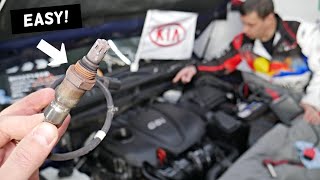
This code almost always points to a faulty upstream oxygen sensor (Bank 1, Sensor 1). Expect to pay $40-$80 for an aftermarket sensor or $150-$250 for an OEM part. It's a DIY-friendly fix with the right O2 sensor socket. Before replacing, check the wiring harness near the exhaust for melting, a common issue.
- P0132 on your Optima means the upstream oxygen sensor (Bank 1, Sensor 1) is sending a constant high voltage signal.
- The most common symptoms are a Check Engine Light and worse-than-usual gas mileage.
- In most cases, replacing the upstream O2 sensor will fix the problem.
- Before buying a new sensor, always inspect the wiring harness for melting or damage, as this is a known issue and the second most likely cause.
- You will likely need a special 22mm (7/8") O2 sensor socket tool to perform the replacement, but it is a very manageable DIY job.
What's Unique About the 2011-2015 Kia Optima
The 2.4L Theta II GDI engine in this generation of Optima has the upstream O2 sensor (Bank 1, Sensor 1) located in a relatively accessible position on the exhaust manifold, near the firewall, making it visible and reachable from the top of the engine bay. This makes inspection and replacement more straightforward than on many other vehicles. While the Theta II engine has known issues, particularly related to engine bearings which can trigger code P1326, the P0132 code is typically an isolated emissions sensor problem. However, it's important not to ignore any check engine light on this platform due to the severity of other potential engine problems.
Generation note: The 2011-2015 year range covers the third generation (TF) of the Kia Optima. The information for the 2.4L GDI engine is consistent across these years and also applies to its platform mate, the 2011-2014 Hyundai Sonata with the same engine. A facelift occurred for the 2014 model year, which included minor styling updates and standardization of the 2.4L engine's output to 192 hp.
Symptoms You May Notice
- Check Engine Light is on
- Decreased fuel economy
- Rough or unstable idle
- Engine hesitation or stumbling on acceleration
- Possible black smoke from the exhaust or a smell of raw fuel in extreme rich-running cases
- Engine may run sluggishly
- Replacing the downstream (Bank 1, Sensor 2) oxygen sensor. This code specifically points to Sensor 1, which is the upstream sensor before the catalytic converter.
- Replacing the O2 sensor without first checking the wiring harness for melting, which is a known issue on this platform.
Most Likely Causes
- Faulty Upstream Oxygen Sensor (Bank 1, Sensor 1) 🔴 High Probability Oxygen sensors are wear-and-tear items that operate in a harsh exhaust environment. They degrade over time and eventually fail, often by sending incorrect voltage signals. This is the most common resolution for P0132.
How to confirm: Use a scan tool to monitor live data for the 'O2S11' or 'B1S1' voltage. If the voltage is stuck high (e.g., above 0.9V) and doesn't fluctuate rapidly in a wave-like pattern, the sensor is very likely bad. A healthy sensor should oscillate between ~0.1V and ~0.9V. A failed sensor may read as high as 1.25V.
Typical fix: Replace the upstream oxygen sensor (Bank 1, Sensor 1).
Est. part cost: $40-$250 - Wiring or Connector Issue 🟡 Medium Probability The sensor's wiring harness is routed close to the hot exhaust manifold. The protective loom can become brittle or a retaining clip can break, allowing wires to touch the exhaust and melt. This can cause a short circuit, sending a constant high voltage signal to the PCM.
How to confirm: Visually inspect the entire length of the O2 sensor's wiring harness from the sensor to its connector. Look for any signs of melting, chafing, corrosion in the pins, or loose connections. Pay close attention to the area where the harness passes over the engine and near the exhaust manifold.
Typical fix: Repair the damaged section of wiring or replace the connector pigtail. Ensure the repaired harness is secured away from heat sources.
Est. part cost: $10-$30 - Rich Running Condition ⚪ Low Probability While less common, issues like a leaking fuel injector or a faulty fuel pressure regulator can cause too much fuel to enter the engine. The O2 sensor will accurately report this as a high voltage (rich) condition. GDI engines can also suffer from carbon buildup which may affect combustion.
How to confirm: Check the long-term and short-term fuel trim values with a scan tool. If they are significantly negative (e.g., -10% or more, approaching the system limit of -25%), the computer is trying to pull fuel, indicating a rich condition. This means the O2 sensor is likely doing its job correctly and the problem lies elsewhere. You may also have other codes present related to fuel trim (like P0172) or specific injectors.
Typical fix: Diagnose and fix the root cause of the rich condition, such as cleaning or replacing a faulty fuel injector.
Est. part cost: $50-$300
Rare But Worth Checking
- Exhaust Leak Before the O2 Sensor: A leak in the exhaust manifold or gasket before the sensor can sometimes disrupt airflow and cause strange readings, though it more commonly causes a lean code (P0131).
- Blown Fuse: The oxygen sensor heater circuit is powered by a fuse. While a blown fuse usually causes a heater circuit code (like P0135), it's worth checking the fuse box in the engine bay for a fuse labeled 'Sensor 1' or similar. On a 2013 Optima, for example, it may be a 15A fuse labeled 'SENSOR 1'.
- Faulty Powertrain Control Module (PCM): This is extremely rare. The PCM itself could have a fault in the sensor's driver circuit. This should only be considered after all other possibilities have been exhaustively ruled out.
Diagnosis Steps
- Read the code with an OBD-II scanner to confirm P0132 is the primary code.
- Use the scanner's live data function to view the voltage for 'O2 Sensor Bank 1 Sensor 1'.
- Observe the voltage with the engine running and fully warmed up. A healthy sensor will fluctuate rapidly between approximately 0.1V and 0.9V. If the voltage is stuck high (e.g., 0.9V or higher) and is not oscillating, it confirms the fault condition.
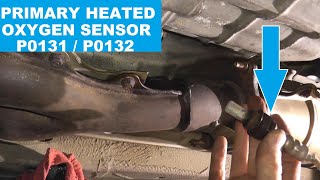
- Turn off the engine and let it cool completely. Locate Bank 1 Sensor 1 on the exhaust manifold near the firewall.
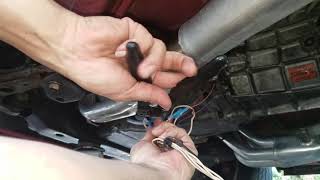
- Thoroughly inspect the sensor's wiring harness and connector. Follow the wire from the sensor to the main harness, looking for any signs of melting, chafing, or physical damage, especially where it passes near hot components.
- Check the fuse for the O2 sensor heater circuit, typically found in the under-hood fuse box. The cover should have a diagram. Look for a fuse labeled 'SENSOR 1' or similar.
- If the wiring and fuse are good and the live data shows a stuck-high voltage, the oxygen sensor itself is the most probable cause of failure.
- Replace the Bank 1, Sensor 1 oxygen sensor. A special 22mm (or 7/8") slotted socket is often required for removal and installation. Apply anti-seize compound to the threads of the new sensor if not pre-applied.
- After replacement, clear the trouble codes with the scanner and perform a test drive to ensure the code does not return.
Parts You'll Likely Need
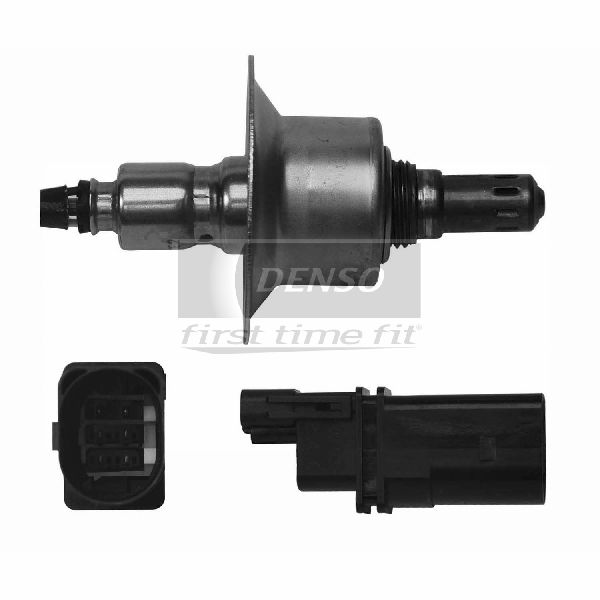
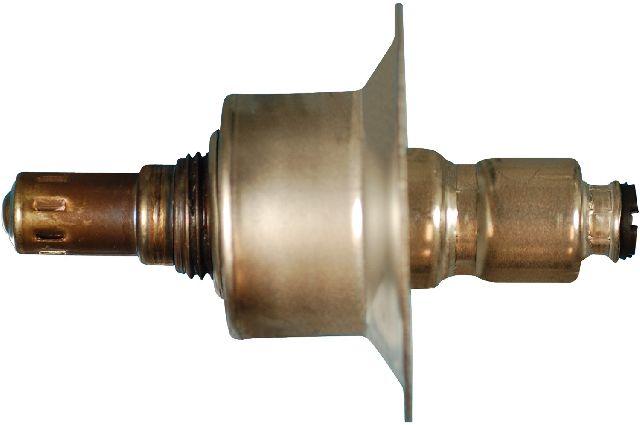
- Upstream Oxygen Sensor (Air/Fuel Ratio Sensor)
(OEM #39210-2G150)— This is the sensor identified by the code (Bank 1, Sensor 1) and is a common wear item that fails by sending an incorrect, fixed voltage.
Trusted brands: NGK, Denso, Bosch, Genuine Hyundai/Kia
OEM price range: $180-$250
Aftermarket price range: $40-$150
Platform-Specific Known Issues
- A Reddit user with P0130 and P0132 codes found that the wiring harness for the O2 sensor had melted, which is a recurring theme for these vehicles due to the harness routing near the exhaust.
- A YouTube video specifically on the Kia Optima with P0130-P0135 codes points out that the harness clip can break, allowing the wires to make contact with the hot exhaust manifold and melt the insulation.
Mechanic-Grade Diagnostic Values
- O2 Sensor Heater Circuit Resistance — expected: 2.5 to 4.0 Ω (at 20°C / 68°F). Failure: A reading outside this range (open circuit or short) indicates a faulty heater element within the sensor.
- Fuel Trim Limit — expected: Long Term Fuel Trim (LTFT) should not remain at its limit.. Failure: If LTFT is pegged at or near -25%, it indicates the PCM is compensating for a severe rich condition, and the O2 sensor is likely reporting correctly.
- Live Data O2 Sensor Voltage (Failure) — expected: Should fluctuate between ~0.1V and ~0.9V.. Failure: A voltage stuck consistently above 0.9V, with real-world failures seen at 1.25V, points to a fault.
- PCM Sensor Reference Voltage (Advanced) — expected: Approximately 5.0 V. Failure: With the O2 sensor disconnected and ignition on (engine off), if the reference voltage measured at the harness connector is significantly higher than 5.0V, it may indicate a rare PCM internal regulator fault.
Wiring & Ground Locations
- Engine Ground Strap (Korea-built) — Main engine ground cable.. A poor engine ground can cause floating voltages and erratic sensor readings. Part number 91860-2T011 is specific to 2012-2013 Korea-built Optimas with the 2.4L engine.
- Engine Ground Strap (US-built) — Main engine ground cable.. A poor engine ground can cause floating voltages and erratic sensor readings. Part number 91860-4C010 is specific to 2012-2013 US-built Optimas with the 2.4L engine.
- O2 Sensor Connector Pins (Heater Circuit) — At the O2 sensor electrical connector.. To test the sensor's internal heater resistance, you must probe the correct pins on the sensor side of the connector. On many Kia sensors, these are the two wires of the same color. On some models, they are specifically identified as terminals 4 and 5 for B1S1.
Real Owner Repair Stories
- Reddit r/autoelectrical user (Vehicle with a P0132 code, likely similar platform) — P0132 code (high voltage) present, rough running that improved when the sensor was disconnected.
❌ Tried (didn't work) Replacing the catalytic converter, Replacing both upstream and downstream O2 sensors
✅ What actually fixed it The root cause was traced back to previous engine work where the exhaust manifold was left hanging by the O2 sensor's wiring harness. This pulled the wires out of the connector. Although the user re-inserted the wires, the damage likely created a short, causing the persistent high voltage reading even with a new sensor. The final fix required repairing the damaged wiring/connector.
Model Year Variations Within This Range
- 2012-2013: The engine ground strap part number differs based on the vehicle's manufacturing plant. US-built models use PN 91860-4C010, while Korea-built models use PN 91860-2T011. A bad ground can cause sensor signal issues.
- 2014-2015: A mid-cycle refresh occurred for the 2014 model year. While largely cosmetic, the 2.4L GDI engine's horsepower was standardized at 192 hp. This is unlikely to affect the diagnosis of P0132 but is a notable change.
Diagnostic Flowchart
Other Known Issues on This Vehicle
Issues unrelated to this code that are worth knowing about as an owner of this generation:
- Catastrophic Engine Failure (Rod Bearing Wear) 🔴 High — Very common across the 2011-2015 model years, leading to class-action lawsuits and recalls. Often presents as a knocking noise, oil consumption, and may trigger code P1326, putting the car in limp mode. (Ref: NHTSA Campaign 17V224, Kia Service Campaign SC147, TSB PI1802W/X. Kia has a lifetime warranty for this specific failure on eligible vehicles that have had the Knock Sensor Detection System (KSDS) update.)
- Worn Steering Coupler 🟠 Medium — Extremely common. The flexible rubber coupler in the electronic power steering column disintegrates over time, causing a clicking or knocking sound in the steering wheel when turning. (Ref: Kia Customer Satisfaction Program CS1604 / TSB CHA072 extended the warranty for this part to 10 years/unlimited mileage.)
- GDI Engine Carbon Buildup 🟠 Medium — Common to all Gasoline Direct Injection (GDI) engines, including the Theta II. Carbon deposits build up on the back of the intake valves over time, leading to misfires, rough idle, and reduced performance, typically after 60,000-80,000 miles.
- Engine Fires / Fuel Leaks 🔴 High — Several recalls were issued for risks of engine compartment fires. One recall involved a high-pressure fuel pipe that could be damaged or misaligned during engine replacement, causing a fuel leak. (Ref: NHTSA Campaign 20V101000, 18V907000)
Used vs. New Parts: Buying Guide for This Vehicle
When a used part is the smart pick: A used part is generally not recommended for the oxygen sensor itself, as it is a wear item. However, sourcing a used wiring harness pigtail connector from a junkyard is a smart choice if the original is melted or damaged.
Donor-vehicle mileage cap: roughly under 120000 miles for the part to have meaningful remaining life.
What to inspect on the donor part:
- For a pigtail connector: ensure the plastic isn't brittle or cracked.
- Check that the locking tab is intact and functional.
- Inspect the wire insulation for flexibility; avoid any that are stiff, cracked, or show signs of melting.
- Look at the pins inside the connector to ensure they are clean and free of corrosion.
Aftermarket brands forum-validated for this vehicle:
- Denso (often the Original Equipment supplier for Asian vehicles)
- NTK (the sensor division of NGK, also a top-tier OE supplier)
Brands owners have reported issues with on this vehicle:
- Universal sensors that require cutting and splicing wires should be avoided in favor of direct-fit models.
- Some forum users report inconsistent performance or premature failure with Bosch sensors on Asian import vehicles, though experiences vary.
Real Owner Stories
Aggregated from forums and TSBs cited above. Mileages and costs reflect what owners reported in those sources.
2011-2015 Kia Optima 2.4L GDI
Symptoms: P0132 code present; owner replaced the sensor but the code persisted.
What fixed it: Discovered the actual cause was melted wires on the O2 sensor harness.
Source hint: Reddit r/MechanicAdvice thread titled 'Melted wires on harness from o2 sensor'
2011-2015 Kia Optima 2.4L GDI
Symptoms: Check engine light with codes P0130 through P0135.
What fixed it: Repaired the wiring harness where the clip had broken, allowing wires to make contact with the hot exhaust manifold and melt the insulation.
Source hint: YouTube video specifically on the Kia Optima with P0130-P0135 codes
Related OBD-II Codes
Frequently Asked Questions
Is there a recall for the P0132 code on my 2011-2015 Kia Optima 2.4L?
I replaced the Bank 1 Sensor 1 oxygen sensor but the P0132 code returned. What else could it be on this specific engine?
Could the carbon buildup common in my Optima's GDI engine cause a P0132 code?
Where is the Bank 1 Sensor 1 located on the 2.4L Theta II engine?
Is there a specific fuse I should check for the O2 sensor on my Kia?
Helpful Videos
We Have This Part in Stock


The information in this article is provided for general reference and educational purposes only. Vehicle specifications, procedures, and part compatibility can vary by production date, trim level, and region. Always consult your vehicle's factory service manual and verify part numbers before purchasing or performing repairs. Safety-critical components such as airbags, seat belts, and braking systems should be installed by a qualified professional.
- Kia Optima:
- 🎬 Helpful Videos
- 🛍️ Shop This Part
- What's Unique About the 2011-2015 Kia Optima
- Symptoms You May Notice
- Most Likely Causes
- Rare But Worth Checking
- Diagnosis Steps
- Parts You'll Likely Need
- Platform-Specific Known Issues
- Mechanic-Grade Diagnostic Values
- Wiring & Ground Locations
- Real Owner Repair Stories
- Model Year Variations Within This Range
- Diagnostic Flowchart
- Other Known Issues on This Vehicle
- Used vs. New Parts: Buying Guide for This Vehicle
- Real Owner Stories
- 2011-2015 Kia Optima 2.4L GDI
- 2011-2015 Kia Optima 2.4L GDI
- Related OBD-II Codes
- Frequently Asked Questions
- 🎟️ Get 5% Off