

P0132 on 2018-2024 GMC Terrain 1.5L: O2 Sensor High Voltage Causes and Fixes
On a 2018-2024 GMC Terrain with the 1.5L engine, code P0132 is almost always caused by a failed upstream oxygen sensor (Bank 1, Sensor 1). Replacing this sensor is the most common fix. Expect to pay $50-$80 for an aftermarket part or $100-$180 for an OEM ACDelco part (P/N 12663317, superseded by 12701634). It is a DIY-friendly repair with the correct O2 sensor socket.
- P0132 on your Terrain almost always means the upstream O2 sensor (before the catalytic converter) has failed.
- Before buying a new sensor, inspect the wiring harness for any signs of melting or damage, as it's exposed to high heat.
- Use a scan tool to watch the sensor's live voltage; if it's stuck high (above 0.9V), it confirms the problem.
- This is a DIY-friendly job with an O2 sensor socket, typically taking less than an hour.
- After fixing the sensor, ask a dealer about TSBs 19-NA-062/19-NA-077 if you experience hesitation, as a software update may also be needed for 2018-2019 models.
What's Unique About the 2018-2024 GMC Terrain
For the 2018-2019 GMC Terrain and its platform-mate, the Chevy Equinox, GM issued Technical Service Bulletin (TSB) 19-NA-062. This TSB addresses customer complaints of hesitation from a stop and poor Auto Start/Stop performance that may occur with a P0132 code. The bulletin explicitly states, "This software enhancement will not correct the DTC's set." Technicians are instructed to diagnose and repair the physical cause of the P0132 (typically the sensor) first, and only then perform the ECM software update to resolve the separate drivability symptoms.
Symptoms You May Notice
- Check Engine Light illuminated
- Decreased fuel economy
- Rough or hesitant engine performance, or lack of power
- Black smoke from the exhaust in some cases
- A 'rotten egg' smell from the exhaust
- Replacing the catalytic converter. P0132 is an upstream sensor code and does not reflect the health of the converter.
- Replacing the downstream (Bank 1, Sensor 2) oxygen sensor instead of the upstream (Bank 1, Sensor 1) sensor.
- Replacing the sensor without first inspecting the wiring harness for obvious damage like melting or chafing.
Most Likely Causes
- Failed Upstream Oxygen Sensor (Bank 1, Sensor 1) 🔴 High Probability Oxygen sensors are wear-and-tear items that operate in a harsh exhaust environment. Internal failure, often of the heater circuit, can cause the sensor's voltage output to short and stick in a high state. This is the most common cause reported by technicians and owners.
How to confirm: Using an OBD-II scanner's live data function, observe the voltage for 'O2S B1S1'. If it is stuck above 0.8-0.9V and does not fluctuate rapidly during engine operation, the sensor has likely failed. A repair community fix on a 2018 Equinox with P0132 confirmed the upstream sensor was not working properly and replacing it solved the issue. Unplugging the sensor should cause the voltage to drop to a default value; if it does, the sensor is bad.
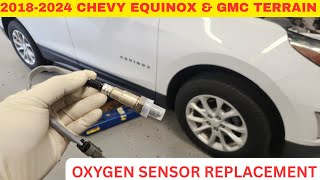
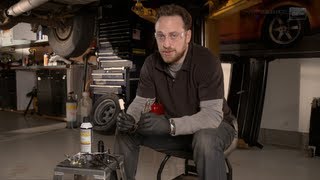
Typical fix: Replace the upstream oxygen sensor located on the exhaust manifold. The OEM part is ACDelco P/N 12663317, which has been superseded by P/N 12701634. 🎬 See this step-by-step sensor replacement for the Terrain and Equinox.
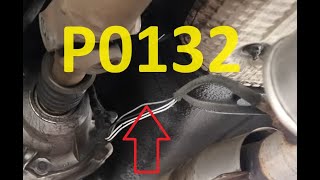
Est. part cost: $50-$180 - Wiring Harness Short or Damage 🟡 Medium Probability The sensor wiring is close to hot exhaust components and can become melted, brittle, or corroded over time, leading to a short circuit between the signal wire and a power source, such as the heater circuit wiring.
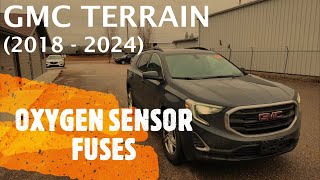
How to confirm: Visually inspect the entire wiring harness from the O2 sensor to the main engine harness. Check for 🎬 Check this video to find the O2 sensor fuse location. melted plastic, chafed wires, or corrosion in the connector. If unplugging the sensor does not cause the live data voltage to drop, a short to power exists in the harness.
Typical fix: Repair or replace the damaged section of the wiring harness and secure it away from heat sources.
Est. part cost: $10-$50 for repair materials - Engine Running Rich ⚪ Low Probability While less common for this specific code, a legitimate rich condition from a leaking fuel injector or faulty fuel pressure regulator can cause the O2 sensor to report high voltage. This is usually accompanied by other trouble codes (e.g., fuel trim codes like P0172).
How to confirm: Check for other DTCs. Analyze short-term and long-term fuel trims with a scan tool. If they are significantly negative, it indicates the ECM is trying to compensate for a rich condition. Test fuel pressure and check for leaking injectors.
Typical fix: Diagnose and repair the root cause of the rich condition, such as replacing a leaking fuel injector.
Est. part cost: $80-$200+
Rare But Worth Checking
- Exhaust Leak: An exhaust leak before the O2 sensor can, in some cases, disrupt sensor readings, though it more commonly causes a lean code (low voltage). It's worth a quick visual and audible inspection.
- PCM Software Anomaly: As noted in TSB 19-NA-062, software issues can cause related drivability problems like hesitation. While the TSB states a software update won't fix the P0132 code itself, ensuring the PCM is updated after the hardware repair is good practice to resolve all symptoms.
Diagnosis Steps
- Connect an OBD-II scanner and confirm P0132 is the active code. Note any other codes, especially P0138, P0172, or P2097.
- View live data for the 'B1S1 O2 Sensor Voltage'. Warm up the engine to operating temperature.
- Observe the voltage. It should fluctuate rapidly between ~0.1V and ~0.9V. If it is stuck high (e.g., 0.9V or more), the sensor or its circuit is faulty.
- Turn off the engine and locate the upstream O2 sensor on the exhaust manifold. Visually inspect its connector and wiring for any signs of melting, corrosion, or physical damage.
- Disconnect the O2 sensor. Turn the ignition on (engine off) and re-check the live data voltage. If the voltage has dropped to a low default value (around 0.45V), the sensor itself is faulty and needs replacement.
- If the voltage remains high after unplugging the sensor, there is a short-to-power in the wiring harness that must be located and repaired.
- If the sensor voltage was fluctuating normally but the code persists, investigate potential causes of a true rich condition, such as fuel pressure issues or leaking injectors.
- After replacing the part, clear the code and perform a test drive to ensure the fix was successful.
- If drivability issues like hesitation persist after the repair, check with a GM dealer if the software update from TSB 19-NA-062 is applicable and has been performed.
Parts You'll Likely Need
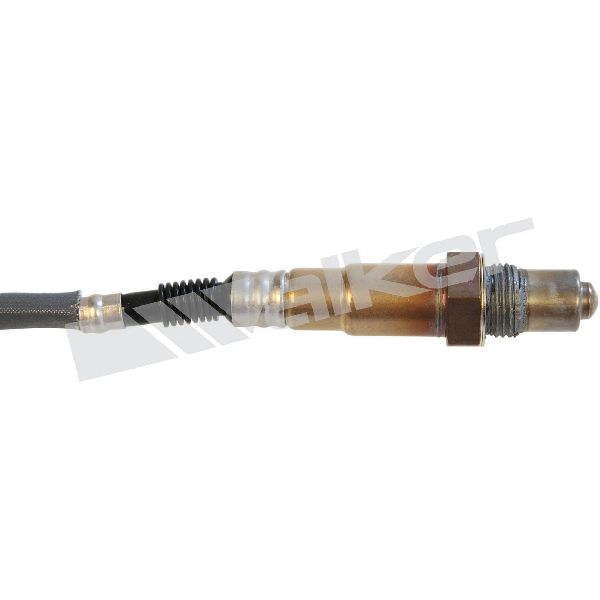
- Upstream Oxygen Sensor (Bank 1, Sensor 1)
(OEM #ACDelco 12663317 (superseded by 12701634))— This is the most common failure point for code P0132. The sensor's internal components fail, causing it to send a constant high voltage signal.
Trusted brands: ACDelco, Bosch, Denso, NGK/NTK
OEM price range: $100-$180
Aftermarket price range: $50-$80
Related Codes That Often Appear With This One
- P0138 — This code is for 'O2 Sensor Circuit High Voltage (Bank 1, Sensor 2)'. It is mentioned alongside P0132 in GM TSB 19-NA-062, suggesting a potential common software-related issue or a systemic problem causing high voltage readings on both sensors.
- P2097 — This code indicates 'Post Catalyst Fuel Trim System Too Rich Bank 1'. If the upstream sensor is falsely reporting rich, the ECM may command less fuel, which can sometimes cause conflicting readings and codes from the downstream sensor.
- P0299 / P2227 — These codes for 'Turbo Underboost' and 'Barometric Pressure Sensor Performance' are linked to a known issue with moisture freezing in the Charge Air Cooler (CAC) on this platform. While not directly causing P0132, it's a common concurrent problem on the same engine that affects performance.
Technical Service Bulletins (TSBs) & Recalls
- 19-NA-062: Technical bulletin regarding Start/Stop Performance, Hesitation, and MIL on with DTC P0132 and/or P0138.
- 19-NA-077: Information bulletin with similar content to 19-NA-062, addressing a software anomaly and advising to fix the DTCs first before applying a software update. Manufacturer TSB Bulletin #19NA077 specifically provides repair information to correct customer concerns of Start/Stop Performance, Hesitation From a Stop, and a Malfunction Indicator Lamp (MIL) illuminated with DTC P0132 and/or P0138 set.
Platform-Specific Known Issues
- TSB 19-NA-062: For 2018-2019 models, GM identifies a software anomaly that can cause hesitation or poor start/stop performance, which may occur at the same time as a P0132 code. The fix is a software update to be performed *after* the physical fault causing the P0132 code is repaired.
Mechanic-Grade Diagnostic Values
- O2 Sensor Heater Circuit Resistance — expected: Generally between 2 and 30 ohms, with a common reading around 7.5 ohms.. Failure: A reading of infinity (Open Loop) or zero ohms (short circuit) indicates a failed heater element within the sensor.
- B1S1 Live Data Voltage (Engine Warm, Idle) — expected: Rapidly fluctuating between approximately 0.1V (lean) and 0.9V (rich).. Failure: Voltage is stuck high, above 0.8V-0.9V, for a prolonged period (e.g., 20+ seconds).
- B1S1 Live Data Voltage (Sensor Unplugged, KOEO) — expected: Drops to a default bias voltage, typically around 450mV (0.45V).. Failure: Voltage remains high, indicating a short-to-power in the vehicle's wiring harness between the connector and the ECM.
Scan Tool Commands That Help
- GDS2 (GM Global Diagnostic System 2): O2 Sensor Heater Test — To command the O2 sensor's internal heater on and off to verify the integrity of the heater circuit, its wiring, and the ECM's control over it. This can help differentiate between a sensor failure and a wiring issue.
- GDS2 (GM Global Diagnostic System 2): Fuel Trim Reset — After replacing a faulty O2 sensor or fixing a rich/lean condition, resetting the fuel trims forces the ECM to relearn the air-fuel mixture strategy from scratch with the new, correct sensor data.
Wiring & Ground Locations
- F3 (15A) and F15 (10A) — In the main underhood fuse box, located in front of the battery.. These fuses supply power to the oxygen sensor circuits. A blown fuse will cause the sensor to not operate correctly and can set various O2 sensor codes. It is a critical first check before replacing parts.
- ECM Connector X1, Pin 18 — On the main Engine Control Module (ECM).. This pin corresponds to the 'High Reference' for Bank 1 Sensor 2, based on a 2018 Terrain wiring diagram. While not B1S1, it shows the type of specific pinout data available. A technician would use this to test for voltage or continuity directly at the ECM to rule out wiring harness issues.
- ECM Connector X1, Pin 25 — On the main Engine Control Module (ECM).. This pin is a 'Low Reference' wire, which acts as the sensor's ground provided by the ECM. A poor connection or break in this wire can cause erratic or biased voltage readings, including a high voltage condition.
Real Owner Repair Stories
- Reddit user in r/MechanicAdvice (2019 Chevy Equinox Premier 1.5L Turbo) — Engine sputtering, Check Engine Light on, vehicle would not exceed 20 mph at one point.
❌ Tried (didn't work) User was asking for a temporary fix before attempting repair.
✅ What actually fixed it The community consensus and the nature of the code strongly pointed to a failed upstream (Bank 1, Sensor 1) oxygen sensor as the direct cause of the severe drivability issue and the P0132 code. The implied fix is sensor replacement.
OEM Part Supersession History
12663317→12701634— This is a common practice by manufacturers to update a part due to design improvements, material changes, or a change in supplier. The new part is considered the current and correct replacement.
Heads up: None. 12701634 is the direct, backward-compatible replacement for 12663317.
Model Year Variations Within This Range
- 2018-2019: These model years are specifically called out in TSB 19-NA-062 for a software anomaly causing hesitation that can accompany a P0132 code. While the hardware fix is the same, these years may require a dealer software update after the repair to resolve all symptoms.
- 2020+: For 2020, GMC made many safety features standard that were previously optional, but this did not affect the P0132 diagnosis. For 2023, the 1.5L engine was updated (new RPO code 'LSD'), but this change to the fuel system does not alter the diagnosis for an O2 sensor high voltage code.
Diagnostic Flowchart
Other Known Issues on This Vehicle
Issues unrelated to this code that are worth knowing about as an owner of this generation:
- Brake Vacuum Pump Failure 🔴 High — A widespread and well-documented problem. Failure can lead to a sudden loss of power brake assist (hard pedal) and, in some cases, the pump can break apart, sending metal debris into the engine causing catastrophic damage. (Ref: TSB #PIP5835 exists for diagnosis, but no safety recall has been issued as of early 2026.)
- Charge Air Cooler (CAC) Icing/Moisture Accumulation 🟠 Medium — Common in cold or humid climates. Moisture accumulates in the intercooler and can freeze in cold weather or be ingested by the engine during acceleration, causing misfires and reduced power. (Ref: TSB 18-NA-020 addresses this issue, which often triggers codes P0300, P0299, and P2227.)
- Cracked Pistons 🔴 High — Less common than other issues but severe. Can be caused by Low-Speed Pre-Ignition (LSPI) or excessive crankcase pressure from a clogged PCV orifice. Often presents with a P0300 (Random Misfire) code. (Ref: TSBs 18-NA-171, 19-NA-122, and 20-NA-047 are related to diagnosis and contributing factors.)
- High-Pressure Fuel Pump Failure 🟠 Medium — Affects some 2018 models. The pump can detach from its mounting flange, potentially damaging the fuel line and causing a fuel leak or stall. (Ref: GM Recall #18188 was issued for this problem.)
- Intermittent 'Shift to Park' Message 🟡 Low — A common annoyance where the vehicle displays a 'Shift to Park' message even when it is already in park, preventing the vehicle from shutting off completely. (Ref: TSB 19-NA-206 addresses this issue, which is typically caused by a faulty switch within the shifter assembly.)
Used vs. New Parts: Buying Guide for This Vehicle
When a used part is the smart pick: For this specific repair, using a used part is strongly discouraged. Oxygen sensors are wear-and-tear items with a finite lifespan, similar to spark plugs or brake pads. A used sensor from a junkyard has unknown remaining life and may fail shortly after installation, wasting time and money.
What to inspect on the donor part:
- Not applicable as used parts are not recommended.
OEM-only on this vehicle (don't cheap out):
- While not strictly 'OEM-only', using a reputable brand is critical. Cheap, unbranded sensors are a common source of recurring issues.
Aftermarket brands forum-validated for this vehicle:
- NTK (also branded as NGK) and Denso are widely regarded as OEM suppliers or high-quality equivalents for GM vehicles.
- Bosch is a major sensor manufacturer, but some professional mechanics report occasional compatibility issues with GM vehicles, making NTK or Denso a safer bet.
Brands owners have reported issues with on this vehicle:
- Unnamed or 'white-box' brands from online marketplaces should be avoided. They often use lower-quality materials that can lead to premature failure or incorrect readings, causing the code to return.
Real Owner Stories
Aggregated from forums and TSBs cited above. Mileages and costs reflect what owners reported in those sources.
2018 Chevrolet Equinox 1.5L
Symptoms: Car was sluggish and had to pull over. Check engine light with code P0132. After clearing the code, it returned. While idling car seems fine but stepping on gas introduces a 'chug' until enough RPMs are reached.
What fixed it: The owner replaced the upstream O2 sensor, though they noted the 'chug' symptom persisted under acceleration.
Source hint: Reddit r/MechanicAdvice
2018 Chevrolet Equinox 1.5L
Symptoms: Lack of power and P0132 code present. Live data showed the upstream sensor was not working properly.
What fixed it: Replacing the upstream O2 sensor fixed the vehicle.
Source hint: Mitchell 1 ProDemand SureTrack Community Fix
Related OBD-II Codes
Frequently Asked Questions
My 2018 GMC Terrain 1.5L is hesitating and has a P0132 code; is there a software update for this?
What is the specific replacement part number for the upstream oxygen sensor on my 1.5L Turbo engine?
Can I diagnose a faulty sensor on my Terrain using just an OBD-II scanner?
Is the P0132 code related to the 'Shift to Park' message I see on my dashboard?
Could a P0132 code be caused by the Charge Air Cooler icing issue common in cold climates?
Helpful Videos
We Have This Part in Stock

The information in this article is provided for general reference and educational purposes only. Vehicle specifications, procedures, and part compatibility can vary by production date, trim level, and region. Always consult your vehicle's factory service manual and verify part numbers before purchasing or performing repairs. Safety-critical components such as airbags, seat belts, and braking systems should be installed by a qualified professional.
- GMC Terrain:
- 🎬 Helpful Videos
- 🛍️ Shop This Part
- What's Unique About the 2018-2024 GMC Terrain
- Symptoms You May Notice
- Most Likely Causes
- Rare But Worth Checking
- Diagnosis Steps
- Parts You'll Likely Need
- Related Codes That Often Appear With This One
- Technical Service Bulletins (TSBs) & Recalls
- Platform-Specific Known Issues
- Mechanic-Grade Diagnostic Values
- Scan Tool Commands That Help
- Wiring & Ground Locations
- Real Owner Repair Stories
- OEM Part Supersession History
- Model Year Variations Within This Range
- Diagnostic Flowchart
- Other Known Issues on This Vehicle
- Used vs. New Parts: Buying Guide for This Vehicle
- Real Owner Stories
- 2018 Chevrolet Equinox 1.5L
- 2018 Chevrolet Equinox 1.5L
- Related OBD-II Codes
- Frequently Asked Questions
- 🎟️ Get 5% Off