

P0132 on 2004-2024 Ford F-150: O2 Sensor High Voltage Causes and Fixes
P0132 on a Ford F-150 indicates a high voltage signal from the upstream oxygen sensor on the passenger side (Bank 1). This is most often caused by a failed sensor. Replacing the Bank 1, Sensor 1 O2 sensor is the most common fix, costing around $50-$100 for an aftermarket part and $90-$180 for an OEM Motorcraft sensor. If the code returns after replacement, suspect a wiring short or an underlying rich fuel condition.
- P0132 on your F-150 points to the upstream O2 sensor on the passenger side (Bank 1).
- The most likely cause is a failed O2 sensor, which is a common wear-and-tear part.
- Before replacing the sensor, inspect its wiring and connector for damage, as this is a common secondary cause.
- If a new sensor doesn't fix the code, investigate the possibility of a true rich-running condition (e.g., a leaking fuel injector) before suspecting the expensive PCM.
- Always verify the correct part number for your specific year and engine combination before purchasing a new sensor.
What's Unique About the 2004-2024 Ford F-150

For the Ford F-150, regardless of the engine (V8 or V6), Bank 1 is always the passenger side of the engine, and Sensor 1 is always the upstream sensor before the catalytic converter. While the code's meaning is consistent across the 2004-2024 model years, the physical location and accessibility of the sensor can vary significantly. On the 2004-2010 models with the 5.4L Triton V8, for example, the Bank 1 sensor is known for being particularly difficult to access, tucked tightly near the firewall. On 2011-2014 models with the 3.5L EcoBoost, the B1S1 sensor is on the passenger side downpipe, and its connector is notoriously hard to reach on top of the transmission, often requiring two people. 🎬 Watch: How to fix EcoBoost sensor codes on 2011-2014 models. For the 5.0L Coyote V8, the sensor is more accessible in the passenger side exhaust manifold.
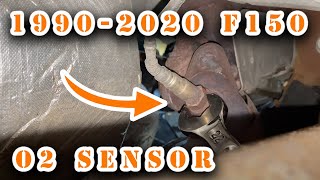
🎬 See this walkthrough for an easy F-150 sensor replacement.Generation note: This guide covers the 11th (2004-2008), 12th (2009-2014), 13th (2015-2020), and 14th (2021-2024) generations of the Ford F-150. The code's meaning is identical for all, but the specific oxygen sensor part number and engine layout will vary. Always verify the part for your specific engine (e.g., 5.4L V8, 5.0L V8, 3.5L EcoBoost, etc.) before purchasing. Owners often recommend using OEM Motorcraft sensors over aftermarket brands, as some aftermarket sensors have been reported to fail prematurely or not resolve the code.
Symptoms You May Notice

- Check Engine Light is on
- Reduced fuel economy
- Engine running rough, hesitating, or stumbling on acceleration
- Black smoke from the exhaust, especially on acceleration
- Smell of raw fuel
- Failed emissions test
- Replacing the O2 sensor without checking for an underlying rich fuel condition. If a fuel injector is leaking, the new O2 sensor will still report a high voltage, and the P0132 code will return.
- Replacing the catalytic converter. This code is for the sensor *before* the converter and is not an indication of converter health.
- Assuming an aftermarket sensor will work as well as OEM. Many F-150 owners report that only Motorcraft sensors solve the problem permanently.
Most Likely Causes

- Failed Bank 1, Sensor 1 Oxygen Sensor 🔴 High Probability Oxygen sensors are wear items exposed to extreme heat, exhaust gases, and contamination from engine fluids like oil or coolant. On trucks, they are also susceptible to physical damage from road debris and water.
How to confirm: Using a scan tool, observe the live data for the B1S1 O2 sensor. If the voltage is stuck above 0.9V and does not fluctuate, the sensor is likely bad. A definitive test is to swap the B1S1 and B2S1 sensor connectors; if the code changes to P0152 (Bank 2 high voltage), the sensor is confirmed faulty. If unplugging the sensor causes the voltage to drop on the scan tool, the sensor is the likely culprit.
Typical fix: Replace the upstream oxygen sensor on the passenger side. It is highly recommended to use an OEM Motorcraft sensor.
Est. part cost: $50-$180 - Wiring or Connector Issue 🟡 Medium Probability The wiring harness is routed near the hot exhaust manifold and can become brittle, melted, or frayed over time, causing a short to power. The connector can also suffer from corrosion or pushed-out pins. This is a common cause if a new sensor does not fix the code.
How to confirm: Visually inspect the wiring from the sensor to the main harness for any signs of melting, chafing, or breaks. Check the connector for corrosion or pushed-out pins. Use a multimeter to check for a short to voltage on the signal wire. One owner on f150online.com fixed the issue by cleaning the PCM connector.
Typical fix: Repair the damaged section of wiring or replace the connector pigtail. Ensure the harness is properly secured away from heat sources.
Est. part cost: $10-$40 - Engine Running Rich ⚪ Low Probability Not specific to this vehicle, but any issue causing a rich condition will be correctly reported by the O2 sensor. Common F-150 issues include leaking fuel injectors or a faulty fuel pressure regulator.
How to confirm: The O2 sensor is correctly reporting a rich condition. Look for other codes, especially P0172 (System Too Rich Bank 1). Check fuel trims with a scan tool; high negative long-term fuel trims indicate the PCM is trying to remove fuel. Investigate potential causes like a leaking fuel injector, faulty fuel pressure regulator, or a dirty/failing Mass Air Flow (MAF) sensor.
Typical fix: Diagnose and repair the root cause of the rich condition (e.g., replace leaking injector, replace fuel pressure regulator).
Est. part cost: $50-$500+
Rare But Worth Checking
- Exhaust Leak Upstream of Sensor: A crack in the exhaust manifold or a leaking gasket before the O2 sensor can sometimes allow outside air to enter, confusing the sensor and causing erratic readings that may trigger a high voltage code.
- Powertrain Control Module (PCM) Fault: This is very rare. The PCM's internal circuits for reading the O2 sensor could fail. This should only be considered after all other possibilities have been exhaustively ruled out. One forum member suspected this after multiple sensor replacements and wiring checks failed to solve the issue.
Diagnosis Steps

- Connect an OBD-II scanner and confirm P0132 is the primary code. Note any other codes present, especially P0172 or P0135.
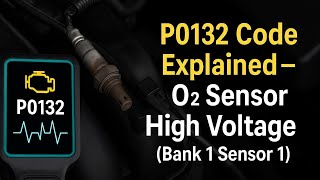
- View live data on the scanner. Watch the voltage for 'O2S11' (or B1S1). It should fluctuate rapidly between approximately 0.1V and 0.9V on a warm, running engine. If it is stuck high (e.g., >0.9V), the fault is active. 🎬 Watch: This video explains the P0132 high voltage code.
- Perform a thorough visual inspection. Look at the Bank 1 Sensor 1 (passenger side, upstream) and its wiring. Check for melted or frayed wires, especially where the harness is close to the exhaust manifold. Inspect the connector for corrosion or damage.
- If wiring looks good, consider swapping sensor connectors. Unplug the B1S1 and B2S1 (driver side, upstream) sensors and swap their connections to the main harness (if the wiring reaches). Clear codes and run the engine. If the code returns as P0152 (Bank 2 High Voltage), the sensor you moved is bad. If P0132 returns, the problem is in the Bank 1 wiring or the PCM.
- If a wiring issue is suspected, use a multimeter to check for continuity and shorts. With the sensor disconnected and ignition on, check for voltage on the signal wire at the harness connector. There should not be battery voltage present; if there is, you have a short to power.
- If the sensor and wiring are confirmed good, investigate potential rich fuel conditions. Check fuel pressure and look for leaking fuel injectors. Analyze fuel trims with your scan tool.
- Only after ruling out all other possibilities should a PCM failure be considered.
Parts You'll Likely Need

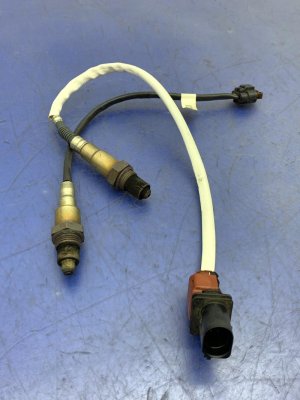
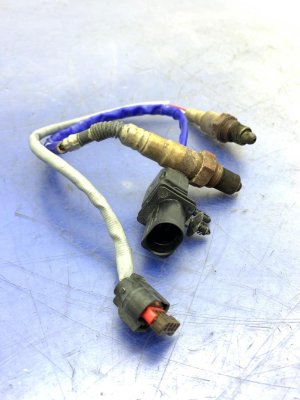
- Oxygen Sensor (Bank 1, Sensor 1)
(OEM #Motorcraft DY-1401 (fits many 5.4L and other models, verify for your specific year/engine))— This is the most common failure point for code P0132. The sensor is a wear item that eventually fails from heat and contamination.
Trusted brands: Motorcraft, Bosch, Denso, NGK/NTK
OEM price range: $90-$180
Aftermarket price range: $50-$100
Related Codes That Often Appear With This One
- P0172 — System Too Rich (Bank 1). This code often accompanies P0132 because it confirms the PCM's perspective that the fuel mixture on Bank 1 is too rich, which is what the high voltage reading from the O2 sensor indicates.
- P2196 — O2 Sensor Signal Stuck Rich (Bank 1, Sensor 1). This is a more specific code that is functionally very similar to P0132 and points to the same set of potential failures.
- P0135 — O2 Sensor Heater Circuit Malfunction (Bank 1, Sensor 1). This code points to a problem with the sensor's internal heater. A failed heater can cause the sensor to give incorrect readings, sometimes triggering P0132 as well.
Platform-Specific Known Issues
- On 2004-2010 F-150s with the 5.4L Triton V8, the Bank 1 Sensor 1 is in a very tight spot near the firewall, making removal and replacement difficult without a specialized O2 sensor socket and extensions.
- On 2011-2014 F-150s with the 3.5L EcoBoost, the B1S1 connector is located on top of the transmission and is very difficult to access. A video guide shows one person reaching from underneath near the driveshaft to unplug it.
- A recurring P0132 that only appears on warm starts can be indicative of a wiring issue that manifests with heat soak, as documented by one owner of a 2020 5.0L F-150.
Mechanic-Grade Diagnostic Values

- O2 Sensor Heater Element Resistance — expected: Between 2 and 30 ohms. A common range cited is 5 to 20 ohms.. Failure: An open circuit (infinite resistance) or a dead short (zero resistance) indicates a failed heater element within the sensor.
- O2 Sensor Heater Circuit Voltage Supply (KOEO) — expected: 10 to 12 Volts DC at the harness connector pin that provides power to the heater.. Failure: No voltage indicates a problem with the power supply fuse or wiring, not the sensor itself.
- Live O2 Sensor Voltage (B1S1) — expected: Rapidly fluctuating between ~0.1V (lean) and ~0.9V (rich) on a warm, closed-loop engine.. Failure: Voltage stuck consistently above 0.9V for an extended period (e.g., 20+ seconds) triggers the P0132 code.
Scan Tool Commands That Help
- Ford IDS (or equivalent professional scan tool): Key-On Engine-Running (KOER) Self-Test — This test actively commands circuits, including the O2 sensor heaters, to check for faults. A technician noted that while resistance was good cold, running the KOER self-test revealed the heater circuit was failing under load, confirming a bad sensor that might otherwise test good.
- Ford IDS / FORScan: PCM Reprogram / Reset Adaptive Tables — After certain repairs or to resolve software glitches. TSBs for 2018-2020 5.0L F-150s call for a PCM reprogram to alter engine vacuum characteristics, which can resolve underlying conditions that might lead to rich readings. Resetting adaptive learning is also advised after major engine work or sensor replacement.
Wiring & Ground Locations

- PCM Connector Pin 60 (1998 4.6L) — At the 104-pin Powertrain Control Module connector.. This is the specific pin for the Bank 1 Sensor 1 O2 Signal (wire color GRY/LT BLU). It's the terminal to test for a short to voltage or check for continuity back to the sensor connector.
- PCM Connector Pin 93 (1998 4.6L) — At the 104-pin Powertrain Control Module connector.. This is the pin for the Bank 1 Sensor 1 Heater Control (wire color RED/WHT). A short in this circuit could potentially affect the signal wire.
- G101 / G102 / G103 — For 2007 models: G101 is on the firewall behind the PCM, G102 is on the firewall just to the right of the PCM, and G103 is on the firewall near the right fender. For earlier models (~2002), G103 is on the RH side front of the vehicle.. These are primary grounding points for the engine bay and PCM. A poor ground at these locations can cause floating voltages and erratic sensor readings, including a false high voltage signal for the O2 sensor.
- Firewall Ground Strap — On many V8 models, a key ground strap runs from the firewall to a double-threaded stud on the back of the passenger side cylinder head.. This is a critical engine-to-chassis ground. If it's loose, corroded, or broken, it can cause a host of electrical issues, including sensor codes like P0132. It's often overlooked during engine or transmission work.
Real Owner Repair Stories
- F150online Forums, user 'youngwill31' (2005 Ford F-150) — Persistent P0132 code.
❌ Tried (didn't work) Replaced Bank 1 Sensor 1 O2 sensor multiple times., Replaced the passenger side catalytic converter., Replaced the MAF sensor., Swapped the B1S1 and B2S1 sensors to confirm the sensor wasn't the issue (the code stayed P0132).
✅ What actually fixed it The user pulled the female harness connector for the O2 sensor up, cleaned it, and then sprayed contact cleaner into the main plug that connects to the computer (PCM). After cleaning the PCM connector, the code went away. - Ford F150 Forum, user 'Dan'sAussieF150' (2020 Ford F-150 5.0L (Right-hand drive conversion in Australia)) — P0132 code that only appeared on warm starts. Cold starts were fine, but restarting a warm engine would trigger the CEL every time.
❌ Tried (didn't work) Replaced the B1S1 O2 sensor twice., Swapped the B1S1 and B2S1 sensor connectors; the fault remained on Bank 1, ruling out the sensor itself.
✅ What actually fixed it The user traced the wiring and found no obvious damage. The issue was diagnosed as a probable wiring fault that only manifested with heat soak in the engine bay. The thread implies the final fix was a wiring repair, as the user confirmed the issue was not the sensor. - Ford F150 Forum, user 'rounded-nut' (Ford F-150 (year not specified)) — Multiple codes at once (P2196, P0171, P2195, P0132, P0133), rough idle, and intermittent power loss.
❌ Tried (didn't work) Initial diagnosis pointed to a bad sensor due to the codes.
✅ What actually fixed it Upon removing the Bank 1 Sensor 1 O2 sensor, the user found green corrosion on the pins of the truck-side wiring harness connector. Cleaning the harness connector with electronics cleaner and a nylon brush, then replacing the sensor, resolved all codes and drivability issues.
OEM Part Supersession History
ML3Z9F472A, ML3Z9F472F→ML3Z-9F472-FA— Standard part revision and consolidation by Ford.
Heads up: These part numbers apply to the latest generation F-150s (2021+), particularly with the 3.5L engine. Using an older generation's sensor may result in fitment or electrical incompatibility.→DY-1401— This is a widely used Motorcraft part number that fits many Ford V8 applications across multiple years.
Heads up: While DY-1401 is very common, it is critical to verify the exact part number for your specific year and engine combination, as there are dozens of variations. For example, DY-1166 is listed for the 2011 5.0L/6.2L, while DY-1401 fits many other years.
Model Year Variations Within This Range

- 2018-2020: F-150s with the 5.0L engine in this range were subject to TSB 19-2365 for excessive oil consumption. The fix involves a PCM reprogram to reduce engine vacuum during deceleration. This underlying oil consumption issue can foul the O2 sensor, leading to codes like P0132. The PCM update is a critical step before assuming the sensor itself is the sole cause.
- 1998-2003: PCM pinouts and wire colors can vary. For example, on a 1998 4.6L, the B1S1 signal is on pin 60 (Gray/Light Blue). On a 2000-2001 4.2L, the B1S2 signal is on pin 35 (Red/Light Green), highlighting the need for a year- and engine-specific wiring diagram when diagnosing.
Diagnostic Flowchart
Real Owner Stories
Aggregated from forums and TSBs cited above. Mileages and costs reflect what owners reported in those sources.
2020 Ford F-150 5.0L
Symptoms: Check engine light with code P0132, occurring randomly at first, then progressing to every warm start. Truck drives and performs fine.
What fixed it: Not resolved in the thread. The owner determined the sensor itself was not the issue after swapping it with the Bank 2 sensor and still getting the error on Bank 1. The suspected cause is a wiring issue or an open circuit fault between the PCM and the sensor.
Source hint: F150Forum.com thread 'P0132 O2 Sensor Issue - Ford F150 Forum'
Ford F-150 (Year/Engine unspecified)
Symptoms: Code P0132 kept popping up. Replaced the sensor twice, replaced a stopped-up passenger side catalytic converter, and replaced the MAF sensor, but the code returned after 30 minutes.
What fixed it: Sprayed contact cleaner into the PCM connector to resolve a poor connection.
Source hint: F150online Forums
Related OBD-II Codes
Frequently Asked Questions
Which oxygen sensor is Bank 1 Sensor 1 on my F-150?
I have a 2004-2010 F-150 with the 5.4L Triton V8. Is the Bank 1 Sensor 1 hard to replace?
How do I access the B1S1 connector on my 2011-2014 3.5L EcoBoost F-150?
I replaced the Bank 1 Sensor 1 on my F-150 but the P0132 code came back. What should I check next?
My 2020 5.0L F-150 only throws the P0132 code on warm starts. What does this mean?
What brand of oxygen sensor should I use for my F-150?
Helpful Videos
![How to Fix P0132 Engine Code in 3 Minutes [2 DIY Methods / Only $8.78]](https://img.youtube.com/vi/z01JETB0ezI/mqdefault.jpg)
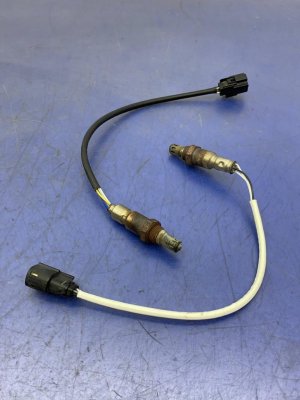
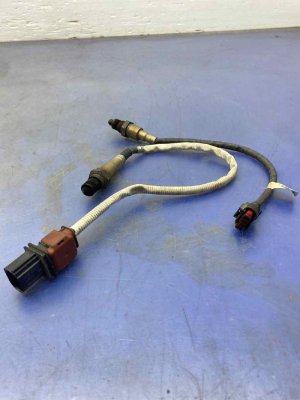
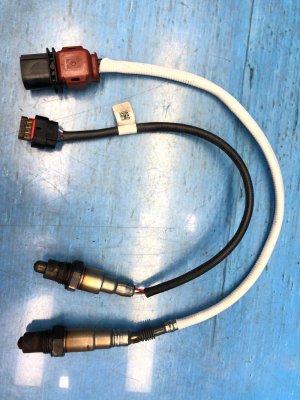
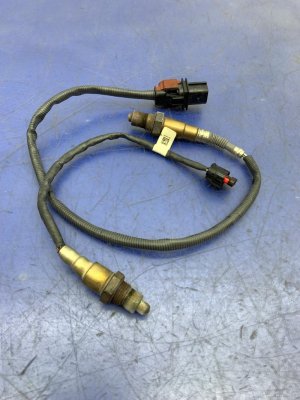
We Have This Part in Stock

The information in this article is provided for general reference and educational purposes only. Vehicle specifications, procedures, and part compatibility can vary by production date, trim level, and region. Always consult your vehicle's factory service manual and verify part numbers before purchasing or performing repairs. Safety-critical components such as airbags, seat belts, and braking systems should be installed by a qualified professional.
- Ford F-150:
- 🎬 Helpful Videos
- 🛍️ Shop This Part
- What's Unique About the 2004-2024 Ford F-150
- Symptoms You May Notice
- Most Likely Causes
- Rare But Worth Checking
- Diagnosis Steps
- Parts You'll Likely Need
- Related Codes That Often Appear With This One
- Platform-Specific Known Issues
- Mechanic-Grade Diagnostic Values
- Scan Tool Commands That Help
- Wiring & Ground Locations
- Real Owner Repair Stories
- OEM Part Supersession History
- Model Year Variations Within This Range
- Diagnostic Flowchart
- Real Owner Stories
- 2020 Ford F-150 5.0L
- Ford F-150 (Year/Engine unspecified)
- Related OBD-II Codes
- Frequently Asked Questions
- 🎟️ Get 5% Off