

P0131 on 2006-2010 Dodge Charger 5.7L HEMI: Causes and Fixes for O2 Sensor Low Voltage
This code almost always points to a failed upstream oxygen sensor on the driver's side. Replacing the sensor is the most common fix. Expect to pay $40-$80 for a quality aftermarket part (NTK, Denso) or around $100-$150 for an OEM Mopar sensor. DIY difficulty is 2/5.
- P0131 on your 5.7L HEMI points to a low voltage signal from the upstream O2 sensor on the driver's side.
- The most common fix is to replace the sensor itself, but always inspect for exhaust leaks (the 'Hemi tick') and wiring damage first, as these are very common on this platform.
- Use a high-quality OEM (Mopar) or OE-equivalent (NTK) sensor to avoid compatibility problems with the vehicle's computer.
- Driving with this code active will cause poor fuel economy and can damage the expensive catalytic converter over time.
What's Unique About the 2006-2010 Dodge Charger
While P0131 is a generic code, on the 5.7L HEMI platform, it's important to consider two specific factors. First, these engines are notoriously prone to exhaust manifold leaks, often due to broken rear bolts, which causes a 'ticking' sound and allows fresh air to be drawn into the exhaust, fooling the sensor into reading a false lean condition. Second, the Chrysler PCM is sensitive to the brand of oxygen sensor used. Owners and technicians strongly recommend using the OEM Mopar sensor or the OE-equivalent brand NTK (who makes the sensor for Mopar) to avoid compatibility issues and repeat codes that are sometimes seen with other aftermarket brands like Bosch.
Symptoms You May Notice
- Check Engine Light is on
- Reduced fuel economy
- Rough or unstable idle
- Engine hesitation or loss of power during acceleration
- Noticeable smell of gasoline from the exhaust
- Exhaust 'ticking' noise, especially when cold, if caused by a manifold leak.
- Replacing the O2 sensor without first checking for exhaust leaks. An exhaust leak will cause the new sensor to read low voltage as well, leading to a repeat code and wasted money.
- Using a cheap, off-brand O2 sensor. Chrysler electronics of this era are known to be finicky, and using a non-OEM-equivalent sensor (like Bosch) can sometimes cause the code to return immediately.
Most Likely Causes
- Failed Bank 1, Sensor 1 Oxygen Sensor 🔴 High Probability Oxygen sensors are wear-and-tear items that degrade over time from heat and contaminants. With the age of this vehicle generation, sensor failure is the most common reason for P0131.
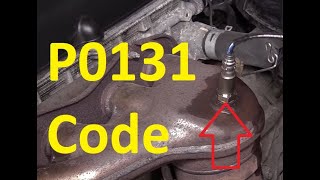
How to confirm: Using an OBD-II scanner, observe the live data for 'O2S B1S1'. A healthy sensor's voltage should fluctuate rapidly between approximately 0.1V and 0.9V multiple times per second. If the voltage is stuck below 0.2V and does not respond to changes in engine RPM 🎬 Watch: A guide to diagnosing P0131 O2 sensor circuit low voltage., the sensor has likely failed.
Typical fix: Replace the upstream oxygen sensor on the driver's side. The original equipment manufacturer is NTK. Using an NTK or Mopar sensor is highly recommended. Apply anti-seize compound to the threads of the new sensor if not pre-applied.
Est. part cost: $40-$150 - Exhaust Leak Before the Sensor 🟡 Medium Probability The 5.7L HEMI engines are known for developing exhaust manifold leaks from broken manifold bolts, particularly the rearmost bolts near the firewall which experience the most heat stress. This allows unmetered air to enter the exhaust stream.
How to confirm: Listen for a distinct 'ticking' noise from the driver's side of the engine bay, especially when the engine is cold, which often lessens as the metal expands. A visual inspection may reveal black soot trails near the manifold-to-head mating surface. A smoke test is the most definitive way to find a leak.
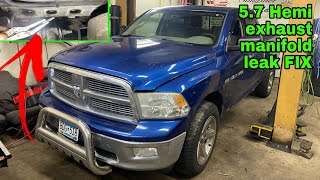
Typical fix: Repairing the exhaust leak. This usually involves replacing the exhaust manifold gasket and extracting and replacing the broken bolts 🎬 Watch: How to fix the most common Hemi manifold bolt failure., which can be difficult and may require a mechanic.
Est. part cost: $20-$300 - Damaged Wiring or Connector 🟡 Medium Probability The O2 sensor wiring harness is routed close to the hot exhaust system, making it susceptible to melting, chafing, or becoming brittle and breaking over time. Manufacturer service bulletins for similar Chrysler platforms, such as TSB Bulletin #25-002-14, specifically identify P0131 as an indicator that the 1/1 O2 sensor may be shorted to ground.
How to confirm: Visually inspect the wiring harness leading to the Bank 1 Sensor 1 O2 sensor. Look for any signs of melted insulation, frayed wires, or corrosion inside the connector. Check for continuity and shorts to ground using a multimeter.
Typical fix: Repair the damaged section of the wiring harness or replace the connector pigtail. Ensure the repaired harness is properly secured away from heat sources using zip ties or clips.
Est. part cost: $15-$50 - Engine Vacuum Leak ⚪ Low Probability
How to confirm: Listen for hissing sounds around the intake manifold, vacuum hoses (especially the PCV hose), and brake booster. You can also spray short bursts of brake cleaner or an unlit propane torch around suspected areas; a change in engine idle indicates a leak.
Typical fix: Replace the leaking vacuum hose, intake manifold gasket, or other faulty component causing the leak.
Est. part cost: $5-$150
Rare But Worth Checking
- Low Fuel Pressure: A weak fuel pump or clogged fuel filter can cause a lean running condition, which the O2 sensor will accurately report as low voltage. This should be considered if other fuel-related codes are present or if fuel trims are highly positive.
- Faulty Powertrain Control Module (PCM): This is extremely rare. The PCM should only be considered as the cause after all other possibilities, including the sensor, wiring, and mechanical issues, have been definitively ruled out. Sometimes a PCM software update from the dealer can resolve intermittent false codes.
Diagnosis Steps
- Connect an OBD-II scanner and confirm P0131 is the active code. Check for any other related codes like P0171 or P0135.
- View the live data stream for the Bank 1 Sensor 1 (B1S1) O2 sensor. A healthy sensor's voltage should fluctuate rapidly between ~0.1V and ~0.9V. If it is stuck below 0.2V, the fault is active.
- With the engine cold, start it and listen carefully for any 'ticking' from the driver's side exhaust manifold, which strongly indicates an exhaust leak. Visually inspect for soot.
- Perform a thorough visual inspection of the B1S1 O2 sensor's wiring harness and connector. Look for any signs of melting, chafing, corrosion, or loose connections. Ensure it is secured away from the exhaust.
- Check for engine vacuum leaks by listening for hissing noises and inspecting the integrity of all vacuum hoses connected to the intake manifold, including the PCV valve and brake booster line.
- If the wiring is intact and there are no signs of exhaust or vacuum leaks, the oxygen sensor itself is the most likely cause of the failure.
- After replacing the sensor or fixing the root cause, clear the codes with the scanner and perform a complete drive cycle to ensure the repair was successful and the Check Engine Light does not return.
Parts You'll Likely Need
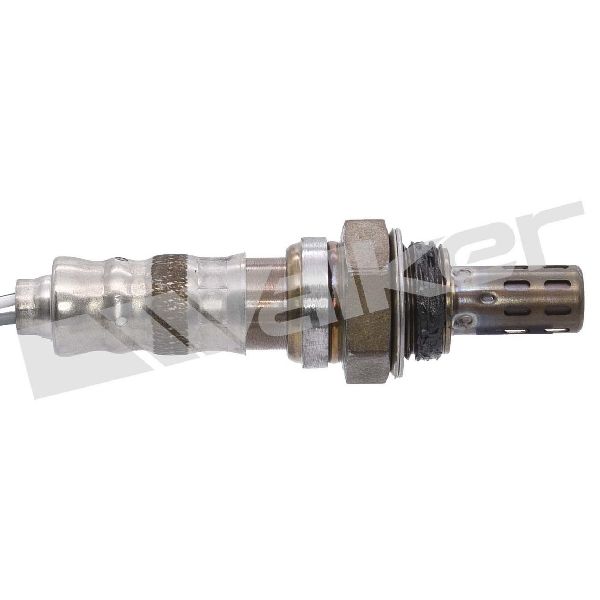
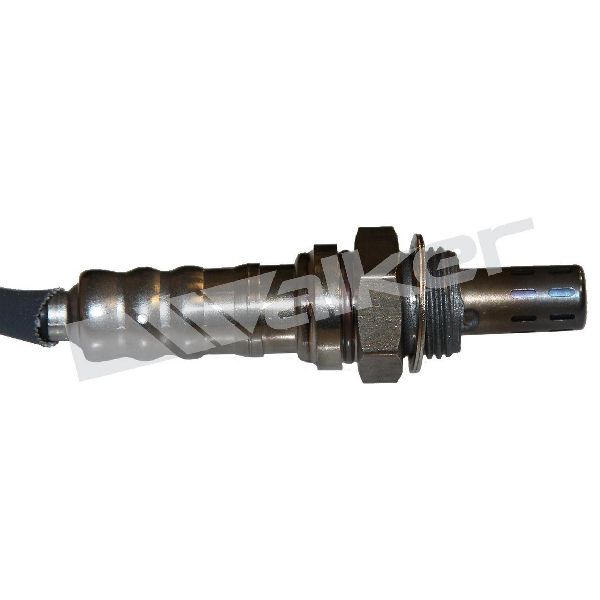
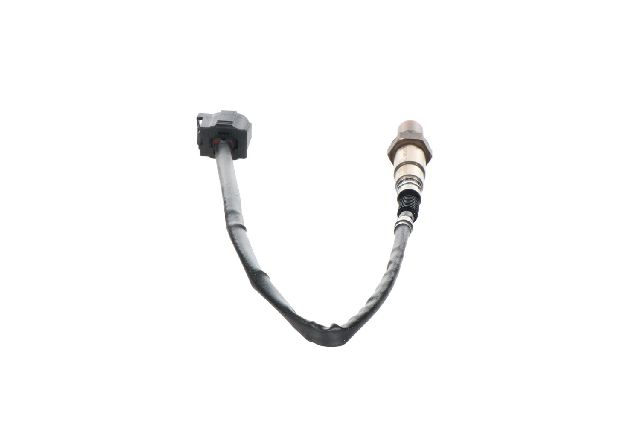
- Upstream Oxygen Sensor (Bank 1, Driver's Side)
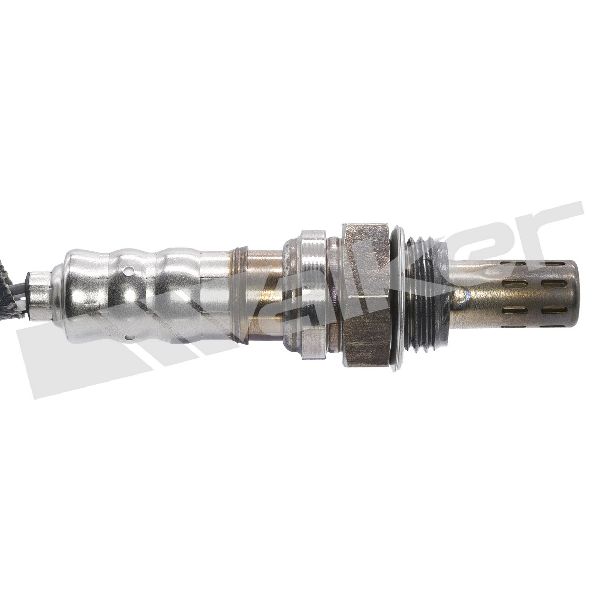
(OEM #5149171AB)— This is the sensor that generates the signal monitored by the PCM for code P0131. It is a common failure item due to age and heat cycles. NTK is the OEM supplier.
Trusted brands: Mopar, NTK, Denso
OEM price range: $100-$190
Aftermarket price range: $40-$80
Related Codes That Often Appear With This One
- P0171 — P0171 means 'System Too Lean (Bank 1)'. A vacuum leak, exhaust leak, or fuel delivery issue can cause both codes, as the O2 sensor is simply reporting the lean condition it detects.
- P0135 — This code indicates a fault in the heater circuit for the same O2 sensor (Bank 1, Sensor 1). Since the heater and sensor are part of the same component, seeing them together almost always confirms a bad O2 sensor.
Technical Service Bulletins (TSBs) & Recalls
- NHTSA ID: 10016925 - A general service bulletin for some Chrysler models that lists a group of O2 sensor-related DTCs, including P0131, P0132, P0133, P0151, etc. This indicates a known pattern of issues that may have updated diagnostic procedures or software flashes available at a dealership.
- TSB Bulletin #25-003-13 - This manufacturer bulletin notes that P0131 can specifically indicate the 1/1 O2 sensor is shorted to ground, often appearing alongside other heater performance codes like P0135.
- TSB Bulletin #25-004-12 - A service bulletin for Chrysler-manufactured fuel systems that identifies P0131 as a condition where the 1/1 O2 sensor is shorted to ground, requiring inspection of the sensor circuit and processor performance.
Platform-Specific Known Issues
- Owner Experience: Exhaust Leak Mimicking Bad Sensor: A user on chargerforums.com reported chasing a P0131 code. After replacing the O2 sensor didn't fix the issue, they discovered two broken exhaust manifold bolts on the driver's side. Replacing the bolts and gasket finally resolved the code. This highlights the importance of checking for the common 'Hemi tick' before replacing parts. 🎬 See this video to identify the 5.7 Hemi exhaust leak sound.
Mechanic-Grade Diagnostic Values
- O2 Sensor Heater Element Resistance — expected: 2.0 to 30.0 Ohms at ambient temperature (approx. 70°F / 21°C).. Failure: A reading of infinite resistance (Open Loop/OL) or near zero Ohms indicates a failed internal heater element.
- O2 Sensor Signal Circuit Voltage (Sensor Disconnected, KOEO) — expected: Approximately 5.0 Volts.. Failure: Significantly lower or no voltage points to an open in the signal wire or a potential issue with the PCM.
- O2 Sensor Signal & Return Circuit Jumper Test (Sensor Disconnected, KOEO) — expected: Voltage should drop from ~5.0V to ~2.5V when a jumper wire is connected between the signal and return circuits on the harness connector.. Failure: If the voltage does not drop as expected, it indicates a problem in the wiring or the PCM, not the sensor itself.
- O2 Sensor Signal Circuit Resistance to Ground — expected: Greater than 10k Ohms (checking for a short).. Failure: A low resistance reading indicates a short to ground in the signal wire.
Scan Tool Commands That Help
- wiTECH (Chrysler Dealer Tool): O2 Sensor Heater Test — This is a bidirectional control that allows a technician to command the O2 sensor's internal heater on and off. It is used to verify the integrity of the heater control circuit and the heater element itself after the sensor has cooled down.
Wiring & Ground Locations
- Engine to Chassis/Firewall Ground — A primary ground strap connects from the rear of the passenger side cylinder head to the firewall.. A poor engine ground can cause erratic voltage readings and floating grounds for various sensors, including the O2 sensors, which rely on a stable ground reference for accurate signaling. Ensuring this connection is clean and tight is a crucial, often overlooked, step in diagnosing electrical faults.
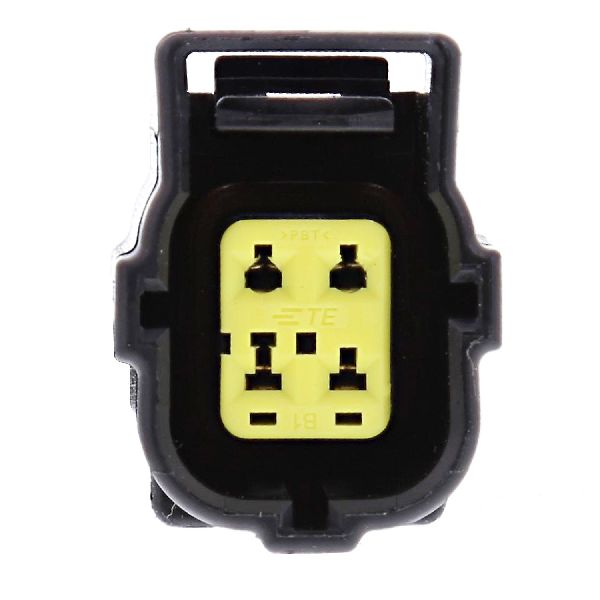
- B1S1 O2 Sensor Connector Pinout (Typical 4-wire) — On the sensor-side of the harness connector.. Knowing the wire functions is required for testing. Typically for Chrysler/NTK sensors: two same-colored wires (e.g., white or black) are for the heater circuit, one wire is the signal, and the last is the sensor ground/return.
OEM Part Supersession History
68066160AA→5149171AB— Part number consolidation and potential minor revision by the manufacturer.
Heads up: 68066160AA is superseded by 5149171AB, which is the current and correct replacement part.5149171AA→5149171AB— Part number consolidation and potential minor revision by the manufacturer.
Heads up: 5149171AA is the older version of the current 5149171AB part. The 'AB' revision is the correct service replacement.
Model Year Variations Within This Range
- 2009-2010: For the 2009 model year, the 5.7L HEMI engine (codenamed 'Eagle') was significantly updated with Variable Camshaft Timing (VCT), new cylinder heads with improved flow, a higher compression ratio (10.5:1 vs 9.6:1), and a stronger rotating assembly. While the fundamental cause of P0131 (O2 sensor failure) remains the same, these engine changes mean that intake and exhaust components are not interchangeable with 2006-2008 models.
Diagnostic Flowchart
Other Known Issues on This Vehicle
Issues unrelated to this code that are worth knowing about as an owner of this generation:
- Dropped Valve Seats (Pre-2009 Engines) 🔴 High — Most common on 2003-2008 5.7L engines, typically over 100,000 miles. Failure often occurs on a hot restart. The issue is a design flaw with insufficient interference fit for the valve seats. (Ref: A Chrysler TSB acknowledged the issue in 2006, stating the 'valve seat is not properly seated', but no recall was issued.)
- MDS Lifter Failure ('Hemi Tick') 🔴 High — More prevalent on the 2009+ 'Eagle' HEMI, but can still occur on earlier models. Often presents as a distinct ticking noise that can lead to camshaft damage if ignored. Failure window is often between 70k-130k miles.
- Broken Exhaust Manifold Bolts 🟠 Medium — Extremely common across all 5.7L HEMI applications. The rearmost bolts are most susceptible to breaking due to heat cycles, causing an exhaust leak and a distinct 'ticking' noise, especially when cold.
- Shifter Stuck in Park ('Pink Thing' Failure) 🟡 Low — Very common on 2005-2007 models. A small pink plastic lever in the shifter assembly breaks, preventing the shifter from moving out of Park. (Ref: No recall, but a well-known issue. Mopar offers a repair kit (P/N 68088259AB), and durable metal aftermarket replacements are widely available.)
- Front Suspension Wear 🟠 Medium — These heavy cars are known to wear out front suspension components like tension struts, control arm bushings, and tie rod ends prematurely, leading to clunking noises and poor alignment.
Used vs. New Parts: Buying Guide for This Vehicle
When a used part is the smart pick: It is almost never a good idea to buy a used oxygen sensor. They are wear-and-tear items with a finite lifespan, and their failure is often due to internal degradation that cannot be visually inspected. The labor to install a used sensor that may fail shortly after is not worth the small cost savings.
Donor-vehicle mileage cap: roughly under 20000 miles for the part to have meaningful remaining life.
What to inspect on the donor part:
- If forced to use one for temporary testing, select one from the lowest-mileage vehicle possible.
- Ensure the wiring pigtail and connector are completely intact with no brittleness or signs of melting.
- The sensor tip should be free of heavy black soot (rich running), white deposits (coolant/oil contamination), or physical damage.
OEM-only on this vehicle (don't cheap out):
- While not strictly 'OEM-only', using the OEM supplier (NTK) or a genuine Mopar part is highly recommended for Chrysler oxygen sensors of this era to prevent compatibility issues that can cause immediate or recurring codes.
Aftermarket brands forum-validated for this vehicle:
- NTK (OEM supplier)
- Denso
Brands owners have reported issues with on this vehicle:
- Bosch (While a quality brand, some owners on Chrysler forums report compatibility issues with their sensors on this specific platform, leading to repeat codes).
Real Owner Stories
Aggregated from forums and TSBs cited above. Mileages and costs reflect what owners reported in those sources.
2006-2010 Dodge Charger 5.7L HEMI V8
Symptoms: Chasing a P0131 code; replaced the O2 sensor but the issue persisted.
What fixed it: Discovered and replaced two broken exhaust manifold bolts and the gasket on the driver's side.
Source hint: chargerforums.com thread titled 'Owner Experience: Exhaust Leak Mimicking Bad Sensor'
2006-2010 Dodge Charger 5.7L HEMI V8
Symptoms: Vehicle threw both P0131 and P0151 O2 sensor codes simultaneously.
What fixed it: Replacing both upstream oxygen sensors with NTK parts.
Source hint: chargerforums.com thread: https://www.chargerforums.com/threads/p0131-and-p0151-o2-sensor-codes.373436/
Related OBD-II Codes
Frequently Asked Questions
Is there a specific brand of oxygen sensor I should use for my 5.7L HEMI Charger?
I hear a ticking sound when my Charger is cold, but it goes away later. Could this be related to P0131?
Does NHTSA ID: 10016925 apply to my P0131 code?
Where is the Bank 1 Sensor 1 O2 sensor located on the 5.7L HEMI V8?
Can a vacuum leak cause P0131 on my 2006-2010 Charger?
Why does the wiring harness fail so often on this generation of Charger?
Helpful Videos

We Have This Part in Stock


The information in this article is provided for general reference and educational purposes only. Vehicle specifications, procedures, and part compatibility can vary by production date, trim level, and region. Always consult your vehicle's factory service manual and verify part numbers before purchasing or performing repairs. Safety-critical components such as airbags, seat belts, and braking systems should be installed by a qualified professional.
- Dodge Charger:
- 🎬 Helpful Videos
- 🛍️ Shop This Part
- What's Unique About the 2006-2010 Dodge Charger
- Symptoms You May Notice
- Most Likely Causes
- Rare But Worth Checking
- Diagnosis Steps
- Parts You'll Likely Need
- Related Codes That Often Appear With This One
- Technical Service Bulletins (TSBs) & Recalls
- Platform-Specific Known Issues
- Mechanic-Grade Diagnostic Values
- Scan Tool Commands That Help
- Wiring & Ground Locations
- OEM Part Supersession History
- Model Year Variations Within This Range
- Diagnostic Flowchart
- Other Known Issues on This Vehicle
- Used vs. New Parts: Buying Guide for This Vehicle
- Real Owner Stories
- 2006-2010 Dodge Charger 5.7L HEMI V8
- 2006-2010 Dodge Charger 5.7L HEMI V8
- Related OBD-II Codes
- Frequently Asked Questions
- 🎟️ Get 5% Off