

P0128 on 2017-2023 GMC Acadia: Steering Warnings, Causes, and Fixes
On a 2017-2023 GMC Acadia with the 3.6L V6 engine, code P0128 is almost always caused by a faulty thermostat that is stuck open. This prevents the engine from warming up properly and, as a unique quirk of this platform, often triggers a 'Service Steering Assist' message. Replacing the thermostat and housing assembly is the definitive fix, costing around $50-$125 for the part and involving significant labor.
- P0128 on a 2017-2023 Acadia is most likely a bad thermostat, not a complex engine problem.
- Do not be alarmed by the 'Service Steering' message; it is a known side effect of this cooling system code and should resolve when the P0128 fault is fixed.
- The most common and effective repair is to replace the thermostat assembly and the ECT sensor at the same time.
- This is a labor-intensive job (DIY Difficulty 4/5) because the parts are buried under the intake manifold.
- Ignoring this code will result in poor fuel economy, no A/C, and potentially unpredictable power steering assistance.
What's Unique About the 2017-2023 Gmc ACADIA

What's highly unusual about the P0128 code on the second-generation GMC Acadia (and its platform mates with the 3.6L V6 LGX engine) is its direct link to the electronic power steering system. A cooling system fault—specifically P0128—will often trigger a 'Service Steering Assist' or 'Steering Assist is Reduced' message on the dashboard. [20, ODI #11698972] This happens because the power steering control module uses engine temperature data to adjust steering feel; it compensates for the thicker grease in the steering gear when the engine is cold by providing more assist. When the temperature signal from the ECM becomes invalid or irrational (due to the P0128 fault), the steering module defaults to a reduced-assist mode as a safety precaution to protect the steering gear in a potential (but undetected) overheat condition. This is a well-documented quirk confirmed by GM Technical Service Bulletin #PIT5967, often confusing owners into thinking they have a major steering problem when the root cause is a failed thermostat.
🎬 Watch: How a thermostat fault triggers steering assist warnings.Diagnostic Flowchart

Tap your situation to follow the diagnostic path that matches what you're seeing on this vehicle.
Symptoms You May Notice

- Check Engine Light is on
- "Service Steering Assist" or "Steering Assist is Reduced Drive With Care" message in the Driver Information Center (DIC). [20, ODI #11698972, ODI #11552490]
- Temperature gauge reads very low, stays on 'C', or drops to zero during driving. [26, ODI #11593543]
- Cooling fans run continuously at high speed, even after the vehicle is turned off. [22, Bulletin #22-NA-054]
- Air conditioning (A/C) does not blow cold air or is disabled by the ECM.
- Poor heater performance or only lukewarm air from the vents.
- Engine takes an unusually long time to warm up.
- Replacing power steering components. Owners or shops may see the 'Service Steering' message and mistakenly diagnose a fault with the electronic power steering rack or module. TSB #PIT5967 specifically warns against this, instructing technicians to diagnose P0128 first if it is present alongside the steering message. [9, 40, ODI #11593543]
Most Likely Causes

- Faulty Engine Coolant Thermostat 🔴 High Probability The thermostat, housed in a plastic assembly on the 3.6L V6 engine, is known to fail by sticking in the open position. This allows coolant to circulate through the radiator constantly, preventing the engine from reaching its target temperature, especially in cooler weather or during highway driving.
How to confirm: After starting the engine cold, feel the upper radiator hose. If it starts to get warm within the first few minutes, the thermostat is likely stuck open, as it should remain closed until the engine is hot (approx. 195°F). A scan tool will also show the coolant temperature struggling to rise, often plateauing around 170-176°F.
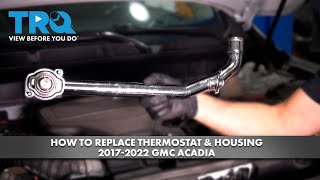
Typical fix: Replace the entire thermostat and housing assembly. It is strongly recommended to replace the Engine Coolant Temperature (ECT) sensor at the same time since it is located directly next to the thermostat and requires the same significant labor to access. Also replace the associated intake manifold gaskets.
Est. part cost: $50 - $125 - Faulty Engine Coolant Temperature (ECT) Sensor 🟡 Medium Probability The ECT sensor can fail and send incorrect, low-temperature readings to the ECM. This can mimic the symptoms of a stuck thermostat, leading the computer to set a P0128 code and disable other systems like the A/C and power steering assist. Some owners report this as the primary failure point.
How to confirm: Use a scan tool to monitor the ECT reading. On a cold engine, the ECT reading should be very close to the ambient air temperature. If the reading is irrational (e.g., -40°F, stuck at a specific number, or intermittently dropping to zero), the sensor or its wiring is bad.
Typical fix: Replace the ECT sensor. Due to its location deep in the engine valley on the 3.6L V6, this repair is labor-intensive and almost always performed at the same time as a thermostat replacement to avoid duplicate labor costs in the future.
Est. part cost: $20 - $50 - ECM Calibration Error (2021 models) ⚪ Low Probability TSB 22-NA-054 indicates that for some 2021 models (including Acadia, XT5, XT6, Blazer, Enclave, Traverse), the P0128 code and associated symptoms can be caused by an ECM calibration timing error, not a hardware failure.
How to confirm: This must be confirmed by a GM dealer or a shop with access to GM's service information system to check if the vehicle's VIN is covered by the bulletin and if the calibration update has been applied.
Typical fix: Reprogram the Engine Control Module (ECM) with the updated software calibration. This is a dealer/shop-level fix.
Est. part cost: $0 (if under warranty) - $150 - Low Engine Coolant Level ⚪ Low Probability
How to confirm: Visually inspect the coolant reservoir when the engine is cold. The level should be at or above the 'Full Cold' line. If it's low, the ECT sensor may be exposed to air instead of coolant, causing inaccurate readings.
Typical fix: Top off the cooling system with the correct type of coolant (typically DEX-COOL for GM vehicles) and inspect for leaks that may have caused the low level.
Est. part cost: $20 - $30
Diagnosis Steps
- Check for TSBs: Use the VIN to check for Technical Service Bulletins, especially #PIT5967 (for the steering link) and #22-NA-054 (for potential ECM reprogram on 2021 models).
- Verify Coolant Level: Ensure the engine coolant is at the proper level in the reservoir when the engine is cold. A low level can cause erratic temperature readings.
- Scan Tool Data Check: Connect a scan tool. On a cold engine, compare the Engine Coolant Temperature (ECT) and Intake Air Temperature (IAT) readings. They should be within a few degrees of each other. If the ECT is wildly different (e.g., -40°F), the sensor is likely bad.
- Monitor Engine Warm-Up: Start the engine and monitor the ECT on the scan tool. The temperature should rise steadily toward 195-210°F. If it stalls around 170-180°F or drops at highway speed, the thermostat is stuck open. Simultaneously, feel the upper radiator hose. It should stay cool until the engine is nearly at operating temp, then get hot quickly. If it warms up gradually, the thermostat is stuck open.
- Inspect ECT Sensor and Wiring: If the thermostat appears to be working correctly but the temperature readings are erratic or nonsensical, inspect the ECT sensor and its wiring harness for damage, corrosion, or loose connections.
- Replace Components: Based on the findings, replace the faulty component. It is highly recommended to replace the thermostat (housing assembly), ECT sensor, and intake manifold gaskets together due to the labor involved in accessing them. Torque intake manifold bolts to 18 ft-lbs 🎬 Watch: A beginner-friendly walkthrough for replacing the LGX thermostat. and thermostat housing bolts to 7.4 ft-lbs (89 in-lbs).
Parts You'll Likely Need
- Engine Coolant Thermostat Housing Assembly
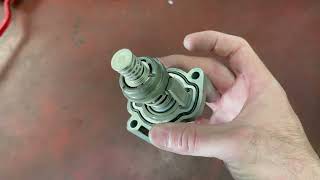
(OEM #12689041 (may be superseded by 12678779))— This is the most common failure point. The original thermostat fails by sticking open. The part is sold as a complete assembly with the housing and crossover pipe.
Trusted brands: ACDelco (GM Genuine), Gates, MotoRad
OEM price range: $55 - $125
Aftermarket price range: $45 - $90 - Engine Coolant Temperature (ECT) Sensor
(OEM #12650595)— This sensor can fail and provide false readings. Due to its difficult-to-access location next to the thermostat, it is almost always replaced during a thermostat job to prevent future labor costs.
Trusted brands: ACDelco (GM Genuine), Bosch, NTK
OEM price range: $25 - $45
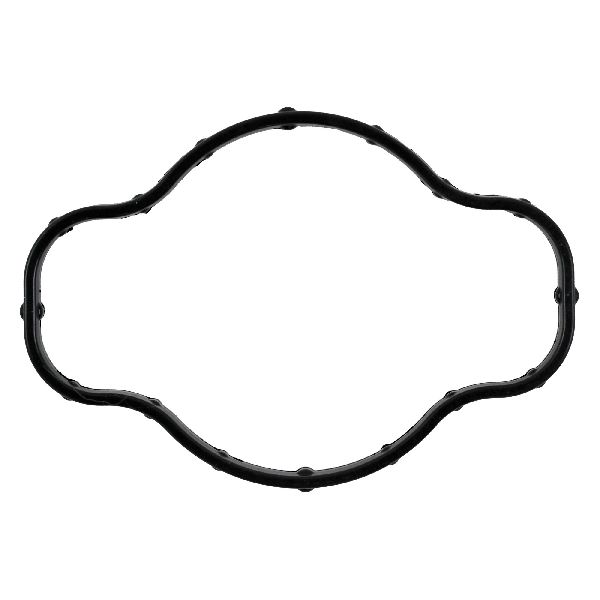
Aftermarket price range: $15 - $30 - Intake Manifold Gaskets
(OEM #12648665)— The intake manifold must be removed to access the thermostat. These gaskets are single-use and must be replaced to prevent vacuum leaks. You will need a set of 6.
Trusted brands: ACDelco (GM Genuine), Fel-Pro, Mahle
OEM price range: $20 - $40
Related Codes That Often Appear With This One
- U0401 — This code, for 'Invalid Data Received From Engine Control Module,' often appears in the Power Steering Control Module (PSCM). It is set because the steering module is receiving irrational engine temperature data from the ECM due to the P0128 fault, causing it to enter a default state. [16, ODI #11694926]
- P01F0 — This is another code related to the rationality of the thermostat. An owner complaint cited this code alongside P0128, indicating a thermostat issue. [ODI #11722457]
Technical Service Bulletins (TSBs) & Recalls
- Bulletin #22-NA-054: Notes that DTC P0128 can be associated with an inaccurate temperature gauge and cooling fans running after the vehicle is off. For some 2021 models, it identifies an ECM calibration error as the cause and specifies reprogramming as the fix.
- Bulletin #PIT5967: Advises technicians to check for and diagnose DTC P0128 if a customer reports a 'Service Steering Message' with no other steering-related codes set. Explains the logic is to protect the steering gear from a potential overheat condition.
Platform-Specific Known Issues
- A 'Service Steering Message' appearing on the dash is a well-documented symptom of code P0128 on this platform. TSB #PIT5967 specifically instructs technicians to diagnose P0128 if this message appears without any steering-specific codes.
- Owner complaints and forum discussions overwhelmingly confirm the link between P0128, a stuck thermostat, and the loss of steering assist, with many owners initially being quoted for expensive steering rack replacements. [20, 21, ODI #11726308, ODI #11593543]
- TSB #22-NA-054 acknowledges that P0128 can cause an inaccurate temperature gauge and cooling fans that continue to run after the vehicle is off, sometimes due to a software glitch on 2021 models. [7, Bulletin #22-NA-054]
- The repair for the thermostat on the 3.6L V6 engine is labor-intensive, requiring the removal of the upper intake manifold to access the components located in the engine valley between the cylinder heads.
Mechanic-Grade Diagnostic Values
- Engine Coolant Temperature (ECT) Sensor Resistance — expected: Approx. 177 Ohms at 212°F (100°C), 241 Ohms at 194°F (90°C), 332 Ohms at 176°F (80°C), 667 Ohms at 140°F (60°C), 1350 Ohms at 104°F (40°C), 3400 Ohms at 68°F (20°C).. Failure: Readings that are infinite (open circuit) or drastically different from the expected value at a known temperature. A reading of -40°F on a scan tool indicates an open circuit.
- ECT Sensor Scan Tool Voltage (Jumper Test) — expected: With a 3A fused jumper wire between the signal and low reference circuits, the scan tool should read > 288°F (142°C).. Failure: A reading colder than the specified value indicates an open/high resistance in the signal circuit.
Scan Tool Commands That Help
- GDS2 (GM Global Diagnostic System 2): Output Control > Cooling Fan Controls — To manually command the cooling fans on and off to verify the functionality of the fan relays and wiring, independent of the ECM's automatic control. This helps rule out a fan control circuit issue when diagnosing P0128 symptoms like fans running continuously.
- GDS2 (GM Global Diagnostic System 2): Configure/Reset Functions — Used after certain component replacements or module programming to re-establish communication or clear learned values. While not always required for a thermostat replacement, it's used for ECM reprogramming as specified in TSB 22-NA-054.
Wiring & Ground Locations
- Cylinder Head Grounds (G102/G104) — Typically located on the rear of the cylinder heads. For the V6 LGX, there are often ground wires on the back of both heads.. The ECT sensor, like other engine sensors, relies on a clean ground path back to the ECM. A loose or corroded ground on the cylinder head can introduce high resistance, causing erratic or incorrect sensor readings that could contribute to or mimic P0128 symptoms.
- ECT Sensor Connector — Deep in the engine valley, next to the thermostat housing, under the intake manifold.. This 2-pin connector provides the 5V reference and low-reference (ground) path for the sensor. Due to its location, it's susceptible to damage during other repairs. A broken locking tab, corrosion, or a loose terminal can cause an intermittent open circuit, leading to a -40°F reading and triggering P0128.
- ECM Connectors — Located on the driver's side of the engine bay.. An intermittent connection at the main Engine Control Module (ECM) harness connectors can cause a loss of communication with various sensors, including the ECT sensor. This can lead to the same symptoms as a failed part (P0128, limp mode, A/C off), but the root cause is a poor connection rather than a faulty component.
Real Owner Repair Stories
- YouTube user @JonMarschand (GMC Acadia (year not specified, but within 2017-2023 range)) — P0128 error code, water temperature gauge drops to zero, power steering goes into limp mode, and A/C fan runs on high.
❌ Tried (didn't work) The owner tested the ECT sensor and found it to be good, concluding that a sensor is unlikely to fail intermittently.
✅ What actually fixed it The owner disconnected all three main electrical harness connectors from the ECM, inspected them, and reconnected them securely. After a start-up sequence, all symptoms were gone, suggesting the problem was a poor connection at the ECM rather than a faulty part.
OEM Part Supersession History
12689041→12678779— Part number 12689041 applies to the first-generation Acadia (2007-2017 Limited). The correct part for the second-generation Acadia (2017-2023) with the LGX V6 is 12678779.
Heads up: Part 12689041 is for the previous generation's LLT/LFX engine and will not fit the second generation's LGX engine. Using this part number will lead to ordering the incorrect component.
Model Year Variations Within This Range
- 2020-2023: The 2020 model year introduced a significant facelift with new exterior styling and a new 9-speed automatic transmission that replaced the previous 6-speed. However, the 3.6L V6 LGX engine, which is the primary subject of this P0128 issue, remained the same.
- 2021 only: Per TSB 22-NA-054, some 2021 models can set a P0128 due to an ECM calibration timing error. For this specific model year, the fix may be a software update (ECM reprogram) instead of a hardware replacement.
Helpful Videos
Used OEM Parts in Stock


New Aftermarket Parts Available


The information in this article is provided for general reference and educational purposes only. Vehicle specifications, procedures, and part compatibility can vary by production date, trim level, and region. Always consult your vehicle's factory service manual and verify part numbers before purchasing or performing repairs. Safety-critical components such as airbags, seat belts, and braking systems should be installed by a qualified professional.
- Gmc ACADIA:
- 🎬 Helpful Videos
- 🛍️ Shop This Part
- What's Unique About the 2017-2023 Gmc ACADIA
- Diagnostic Flowchart
- Symptoms You May Notice
- Most Likely Causes
- Diagnosis Steps
- Parts You'll Likely Need
- Related Codes That Often Appear With This One
- Technical Service Bulletins (TSBs) & Recalls
- Platform-Specific Known Issues
- Mechanic-Grade Diagnostic Values
- Scan Tool Commands That Help
- Wiring & Ground Locations
- Real Owner Repair Stories
- OEM Part Supersession History
- Model Year Variations Within This Range
- 🎟️ Get 5% Off