

P0128 on 2011-2014 Ford Mustang 5.0L: Causes and Fixes for Coolant Temperature Issues
On a 2011-2014 Mustang with the 5.0L Coyote V8, code P0128 almost always means the engine thermostat is stuck open. The most effective fix is replacing the thermostat with an OEM Motorcraft part (BR3Z-8575-F). Expect to pay around $25-$50 for an aftermarket part or $50-$75 for an OEM Motorcraft part. This is a common DIY repair with a difficulty of 2/5, often completed in under 2 hours.
- P0128 means your Mustang's engine isn't getting hot enough, fast enough.
- The most likely cause by a wide margin is a thermostat that is stuck in the open position.
- You can continue driving, but you'll get worse gas mileage and have a weak heater until it's fixed.
- The fix is usually straightforward: replace the thermostat and its gasket, then top off the coolant.
- Always use the correct Motorcraft Orange coolant (or a compatible equivalent) to avoid cooling system problems.
What's Unique About the 2011-2014 Ford Mustang
The 5.0L Coyote V8 in the S197 Mustang uses a 'cold-side' thermostat, which is a common and straightforward design. Unlike some more complex modern engines, diagnosing P0128 on this platform is typically very direct. The overwhelming majority of cases are due to a simple mechanical failure of the thermostat sticking open, a frequent occurrence as the part ages. While aftermarket lower-temperature thermostats (e.g., 170°F or 180°F) are popular modifications, they can cause this code to appear, especially in colder weather if the vehicle's tune is not adjusted accordingly. Forum discussions confirm that without a tune adjustment, a lower temp thermostat can prevent the engine from reaching the PCM's expected temperature in time, triggering the code.
Symptoms You May Notice
- Check Engine Light is on
- Engine temperature gauge reads lower than normal (e.g., stays at 1/4 mark instead of in the middle).
- Heater blows lukewarm or cool air, especially in cold weather.
- Reduced fuel economy.
- Engine takes a very long time to warm up.
- Replacing the Cylinder Head Temperature (CHT) sensor when the thermostat is the actual problem. Always diagnose by monitoring the coolant temperature during warm-up before replacing parts, as the thermostat is the most likely culprit by a large margin.
Most Likely Causes
- Engine Coolant Thermostat Stuck Open 🔴 High Probability The thermostat is a mechanical wear-and-tear item designed to fail in the open position to prevent overheating. Over time, the spring mechanism weakens or debris can hold it open. This is the most common cause for P0128 on virtually all Ford vehicles with the 5.0L Coyote engine, including the Mustang and F-150.
How to confirm: Use a scan tool to monitor the live engine coolant temperature (ECT) or Cylinder Head Temperature (CHT) data from a cold start. The temperature should rise steadily to ~190-195°F and then dip slightly as the thermostat opens. If the temperature rises very slowly, struggles to reach 190°F (e.g., maxes out at 158°F as one owner reported), or if the upper radiator hose gets warm gradually from the start instead of getting hot suddenly, the thermostat is stuck open.
Typical fix: Replace the engine coolant thermostat and the corresponding O-ring or gasket. It is highly recommended to use a genuine Motorcraft thermostat.
Est. part cost: $25-$75 - Low Engine Coolant Level 🟡 Medium Probability Cooling systems can develop small leaks over time from hoses, the radiator, the degas bottle, or the water pump. A known issue on some 5.0L engines is a weeping water pump. If the coolant level drops, air pockets can form, particularly around the temperature sensor, causing inaccurate readings and triggering a P0128 code. Manufacturer service bulletin TSB 20-2234 notes that vehicles may exhibit an illuminated MIL with P0128 alongside low coolant levels.
How to confirm: Visually inspect the coolant reservoir (degas bottle) when the engine is cold. The level should be between the 'MIN' and 'MAX' lines. A level even slightly below the MIN line has been known to cause this code. Also, inspect for any visible signs of coolant leaks (typically orange, yellow, or white crusty residue) around the engine bay, especially at hose connections and near the water pump pulley.
Typical fix: Find and repair the source of the leak, then refill the cooling system with the correct type of coolant and bleed any air from the system. Topping off the coolant may resolve the code temporarily if the leak is slow.
Est. part cost: $25-$40 for coolant - Faulty Engine Coolant Temperature (ECT) Sensor ⚪ Low Probability The 5.0L Coyote engine in this application uses a Cylinder Head Temperature (CHT) sensor instead of a traditional ECT sensor that is submerged in coolant. While sensor failure is less common than thermostat failure for this code, it's not impossible for it to send incorrect data to the PCM. TSB 21-2168 indicates that an intermittent drop in engine coolant temperature (ECT) voltage can cause an incorrectly illuminated MIL and/or Engine Coolant Over Temperature warning with DTC P0128.
How to confirm: With a scan tool, watch the CHT data. If the reading is nonsensical (e.g., jumps from -40°F to 200°F instantly) or doesn't change at all as the engine warms up, the sensor or its wiring is likely faulty. The sensor is located on the passenger side cylinder head, near the firewall.
Typical fix: Replace the Cylinder Head Temperature (CHT) sensor.
Est. part cost: $20-$50
Rare But Worth Checking
- Cooling Fan Running Constantly: If the electric cooling fan is stuck on and runs at full speed even when the engine is cold, it can over-cool the engine and prevent it from reaching operating temperature, triggering a P0128. This is usually caused by a failed fan control module, a short in the wiring, or a bad relay.
- Internal Debris in Cooling System: In rare cases, microscopic metal shavings or other debris from manufacturing or a previous repair can get lodged in the thermostat, preventing it from closing fully. This would require a thorough system flush in addition to replacing the thermostat.
- Defective Replacement Thermostat: Owners have reported receiving defective thermostats, even new OEM parts, that are stuck open out of the box. If the P0128 code returns immediately after a replacement, the new part could be faulty.
- PCM Software Issues: In some Ford models, an incorrectly illuminated MIL with P0128 may be due to the software in the PCM, as documented in TSB 25-2348 and TSB 25-2486.
Diagnosis Steps
- Check for other Diagnostic Trouble Codes (DTCs) with a scan tool.
- With the engine cold, check the coolant level in the degas bottle (reservoir). Ensure it is between the MIN and MAX lines. Top off if low and re-evaluate.
- Inspect the engine bay for any signs of coolant leaks (hoses, radiator, water pump, thermostat housing). Pay close attention to the quick-connect hose fittings and the area around the water pump pulley.
- Connect a scan tool and monitor the Cylinder Head Temperature (CHT) parameter.
- Start the engine from cold and watch the CHT reading. It should climb steadily. The upper radiator hose should remain cool while the engine warms up.
- Once the CHT reaches approximately 190-195°F, the thermostat should open, and you will feel the upper radiator hose become hot as coolant flows into the radiator. The CHT reading may dip slightly at this point.
- If the temperature rises very slowly, never reaches ~190°F, or if the upper radiator hose gets warm gradually from the start, the thermostat is stuck open and must be replaced.
- If the temperature reading on the scan tool is erratic or doesn't move from a very low reading, investigate the CHT sensor and its wiring for faults.
- Check if the cooling fan runs constantly, even when the engine is cold. If it does, diagnose the fan control circuit.
Parts You'll Likely Need
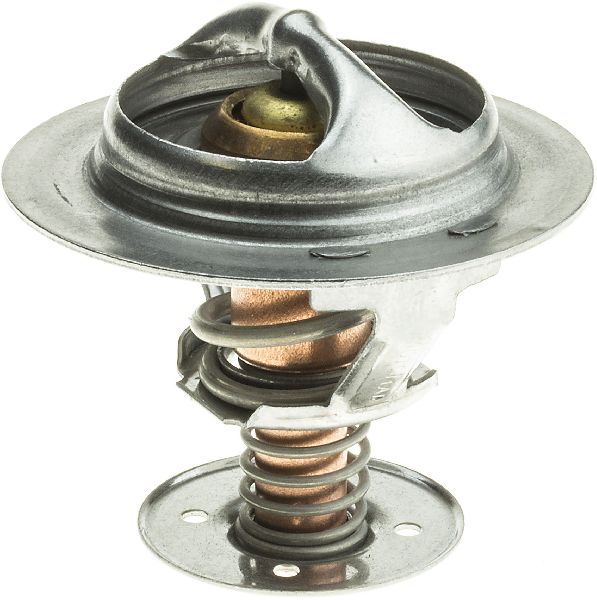
- Engine Coolant Thermostat
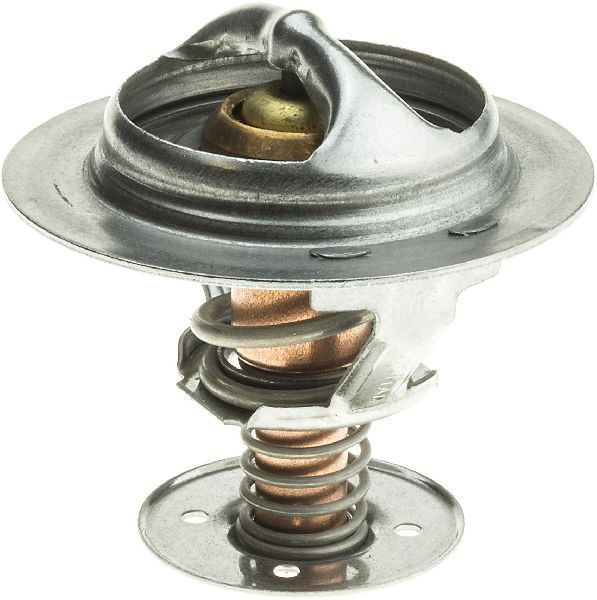
(OEM #BR3Z-8575-F)— This is the most common failure point for code P0128. The original part is a 190°F thermostat that can get stuck open over time. This part number supersedes BR3Z-8575-C and BR3Z-8575-E.
Trusted brands: Motorcraft, Stant, Gates
OEM price range: $40-$60
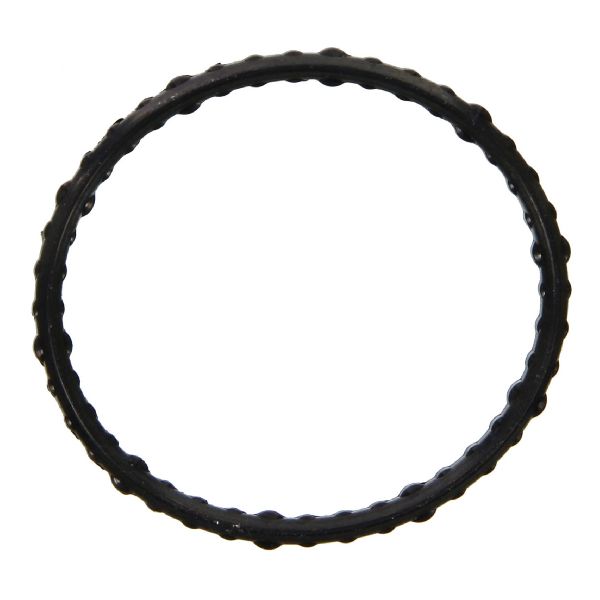
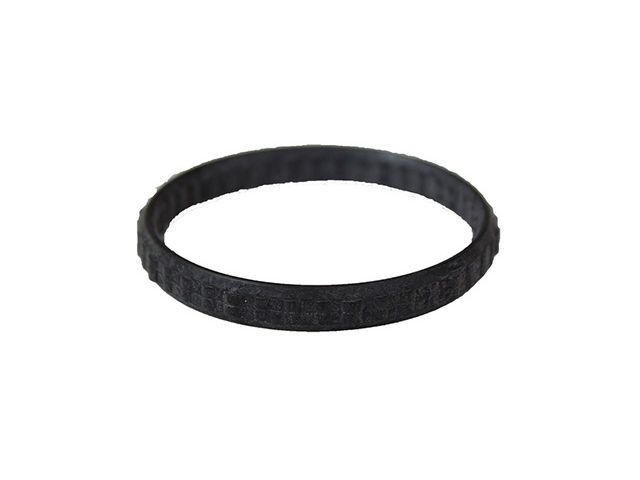
Aftermarket price range: $25-$50 - Thermostat Housing O-Ring / Gasket
(OEM #7T4Z-8590-A)— This seal should always be replaced when changing the thermostat to prevent coolant leaks. Some thermostat kits include it, but the OEM part is often sold separately.
Trusted brands: Motorcraft, Fel-Pro
OEM price range: $10-$15
Aftermarket price range: $5-$10 - Engine Coolant / Antifreeze
(OEM #VC-3-B (Orange) or VC-13-G (Yellow))— You will lose some coolant when replacing the thermostat. The 2011-2014 Mustang was factory-filled with Motorcraft Orange Concentrated Engine Coolant (VC-3-B), mixed 50/50 with distilled water. This has been superseded by Motorcraft Yellow (VC-13-G), which is fully compatible and can be mixed with the orange coolant.
Trusted brands: Motorcraft, PEAK, Prestone
OEM price range: $25-$35 per gallon
Aftermarket price range: $20-$30 per gallon
Platform-Specific Known Issues
- DIY access to the thermostat housing is straightforward. It is located at the front of the engine, where the upper radiator hose connects. The air intake tube must be removed for clearance.
- When replacing the thermostat, ensure the jiggle valve (small metal pin) is oriented in the 12 o'clock (up) position to allow trapped air to bleed from the system.
Mechanic-Grade Diagnostic Values
- Cylinder Head Temperature (CHT) Sensor Resistance — expected: Approximately 2,200 - 3,000 Ω at 68°F (20°C), and 250 - 350 Ω at 176°F (80°C).. Failure: A reading significantly outside this range, or an open/short circuit reading, indicates a faulty sensor.
- Cylinder Head Temperature (CHT) Sensor Voltage — expected: The Ford CHT sensor uses a dual switching resistor circuit. At 194°F (90°C), the voltage could be either ~0.60V or ~3.71V as it crosses the overlap zone. A typical cold start voltage at ~68°F (20°C) would be around 3.0-3.5V.. Failure: A voltage reading that is stuck high (e.g., >4.6V) or low, or does not change as the engine warms up, points to a sensor or wiring issue.
Scan Tool Commands That Help
- Ford IDS / ForScan: Live Data PID Monitoring (CHT, CHT_V) — This is the primary method for diagnosing P0128. Monitor the Cylinder Head Temperature (CHT) PID from a cold start to see if it rises slowly or fails to reach the target ~190-195°F. Simultaneously monitoring CHT_V (CHT Voltage) can help identify sensor-specific electrical faults.
Wiring & Ground Locations
- G104 — Located on the left front of the engine compartment.. This is a primary ground point for the engine control sensor harness. A corroded or loose connection at G104 could cause erratic readings from the CHT sensor, potentially contributing to or mimicking the symptoms of P0128.
- CHT Sensor Connector — On the rear of the passenger side cylinder head, near the firewall. It can be difficult to access without removing the heater core lines.. This is the direct connection point for the CHT sensor. The connector itself or the wiring leading to it can become damaged or corroded, leading to incorrect temperature signals being sent to the PCM. The CHT sensor has two pins: CHT signal and Signal Return (SIGRTN).
Real Owner Repair Stories
- Ford F150 Forum (2016 F-150 5.0L (shared engine architecture)) — Engine coolant over-temperature warning on the dash, followed by the engine entering limp mode and shutting down. However, a separate gauge showed coolant temps were normal (<200°F).
❌ Tried (didn't work) Initial roadside diagnosis was inconclusive as the truck would not move.
✅ What actually fixed it The owner suspected an electrical fault rather than a true overheat. The issue was a faulty Cylinder Head Temperature (CHT) sensor that was sending an erroneously high reading (>310°F) to the PCM, causing the fail-safe engine shutdown. Replacing the CHT sensor and inspecting the wiring resolved the issue. - NHTSA ODI #11640247 — An owner reported receiving a high estimate for repairs including code P0128, which was presented alongside recommendations for starters, coils, plugs, and a coolant flush after a previous converter replacement.
OEM Part Supersession History
BR3Z-8575-C, BR3Z-8575-E→BR3Z-8575-F— Standard part revision and consolidation by the manufacturer.
Heads up: The newer part (BR3Z-8575-F) is a direct replacement for the older numbers and is fully compatible.
Model Year Variations Within This Range
- 2011-2012: Engines in these years featured piston oil squirters and were rated at 412 HP.
- 2013-2014: The piston oil squirters were removed, and pistons with a low-friction coating were introduced. Horsepower was slightly increased to 420 HP. The cooling system itself, including the thermostat and CHT sensor, remained fundamentally the same for the purposes of diagnosing P0128.
Diagnostic Flowchart
Other Known Issues on This Vehicle
Issues unrelated to this code that are worth knowing about as an owner of this generation:
- MT82 Manual Transmission Problems 🔴 High — Common complaint for 2011-2014 models. Issues include high-RPM lockout (especially 2nd-3rd gear), grinding, and premature failure of synchronizers. Became the subject of a class-action lawsuit. (Ref: Multiple TSBs were issued to dealers with various fixes, but no official recall was mandated by the NHTSA.)
- Aluminum Hood Corrosion 🟠 Medium — Widespread cosmetic issue where paint bubbles and peels, typically on the leading edge of the hood. Caused by iron contamination during manufacturing. (Ref: Ford TSB 20-2233 (supersedes earlier versions) addresses this issue, recommending panel replacement. Warranty coverage was typically 5 years/unlimited miles for corrosion perforation.)
- Water Pump Failure 🟠 Medium — While more notorious on the 3.7L V6, the 5.0L V8 can also experience premature water pump failure. Symptoms include a whining or grinding noise from the front of the engine and coolant leaks.
- Engine Knock on Early 2011 Models 🟡 Low — Some early production 2011 5.0L engines exhibited a knocking sound or piston slap, particularly when cold. Most affected engines were likely repaired under warranty early in their life. (Ref: TSB 11-7-7 was issued regarding potential engine damage from unauthorized modifications, but not directly for this knock.)
Used vs. New Parts: Buying Guide for This Vehicle
When a used part is the smart pick: For this specific repair, using a used part is not recommended for the thermostat itself, as it is an inexpensive wear item. However, if the thermostat housing (water outlet) is damaged during removal, a used OEM housing from a reputable auto recycler could be a cost-effective alternative to a new one.
Donor-vehicle mileage cap: roughly under 80000 miles for the part to have meaningful remaining life.
What to inspect on the donor part:
- For a used thermostat housing, inspect for cracks, especially around the bolt holes.
- Check for heavy corrosion or pitting on the sealing surfaces where the O-ring sits.
- Ensure all threaded inserts are intact and not stripped.
OEM-only on this vehicle (don't cheap out):
- Engine Coolant Thermostat
Aftermarket brands forum-validated for this vehicle:
- Stant
- Gates
Brands owners have reported issues with on this vehicle:
- No-name, unbranded thermostats sold on online marketplaces are frequently reported to fail prematurely or be defective out of the box.
Real Owner Stories
Aggregated from forums and TSBs cited above. Mileages and costs reflect what owners reported in those sources.
2011 Ford Mustang 5.0
Symptoms: Check engine light with P0128. Car runs perfectly normal, no rough idle, temp gauge is perfectly in the middle. Later realized it does take exceptionally long to get to operating temperature but it gets there.
What fixed it: The user was advised to replace the thermostat as it was likely stuck open.
Source hint: Reddit r/MechanicAdvice
2011 Ford Mustang 5.0
Symptoms: User installed a lower-temperature aftermarket thermostat and received code P0128.
What fixed it: Returning to the stock temperature thermostat to resolve the issue.
Source hint: s197forum.com/threads/p0128-code.70817/
2011-2014 Ford Mustang 5.0L
Symptoms: A very small gap in the thermostat was enough to significantly increase warm-up time and trigger the code.
What fixed it: Replacement of the faulty thermostat.
Source hint: s197forum.com/threads/change-thermostat-how-to.143209/
Related OBD-II Codes
Frequently Asked Questions
I've heard the 5.0L Coyote uses a Cylinder Head Temperature (CHT) sensor instead of a standard coolant sensor. How does this affect a P0128 diagnosis?
Is there a specific way I should install the thermostat on my Mustang to prevent air pockets?
My Mustang's heater is blowing lukewarm air and the temp gauge is at the 1/4 mark. Is this related to P0128?
Could my aftermarket low-temperature thermostat be causing the P0128 code?
I see a small leak near my water pump pulley. Could this trigger a P0128 code?
What specific temperature should I look for on my scan tool to confirm the thermostat is working?
Helpful Videos
Used OEM Parts in Stock

New Aftermarket Parts Available



The information in this article is provided for general reference and educational purposes only. Vehicle specifications, procedures, and part compatibility can vary by production date, trim level, and region. Always consult your vehicle's factory service manual and verify part numbers before purchasing or performing repairs. Safety-critical components such as airbags, seat belts, and braking systems should be installed by a qualified professional.
- Ford Mustang:
- 🎬 Helpful Videos
- 🛍️ Shop This Part
- What's Unique About the 2011-2014 Ford Mustang
- Symptoms You May Notice
- Most Likely Causes
- Rare But Worth Checking
- Diagnosis Steps
- Parts You'll Likely Need
- Platform-Specific Known Issues
- Mechanic-Grade Diagnostic Values
- Scan Tool Commands That Help
- Wiring & Ground Locations
- Real Owner Repair Stories
- OEM Part Supersession History
- Model Year Variations Within This Range
- Diagnostic Flowchart
- Other Known Issues on This Vehicle
- Used vs. New Parts: Buying Guide for This Vehicle
- Real Owner Stories
- 2011 Ford Mustang 5.0
- 2011 Ford Mustang 5.0
- 2011-2014 Ford Mustang 5.0L
- Related OBD-II Codes
- Frequently Asked Questions
- 🎟️ Get 5% Off