

P0128 on 2015-2020 Ford F-150: Causes, Fixes, and Thermostat Issues
For a 2015-2020 Ford F-150, code P0128 almost always means the engine thermostat is stuck open. Replacing the thermostat and housing assembly is the most common fix, costing around $40-$80 for parts and is a straightforward DIY job for most engines.
- P0128 on a 2015-2020 F-150 means the engine isn't warming up fast enough.
- The most likely cause by a wide margin is a thermostat that is stuck open.
- Replacing the thermostat and housing assembly is a relatively simple and affordable DIY repair that usually solves the problem.
- Before buying parts, check your coolant level first to rule out the simplest issue.
- If you have a 2.7L EcoBoost engine, be aware of TSB 21-2168, which points to a potential wiring issue with the coolant temperature sensor.
What's Unique About the 2015-2020 Ford F-150
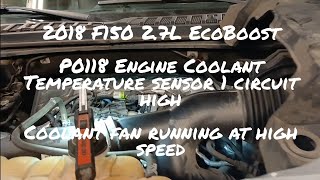
For the 2015-2020 F-150, particularly the 2018-2020 2.7L EcoBoost models, P0128 can be linked to a specific wiring issue. Ford issued a Technical Service Bulletin (TSB 21-2168) that addresses intermittent voltage drops from the Engine Coolant Temperature (ECT) sensor due to its location and wiring harness routing. The official fix involves installing a relocation kit (Part No. ML3Z-14A411-H) which includes a new heater hose with an integrated sensor and a jumper harness, turning an 8+ hour job into a 2-hour one. 🎬 See how to install the 2.7L EcoBoost ECT relocation kit. While a stuck thermostat is still the most common cause across all engines, this known sensor issue is a key vehicle-specific problem to be aware of for the 2.7L EcoBoost. Additionally, these trucks often use a 'cold-side' thermostat, and installing an incorrect 'hot-side' aftermarket part can cause this code.
Diagnostic Flowchart
Tap your situation to follow the diagnostic path that matches what you're seeing on this vehicle.
Symptoms You May Notice
- Check Engine Light (MIL) is on
- Engine temperature gauge reads lower than normal or takes a very long time to reach the middle
- Heater may not blow hot air or takes longer than usual to warm up
- Decreased fuel economy
- Engine temperature may drop while driving at highway speeds
- Failing an emissions test
- Replacing the Engine Coolant Temperature (ECT) sensor when the actual problem is a thermostat that is stuck open. The thermostat is the most common failure point for this code. Always diagnose by watching the live temperature data from a cold start before replacing parts. 🎬 Watch: EricTheCarGuy explains the science behind the P0128 code.
- Installing an incorrect aftermarket 'hot-side' thermostat instead of the OEM-specified 'cold-side' thermostat. This will lead to the code returning as the cooling system will not operate as designed.
Most Likely Causes
- Thermostat Stuck Open 🔴 High Probability Thermostats are wear-and-tear items. The internal spring or wax pellet can fail, causing it to remain open and allow coolant to circulate constantly through the radiator, preventing the engine from warming up properly. This is the most common cause for P0128 across all F-150 engines.
How to confirm: Monitor the engine coolant temperature with a scan tool from a cold start. If the temperature rises very slowly, never reaches the target (typically 190-210°F), or drops at highway speeds, the thermostat is almost certainly stuck open. You may also feel the upper radiator hose getting warm almost immediately after starting, instead of remaining cool until the engine warms up.
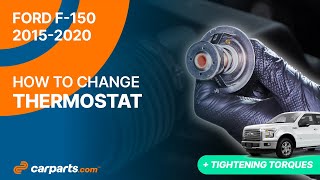
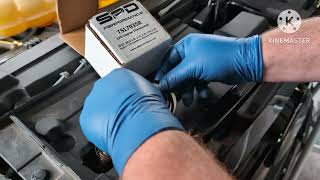
Typical fix: Replace the engine thermostat and its housing/gasket. It is highly recommended to replace the entire assembly with a genuine Motorcraft part to ensure it is the correct 🎬 Watch this step-by-step 5.0L thermostat and coolant exchange guide. 'cold-side' design.
Est. part cost: $40-$80 - Low Engine Coolant Level 🟡 Medium Probability Coolant can be lost through leaks in hoses, the radiator, water pump, or other cooling system components. An air pocket can form near the ECT sensor, causing it to give a false low reading, which can trigger a P0128 code.
How to confirm: Visually inspect the coolant level in the degas bottle (coolant reservoir) when the engine is cold. The level should be between the 'MIN' and 'MAX' lines. Also, inspect for any visible signs of coolant leaks (often bright orange or yellow residue, depending on the coolant type used).
Typical fix: Top off the coolant with the correct Ford-specified type (Motorcraft Orange VC-3-D or Yellow VC-13-G) and bleed the system of any air. Find and repair the source of any leaks. Ford has transitioned from Orange to Yellow coolant, and they are compatible.
Est. part cost: $20-$40 - Faulty Engine Coolant Temperature (ECT) Sensor or Wiring ⚪ Low Probability As noted in TSB 21-2168 for 2.7L EcoBoost engines, the sensor's location and harness routing can lead to intermittent voltage drops, causing erratic readings. The original sensor is located in a difficult-to-access spot under the intake manifold. This can affect other engines as well, though it's less common than a failed thermostat.
How to confirm: Use a scan tool to monitor the ECT sensor data. Look for readings that are erratic, jump around, or are clearly incorrect (e.g., reading -40°F on a warm day). You can also test the sensor's resistance with a multimeter; at 68°F (20°C), it should be between 2,000-3,000 ohms.
Typical fix: For the issue described in TSB 21-2168, the fix involves relocating the sensor and installing a jumper harness (Part No. ML3Z-14A411-H). In other cases, simply replacing the faulty ECT sensor is sufficient.
Est. part cost: $25-$60
Rare But Worth Checking
- Cooling Fan Stuck On: If the electric cooling fan runs constantly, even when the engine is cold, it can over-cool the engine and prevent it from reaching operating temperature, triggering a P0128. This is usually caused by a failed fan control module, a stuck relay, or as a default failure mode from a bad ECT sensor.
- Active Grille Shutter System Fault: Some F-150s are equipped with active grille shutters that close at startup to aid engine warm-up. If these shutters are stuck open, it could contribute to a slower warm-up time, especially in cold weather. This would likely be accompanied by other specific fault codes related to the shutter system.
Diagnosis Steps
- Check for a Check Engine Light and scan for codes. Confirm that P0128 is present.
- Check the engine coolant level in the reservoir when the engine is cold. Ensure it is between the MIN and MAX marks. If low, top it off with the correct type of coolant (Motorcraft VC-13-G Yellow or equivalent) and inspect for leaks.
- Use a scan tool with live data capability to monitor the Engine Coolant Temperature (ECT) PID. Start the engine from a cold-soak condition.
- Observe the temperature climb. It should rise steadily to around 190°F or higher and then stabilize.
- If the temperature rises very slowly, struggles to get over 160-170°F, or drops significantly at highway speeds, the thermostat is almost certainly stuck open.
- If the temperature reading on the scan tool is erratic, jumps to very high or low extremes, or doesn't seem to change at all, suspect a faulty ECT sensor or a wiring issue, especially on a 2.7L EcoBoost model.
- If the thermostat is suspected, replace it along with the gasket/housing. This is the most common fix.
- After the repair, clear the codes and perform a drive cycle. This typically involves letting the engine warm up completely and driving at various speeds to ensure the problem is resolved and the light does not return.
Parts You'll Likely Need
- Engine Coolant Thermostat Assembly
(OEM #Varies by engine. Examples: RT-1251 (for 5.0L & 2.7L), RT-1252 (for 3.5L EcoBoost, replaces HL3Z-8575-B), BL3Z-8575-B (for 3.5L/3.3L).)— This is the most frequent cause of code P0128, as the thermostat gets stuck in the open position. It's recommended to replace the entire assembly which includes the housing.
Trusted brands: Motorcraft, Stant, Motorad
OEM price range: $50-$90
Aftermarket price range: $40-$70 - Engine Coolant Temperature (ECT) Sensor — This is a less common but possible cause, especially if the temperature readings are erratic or if other ECT-related codes are present. It's a known issue on some 2.7L EcoBoost models per TSB 21-2168.
Trusted brands: Motorcraft, Bosch, Delphi
OEM price range: $30-$60
Aftermarket price range: $20-$40 - Engine Coolant
(OEM #Motorcraft VC-13-G (Yellow))— You will lose some coolant when replacing the thermostat or sensor, so you will need to top off the system. Always use the Ford-specified coolant type to avoid system damage. Ford has superseded its Orange coolant with the Yellow P-OAT type.
Trusted brands: Motorcraft, PEAK, Zerex
OEM price range: $20-$30 per gallon
Aftermarket price range: $18-$25 per gallon - ECT Sensor Relocation Kit (2.7L EcoBoost only)
(OEM #ML3Z-14A411-H)— This is the official Ford fix for the known ECT sensor issue on 2018-2020 2.7L EcoBoost engines as described in TSB 21-2168. It includes a new heater hose with a relocated sensor port and a jumper harness.
Trusted brands: Motorcraft
OEM price range: $70-$100
Aftermarket price range: N/A
Related Codes That Often Appear With This One
- P0116, P0117, P0118, P0119, P0217, P1299 — These codes are all related to the Engine Coolant Temperature sensor and circuit. Ford TSB 21-2168 specifically lists these codes together as being caused by an intermittent voltage drop in the ECT sensor circuit on some 2.7L EcoBoost F-150s.
Technical Service Bulletins (TSBs) & Recalls
- TSB 21-2168: Addresses an intermittent drop in engine coolant temperature (ECT) voltage that can cause P0128 and other related codes on 2018-2020 F-150s with the 2.7L EcoBoost engine.
Platform-Specific Known Issues
- TSB 21-2168: Some 2018-2020 F-150s with the 2.7L EcoBoost engine may experience a group of DTCs including P0128 due to an intermittent voltage drop in the ECT sensor circuit. The official fix involves replacing the heater hose to relocate the sensor and installing a jumper harness (Part No. ML3Z-14A411-H).
- 5.0L V8 Thermostat Location: On the 5.0L Coyote V8, the thermostat is located on the lower radiator hose inlet to the engine, which is a 'cold-side' configuration.
- Cold-Side Thermostat Design: Many engines in this F-150 generation use a 'cold-side' thermostat, which regulates temperature based on coolant exiting the radiator. Using a traditional 'hot-side' aftermarket thermostat can cause cooling system performance issues and trigger P0128.
Mechanic-Grade Diagnostic Values
- Engine Coolant Temperature (ECT) Sensor Resistance — expected: Approximately 2000-3000 Ω at 20°C (68°F), dropping to 200-300 Ω at 90°C (194°F).. Failure: An open circuit (infinite resistance) or short (near-zero resistance), or values that do not correspond to the current temperature.
- Engine Coolant Temperature (ECT) Sensor Signal Voltage — expected: Approximately 2.0V - 3.0V on a cold start, decreasing as the engine warms up.. Failure: A reading near 5.0V indicates an open circuit (interpreted as -40°F by the PCM), while a reading near 0V indicates a short circuit.
- Live Data - Engine Coolant Temperature (ECT) PID — expected: Should rise steadily from ambient temperature to a stable 190-210°F (88-99°C) and hold there during operation.. Failure: Temperature stalls between 150-170°F, rises very slowly, or drops significantly at highway speeds, indicating a thermostat stuck open.
Wiring & Ground Locations
- ECT Sensor (2.7L EcoBoost) — Original location is under the intake manifold, making it very difficult to access. The TSB 21-2168 relocation kit moves it to the upper heater hose.. The original location is prone to harness damage, causing intermittent signals and a host of ECT-related codes, including P0128.
- Connector C1047 (2.7L EcoBoost) — Located on the driver's side at the back of the valve cover.. This is a key connector for testing the ECT sensor circuit. A technician can test the sensor by checking for resistance between pins 1 and 4.
- CHT Sensor (5.0L V8) — On the passenger side cylinder head, near the firewall at the base of the intake manifold. The 5.0L uses a Cylinder Head Temperature (CHT) sensor which the PCM uses for coolant temperature inference.. This is the primary sensor for temperature reading on the 5.0L. A fault here can mimic thermostat issues.
- PCM Signal Ground (Reference) — The signal return wire for the ECT/CHT sensor circuit can often be traced back to a specific pin on the PCM, such as Pin 46 on some Ford models.. When diagnosing a persistent sensor code, testing for good ground continuity from the sensor connector back to the PCM ground pin can identify a wiring fault that a simple chassis ground test might miss.
Real Owner Repair Stories
- Reddit user in r/CrownVictoria (2009 Ford Crown Victoria (uses similar PCM logic)) — Intermittent P0128 code, temperature gauge never going above 1/3, slow cabin heat.
❌ Tried (didn't work) Initially replaced a suspected 160°F thermostat with a new 180°F thermostat. The code continued to appear.
✅ What actually fixed it The PCM was programmed to expect a 195°F operating temperature. The 180°F thermostat, while functional, did not allow the engine to reach the temperature required by the PCM's logic. Replacing the 180°F thermostat with the correct OEM-spec 195°F thermostat resolved the P0128 code permanently. - North American Motoring forum user (Mini Cooper (illustrates a common electrical issue)) — P0128 code appeared three months after a new thermostat housing was installed.
❌ Tried (didn't work) Assuming the new thermostat had failed prematurely.
✅ What actually fixed it Upon inspection, the electrical connector for the temperature sensor on the new thermostat housing was not fully seated. It came off with a light tug. Pushing the connector on until it clicked securely into place resolved the code.
When the Usual Fixes Don't Work
- While P0128 is overwhelmingly caused by the thermostat, there are extremely rare instances where other system faults can trigger it. In one documented case on a different vehicle platform, a technician found that a faulty Air-Fuel Ratio (O2) sensor was preventing the engine from entering closed-loop operation correctly. The PCM, seeing a conflict between the engine run time and the failure to enter closed-loop, set a P0128 code as a symptom of the root problem. The code was only resolved after the faulty A/F sensor was replaced, even though the thermostat had been changed first. This is an unlikely scenario on an F-150 but serves as a reminder to consider the entire engine management system if the common causes do not lead to a fix.
OEM Part Supersession History
HL3Z-8575-A, RT-1238→HL3Z-8575-B— Standard part evolution and updates.HL3Z-8575-B→RT-1252 (Motorcraft)— Represents a redesigned thermostat assembly for the 3.5L EcoBoost, intended to resolve issues with temperature surging and overheating noted in some 2017-2020 models.
Heads up: RT-1252 is the preferred service part for 2017-2020 3.5L F-150s experiencing temperature regulation issues.
Model Year Variations Within This Range
- 2018-2020: On 2.7L EcoBoost engines, the ECT sensor was placed in a location under the intake manifold prone to wiring harness damage. TSB 21-2168 provides a relocation kit (ML3Z-14A411-H) as the official repair, moving the sensor to a more accessible and reliable location on a heater hose.
- 2017-2020: For the 3.5L EcoBoost, Ford introduced an updated thermostat assembly (Motorcraft RT-1252) to address temperature instability and overheating issues seen in earlier versions of this generation.
Helpful Videos

Used OEM Parts in Stock
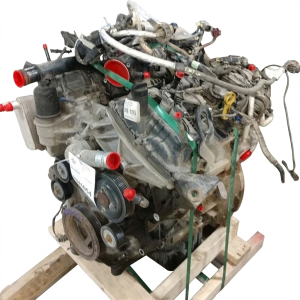

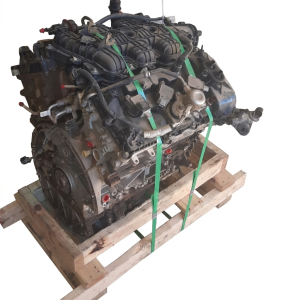
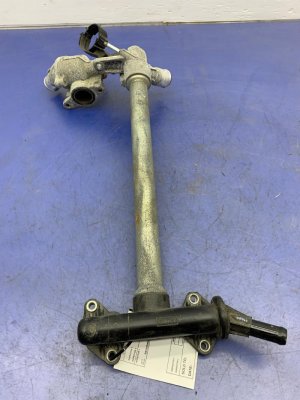
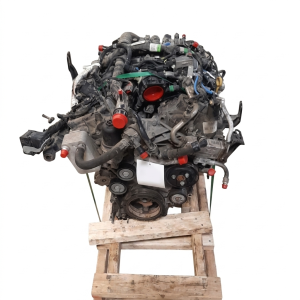
New Aftermarket Parts Available




The information in this article is provided for general reference and educational purposes only. Vehicle specifications, procedures, and part compatibility can vary by production date, trim level, and region. Always consult your vehicle's factory service manual and verify part numbers before purchasing or performing repairs. Safety-critical components such as airbags, seat belts, and braking systems should be installed by a qualified professional.
- Ford F-150:
- 🎬 Helpful Videos
- 🛍️ Shop This Part
- What's Unique About the 2015-2020 Ford F-150
- Diagnostic Flowchart
- Symptoms You May Notice
- Most Likely Causes
- Rare But Worth Checking
- Diagnosis Steps
- Parts You'll Likely Need
- Related Codes That Often Appear With This One
- Technical Service Bulletins (TSBs) & Recalls
- Platform-Specific Known Issues
- Mechanic-Grade Diagnostic Values
- Wiring & Ground Locations
- Real Owner Repair Stories
- When the Usual Fixes Don't Work
- OEM Part Supersession History
- Model Year Variations Within This Range
- 🎟️ Get 5% Off