

P0123 on 2013-2019 Ram 1500 3.6L V6: Throttle Position Sensor Causes and Fixes
On a 2013-2019 Ram 1500 with the 3.6L V6, code P0123 is almost always caused by a failed throttle position sensor. Because the sensor is built into the throttle body, the entire assembly must be replaced. This is a very common failure across the many Chrysler, Dodge, and Jeep vehicles that use the 3.6L Pentastar engine. Expect to pay $150-$300 for an aftermarket part (Mopar OEM is $250-$400), and it's a straightforward DIY job for most owners.
- P0123 on your Ram 1500 3.6L means the throttle position sensor is sending a high voltage signal.
- This code will likely illuminate the 'red lightning bolt' ETC light and put your truck in 'limp mode', making it unsafe to drive normally.
- The most common cause by far is a failed throttle position sensor, which is part of the throttle body assembly.
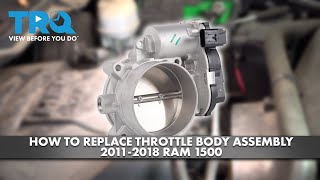
- The fix is to replace the entire throttle body. This is a DIY-friendly job that takes less than an hour.
- Always check the wiring and connector to the throttle body for damage before replacing parts.
- The code is often accompanied by P0222; seeing them together is a strong confirmation of throttle body failure.
What's Unique About the 2013-2019 Ram 1500
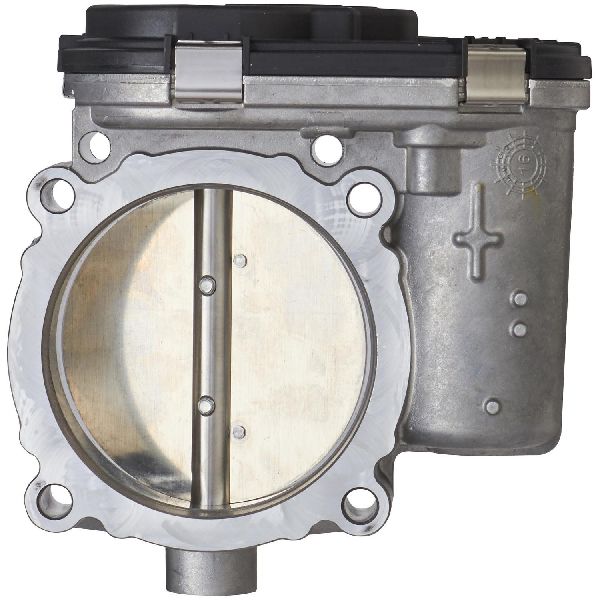
On the 3.6L Pentastar V6 engine, used across a vast range of Chrysler, Dodge, and Jeep vehicles, the throttle position sensor (TPS) is not a small, separately replaceable part. Instead, it is integrated directly into the electronic throttle body assembly. This means that if the sensor fails and triggers a P0123 code, you cannot buy just the sensor; you must replace the entire throttle body unit. This design choice makes throttle body replacement the most common repair for this code on these trucks.
Generation note: The 2013-2019 year range covers two distinct generations of the Ram 1500. The fourth-generation ('DS') was produced from 2009 to 2018. In 2019, the all-new fifth-generation ('DT') was launched, but the older 'DS' model continued to be sold alongside it as the 'Ram 1500 Classic'. While the 3.6L engine is used in both, and the throttle body is largely the same, always verify the correct throttle body part number for your specific model year and generation (DT or DS/Classic) before ordering.
Symptoms You May Notice
- Check Engine Light is illuminated
- Electronic Throttle Control (ETC) warning light (a red lightning bolt) is illuminated on the dashboard.
- Vehicle enters 'limp mode' with drastically reduced engine power and acceleration.
- Hesitation, bucking, or jerking when accelerating.
- Rough or unusually high idle.
- Engine may stall or be hard to start.
- Poor or delayed acceleration response.
- Replacing the accelerator pedal assembly. The pedal has its own position sensors (APPS), but P0123 specifically refers to the sensor at the throttle body on the engine.
- Cleaning a dirty throttle body. While a dirty throttle body can cause other issues like rough idle, it will not cause an electrical 'circuit high' fault code like P0123. This code indicates an electrical failure, not a mechanical obstruction.
Most Likely Causes
- Failed Throttle Body Assembly 🔴 High Probability The throttle position sensor (TPS) is an electronic component that wears out over time. Since it is integrated into the throttle body on the Pentastar V6, the entire unit is the single point of failure. This is a well-documented issue across all vehicles with this engine.
How to confirm: After confirming the wiring is intact, use a scan tool to observe the TPS voltage with the key on, engine off. If the voltage for 'TPS A' is stuck high (e.g., over 4.6V) and does not change as you manually (or have a helper) press the accelerator pedal, the sensor inside the throttle body has failed. The voltage should normally sweep smoothly from ~0.5V to ~4.5V.
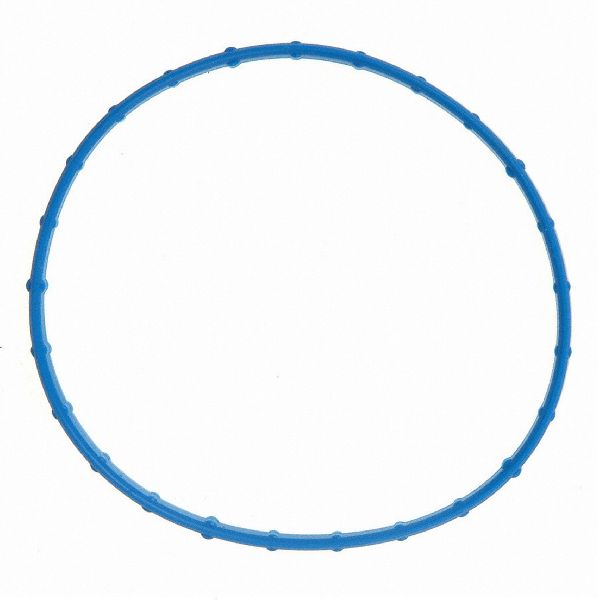
Typical fix: Replace the entire throttle body assembly. This includes the integrated electronic sensor and throttle plate motor. A new gasket should be used. After installation, a throttle relearn procedure is required.
Est. part cost: $150-$400 - Wiring Harness or Connector Issue 🟡 Medium Probability The wiring harness to the throttle body is located at the front of the engine and is subject to heat, vibration, and potential corrosion, which can lead to a short circuit or poor connection over time. In some cases, the connector can become loose after other work (like an air filter change) is performed.
How to confirm: Visually inspect the wiring harness leading to the throttle body for any signs of chafing, melting, or broken wires. Unplug the connector and check for corrosion, moisture, or bent/damaged pins. A 'wiggle test' on the harness while monitoring live TPS voltage can reveal intermittent connections. A short to a power source in the signal wire will cause a constant high voltage reading.
Typical fix: Repair the damaged section of the wiring harness or replace the connector pigtail. Ensure the connector is fully seated and the locking tab is engaged. Use dielectric grease to prevent future moisture intrusion.
Est. part cost: $10-$50
Rare But Worth Checking
- Faulty Powertrain Control Module (PCM): This is the least likely cause and should only be considered after the throttle body and wiring have been thoroughly checked and ruled out. A forum user on JK-Forum.com with a similar Pentastar engine resolved a P0123 code with a PCM flash from the dealer, indicating software glitches can be a cause. Another user on RamForum.com had a complex issue involving a no-start and P0123/P0222 that was ultimately not the throttle body.
- Outdated PCM Software: Chrysler has issued TSBs for other models with the Pentastar engine to correct erroneous throttle-related codes via a software update. Before replacing a throttle body, it's worth checking with a dealer if any PCM updates are available for your vehicle's VIN, as this can be a cheaper initial step.
Diagnosis Steps
- Connect an OBD-II scanner and confirm P0123 is the active code. Note any other codes, especially P0222 or P2135, as this strongly points to throttle body failure.
- Use the scanner's live data function to view the voltage of 'TPS Circuit A'. With the key on and engine off, it should be stuck at a high value (over 4.5V).
- Turn the vehicle off. Disconnecting the battery is a good safety practice.
- Thoroughly inspect the wiring harness and 6-pin electrical connector at the throttle body. Look for any signs of damage, corrosion, or loose pins. Ensure the connector is fully seated.
- If the wiring appears undamaged, the most probable cause is a failed sensor within the throttle body.
- Replace the throttle body assembly and the associated gasket.
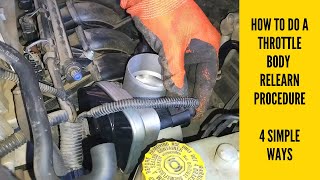
- After installation, perform a throttle relearn procedure. A common manual method is: Turn the key to the 'On' position (engine off), wait for dash lights to settle, slowly press the accelerator pedal to the floor, then slowly release it. Do this once. Turn the key 'Off' for 10 seconds, then start the engine and let it idle to confirm the fix.
- Clear the codes with the scanner and take the vehicle for a test drive to ensure the issue is resolved.
Parts You'll Likely Need
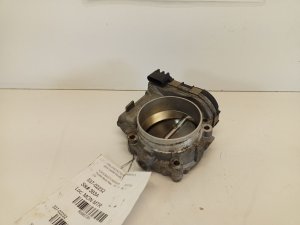
- Throttle Body Assembly
(OEM #05184349AF, 05184349AE, 05184349AD, 05184349AC)— This is the primary fix because the faulty Throttle Position Sensor (TPS) is integrated into this assembly and cannot be replaced separately on the 3.6L Pentastar engine. Part numbers have been superseded over the years; 'AF' is a common recent version.
Trusted brands: Mopar, Dorman, Hitachi, Standard Motor Products (SMP)
OEM price range: $250-$400
Aftermarket price range: $150-$250
Related Codes That Often Appear With This One
- P0222 — P0222 is 'Throttle/Pedal Position Sensor/Switch 'B' Circuit Low'. The throttle body contains two redundant sensors for safety. It's extremely common for a general internal failure of the throttle body to cause faults in both sensors, triggering opposite (high and low) codes simultaneously. Seeing P0123 and P0222 together is a very strong indicator that the throttle body assembly has failed.
- P2135 — P2135 is 'Throttle/Pedal Position Sensor/Switch 'A'/'B' Voltage Correlation'. This code sets when the PCM sees that the signals from the two redundant throttle position sensors do not agree with each other. A failing sensor can send erratic signals that trigger both a high input code (P0123) and a correlation fault.
Technical Service Bulletins (TSBs) & Recalls
- While no specific TSB for P0123 on the Ram 1500 was found, Chrysler has issued TSBs like #18-045-16 for other vehicles using the same engine to fix erroneous throttle codes with a PCM software update. It is always advisable to check with a dealer for any available updates for your VIN.
Platform-Specific Known Issues
- source — A user on RamForum.com with a 2018 Ram experienced a no-start condition with a red lightning bolt light, later finding codes P0123 and P0222. They replaced the throttle body and battery, but the issue persisted. The problem turned out to be a faulty starter, highlighting that while P0123/P0222 usually means a bad throttle body, other electrical system faults can sometimes trigger these codes or present with similar symptoms.
- source — A user on RamForum.com reported their 2014 3.6L Ram was stuck in limp mode with the ETC light on, throwing a host of codes including P0123, P0113, P0222, and P2135. This combination of multiple throttle-related electrical faults strongly points to either a failed throttle body or a significant wiring/PCM issue.
Mechanic-Grade Diagnostic Values
- Throttle Position Sensor 'A' (TPS1) Signal Voltage — expected: Approx. 0.45V at closed throttle (idle), sweeping smoothly up to approx. 4.5V at wide-open throttle (WOT).. Failure: Voltage is stuck high (above 4.5V) regardless of throttle plate position.
- Throttle Position Sensor 'B' (TPS2) Signal Voltage — expected: Approx. 4.7V at closed throttle, sweeping smoothly down to approx. 0.3V at WOT.. Failure: Voltage does not sweep correctly or is stuck, often triggering a P0222 (low input) or P2135 (correlation) code along with P0123.
- 5-Volt Reference Voltage at Throttle Body Connector — expected: A steady 5 volts with the key on, engine off.. Failure: Voltage is significantly higher or lower than 5V, or is absent, indicating a wiring or PCM issue.
- Throttle Body Mounting Bolt Torque — expected: 70 inch-pounds (approx. 8 Nm). Failure: N/A - This is an installation specification.
Scan Tool Commands That Help
- wiTECH (Dealer Tool) or equivalent professional scanner: ETC RELEARN — This function should be performed after replacing the throttle body assembly to force the PCM to learn the new sensor's closed, open, and partial throttle positions. While a manual relearn often works, this is the official and most reliable procedure.
Wiring & Ground Locations
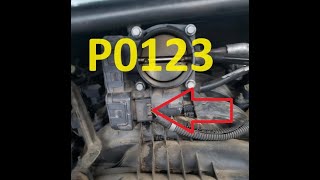
- Throttle Body Connector (C1) — The 6-pin connector directly on the electronic throttle body assembly at the front of the engine.. This is the single connection point for all power, ground, and signal wires for both throttle position sensors (TPS1 and TPS2) and the throttle motor. A bad connection, corrosion, or damaged pin here is a primary cause of P0123.
- Throttle Body Connector Pinout (Typical Pentastar) — Pin 1: ETC Motor (+), Pin 2: TPS 2 Signal, Pin 3: 5V Reference, Pin 4: ETC Motor (-), Pin 5: TPS 1 Signal, Pin 6: Sensor Ground/Return.. Knowing the pinout allows for targeted voltage and resistance tests. For P0123, you would test Pin 5 (TPS 1 Signal) for a short to voltage or an incorrect high reading, and Pin 3 for a stable 5V reference.
- G300 / G301 — Main chassis grounds often found inside the vehicle, under the front seats or behind the kick panels in the footwells.. These grounds are critical for the proper operation of the PCM and other modules. A poor connection here can lead to unstable reference voltages for engine sensors, potentially causing erratic codes like P0123.
Real Owner Repair Stories
- RamForum.com user (2000 Ram 1500 5.9L (Note: Older model but demonstrates a critical diagnostic path for recurring P0123)) — Check engine light, rough running, high idle, engine wants to die, code P0123.
❌ Tried (didn't work) Replacing the throttle position sensor (3 times), Replacing the PCM and sensor (twice)
✅ What actually fixed it The owner sold the truck, but a subsequent mechanic diagnosed the root cause as a hard-to-find short in the wiring harness that was repeatedly destroying the new PCM and TPS components. This highlights that recurring P0123 codes after part replacement strongly point to a wiring fault, not defective parts. - RamForum.com user 'whoofenstein' (2018 Ram 1500 5.7L (Note: Different engine, but analogous ETC system and codes)) — No-start, faint click, red lightning bolt on dash, codes P0123 and P0222.
❌ Tried (didn't work) Jumping the battery, Throttle pedal reset procedure, Replacing the electronic throttle body assembly, Replacing the battery
✅ What actually fixed it The dealer replaced the starter. This case shows that on no-start/no-crank vehicles, a major electrical fault in the starting/charging system can cause the PCM to set spurious throttle-related codes as a secondary symptom.
When the Usual Fixes Don't Work
- While a failed throttle body is the cause of P0123 in the vast majority of cases for the 3.6L Pentastar, there are documented instances where the code is a secondary symptom of a larger electrical problem. In one case involving a no-start condition, the root cause was a faulty starter, and replacing the throttle body had no effect. In another recurring failure, a hidden short-to-power in the wiring harness was repeatedly destroying new PCMs and throttle position sensors, demonstrating that if a new throttle body doesn't fix the code, a thorough wiring inspection is mandatory before replacing the PCM.
OEM Part Supersession History
5184349AB, 5184349AC, 5184349AD, 5184349AE→05184349AF— Standard part evolution for design improvements, reliability updates, or manufacturing changes.
Heads up: All listed part numbers are generally interchangeable for the 3.6L Pentastar engine in this vehicle range, with the later revisions being preferred. Always verify fitment with a VIN.
Diagnostic Flowchart
Other Known Issues on This Vehicle
Issues unrelated to this code that are worth knowing about as an owner of this generation:
- Cracked Oil Filter Housing/Cooler Assembly 🔴 High — Extremely common. The plastic housing becomes brittle from heat cycles and can crack, causing significant oil and/or coolant leaks into the engine valley. Often misdiagnosed as a rear main seal leak. (Ref: No recall, but it is a widely known design flaw. Aftermarket aluminum housings are a popular and recommended upgrade.)
- Rocker Arm / Camshaft Failure ('Pentastar Tick') 🔴 High — Common, typically occurs after 80,000 miles. Needle bearings in the rocker arms fail, causing a ticking noise, misfires (P0300), and eventual damage to the camshaft lobes. (Ref: A class-action lawsuit was filed regarding this issue. TSB 09-011-25 was issued for some models, pointing to a manufacturing issue with the parts.)
- Thermostat Housing Coolant Leak 🟠 Medium — Common. Similar to the oil filter housing, the plastic thermostat housing can warp or crack over time, causing coolant leaks at the front of the engine. (Ref: No recall. Dorman offers an upgraded aluminum housing as a more durable replacement.)
- Loss of Power Steering (EPS Failure) 🔴 High — Affects some 2013-2019 models with Electric Power Steering (EPS). Can result in a sudden and complete loss of power steering assist. More common on 2013 models. (Ref: A recall was issued for some vehicles, but many owners report having the same failure on vehicles not covered by the recall VIN range.)
Used vs. New Parts: Buying Guide for This Vehicle
When a used part is the smart pick: A used throttle body is generally NOT recommended for this repair. The integrated TPS is a known high-failure-rate electronic component. Buying a used part carries a significant risk of inheriting the same problem or having it fail shortly after installation.
Donor-vehicle mileage cap: roughly under 40000 miles for the part to have meaningful remaining life.
What to inspect on the donor part:
- Verify the part number matches or is a compatible supersession.
- Inspect the electrical connector pins for any signs of corrosion, damage, or moisture.
- Check the throttle bore for excessive carbon buildup, which might indicate a high-mileage or poorly maintained engine.
- Ensure the throttle plate moves freely without binding (if possible to test manually).
OEM-only on this vehicle (don't cheap out):
- While not strictly 'OEM-only', using a Mopar-branded throttle body is highly recommended for longevity and to avoid repeat failures.
Aftermarket brands forum-validated for this vehicle:
- Hitachi (Often an OEM supplier)
- Bosch (Often an OEM supplier)
Brands owners have reported issues with on this vehicle:
- Generic, unbranded, or extremely low-cost options from online marketplaces have a poor reputation for premature failure.
- While Dorman offers an 'OE Fix' for some parts, forum discussions show mixed reviews for their throttle bodies, with some users recommending sticking to OEM or OEM-supplier brands like Bosch.
Real Owner Stories
Aggregated from forums and TSBs cited above. Mileages and costs reflect what owners reported in those sources.
2018 Ram 1500 3.6L
Symptoms: No-start condition with a red lightning bolt light on the dashboard; codes P0123 and P0222 were present.
What fixed it: The issue turned out to be a faulty starter, even though the codes suggested a throttle body failure.
Source hint: RamForum.com Thread 'p0123 / p0222 - Replacing tb (tps built in) did not resolve'
2014 Ram 1500 3.6L
Symptoms: Truck was stuck in limp mode with the ETC light on and multiple codes: P0123, P0113, P0222, and P2135.
What fixed it: The combination of codes points to either a failed throttle body or a significant wiring/PCM issue.
Source hint: RamForum.com Thread '2014 ram 1500 multiple error codes need help truck in limo mode'
Related OBD-II Codes
Frequently Asked Questions
Is there a TSB for throttle codes on the Ram 1500 3.6L Pentastar?
Can I just replace the sensor, or do I need the whole throttle body for my 2013-2019 Ram?
How do I perform the throttle relearn on my Ram 1500 after replacing the part?
What does the red lightning bolt on my dashboard mean?
Could my P0123 code be related to the 'Pentastar Tick' issue?
Is there an upgraded part to prevent the common coolant leaks on this engine?
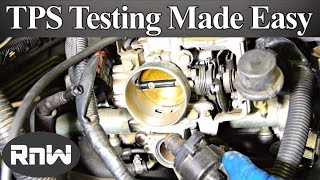
Helpful Videos

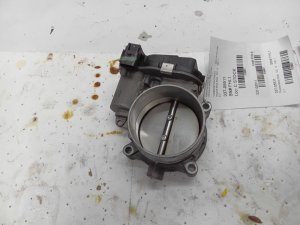
Used OEM Parts in Stock
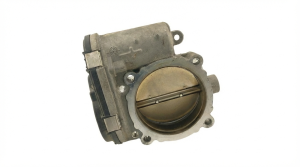
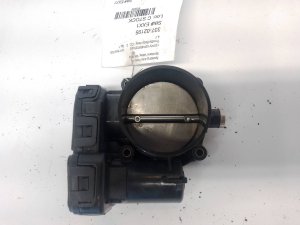
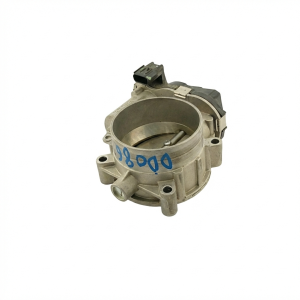
New Aftermarket Parts Available

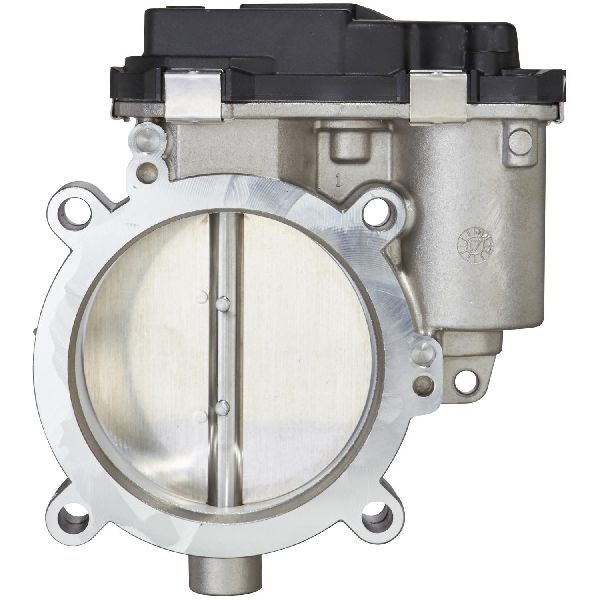

The information in this article is provided for general reference and educational purposes only. Vehicle specifications, procedures, and part compatibility can vary by production date, trim level, and region. Always consult your vehicle's factory service manual and verify part numbers before purchasing or performing repairs. Safety-critical components such as airbags, seat belts, and braking systems should be installed by a qualified professional.
- Ram 1500:
- 🎬 Helpful Videos
- 🛍️ Shop This Part
- What's Unique About the 2013-2019 Ram 1500
- Symptoms You May Notice
- Most Likely Causes
- Rare But Worth Checking
- Diagnosis Steps
- Parts You'll Likely Need
- Related Codes That Often Appear With This One
- Technical Service Bulletins (TSBs) & Recalls
- Platform-Specific Known Issues
- Mechanic-Grade Diagnostic Values
- Scan Tool Commands That Help
- Wiring & Ground Locations
- Real Owner Repair Stories
- When the Usual Fixes Don't Work
- OEM Part Supersession History
- Diagnostic Flowchart
- Other Known Issues on This Vehicle
- Used vs. New Parts: Buying Guide for This Vehicle
- Real Owner Stories
- 2018 Ram 1500 3.6L
- 2014 Ram 1500 3.6L
- Related OBD-II Codes
- Frequently Asked Questions
- 🎟️ Get 5% Off