

P0123 on 2007-2017 Mitsubishi Lancer: Throttle Position Sensor High Input Causes and Fixes
On a 2007-2017 Lancer, code P0123 almost always points to a failed throttle position sensor, which is integrated into the throttle body. This requires replacing the entire throttle body assembly. Expect to pay $250-$400 for an aftermarket part and around $900+ for an OEM unit. Checking wiring first is crucial, but the sensor itself is the most common failure point.
- P0123 on a 2007-2017 Lancer means the throttle position sensor is sending an abnormally high voltage signal to the computer.
- The most likely cause is a failed sensor, which is integrated into the throttle body.
- The fix is to replace the entire throttle body assembly. This is a straightforward DIY job for many, but the part can be costly.
- Always check the wiring and connector to the throttle body for damage before buying expensive parts.
- Driving with this code can be unpredictable due to the vehicle entering a 'limp mode' with reduced power.
- A throttle relearn procedure is necessary after replacement to ensure proper idle and performance.
What's Unique About the 2007-2017 Mitsubishi Lancer
For the 2007-2017 Mitsubishi Lancer (and many modern vehicles), the throttle position sensor is not a separate, replaceable part. It is integrated directly into the electronic throttle body assembly. This means that if the sensor fails, which is the most common cause of P0123, the entire throttle body must be replaced. This design simplifies manufacturing but increases the cost and complexity of this specific repair for the owner. Unlike some older vehicles where the TPS could be unbolted and replaced independently, this platform combines the sensor, motor, and throttle plate into a single unit.
Symptoms You May Notice
- Check Engine Light is on
- Vehicle enters "limp mode" with very limited acceleration
- Hesitation or stumbling during acceleration, sometimes described as jerking at light throttle.
- Rough or unstable idle, potentially stalling at stops.
- Hard starting
- Poor fuel economy.
- Engine revs high (e.g., 2000 RPM) at idle but has no response from the accelerator pedal.
- Replacing the accelerator pedal position (APP) sensor. While the APP sensor is part of the same system, P0123 specifically points to the sensor at the throttle body, not the one at the pedal.
- Cleaning a dirty throttle body. While a dirty throttle body can cause other idle and performance issues, it is unlikely to cause a 'circuit high' electrical fault code like P0123.
Most Likely Causes
- Failed Throttle Position Sensor (Integrated in Throttle Body) 🔴 High Probability The TPS is an electronic component that wears out over time. On this platform, it is not sold separately, making throttle body replacement the only option for a sensor failure. This is the most cited solution in owner forums.
How to confirm: Use a scan tool to monitor live data for the TPS voltage. If it reads abnormally high (e.g., stuck at 4.8V or higher) regardless of pedal position, the sensor has failed. You can also back-probe the sensor connector 🎬 Watch: How to test and replace the TPS sensor with a multimeter to verify the signal wire voltage. With the key on, engine off, the voltage should sweep smoothly from ~0.5V at closed throttle to ~4.5V at wide-open throttle. A reading stuck high confirms the fault.
Typical fix: Replace the entire throttle body assembly. A throttle relearn procedure is required after installation for the ECU to learn the new sensor's idle and full-throttle positions.
Est. part cost: $250-$950 - Wiring or Connector Issue 🟡 Medium Probability Engine vibration and heat can cause wiring to fray or connectors to become loose or corroded over time. The connector at the throttle body is a common point of failure.
How to confirm: Visually inspect the wiring harness and connector (B-10 on some diagrams) going to the throttle body for any signs of damage, corrosion, or loose pins. Use a multimeter to check for a stable 5V reference signal (Pin 5 to ground), a good ground (Pin 3), and continuity on the signal wire (Pin 4) between the throttle body and the ECM.
Typical fix: Repair the damaged section of the wiring harness or clean the connector terminals with electrical contact cleaner and apply dielectric grease. If pins are loose or the connector is cracked, it may need to be replaced.
Est. part cost: $5-$50
Rare But Worth Checking
- Failed Powertrain Control Module (PCM/ECM): This is the least likely cause and should only be considered after all other possibilities, including the throttle body and wiring, have been thoroughly ruled out. ECM failure is rare, but it can happen.
- Faulty Alternator: In rare cases, a failing alternator can produce excessive voltage throughout the vehicle's electrical system, causing the TPS to send a signal that is out of range. This would typically be accompanied by other electrical-related trouble codes.
Diagnosis Steps
- Connect an OBD-II scanner and confirm P0123 is the primary code. Note any other codes present.
- Use the scanner's live data function to observe the 'Throttle Position Sensor (main)' voltage (PID 13 on some scan tools). With the key on and engine off, the voltage should be low (around 0.5V-0.7V) at idle and sweep smoothly up to ~4.5V at wide-open throttle. A reading stuck at or near 4.8V confirms the 'High Input' condition.
- If the reading is stuck high, turn the ignition off and disconnect the throttle body connector (often labeled B-10).
- Inspect the connector terminals (both on the harness and the throttle body) for corrosion, moisture, or bent/damaged pins.
- With the connector unplugged and key on, use a multimeter to test the harness-side connector. Verify you have a stable 5V reference on the correct pin (often Pin 5) and a good ground on its corresponding pin (often Pin 3).
- If wiring checks out with proper voltage and ground, the fault is almost certainly the throttle position sensor itself. Since it's integrated, the throttle body assembly needs to be replaced.
- If wiring is damaged, repair the affected wires and re-test.
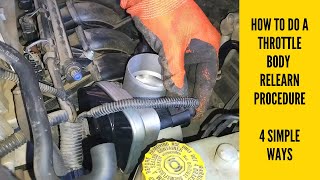
- After replacing the throttle body, clear the code and perform a throttle relearn procedure. A common method involves warming the engine, turning the ignition off for 10+ seconds, starting it, and letting the car idle for 10-15 minutes with no accessories on. 🎬 Watch: Four ways to perform a throttle relearn procedure
Parts You'll Likely Need
- Throttle Body Assembly
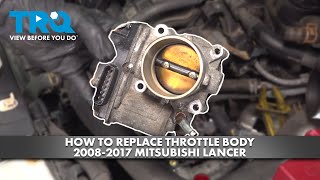
(OEM #1450A109 (Primarily for 2.0L Turbo models like Ralliart/Evo))— This is the most common cause of a P0123 code on this vehicle, as the throttle position sensor is built into the assembly and is not serviceable separately. Note that part numbers may vary for non-turbo engines (e.g., 4B11, 4B12 naturally aspirated). Always verify with VIN. 🎬 See this walkthrough on how to replace the throttle body
Trusted brands: Mitsubishi (OEM), Hitachi, Standard Motor Products, Spectra Premium, Cardone (Remanufactured)
OEM price range: $900-$1280.
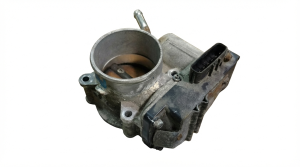
Aftermarket price range: $250-$400
Related Codes That Often Appear With This One
- P0222 (Throttle/Pedal Position Sensor/Switch 'B' Circuit Low)
- P2135 (Throttle/Pedal Position Sensor/Switch 'A'/'B' Voltage Correlation)
Platform-Specific Known Issues
- On forums like EvolutionM.net, the overwhelming consensus for P0123 is throttle body replacement. Users report that attempts to clean the unit or check wiring usually lead back to replacing the entire assembly as the final fix.
Mechanic-Grade Diagnostic Values
- TPS (Main) Signal Voltage at Idle (Closed Throttle) — expected: 0.535 - 0.735 Volts. Failure: A voltage reading stuck at or above 4.8V indicates a 'High Input' fault.
- TPS (Main) Signal Voltage at Wide Open Throttle (WOT) — expected: 4.0 - 5.5 Volts. Failure: Voltage should sweep smoothly from idle to WOT. Jumps, drops, or no change indicates a faulty sensor.
- 5V Reference Voltage at Harness Connector — expected: 4.9 - 5.1 Volts (between Pin 5 and ground). Failure: No voltage or voltage outside this range indicates a wiring or ECM issue.
- Ground Circuit Continuity at Harness Connector — expected: Less than 2 ohms (between Pin 3 and chassis ground). Failure: High resistance indicates a poor ground connection, which can cause a high signal voltage.
- Throttle Body Mounting Bolt Torque — expected: 84 in-lbs (9.5 Nm). Failure: N/A
Scan Tool Commands That Help
- Mitsubishi MUT-III (MB991958): Data List Item 13 or 14: Throttle Position Sensor (main) — This is the primary function used to view the live voltage output from the TPS. It's the first step in electronic diagnosis to see if the sensor is reporting a high voltage to the ECM as the code suggests.
- Professional Scan Tool (e.g., iCarsoft): Throttle Body Reset / Adaptation — After replacing the throttle body, this function is used to command the ECM to learn the new sensor's closed, open, and idle positions. This is critical for restoring correct idle speed and throttle response.
Wiring & Ground Locations
- B-10 / A-41 — The main electrical connector on the electronic throttle body assembly itself.. This is the primary point to test for 5V reference, ground, and the signal wire voltage. Corrosion or damage here is a common cause of P0123.
- Throttle Body Connector Pin 5 — On the harness-side connector (B-10) for the throttle body.. This pin supplies the 5-volt reference power from the ECM. A short to power on another wire or a faulty ECM could send incorrect voltage here.
- Throttle Body Connector Pin 3 — On the harness-side connector (B-10) for the throttle body.. This is the sensor ground provided by the ECM. A bad ground connection here can cause the signal voltage to float high, triggering P0123.
- Throttle Body Connector Pin 4 — On the harness-side connector (B-10) for the throttle body.. This is the signal wire that sends the variable voltage back to the ECM. It should be tested for shorts to power and for smooth voltage change as the throttle moves.
Real Owner Repair Stories
- Reddit user /u/Low_Pin_8431 (2011 Mitsubishi Lancer) — Idle trouble, seemed 'a little off when letting off the gas'.
❌ Tried (didn't work) Initially thought it was a separate IACV (Idle Air Control Valve), but discovered it was integrated into the throttle body.
✅ What actually fixed it The user disconnected the battery, cleaned the throttle body, reassembled it, and then performed a manual idle relearn procedure. This resolved the issue and returned the car to normal operation.
OEM Part Supersession History
1450A109→1450A109 (current)— This part number appears to be stable for the specified turbo models (Lancer Evolution X, Ralliart) within the 2008-2015 range.
Heads up: This part number is specifically listed for Lancer models 'With turbo'. Non-turbo models (like the base ES, DE, GTS with 4B11 or 4B12 engines) use a different throttle body. Always verify the correct part number with the vehicle's VIN before ordering.
Diagnostic Flowchart
Other Known Issues on This Vehicle
Issues unrelated to this code that are worth knowing about as an owner of this generation:
- Clear Coat / Paint Peeling 🟠 Medium — Widespread, especially on darker colors like red and blue. Can start peeling after 3-5 years.
- CVT Transmission Overheating or Failure 🔴 High — Common, particularly on earlier models (2008-2012). Often triggers a 'Slow Down' warning. Can occur from 80,000 km onwards. (Ref: A TCM software update was issued to help manage temperatures, but mechanical failure can still occur.)
- Engine Stalling / Cutting Out 🔴 High — Frequently reported issue where the engine may stall when coming to a stop or at idle.
- Faulty Blower Motor Resistor 🟡 Low — Very common problem where the fan speed controls stop working correctly, often getting stuck on one speed or not working at all.
- Brake Booster Check Valve Failure 🔴 High — Affects early production models. The brake pedal can become hard and difficult to press after extended periods of driving without braking, increasing stopping distance.
- Premature Wheel Bearing Wear 🟠 Medium — Rear wheel bearings are noted to wear out between 80,000-120,000 km, causing a humming or grinding noise from the rear of the vehicle.
Used vs. New Parts: Buying Guide for This Vehicle
When a used part is the smart pick: Given the high cost of a new OEM throttle body (over $900), a used part from a reputable salvage yard is a very common and sensible choice for this repair. Since the failure is electronic, a used part is a gamble, but the significant cost savings often make it worthwhile.
Donor-vehicle mileage cap: roughly under 80000 miles for the part to have meaningful remaining life.
What to inspect on the donor part:
- Check for a clean throttle plate and bore. Heavy carbon buildup may suggest high mileage or poor maintenance.
- Ensure the electrical connector pins are straight, clean, and free of any corrosion.
- Verify the part number on the used unit matches the one being replaced.
- Ask the seller for the mileage of the donor vehicle if possible.
- Ensure there's a return policy in case the used sensor is also faulty.
Aftermarket brands forum-validated for this vehicle:
- Hitachi (Often the OEM manufacturer)
- Standard Motor Products (SMP)
- Spectra Premium
- TRQ
Brands owners have reported issues with on this vehicle:
- Unbranded, no-name parts from online marketplaces should be treated with caution, as quality control can be inconsistent.
Real Owner Stories
Aggregated from forums and TSBs cited above. Mileages and costs reflect what owners reported in those sources.
2004 Mitsubishi Ralliart
Symptoms: Jerking, power loss, and a high idle at 2000 RPM with no throttle response.
What fixed it: The recommended fix was to replace the sensor/throttle body.
Source hint: EvolutionM.net thread titled 'TPS sensor help!!!!! Throwing a code P0123'
Mitsubishi Lancer
Symptoms: After removing and reinstalling the original TPS to address a P0120 code, the owner experienced idling issues.
What fixed it: Replacing the TPS (as part of the throttle body assembly).
Source hint: Forum member report cited in article context regarding a P0120 code
Mitsubishi Lancer/Ralliart
Symptoms: Intermittent throttle hesitation and the Service Engine Soon light coming on.
What fixed it: The owner was advised to try reseating the ECU connectors as a no-cost preliminary diagnostic step before replacing any parts.
Source hint: EvolutionM.net thread titled 'Throttle position sensor...'
Related OBD-II Codes
Frequently Asked Questions
My 2010 Lancer is in 'limp mode' with code P0123. Can I just replace the throttle position sensor, or do I need the whole throttle body?
What is the 'throttle relearn procedure' I need to do on my Lancer after replacing the throttle body for a P0123 code?
Before buying a new throttle body for my Lancer, what wiring should I check for P0123?
My scan tool shows the throttle position voltage is stuck at 4.8V. Does this confirm a bad sensor on my Lancer?
I have a Jeep Patriot with the 2.4L 'World Engine' and a P0123 code. Is the problem similar to the Mitsubishi Lancer?
My Lancer is jerking and has a high idle around 2000 RPM, but the gas pedal does nothing. Is this a symptom of P0123?
Helpful Videos

Used OEM Parts in Stock


New Aftermarket Parts Available

The information in this article is provided for general reference and educational purposes only. Vehicle specifications, procedures, and part compatibility can vary by production date, trim level, and region. Always consult your vehicle's factory service manual and verify part numbers before purchasing or performing repairs. Safety-critical components such as airbags, seat belts, and braking systems should be installed by a qualified professional.
- Mitsubishi Lancer:
- 🎬 Helpful Videos
- 🛍️ Shop This Part
- What's Unique About the 2007-2017 Mitsubishi Lancer
- Symptoms You May Notice
- Most Likely Causes
- Rare But Worth Checking
- Diagnosis Steps
- Parts You'll Likely Need
- Related Codes That Often Appear With This One
- Platform-Specific Known Issues
- Mechanic-Grade Diagnostic Values
- Scan Tool Commands That Help
- Wiring & Ground Locations
- Real Owner Repair Stories
- OEM Part Supersession History
- Diagnostic Flowchart
- Other Known Issues on This Vehicle
- Used vs. New Parts: Buying Guide for This Vehicle
- Real Owner Stories
- 2004 Mitsubishi Ralliart
- Mitsubishi Lancer
- Mitsubishi Lancer/Ralliart
- Related OBD-II Codes
- Frequently Asked Questions
- 🎟️ Get 5% Off