

P0123 on 2007-2014 GMC Sierra 1500 4.8L: Causes and Fixes for Throttle Position Sensor Fault
P0123 on a GMC Sierra most often means the throttle body has failed. The Throttle Position Sensor (TPS) is integrated into it and isn't sold separately by GM. The most common fix is replacing the entire throttle body assembly, which costs between $150 and $350 for the part. After replacement, a throttle relearn procedure is required, and in some cases, programming with a dealer-level tool may be necessary. Before replacing parts, inspect the wiring harness for damage, as this is another known ca
- P0123 means the throttle position sensor is sending a signal that is too high, which will put your truck in 'Reduced Engine Power' mode.
- The most likely cause on this GMC Sierra is a failed throttle body assembly, as the sensor is built into it.
- Before replacing the throttle body, always inspect the wiring and connector for damage or corrosion, which is a known issue.
- After cleaning or replacing the throttle body, a 'throttle relearn' procedure is mandatory for the engine to idle correctly.
- This is a DIY-friendly repair for those with basic tools, with the main part costing between $150 and $350.
What's Unique About the 2007-2014 GMC Sierra 1500
On these GMT900 platform trucks (2007-2013), the Throttle Position Sensor (TPS) is integrated into the electronic throttle body assembly and is not typically sold as a separate component by GM. While some aftermarket options exist for the sensor alone, the most common and reliable repair is to replace the entire throttle body unit. This platform is also known for issues like wiring harness chafing or corrosion at the throttle body connector, which can mimic sensor failure. In some documented cases, the signal wire can suffer from 'cross-talk,' picking up voltage from an adjacent wire within the harness, which requires bypassing the faulty wire.
Generation note: The specified 2007-2014 range covers two generations. This guide primarily applies to the GMT900 generation (2007-2013) which used the 4.8L V8 engine. The 2014 model year marked the start of the new K2XX generation, which introduced different engines and systems. While the code's meaning is the same, part numbers and wiring specifics may differ on a 2014 K2XX model. Note that GM also sold a 2014 'Sierra 1500 Limited' which was a carryover of the GMT900 body style.
Symptoms You May Notice
- "Reduced Engine Power" message on the dashboard
- Check Engine Light is on
- Poor or hesitant acceleration
- Rough or unstable idle
- Engine may stall
- Harsh or erratic transmission shifting while in limp mode.
- Replacing the accelerator pedal position (APP) sensor. While the pedal sensor is part of the overall throttle control system, P0123 specifically points to the 'A' circuit at the throttle body, not the pedal. Pedal-related issues will set different codes (e.g., P2138).
Most Likely Causes
- Failed Throttle Body Assembly 🔴 High Probability The internal electronic components of the Throttle Position Sensor (TPS), which is integrated into the assembly, are a common failure point on this platform. Wear over time can cause the sensor to send incorrect voltage signals, getting stuck in a high voltage state.
How to confirm: Using a scan tool, observe the live data for 'TP Sensor 1'. If the voltage is stuck high (e.g., at 5.0V) regardless of pedal position, the sensor inside the throttle body has likely failed.
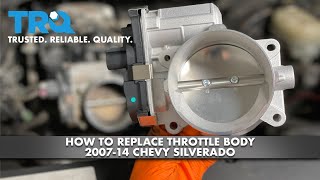
Typical fix: Replace the entire throttle body assembly. 🎬 Watch: How to replace the throttle body assembly A throttle relearn procedure must be performed afterward. Note that some official GM documentation states this part requires programming with special tools to ensure proper operation.
Est. part cost: $150-$350 - Wiring Harness or Connector Issue 🟡 Medium Probability The engine wiring harness can chafe against engine components or brackets, causing wires to short to a power source. A known failure mode involves the dark green signal wire for TPS 1 developing a short or picking up 'cross-talk' voltage from another wire in the harness, causing a persistent P0123 even with a new throttle body. The connector pins can also suffer from corrosion or poor tension (fretting).
How to confirm: Visually inspect the harness for chafing, especially near the cylinder heads and brackets. Unplug the connector and check for corrosion. A multimeter test may show correct voltages, but a 'load test' (using a headlight bulb) is more effective at finding a weak connection. In one documented repair, a technician identified the fault only by running a new, separate wire from the throttle body to the ECM (Pin 65 on the E38 ECM) to bypass the compromised wire in the main harness.
Typical fix: If the connector is corroded, replace it with a new pigtail. If a wire is damaged, it must be repaired. In cases of internal harness shorts or 'cross-talk,' the most effective repair may be to abandon the faulty wire and run a new one.
Est. part cost: $20-$50 for a connector pigtail - Dirty Throttle Body ⚪ Low Probability Carbon buildup can cause the throttle plate to stick, but this more commonly causes P0121 (performance) or P2135 (correlation) codes. It is less likely to cause a P0123 'circuit high' fault, which is almost always electrical in nature.
How to confirm: Remove the air intake tube and visually inspect the throttle bore and plate for significant carbon buildup.
Typical fix: Clean the throttle body bore and plate using a dedicated throttle body cleaner and a soft brush or rag. Do not manually force the butterfly valve open on an electronic throttle body. A throttle relearn is necessary after cleaning.
Est. part cost: $5-$15 for cleaner
Rare But Worth Checking
- Faulty Powertrain Control Module (PCM): This is a rare cause. The PCM should only be suspected after all other possibilities, including the throttle body and wiring, have been thoroughly tested and ruled out. A faulty PCM can sometimes cause a high voltage reading on the sensor circuit.
- Faulty Alternator: An alternator that is over-charging the electrical system can cause high voltage readings on various sensors. This is unlikely to be the sole cause and would typically be accompanied by other electrical-related trouble codes and symptoms like very bright lights or a battery warning.
Diagnosis Steps
- Connect an OBD-II scanner and confirm P0123 is present. Check for any other related codes like P2135 or P1516.
- View live data on the scanner. Monitor 'TP Sensor 1 Voltage' and 'TP Sensor 1 Position'. The voltage should be around 0.5V at idle and sweep smoothly up to ~4.5V at wide-open throttle. A reading stuck high (e.g., 5.0V) points to a circuit high fault.
- Turn the ignition off. Disconnect the throttle body electrical connector. Inspect the connector and wiring harness for any visible damage, corrosion, chafing, or loose connections.
- With the key on, engine off, use a multimeter to verify you have a 5-volt reference and a good ground at the appropriate pins on the harness-side connector.
- If wiring appears good but the issue persists, consider a more advanced wiring test. A simple multimeter check may not reveal a wire that is shorting to another voltage source under load ('cross-talk'). A professional may need to load-test the circuit or run a bypass wire to definitively rule out a harness issue.
- If reference voltage and ground are good and wiring is confirmed to be intact, the fault is most likely the throttle body assembly itself.
- Replace the throttle body assembly.
- After replacement, perform the throttle relearn procedure. 🎬 See this step-by-step throttle relearn procedure This can sometimes be done without a scan tool (idling for 3 minutes, turning off for 60 seconds, idling for 3 more minutes), but be aware that official GM procedure may call for a programming/setup function with a scan tool for proper operation.
Parts You'll Likely Need
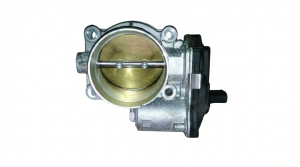
- Throttle Body Assembly
(OEM #GM: 12670839 (supersedes older numbers), ACDelco: 217-3151)— This is the most common fix because the Throttle Position Sensor (TPS) that fails is integrated into this assembly and not sold separately by GM for this vehicle.
Trusted brands: ACDelco (GM Original Equipment), GM Genuine Parts, Bosch
OEM price range: $250-$350
Aftermarket price range: $150-$250 - Throttle Body Gasket/Seal
(OEM #Included with new throttle body)— This seal should always be replaced when the throttle body is removed to prevent vacuum leaks. Most new throttle bodies include a new seal.
Trusted brands: ACDelco, Fel-Pro
OEM price range: $10-$20
Aftermarket price range: $5-$10
Related Codes That Often Appear With This One
- P2135 — This code indicates a correlation error between the two throttle position sensors (A and B). A failing sensor that triggers P0123 can also send signals that disagree with the second sensor, triggering P2135 and the 'Reduced Engine Power' mode.
- P1516 — This is a GM-specific code that means the PCM has detected an error between the commanded throttle position and the actual throttle position. It often appears alongside TPS circuit codes like P0123 when the PCM loses control of the throttle plate.
Technical Service Bulletins (TSBs) & Recalls
- PIP4786B: Intermittent Reduced Engine Power with DTC P0123, P0223, P2135. Advises checking for terminal fretting/corrosion at throttle body and PCM connectors.
Platform-Specific Known Issues
- A particularly difficult-to-diagnose cause for P0123 on this platform is an internal wiring harness short, or 'cross-talk', where the TPS signal wire (often dark green) picks up stray voltage from an adjacent wire. This can cause the code to persist even after replacing the throttle body. The definitive fix in this scenario is to run a new, dedicated wire from the sensor to the PCM, bypassing the fault in the harness.
Mechanic-Grade Diagnostic Values
- TPS 1 Signal Voltage (at sensor connector) — expected: Approx. 0.45V at closed throttle, sweeping smoothly to approx. 4.5V at wide-open throttle (WOT).. Failure: Voltage is stuck high (near 5.0V) regardless of throttle plate position, or does not change smoothly.
- 5-Volt Reference Voltage (at sensor connector) — expected: A steady 5.0 volts from the PCM.. Failure: Voltage is significantly higher or lower than 5.0V, or is absent.
- Low Reference (Ground) Circuit — expected: Near 0V, with very low resistance to a known good chassis ground (less than 50 mV drop).. Failure: Voltage reading is high, or resistance to ground is high, indicating a poor ground connection.
- Throttle Actuator Control Motor Resistance — expected: Between 2 to 15 Ohms between terminals A and B on the throttle body.. Failure: Resistance is over the limit (open circuit) or less than 1 Ohm (short circuit).
Scan Tool Commands That Help
- GDS2 (GM Global Diagnostic System 2): Module Diagnostics -> Engine Control Module -> Output Controls — To command the throttle body to specific positions (e.g., 25%, 50%, 75%) while monitoring TPS 1 and TPS 2 voltage. This helps verify if the throttle body responds correctly to PCM commands and if the sensors report the position accurately. This is used after basic voltage checks to isolate a faulty throttle body from a wiring or PCM issue.
- GDS2 or compatible high-end scan tool: Throttle/Idle Learn Reset — This function is required after replacing the throttle body or cleaning it. It resets the learned idle and throttle position values in the PCM, forcing a new calibration. While a manual relearn often works, the scan tool function is the official GM procedure.
Wiring & Ground Locations
- G103 — On the front of the passenger side (right side) cylinder head.. This is a primary engine ground point. A poor connection here can affect the reference voltage and ground for multiple sensors, including the TPS, leading to erratic readings and codes like P0123.
- G104 — On the rear of the driver's side (left side) cylinder head. Note: Some sources may have conflicting or confusing location descriptions, but it is a key ground on the engine block.. Shares grounding duties with G103 for various engine and control module functions. A loose or corroded G104 can cause intermittent and hard-to-diagnose electrical issues.
- E38 ECM Connector X2, Pin 65 — At the Powertrain Control Module (PCM/ECM).. This is the pin for the TPS Sensor 1 Signal. When diagnosing a persistent P0123 with a known-good throttle body, technicians may test for continuity and voltage at this pin or run a bypass wire directly to it from the throttle body connector.
- E38 ECM Connector X2, Pin 68 — At the Powertrain Control Module (PCM/ECM).. This is the pin for the 5-Volt Reference 1 circuit, which supplies power to the TPS.
- E38 ECM Connector X2, Pin 51 — At the Powertrain Control Module (PCM/ECM).. This is the pin for the Low Reference (ground) circuit for the TPS.
Real Owner Repair Stories
- Forum discussions and technician case studies (2007-2013 GMC Sierra / Chevrolet Silverado with 4.8L/5.3L V8) — Persistent P0123 code, 'Reduced Engine Power' message, and stalling, even after throttle body replacement.
❌ Tried (didn't work) Replacing the throttle body assembly (sometimes multiple times), Cleaning the throttle body, Replacing the accelerator pedal assembly, Cleaning engine ground connections
✅ What actually fixed it An internal short or 'cross-talk' within the main engine wiring harness was found. The signal wire for TPS 1 was picking up voltage from an adjacent wire. The definitive fix was to abandon the compromised wire in the harness and run a new, dedicated wire from the throttle body connector (Pin F, Dark Green wire) directly to the corresponding pin at the ECM (Pin 65 on E38 ECM). - NHTSA ODI #11525778 — An owner of a related GM model reported that the vehicle started losing power and had problems cranking, eventually resulting in a no-crank condition accompanied by a P0123 error code.
OEM Part Supersession History
12627217, 12669073→12670839— Standard part evolution, likely for improved reliability or manufacturing efficiency.
Heads up: The newest part number (12670839) is the correct service replacement for the specified vehicle range. Using older, discontinued numbers from new-old-stock is not recommended.
Model Year Variations Within This Range
- 2014: 2014 was a split year. The new 'K2XX' chassis was introduced with all-new EcoTec3 engines. However, GM also sold the previous generation 'GMT900' as the '2014 Sierra 1500 Limited'. It is critical to identify which version of the 2014 truck is being worked on, as the throttle body, wiring, and PCM are different between the GMT900 (with the 4.8L V8) and the K2XX (with the 5.3L EcoTec3 V8). This guide primarily applies to the GMT900 platform.
Diagnostic Flowchart
Other Known Issues on This Vehicle
Issues unrelated to this code that are worth knowing about as an owner of this generation:
- Cracked Dashboard 🟠 Medium — Extremely common on the GMT900 platform. Cracks typically form on the driver's side above the instrument cluster and/or around the passenger airbag cover. Can occur at any mileage.
- Broken Exhaust Manifold Bolts 🟠 Medium — Common at higher mileage (typically over 100k miles). The rearmost bolts on both driver and passenger side manifolds are prone to snapping due to heat cycles, causing an exhaust leak tick noise that is most noticeable on a cold start.
- Intake Manifold Gasket Leaks 🟡 Low — The plastic intake manifold gaskets can harden and fail over time, leading to vacuum leaks. This often results in lean codes (P0171/P0174) and a rough idle, especially on cold starts.
- Reliability Benefit: No Active Fuel Management (AFM) 🟡 Low — The 4.8L (LY2/L20) engines in this platform were not equipped with AFM. This is a significant reliability advantage, as they are immune to the collapsed lifters, bent pushrods, and camshaft failures that frequently plague the 5.3L and 6.2L AFM-equipped engines of the same era. (Ref: N/A (Design feature))
Used vs. New Parts: Buying Guide for This Vehicle
When a used part is the smart pick: A used throttle body from a junkyard can be a cost-effective option if the budget is tight, but it is a gamble. Since this is a common failure item due to electronic wear, a used part may have a limited remaining lifespan or could be faulty from the start. It makes most sense on a high-mileage vehicle where the goal is simply to get it running without a large investment.
Donor-vehicle mileage cap: roughly under 80000 miles for the part to have meaningful remaining life.
What to inspect on the donor part:
- Check the donor vehicle's mileage if possible; lower is always better.
- Inspect the electrical connector pins for any signs of corrosion, bending, or damage.
- Look at the throttle plate and bore. While some carbon is normal, excessive, thick buildup might suggest the donor engine had other issues (e.g., PCV system failure).
- Ask the salvage yard about their return or warranty policy. Many offer a 30-day exchange warranty if the part is dead on arrival.
Aftermarket brands forum-validated for this vehicle:
- ACDelco (GM Original Equipment)
- Bosch (Often the OEM supplier)
- Hitachi
Brands owners have reported issues with on this vehicle:
- Unnamed, 'white-box' brands from online marketplaces. While tempting due to low price, they have a high rate of premature failure and can cause significant diagnostic frustration.
Real Owner Stories
Aggregated from forums and TSBs cited above. Mileages and costs reflect what owners reported in those sources.
2007-2013 GMC Sierra 1500 4.8L V8
Symptoms: A persistent P0123 code remained even after common parts were replaced.
What fixed it: Running a new, separate wire from the throttle body to the ECM (Pin 65 on the E38 ECM) to bypass a compromised wire in the main harness that was picking up 'cross-talk' voltage.
Source hint: vehicle_specific_issues
2007-2013 GMC Sierra 1500
Symptoms: Reduced Engine Power mode, Check Engine Light, and intermittent P0123, P0223, and P2135 codes.
What fixed it: Inspecting and cleaning terminal fretting and corrosion at the throttle body and PCM connectors as advised by technical service bulletins.
Source hint: TSB PIP4786B
2007-2013 GMC Sierra 1500
Symptoms: Dreaded 'Reduced Engine Power' issue accompanied by codes P1516 and P2135.
What fixed it: Replacing the throttle body assembly and performing a relearn procedure.
Source hint: gm-trucks.com - 'Dreaded "Reduced Engine Power" issue'
GM Platform Owner Report
Symptoms: The vehicle started losing power and had problems cranking, eventually leading to a complete no-crank condition with a P0123 error code.
What fixed it: Diagnostic investigation into the engine control system following the P0123 fault.
Source hint: NHTSA ODI #11525778
Related OBD-II Codes
Frequently Asked Questions
Does TSB PIP4786B apply to my GMC Sierra if I have a P0123 code?
Why does my Sierra still show P0123 after I replaced the throttle body?
Can I just clean the throttle body to fix a P0123 'circuit high' fault?
Is there a specific relearn procedure for the 4.8L V8 after replacing the throttle body?
Does the 4.8L engine in my 2007-2014 Sierra have the same lifter issues as the 5.3L?
What should the TP Sensor 1 voltage look like on a scan tool for a healthy Sierra?
Can a P0123 code cause my vehicle to not crank?
Helpful Videos

We Have This Part in Stock





The information in this article is provided for general reference and educational purposes only. Vehicle specifications, procedures, and part compatibility can vary by production date, trim level, and region. Always consult your vehicle's factory service manual and verify part numbers before purchasing or performing repairs. Safety-critical components such as airbags, seat belts, and braking systems should be installed by a qualified professional.
- GMC Sierra 1500:
- 🎬 Helpful Videos
- 🛍️ Shop This Part
- What's Unique About the 2007-2014 GMC Sierra 1500
- Symptoms You May Notice
- Most Likely Causes
- Rare But Worth Checking
- Diagnosis Steps
- Parts You'll Likely Need
- Related Codes That Often Appear With This One
- Technical Service Bulletins (TSBs) & Recalls
- Platform-Specific Known Issues
- Mechanic-Grade Diagnostic Values
- Scan Tool Commands That Help
- Wiring & Ground Locations
- Real Owner Repair Stories
- OEM Part Supersession History
- Model Year Variations Within This Range
- Diagnostic Flowchart
- Other Known Issues on This Vehicle
- Used vs. New Parts: Buying Guide for This Vehicle
- Real Owner Stories
- 2007-2013 GMC Sierra 1500 4.8L V8
- 2007-2013 GMC Sierra 1500
- 2007-2013 GMC Sierra 1500
- GM Platform Owner Report
- Related OBD-II Codes
- Frequently Asked Questions
- 🎟️ Get 5% Off