

P0123 on 2015-2017 Chrysler 200 2.4L: Throttle Position Sensor Circuit High Causes and Fixes
On a 2015-2017 Chrysler 200 with the 2.4L engine, code P0123 almost always means the entire electronic throttle body assembly has failed. The sensor is integrated and cannot be replaced separately. This is a very common failure across all vehicles using this engine. Expect to pay $150-$350 for the part, with DIY replacement being a common option. After replacement, a throttle relearn procedure is mandatory.
- P0123 on your Chrysler 200 almost always points to a failed electronic throttle body.
- The throttle position sensor (TPS) cannot be replaced by itself; it is part of the complete throttle body assembly.
- If you also have code P0222, it is a definitive sign that the throttle body needs to be replaced.
- This is a repair that a DIYer with basic tools can perform in about an hour.
- Driving with this code is unsafe as the car can lose power and stall at any moment.
What's Unique About the 2015-2017 Chrysler 200
For the 2015-2017 Chrysler 200 with the 2.4L Tigershark engine, the throttle position sensor (TPS) is not a separate, replaceable part. It is integrated into the electronic throttle body assembly. This design means that if the sensor fails, the entire throttle body must be replaced. This is a known weak point across the entire Tigershark engine family, affecting numerous Chrysler, Dodge, Jeep, and Ram models. It's also common for this code to appear with P0222 (TPS 'B' Circuit Low), which almost certainly confirms an internal electronic failure of the throttle body unit.
Symptoms You May Notice
- Check Engine Light is on
- Electronic Throttle Control (ETC) warning light (a red lightning bolt symbol) is on.
- Vehicle enters 'limp mode' with severely reduced engine power and acceleration.
- Engine may hesitate, run rough, or stall.
- Poor or no throttle response.
- Cruise control will not work.
- In some cases, the engine may crank but fail to start.
- Replacing the accelerator pedal sensor. P0123 refers specifically to the sensor on the throttle body ('A' circuit), not the pedal sensor, which generates different codes (e.g., P2122, P2127).
- Cleaning a dirty throttle body. While cleaning is good maintenance, it will not fix an electrical circuit high fault like P0123. This code points to an electrical failure, not a mechanical obstruction or dirt. The failure is almost always internal to the sealed electronics.
Most Likely Causes
- Failed Electronic Throttle Body Assembly 🔴 High Probability The 2.4L Tigershark engine family has a widely documented issue with the internal electronics of the throttle body failing. The sensors are integrated and not sold separately. This is the most common cause for P0123 on this platform.
How to confirm: Use a scan tool to monitor live data for TPS1 and TPS2 voltages. If P0123 is present, TPS1 voltage will be stuck high (near 5.0V). If P0222 is also present, it's a near-certain confirmation of throttle body failure.
Typical fix: Replace the entire electronic throttle body assembly. A throttle relearn procedure is required after installation.
Est. part cost: $150-$350 - Wiring or Connector Issue ⚪ Low Probability
How to confirm: Visually inspect the wiring harness and connector going to the throttle body for any signs of damage, corrosion, or loose pins. Use a multimeter to check for a stable 5-volt reference, good ground, and for a short to power on the signal wire. A short in a nearby circuit, like the oil pressure sensor, could potentially affect the 5V reference circuit shared by the throttle body.
Typical fix: Repair the damaged section of the wiring harness or clean/replace the connector.
Est. part cost: $10-$100 - Outdated PCM Software ⚪ Low Probability Chrysler has issued multiple Technical Service Bulletins (TSBs) for other models with similar powertrain architecture where sensitive PCM logic could falsely trigger P0123. TSB 18-045-16 REV. A, for example, addresses this for 2015 models with the 6.4L engine, but it shows a pattern of software-related TPS codes.
How to confirm: A Chrysler dealership or a properly equipped independent shop can check your vehicle's VIN against their database for any available PCM software updates, such as TSB 18-023-16 which was for 2.4L powertrain improvements.
Typical fix: Reflash the Powertrain Control Module (PCM) with the updated software.
Est. part cost: $0-$250
Rare But Worth Checking
- Faulty Powertrain Control Module (PCM): This is extremely rare. The PCM should only be considered after all other possibilities, including the throttle body and wiring, have been exhaustively ruled out.
Diagnosis Steps
- Connect an OBD-II scanner and confirm that P0123 is the active code. Check for any other related codes, especially P0222 or P2135.
- With the key on, engine off, use the scanner's live data function to view the voltage for Throttle Position Sensor 1 (TPS1). A reading stuck high, near 5.0V, confirms the fault condition.
- Visually inspect the throttle body electrical connector and wiring harness for any obvious signs of damage, corrosion, or loose connections.
- If wiring appears intact and P0123 is paired with P0222, the throttle body assembly is almost certainly faulty and should be replaced.
- If only P0123 is present and wiring looks good, you can test the circuit. Disconnect the throttle body. Check for 5V reference and good ground at the connector. Check the signal wire for any voltage; it should be 0V. If there is voltage on the signal wire with the sensor disconnected, there is a short to power in the harness.
- If the wiring and connector are confirmed to be good, the failure is internal to the throttle body. 🎬 See this step-by-step guide on testing and replacing the sensor
- After replacing the throttle body, perform a throttle relearn procedure. This can often be done without a scan tool by turning the key to 'ON' (engine off), waiting for dash lights to cycle, slowly pressing the accelerator pedal to the floor and releasing it slowly, then turning the key 'OFF' for at least 10 seconds before starting the engine.
Parts You'll Likely Need
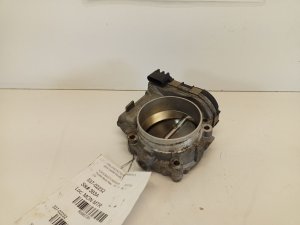
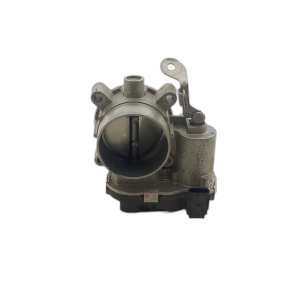
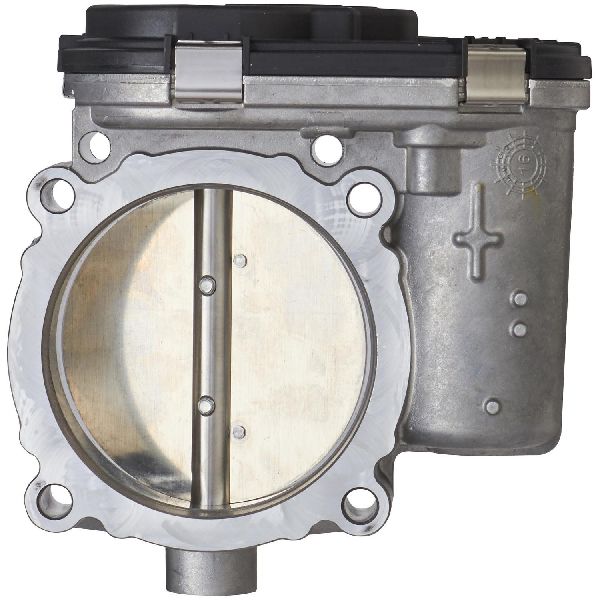
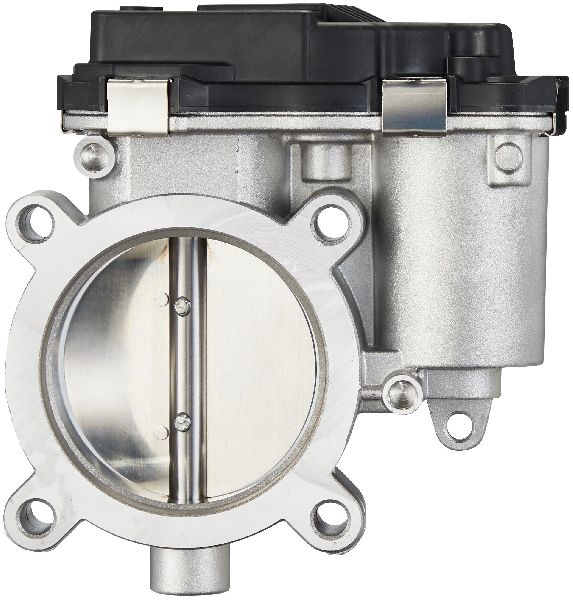
- Electronic Throttle Body Assembly
(OEM #4891735AC)— This is the most common cause of code P0123 on this vehicle, as the internal throttle position sensor fails and is not serviceable separately. Note: This part number has been superseded by 4891735AD.
Trusted brands: Mopar, Bosch, Hitachi, Dorman
OEM price range: $250-$400
Aftermarket price range: $150-$250
Related Codes That Often Appear With This One
- P0222 — P0222 is 'Throttle Position Sensor 'B' Circuit Low'. The throttle body uses two sensors for redundancy. A common failure mode is for one sensor to fail high (P0123) and the other to fail low (P0222) at the same time. Seeing them together almost guarantees the throttle body has failed internally.
- P2135 — This code means 'Throttle/Pedal Position Sensor/Switch 'A' / 'B' Voltage Correlation'. It sets when the PCM sees that the signals from the two throttle position sensors don't make sense together, which is a direct result of the failure causing P0123.
- P2172 — This code for 'High Airflow/Vacuum Leak Detected' can appear with TPS codes if the throttle body is not functioning correctly, as noted in TSBs for other platforms.
Technical Service Bulletins (TSBs) & Recalls
- While no TSB directly targets P0123 on the 2.4L 200, related bulletins show a pattern. TSB 18-045-16 REV. A was issued for other 2015 Chrysler models to fix false TPS codes via a software update. TSB 18-023-16 was released for '2.4L Powertrain Diagnostic and System Improvements' on the 2015 200.
Platform-Specific Known Issues
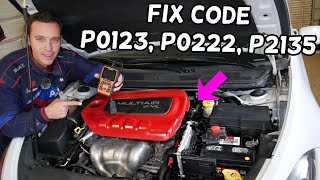
- The 2.4L Tigershark engine used in the 2015-2017 Chrysler 200 is known for a high rate of electronic throttle body failures. 🎬 Watch: How to fix codes P0123, P0222, and P2135 on your Chrysler 200
- This engine is also subject to a class-action lawsuit and warranty extension (XB1) for excessive oil consumption due to piston ring issues, which can cause other performance-related codes but is a separate issue from P0123.
Mechanic-Grade Diagnostic Values
- TPS 'A' (TPS1) Signal Voltage — expected: Approx. 0.5V - 0.9V at closed throttle (KOEO), sweeping smoothly to ~4.5V at wide-open throttle.. Failure: Voltage is stuck high, at or near 5.0V, and does not change when the accelerator pedal is pressed.
- 5-Volt Reference at Throttle Body Connector — expected: A steady 4.5V to 5.2V with Key On, Engine Off (KOEO).. Failure: Voltage is absent, intermittent, or significantly lower than 4.5V, indicating a wiring or PCM issue.
- Sensor Ground Circuit Resistance — expected: Less than 5.0 ohms between the ground pin at the throttle body connector and a known good chassis ground.. Failure: High resistance (or an open circuit) indicates a bad ground connection, which can cause incorrect sensor readings.
Scan Tool Commands That Help
- Witech or equivalent professional scanner: Learn ETC (Electronic Throttle Control) / Throttle Body Adaptation — This is a mandatory calibration procedure required after replacing the electronic throttle body. It teaches the PCM the new sensor's closed, open, and idle positions.
- Witech or equivalent professional scanner: Throttle Body Actuator/Motor Sweep Test — This bidirectional test commands the throttle plate to move through its full range of motion while monitoring sensor voltage. It can be used to confirm a sticky mechanism or erratic sensor readings before replacing the part.
Wiring & Ground Locations
- G905A — In the engine compartment, below the left (driver's side) headlight assembly.. This is a primary engine compartment ground distribution point. A loose or corroded connection here is a known cause of various erratic sensor faults and electrical issues on this platform and should be inspected when diagnosing any electronic code.
- Throttle Body 6-Pin Connector — Plugged directly into the electronic throttle body assembly.. This is the single connection point for all power, ground, and signal wires for both throttle position sensors and the actuator motor. Testing for 5V reference, ground, and signal voltage should be performed here. A vehicle-specific wiring diagram is required to confirm the exact pin numbers for the 2.4L Tigershark.
Real Owner Repair Stories
- YouTube - World Mechanics (2015 Dodge Dart with 2.4L MultiAir (Tigershark) engine) — Check Engine Light on with codes P0123 and P0222.
❌ Tried (didn't work) The video advises checking fuses and the electrical connector first, implying these are potential but less likely causes.
✅ What actually fixed it The problem was resolved by replacing the entire electronic throttle body assembly. After clearing the codes, the engine ran properly and the check engine light did not return.
OEM Part Supersession History
4891735AC→4891735AD— Standard part revision by the manufacturer, likely to improve reliability or address known failure modes.
Heads up: The original part 4891735AC is discontinued. 4891735AD is the correct replacement.
Model Year Variations Within This Range
- 2015-2017: No significant variations in the throttle body part, wiring, or common causes for P0123 have been identified within this specific model year range. The 2015 model year received more general complaints, particularly for the transmission, but the throttle body issue is common across all three years.
Diagnostic Flowchart
Other Known Issues on This Vehicle
Issues unrelated to this code that are worth knowing about as an owner of this generation:
- Excessive Oil Consumption 🔴 High — Widespread issue affecting a large percentage of 2.4L Tigershark engines. Owners report consuming a quart of oil every 1,000-2,000 miles. Can lead to engine stalling or catastrophic failure if oil level is not monitored frequently. (Ref: Warranty Extension 'XB1'; TSB 09-003-23; TSB 09-006-20 REV. B)
- ZF 9-Speed Transmission Problems 🔴 High — Very common, especially on 2015 models. Symptoms include harsh/lurching shifts (particularly 1-2 and 2-3), hesitation from a stop, and sudden, unexpected shifts to neutral. (Ref: NHTSA Recall 16V-529; Multiple software update TSBs were released.)
- Engine Stalls While Driving 🔴 High — Numerous owner complaints of the engine shutting off without warning while driving. This is often a consequence of the oil consumption issue (low oil pressure) or transmission faults.
- MultiAir Actuator ('Brick') Failure 🟠 Medium — The electro-hydraulic valve actuation system is highly sensitive to oil level and quality. Low oil levels from the known consumption issue can starve the actuator, leading to failure, rough running, and various P106x codes.
Used vs. New Parts: Buying Guide for This Vehicle
When a used part is the smart pick: Due to the extremely high failure rate of this electronic part across the entire Tigershark engine family, purchasing a used throttle body is NOT recommended. It should only be considered as a last-resort, temporary fix if the donor vehicle is verified to have very low mileage.
Donor-vehicle mileage cap: roughly under 30000 miles for the part to have meaningful remaining life.
What to inspect on the donor part:
- Verify the part number matches (or is the updated 4891735AD).
- Inspect the electrical connector pins for any signs of corrosion, moisture, or damage.
- Avoid parts from vehicles that had significant front-end collision damage.
- If possible, get the VIN of the donor car to check its mileage and history.
OEM-only on this vehicle (don't cheap out):
- While not strictly 'OEM-only', using a new OEM (Mopar) or a top-tier aftermarket brand (Bosch, Hitachi, Dorman) is strongly advised for the Electronic Throttle Body to avoid premature failure, which is common with cheaper, unbranded units.
Aftermarket brands forum-validated for this vehicle:
- Bosch
- Hitachi
- Dorman
Real Owner Stories
Aggregated from forums and TSBs cited above. Mileages and costs reflect what owners reported in those sources.
2015 Chrysler 200 2.4L
Symptoms: Check engine light on, Electronic Throttle Control (red lightning bolt) light on, and the vehicle entered 'limp mode' with severely reduced power.
What fixed it: Replacement of the entire electronic throttle body assembly followed by a throttle relearn procedure.
Source hint: 200forums.com discussions regarding common P0123 fixes and limp mode symptoms.
2015 Chrysler 200 2.4L
Symptoms: The engine would crank but fail to start; in other instances, it suffered from poor or no throttle response.
What fixed it: Replacing the faulty electronic throttle body assembly, as the internal electronics are a documented failure point on the Tigershark engine.
Source hint: YouTube videos from 'World Mechanics' and 'FIX Your Car' demonstrating P0123/P0222 diagnosis.
Related OBD-II Codes
Frequently Asked Questions
Is there a TSB for the P0123 code on my 2015 Chrysler 200 2.4L?
Can I fix the P0123 code by just replacing the sensor on the 2.4L Tigershark?
Do I need a professional scan tool to perform the throttle relearn after replacing the part?
Could my Chrysler 200's oil consumption issue be causing the P0123 code?
My car has a red lightning bolt symbol and won't accelerate. Is this related to P0123?
Could a short in another sensor cause a P0123 on this vehicle?
Helpful Videos

Used OEM Parts in Stock
New Aftermarket Parts Available


The information in this article is provided for general reference and educational purposes only. Vehicle specifications, procedures, and part compatibility can vary by production date, trim level, and region. Always consult your vehicle's factory service manual and verify part numbers before purchasing or performing repairs. Safety-critical components such as airbags, seat belts, and braking systems should be installed by a qualified professional.
- Chrysler 200:
- 🎬 Helpful Videos
- 🛍️ Shop This Part
- What's Unique About the 2015-2017 Chrysler 200
- Symptoms You May Notice
- Most Likely Causes
- Rare But Worth Checking
- Diagnosis Steps
- Parts You'll Likely Need
- Related Codes That Often Appear With This One
- Technical Service Bulletins (TSBs) & Recalls
- Platform-Specific Known Issues
- Mechanic-Grade Diagnostic Values
- Scan Tool Commands That Help
- Wiring & Ground Locations
- Real Owner Repair Stories
- OEM Part Supersession History
- Model Year Variations Within This Range
- Diagnostic Flowchart
- Other Known Issues on This Vehicle
- Used vs. New Parts: Buying Guide for This Vehicle
- Real Owner Stories
- 2015 Chrysler 200 2.4L
- 2015 Chrysler 200 2.4L
- Related OBD-II Codes
- Frequently Asked Questions
- 🎟️ Get 5% Off