

P0122 on 2003-2012 Saab 9-3: Throttle Position Sensor Low Voltage Causes and Fixes
On a 2003-2012 Saab 9-3, code P0122 is almost always caused by a failing electronic throttle body assembly. The car will enter 'limp-home' mode, severely limiting power. The fix is to replace the entire throttle body, as the sensor is integrated and not sold separately. Before replacement, a thorough check of the wiring harness for damage is crucial.
- P0122 on a 2003-2012 Saab 9-3 means the throttle body's internal position sensor has failed.
- The car will enter a 'limp-home mode' with very little power, which is a primary symptom.
- The fix is to replace the entire electronic throttle body assembly; the sensor cannot be replaced by itself.
- Before replacing the expensive throttle body, check the wiring harness for damage, as this can cause the same code.
- After replacement, a software adaptation using a Tech2 tool may be needed for the fix to be permanent.
- Ensure you purchase the correct throttle body part number for your vehicle's model year (2003-2006 vs 2007-2012).
What's Unique About the 2003-2012 Saab 9-3
On this generation of Saab 9-3 (YS3F), the throttle position sensor (TPS) is not a separate, replaceable part. It is integrated into the electronic throttle body assembly, a component often manufactured by Bosch. This means a simple sensor failure requires the replacement of the entire, more expensive throttle body unit. These cars are also well-known for entering a very restrictive 'limp-home mode' immediately when this fault is detected, making the issue impossible to ignore.
Symptoms You May Notice
- Vehicle enters 'limp-home' mode with drastically reduced power.
- Check Engine Light is on.
- Throttle body warning light may be illuminated (often a lightning bolt symbol).
- Cruise control will not function.
- Poor or hesitant acceleration.
- Rough or unstable idle.
- Engine may stall.
- Replacing only the accelerator pedal position sensor. While it is part of the throttle control system, P0122 specifically points to the sensor at the throttle body, not the pedal, on this vehicle.
- Assuming a simple cleaning will fix the electrical fault. While cleaning a dirty throttle body is good practice, it rarely resolves an internal electronic sensor failure that causes P0122.
Most Likely Causes
- Failed Throttle Body Assembly 🔴 High Probability The internal electronics of the integrated throttle position sensor are a common failure point on these Bosch electronic throttle bodies. The non-serviceable sensors wear out or fail, leading to voltage readings below the specified threshold.
How to confirm: After confirming wiring is intact, use a scan tool to monitor TPS voltage. If the voltage for Sensor 1 is stuck low (e.g., <0.28V) regardless of pedal input, the throttle body has failed. According to Saab's diagnostic help, the sum of voltage from sensor 1 and sensor 2 should equal 5V; a deviation indicates a fault.
Typical fix: Replace the entire throttle body assembly. A throttle body adaptation/relearn procedure with a capable scan tool (like a Tech2) is highly recommended after installation to ensure the ECM correctly recognizes the new part.
Est. part cost: $200-$500 - Wiring Harness or Connector Fault 🟡 Medium Probability The engine bay environment can cause wiring insulation to become brittle and connectors to corrode over time. The harness section near the throttle body is subject to heat and vibration.
How to confirm: Visually inspect the wiring harness leading to the throttle body for any signs of chafing, melting, or damage. Check the connector for corrosion, moisture, or backed-out pins. Use a multimeter to test for continuity, a 5V reference signal, and a good ground at the connector. Wiggling the harness while monitoring voltage can help identify intermittent shorts.
Typical fix: Repair the damaged section of the wiring harness or replace the connector pigtail. Ensure a solid, weatherproof repair.
Est. part cost: $15-$50 - Dirty Throttle Body ⚪ Low Probability Carbon and oil vapor buildup from the PCV system is common in any engine, but it's less likely to cause a specific low voltage code unless the buildup is so severe it prevents the throttle plate from returning to its base position.
How to confirm: Remove the intake hose and inspect the throttle plate and bore. If there is significant black buildup, it can cause the plate to stick slightly open or closed.
Typical fix: Clean the throttle body bore and plate thoroughly with a dedicated throttle body cleaner and a soft cloth. This is a good first step before replacing parts, but it is less likely to fix a specific low voltage electrical code like P0122 compared to a mechanical sticking code.
Est. part cost: $10-$20
Rare But Worth Checking
- Faulty Engine Control Module (ECM): This is very rare. The ECM should only be suspected after the throttle body and all related wiring have been definitively ruled out as the cause. A specialist would be needed to test and confirm an ECM fault.
Diagnosis Steps
- Connect an OBD-II scanner and confirm P0122 is the active code. Note any other accompanying codes like P0223.
- Using the scanner's live data function, monitor the voltage from 'Throttle Position Sensor 1'. It will likely be stuck below 0.28V. Also, monitor 'Throttle Position Sensor 2'. The sum of the two sensor voltages should be 5V.
- Perform a thorough visual inspection of the wiring harness and connector going to the throttle body. Look for any obvious signs of damage, chafing, melting, or corrosion. Unplug the connector and check for bent or corroded pins.
- With the key on, engine off, use a multimeter to verify a 5V reference signal and a good ground at the throttle body connector pins. Refer to a workshop manual for the correct pinout.
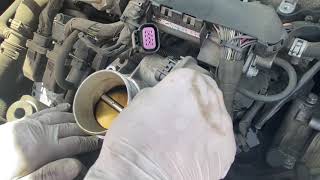
- If the wiring looks good, disconnect the intake boot and inspect the throttle body. If it is extremely dirty, clean it thoroughly with appropriate cleaner. 🎬 See how to clean the throttle body and reset limp mode.
- If the code persists after cleaning and wiring checks, the throttle body assembly is almost certainly faulty and needs to be replaced.
- Order a new throttle body assembly. Note the specific part number for your model year and engine.
- After replacing the throttle body, clear all codes. An adaptation procedure using a Saab-specific scan tool (like a Tech2) is strongly recommended for the ECM to learn the new part's parameters correctly. Failure to do so may result in the code returning or other running issues.
Parts You'll Likely Need
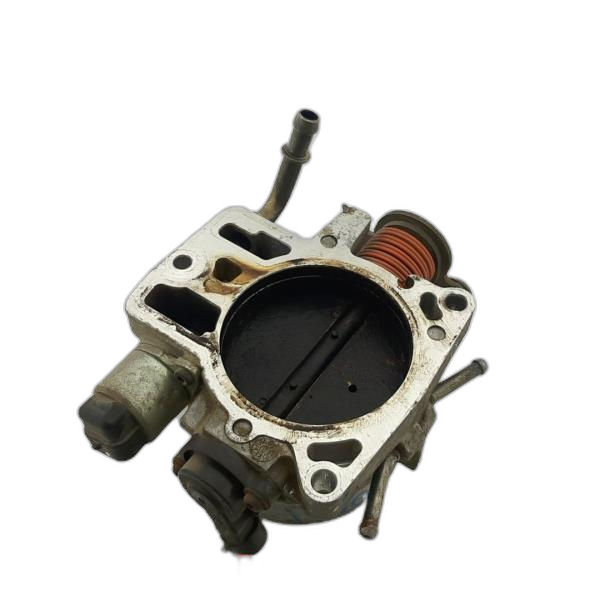
- Electronic Throttle Body Assembly
(OEM #93176028 (for 2003-2006 B207 models), 93189207 (for 2007-2012 B207 models))— This is the most common failure. The internal, non-serviceable throttle position sensor fails, requiring the replacement of the entire unit.
Trusted brands: Bosch, Pierburg, Genuine Saab/GM
OEM price range: $350-$550
Aftermarket price range: $200-$400
Related Codes That Often Appear With This One
- P0223 — This code indicates a high voltage fault on the second throttle position sensor (Sensor 2). It's common to see faults on both internal sensors when the throttle body's electronics fail. A YouTube video specifically documents a 2003 Aero with both P0122 and P0223, fixed by throttle body replacement. 🎬 Watch this 2003 Aero throttle body replacement for P0122 and P0223.
- P1230 — This is a Saab-specific code for 'Throttle Valve / Pedal Position Sensor Signal Not In Range', which is another indicator of a general throttle body failure.
- P1231 — Another Saab-specific code, 'Throttle Valve Control Signal Not In Range', pointing towards the same root cause within the throttle body assembly.
Platform-Specific Known Issues
- A known issue is that replacing the throttle body can sometimes still result in codes until an ECM software update is performed by a dealer or specialist with a Tech2 tool. This update helps the ECM work correctly with the tolerances of the new throttle body.
- The 2003-2006 models with the B207 engine use a different throttle body (e.g., part number 93176028) than the 2007-2012 models (e.g., 93189207). It is crucial to verify the correct part for the specific vehicle year.
Mechanic-Grade Diagnostic Values
- Throttle Position Sensor 1 Voltage (Live Data) — expected: Approx. 0.5V - 1.0V at idle, smoothly increasing to 4.0V - 5.0V at wide-open throttle.. Failure: Voltage is stuck below 0.28V regardless of throttle position.
- Sum of TPS Sensor 1 and Sensor 2 Voltages — expected: The sum of the two sensor voltages should equal 5V with the ignition on.. Failure: A significant deviation from 5V indicates an internal fault in the throttle body assembly.
- 5V Reference Voltage at Connector — expected: 4.8V - 5.2V between the 5V reference pin and the ground pin at the throttle body connector with key on, engine off.. Failure: Voltage below 4.8V indicates a problem with the ECM or wiring, not necessarily the throttle body itself.
- Ground Circuit Resistance at Connector — expected: Less than 5 Ω between the low reference (ground) circuit pin at the connector and a known good chassis ground.. Failure: Resistance higher than 5 Ω indicates a poor ground connection which can cause low voltage readings.
Scan Tool Commands That Help
- Saab Tech2: Throttle Body Adaptation/Calibration — This function should be used after replacing the throttle body assembly. It forces the ECM to learn the closed, open, and intermediate positions of the new throttle plate, ensuring accurate readings and preventing the code from returning.
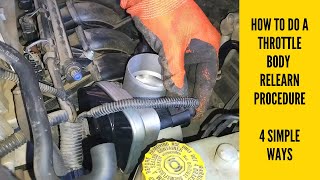
- Manual Relearn (No Scan Tool): Throttle Body Relearn Procedure — If a Tech2 is unavailable after replacing the throttle body or disconnecting the battery. The procedure typically involves turning the key to 'ON', waiting, pressing the accelerator pedal to the floor and releasing it 5 times, waiting again, and then starting the engine to let it idle and adapt. While less reliable than a Tech2, it can often work.
Wiring & Ground Locations
- G7 — On B207 engines, this ground point is located on the engine control module's top right attachment lug or on a support bracket under the intake manifold.. The engine harness, which includes the throttle body wiring, is grounded via this point. A loose or corroded G7 ground can cause intermittent and difficult-to-diagnose low voltage issues across multiple engine sensors, including the TPS.
- Throttle Body Connector (Pre-2007) — The electrical connector on the throttle body for 2003-2006 models.. This is an 8-pin connector. A common point of failure is corrosion or backed-out pins within this connector, causing a low or open circuit for TPS sensor 1.
- Throttle Body Connector (2007+) — The electrical connector on the throttle body for 2007-2012 models.. Saab changed to a 6-pin connector starting in 2007. Pins 2 and 8 were eliminated as redundant. It's critical to use the correct pigtail or repair connector for the specific model year.
Real Owner Repair Stories
- Reddit r/saab user (2009 Saab 9-3 2.0T) — Check engine light on, 'limited performance' message, and weak acceleration.
❌ Tried (didn't work) A mechanic diagnosed a faulty throttle position sensor and replaced it. The issue returned after a few weeks.
✅ What actually fixed it The user was advised by the mechanic that the next steps would be to replace either the entire throttle body assembly or the ECU, with the throttle body being the far more likely culprit. - Reddit r/saab user (2003 9-3 SS) — Throttle body error codes and frequent limp mode.
❌ Tried (didn't work) Initial thoughts were to replace the throttle body.
✅ What actually fixed it The owner thoroughly cleaned the throttle body itself AND the large electrical connector under the battery box. After cleaning both, the codes and limp mode issues were resolved without replacing any parts.
OEM Part Supersession History
12791257→93176028— Standard part number update/revision by the manufacturer.
Heads up: These parts are for the 2003-2006 B207 engine models and are interchangeable. They are not compatible with 2007+ models.
Model Year Variations Within This Range
- 2003-2006: Uses an 8-pin electrical connector on the throttle body. The correct part number is typically 93176028 (or its predecessor 12791257).
- 2007-2012: Uses a 6-pin electrical connector on the throttle body. The correct part number is typically 93189207. The wiring was simplified, with two redundant wires being removed. The parts are not interchangeable between the two year ranges due to the different connectors.
- 2006-2009 (V6 2.8T): The 2.8L V6 (LP9) engine uses a different throttle body assembly (e.g., Bosch P/N 0280750168) than the 4-cylinder models. While it can suffer from the same P0122 failure mode, the part itself is not interchangeable.
Diagnostic Flowchart
Other Known Issues on This Vehicle
Issues unrelated to this code that are worth knowing about as an owner of this generation:
- Column Integrated Module (CIM) Failure 🔴 High — Common failure. Symptoms include non-working steering wheel buttons, intermittent horn, airbag light, and key recognition/starting issues. (Ref: No specific recall, but a widely documented problem. Repair involves replacing the unit and programming with a Tech2.)
- Premature Intake Valve Wear (B207 engines, esp. 2007-2009) 🔴 High — Affects a subset of 2.0T engines, typically manifesting as cold start misfires and loss of compression. Caused by soft valve material. (Ref: Saab issued a warranty extension/service campaign for some VINs. The fix is a cylinder head replacement with updated valves.)
- Convertible Top Hydraulic Leaks/Failures 🟠 Medium — Common on convertible models. Hydraulic lines can chafe and leak, or the front bow latch cylinder fails, causing fluid to leak into the cabin near the sun visor.
- Cracked Intake Air Delivery Pipe 🟡 Low — The plastic/rubber intake pipe between the MAF sensor and the turbo can crack, causing unmetered air to enter and trigger lean codes (P0171) and rough running.
- PCV System Valve/Hose Failures 🟠 Medium — The check valves and hoses in the positive crankcase ventilation (PCV) system can fail, leading to oil consumption, smoking, and internal boost leaks. (Ref: Saab released updated PCV kits (TSB 210-2418) to address oil leakage issues related to inadequate crankcase ventilation.)
Used vs. New Parts: Buying Guide for This Vehicle
When a used part is the smart pick: A used throttle body can be a cost-effective option if sourced from a low-mileage, reputable salvage yard. Given the high failure rate, it's a gamble, but can save hundreds of dollars. It makes most sense for a DIY repair where the labor cost is zero if the part fails prematurely.
Donor-vehicle mileage cap: roughly under 80000 miles for the part to have meaningful remaining life.
What to inspect on the donor part:
- Verify the part number on the used unit matches your original exactly (93176028 for '03-'06, 93189207 for '07+).
- Inspect the electrical connector pins for any signs of corrosion, bending, or damage.
- Look at the throttle plate and bore; excessive black gunk may indicate a poorly maintained engine.
- Ask for the donor vehicle's mileage if possible; lower is always better.
- Check the seller's return policy. Many eBay sellers of used parts offer a 30-day warranty.
Aftermarket brands forum-validated for this vehicle:
- Bosch (Often the Original Equipment Manufacturer)
- Pierburg (A reputable OEM supplier)
- Hella (Known for remanufactured units with good warranties)
Brands owners have reported issues with on this vehicle:
- Unbranded, no-name units from online marketplaces can be a significant risk. While some may work, forum discussions often highlight a higher failure rate and poor quality control compared to established brands.
Real Owner Stories
Aggregated from forums and TSBs cited above. Mileages and costs reflect what owners reported in those sources.
2003 Saab 9-3 Aero
Symptoms: The car was suffering from both P0122 and P0223 codes.
What fixed it: The ultimate fix was a complete throttle body replacement.
Source hint: YouTube - 'Saab 9-3 Aero 2003 Throttlebody replacement P0122 P0223 PIERBURG PART FAILED?!'
2003-2012 Saab 9-3
Symptoms: The car entered limp-home mode, which was caused by P0122 and related throttle codes.
What fixed it: Replacement of the complete throttle body assembly, followed by a necessary post-replacement adaptation using a Tech2 scan tool.
Source hint: Saabcentral.com / Saabscene.com
Related OBD-II Codes
Frequently Asked Questions
My 2005 Saab 9-3 just went into 'limp-home mode.' Is this a typical symptom for code P0122?
I replaced the throttle body, but the P0122 code came back. What did I miss?
Can I just clean the throttle body to fix a P0122 code?
Do I need a special tool to fix this myself?
I have a 2006 9-3. Can I use a throttle body from a 2008 model?
My steering wheel buttons stopped working around the same time I got this engine code. Are the problems related?
Helpful Videos


We Have This Part in Stock



The information in this article is provided for general reference and educational purposes only. Vehicle specifications, procedures, and part compatibility can vary by production date, trim level, and region. Always consult your vehicle's factory service manual and verify part numbers before purchasing or performing repairs. Safety-critical components such as airbags, seat belts, and braking systems should be installed by a qualified professional.
- Saab 9-3:
- 🎬 Helpful Videos
- 🛍️ Shop This Part
- What's Unique About the 2003-2012 Saab 9-3
- Symptoms You May Notice
- Most Likely Causes
- Rare But Worth Checking
- Diagnosis Steps
- Parts You'll Likely Need
- Related Codes That Often Appear With This One
- Platform-Specific Known Issues
- Mechanic-Grade Diagnostic Values
- Scan Tool Commands That Help
- Wiring & Ground Locations
- Real Owner Repair Stories
- OEM Part Supersession History
- Model Year Variations Within This Range
- Diagnostic Flowchart
- Other Known Issues on This Vehicle
- Used vs. New Parts: Buying Guide for This Vehicle
- Real Owner Stories
- 2003 Saab 9-3 Aero
- 2003-2012 Saab 9-3
- Related OBD-II Codes
- Frequently Asked Questions
- 🎟️ Get 5% Off