

P0122 on 2011-2023 Dodge Challenger 3.6L: Throttle Position Sensor Circuit Low Causes and Fixes
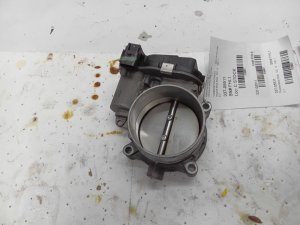
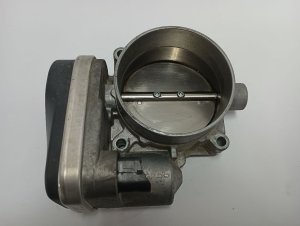
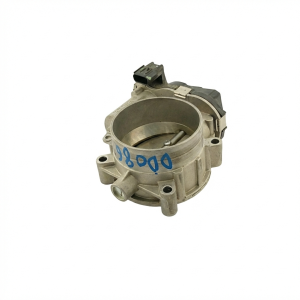
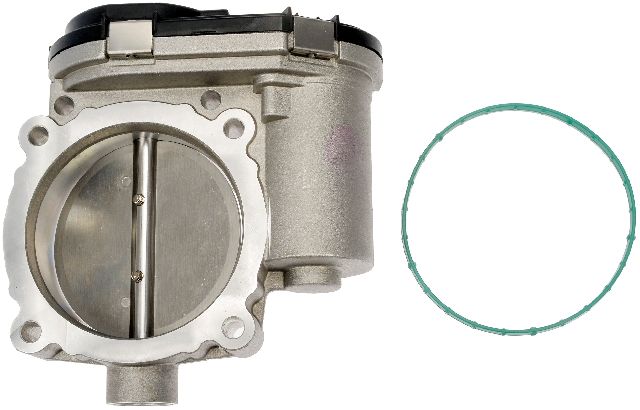
On the 3.6L Challenger, P0122 almost always means the entire electronic throttle body assembly has failed. The sensor is integrated and not sold separately. Before replacing it (approx. $150-$300 for the part), check for any available PCM software updates with a dealer, as this can sometimes be the fix.
- P0122 on a 3.6L Challenger almost always points to a faulty electronic throttle body.
- The throttle position sensor (TPS) is built into the throttle body; you cannot replace just the sensor.
- Before replacing any parts, check with a dealer if your vehicle needs a PCM software update, as this is a known and cheaper fix.
- Symptoms are serious and include 'limp mode,' which makes the car unsafe to drive in traffic.
- After replacing the throttle body, a simple 'relearn' procedure is required.
What's Unique About the 2011-2023 Dodge Challenger
On the 3.6L Pentastar V6 engine in the Dodge Challenger, the throttle position sensor (TPS) is not a separate, replaceable part. It is permanently integrated into the electronic throttle body assembly. This means that a sensor failure requires the replacement of the entire throttle body unit. While this is the most common hardware failure, Chrysler has also issued several Technical Service Bulletins (TSBs) recommending a PCM software update to fix overly sensitive diagnostics that can falsely trigger this code.
Generation note: The 2011-2023 range covers the third generation (LC) of the Dodge Challenger. This generation received a significant facelift for the 2015 model year, including interior and some powertrain updates. However, the P0122 code, its causes, and the primary fix (throttle body replacement) are consistent across these years for the 3.6L Pentastar V6 engine.
Symptoms You May Notice
- Check Engine Light illuminated
- Electronic Throttle Control (ETC) 'lightning bolt' warning light on the dash
- Vehicle enters a low-power 'limp mode' with severely limited acceleration
- Engine stalling or having a rough, low, or high idle
- Hesitation, surging, or stumbling during acceleration
- Unresponsive or delayed throttle response
- Replacing the accelerator pedal position (APP) sensor. The P0122 code specifically points to the sensor circuit at the throttle body, not the pedal.
- Cleaning the throttle body. While a dirty throttle body can cause idle problems, it will not cause an electrical low voltage circuit code like P0122.
Most Likely Causes
- Failed Electronic Throttle Body Assembly 🔴 High Probability The non-serviceable throttle position sensor is integrated into the assembly and is a well-documented common failure point on the 3.6L Pentastar engine. Owners frequently report sudden limp mode activation, which is resolved by replacing the entire unit.
How to confirm: With a scan tool, observe the live data for TPS voltage. If it reads below ~0.2V and does not change smoothly as the pedal is pressed (with key on, engine off), the sensor within the throttle body has failed. The presence of codes P0123, P0222, or P0223 alongside P0122 strongly indicates throttle body failure.
Typical fix: Replace the entire electronic throttle body assembly. A throttle relearn procedure is required after installation.
Est. part cost: $150-$300 - Outdated PCM Software 🟡 Medium Probability Dodge released multiple TSBs for these vehicles to update the PCM software, which had overly sensitive diagnostic parameters that could falsely trigger a P0122 code.
How to confirm: A Dodge dealership or a qualified shop with access to OEM software can check if your vehicle's VIN has a pending software update related to TSBs like #18-045-16 REV. A. This TSB specifically lists P0122, P0123, P0222, and P0223 as codes addressed by the flash.
Typical fix: Reprogram or 'flash' the Powertrain Control Module (PCM) with the latest software version. This must be done before replacing hardware.
Est. part cost: $0-$200 - Wiring or Connector Issue ⚪ Low Probability The engine harness connector at the throttle body is exposed to heat and vibration, which can lead to corrosion, pushed-out pins, or damaged wires over time.
How to confirm: Visually inspect the 6-pin connector at the throttle body for corrosion, damage, or loose pins. Use a multimeter to test for a stable 5V reference, a good ground, and for shorts or opens on the signal wire.
Typical fix: Repair the damaged section of the wiring harness or replace the connector pigtail if the housing or pins are damaged.
Est. part cost: $20-$80
Rare But Worth Checking
- Leaking Oil Filter / Cooler Housing: This is a known issue on the 3.6L Pentastar. Oil leaks from the housing in the engine valley and can saturate the wiring harness below. This can short the 5V reference circuit shared by the TPS, causing P0122 and often other codes like P0642. If you see oil pooled in the engine valley, this is a likely culprit. 🎬 See how to fix a leaking Pentastar oil cooler housing
- Faulty Powertrain Control Module (PCM): This is very rare, but the PCM can fail internally. This should only be considered after all other possibilities, including wiring and software, have been thoroughly ruled out.
Diagnosis Steps
- Check for TSBs: Contact a Dodge dealer with your VIN to see if there are any open recalls or software updates related to the PCM or throttle system (e.g., TSB 18-045-16 REV. A). If an update is available, have it performed first.
- Inspect the Wiring: Carefully inspect the wiring harness and the 6-pin electrical connector at the throttle body. Look for any signs of damage, corrosion, melting, or loose pins.
- Test the Circuit: Using a multimeter with the key on and engine off, back-probe the connector to verify a stable 5-volt reference and a solid ground. Then, check the signal wire voltage; if it's stuck below 0.2 volts, the issue is confirmed.
- Check for Related Leaks: Inspect the engine valley (between the cylinder heads) for signs of an oil leak from the oil filter/cooler housing, as this is a known cause of wiring shorts on this engine.
- Replace the Throttle Body: If the software is up to date and the wiring is confirmed to be good, the throttle body assembly itself has failed and must be replaced.
- Perform Relearn Procedure: After installing the new throttle body, a throttle position relearn procedure is necessary. This can often be done without a scan tool by turning the key to 'ON' (without starting), slowly pressing the gas pedal to the floor, slowly releasing it, and then turning the key off for 10 seconds. 🎬 Watch: How to perform the throttle relearn procedure
Parts You'll Likely Need
- Electronic Throttle Body Assembly
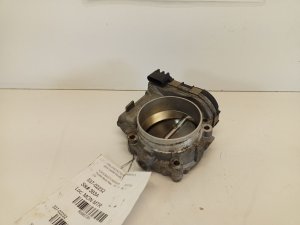
(OEM #5184349AF (supersedes 5184349AB, 5184349AC, 5184349AD, 5184349AE))— This is the most common fix, as the throttle position sensor that causes code P0122 is integrated into this assembly and cannot be replaced separately.
Trusted brands: Mopar (OEM), Bosch, Standard Motor Products (SMP), Cardone, BBK Performance (offers larger 78mm bore for increased airflow)
OEM price range: $250-$450
Aftermarket price range: $150-$250
Related Codes That Often Appear With This One
- P0222 — This is the 'low input' code for the secondary throttle position sensor ('B' circuit). Seeing P0122 and P0222 together strongly points to a failure of the entire throttle body assembly.
- P0123 — This is the 'high input' code for the same sensor ('A' circuit). If the sensor is failing, it can send erratic signals, causing either code to appear.
- U1424 — This code for 'Implausible Engine Torque Signal' is mentioned in TSBs alongside P0122. A faulty throttle position signal provides conflicting data for torque calculations, and a PCM software update often resolves both.
Technical Service Bulletins (TSBs) & Recalls
- TSB #18-062-17: Recommends a PCM software update for 2016 models to improve diagnostic logic for P0122, P0123, P0222, P0223, and U1424.
- TSB #18-045-16 REV. A: Involves reprogramming the PCM for 2015 models and addresses a list of DTCs including P0122, P0123, P0222, and P0223, indicating a software fix for throttle body circuit codes.
- TSB #09-002-14 REV. B: Related to the left cylinder head failure on 2011-2013 models, which is a separate major issue but part of the overall platform history.
Platform-Specific Known Issues
- The 3.6L Pentastar engine is known for failure of the integrated throttle position sensor within the throttle body assembly.
- Several TSBs were issued by Dodge to update PCM software that was too sensitive and could incorrectly set a P0122 code.
- A leaking oil filter/cooler housing, a common issue on this engine, can cause oil to saturate the wiring harness below, leading to a short on the 5V reference circuit that can trigger P0122.
Mechanic-Grade Diagnostic Values
- TPS1 Signal Voltage (Scan Tool) — expected: Sweeps smoothly from ~0.5V-0.7V (closed throttle) to ~4.3V-4.7V (wide-open throttle).. Failure: Voltage is stuck below 0.2V, does not change, or has dead spots/jumps when the pedal is pressed.
- TPS2 Signal Voltage (Scan Tool) — expected: Mirrors TPS1 but often sweeps in the opposite direction (e.g., from ~4.3V at closed throttle down to ~0.7V at wide-open throttle).. Failure: Voltage does not mirror TPS1, is stuck, or is erratic. Often sets P0222 or P0223.
- 5-Volt Reference at Throttle Body Connector (Pin 4) — expected: 4.5V to 5.2V with Key On, Engine Off.. Failure: Voltage is significantly below 4.5V or absent, indicating a wiring issue (short to ground) or a PCM fault.
- Sensor Ground Circuit Resistance (Pin 3 to Chassis Ground) — expected: Less than 5.0 ohms.. Failure: High resistance indicates a poor ground connection, which can cause incorrect voltage readings.
Scan Tool Commands That Help
- wiTECH (Chrysler/Dodge/Jeep Dealer Tool): ETC RELEARN — This function is required after replacing the throttle body assembly to calibrate the new part with the PCM. It electronically performs the throttle relearn procedure.
- wiTECH or equivalent professional scan tool: ETC Throttle Follower Test — This bidirectional test allows the technician to command the throttle plate to open and close while observing the TPS1 and TPS2 voltage readings on the scan tool, confirming if the sensor signals are smooth and accurate.
Wiring & Ground Locations
- Throttle Body Connector (6-pin) — Plugs directly into the electronic throttle body, located at the top rear of the 3.6L engine where the air intake duct connects.. This is the single point of failure for all TPS signals, power, and ground. Corrosion or damage to pins 2 (TPS1 Signal), 3 (Sensor Ground), or 4 (5V Reference) will directly cause P0122.
- Pinout: Pin 2 — On the 6-pin throttle body connector.. This is the TPS 1 Signal wire (Circuit K22). A short to ground on this wire is the direct electrical cause for a P0122 code.
- Pinout: Pin 3 — On the 6-pin throttle body connector.. This is the Sensor Ground wire (Circuit K922). An open or high resistance on this ground circuit will cause the signal voltage to be inaccurate.
- Pinout: Pin 4 — On the 6-pin throttle body connector.. This is the 5V Reference wire. If this voltage is low due to a short elsewhere, it will cause the TPS signal to be low.
- G104 — A primary engine ground point located on the right side of the engine block.. A loose or corroded main engine ground can create an unstable ground reference for all engine sensors, including the TPS, leading to erratic voltage readings that could trigger a false P0122.
Real Owner Repair Stories
- ChallengerTalk Forum (2013 Dodge Challenger SXT (3.6L)) — Car went into limp mode with ETC light flashing and Check Engine light on. Codes P0122 and P0222 were present.
❌ Tried (didn't work) Cleaning the throttle body., Performing a manual throttle relearn procedure.
✅ What actually fixed it Replacement of the entire electronic throttle body assembly. After replacement and a relearn procedure, both codes were cleared and did not return. - Wrangler Forum (cross-platform 3.6L Pentastar issue) (2014 Jeep Wrangler (3.6L)) — P0122 code present along with P0642 (Sensor Reference Voltage 'A' Circuit Low). Vehicle in limp mode.
❌ Tried (didn't work) Replacing the throttle body assembly did not fix the issue.
✅ What actually fixed it The cause was a known leaking oil filter/cooler housing assembly. Oil dripped onto the engine wiring harness below, saturating it and causing the 5V reference wire to short to ground. Repairing the oil leak and cleaning/repairing the affected wiring harness resolved both codes.
OEM Part Supersession History
5184349AB, 5184349AC, 5184349AD, 5184349AE→5184349AF— Standard part evolution for improved reliability or manufacturing changes.
Heads up: All previous versions are superseded by 5184349AF. When replacing, it is critical to use the latest 'AF' revision to ensure you have the most updated and reliable version of the part.
Diagnostic Flowchart
Other Known Issues on This Vehicle
Issues unrelated to this code that are worth knowing about as an owner of this generation:
- Rocker Arm Bearing Failure ('Pentastar Tick') 🔴 High — Common across all years, but particularly noted in earlier models (2011-2016). Can occur at various mileages, often starting as a faint tick that worsens over time. (Ref: No official recall, but the subject of multiple class-action lawsuits.)
- Cracked Oil Filter / Cooler Housing Assembly 🔴 High — Extremely common, especially on models 2014 and newer. The plastic housing is prone to cracking from heat cycles, often leading to significant oil leaks into the engine valley.
- Left Cylinder Head Failure (Early Models) 🔴 High — Primarily affects 2011-2013 models. Caused misfires and check engine lights. The issue was traced to valve guide and seat wear. (Ref: Chrysler issued an extended warranty (10 years/150,000 miles) under code X56 and TSB 09-002-14.)
- Alternator Failure 🟠 Medium — A recall was issued for some 2014 models with the 160 amp alternator, which could suddenly fail. However, alternator issues can occur on other years as well. (Ref: Recall P60 (NHTSA 14V-634))
Used vs. New Parts: Buying Guide for This Vehicle
When a used part is the smart pick: A used throttle body is a risky choice. Because the failure is electronic and internal to the sealed sensor unit, there is no way to visually inspect a used part for remaining life. The labor to replace it is low, making the potential savings from a used part not worth the risk of it failing again shortly after installation.
Donor-vehicle mileage cap: roughly under 40000 miles for the part to have meaningful remaining life.
What to inspect on the donor part:
- Verify the part number is the latest revision (5184349AF).
- Inspect the electrical connector pins for any signs of corrosion, moisture, or damage.
- Ensure the throttle blade moves freely without binding (though this does not test the electronics).
- Obtain a part from a vehicle with a documented low mileage and no front-end collision damage.
OEM-only on this vehicle (don't cheap out):
- Electronic Throttle Body Assembly
Aftermarket brands forum-validated for this vehicle:
- Bosch (Often the OEM supplier)
- Mopar (OEM)
- BBK Performance (for users seeking a larger, performance-oriented throttle body)
Brands owners have reported issues with on this vehicle:
- Unnamed, no-brand parts from online marketplaces are a significant gamble and are frequently reported to fail prematurely or be dead-on-arrival.
Real Owner Stories
Aggregated from forums and TSBs cited above. Mileages and costs reflect what owners reported in those sources.
2011-2023 Dodge Challenger 3.6L
Symptoms: The owner experienced P0122 and P0222 codes, which caused the vehicle to enter limp mode.
What fixed it: Replacing the electronic throttle body assembly.
Source hint: https://www.challengerforumz.com/threads/p0122-and-p0222-codes-help.126505/
2011-2023 Dodge Challenger 3.6L
Symptoms: The owner reported the P0122 code accompanied by the Electronic Throttle Control (ETC) 'lightning bolt' light and the car entering limp mode.
What fixed it: Replacement of the throttle body, which the community confirmed as the standard fix.
Source hint: https://www.challengertalk.com/threads/p0122-throttle-pedal-position-sensor-switch-a-circuit-low-input.693176/
Related OBD-II Codes
Frequently Asked Questions
Is there a software update for my 2015 Dodge Challenger to fix the P0122 code?
Can I fix the Throttle Position Sensor (TPS) on my 3.6L Pentastar without replacing the whole throttle body?
Does my 2016 Challenger have a specific TSB for throttle circuit codes?
How do I perform a throttle relearn on my Challenger after replacing the part?
Could an oil leak cause my P0122 code?
What does the 'lightning bolt' light on my dash mean alongside P0122?
Helpful Videos
Used OEM Parts in Stock
New Aftermarket Parts Available


The information in this article is provided for general reference and educational purposes only. Vehicle specifications, procedures, and part compatibility can vary by production date, trim level, and region. Always consult your vehicle's factory service manual and verify part numbers before purchasing or performing repairs. Safety-critical components such as airbags, seat belts, and braking systems should be installed by a qualified professional.
- Dodge Challenger:
- 🎬 Helpful Videos
- 🛍️ Shop This Part
- What's Unique About the 2011-2023 Dodge Challenger
- Symptoms You May Notice
- Most Likely Causes
- Rare But Worth Checking
- Diagnosis Steps
- Parts You'll Likely Need
- Related Codes That Often Appear With This One
- Technical Service Bulletins (TSBs) & Recalls
- Platform-Specific Known Issues
- Mechanic-Grade Diagnostic Values
- Scan Tool Commands That Help
- Wiring & Ground Locations
- Real Owner Repair Stories
- OEM Part Supersession History
- Diagnostic Flowchart
- Other Known Issues on This Vehicle
- Used vs. New Parts: Buying Guide for This Vehicle
- Real Owner Stories
- 2011-2023 Dodge Challenger 3.6L
- 2011-2023 Dodge Challenger 3.6L
- Related OBD-II Codes
- Frequently Asked Questions
- 🎟️ Get 5% Off