

P0122 on 2010-2017 Chevrolet Equinox 2.4L: Throttle Position Sensor Low Input Causes and Fixes
On a 2010-2017 Equinox with the 2.4L engine, code P0122 almost always means the entire electronic throttle body assembly has failed. This triggers the 'Reduced Engine Power' warning. The fix is to replace the throttle body, which costs around $100-$250 for the part and is a common DIY repair. A throttle relearn procedure is required after replacement.
- P0122 on a 2.4L Equinox almost always points to a failed electronic throttle body, not the gas pedal sensor.
- The primary symptom is the 'Reduced Engine Power' warning, which makes the vehicle unsafe for normal driving.
- The throttle position sensors are integrated into the throttle body and cannot be replaced separately.
- Replacing the throttle body is a DIY-friendly job that takes about an hour.
- A throttle relearn procedure is necessary after replacement to ensure proper idle and performance.
What's Unique About the 2010-2017 Chevrolet Equinox
The 2.4L Ecotec engine in this generation of Equinox is well-known for throttle body issues. The key thing to understand is that the two throttle position sensors are built directly into the throttle body and are not designed to be serviced or replaced separately. While P0122 is a generic code, on this specific platform, it almost always points directly to an internal electronic failure of the throttle body assembly itself, not a wiring or computer issue. This failure is so common that most owners will experience the 'Reduced Engine Power' message at some point because of it.
Symptoms You May Notice
- "Reduced Engine Power" message on the dashboard.
- "Service StabiliTrak" message appearing, often simultaneously with the reduced power message.
- Check Engine Light is on.
- Vehicle has very limited acceleration, sometimes unable to exceed 15-20 mph.
- Hesitation or stumbling when trying to accelerate.
- Rough, low, or erratic idle.
- Engine may stall unexpectedly at low speeds or at a stop.
- Hard starting engine.
- Replacing the Accelerator Pedal Position (APP) sensor. The APP sensor is located at the gas pedal, not on the engine. While it can cause similar symptoms, P0122 specifically points to the Throttle Position (TP) sensor circuit at the engine's throttle body.
- Cleaning a dirty throttle body. While cleaning a throttle body can resolve some idle issues or a sticking throttle plate, it will not fix an internal electronic failure of the TPS sensor, which is the root cause of P0122.
Most Likely Causes
- Failed Throttle Body Assembly 🔴 High Probability The electronic throttle body used on the 2.4L Ecotec engine has a high rate of internal failure. The integrated, non-serviceable throttle position sensors wear out or the internal electronics fail, causing incorrect voltage signals. This is the most common cause for P0122 by a wide margin.
How to confirm: Using a scan tool, observe the live data for 'TP Sensor 1 Voltage'. If the voltage is stuck below 0.3V and does not change when the accelerator is pressed (with the key on, engine off), the sensor inside the throttle body has failed. The two sensor voltages should move in opposite directions (one increasing, one decreasing) as the throttle is opened; a failure will disrupt this pattern.
Typical fix: Replace the entire throttle body assembly with a new gasket. A throttle relearn procedure is required after installation.
Est. part cost: $100-$270 - Wiring Harness or Connector Issue ⚪ Low Probability While less common than throttle body failure, GM platforms of this era can experience issues with wiring, including corrosion in connectors or chafing of the harness.
How to confirm: Visually inspect the throttle body connector for corrosion, moisture, or pushed-out pins. With the connector unplugged, check for 5V reference and a good ground on the appropriate pins. Wiggle the harness while watching live data on a scan tool to see if the voltage reading is erratic, which would indicate an intermittent connection.
Typical fix: Repair the damaged section of the wiring harness or clean/replace the connector pigtail. Applying dielectric grease can help prevent future corrosion.
Est. part cost: $15-$50 - Faulty Engine Control Module (ECM) ⚪ Low Probability
How to confirm: This should only be considered after the throttle body and all related wiring have been tested and confirmed to be in good working order. An ECM failure is rare and requires professional-level diagnostics to confirm.
Typical fix: Replace and reprogram the Engine Control Module.
Est. part cost: $300-$800
Diagnosis Steps
- Connect an OBD-II scanner and confirm P0122 is present. Note any other codes, especially P2135, P0222, or P0223.
- With the key on and engine off, use the scanner to monitor live data for 'TP Sensor 1 Voltage' and 'TP Sensor 2 Voltage'.
- At closed throttle, the reading for TP Sensor 1 should be around 0.3-0.5 volts. If it is stuck below 0.3V, the sensor or circuit is faulty.
- Slowly press the accelerator pedal to the floor. The voltage for Sensor 1 should increase smoothly to over 4.0 volts, while Sensor 2's voltage decreases. If the voltage for Sensor 1 is stuck low, jumps erratically, or has dead spots, the throttle body is almost certainly bad.
- Turn the ignition off and disconnect the throttle body electrical connector. Inspect the pins and terminals for corrosion, moisture, or damage.
- If the connector looks good, perform a wiggle test on the harness while a helper watches the live data to check for intermittent connections.
- If the wiring and connector are confirmed to be good, the failure is internal to the throttle body assembly.
- Replace the throttle body assembly and gasket.
- After replacement, perform a throttle relearn procedure. A common manual method is to start the engine and let it idle in Park for 3 minutes, turn the engine off for 60 seconds, then restart and idle for another 3 minutes. Clear all codes and test drive.
Parts You'll Likely Need
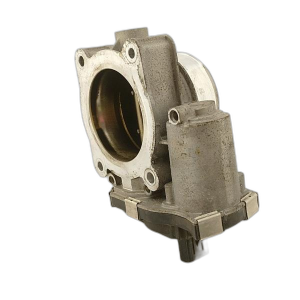
- Electronic Throttle Body Assembly
(OEM #12631186, 12694871)— This is the primary failure point for code P0122 on this vehicle, as the internal throttle position sensors are a known high-failure item and are not sold separately. Part number 12631186 has been superseded by 12694871.
Trusted brands: ACDelco, GM Genuine, Hitachi, Dorman
OEM price range: $200-$270
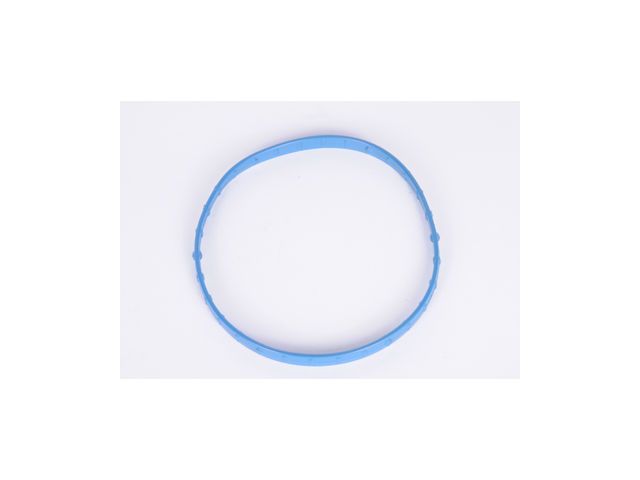
Aftermarket price range: $100-$200 - Throttle Body Gasket — A new gasket is required to ensure a proper air-tight seal when replacing the throttle body. Some new throttle bodies may include one, but it should be confirmed before starting the repair.
Trusted brands: Fel-Pro, Mahle, ACDelco
OEM price range: $5-$15
Aftermarket price range: $3-$10
Related Codes That Often Appear With This One
- P2135 — This code for 'Throttle/Pedal Position Sensor/Switch 'A' / 'B' Voltage Correlation' is extremely common with P0122. It sets when the ECM sees that the two internal TPS signals don't match, which is a direct result of one of them failing and sending a low voltage signal.
- P0222 — This is the 'Circuit Low' code for the secondary throttle position sensor (Sensor 'B'). If both P0122 and P0222 appear together, it strongly indicates a complete internal failure of the throttle body assembly or a loss of the 5-volt reference/ground circuit shared by the sensors.
- P0223 — This is the 'Circuit High' code for the secondary sensor ('B'). Since the sensors work in opposition, a failure causing Sensor 'A' to read low (P0122) can sometimes be interpreted by the ECM in a way that flags the opposing sensor's signal as unexpectedly high, triggering P0223.
Technical Service Bulletins (TSBs) & Recalls
- TSB PIP5093B: While not directly for P0122, this bulletin addresses a frozen PCV orifice in cold weather that can cause oil leaks. The procedure involves cleaning the throttle body, acknowledging it's a related service point.
- TSB #17-NA-098: Pertains to rough running and stalling on the 2.4L engine, recommending replacement of camshaft actuator solenoids, another common issue on this powertrain.
Platform-Specific Known Issues
- The simultaneous illumination of the 'Reduced Engine Power' and 'Service StabiliTrak' warnings is a hallmark symptom of a throttle body failure on this GM platform. The stability control system relies on accurate engine torque data, which becomes unreliable when the TPS fails, causing the ECM to disable it as a precaution. This is corroborated by NHTSA complaint ODI #10809597 for a different Chevrolet model.
- Oil contamination from the PCV system can sometimes coat the throttle body. While cleaning this residue is good practice during replacement, it is not the cause of the P0122 electronic failure. TSB PIP5093B addresses a related PCV issue where a frozen orifice can cause crankcase pressure issues.
- Excessive oil consumption is a notorious problem for the 2.4L Ecotec engine in 2010-2013 models, which can lead to other engine issues but is separate from the electronic throttle body failure.
Mechanic-Grade Diagnostic Values
- 5V Reference Circuit Voltage at Throttle Body Connector Pin E — expected: 4.8-5.2 Volts (Key On, Engine Off). Failure: Voltage outside this range indicates a wiring issue or an ECM fault.
- Low Reference (Ground) Circuit Resistance at Throttle Body Connector Pin C — expected: Less than 5 Ohms to chassis ground. Failure: Resistance greater than 5 Ohms indicates a poor ground connection.
- TP Sensor 1 Signal Circuit Voltage at Throttle Body Connector Pin D — expected: Less than 1.0 Volt (Key On, Engine Off, Throttle Closed). Failure: Voltage significantly higher than 1.0V with the throttle closed points to a short to voltage.
- TP Sensor 2 Signal Circuit Voltage at Throttle Body Connector Pin F — expected: 4.8-5.2 Volts (Key On, Engine Off, Throttle Closed). Failure: Voltage significantly less than 4.8V points to a short to ground or an open/high resistance in the circuit.
Scan Tool Commands That Help
- GDS2/Tech2: Throttle Sweep Test — This bidirectional test commands the throttle plate through its full range of motion while graphing TPS 1 and TPS 2 voltages. It is used to definitively confirm if the sensors are tracking correctly and if their signals are smooth, erratic, or non-responsive, which is crucial for confirming a failed throttle body assembly.
- Professional Scan Tool: Idle Learn / Throttle Relearn — After replacing the throttle body, this function resets the learned idle values in the ECM. While a manual procedure exists, using the scan tool function is the factory-recommended method to ensure the new baseline idle position is learned immediately and correctly.
Wiring & Ground Locations
- Q38 Throttle Body Connector — The 6-pin electrical connector located directly on the electronic throttle body assembly.. This is the primary connection point for all power, ground, and signal wires for the integrated TPS sensors. P0122 relates specifically to the signal from Pin D. Pin E (5V Reference) and Pin C (Low Reference/Ground) are also critical for sensor operation.
- G103 — On the cowl in the left rear of the engine compartment, often near the brake booster.. This is a major ground point for the Body Control Module (BCM) and other components in the cabin. While not the primary engine ground, a poor connection here can cause a variety of strange electrical issues.
- G112 — On the lower left front of the engine block, sometimes described as being under the alternator.. This is a primary ground point for the Engine Control Module (ECM). A loose or corroded connection at G112 can cause erratic sensor readings for multiple engine components, including the throttle position sensors, leading to false codes.
OEM Part Supersession History
12631186→12694871— Standard part evolution for design or supplier improvements.
Heads up: The new part number 12694871 is the correct service replacement for the original 12631186 and is fully compatible.
Model Year Variations Within This Range
- 2010-2013: Models in this earlier range are more notorious for the 2.4L engine's excessive oil consumption issue, which is a separate problem from the P0122 throttle body failure but can cause overall poor engine health.
- 2013-2017: These later models received updates that reportedly fixed many of the earlier engine flaws, though the throttle body remains a common failure point across the entire generation.
Diagnostic Flowchart
Other Known Issues on This Vehicle
Issues unrelated to this code that are worth knowing about as an owner of this generation:
- Excessive Oil Consumption 🔴 High — Extremely common on 2010-2013 models, defined as consuming more than 1 quart per 2,000 miles. Can lead to engine damage if oil level is not checked frequently. (Ref: Special Coverage Adjustments #14159 (2010), #15285C (2011), #16118 (2012), #N192291100 (2013) were issued to replace piston rings on affected vehicles.)
- Timing Chain Stretch / Failure 🔴 High — Common, especially on vehicles over 80,000 miles. Often accelerated by low oil levels from the oil consumption issue. Symptoms include a rattling noise on cold start. (Ref: TSB #12313C covers a stretched balance shaft chain for 2010-2011 models. No recall, but it's a widely documented failure.)
- High-Pressure Fuel Pump (HPFP) Failure 🟠 Medium — Common on 2010-2012 models. The internal seal fails, leaking gasoline into the engine oil, causing a rich condition (P0172), stalling, and potential engine damage. (Ref: Voluntary Emission Recall #43180 was issued for 2010-2011 models to replace the HPFP.)
- Faulty Camshaft Position Actuator Solenoids 🟡 Low — Very common failure causing rough idle, hesitation, and stalling. Often triggered by low or dirty engine oil. Easy and inexpensive to replace. (Ref: TSB #17-NA-098 describes the condition and recommends replacing both intake and exhaust solenoids.)
- Catalytic Converter Failure 🟠 Medium — Often a secondary failure caused by the primary issue of excessive oil consumption, which contaminates and clogs the converter. (Ref: GM had special coverage programs (e.g., 15810 for 2010-2011 models) that extended the warranty for this part due to the known oil consumption problem.)
Used vs. New Parts: Buying Guide for This Vehicle
When a used part is the smart pick: A used OEM throttle body from a low-mileage, rear-ended donor vehicle can be a cost-effective option, as it may be more reliable than a cheap, new aftermarket part. However, this is a high-failure item, so it's a gamble.
Donor-vehicle mileage cap: roughly under 60000 miles for the part to have meaningful remaining life.
What to inspect on the donor part:
- Verify the donor vehicle's mileage is low.
- Inspect the electrical connector pins for any signs of corrosion or damage.
- Check the throttle bore for excessive carbon buildup, which might indicate a poorly maintained engine.
- Ensure the part comes with a short warranty or return period from the salvage yard.
Aftermarket brands forum-validated for this vehicle:
- ACDelco (OEM)
- GM Genuine
- Hitachi
- Dorman
Brands owners have reported issues with on this vehicle:
- Unbranded, no-name parts sold on online marketplaces are a significant risk, as their internal electronics may be of poor quality and fail prematurely.
Real Owner Stories
Aggregated from forums and TSBs cited above. Mileages and costs reflect what owners reported in those sources.
2011 Chevrolet Equinox 2.4L
Symptoms: The vehicle displayed 'Service StabiliTrak' and 'Reduced Engine Power' warnings. The owner attempted to clean the throttle body, but the fix only lasted for one week before the symptoms returned.
What fixed it: Replacing the entire throttle body assembly.
Source hint: Chevrolet Forum - 'Service StabiliTrak/Reduced Engine Power'
2010-2013 Chevrolet Equinox 2.4L — ~85000 miles
Symptoms: Rattling noise on cold start and eventual engine issues linked to timing chain stretch.
What fixed it: Replacement of the timing chain; often necessitated by low oil levels from the engine's known oil consumption problem.
Source hint: vehicle_specific_issues and known_issues context
Related OBD-II Codes
Frequently Asked Questions
Can I just clean the throttle body on my 2011 Equinox to fix the P0122 code and 'Reduced Engine Power' message?
Why does my Equinox show 'Service StabiliTrak' at the same time as the P0122 code?
Is there a specific TSB for the rough idle and stalling I'm experiencing alongside P0122?
What is the manual throttle relearn procedure for the 2010-2017 Equinox after replacing the throttle body?
Does the 2.4L Ecotec engine have other known issues I should look out for while fixing this code?
Could a frozen PCV orifice be causing my throttle body issues?
Helpful Videos

Used OEM Parts in Stock



New Aftermarket Parts Available





The information in this article is provided for general reference and educational purposes only. Vehicle specifications, procedures, and part compatibility can vary by production date, trim level, and region. Always consult your vehicle's factory service manual and verify part numbers before purchasing or performing repairs. Safety-critical components such as airbags, seat belts, and braking systems should be installed by a qualified professional.
- Chevrolet Equinox:
- 🎬 Helpful Videos
- 🛍️ Shop This Part
- What's Unique About the 2010-2017 Chevrolet Equinox
- Symptoms You May Notice
- Most Likely Causes
- Diagnosis Steps
- Parts You'll Likely Need
- Related Codes That Often Appear With This One
- Technical Service Bulletins (TSBs) & Recalls
- Platform-Specific Known Issues
- Mechanic-Grade Diagnostic Values
- Scan Tool Commands That Help
- Wiring & Ground Locations
- OEM Part Supersession History
- Model Year Variations Within This Range
- Diagnostic Flowchart
- Other Known Issues on This Vehicle
- Used vs. New Parts: Buying Guide for This Vehicle
- Real Owner Stories
- 2011 Chevrolet Equinox 2.4L
- 2010-2013 Chevrolet Equinox 2.4L — ~85000 miles
- Related OBD-II Codes
- Frequently Asked Questions
- 🎟️ Get 5% Off