

P0121 on 2012-2018 Ford Focus: Throttle Position Sensor Causes and Fixes
On a 2012-2018 Ford Focus, code P0121 usually points to a failing throttle body assembly, as the sensors are integrated. Symptoms include poor acceleration, stalling, and the wrench light. Replacing the entire throttle body is the most common fix. Ford acknowledged this widespread issue with an extended warranty program (13N03), which has now expired for most owners.
- P0121 on a 2012-2018 Focus means the engine's computer is getting an unreliable signal about the throttle's position.
- The most common symptoms are poor acceleration, stalling at stops, and a Check Engine or Wrench light.
- Before replacing parts, try cleaning the throttle body, as carbon buildup can cause the throttle plate to stick and trigger this code.
- The most likely fix is replacing the entire electronic throttle body assembly, as the sensors are integrated and not sold separately.
- Check for any open recalls related to wiring harnesses on your specific vehicle, especially if you own a Focus ST model.
What's Unique About the 2012-2018 Ford Focus
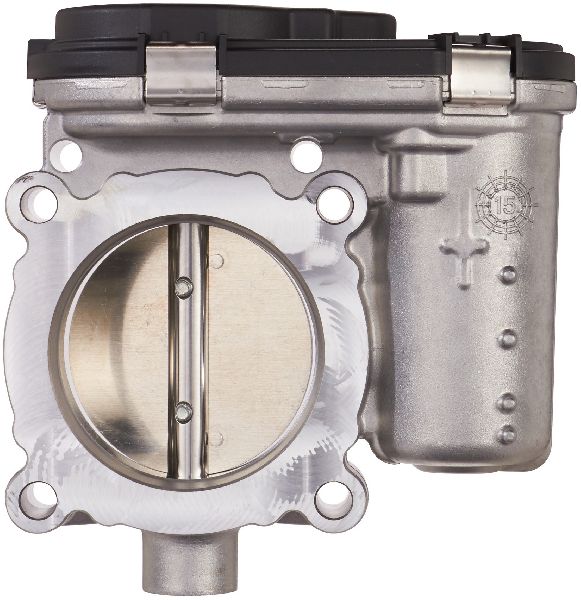
The 2012-2018 Ford Focus with the 2.0L GDI engine uses an electronic throttle body where the throttle position sensors (TPS) are built-in and not sold separately. This design means a failure of one of the internal sensors—a very common cause for P0121 due to contamination on internal contacts—requires replacing the entire throttle body unit. Ford acknowledged this common failure by issuing Customer Satisfaction Program 13N03, which extended the warranty on the throttle body to 10 years or 150,000 miles. However, for most vehicles, this warranty period has now expired, making it an out-of-pocket expense for owners.
Symptoms You May Notice
- Check Engine Light is on
- Wrench light illuminates on the dashboard
- Sudden loss of power and entering 'limp mode'
- Poor, hesitant, or delayed acceleration
- Engine stalling, especially at idle or when coming to a stop
- Rough or unstable idle
- Hard starting
- 'Hill Start Assist Not Available' message on the dash display
- Replacing only the accelerator pedal position sensor (APPS). While the APPS can cause similar symptoms, P0121 specifically relates to the sensor at the throttle body on the engine.
- Assuming a dirty throttle body is the only problem. While cleaning is good maintenance, it rarely fixes the electronic fault that causes P0121 on the 2012-2018 Focus.
Most Likely Causes
- Faulty Throttle Body Assembly 🔴 High Probability This is a well-documented, widespread failure point for this platform. The internal electronic sensors fail due to contamination on the contacts, which is not serviceable. Ford's extended warranty program (13N03) for this specific part confirms its high failure rate.
How to confirm: Use a scan tool with live data to monitor the TPS voltage PIDs (TP1 and TP2). Look for erratic readings, dropouts, or a signal that doesn't smoothly follow the throttle pedal's movement with the key on, engine off. The voltages should move in opposite directions smoothly. A failure is often intermittent and may happen only when the engine is warm.
Typical fix: Replace the entire throttle body assembly. Aftermarket and remanufactured units are available. A throttle body relearn procedure is required after installation. 🎬 Watch: How to perform the electronic throttle body calibration procedure. In some Ford models, as noted in NHTSA ODI #10255038, technicians found the electronic throttle body physically sticking closed, requiring a full replacement.
Est. part cost: $100-$250 - Dirty or Carbon-Fouled Throttle Body ⚪ Low Probability While carbon buildup can cause the throttle plate to stick, leading to performance issues, it is rarely the root cause of the electronic failure that triggers P0121 and limp mode on this specific vehicle. Cleaning is often attempted but usually does not provide a long-term solution for this code.
How to confirm: Remove the air intake hose and visually inspect the throttle plate and bore for heavy black carbon buildup. Check if the plate moves smoothly by hand (with the engine off).
Typical fix: Clean the throttle body bore and plate with a dedicated throttle body cleaner and a soft cloth. While this may temporarily improve a rough idle, it will not fix the internal electronic fault that is the common cause of P0121.
Est. part cost: $5-$15 - Damaged Wiring or Poor Connection ⚪ Low Probability For 2013-2014 Focus ST models, a known issue with insufficient crimps in the engine wiring harness splices could cause various drivability problems and codes. This was addressed by TSB 13-09-07 and later Safety Recall 14S17. The specific splices at fault were S132 and S133.
How to confirm: Visually inspect the wiring harness and connector going to the throttle body for any signs of damage, corrosion, or loose pins. For ST models covered by the recall, a dealer can check if the repair was performed. The faulty splices are located in the engine harness near the front of the transmission.
Typical fix: Repair the damaged section of wiring or replace the connector pigtail. For the recall-specific issue, dealers were instructed to replace the crimped splices with new, more robust splices.
Est. part cost: $15-$50
Rare But Worth Checking
- Faulty Powertrain Control Module (PCM): This is extremely rare and should only be considered after the throttle body and all wiring have been definitively ruled out. In some Ford platforms, as described in NHTSA ODI #10286213, a PCM reflash and retest were performed alongside throttle body replacement to resolve P0121.
Diagnosis Steps
- Read the codes: Use an OBD-II scanner to confirm P0121 and check for any other related codes like P2135, P2111, or P2112.
- Check for Extended Warranty: Although likely expired, check with a Ford dealer using your VIN to see if Customer Satisfaction Program 13N03 is somehow still active for your vehicle.
- Inspect the Throttle Body Connector: Check the electrical connector and wiring harness going to the throttle body for visible damage, corrosion, or loose connections.
- Analyze Live Data: Use a scan tool to monitor the live data PIDs for Throttle Position (TP1, TP2). With the key on and engine off, slowly press and release the gas pedal. The voltage should change smoothly with no glitches or dropouts. One voltage should rise (e.g., ~0.7V to ~4.5V) while the other falls.
- Clean the Throttle Body (Optional): You can try cleaning the throttle body, but be aware it is unlikely to solve the problem if the cause is electronic.
- Replace the Throttle Body: If the sensor signals are erratic or incorrect and the wiring is confirmed to be good, the throttle body assembly is faulty and needs to be replaced. This is the most common and definitive fix.
- Perform Relearn Procedure: After replacing the throttle body, a relearn procedure is necessary. A common tool-free method is: Turn the ignition to 'ON' (engine off) for 2 minutes. Turn ignition 'OFF' for 1 minute. Start the engine and let it idle for 2 minutes with no accessories on. Then, let it idle for another 2 minutes with the A/C on. Drive the vehicle to allow the PCM to fully adapt.
Parts You'll Likely Need
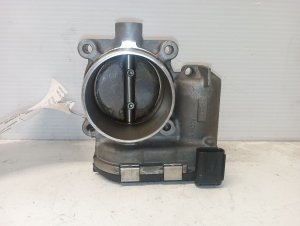
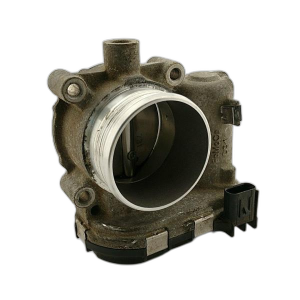
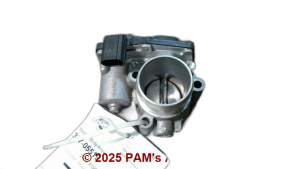
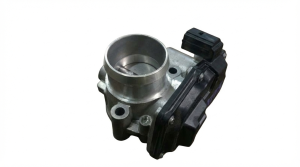
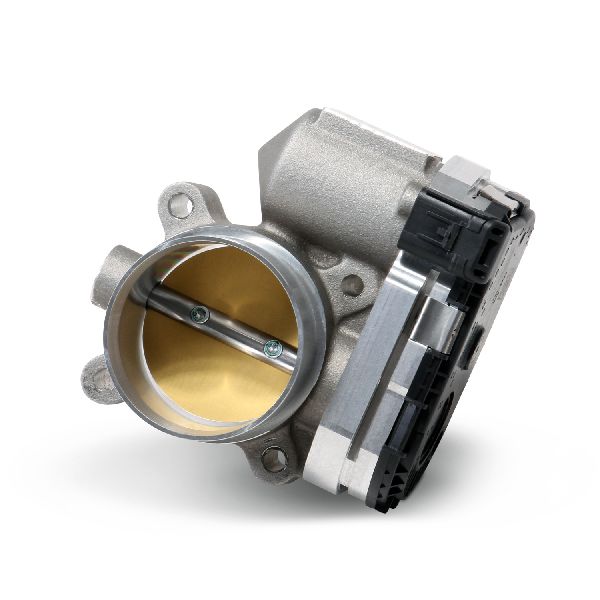
- Electronic Throttle Body Assembly
(OEM #CM5Z-9E926-D (Motorcraft Part# RTB1031))— This is the most common cause of P0121 on this vehicle, as the internal throttle position sensors fail and are not serviceable separately.
Trusted brands: Motorcraft (OEM), Bosch, Cardone (Remanufactured), Dorman
OEM price range: $180-$250
Aftermarket price range: $100-$180
Related Codes That Often Appear With This One
- P2135 — This code indicates a voltage correlation issue between the two throttle position sensors ('A' and 'B'). Since they are in the same assembly, a failure often triggers both codes.
- P2111 — Indicates 'Throttle Actuator Control System - Stuck Open'. This often accompanies P0121 when the throttle body fails.
- P2112 — Indicates 'Throttle Actuator Control System - Stuck Closed'. This is another common companion code pointing to a failed throttle body assembly. NHTSA ODI #10257081 notes that P0121 and P2112 can appear together alongside various chassis and electrical codes.
Technical Service Bulletins (TSBs) & Recalls
- 13N03 - Customer Satisfaction Program: Extended warranty coverage for the electronic throttle body due to high failure rates causing limp mode.
- 14S17 - Safety Recall: For certain 2013-2014 Focus ST models related to engine wiring harness splices that could cause stalling.
- 13-09-07 - TSB: Preceded recall 14S17, identifying the wiring splice issue (S132, S133) as a cause for drivability concerns on Focus ST models.
Platform-Specific Known Issues
- Customer Satisfaction Program 13N03 - Throttle Body Extended Warranty: Ford acknowledged the high failure rate of the electronic throttle body by extending its warranty to 10 years or 150,000 miles. This program covered replacement if the vehicle exhibited symptoms like an illuminated wrench or check engine light due to a faulty throttle body. For most 2012-2018 models, this warranty period has now expired.
- Recall 14S17 / TSB 13-09-07 - Wiring Harness Splice Issue (Focus ST): Specific to 2013-2014 Focus ST models, this recall addressed poorly crimped wiring harness splices (S132 and S133) that could provide incorrect signals to the PCM from sensors like the MAP sensor, causing stalling, hesitation, and potentially related DTCs. The fix involved dealers repairing the splices in the harness.
Mechanic-Grade Diagnostic Values
- Throttle Position Sensor (TPS) Reference Voltage — expected: 4.8V - 5.2V at the connector with key on, engine off.. Failure: Voltage below 4.8V or above 5.2V indicates a problem with the PCM or wiring, not necessarily the sensor itself.
- Throttle Position Sensor (TP1/TP2) Signal Voltage at Idle — expected: One sensor (TP1) should read approximately 0.5V to 1.0V, while the other (TP2) reads a higher voltage (e.g., ~4.5V). The key is that they are inverse and the sum is around 5V.. Failure: Voltages outside this range, or readings that are jumpy, erratic, or do not change smoothly as the throttle is slowly opened.
- Throttle Position Sensor (TP1/TP2) Signal Voltage at Wide Open Throttle (WOT) — expected: The sensor that was low at idle should now read ~4.5V, and the sensor that was high should now read low (~0.5V).. Failure: Failure to reach the expected voltage, or any spikes/dropouts during the throttle sweep.
- Throttle Body Connector Ground Circuit — expected: Less than 0.1V when testing between the ground pin and a known good chassis ground.. Failure: Higher voltage indicates a poor ground connection, which can cause erratic sensor readings.
Scan Tool Commands That Help
- Ford IDS (Integrated Diagnostic System): PCM Reset / Clear All Faults / Clear PCM Adaptive Memory — This command should be used after replacing the throttle body to wipe the old learned values and prepare the PCM for the relearn procedure.
- Ford IDS (Integrated Diagnostic System): Live Data Graphing (TP1, TP2, APP1, APP2) — Essential for diagnosing intermittent P0121. Graphing the throttle and pedal position sensor PIDs allows a technician to visually identify glitches, dropouts, or non-linear responses during a slow throttle sweep that a simple digital readout might miss.
- Ford IDS (or equivalent high-end scanner): Throttle Plate Sweep Test — This is a bidirectional command where the scan tool commands the PCM to sweep the throttle plate through its full range of motion. It's used with the key on, engine off to verify the mechanical and electrical integrity of the throttle body without needing to press the pedal.
Wiring & Ground Locations
- Throttle Body Connector (C1463B) — Directly on the electronic throttle body, located at the front right of the intake manifold.. This 6-pin connector is the single interface for the throttle body's power, ground, and dual TPS signals. Corrosion or loose pins here are a primary point of failure for P0121.
- Throttle Body Connector Pinout (Typical) — Pin 1: TP2 Signal, Pin 2: Ground, Pin 3: TP1 Signal, Pin 4: Throttle Motor -, Pin 5: 5V Reference, Pin 6: Throttle Motor +.. Knowing the pinout is essential for accurately testing for 5V reference, ground, and the individual TP sensor signals directly at the component.
- Ground G100 / G103 — G100 is on the left side of the engine compartment. G103 is located near the powertrain control module, under the airbox/battery area.. The PCM and its sensors rely on clean ground connections. A corroded or loose main engine ground can introduce electrical noise and voltage drops, causing the PCM to misinterpret sensor data and set codes like P0121.
- Splice S133 (Focus ST) — Located in the engine wiring harness, near the front of the transmission. This splice is a known failure point covered by recall 14S17.. On ST models, a faulty S133 splice can cause erratic signals to the PCM, leading to various drivability codes, including those related to throttle and pedal position.
Real Owner Repair Stories
- Reddit user in r/MechanicAdvice (Ford Focus (year not specified, but within the generation)) — P0121 error code appeared.
❌ Tried (didn't work) Wiping down the throttle body, which was already visually clean.
✅ What actually fixed it The error code disappeared and did not return after the owner unscrewed the sensor cap, inspected it, and re-installed it. This suggests the issue was a poor connection that was temporarily resolved by reseating the connector. - NHTSA ODI #11014092 — An owner reported that their vehicle scanned with P0121-20 and P0100-20 codes, noting the issue was frequent during the last two times the car was driven.
OEM Part Supersession History
CM5Z-9E926-A, CM5Z-9E926-B, CM5Z-9E926-C→CM5Z-9E926-D (Motorcraft RTB1031)— Revisions to improve reliability and address the common internal electronic failures.
Model Year Variations Within This Range
- 2013-2014 (Focus ST Only): These model years were subject to Safety Recall 14S17 for faulty wiring harness splices (S132, S133) that could cause stalling and various DTCs. While not exclusive to P0121, this wiring issue is a specific known problem for these years and trim that is not present on other Focus models.
Diagnostic Flowchart
Used vs. New Parts: Buying Guide for This Vehicle
When a used part is the smart pick: A used throttle body is a high-risk, low-reward option for this specific repair. Because the failure is electronic and internal, there is no way to visually inspect a used part for quality. The failure is widespread, meaning a used part from a donor vehicle is likely to have the same defect or fail soon after installation. It only makes sense if the part is extremely cheap and the owner is willing to risk doing the labor twice.
Donor-vehicle mileage cap: roughly under 50000 miles for the part to have meaningful remaining life.
What to inspect on the donor part:
- Verify the part number matches exactly (CM5Z-9E926-D or a prior revision).
- Ask the seller if they can provide the VIN of the donor car to check its history or if it was replaced under the 13N03 warranty program.
- Inspect the connector pins for any signs of corrosion, bending, or damage.
- Avoid parts that show signs of heavy carbon buildup, as this may indicate a poorly running engine that could have stressed other components.
Aftermarket brands forum-validated for this vehicle:
- Motorcraft (OEM)
- Bosch
Brands owners have reported issues with on this vehicle:
- While Dorman is a common aftermarket brand (part 977-592), owner reports are mixed. Some work perfectly, while others have a higher-than-average failure rate compared to OEM. It is a budget-friendly option but may carry more risk than OEM or Bosch.
Real Owner Stories
Aggregated from forums and TSBs cited above. Mileages and costs reflect what owners reported in those sources.
2012 Ford Focus
Symptoms: The car went into sudden limp mode, accompanied by an illuminated wrench and check engine light.
What fixed it: Replacing the entire throttle body assembly was the only fix that resolved the issue.
Source hint: FocusFanatics: 2012 Ford Focus Throttle Body Issue and Recall
Ford Focus (2012-2018)
Symptoms: Experienced a throttle body malfunction which caused the car to enter limp mode and illuminate the wrench light.
What fixed it: The throttle body was replaced under Ford's Customer Satisfaction Program 13N03.
Source hint: Reddit r/Ford: Experience with Consumer Satisfaction Program 13N03?
2013-2014 Focus ST
Symptoms: The vehicle was stalling and hesitating, which triggered diagnostic trouble codes.
What fixed it: The issue was resolved by a dealer repairing the faulty S132 and S133 splices in the engine wiring harness as per the recall.
Source hint: Recall 14S17 / TSB 13-09-07 - Wiring Harness Splice Issue (Focus ST)
Related OBD-II Codes
Frequently Asked Questions
I heard there was an extended warranty for the throttle body on my Ford Focus. Is it still active?
Will cleaning the throttle body fix the P0121 code and limp mode on my Focus?
My car is a 2014 Focus ST. Does the wiring harness recall 14S17 apply to my P0121 code?
What is the most common fix for P0121 on a 2012-2018 Ford Focus?
After replacing the throttle body, is a special 'relearn' procedure required?
Besides the check engine light, what other symptoms are common with a P0121 code on this car?
Helpful Videos

Used OEM Parts in Stock
New Aftermarket Parts Available


The information in this article is provided for general reference and educational purposes only. Vehicle specifications, procedures, and part compatibility can vary by production date, trim level, and region. Always consult your vehicle's factory service manual and verify part numbers before purchasing or performing repairs. Safety-critical components such as airbags, seat belts, and braking systems should be installed by a qualified professional.
- Ford Focus:
- 🎬 Helpful Videos
- 🛍️ Shop This Part
- What's Unique About the 2012-2018 Ford Focus
- Symptoms You May Notice
- Most Likely Causes
- Rare But Worth Checking
- Diagnosis Steps
- Parts You'll Likely Need
- Related Codes That Often Appear With This One
- Technical Service Bulletins (TSBs) & Recalls
- Platform-Specific Known Issues
- Mechanic-Grade Diagnostic Values
- Scan Tool Commands That Help
- Wiring & Ground Locations
- Real Owner Repair Stories
- OEM Part Supersession History
- Model Year Variations Within This Range
- Diagnostic Flowchart
- Used vs. New Parts: Buying Guide for This Vehicle
- Real Owner Stories
- 2012 Ford Focus
- Ford Focus (2012-2018)
- 2013-2014 Focus ST
- Related OBD-II Codes
- Frequently Asked Questions
- 🎟️ Get 5% Off