

P0119 on 2017-2019 Ford Fusion: ECT Circuit Intermittent Causes and Fixes
For a 2017-2019 Ford Fusion, code P0119 is most often caused by a wiring or connector issue at the Engine Coolant Temperature (ECT) sensor, especially on 2.7L EcoBoost models. Ford TSBs confirm a faulty harness (shared with the knock sensor) is a common culprit. A faulty ECT sensor is the next most likely cause. Expect to pay $20-$60 for a new sensor.
- For the 2017-2019 Fusion, especially with the 2.7L engine, always inspect the ECT sensor's wiring and connector before replacing the sensor itself.
- P0119 indicates an intermittent signal, so wiggling wires while watching live data is a key diagnostic step.
- Driving with this code can lead to poor performance and potential overheating; it should be addressed promptly.
- Ensure the cooling system is full and properly bled of air, as this can also cause erratic readings.
What's Unique About the 2017-2019 Ford FUSION
On the 2017-2019 Ford Fusion, particularly models with the 2.7L EcoBoost engine, this code is frequently linked to specific, documented wiring problems. Ford issued multiple Technical Service Bulletins (TSBs) pointing to issues like an ECT sensor connector that isn't fully seated or damaged wiring in the harness. Crucially, TSB SSM 48991 notes the ECT sensor shares a wiring harness with the knock sensor (base part number 12A699), which is a common point of failure, causing P0119 and other codes. This makes a thorough wiring inspection more critical on this platform than just assuming the sensor itself has failed.
Diagnostic Flowchart
Tap your situation to follow the diagnostic path that matches what you're seeing on this vehicle.
Symptoms You May Notice
- Check Engine Light or Wrench Light is on
- Temperature gauge behaving erratically (swinging from cold to hot) or not working at all
- Engine running rough, hesitating, or stalling, especially when cold
- Electric cooling fans running constantly or not turning on when they should
- Decreased fuel economy
- Hard starting when the engine is cold
- Engine overheating warning light may illuminate, sometimes falsely triggering limp mode. 🎬 Watch: Common symptoms of a failing coolant temperature sensor
- Replacing the ECT sensor without first thoroughly inspecting the wiring and connector, which is a known primary issue on the 2.7L EcoBoost engine.
- Replacing the thermostat when the problem is purely electrical (sensor or wiring).
Most Likely Causes
- Damaged or Loose ECT Sensor Connector/Wiring 🔴 High Probability Multiple Ford TSBs (SSM 47791, SSM 46906, SSM 48991) specifically cite a poorly seated connector or damaged wiring as a primary cause for the P0119 code on 2017-2019 Fusions with the 2.7L engine. The harness is often shared with the knock sensor and is a known failure point.
How to confirm: Visually inspect the ECT sensor connector for looseness, corrosion, or damage. Wiggle the connector and nearby wiring with the engine running and a scan tool monitoring live ECT data; if the temperature reading jumps, a wiring fault is likely. 🎬 Watch: How to diagnose and fix intermittent sensor circuit codes TSB SSM 47791 specifically points to inspecting the harness between connectors C1016 and C1168 on the Fusion.
Typical fix: Reseat the connector securely. If damaged, repair the wiring or replace the connector pigtail (Motorcraft WPT-1253 is a common service part). Applying dielectric grease can prevent future moisture intrusion.
Est. part cost: $15-$40 for a pigtail connector - Faulty Engine Coolant Temperature (ECT) Sensor 🔴 High Probability Sensors are wear items and can fail intermittently before failing completely. TSB SSM 48991 suggests replacing the ECT sensor and knock sensor harness together on 2.7L models, acknowledging the sensor itself can be the problem.
How to confirm: Use a scan tool to watch live data for erratic readings. You can also test the sensor's resistance with a multimeter. A good sensor should read approximately 2,000-3,000 Ohms at 68°F (20°C) and drop to around 200-300 Ohms at operating temperature (194°F/90°C).
Typical fix: Replace the ECT sensor. For the 2.7L engine, the OEM part number is FT4Z-12A648-B. 🎬 See this walkthrough for replacing the sensor on a Fusion On these engines, it is often recommended to replace the associated harness (base P/N 12A699) at the same time per TSB SSM 48991.
Est. part cost: $20-$60 - Low Engine Coolant or Air in the System 🟡 Medium Probability If the coolant level is low, air pockets can pass over the sensor, causing its temperature reading to fluctuate wildly and trigger a P0119 code. Some EcoBoost engines are known for coolant intrusion issues which can lead to low coolant levels.
How to confirm: Check the coolant level in the reservoir when the engine is cold. If low, inspect for leaks. If the system was recently serviced, it may need to be 'burped' to remove trapped air. A pressure test can help identify hidden leaks.
Typical fix: Top off the coolant with the correct Ford-specified type (Motorcraft Yellow P-OAT) and bleed the cooling system to remove any air pockets.
Est. part cost: $20-$40 for coolant - Faulty Thermostat ⚪ Low Probability
How to confirm: If the thermostat is stuck partially open, it can cause the engine temperature to fluctuate, though this usually sets a P0128 code more often. Monitor live data to see if the engine is slow to warm up or if the temperature drops at highway speeds.
Typical fix: Replace the thermostat and gasket.
Est. part cost: $30-$80
Rare But Worth Checking
- Internal Coolant Leak (EcoBoost Engines): On 1.5L and 2.0L EcoBoost engines, a known block/head design flaw can cause coolant to leak into the cylinders. This leads to coolant loss, misfires, and can potentially cause erratic temperature readings, contributing to a P0119 code among others like P1299. This is a major repair often requiring engine short or long block replacement.
- Faulty Powertrain Control Module (PCM): This is extremely rare. All other possibilities, especially wiring and sensor issues, must be exhaustively ruled out before considering the PCM as the cause.
Diagnosis Steps
- Check the engine coolant level in the reservoir (when cold) and inspect for any visible leaks.
- Connect an OBD-II scanner and view the live data for Engine Coolant Temperature (ECT). Note the reading with the engine cold.
- Start the engine and watch the ECT reading. Note any sudden, illogical jumps or if it reads an extreme value (e.g., -40°F or 250°F+).
- Locate the ECT sensor. On the 2.7L, it is part of a harness with the knock sensor. On other engines (1.5L, 2.0L, 2.5L), it is typically located on the cylinder head or thermostat housing.
- With the engine running, carefully wiggle the sensor's electrical connector and the nearby wiring harness. If the temperature reading on the scan tool fluctuates wildly, you have found a wiring or connection issue.
- Inspect the connector pins for corrosion, damage, or being spread too far apart. Ensure it is fully seated.
- If wiring seems okay, turn off the engine. Disconnect the sensor and use a multimeter to test its resistance. It should be between 2000-3000 ohms at ~68°F (20°C). If the reading is out of spec, the sensor is bad.
- If the sensor and wiring test good, investigate other possibilities like air in the system or a faulty thermostat.
- For 2.7L EcoBoost models, if a wiring fault is confirmed, strongly consider replacing the entire ECT/Knock sensor harness (base P/N 12A699) and the ECT sensor (FT4Z-12A648-B) as recommended by TSB SSM 48991.
Parts You'll Likely Need
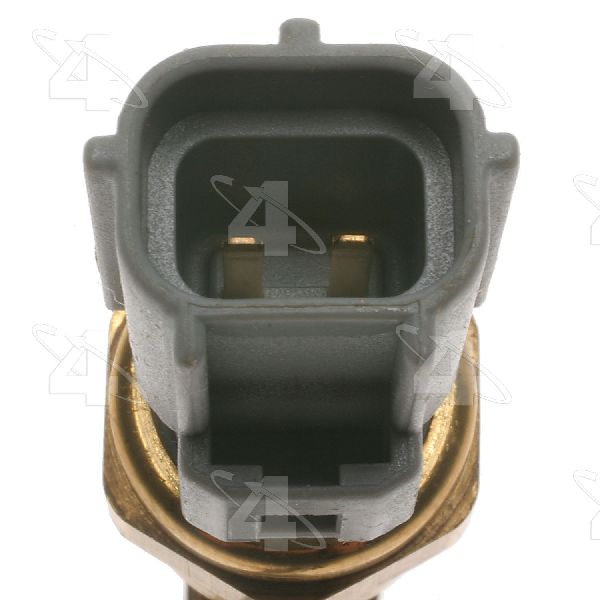
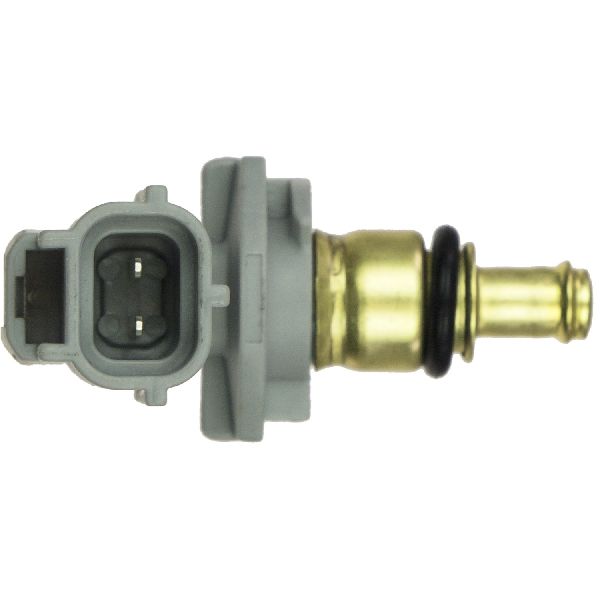
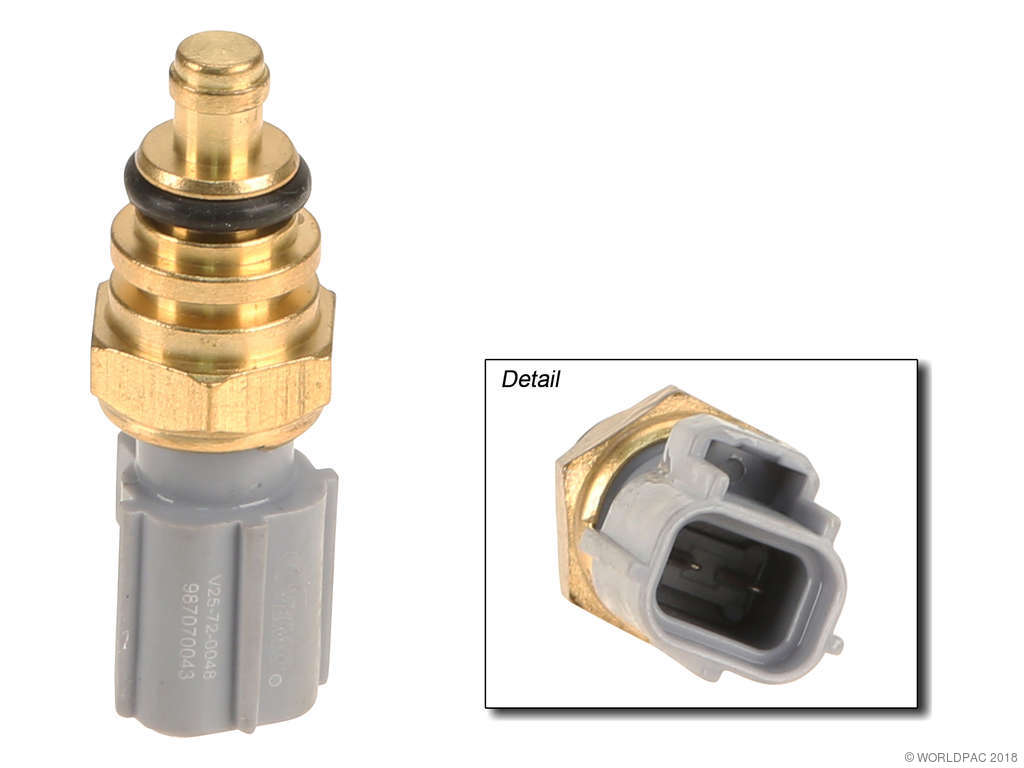
- Engine Coolant Temperature (ECT) Sensor
(OEM #FT4Z-12A648-B (for 2.7L EcoBoost))— This sensor is a primary cause of failure and is often replaced to resolve P0119. TSB SSM 48991 recommends replacing it along with its harness on 2.7L models.
Trusted brands: Motorcraft, Bosch, Delphi, NTK
OEM price range: $40-$70
Aftermarket price range: $20-$50 - ECT / Knock Sensor Harness
(OEM #12A699 (Base Part Number))— Specifically for the 2.7L EcoBoost, Ford TSB SSM 48991 identifies this harness as a common failure point causing P0119 and other codes, recommending its replacement.
Trusted brands: Motorcraft
OEM price range: $50-$90
Aftermarket price range: N/A - ECT Sensor Connector Pigtail
(OEM #WPT-1253)— Ford TSBs point to connector and wiring issues, making a pigtail replacement necessary if the original connector is damaged or corroded. This is a common service part for Ford wiring repairs.
Trusted brands: Motorcraft, Dorman
OEM price range: $25-$40
Aftermarket price range: $10-$30
Related Codes That Often Appear With This One
- P0116 — Indicates an ECT Sensor Performance/Range problem, often set alongside P0119 due to the erratic signal.
- P0117 — Indicates ECT Sensor Circuit Low Input, which can happen intermittently during a P0119 fault.
- P0118 — Indicates ECT Sensor Circuit High Input, which can happen intermittently during a P0119 fault.
- P0128 — Indicates the thermostat has not reached its expected operating temperature. This can be triggered if the faulty ECT sensor data makes the PCM believe the engine isn't warming up correctly.
- P0330 — Indicates a Knock Sensor 2 Circuit Malfunction. This code is specifically mentioned in TSBs alongside P0119 for the 2.7L engine because the ECT and knock sensors share a problematic wiring harness.
- P1299 — Indicates Cylinder Head Overtemperature Protection is active. A faulty, erratic signal from the ECT circuit can falsely trigger this limp mode.
Technical Service Bulletins (TSBs) & Recalls
- SSM 48991: For 2.7L engines, suggests the cause may be the ECT sensor or knock sensor wiring harness and advises replacing both as a set. Affects Fusion, Edge, F-150, and various Lincoln models.
- SSM 47791: For 2.7L engines, points to an ECT sensor connector that is not fully seated or has damaged wiring.
- SSM 46906: An earlier bulletin, also for 2.7L engines, with the same guidance as SSM 47791 regarding a poorly seated connector or damaged wiring.
Platform-Specific Known Issues
- TSB SSM 48991 notes that on 2.7L EcoBoost engines, P0119 can be caused by issues with the ECT sensor or the knock sensor wiring harness.
Mechanic-Grade Diagnostic Values
- ECT Sensor Resistance (disconnected) — expected: Approx. 2,000-3,000 Ω at 68°F (20°C); Approx. 200-300 Ω at 194°F (90°C). Resistance should decrease smoothly as temperature increases.. Failure: An open circuit (infinite resistance), short circuit (near-zero resistance), or values that are out of the expected range for a given temperature.
- ECT Sensor Signal Voltage (Key-On, Engine-Off) — expected: Approx. 2.0V - 3.0V on a cold engine.. Failure: Voltage is near 5.0V (indicates open circuit) or near 0V (indicates short to ground).
- ECT Sensor Signal Voltage (Engine at Operating Temp) — expected: Approx. 0.5V.. Failure: Voltage does not drop as the engine warms up, or fluctuates erratically without a corresponding temperature change.
- ECT Circuit Integrity Check (Scan Tool) — expected: Unplugging the sensor should show approx. -40°F (-40°C). Jumpering the two connector terminals should show approx. 285°F (140°C).. Failure: If the scan tool does not show these extreme values, it indicates a problem in the wiring to the PCM or the PCM itself, not the sensor.
Scan Tool Commands That Help
- High-End OBD-II Scanner (e.g., Ford IDS, iCarsoft, Autel): Live Data Stream for ECT Sensor — This is the primary function used to diagnose P0119. Monitor the ECT temperature and voltage readings while wiggling the harness to pinpoint intermittent connections. Look for sudden, illogical jumps or dropouts.
- High-End OBD-II Scanner: Active Test / Bidirectional Control — Some scanners may offer an active test for the ECT circuit to check for responses, which can help differentiate between a sensor and a wiring issue. It can also be used to command cooling fans on/off to verify the output side of the cooling system control.
Wiring & Ground Locations
- C1016 and C1168 — These are inline harness connectors for the 2.7L engine wiring.. TSB SSM 47791 specifically identifies the wiring between these two connectors as a common location for damage that causes P0119 on the 2017-2019 Fusion 2.7L. Inspection should be focused here before replacing parts.
- G104 / G105 / G106 — Various points on the right side of the engine compartment. G104 is often near the right strut tower.. The ECT sensor circuit requires a solid ground reference. While not explicitly tied to the ECT in search results, these are major engine bay ground points. A corroded or loose ground here can cause intermittent and erratic readings on multiple sensors, including the ECT.
Real Owner Repair Stories
- Ford Technical Service Bulletin (TSB) SSM 47791 & SSM 48991 (2017-2019 Ford Fusion with 2.7L EcoBoost engine) — Malfunction Indicator Lamp (MIL) and/or wrench lamp on, with DTCs P0119, P0116, P0117, P0118, and often P0330 (knock sensor).
❌ Tried (didn't work) Replacing only the ECT sensor without inspecting the wiring harness.
✅ What actually fixed it The documented root cause was a poorly seated ECT sensor connector or damaged wiring in the shared ECT/Knock sensor harness (base part 12A699). The official fix is to inspect the wiring between connectors C1016 and C1168, repair any damage, and ensure the connector is fully seated. In many cases, replacing the entire harness section along with the ECT sensor is the most robust repair.
When the Usual Fixes Don't Work
- While replacing the ECT sensor is a common and often successful fix for P0119 on many vehicles, for the 2017-2019 Fusion with the 2.7L engine, this can be a misdiagnosis. Ford's own Technical Service Bulletins (SSM 47791, SSM 48991) provide strong evidence that the root cause is frequently a fault in the wiring harness shared by the ECT and knock sensors. Technicians and owners who replace the sensor without thoroughly inspecting the harness between connectors C1016 and C1168 may find the code returns, as the underlying intermittent open or short in the wiring was not addressed.
OEM Part Supersession History
FT4Z-12A648-A, DY-1298→FT4Z-12A648-B— Revision to improve performance or reliability.
Heads up: The newer part FT4Z-12A648-B is the correct service part for the 2.7L EcoBoost and should be used for replacement.
Model Year Variations Within This Range
- 2017-2019: The Ford Fusion Sport model, equipped with the 2.7L twin-turbo V6, is the primary subject of the TSBs regarding P0119. While other Fusion engines (1.5L, 2.0L, 2.5L) can experience P0119 from standard sensor failure, they are not implicated in the specific, common harness failure documented for the 2.7L engine.
Helpful Videos
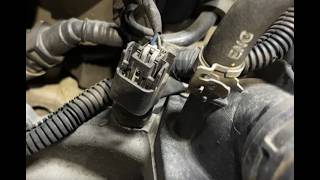
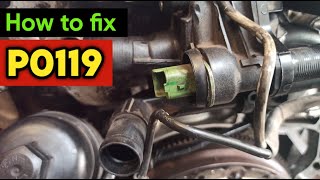
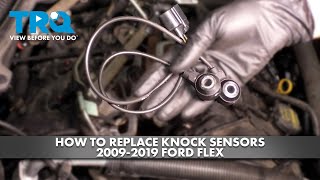
Used OEM Parts in Stock


New Aftermarket Parts Available


The information in this article is provided for general reference and educational purposes only. Vehicle specifications, procedures, and part compatibility can vary by production date, trim level, and region. Always consult your vehicle's factory service manual and verify part numbers before purchasing or performing repairs. Safety-critical components such as airbags, seat belts, and braking systems should be installed by a qualified professional.
- Ford FUSION:
- 🎬 Helpful Videos
- 🛍️ Shop This Part
- What's Unique About the 2017-2019 Ford FUSION
- Diagnostic Flowchart
- Symptoms You May Notice
- Most Likely Causes
- Rare But Worth Checking
- Diagnosis Steps
- Parts You'll Likely Need
- Related Codes That Often Appear With This One
- Technical Service Bulletins (TSBs) & Recalls
- Platform-Specific Known Issues
- Mechanic-Grade Diagnostic Values
- Scan Tool Commands That Help
- Wiring & Ground Locations
- Real Owner Repair Stories
- When the Usual Fixes Don't Work
- OEM Part Supersession History
- Model Year Variations Within This Range
- 🎟️ Get 5% Off