

P0119 on 2015-2020 Ford F-150: ECT Circuit Intermittent Causes and Fixes
On a 2015-2020 F-150, especially with the 2.7L EcoBoost engine, P0119 is most often caused by a poor connection or damaged wiring at the Engine Coolant Temperature (ECT) sensor. Before replacing the sensor, thoroughly inspect the connector and harness, as this is a known issue covered by Ford Technical Service Bulletins. For 2018-2020 2.7L models, a specific TSB recommends relocating the sensor to a new position to resolve the issue permanently.
- For a P0119 code on a 2015-2020 F-150, especially with a 2.7L engine, suspect a wiring or connector issue before buying a new sensor.
- Ford has issued multiple TSBs (SSM 47791, TSB 21-2168) for this exact problem, confirming it's a known platform issue.
- Symptoms include a fluctuating temperature gauge, Check Engine Light, and cooling fans running constantly.
- For 2018-2020 2.7L models, a permanent fix may involve installing a Ford-issued sensor relocation kit.
- Always check the simple things first: coolant level and the physical connection at the sensor.
What's Unique About the 2015-2020 Ford F-150
For the 2015-2020 F-150, particularly models with the 2.7L EcoBoost engine, this code is frequently not a sensor failure. The original ECT sensor is buried deep in the engine valley under the intake manifold, a location subject to heat and difficult access. Ford has issued multiple Technical Service Bulletins (TSBs) acknowledging that the root cause is often a poorly seated connector, damaged wiring, or an intermittent voltage drop in the ECT sensor circuit. TSB 21-2168, specifically for 2018-2020 models, provides a kit to relocate the sensor to an upper heater hose, turning an 8+ hour repair into a 2-hour job and bypassing the problematic original wiring.
Diagnostic Flowchart
Tap your situation to follow the diagnostic path that matches what you're seeing on this vehicle.
Symptoms You May Notice
- Check Engine Light or Malfunction Indicator Lamp (MIL) illuminated.
- Wrench lamp may be illuminated.
- Engine Coolant Over Temperature warning on the dash, even if the engine isn't hot.
- Temperature gauge fluctuating wildly or dropping to cold unexpectedly.
- Electric cooling fans running constantly at high speed, even after a cold start.
- Rough or unstable idle.
- Reduced fuel economy.
- Hesitation during acceleration.
- Hard starting, especially when the engine is cold.
- Replacing the ECT sensor without first thoroughly inspecting the connector and wiring harness. Many owners on forums like F150forum.com and Ford Truck Enthusiasts report replacing the sensor (especially on the difficult 2.7L) only to have the code return because the true fault was in the wiring. 🎬 See why replacing the sensor alone often fails on 2.7L engines.
Most Likely Causes
- Poorly Seated or Damaged ECT Sensor Connector 🔴 High Probability This is a widely documented issue, cited directly in Ford TSBs SSM 47791 and SSM 46906 for 2.7L engines. The connector can become loose, corroded, or the terminal pins can lose tension, causing an intermittent signal. The wiring near the connector is also prone to breaking internally within the insulation.
How to confirm: Visually inspect the ECT sensor connector. Unplug it, check for corrosion or damage on the pins, and plug it back in, ensuring it clicks and is fully seated. Wiggle the connector and nearby harness with the engine running while monitoring live ECT data on a scan tool to see if the reading jumps or drops out.
Typical fix: Clean the connector terminals with electrical contact cleaner and apply dielectric grease. If the connector is damaged or the wiring is broken at the connector, it will need to be replaced with a new pigtail, such as Motorcraft WPT-1141.
Est. part cost: $15-$40 for a new connector pigtail - Damaged Wiring Harness 🔴 High Probability Ford TSBs point to damaged wiring as a primary cause, especially on 2.7L models between specific harness connectors (C1064 and C1047). The harness can chafe against engine components or the insulation can become brittle from heat cycles, leading to intermittent opens or shorts. One owner on a forum discovered the harness was folded and pinched under the intake manifold from a previous repair.
How to confirm: Carefully inspect the wiring harness leading to the ECT sensor for any signs of chafing, melting, or breaks. Perform a continuity test with a multimeter from the sensor connector to the PCM connector to check for opens or high resistance.
Typical fix: Repair the damaged section of wire using approved solderless splice connectors and heat shrink tubing. For 2018-2020 2.7L models, Ford's official fix is the relocation kit (part #ML3Z-14A411-H) which includes a new heater hose with an integrated sensor and a jumper harness to bypass the problematic factory wiring.
Est. part cost: $5-$15 for wire repair, $100-$150 for the relocation kit - Failing Engine Coolant Temperature (ECT) Sensor 🟡 Medium Probability While wiring is a more common culprit on this platform, the sensor itself can fail intermittently. Internal components can degrade, causing erratic resistance readings that don't align with the actual coolant temperature. On the 2.7L EcoBoost, the sensor is notoriously difficult to access, located under the intake manifold in the engine valley.
How to confirm: After confirming the wiring and connector are good, test the sensor. Use a scan tool to watch live data for illogical jumps. Alternatively, remove the sensor and test its resistance with a multimeter while heating it in water to see if the resistance changes smoothly and matches manufacturer specifications.
Typical fix: Replace the ECT sensor. On the 2.7L engine, this is a labor-intensive job (estimated 8+ hours) requiring removal of the intake manifold. Due to the high labor cost, many owners opt to install the TSB relocation kit instead.
Est. part cost: $25-$50 - Low Engine Coolant / Air in System ⚪ Low Probability If the coolant level is low, air pockets can pass over the sensor, causing its temperature reading to drop suddenly and erratically as it's exposed to air instead of liquid. This can trick the PCM into thinking there is an intermittent electrical fault.
How to confirm: Check the coolant level in the degas bottle (reservoir) and radiator (only when the engine is completely cold). If the level is low, there is a leak that must be found and repaired.
Typical fix: Top off the coolant with the correct Motorcraft type and properly bleed the cooling system to remove any air pockets. Find and repair the source of the coolant leak.
Est. part cost: $15-$30 for coolant
Rare But Worth Checking
- Failing Thermostat: A thermostat that is sticking open or closed can cause strange temperature fluctuations, but it's more likely to set a P0128 (Thermostat Rationality) code. It's less likely to cause the sharp, intermittent electrical signal fault of a P0119, though it can be a contributing factor.
- Powertrain Control Module (PCM) Fault: In very rare cases, the internal circuits of the PCM that process the ECT signal can fail. This should only be considered after all other possibilities (sensor, wiring, connections, and coolant level) have been exhaustively ruled out.
Diagnosis Steps
- Read all trouble codes with an OBD-II scanner. Note any other codes that are present.
- Check the engine coolant level in the degas bottle to ensure it is full (only when the engine is cool).
- Visually inspect the ECT sensor connector for damage, corrosion, or a loose fit. Unplug and reseat it firmly, ensuring it 'clicks'.
- Inspect the visible sections of the wiring harness leading to the ECT sensor for chafing, breaks, or heat damage, particularly where it might rub against other components.
- Using a scan tool, monitor the live ECT data feed while the engine is running. Wiggle the connector and harness from the sensor back towards the firewall to see if you can force the reading to become erratic. 🎬 Watch: How to diagnose P0119 by monitoring live sensor data.
- If the signal is erratic and can be induced by wiggling wires, pinpoint and repair the faulty section of the harness or connector pigtail.
- If the wiring seems okay, test the sensor itself. With a cold engine, the ECT reading should be very close to the Ambient Air Temperature (AAT) sensor reading. If they differ significantly, the ECT sensor is likely faulty.
- If the sensor and wiring both test good, consider if air in the system (from a leak) or a sticking thermostat could be causing erratic temperature changes, though this is less common for P0119.
- For 2018-2020 2.7L models, if wiring is suspected, the most robust repair is installing the TSB 21-2168 relocation kit. 🎬 Watch: Step-by-step installation of the TSB 21-2168 relocation kit.
- As a last resort, if all other components are verified to be good, investigate the possibility of a PCM fault.
Parts You'll Likely Need
- Engine Coolant Temperature (ECT) Sensor
(OEM #FT4Z-12A648-B)— This is the sensor that provides the temperature reading. While often misdiagnosed, it can fail and is a common replacement part for this code. On the 2.7L, it is very difficult to ac
Related Codes That Often Appear With This One
- P0116, P0117, P0118 — These codes are all related to the ECT sensor circuit (Range/Performance, Low Input, High Input) and often appear with P0119 when the signal is highly erratic. TSB 21-2168 lists these as related codes.
- P0128 — Coolant Thermostat (Coolant Temperature Below Thermostat Regulating Temperature). This can be set if the PCM gets confusing data from the ECT sensor and can't verify the engine is reaching operating temperature correctly.
- P0217, P1299 — These are engine over-temperature protection codes. The PCM may trigger these as a precaution if it receives an erratic or high reading from the ECT sensor, even if the engine isn't actually overheating.
Technical Service Bulletins (TSBs) & Recalls
- TSB 21-2168: Notes that an intermittent drop in ECT voltage on 2.7L engines can cause P0119 and recommends a sensor relocation kit.
- SSM 47791: Points to a poorly seated ECT connector or damaged wiring on 2.7L engines as the cause for P0119.
- SSM 46906: An earlier version of SSM 47791, also citing the ECT connector and wiring on 2.7L engines.
Platform-Specific Known Issues
- 2.7L EcoBoost Sensor Location (2018+): For 2018 and newer 2.7L EcoBoost engines, the ECT sensor is located deep in the engine valley, underneath the intake manifold. This makes replacement a very labor-intensive job (8+ hours). This is a change from earlier models where it was more accessible.
- TSB 21-2168 Relocation Kit (2018-2020 2.7L): For 2018-2020 F-150s with the 2.7L engine, Ford's recommended fix is not to replace the original sensor but to install kit #ML3Z-14A411-H. This kit provides a new heater hose with a port for a new ECT sensor and a jumper harness that connects to a more reliable point in the main harness, bypassing the faulty original circuit.
- SSM 47791 Wiring/Connector Fault (2015-2019 2.7L): For a broader range of 2.7L engines, this Special Service Message highlights that P0119 is often due to the ECT connector not being fully seated or having damaged wiring between specific harness connection points. It explicitly advises against replacing the sensor if damaged wiring is found.
Mechanic-Grade Diagnostic Values
- ECT Sensor Resistance (NTC Type) — expected: Approx. 2000-3000 Ω at 68°F (20°C), decreasing to 200-300 Ω at 194°F (90°C). Resistance should change smoothly as temperature changes.. Failure: Readings outside the expected range, or resistance that jumps erratically instead of changing smoothly with temperature. An open circuit (infinite resistance) or short circuit (zero resistance) indicates a failed sensor.
- ECT Sensor Signal Voltage (at sensor connector) — expected: Approx. 2.0V - 3.0V on a cold engine. Drops to approx. 0.5V when the engine is at full operating temperature.. Failure: Voltage that is stuck high (near 5V), stuck low (near 0V), or fluctuates rapidly without a corresponding change in engine temperature. The PCM may set a code if voltage is above 4.9V or below 0.5V for more than a few seconds.
- Live Scan Tool Data: ECT vs. IAT — expected: On a 'cold soak' engine (left off for 8+ hours), the Engine Coolant Temperature (ECT) and Intake Air Temperature (IAT) readings should be within a few degrees of each other.. Failure: A significant difference between the ECT and IAT readings on a cold engine points to a likely fault in the ECT sensor or its circuit.
Scan Tool Commands That Help
- Ford IDS (or equivalent high-end scanner): Reset All Adaptations / Clear KAM — After replacing a sensor or repairing a wiring fault, it is good practice to clear the Keep Alive Memory (KAM). This forces the PCM to relearn fuel trims and other adaptive strategies with the now-correct sensor data, which can resolve lingering drivability issues like rough idle or poor fuel economy.
Wiring & Ground Locations
- PCM Grounds — On the firewall of the engine bay. Depending on the model year and engine, there may be one or two ground points specifically for the PCM.. The ECT sensor circuit relies on a stable ground reference provided by the PCM. A loose or corroded PCM ground can introduce electrical noise and voltage fluctuations, causing intermittent codes like P0119.
- Main Battery Ground — In the engine bay, just in front of the washer fluid reservoir.. While less direct, a poor main ground connection can cause a host of unpredictable electrical issues across the entire vehicle, including erratic sensor readings.
- ECT Sensor Harness (2.7L) — Runs from the sensor, located under the intake manifold in the engine valley, back towards the firewall to the PCM.. This harness is the primary failure point. It is susceptible to chafing against the engine block/heads, being pinched under the intake manifold during service, and damage from excessive heat cycles.
Real Owner Repair Stories
- Ford F150 Forum (2007 Ford F-150 (similar 5.4L engine architecture with sensor under intake)) — Check Engine Light with code P0119, failed emissions test.
❌ Tried (didn't work) Clearing codes by disconnecting the battery., Performing a full coolant back flush and replacing the thermostat.
✅ What actually fixed it A mechanic discovered the sensor wiring harness was 'folded' and had rubbed against the engine, exposing the wire and causing an intermittent short. The harness was damaged during a previous repair that involved removing the intake manifold. Repairing the wire and replacing the sensor (since the intake was already off) resolved the code. - F150online Forums (2004-2008 generation F-150) — Check Engine Light with code P0119.
❌ Tried (didn't work) Replacing the CHT/ECT sensor located under the intake manifold.
✅ What actually fixed it After replacing the sensor did not fix the issue, the truck was taken to the dealership where the Powertrain Control Module (PCM) was diagnosed as faulty and replaced. This is a rare but possible cause.
"I Checked Everything" — The Actual Cause
- A common scenario for P0119 is a wiring fault that only appears under specific conditions. A continuity test on the ECT circuit with a multimeter may show that the wiring is perfectly fine when the engine is cold. However, once the engine heats up, heat-induced expansion can cause a microscopic break in a wire to separate, creating an open circuit and triggering the code. This is why wiggling the harness while monitoring live data on a running engine is a more effective diagnostic step than a simple cold continuity check.
OEM Part Supersession History
N/A - Original wiring and sensor→ML3Z-14A411-H— This is not a direct part supersession, but a TSB-directed repair kit. It contains a new heater hose with an integrated ECT sensor port, a new sensor, and a jumper harness to bypass the original, failure-prone wiring.
Heads up: This kit is the official fix for 2018-2020 2.7L EcoBoost F-150s per TSB 21-2168. While the earlier 2015-2017 models suffer similar wiring issues, this specific kit is not listed as the official repair for them.
Model Year Variations Within This Range
- 2015-2017: For these years, Ford's service bulletins (SSM 46906, SSM 47791) primarily pointed to inspecting the ECT sensor connector for a poor connection or damaged wiring as the cause of P0119. The prescribed fix was to repair the connector or wiring.
- 2018-2020: For these years, which followed a vehicle refresh, Ford issued a more comprehensive fix via TSB 21-2168. This bulletin acknowledges the intermittent voltage drop and instructs technicians to install a full relocation kit (ML3Z-14A411-H) that moves the sensor out of the hot engine valley and onto a heater hose, bypassing the original problematic wiring entirely.
Helpful Videos
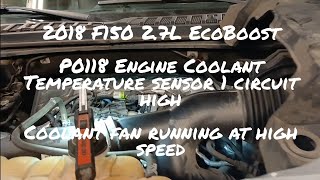

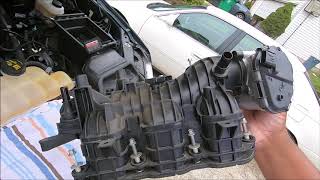
We Have This Part in Stock
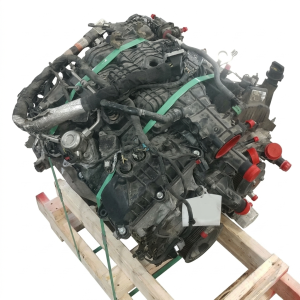


The information in this article is provided for general reference and educational purposes only. Vehicle specifications, procedures, and part compatibility can vary by production date, trim level, and region. Always consult your vehicle's factory service manual and verify part numbers before purchasing or performing repairs. Safety-critical components such as airbags, seat belts, and braking systems should be installed by a qualified professional.
- Ford F-150:
- 🎬 Helpful Videos
- 🛍️ Shop This Part
- What's Unique About the 2015-2020 Ford F-150
- Diagnostic Flowchart
- Symptoms You May Notice
- Most Likely Causes
- Rare But Worth Checking
- Diagnosis Steps
- Parts You'll Likely Need
- Related Codes That Often Appear With This One
- Technical Service Bulletins (TSBs) & Recalls
- Platform-Specific Known Issues
- Mechanic-Grade Diagnostic Values
- Scan Tool Commands That Help
- Wiring & Ground Locations
- Real Owner Repair Stories
- "I Checked Everything" — The Actual Cause
- OEM Part Supersession History
- Model Year Variations Within This Range
- 🎟️ Get 5% Off