

P0118 on 2007-2016 Volvo S80 3.2L: Engine Coolant Temperature Sensor Causes and Fixes
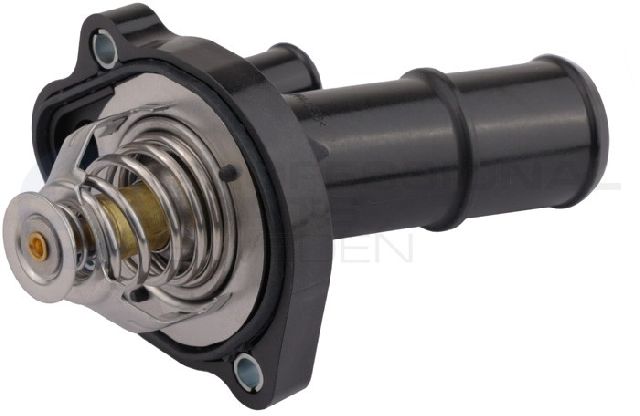
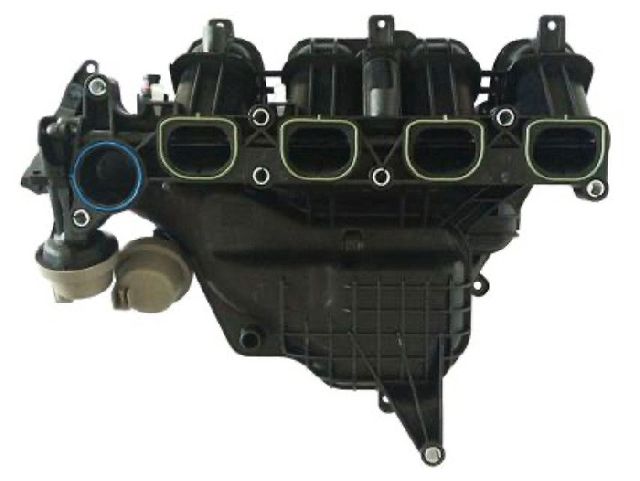
On the Volvo S80 3.2L, code P0118 is almost always caused by a failed Engine Coolant Temperature (ECT) sensor. Because the sensor is integrated into the thermostat housing located under the intake manifold, the entire assembly is typically replaced. Expect to pay $100-$180 for the part. This is a moderately difficult DIY job due to the need to remove the intake manifold.
- P0118 on this Volvo means the engine computer thinks the engine is freezing cold due to a fault in the coolant temperature sensor circuit.
- The most common symptom, besides the Check Engine Light, is the radiator fan running constantly at full speed.
- The fix is to replace the entire thermostat housing assembly, which contains the sensor.
- This is not a simple repair; the intake manifold must be removed to access the part, making it a 4/5 difficulty for DIY.
- Always replace the intake manifold gaskets (PN 30777423) when performing this job to prevent future vacuum leaks.
What's Unique About the 2007-2016 Volvo S80
On the Volvo 3.2L SI6 engine, the Engine Coolant Temperature (ECT) sensor is not a separate, easily accessible part. Instead, it is integrated directly into the main thermostat housing assembly. This entire assembly is located underneath the intake manifold, making replacement a more involved job that requires removing the manifold for access. Because of this design, a P0118 code on this specific engine almost always leads to replacing the complete thermostat housing unit rather than just a simple sensor. This design is shared across all vehicles using the 3.2L SI6 engine.
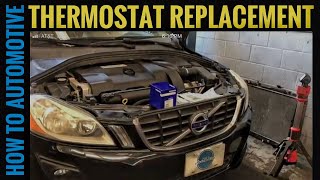
🎬 Watch this overview of replacing the Volvo 3.2 thermostat housing assembly.Symptoms You May Notice
- Check Engine Light is on
- Cooling fans run continuously at high speed, even after the engine is turned off.
- Hard starting, especially when the engine is cold, as the ECM commands an overly rich fuel mixture.
- Noticeably poor fuel economy.
- Black smoke from the exhaust during a cold start due to the rich fuel mixture.
- Rough or unstable idle.
- Temperature gauge on the dashboard may read cold and not move, or show other erratic behavior.
- Replacing only the thermostat. On this engine, the sensor is part of the housing assembly, so replacing a standalone thermostat (if one could be sourced) would not fix an electrical code like P0118.
- Assuming the car is actually overheating. While the fans run constantly, the P0118 code itself indicates an electrical fault (impossibly cold reading), not a true overheating condition.
Most Likely Causes
- Failed Engine Coolant Temperature (ECT) Sensor / Thermostat Assembly 🔴 High Probability The ECT sensor is integrated into the thermostat housing, which is a common failure point on the SI6 engine. The plastic housing and internal sensor are subject to constant heat cycles, leading to eventual failure. The entire unit is replaced as a single assembly.
How to confirm: Use an OBD-II scanner to check live data. A temperature reading of -40°F or -40°C is a definitive sign of an open circuit fault pointing to the sensor or its wiring. Final confirmation requires testing the sensor directly, which necessitates removing the intake manifold for access.
Typical fix: Replace the entire thermostat housing assembly, which includes the thermostat, housing, and new integrated ECT sensor. It is critical to also replace the intake manifold gaskets at the same time.
Est. part cost: $100-$180 - Damaged Wiring or Connector 🟡 Medium Probability The wiring harness is located under the intake manifold in a high-heat area, making it susceptible to becoming brittle and damaged over time. Oil leaks from the nearby PCV system or vacuum pump can also degrade the wiring insulation, leading to shorts or breaks.
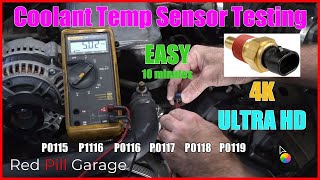
How to confirm: After removing the intake manifold, visually inspect the connector and wiring going to the thermostat housing for any signs of corrosion, breaks, or loose pins. Use a multimeter to check for a 5-volt reference signal 🎬 Learn how to test and diagnose a P0118 sensor circuit. and a good ground at the connector. If either is missing, the problem is in the harness, not the sensor.
Typical fix: Repair the damaged section of the wiring harness or replace the connector pigtail. Ensure the repair is well-insulated to protect against future heat damage.
Est. part cost: $15-$50
Rare But Worth Checking
- Faulty Engine Control Module (ECM): This is extremely rare. This should only be considered after a certified technician has definitively ruled out the sensor, wiring, and connectors as the cause of the problem.
Diagnosis Steps
- Connect an OBD-II scanner and confirm P0118 is the active code. Check for any other related codes.
- View the live data stream. Look at the Engine Coolant Temperature (ECT) reading. A value of -40°F or -40°C strongly indicates an open circuit in the ECT sensor system.
- As a simple check, compare the cold ECT reading to the Intake Air Temperature (IAT) reading with the engine off. They should be very close. A large discrepancy points to the ECT circuit.
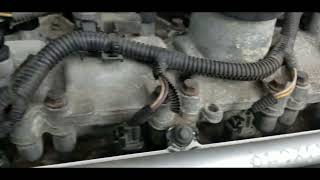
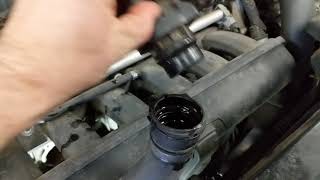
- Prepare to access the thermostat housing. This requires the removal of the engine intake manifold. 🎬 Watch a step-by-step video on removing the Volvo S80 intake manifold. This is a multi-hour job.
- Once the manifold is removed, carefully inspect the ECT sensor connector (part of the thermostat housing) and its wiring harness for any visible damage, corrosion, oil contamination, or loose pins.
- If no visual damage is found, disconnect the sensor. Use a multimeter to test for a 5-volt reference and a good ground at the connector pins with the key on, engine off.
- If the 5V reference and ground are present, the fault is almost certainly the ECT sensor itself. Since it's integrated, the entire thermostat assembly must be replaced.
- If voltage or ground is missing, the wiring harness is faulty. Trace the wiring back towards the ECM to find and repair the break or short.
- After replacing the thermostat assembly and intake manifold gaskets, clear the trouble code and perform a drive cycle. Monitor the live ECT data to ensure it rises to normal operating temperature (typically 190-210°F) and the cooling fans cycle correctly.
Parts You'll Likely Need
- Engine Coolant Thermostat Assembly
(OEM #31355151)— This is the primary cause of P0118 on the 3.2L engine, as it contains the integrated ECT sensor, thermostat, and housing in one unit.
Trusted brands: Volvo (Genuine), Mahle, Behr, Wahler
OEM price range: $150-$185
Aftermarket price range: $90-$130 - Intake Manifold Gaskets
(OEM #30777423)— The intake manifold must be removed to access the thermostat housing. The gaskets are considered a one-time use item and must be replaced to prevent vacuum leaks after the repair.
Trusted brands: Volvo (Genuine), Victor Reinz, Elring
OEM price range: $50-$70
Aftermarket price range: $25-$40
Platform-Specific Known Issues
- Access Requires Intake Manifold Removal: Unlike many vehicles where the ECT sensor is easily accessible, on the Volvo 3.2L SI6 it is buried under the intake manifold. This significantly increases the labor time and complexity of the repair, turning a simple sensor replacement into a more involved job.
Mechanic-Grade Diagnostic Values
- ECT Sensor Resistance vs. Temperature — expected: Approx. 5.6 kOhms at 32°F (0°C), ~2.0-3.0 kOhms at 68°F (20°C), ~318 Ohms at 176°F (80°F), and ~184 Ohms at 212°F (100°F).. Failure: Infinite resistance (open circuit) or a reading that does not change as temperature changes. A reading of near-zero ohms indicates a short circuit.
- ECT Sensor Connector Voltage (Key On, Engine Off) — expected: One pin should have a 5-volt reference from the ECM, and the other should be a sensor ground.. Failure: Absence of the 5V reference or a faulty ground points to a wiring or ECM issue, not a sensor failure.
Hidden / Shadow Codes Worth Checking
- ECM-P011817: This is the Volvo-specific format for the generic P0118 code. The suffix '17' often indicates 'Circuit voltage above threshold'. Seeing this code in VIDA confirms the ECM is seeing a voltage higher than the expected maximum, reinforcing the diagnosis of an open circuit. (see via Volvo's VIDA diagnostic software or a compatible high-end professional scanner.)
Wiring & Ground Locations
- ECT Sensor Connector — Plugged into the thermostat housing, which is located on the left side (driver's side for US models) of the engine block, underneath the intake manifold.. This is the primary connection point to test. Corrosion, oil contamination, or loose pins here are a common cause of the 'High Input' signal.
- G89 — A ground point located in the left front of the engine compartment.. This ground serves various engine components. While not exclusively for the ECT, a corroded or loose connection at this point can introduce electrical noise or a floating ground, potentially affecting sensor readings.
Real Owner Repair Stories
- VolvoForums user 'rspi' (1998 Volvo S70 (P80 chassis, but same sensor principle)) — Overheating condition occurred, which damaged the original temp sensor. A new sensor was installed.
❌ Tried (didn't work) A brand new (likely aftermarket) ECT sensor was installed but failed within a week, causing the same P0118 symptoms to return.
✅ What actually fixed it Installing a used ECT sensor sourced from a junkyard resolved the problem long-term. This suggests potential quality control issues with some new aftermarket sensors, making a used OEM part a viable alternative.
OEM Part Supersession History
30774489→31355151— Standard part revision and consolidation by Volvo.
Heads up: None. The new part number (31355151) is a direct replacement for the old one (30774489).
Model Year Variations Within This Range
- 2011-2016: For the 2011 model year, the 3.2L inline-6 engine received a minor power increase from 235 hp to 240 hp. This change did not affect the cooling system, thermostat housing part number, or the diagnosis for code P0118.
Diagnostic Flowchart
Other Known Issues on This Vehicle
Issues unrelated to this code that are worth knowing about as an owner of this generation:
- Rear End Accessory Drive (READ) Bearing Failure 🔴 High — More common on earlier models (pre-2010). Can occur over 100k miles. Failure produces a distinct growl or whine from the transmission side of the engine. (Ref: Volvo TSB 21-9 describes a noise caused by failure of the drive gear.)
- Brake Vacuum Pump Oil Leak 🟠 Medium — Very common across all model years, typically noticed after 80k miles. Causes oil to drip onto the transmission housing.
- PCV / Oil Trap Diaphragm Failure 🟠 Medium — Common failure around 100k-130k miles. A torn diaphragm causes a loud whistling or howling noise at idle.
- Upper Engine Mount (Torque Rod) Wear 🟡 Low — A common wear item that fails every 60k-80k miles. Causes noticeable vibration in the cabin at idle and during acceleration.
Used vs. New Parts: Buying Guide for This Vehicle
When a used part is the smart pick: A used part is generally NOT recommended for this repair. The thermostat assembly is a known failure item made of plastic and contains an electronic sensor, both of which degrade with heat cycles. The only exception might be if a known-good, very low mileage OEM unit is available and the budget is extremely tight, as some forum users have had success with used OEM parts after new aftermarket ones failed.
Donor-vehicle mileage cap: roughly under 40000 miles for the part to have meaningful remaining life.
What to inspect on the donor part:
- Verify the part is Genuine Volvo, not an aftermarket brand.
- Inspect the plastic housing for any hairline cracks, chalkiness, or signs of brittleness.
- Check the electrical connector pins for any corrosion or damage.
- Ask for the donor vehicle's mileage and avoid parts from high-mileage cars.
OEM-only on this vehicle (don't cheap out):
- While not strictly 'OEM-only', using a Genuine Volvo or a high-quality OEM supplier like Mahle or Behr for the thermostat assembly is strongly advised over cheaper, unbranded aftermarket options to avoid premature failure.
Aftermarket brands forum-validated for this vehicle:
- Mahle
- Behr
- Wahler
- Vernet
Brands owners have reported issues with on this vehicle:
- Unbranded, 'white-box' parts from online marketplaces have a higher reported failure rate. While not a specific brand, users report issues with the cheapest available options failing quickly.
Real Owner Stories
Aggregated from forums and TSBs cited above. Mileages and costs reflect what owners reported in those sources.
Volvo 850 (referenced in VolvoForums context for P0118)
Symptoms: The cooling fan was running constantly, even for up to 5 minutes after the car was shut down.
What fixed it: The P0118 code was addressed by investigating the ECT sensor circuit which was causing the fan fail-safe mode.
Source hint: VolvoForums thread titled 'Trouble Code P0118'
2007-2016 Volvo S80 3.2L I6 — ~100000 miles
Symptoms: A loud whistling or howling noise at idle, which can be found near the engine components where the ECT wiring is located.
What fixed it: Replacement of the PCV / Oil Trap Diaphragm.
Source hint: Known Issues: PCV / Oil Trap Diaphragm Failure
2007-2010 Volvo S80 3.2L I6 — ~110000 miles
Symptoms: A distinct growl or whine coming from the transmission side of the engine.
What fixed it: Repair of the Rear End Accessory Drive (READ) bearing failure as described in TSB 21-9.
Source hint: Volvo TSB 21-9
Related OBD-II Codes
Frequently Asked Questions
Why are my cooling fans running at high speed even after I turn off my S80?
Can I just replace the ECT sensor on my 3.2L I6 engine?
Is it true that the intake manifold has to be removed to fix a P0118 code?
What else should I replace while the intake manifold is off for the ECT sensor repair?
Does Volvo TSB 21-9 relate to my P0118 temperature sensor issue?
Could an oil leak be causing my P0118 code?
Helpful Videos


Used OEM Parts in Stock



New Aftermarket Parts Available

The information in this article is provided for general reference and educational purposes only. Vehicle specifications, procedures, and part compatibility can vary by production date, trim level, and region. Always consult your vehicle's factory service manual and verify part numbers before purchasing or performing repairs. Safety-critical components such as airbags, seat belts, and braking systems should be installed by a qualified professional.
- Volvo S80:
- 🎬 Helpful Videos
- 🛍️ Shop This Part
- What's Unique About the 2007-2016 Volvo S80
- Symptoms You May Notice
- Most Likely Causes
- Rare But Worth Checking
- Diagnosis Steps
- Parts You'll Likely Need
- Platform-Specific Known Issues
- Mechanic-Grade Diagnostic Values
- Hidden / Shadow Codes Worth Checking
- Wiring & Ground Locations
- Real Owner Repair Stories
- OEM Part Supersession History
- Model Year Variations Within This Range
- Diagnostic Flowchart
- Other Known Issues on This Vehicle
- Used vs. New Parts: Buying Guide for This Vehicle
- Real Owner Stories
- Volvo 850 (referenced in VolvoForums context for P0118)
- 2007-2016 Volvo S80 3.2L I6 — ~100000 miles
- 2007-2010 Volvo S80 3.2L I6 — ~110000 miles
- Related OBD-II Codes
- Frequently Asked Questions
- 🎟️ Get 5% Off