

P0118 on 2010-2022 Subaru Legacy: Engine Coolant Temp Sensor High Input Causes & Fixes
P0118 on a Subaru Legacy most often means the Engine Coolant Temperature (ECT) sensor has failed. This is a simple and affordable DIY fix, typically costing between $25 and $75 for a new sensor. The engine computer thinks the engine is freezing cold, causing starting issues, poor fuel economy, and the cooling fans to run constantly.
- P0118 on a 2010-2022 Legacy is almost always caused by a failed Engine Coolant Temperature (ECT) sensor or its wiring.
- Symptoms include constant cooling fan operation, hard starts, and poor fuel mileage.
- Diagnosis is straightforward with a scan tool: a reading of -40° confirms the open circuit fault.
- The replacement part number is different depending on the year: check if you need 22630AA140 (early 5th gen), 22630AA230 (late 5th/6th gen), or 22630AA27A (7th gen).
- For 2020-2022 models, ensure your code is P0118 and not a P26xx code, which points to a different part (Thermo Control Valve) covered by a warranty extension.
What's Unique About the 2010-2022 Subaru Legacy
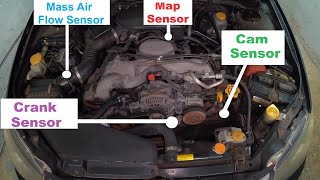
For the Subaru Legacy, the P0118 code is a straightforward issue, almost always pointing to the ECT sensor or its wiring. However, the specific part number for the sensor changes across the three generations covered (2010-2014, 2015-2019, 2020-2022). On EJ and FB series engines, the sensor is typically located on the coolant crossover pipe 🎬 Watch: Video guide to Subaru boxer engine sensor locations under the intake manifold. Additionally, on 2020-2022 models with the FB25DI engine, it's important not to confuse a P0118 fault with issues related to the more complex Thermo Control Valve (TCV), which has its own set of trouble codes (P26xx) and a specific warranty extension.
Generation note: The 2010-2022 range covers three Subaru Legacy generations: - 5th Generation (2010-2014): Models from 2010-2012 may use a different ECT sensor part number than 2013-2014 models. The sensor is typically located on the coolant crossover pipe. This generation also saw the introduction of the Lineartronic CVT, which had early reliability issues. - 6th Generation (2015-2019): Uses a consistent ECT sensor across the generation. The FB25 engine used in many of these models was part of a class-action lawsuit for excessive oil consumption. - 7th Generation (2020-2022): Introduced the Thermo Control Valve (TCV), a separate component that can cause cooling system faults but with different DTCs. The ECT sensor part number may differ from previous generations. These models were also included in a class-action settlement for spontaneously cracking windshields.
Symptoms You May Notice
- Check Engine Light is on
- Cooling fans run constantly, even when the engine is cold
- Difficult starting, especially when the engine is warm (as the ECM injects too much fuel, creating a rich condition)
- Poor fuel economy
- Black smoke from the exhaust on startup
- Rough idle or hesitation, particularly before the engine warms up
- Temperature gauge on the dashboard may not work or reads cold. On some models without a traditional gauge, the blue 'cold engine' light may stay on, or the red 'hot' light may illuminate incorrectly.
- Disabled advanced features like EyeSight, X-Mode, or cruise control, as the ECM enters a failsafe mode.
- Replacing the thermostat. A thermostat stuck open would cause a P0128 (Coolant Temperature Below Thermostat Regulating Temperature) code, not a P0118.
- On 2020-2022 models, confusing an ECT sensor failure (P0118) with a Thermo Control Valve (TCV) failure. TCV failures are common on these models but set different codes, such as P26A3, P26A5, or P2682, and are covered by a warranty extension (TSB 09-119-24).
Most Likely Causes
- Failed Engine Coolant Temperature (ECT) Sensor 🔴 High Probability The sensor is a thermistor that can fail internally over time, creating an open circuit which is the direct cause of the 'High Input' code. This is the most common resolution reported by owners.
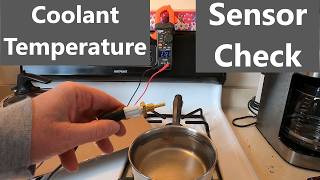
How to confirm: With a scan tool, check live data. A reading of -40°F or -40°C with the engine off but key on points to a failed sensor or open circuit. You can also test the sensor's resistance with a multimeter; at 68°F (20°C), the resistance should be between 2,000 and 3,000 ohms. Infinite resistance (OL) means it has failed open.
Typical fix: Replace the Engine Coolant Temperature sensor. This is a screw-in sensor, and replacement requires partially draining the coolant or being prepared for a small spill and quick swap.
Est. part cost: $25-$75 - Damaged Wiring or Connector 🟡 Medium Probability The wiring harness near the engine can become brittle from heat cycles or be damaged by rodents, leading to a broken wire (open circuit). The connector itself can also corrode or have pins back out.
How to confirm: Visually inspect the wiring and connector for any signs of damage, corrosion, or looseness. A Reddit user with an '18 Outback discovered their P0118 code was caused by a rat chewing through the coolant line and likely the sensor wiring. Wiggle the connector while watching live data on a scan tool; if the temperature reading flickers, you have a bad connection. Use a multimeter to check for 5V reference and ground at the connector.
Typical fix: Repair the broken wire or replace the connector pigtail. Clean corroded terminals with electrical contact cleaner.
Est. part cost: $10-$50 - Disconnected ECT Sensor Connector ⚪ Low Probability The connector may not have been properly seated after previous service work. On some Subaru engines, the ECT sensor and knock sensor connectors are identical and located near each other, making it possible to swap them accidentally during reassembly.
How to confirm: Visually inspect the ECT sensor and ensure the electrical connector is firmly plugged in and the locking tab is engaged. If codes for the knock sensor (e.g., P0327) are also present, check if the connectors have been swapped.
Typical fix: Securely reconnect the connector to the correct sensor and clear the trouble code.
Est. part cost: $0
Rare But Worth Checking
- Faulty Engine Control Module (ECM): This is extremely rare. The ECM should only be considered after all other possibilities, including the sensor, wiring, and connections, have been thoroughly tested and ruled out.
- Air Pocket in the Cooling System: An air pocket trapped near the sensor after a coolant service can cause erratic readings, though it typically leads to overheating codes or P0117 (Low Input) rather than P0118. However, if the system was not properly 'burped' after a repair, it can contribute to cooling system faults.
Diagnosis Steps
- Connect an OBD-II scanner and confirm P0118 is the active code. Check the freeze frame data to see engine conditions when the code was set.
- View live data on the scanner. Look at the Engine Coolant Temperature reading. If it shows -40°F or a similarly low, static number, it confirms the open circuit fault.
- Turn the engine off. Locate the ECT sensor. On most EJ and FB engines, it's on the coolant crossover pipe, situated under the intake manifold assembly.
- Inspect the sensor's electrical connector and nearby wiring for obvious damage, corrosion, or loose connections. Check for signs of rodent activity.
- Disconnect the sensor. The scan tool reading should not change. Now, use a jumper wire to connect the two terminals in the harness-side connector. The temperature reading on the scan tool should jump to a very high value (e.g., 250°F+).
- If the jumper test causes the temperature to read high, the wiring and ECM are good. The original ECT sensor is faulty and must be replaced.
- If the jumper test does NOT cause the temperature to read high, there is a problem in the wiring. Use a multimeter to check for a 5-volt reference signal on one wire and a good ground on the other at the connector. Repair the open circuit in the wire that is missing its signal.
- If replacing the sensor, ensure the cooling system is properly bled ('burped') to remove any air pockets that could affect sensor readings.
Parts You'll Likely Need
- Engine Coolant Temperature Sensor (2010-2012)
(OEM #22630AA140)— This is the most common failure point for a P0118 code. This part number appears to fit the early 5th generation models with the EJ25 engine.
Trusted brands: Subaru (OEM), NTK, Denso
OEM price range: $30-$45
Aftermarket price range: $15-$30 - Engine Coolant Temperature Sensor (2013-2019)
(OEM #22630AA230)— This is the most common failure point for a P0118 code. This part number fits late 5th gen and all 6th gen Legacy models, typically with the FB25 engine.
Trusted brands: Subaru (OEM), NTK, Denso, Beck/Arnley
OEM price range: $45-$65
Aftermarket price range: $20-$40 - Engine Coolant Temperature Sensor (2020-2022)
(OEM #22630AA27A)— This is the most common failure point for a P0118 code. This is the updated part number for the 7th generation Legacy, often with the FA24F engine.
Trusted brands: Subaru (OEM), NTK, Holstein
OEM price range: $55-$75
Aftermarket price range: $30-$50
Technical Service Bulletins (TSBs) & Recalls
- TSB 09-119-24: While not for P0118, this TSB extends the warranty on the Thermo Control Valve (TCV) for 2020-22 Legacy models to 15 years/150,000 miles for codes like P2682 and P26A**. This is a critical related cooling system component that owners should be aware of, as its failure can present with similar dashboard warnings (disabled EyeSight) but is a distinct issue from the ECT sensor.
Platform-Specific Known Issues
- Rodent Damage to Wiring: A user on Reddit with an 18 Outback reported a P0118 code immediately after discovering a rat had chewed through a coolant line in the engine bay. This highlights the vulnerability of the sensor's wiring to rodent damage, which can cause the open circuit condition.
- Swapped Connectors with Knock Sensor: On FT86Club.com, a forum for the Subaru BRZ which shares engine architecture, a user with a P0118 code after an engine rebuild discovered the issue was resolved by swapping the ECT connector with the nearby knock sensor
Mechanic-Grade Diagnostic Values
- ECT Sensor Resistance vs. Temperature — expected: At 20°C (68°F): ~2,000-3,000 Ohms. At 90°C (194°F): ~200-300 Ohms.. Failure: Infinite resistance (OL) indicates an open sensor. Resistance that does not change with temperature also indicates failure.
- ECT Sensor Connector Voltage (Key On, Engine Off) — expected: One pin should have a 5-volt reference from the ECM. The other pin is the signal return/ground, which will show near 0 volts when measured against chassis ground.. Failure: Absence of the 5V reference points to a wiring or ECM issue. Absence of a good ground points to a break in the ground wire.
- ECT Sensor Signal Voltage (Back-probed, Engine Running) — expected: Should be between 2V and 3V on a cold engine, dropping smoothly to around 0.5V as the engine warms up to operating temperature.. Failure: A static voltage near 5V indicates an open circuit. Voltage that doesn't decrease as the engine warms up indicates a faulty sensor or circuit issue.
Scan Tool Commands That Help
- Subaru Select Monitor (SSM): Current Data Display & Save — This function allows a technician to view live data for the 'Engine Coolant Temperature' parameter. It is the primary way to confirm the ECM is seeing the erroneous -40°F/-40°C reading. The data can be saved and reviewed to diagnose intermittent faults.
- Subaru Select Monitor (SSM): Clear Memory Mode — After a repair has been completed, this function is used to erase the stored P0118 DTC from the Engine Control Module's memory.
Wiring & Ground Locations
- Engine Block to Chassis Ground — A primary ground strap typically connects from the engine block (often near the alternator or starter) directly to the vehicle's chassis/frame rail.. The ECT sensor circuit relies on a solid engine ground. A corroded or loose main engine ground can introduce resistance, causing strange readings across multiple sensors, including the ECT.
- Intake Manifold Ground — On many Subaru engines, the ECU's main ground reference points are bolted directly to the top of the intake manifold.. Since the ECT sensor's signal is interpreted by the ECU, a poor ground at the intake manifold can disrupt the entire reference system, potentially causing a P0118 code. This is especially critical if non-conductive TGV deletes or spacers have been installed without adding a supplementary ground wire.
- ECT Sensor Connector — On the coolant crossover pipe, under the intake manifold, near the throttle body for EJ/FB engines.. This is the most common point of failure. The two pins are the 5V reference and the signal return (ground). Testing for voltage and continuity happens here. The connector itself can fail internally or wires can break right at the back of the connector.
Real Owner Repair Stories
- Reddit user on r/ToyotaTundra (similar 2-wire sensor design) (Toyota Tundra, symptoms and diagnosis are identical to Subaru) — P0118 code, fans running constantly, hard starting.
❌ Tried (didn't work) Replaced the ECT sensor
✅ What actually fixed it The wire had corroded and broken *inside* the insulation right at the connector. The insulation looked fine, but pulling on the wire revealed it was severed. Re-crimping the wire onto a new terminal and inserting it into the connector solved the problem.
OEM Part Supersession History
N/A→22630AA230— This part number is widely used across many Subaru models from roughly 2013 to 2019, including the Legacy, Forester, Impreza, and BRZ, indicating it was a standardized part for that era.
Heads up: While it may physically fit, using this part on an earlier 2010-2012 model that specifies 22630AA140, or a later 2020+ model, may result in incorrect temperature readings due to different resistance curves.
Model Year Variations Within This Range
- 2010-2012: Primarily uses EJ-series engines. The ECT sensor is located on the coolant crossover pipe under the manifold. The part number is often different from later generations (e.g., 22630AA140).
- 2013-2019: Primarily uses FB-series engines. The ECT sensor location is similar (coolant crossover pipe), but the part number was standardized to 22630AA230 for most of this period.
- 2020-2022: Introduced new engine platforms like the FA24F and updated FB25DI. These models feature a complex Thermo Control Valve (TCV) assembly which can be confused with the ECT sensor. The ECT sensor itself may have a different part number (e.g., 22630AA27A) and location depending on the specific engine.
Diagnostic Flowchart
Other Known Issues on This Vehicle
Issues unrelated to this code that are worth knowing about as an owner of this generation:
- Lineartronic CVT Failure/Shudder 🔴 High — Common in 5th gen (2010-2014), especially early models (2010-2012). Issues include shuddering, hesitation, and torque converter lock-up failure causing stalls. Subaru extended the CVT warranty to 10 years/100,000 miles for many models. (Ref: Warranty Extension Program)
- Excessive Oil Consumption (FB Engines) 🔴 High — Widespread in 2011-2015 models with the FB25 2.5L engine, particularly the 2013 Legacy. Caused by defective piston rings. Onset can be as early as 30-60k miles. (Ref: Class Action Lawsuit Settlement (Yaeger v. Subaru, settled 2016))
- Thermo Control Valve (TCV) Failure 🟠 Medium — Common on 2020-2022 Legacy models with the 2.5L FB25DI engine. Internal coolant leaks corrode the electronics, disabling systems like EyeSight and setting P26xx codes. (Ref: TSB 09-119-24 (Warranty Extension to 15 years/150,000 miles))
- Spontaneously Cracking Windshields 🟠 Medium — Affects 2020-2022 Legacy models. The OEM windshields are allegedly prone to cracking or chipping with minimal or no impact. (Ref: Class Action Lawsuit Settlement (Powell, et al. v. Subaru, settled 2025))
- Premature Headlight Burnout 🟡 Low — A frequent complaint on 5th generation (2010-2014) models, where owners report replacing low-beam headlight bulbs more often than expected.
- Brake Line Corrosion 🔴 High — A recall was issued for 2010-2014 models sold in salt-belt states due to potential for salt water to splash on brake lines through a gap, causing excessive corrosion and potential brake fluid leaks. (Ref: Recall)
Used vs. New Parts: Buying Guide for This Vehicle
When a used part is the smart pick: A used part is generally NOT recommended for the ECT sensor itself. The part is inexpensive new, critical for engine management, and a common failure item. However, sourcing a used connector pigtail from a junkyard harness is a very smart choice if your original connector is damaged or the wires are broken close to the connector body.
Donor-vehicle mileage cap: roughly under 120000 miles for the part to have meaningful remaining life.
What to inspect on the donor part:
- For a connector pigtail, ensure there is at least 6-8 inches of wire attached.
- Check that the plastic locking tab on the connector is intact and not brittle.
- Inspect the wire insulation for any signs of cracking, melting, or previous repairs.
- Look at the metal terminals inside the connector; they should be clean and free of green or white corrosion.
Aftermarket brands forum-validated for this vehicle:
- Denso (often the Original Equipment Manufacturer for Subaru)
- NTK
Brands owners have reported issues with on this vehicle:
- No-name, unbranded sensors from online marketplaces. While cheap, they are known for high failure rates and incorrect resistance curves, leading to persistent running issues even if the code is resolved.
Real Owner Stories
Aggregated from forums and TSBs cited above. Mileages and costs reflect what owners reported in those sources.
2018 Subaru Outback (FB25)
Symptoms: Check engine light appeared immediately after discovering a rat had chewed through a coolant line in the engine bay.
What fixed it: Repairing the damaged wiring harness/coolant line caused by rodent activity.
Source hint: Reddit r/subaru - Rodent Damage
Subaru BRZ (Shared Engine Architecture)
Symptoms: Persistent P0118 code following an engine rebuild.
What fixed it: Swapping the ECT connector with the nearby knock sensor connector, as the two plugs are identical and were accidentally swapped during reassembly.
Source hint: FT86Club.com - Swapped Connectors
Related OBD-II Codes
Frequently Asked Questions
Does TSB 09-119-24 cover my P0118 code on a 2020-2022 Subaru Legacy?
Why is my EyeSight and cruise control disabled on my Legacy when the check engine light is for a coolant sensor?
Where is the ECT sensor located on my Legacy's engine?
Could my P0118 code be caused by something other than a bad sensor?
What should the resistance be for a healthy Subaru ECT sensor?
Why does my Legacy have black smoke and a rough idle on startup with this code?
Helpful Videos
We Have This Part in Stock



The information in this article is provided for general reference and educational purposes only. Vehicle specifications, procedures, and part compatibility can vary by production date, trim level, and region. Always consult your vehicle's factory service manual and verify part numbers before purchasing or performing repairs. Safety-critical components such as airbags, seat belts, and braking systems should be installed by a qualified professional.
- Subaru Legacy:
- 🎬 Helpful Videos
- 🛍️ Shop This Part
- What's Unique About the 2010-2022 Subaru Legacy
- Symptoms You May Notice
- Most Likely Causes
- Rare But Worth Checking
- Diagnosis Steps
- Parts You'll Likely Need
- Technical Service Bulletins (TSBs) & Recalls
- Platform-Specific Known Issues
- Mechanic-Grade Diagnostic Values
- Scan Tool Commands That Help
- Wiring & Ground Locations
- Real Owner Repair Stories
- OEM Part Supersession History
- Model Year Variations Within This Range
- Diagnostic Flowchart
- Other Known Issues on This Vehicle
- Used vs. New Parts: Buying Guide for This Vehicle
- Real Owner Stories
- 2018 Subaru Outback (FB25)
- Subaru BRZ (Shared Engine Architecture)
- Related OBD-II Codes
- Frequently Asked Questions
- 🎟️ Get 5% Off