

OBD-II Code P2682: Engine Coolant Bypass Valve Circuit Low
The Ultimate Guide: What P2682 means, why it triggers, and how to fix it for good
- P2682 flags a short to ground in the engine coolant bypass valve circuit, which functions as the electronic thermostat in modern vehicles.
- A valve stuck closed causes catastrophic engine overheating within 15 minutes, while a valve stuck open eliminates cabin heat and drops fuel economy by 5-15%.
- Stop driving immediately if the engine temperature gauge spikes; continuing to drive risks a warped cylinder head or blown head gasket costing upwards of $2,500.
- Subaru (2019-2022) and Toyota (2018-2021) owners must check their VIN with a dealer first, as both manufacturers offer free 15-year or extended warranty replacements for this specific failure.
- The most frequent root cause is an internal coolant leak that shorts the valve's electronics, requiring a $600 to $1,800 replacement with a redesigned OEM part.
What Does P2682 Mean?
The Powertrain Control Module (PCM) detected a short to ground or abnormally low voltage in the electronic circuit controlling the engine coolant bypass valve. This valve replaces a traditional mechanical thermostat on many modern engines. When the PCM sees this low voltage, it cannot command the valve to open or close, leaving the engine unable to regulate its temperature.
Technical definition: The SAE/ISO definition is "Engine Coolant Bypass Valve 'A' Control Circuit Low". This indicates the PCM measured a voltage in the valve's control circuit below the specified minimum threshold. 🎬 Watch: A quick guide to understanding the P2682 code. This is almost always caused by a direct short to ground in the wiring or an internal short within the valve's electronic motor.
Can I Drive With P2682?
No — Do Not Drive. Driving with P2682 risks catastrophic engine damage. If the valve fails closed, the engine overheats within minutes, warping the cylinder head or blowing the head gasket—a $2,500+ repair. If it fails open, the engine runs cold, causing a 5-15% drop in fuel economy, zero cabin heat, and eventual catalytic converter damage. Tow the vehicle if the temperature gauge spikes.
Common Causes
- Internal Coolant Leak into Valve Electronics (Very Common) — This is the definitive failure mode for affected Subaru and Toyota models. Internal seals degrade, allowing engine coolant to flood the valve's electronic motor and position sensor. This creates a hard short circuit to ground, instantly triggering P2682.
- Faulty Engine Coolant Bypass Valve Motor (Very Common) — Even without a coolant leak, the internal electromagnetic coil or solenoid that actuates the valve burns out or shorts internally over time, dropping circuit voltage below the PCM's threshold.
- Shorted or Damaged Wiring Harness (Common) — Engine vibration, heat, or rodents damage the wiring harness leading to the valve. If the exposed power or control wire touches the metal engine block or chassis, it creates a direct short to ground.
- Blown Circuit Fuse (Less Common) — The bypass valve circuit is fuse-protected. If the valve shorts internally or the wiring grounds out, the fuse blows to protect the PCM. A blown fuse completely de-energizes the circuit, resulting in a low voltage reading.
- Corroded Ground Connections (Less Common) — The circuit requires a clean ground to chassis or engine block. Severe corrosion at the ground terminal introduces high resistance, dropping the operating voltage low enough to set the code.
- Failed Powertrain Control Module (PCM) (Very Rare) — The internal driver transistor inside the PCM that commands the valve burns out. This requires replacing and reprogramming the entire engine computer and is only diagnosed after ruling out the valve and wiring.
Symptoms
- Engine Overheats Rapidly (Valve Stuck Closed) — Coolant cannot reach the radiator. The temperature gauge spikes into the red zone within 5 to 15 minutes of driving, accompanied by dashboard overheating warnings.
- No Cabin Heat (Valve Stuck Open) — The valve fails to restrict coolant flow, preventing the engine from reaching operating temperature. The heater core stays cold, blowing unheated air into the cabin.
- Driver-Assist Systems Disabled — On Subaru and Toyota models, the PCM enters fail-safe mode. Systems relying on engine data—like EyeSight, adaptive cruise control, and pre-collision braking—shut down, illuminating multiple dashboard warning lights.
- Check Engine Light Illuminated — The Malfunction Indicator Lamp (MIL) turns on immediately when the PCM detects the circuit short.
- Reduced Fuel Economy — If stuck open, the engine runs continuously cold. The PCM compensates by injecting a richer fuel mixture, dropping fuel economy by 5% to 15%.
Diagnostic Flowchart
Tap your situation to follow the diagnostic path that matches what you're seeing on this code.
Common Fixes & Costs
- Replace Engine Coolant Bypass Valve
— Parts: $100 - $500, Labor: $300 - $1500, ~5.5 hr book time
(Intermediate)
Subaru Outback/Forester (2019-2024): OEM 21319AA040 (Redesigned) (Alt: Avoid aftermarket; OEM is required for longevity.)
Toyota RAV4/Camry (2018-2021): OEM 16260-F0010 (Hose assembly), 16671-F2020 (Valve) (Alt: Dorman 902-3102)
VW GTI Mk7 (2015-2020): OEM 06L121111P (Full Assembly) (Alt: Beck Arnley 143-0913) - Repair Damaged Wiring Harness — Parts: $10 - $50, Labor: $100 - $300, ~1.5 hr book time (Intermediate)
- Replace Blown Circuit Fuse — Parts: $1 - $5, Labor: $0 - $50, ~0.1 hr book time (DIY)
- Clean Ground Connections — Parts: $0 - $10, Labor: $50 - $100, ~0.5 hr book time (DIY)
- Replace Powertrain Control Module (PCM) — Parts: $500 - $1500, Labor: $150 - $300, ~1.5 hr book time (Professional)
Used vs. New Parts: Buying Guide
When a used part is worth it: Never. The original factory valves have a near 100% failure rate over time. Buying a used valve guarantees you will pay for the labor twice.
Donor quality checklist:
- Do not buy used. Verify you are purchasing the redesigned OEM part number (e.g., Subaru 21319AA040).
Decision logic:
- If You own an affected Subaru or Toyota → Go to the dealer for a free replacement under the extended warranty/CSP.
- If You are paying out of pocket → Buy a brand new OEM part. The labor is too expensive to risk a cheap aftermarket or used part failing.
Warranty tradeoff: New OEM parts carry a 12-month warranty. Dealer-installed warranty extension parts are covered for 15 years/150k miles.
Worst-case if a used part fails: $1,500 to redo the labor when the used part shorts out.
What Happens If You Wait — Timeline
- 0 - 15 Minutes: 0-5 min: CEL illuminates, temp gauge climbs. 5-10 min: Temp gauge hits red, dashboard warns of overheating. 10-15 min: Coolant boils over, cylinder head warps, head gasket blows. (MPG impact: 0%% · Added cost: $2,500 - $5,000+ if driven until engine damage occurs.)
- 0 - 6+ Months: 0-2 weeks: CEL on, no cabin heat, engine runs cold. 2-12 weeks: Fuel economy drops noticeably as the engine runs rich. 3-6+ months: The rich fuel mixture overheats and melts the catalytic converter. (MPG impact: 5-15%% · Added cost: $1,200 - $2,800 for a replacement catalytic converter.)
Cost of Not Fixing It
- Immediate (0-1 month): If stuck closed, the engine overheats and destroys itself. If stuck open, you lose cabin heat and fail emissions testing. (Added cost: $2,500 - $5,000+)
- 1-6 months: Driving stuck open forces the engine to run rich, dumping unburned fuel into the exhaust and destroying the catalytic converter. (Added cost: $1,200 - $2,800)
Diagnosis Steps
- Scan Codes and Review Freeze Frame
Connect a scanner to confirm P2682. Look for paired codes like P0128 (stuck open) or Subaru-specific P26A* codes (Thermo Control Valve failure). Note the freeze-frame coolant temperature to determine if the engine was overheating or running cold when the fault occurred.
Tools: OBD-II Scanner (Beginner) - Inspect Valve Connector and Wiring
Locate the bypass valve. Unplug the electrical connector and check for green corrosion, melted plastic, or coolant pooling inside the plug (a guaranteed sign of internal valve failure). Trace the wiring harness back to the PCM, looking for chafed insulation touching metal.
Tools: Flashlight, Mirror (Beginner) - Check the Circuit Fuse
Locate the specific fuse powering the bypass valve circuit in the engine bay fuse box. If blown, replace it once. If it blows again immediately upon key-on, you have a hard short to ground in the wiring or the valve itself.
Tools: Owner's Manual, Fuse Puller (Beginner) - Test Circuit Voltage and Ground
Turn the ignition ON (engine OFF). Disconnect the valve. Backprobe the harness connector with a multimeter. The power wire must show reference voltage (usually 5V or 12V, check manual). A reading below 2.0V confirms the 'Circuit Low' fault. Verify the ground wire shows less than 0.1 Ohms resistance to the chassis.
Tools: Digital Multimeter, Service Manual (Intermediate) - Measure Valve Internal Resistance
Set the multimeter to Ohms. Measure across the control pins directly on the valve. Compare to OEM specs (typically 5-50 Ohms). A reading near 0 Ohms proves the valve's internal coil is shorted and requires replacement.
Tools: Digital Multimeter, Service Manual (Intermediate) - Command Valve via Bidirectional Tool
Use a pro-level scanner to manually command the valve open and closed. Monitor live voltage and current PIDs. If the scanner shows the command sent but current spikes or voltage drops to zero without a physical 'click' from the valve, the valve or wiring is shorted.
Tools: Bidirectional Scan Tool (Advanced) - Isolate Short to Ground in Wiring
Disconnect the harness at both the valve and the PCM. Measure continuity between the control wire and a clean chassis ground. It must read OL (Open Loop). Any continuity reading confirms the wire is shorted to ground within the harness.
Tools: Digital Multimeter, Wiring Diagram (Professional) - Analyze PWM Signal with Oscilloscope
For Pulse Width Modulated (PWM) valves, connect an oscilloscope to the control wire. A healthy circuit shows a crisp square wave. A P2682 fault displays a flat line near 0V, instantly differentiating a wiring short from a failed PCM driver.
Tools: Automotive Oscilloscope (Professional)
When This Code Triggers (Freeze-Frame Conditions)
- Engine Coolant Temp: 185-210°F (85-99°C) (The fault logs when the engine reaches operating temperature and the PCM commands a valve adjustment that fails to execute due to the short.)
- Engine Load: 25-50% (Triggers under moderate load during steady cruising, when the cooling system actively manages flow to maintain efficiency.)
- Vehicle Speed: 40-65 mph (65-105 kph) (Frequently sets during highway driving as consistent airflow demands precise valve regulation.)
Related Codes
- P2681 — Indicates an 'Open Circuit' (broken wire or unplugged connector). P2682 is a short to ground. P2681 shows infinite resistance; P2682 shows zero resistance.
- P2683 — Indicates a 'Circuit High' (short to power). The wire is touching a 12V source instead of a ground.
- P0128 — Means 'Coolant Temp Below Regulating Temp'. Appears alongside P2682 when the shorted valve gets stuck in the wide-open position.
- P26A3, P26A5 — Subaru-specific codes for Thermo Control Valve performance. Seeing these with P2682 guarantees you need the TCV replaced under warranty.
Climate & Environmental Factors
- Cold Climates: A stuck-open valve is immediately obvious in winter because the cabin heater blows cold air. Subarus use this valve to prevent throttle body icing; failure disables this protection.
- Extreme Temperature Cycles: Rapid shifts from freezing ambient temps to hot engine temps accelerate the degradation of the valve's internal plastic seals, causing the coolant leak.
How to Talk to a Mechanic About This Code
Say this: "I have an active P2682 code for the Coolant Bypass Valve Circuit Low. Before replacing the valve, please test the harness for a short to ground and measure the internal resistance of the valve coil to confirm it failed."
This proves you understand the difference between a wiring short and a failed valve. It forces the mechanic to perform a real electrical diagnosis rather than blindly firing the parts cannon at a $1,500 repair.
Avoid saying:
- 'My car is overheating, just fix whatever is wrong.'
- 'The internet said I need a new thermostat.'
- 'Can you just clear the code so my EyeSight works again?'
Questions to ask before authorizing the repair:
- Did you check my VIN for active warranty extensions or Customer Support Programs?
- Did the valve fail the internal resistance test, or is the harness shorted?
- Are you installing the redesigned OEM part number?
- Does your scanner have the capability to run the electronic coolant air purge procedure?
Where to Take It: Dealer vs Independent vs Chain
- Dealer:
Best for: Subaru and Toyota owners claiming free repairs under warranty extensions., VW/Audi owners needing complex integrated water pump replacements.
Downsides: Labor rates are $150-$250+ per hour., Will push for full valve replacement even if the issue is a simple chafed wire. (Typical cost: +50% vs. baseline) - Independent Shop:
Call the dealer first to check for warranty coverage. If denied, use a brand-specific independent shop to save $300+ on labor.
Best for: Out-of-warranty vehicles requiring wiring harness repairs., Finding a brand-specific specialist (e.g., a Subaru shop) who can do the labor cheaper than the dealer.
Downsides: General mechanics may lack the software to run the required electronic coolant bleed procedure. (Typical cost: +0% vs. baseline) - Chain Shop:
AVOID. This is a complex electrical and labor-intensive repair that chain shops are not equipped to handle.
Best for: Basic fluid changes and brake pads.
Downsides: Technicians lack the specialized bidirectional scanners and oscilloscope training required to diagnose a 5V reference short., High risk of misdiagnosis. (Typical cost: -10% vs. baseline)
When to Walk Away From the Repair
If the repair cost exceeds 50% of the vehicle's private-party value, sell or trade the car.
- Car worth $18000, fix is $1500: Fix it. The repair is less than 10% of the car's value. This is standard for 2019+ Subarus and Toyotas.
- Car worth $6000, fix is $1500: Borderline. At 25% of the car's value, fix it only if the transmission and head gaskets are in perfect condition.
- Car worth $2500, fix is $1500: Walk away. Spending $1,500 on a $2,500 car is a total loss.
What Scan Tool You Need for This Code
Minimum: A scanner that reads live data, specifically Engine Coolant Temperature, to verify if the valve is stuck open or closed.
A $20 code reader cannot perform bidirectional tests. You must be able to command the valve open and closed via the scanner to prove the motor is dead.
Budget: Ancel BD310 (~$70) — Reads the code and displays live coolant temperature on your phone so you know if it's safe to drive.
Mid-range: Foxwell NT510 Elite (~$160) — Provides full bidirectional control. You can command the bypass valve to actuate, instantly proving if the wiring or the valve is the culprit.
Professional: Autel MaxiCOM MK808S (~$450) — Offers bidirectional control, live data graphing, and the ability to run the mandatory 'Coolant Air Purge Mode' after replacing the valve.
Rent vs buy: Auto parts stores will read the code for free, but their scanners cannot test the valve. Buy the Foxwell NT510 if you plan to diagnose this yourself.
How to Clear the Code After You Fix It
- Clear P2682 using an OBD-II scan tool.
- On Subarus, use a pro scanner to run 'Coolant Air Purge Mode' to bleed the system.
- Drive the vehicle to verify the temperature gauge reaches the middle and stays steady.
Drive cycle (~30 minutes): Start cold. Idle for 3 minutes with A/C on. Drive 15 minutes in stop-and-go traffic. Drive 10 minutes at a steady 55-60 mph on the highway. Let the engine cool completely.
Readiness monitors affected: Catalyst monitor, Oxygen (O2) sensor monitor, Thermostat monitor
Before emissions retest: drive at least 50 miles to fully set monitors.
Watch out for:
- Failing to run the electronic coolant bleed procedure on Subarus leaves air pockets, causing immediate overheating even with a new valve.
- Clearing the code without fixing the short causes the CEL to return the moment you turn the key.
Will This Fail Emissions / State Inspection?
Yes — this code typically fails an OBD-II emissions inspection.
- California: An active P2682 is an automatic failure. You must complete a full drive cycle after repair to set the Thermostat and Catalyst monitors to 'Ready'.
- New York: The NYVIP3 inspection fails any vehicle with an active P2682 code.
Most Commonly Affected Vehicles
- Subaru Outback, Legacy (2020-2022) — Guaranteed failure of the Thermo Control Valve (TCV). Covered by Subaru warranty extension TSB 09-119-24 for 15 years/150,000 miles.
- Subaru Forester (2019-2021) — Uses the same defective TCV as the Outback. Covered under TSB 09-119-24.
- Subaru Crosstrek (2021) — Models with the 2.5L engine are affected and covered by TSB 09-119-24.
- Toyota RAV4 (2019-2021) — Coolant bypass valve fails frequently. Covered under Toyota Customer Support Program (CSP) 24TE04.
- Toyota Camry (2018-2021) — Shares the RAV4 engine and bypass valve defect. Covered under CSP 24TE04.
- Volkswagen GTI, Golf (Mk7) (2015-2020) — The bypass valve is integrated into a massive plastic thermostat/water pump assembly that cracks and shorts out. Requires replacing the entire $1,000+ unit.
- Ford Focus, Escape, Fusion (2013-2016) — 1.6L EcoBoost engines suffer bypass valve failures linked to severe overheating recalls (NHTSA 13V584000).
- BMW 3-Series, X3, X5 (2006-2023) — Electronic thermostat failures are routine maintenance items, though BMW uses specific hex codes (e.g., 2E82) alongside generic OBD-II codes.
Manufacturer-Specific Notes
- Subaru: Subaru calls this the 'Thermo Control Valve' (TCV). The failure rate is so high they issued TSB 09-119-24, extending the warranty to 15 years/150k miles. They abandoned this electronic design and returned to mechanical thermostats for the 2025 Forester.
- Toyota: Toyota issued Customer Support Program 24TE04 to cover this repair after facing a class-action lawsuit. The dashboard will display 'Engine Maintenance Required' rather than a standard Check Engine Light.
- Volkswagen/Audi: You cannot buy just the bypass valve. It is permanently integrated into the water pump housing, forcing you to replace the entire assembly.
Real Owner Stories
2020 Subaru Outback - Reimbursed after $1,700 repair
Check Engine Light and EyeSight disabled at 75K miles. Dealer diagnosed a shorted Thermo Control Valve.
What they tried:
- Paid $1,700 out of pocket because the vehicle was past the 60K powertrain warranty.
Outcome: Subaru later issued TSB 09-119-24, extending the warranty to 15 years/150,000 miles. The owner filed online and received full reimbursement.
Lesson: Never pay for a Subaru TCV repair without checking TSB 09-119-24. If you already paid, apply for reimbursement through Subaru of America.
2020 Toyota RAV4 - 'Engine Maintenance Required' warning
Dashboard displayed 'Engine Maintenance Required' (not the oil light) and A/C stopped working intermittently.
What they tried:
- Dealer quoted $600 to replace the coolant bypass valve.
Outcome: Owner referenced Toyota Customer Support Program (CSP) 24TE04. The dealer verified the VIN and performed the repair for free.
Lesson: On 2018-2021 Toyotas, an 'Engine Maintenance Required' message points directly to this valve. Use CSP 24TE04 to demand a free repair.
2021 Subaru Crosstrek - Limped home with no heat
P2682 triggered 100 miles from home. The cabin heater blew cold air.
What they tried:
- Used a Bluetooth scanner to monitor live coolant temperature. Because it stayed at 160°F (stuck open) and didn't overheat, they drove home safely.
Outcome: Replaced the valve under warranty the next week.
Lesson: If P2682 sets, turn on the heater. If it blows cold, the valve is stuck open and you can carefully drive to a shop. If the temp gauge spikes, pull over immediately.
How to Prevent This Code From Triggering
- Flush cooling system at OEM intervals (Every 50,000 to 100,000 miles or 5 years) — Old, acidic coolant degrades the internal plastic seals of the electronic bypass valve, causing the internal leak that shorts the circuit.
- Use only OEM-specified coolant (Every top-off or flush) — Mixing universal coolants causes chemical gelling that blocks the bypass valve and accelerates seal corrosion.
- Inspect wiring harness near the valve (During every oil change) — Catching chafed wire insulation before it touches the engine block prevents the short-to-ground that triggers P2682.
Frequently Asked Questions
Why did EyeSight and cruise control turn off with the Check Engine Light?
The PCM disables advanced driver-assist systems as a mandatory fail-safe. These systems rely on accurate engine temperature data to function safely. Once the P2682 code is cleared, EyeSight will reactivate.
Can I just replace the thermostat to fix P2682?
No. Vehicles with this code do not have a traditional mechanical thermostat. The electronic coolant bypass valve completely replaces it and must be diagnosed electrically.
Why is the repair so expensive on my Subaru?
The Thermo Control Valve sits deep under the intake manifold. Mechanics must drain the coolant, remove the manifold, and replace one-time-use high-pressure fuel lines, turning a $150 part into a 5-hour labor job.
Is the redesigned Subaru part more reliable?
Yes. The updated part (21319AA040) features a thicker internal shaft and upgraded waterproofing to stop coolant from leaking into the electronics.
My check engine light turned off by itself. Am I okay?
No. The short circuit is intermittent, meaning a wire is vibrating against metal or the internal leak is temporarily dry. The code is stored in history and will return; get it diagnosed before it strands you.
What is 'Coolant Air Purge Mode'?
It is a software command used by mechanics to cycle the electronic valve and push trapped air out of the cooling system after a repair. Skipping this step causes immediate overheating.
Can a bad bypass valve cause other sensors to fail?
Yes. On Subarus, a severe short inside the valve can drag down the entire 5-volt reference circuit. This knocks out the throttle position and MAP sensors, causing the engine to stall.
Key Takeaways
- P2682 flags a short to ground in the engine coolant bypass valve circuit, which functions as the electronic thermostat in modern vehicles.
- A valve stuck closed causes catastrophic engine overheating within 15 minutes, while a valve stuck open eliminates cabin heat and drops fuel economy by 5-15%.
- Stop driving immediately if the engine temperature gauge spikes; continuing to drive risks a warped cylinder head or blown head gasket costing upwards of $2,500.
- Subaru (2019-2022) and Toyota (2018-2021) owners must check their VIN with a dealer first, as both manufacturers offer free 15-year or extended warranty replacements for this specific failure.
- The most frequent root cause is an internal coolant leak that shorts the valve's electronics, requiring a $600 to $1,800 replacement with a redesigned OEM part.
Helpful Videos
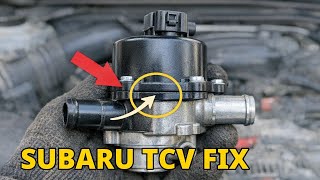
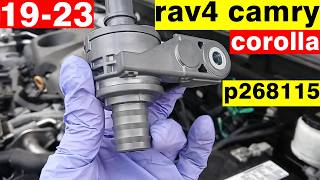
![What is P2682 Engine Code [Quick Guide]](https://img.youtube.com/vi/TiVReh3O5WU/mqdefault.jpg)

The information in this article is provided for general reference and educational purposes only. Vehicle specifications, procedures, and part compatibility can vary by production date, trim level, and region. Always consult your vehicle's factory service manual and verify part numbers before purchasing or performing repairs. Safety-critical components such as airbags, seat belts, and braking systems should be installed by a qualified professional.
- 🎬 Helpful Videos
- What Does P2682 Mean?
- Can I Drive With P2682?
- Common Causes
- Symptoms
- Diagnostic Flowchart
- Common Fixes & Costs
- Used vs. New Parts: Buying Guide
- What Happens If You Wait — Timeline
- Cost of Not Fixing It
- Diagnosis Steps
- When This Code Triggers (Freeze-Frame Conditions)
- Related Codes
- Climate & Environmental Factors
- How to Talk to a Mechanic About This Code
- Where to Take It: Dealer vs Independent vs Chain
- When to Walk Away From the Repair
- What Scan Tool You Need for This Code
- How to Clear the Code After You Fix It
- Will This Fail Emissions / State Inspection?
- Most Commonly Affected Vehicles
- Manufacturer-Specific Notes
- Real Owner Stories
- 2020 Subaru Outback - Reimbursed after $1,700 repair
- 2020 Toyota RAV4 - 'Engine Maintenance Required' warning
- 2021 Subaru Crosstrek - Limped home with no heat
- How to Prevent This Code From Triggering
- Frequently Asked Questions
- Why did EyeSight and cruise control turn off with the Check Engine Light?
- Can I just replace the thermostat to fix P2682?
- Why is the repair so expensive on my Subaru?
- Is the redesigned Subaru part more reliable?
- My check engine light turned off by itself. Am I okay?
- What is 'Coolant Air Purge Mode'?
- Can a bad bypass valve cause other sensors to fail?
- Key Takeaways
- 🎟️ Get 5% Off