

P0118 on 2014-2018 Mazda 3: Engine Coolant Temp Sensor Causes and Fixes
On a 2014-2018 Mazda 3, code P0118 is almost always caused by a failed Engine Coolant Temperature (ECT) sensor. This is a simple DIY fix with the correct OEM part (PE01-18-840A) costing between $20 and $65. Using non-OEM sensors can sometimes cause the code to persist.
- P0118 on your Mazda 3 means the engine computer thinks the engine is freezing cold due to a circuit fault.
- The most common symptoms are a Check Engine Light and cooling fans that won't turn off.
- The problem is almost always a bad Engine Coolant Temperature (ECT) sensor, which is an inexpensive and accessible part to replace.
- It is highly recommended to use a genuine Mazda OEM sensor (Part #PE01-18-840A) as some aftermarket sensors may not fix the problem.
- Before buying parts, use a scan tool to confirm the live coolant temperature reading is stuck at a very low number (like -40°F).
What's Unique About the 2014-2018 Mazda 3
For the third-generation Mazda 3 with the Skyactiv-G engine, the P0118 code does not point to any unusual, platform-specific defect. The causes and diagnostic procedures are standard for this common fault code. The ECT sensor is a simple, reliable component that can fail over time like any other sensor. The repair is straightforward and accessible for a DIY mechanic. However, some owners have reported that using aftermarket sensors did not resolve the code, and switching to a genuine Mazda OEM sensor was necessary to fix the issue. Some Skyactiv platforms may have two ECT sensors, but P0118 almost always refers to the primary sensor on the cylinder head.
Symptoms You May Notice
- Check Engine Light is on
- Cooling fans run continuously at high speed, even with a cold engine.
- Engine temperature gauge on the dashboard may not work or shows a very low reading
- Difficulty starting the engine, particularly when cold.
- Reduced fuel economy.
- Engine may run rough or hesitate, especially before it has warmed up.
- Black smoke from the exhaust on startup due to the rich fuel mixture.
- Replacing the thermostat. A faulty thermostat typically causes overheating or a P0128 code (engine not reaching operating temperature), not a P0118 electrical circuit code.
Most Likely Causes
- Failed Engine Coolant Temperature (ECT) Sensor 🔴 High Probability This is the most common point of failure for this circuit due to age and heat cycles causing the internal thermistor to fail open.
How to confirm: Use a scan tool to check live data. If the ECT reads -40°F or a similarly low, static temperature while the engine is off but the ambient temperature is much higher, the sensor has likely failed internally creating an open circuit. Alternatively, test the sensor's resistance with a multimeter; a healthy sensor should read approximately 2000-3000 Ohms at 20°C (68°F). An infinite or extremely high reading indicates failure.
Typical fix: Replace the ECT sensor. It is located on the driver's side of the engine cylinder head. The old sensor is unscrewed (19mm deep socket) and the new one is installed and torqued to 15 ft-lbs. Some coolant will be lost, so it's necessary to top off the system afterward with Mazda FL22 coolant.
Est. part cost: $20-$65 - Damaged Wiring or Connector 🟡 Medium Probability Wires can become brittle from heat and vibration, or the connector pins can corrode or become loose. The connector itself can be damaged during other maintenance.
How to confirm: Visually inspect the wiring harness and connector for the ECT sensor for any signs of breaks, corrosion, or loose pins. With the sensor unplugged, use a jumper wire to short the two terminals in the vehicle's harness connector. The scan tool's live data reading should jump to a very high temperature (e.g., 250°F+). If it does, the wiring is good; if it doesn't, there is an open in the wiring.
Typical fix: Repair the broken wire or replace the connector pigtail. In one documented case on a Mazdaspeed, a user resolved persistent P0118 and P0126 codes by replacing a faulty aftermarket sensor with an OEM one, noting the connector was also in rough shape. In another case for the same code, the final fix was replacing a corroded connector pigtail.
Est. part cost: $10-$30
Rare But Worth Checking
- Faulty Powertrain Control Module (PCM): This is extremely rare. The PCM should only be considered after the sensor and wiring have been definitively ruled out as the cause.
Diagnosis Steps
- Connect an OBD-II scanner and confirm P0118 is the active code.
- View live data on the scanner. Check the Engine Coolant Temperature (ECT) reading. With a cold engine, it should be close to the Intake Air Temperature (IAT) and ambient temperature.
- If the ECT reads an illogical, very low temperature (like -40°F), it confirms a high input/open circuit fault.
- Turn the engine off. Locate the ECT sensor on the driver's side of the engine cylinder head.
- Inspect the sensor's electrical connector and nearby wiring for any visible damage, corrosion, or loose connections.
- Disconnect the ECT sensor. The reading on the scan tool should not change from -40°F.
- Take a small jumper wire and carefully connect the two metal terminals inside the wiring harness connector (do not probe the PCM side).
- Check the scan tool again. The ECT reading should now show a very high temperature (250°F or more). If it does, the wiring and PCM are good, and the ECT sensor is faulty.
- If the temperature reading does not change when jumped, there is an open circuit (broken wire) between the connector and the PCM.
- If the sensor is deemed faulty, replace it with a quality OEM part. Be prepared to lose a small amount of coolant and have new, compatible coolant (Mazda FL22) ready to top off the system.
- Torque the new sensor to 15 ft-lbs. Clear the code and perform a drive cycle to ensure the fix is complete.
Parts You'll Likely Need
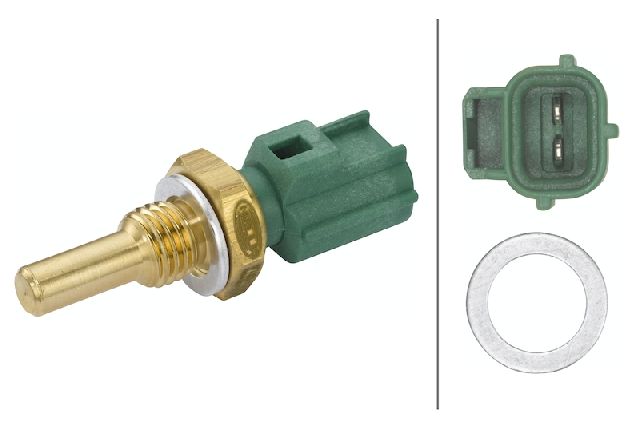
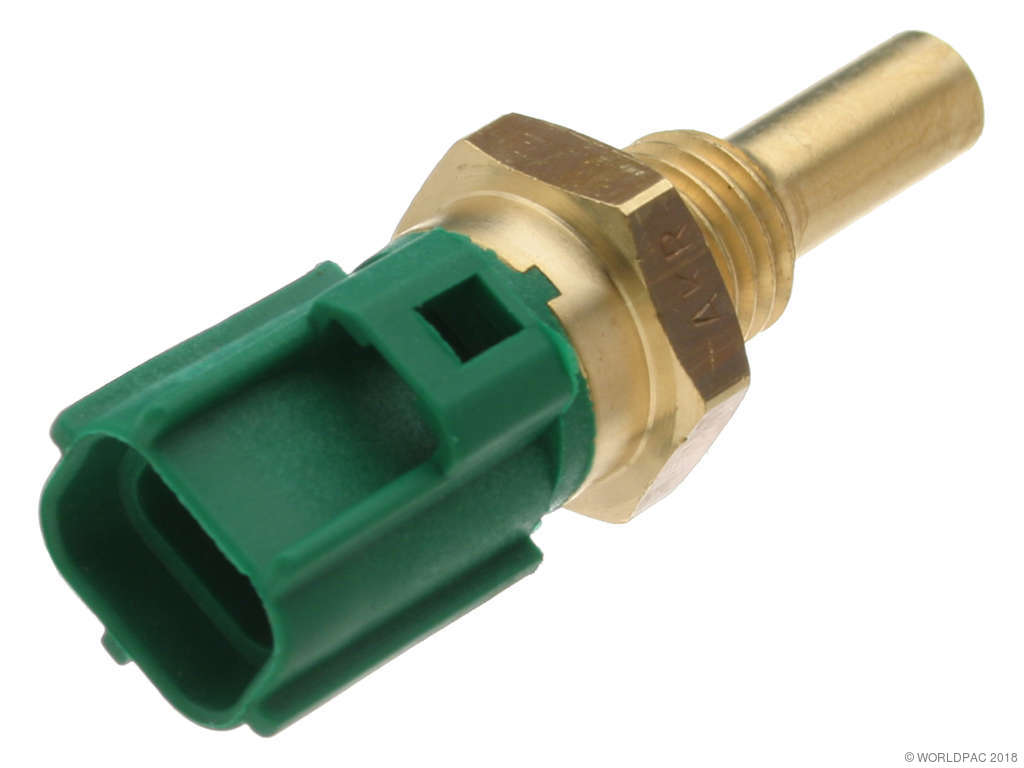
- Engine Coolant Temperature Sensor
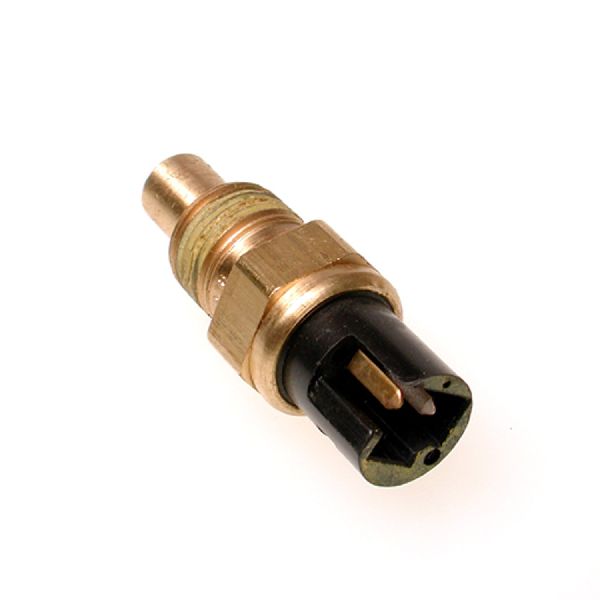
(OEM #PE01-18-840A)— This is the most common failure point for a P0118 code. The original part number B593-18-840A is for older models; Skyactiv engines require PE01-18-840A or the similar PE18-18-840. Using a genuine OEM sensor is recommended as some aftermarket versions have been reported to not resolve the code.
Trusted brands: Mazda (OEM), Denso, NGK/NTK, Standard Motor Products
OEM price range: $45-$65
Aftermarket price range: $20-$45
Related Codes That Often Appear With This One
- P0126: Insufficient Coolant Temperature for Stable Operation (often appears with intermittent ECT sensor faults)
Technical Service Bulletins (TSBs) & Recalls
- TSB 07-007/17: While not for P0118, this TSB is relevant to the cooling system on this platform (including Mazda 3, 6, and CX-5), addressing poor heater performance from a clogged heater core, which can sometimes be accompanied by code P011A (ECT Sensor 1/2 Correlation).
Mechanic-Grade Diagnostic Values
- ECT Sensor Resistance (Ohms) — expected: Approx. 2000-3000 Ω at 20°C (68°F); Approx. 250-350 Ω at 80°C (176°F).. Failure: An infinite resistance (open circuit) reading confirms a failed sensor, which directly causes a P0118 code.
- ECT Sensor Signal Voltage (at PCM) — expected: Varies with temperature. Examples: 3.10V at 20°C (68°F), 0.87V at 80°C (176°F), 0.55V at 100°C (212°F).. Failure: A static voltage reading of 4.6V or higher indicates an open circuit, triggering the P0118 code.
- ECT Sensor Reference Voltage (at connector, unplugged) — expected: 4.5V - 5.0V from the PCM.. Failure: 0V indicates a broken wire from the PCM. A reading of 12V indicates a short-to-power in the harness, a rare but possible fault.
Scan Tool Commands That Help
- Mazda M-MDS (or FORScan): Live Data Logger / PID Monitoring — This is not a bidirectional command, but the primary function used to diagnose P0118. A technician uses it to monitor the 'ECT' and 'ECT2_V' (if applicable) PIDs to confirm the sensor is reporting an illogical, static low temperature (e.g., -40°F) or a high voltage, which is the basis for the diagnosis.
Wiring & Ground Locations
- ECT Sensor Circuit — The ECT sensor connector has two wires running in a harness from the sensor on the driver's side of the cylinder head directly to the Powertrain Control Module (PCM).. The circuit consists of a 5-volt reference wire from the PCM and a sensor ground wire returning to the PCM. A break (open) in either of these wires will cause maximum resistance in the circuit, resulting in a high voltage signal and a P0118 code, mimicking a failed sensor.
Real Owner Repair Stories
- Mazdaspeeds.org forum user 'Sleepy_Pat' (Mazdaspeed (similar engine electronics principle)) — Persistent P0118 and P0126 codes, incorrect temperature readings.
❌ Tried (didn't work) Replacing the ECT sensor with an aftermarket part.
✅ What actually fixed it Replacing the aftermarket sensor with a genuine OEM Mazda ECT sensor resolved all codes. The user also noted the connector was in poor condition, suggesting it could have been a contributing factor. - LS1Tech.com forum user (Chevrolet Camaro (different vehicle, but identical P0118 code principle)) — P0118 code, temp gauge not working, fans always on, no-start condition after PCM reset.
❌ Tried (didn't work) Replacing the ECT sensor with a new part., Testing the old sensor (it worked correctly in hot water)., Inspecting wiring for obvious pinches or breaks.
✅ What actually fixed it The connector pigtail itself was corroded internally, likely from coolant contamination during a previous repair. Replacing the pigtail by cutting out the old one and soldering in a new one fixed the problem completely.
OEM Part Supersession History
B593-18-840A→PE01-18-840A / PE18-18-840— Part redesign for Skyactiv engine platforms.
Heads up: Part B593-18-840A is for older, non-Skyactiv Mazda engines. While it may physically fit, its resistance curve may differ, leading to incorrect temperature readings or persistent codes. It is critical to use the PE-prefix part for the 2014-2018 Mazda 3.
Model Year Variations Within This Range
- 2017-2018: The Mazda 3 received a facelift for the 2017 model year, which included cosmetic updates, interior refinements, and the introduction of G-Vectoring Control. However, the 2.0L Skyactiv-G engine and its cooling system components, including the ECT sensor location and part number, remained unchanged. The diagnostic and repair procedure for P0118 is identical for all years in the 2014-2018 range.
Diagnostic Flowchart
Other Known Issues on This Vehicle
Issues unrelated to this code that are worth knowing about as an owner of this generation:
- Infotainment 'Ghost Touch' and Delamination 🟠 Medium — Very common, especially on 2014-2016 models. The touchscreen may register phantom inputs or become unresponsive. (Ref: Mazda issued a warranty extension for this issue.)
- Cracked Cylinder Head (2.5T Engine) 🔴 High — Primarily affects the turbocharged 2.5T Skyactiv-G engine, not the 2.0L, but is a significant issue for the platform family. Can cause coolant leaks near the exhaust manifold. (Ref: TSB 01-013/21 describes the issue and repair procedure.)
- Clogged Heater Core 🟡 Low — Some owners report poor heater performance. Can be associated with DTC P011A. (Ref: TSB 07-007/17 addresses poor heater performance due to a clogged heater unit.)
- Carbon Buildup on Intake Valves 🟠 Medium — A common long-term issue for all direct-injection (GDI) engines, including the Skyactiv-G. Can cause misfires and reduced performance over 80,000+ miles.
Used vs. New Parts: Buying Guide for This Vehicle
When a used part is the smart pick: For this repair, a used part is only a reasonable choice for the wiring connector pigtail if the original is physically broken or corroded. Never buy a used ECT sensor itself.
Donor-vehicle mileage cap: roughly under 80000 miles for the part to have meaningful remaining life.
What to inspect on the donor part:
- For a pigtail: ensure the plastic is not brittle or cracked.
- Check that the locking tab is intact.
- Inspect the metal pins inside the connector for any green or white corrosion.
- Ensure the attached wires are flexible and the insulation is not cracking.
OEM-only on this vehicle (don't cheap out):
- Engine Coolant Temperature Sensor (ECT)
Aftermarket brands forum-validated for this vehicle:
- Denso
- NGK/NTK
- Standard Motor Products (SMP)
Brands owners have reported issues with on this vehicle:
- Unbranded or generic 'white-box' parts have been reported by forum users to not resolve the P0118 code, requiring a second repair with an OEM part.
Real Owner Stories
Aggregated from forums and TSBs cited above. Mileages and costs reflect what owners reported in those sources.
Mazdaspeed (Skyactiv-G Platform Mate)
Symptoms: The owner experienced persistent P0118 and P0126 codes even after installing a new sensor. The connector was also noted to be in rough shape.
What fixed it: The issue was fully resolved only after replacing the faulty aftermarket sensor with a genuine OEM sensor.
Source hint: Mazdaspeeds.org - 'Ecu issue?' thread
2014-2018 Mazda 3 2.0L
Symptoms: The owner required a walkthrough for a P0118 fault where the sensor needed replacement.
What fixed it: Replacement of the ECT sensor using a 19mm deep socket, torqued to 15 ft-lbs, and topping off with FL22 coolant.
Source hint: 1A Auto: How to Replace Engine Coolant Temperature Sensor 2014-18 Mazda 3
2013-Present Mazda CX-5 (2.0L Skyactiv-G)
Symptoms: Owner reported diagnostic path for P0118 and P011A codes on the same engine architecture used in the Mazda 3.
What fixed it: Replacing the PE01-18-840A ECT sensor and checking for wiring opens.
Source hint: CX-5 Owner Forums
Related OBD-II Codes
Frequently Asked Questions
Why are my cooling fans running at high speed even though I just started my Mazda 3 in the morning?
I replaced my ECT sensor with a part from a local auto store, but the P0118 code is still there. What should I do?
Does TSB 07-007/17 mean my P0118 code is caused by a clogged heater core?
Where is the ECT sensor located on the 2.0L Skyactiv-G engine?
Can I use any coolant to top off my Mazda 3 after replacing the sensor?
Is the P0118 code related to the 'Ghost Touch' infotainment issue on my 2014 Mazda 3?
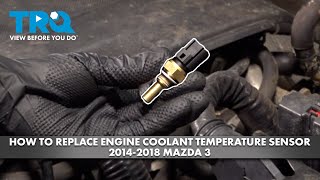
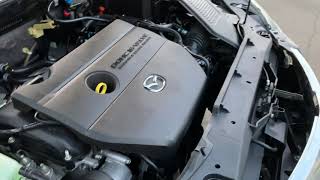
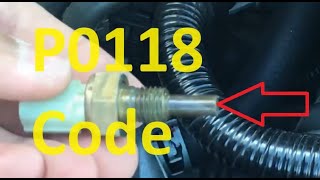
Helpful Videos

We Have This Part in Stock


The information in this article is provided for general reference and educational purposes only. Vehicle specifications, procedures, and part compatibility can vary by production date, trim level, and region. Always consult your vehicle's factory service manual and verify part numbers before purchasing or performing repairs. Safety-critical components such as airbags, seat belts, and braking systems should be installed by a qualified professional.
- Mazda 3:
- 🎬 Helpful Videos
- 🛍️ Shop This Part
- What's Unique About the 2014-2018 Mazda 3
- Symptoms You May Notice
- Most Likely Causes
- Rare But Worth Checking
- Diagnosis Steps
- Parts You'll Likely Need
- Related Codes That Often Appear With This One
- Technical Service Bulletins (TSBs) & Recalls
- Mechanic-Grade Diagnostic Values
- Scan Tool Commands That Help
- Wiring & Ground Locations
- Real Owner Repair Stories
- OEM Part Supersession History
- Model Year Variations Within This Range
- Diagnostic Flowchart
- Other Known Issues on This Vehicle
- Used vs. New Parts: Buying Guide for This Vehicle
- Real Owner Stories
- Mazdaspeed (Skyactiv-G Platform Mate)
- 2014-2018 Mazda 3 2.0L
- 2013-Present Mazda CX-5 (2.0L Skyactiv-G)
- Related OBD-II Codes
- Frequently Asked Questions
- 🎟️ Get 5% Off