

P0118 on 2010-2015 Hyundai Tucson: Engine Coolant Temperature Circuit High Causes and Fixes
On a 2010-2015 Hyundai Tucson with either the 2.0L or 2.4L Theta II engine, code P0118 is most often caused by a failed Engine Coolant Temperature (ECT) sensor. This results in a Check Engine Light and constantly running cooling fans. It is a straightforward DIY replacement, with the OEM part (39220-38010) costing between $20 and $60.
- P0118 on your Tucson means the computer thinks the engine is extremely cold (often -40°F) due to a high voltage signal from the coolant sensor, which usually indicates an open circuit.
- The most likely cause is a bad Engine Coolant Temperature (ECT) sensor (Part #39220-38010), which is an affordable and accessible part to replace.
- Key symptoms to watch for are a Check Engine Light and cooling fans that won't turn off.
- Before buying parts, check the sensor's connector for corrosion or damage, as a bad connection can also trigger this code.
- If you replace the sensor yourself, remember to bleed the cooling system afterward to remove any air pockets, which can cause overheating.
What's Unique About the 2010-2015 Hyundai Tucson
For the second-generation (LM) Hyundai Tucson, the P0118 code is a very common and straightforward issue. The problem almost always points to the sensor itself or its immediate wiring, rather than more complex system failures. The sensor is located on the cylinder head near the thermostat housing on the 2.4L GDI engine. The PCM's response is predictable: it will command the cooling fans to run continuously at high speed as a fail-safe measure to prevent potential overheating, which is a very noticeable symptom for the driver.
Symptoms You May Notice
- Check Engine Light is on
- Cooling fans run constantly, even when the engine is cold
- Difficulty starting the engine, especially when cold
- Poor fuel economy
- Rough or hesitant idle until the engine warms up
- Temperature gauge on the dashboard may be stuck on cold or behave erratically
- Black smoke from exhaust on startup (less common, due to rich fuel mixture)
- Replacing the thermostat. While a faulty thermostat can cause cooling issues (often code P0128), it will not cause a P0118 'Circuit High' electrical fault code. A user on Reddit reported getting a P0118 code after a thermostat replacement, which was likely caused by damaging the sensor or wiring during the repair.
Most Likely Causes
- Faulty Engine Coolant Temperature (ECT) Sensor 🔴 High Probability The sensor is a simple thermistor that can fail over time, developing an internal open circuit which causes the high resistance reading. This is the most frequent point of failure for this code on this platform.
How to confirm: With the engine cold, use a scan tool to compare the ECT reading to the Intake Air Temperature (IAT) reading. They should be within a few degrees of each other. If the ECT shows an extreme cold value (like -40°F), the sensor is likely bad. You can also test the sensor's resistance with a multimeter. At room temperature (20°C/68°F), it should be around 2.31-2.59 kΩ. An 'infinite' or 'O.L.' reading indicates an open circuit and a failed sensor.
Typical fix: Replace the ECT sensor. This involves partially draining the coolant, unplugging the old sensor, removing a retaining clip, and installing the new sensor with its O-ring. Always bleed the cooling system after replacement to remove air pockets.
Est. part cost: $20-$60 - Damaged Wiring or Connector 🟡 Medium Probability The wiring harness and two-pin connector are exposed to engine heat and vibration, which can lead to corrosion, broken wires at the connector, or loose pins over time.
How to confirm: Visually inspect the ECT sensor's connector and wiring for any signs of corrosion, damage, or loose connections. Unplug the connector and check for a 5-volt reference signal on one pin and a good ground on the other pin with the key on, engine off. Wiggle the harness while watching the live data on a scan tool to see if the reading changes, which would indicate an intermittent connection.
Typical fix: Clean the connector pins with electrical contact cleaner. If a wire is broken, it will need to be repaired or spliced. If the connector itself is damaged (a common issue), it will need to be replaced with a new pigtail connector.
Est. part cost: $5-$30 for a new pigtail connector
Rare But Worth Checking
- Faulty Powertrain Control Module (PCM): This is very rare. The PCM should only be considered after the sensor and wiring have been thoroughly tested and confirmed to be good. A PCM failure is the least likely cause.
- Low Engine Coolant Level: If the coolant level is so low that the sensor is exposed to air instead of coolant, it can send inaccurate readings. This is unlikely to cause a 'Circuit High' code but is a basic check that should be performed as part of any cooling system diagnosis.
Diagnosis Steps
- Connect an OBD-II scanner and verify that P0118 is the primary code.
- View the live data stream. Check the Engine Coolant Temperature (ECT) reading. If the engine is cold, the ECT reading should be very close to the Intake Air Temperature (IAT) and ambient air temperature. A reading of -40°F or a similarly low, fixed value points directly to an open circuit.
- Turn the vehicle off. Locate the ECT sensor on the cylinder head, near the thermostat housing. On the 2.4L engine, it's on the right side of the head (passenger side in LHD vehicles).
- Visually inspect the sensor's electrical connector and wiring for any obvious damage, corrosion, or broken wires right at the back of the connector.
- Disconnect the connector. Check for a 5-volt reference signal on one pin and a good ground on another pin with the key on, engine off, using a multimeter.
- If voltage and ground are present, the wiring is likely okay. The fault is most likely the sensor itself. You can confirm by testing the sensor's resistance with a multimeter. A good sensor should have resistance around 2.31-2.59kΩ at 20°C (68°F).
- If you jumper the two pins of the harness connector together with a fused wire, the scan tool reading should go to a maximum hot temperature (e.g., 284°F). If it does, the wiring to the PCM is good, confirming the sensor is bad.
- If voltage or ground is missing, or the jumper test fails, trace the wiring back to the PCM to find the break or short in the circuit.
- If the sensor and wiring both test good, the issue may be a faulty PCM, but this is extremely rare and should be the last consideration.
Parts You'll Likely Need
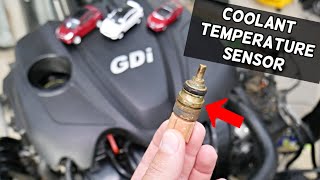
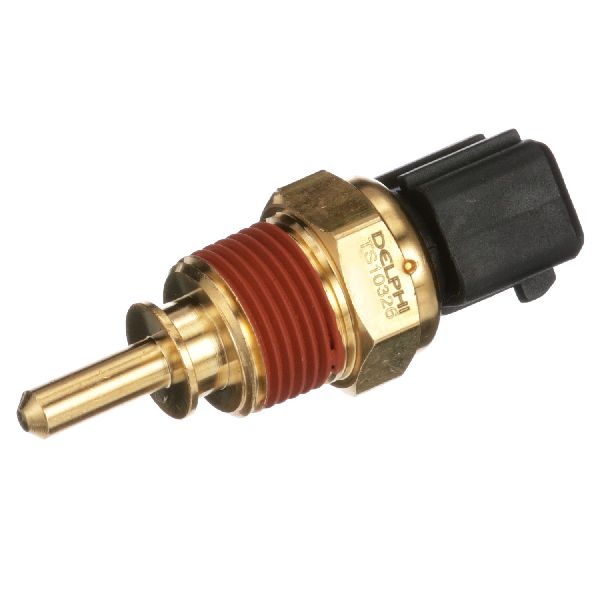
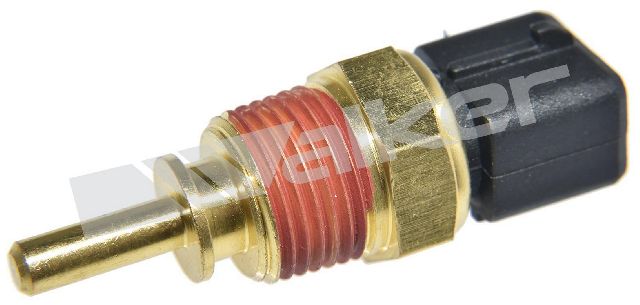
- Engine Coolant Temperature Sensor
(OEM #39220-38010)— This sensor is the most common point of failure for the P0118 code, as its internal thermistor can fail and create an open circuit. This part number is widely listed for the 2010-2015 Tucson and other Hyundai/Kia models.
Trusted brands: Hyundai (OEM), Standard Motor Products, NTK, Beck/Arnley
OEM price range: $40-$60
Aftermarket price range: $20-$45
Platform-Specific Known Issues
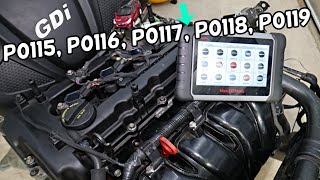
- Sensor Location: On the 2.4L Theta II GDI engine, the ECT sensor is located on the passenger side of the cylinder head, near the thermostat housing and upper radiator hose connection. It is relatively easy to access after removing the engine cover. 🎬 Watch: See the exact sensor location on the 2.4L engine.
- Real Owner Experience: A Reddit user with a P0118 code and a temp gauge stuck on 'C' was advised that the -40 degree reading is a default for an open circuit, and the most likely cause is a bad ECT sensor, which would also cause the engine to run rich. This aligns perfectly with the common diagnosis.
Mechanic-Grade Diagnostic Values
- ECT Sensor Resistance — expected: 2.31 ~ 2.59 kΩ at 20°C (68°F). Failure: An 'infinite' or 'O.L.' (Open Line) reading indicates an internal open circuit in the sensor.
- ECT Sensor Resistance — expected: 14.013 ~ 16.83 kΩ at -20°C (-4°F). Failure: A reading significantly outside this range at the specified temperature indicates a faulty sensor.
- ECT Sensor Signal Voltage at PCM — expected: Should vary based on temperature. A 'High Input' code is set when voltage exceeds 3.255V for more than 2 seconds.. Failure: A constant high voltage (near 5V) indicates an open circuit between the sensor and the PCM.
- ECT Connector Voltage (Key On, Engine Off, Connector Unplugged) — expected: Approximately 5V on the reference wire and 0V (good ground) on the ground wire.. Failure: Absence of 5V suggests a wiring issue from the PCM; absence of ground suggests a break in the ground circuit.
Scan Tool Commands That Help
- Hyundai GDS (Global Diagnostic System): Live Data Graphing (ECT Sensor) — To visually monitor the ECT sensor voltage or temperature reading while wiggling the harness. This helps identify intermittent open circuits or poor connections that cause the P0118 code. The GDS provides dealership-level data refresh rates for this test.
- Hyundai GDS (Global Diagnostic System): DTC Diagnosis Guide — After retrieving code P0118, the GDS software provides a step-by-step diagnostic tree specific to that code and vehicle, including wiring diagrams, component locations, and expected values, streamlining the process.
Wiring & Ground Locations
- ECT Sensor Signal Pin — Pin 74 on the blue PCM connector plug.. This is the specific pin at the PCM where the temperature signal from the ECT sensor arrives. Technicians can test for continuity between this pin and the signal wire at the sensor connector to verify the wire's integrity.
- ECT Sensor Ground Pin — Pin 63 on the blue PCM connector plug.. This is the sensor's ground circuit pin at the PCM. A break in the wire between the sensor and this pin will cause an open circuit and trigger P0118.
- Ground Point GHG01 — Located in the left front of the engine compartment.. This is a primary engine compartment ground point. While the ECT sensor grounds through the PCM, a poor main ground for the PCM itself can cause floating voltages and erratic sensor readings. Verifying this ground is clean and tight is a good practice during advanced diagnostics.
- ECT Sensor Connector — A two-wire connector, usually gray or black, on the thermostat housing.. This is the most common location for physical damage, corrosion, or loose pins. The signal wire is typically yellow, and the ground wire is gray or tan.
Real Owner Repair Stories
- 2CarPros Forum User RZNLVS562 (Vehicle with similar PCM/ECT sensor logic) — ECT sensor reading stuck at -60°C, radiator fan not turning on.
❌ Tried (didn't work) Verified the cooling fan works by supplying direct voltage., Checked continuity between the ECT sensor connector and the ECM pins; wires were good., Checked for ground on the relevant ECM pins; grounds were good.
✅ What actually fixed it The user concluded the PCM was internally shorted, preventing it from sending the 5V reference signal to the ECT sensor. The final fix was to replace the PCM with a cloned unit. This is a rare but important outcome after all wiring and the sensor itself have been ruled out. - NHTSA ODI #10095960 (Cross-manufacturer reference) — An owner of a vehicle from the same manufacturer reported that while dealing with engine damage from a jumped belt, the P0118 code appeared, highlighting how electrical faults can sometimes surface alongside mechanical failures.
Diagnostic Flowchart
Used vs. New Parts: Buying Guide for This Vehicle
When a used part is the smart pick: For this repair, a used OEM ECT sensor from a low-mileage donor vehicle is a reasonable choice. The sensor is not a high-wear item, and a used OEM part is often more reliable than a new, cheap aftermarket alternative. A used wiring pigtail is also a good option if only the connector is damaged.
Donor-vehicle mileage cap: roughly under 80000 miles for the part to have meaningful remaining life.
What to inspect on the donor part:
- Inspect the sensor's plastic body for cracks or signs of overheating.
- Check the connector pins for corrosion or damage.
- If possible, test the resistance of the used sensor with a multimeter before purchase to ensure it's within spec (approx. 2.3-2.6 kΩ at room temp).
OEM-only on this vehicle (don't cheap out):
- Powertrain Control Module (PCM). Due to the need for VIN programming and software matching, a new or professionally cloned OEM PCM is the only reliable option if the original is found to be faulty.
Aftermarket brands forum-validated for this vehicle:
- NTK
- Standard Motor Products (SMP)
- Beck/Arnley
Brands owners have reported issues with on this vehicle:
- No-name, unbranded sensors from online marketplaces should be avoided, as they have a higher rate of being out-of-spec from the factory or failing prematurely.
Real Owner Stories
Aggregated from forums and TSBs cited above. Mileages and costs reflect what owners reported in those sources.
2010-2015 Hyundai Tucson
Symptoms: The temperature gauge was stuck on 'C' and a scan tool showed a -40 degree reading, causing the engine to run rich.
What fixed it: The diagnosis indicated the most likely cause was a bad ECT sensor creating an open circuit.
Source hint: Reddit user experience mentioned in vehicle_specific_issues
NHTSA Reported Incident
Symptoms: A technician noted that code P0118 appeared on a vehicle from the same manufacturer while investigating a belt that had "jumped" and caused engine damage.
What fixed it: While the primary issue was mechanical, the P0118 code was identified as an additional fault during the diagnostic choice process (NHTSA ODI #10095960).
Source hint: NHTSA ODI #10095960
Related OBD-II Codes
Frequently Asked Questions
Where is the engine coolant temperature (ECT) sensor located on my 2010-2015 Tucson with the 2.4L engine?
My scan tool is showing a coolant temperature of -40°F. Is that normal?
How can I test the ECT sensor on my Tucson myself?
My cooling fans are running all the time, even right after starting the engine cold. Is this related to the P0118 code?
I replaced the ECT sensor, but the code came back. What else should I check?
Are there any recommended aftermarket brands for the ECT sensor on this vehicle?
Helpful Videos
We Have This Part in Stock


The information in this article is provided for general reference and educational purposes only. Vehicle specifications, procedures, and part compatibility can vary by production date, trim level, and region. Always consult your vehicle's factory service manual and verify part numbers before purchasing or performing repairs. Safety-critical components such as airbags, seat belts, and braking systems should be installed by a qualified professional.
- Hyundai Tucson:
- 🎬 Helpful Videos
- 🛍️ Shop This Part
- What's Unique About the 2010-2015 Hyundai Tucson
- Symptoms You May Notice
- Most Likely Causes
- Rare But Worth Checking
- Diagnosis Steps
- Parts You'll Likely Need
- Platform-Specific Known Issues
- Mechanic-Grade Diagnostic Values
- Scan Tool Commands That Help
- Wiring & Ground Locations
- Real Owner Repair Stories
- Diagnostic Flowchart
- Used vs. New Parts: Buying Guide for This Vehicle
- Real Owner Stories
- 2010-2015 Hyundai Tucson
- NHTSA Reported Incident
- Related OBD-II Codes
- Frequently Asked Questions
- 🎟️ Get 5% Off