

P0118 on 2017-2019 Ford Fusion: Engine Coolant Temperature Sensor Circuit High Input Causes and Fixes
For a 2017-2019 Ford Fusion, code P0118 most often points to a faulty Engine Coolant Temperature (ECT) sensor or a bad electrical connection to it. On 2.7L EcoBoost models, this is a known issue covered by multiple TSBs where the sensor, its connector, or the short jumper harness it connects to is the root cause. The fix is typically replacing the sensor and/or harness, which can be a labor-intensive job due to the sensor's location under the intake manifold.
- P0118 on a 2017-2019 Fusion indicates the computer is getting a signal for an extremely cold engine, usually due to an open circuit.
- Before replacing any parts, carefully inspect the ECT sensor's electrical connector for damage or a loose fit, as this is a known issue.
- If you have the 2.7L EcoBoost engine, be aware of the specific TSBs that point to a faulty wiring harness as a common culprit.
- The most likely parts needed for the fix are the ECT sensor itself or its connector pigtail.
- This is a manageable DIY repair that can prevent poor performance, bad fuel economy, and potential engine overheating.
What's Unique About the 2017-2019 Ford FUSION
For the 2017-2019 Ford Fusion, particularly models equipped with the 2.7L EcoBoost engine, this code is frequently more than just a bad sensor. Ford has issued multiple Technical Service Bulletins (TSBs) indicating that the issue is often a poorly seated electrical connector or a problematic wiring harness that is shared with the knock sensor. The ECT sensor on the 2.7L engine is located deep in the valley between the cylinder banks, under the intake manifold, making access difficult and labor-intensive. This makes inspecting the wiring and connector just as critical as testing the sensor itself, and replacement is a more involved job than on other engines.
Diagnostic Flowchart
Tap your situation to follow the diagnostic path that matches what you're seeing on this vehicle.
Symptoms You May Notice
- Check Engine Light is on
- Engine is hard to start, especially when cold
- Rough or erratic idle
- Poor fuel economy
- Black smoke from the exhaust
- Cooling fans run constantly at high speed
- Engine temperature gauge may behave erratically, show no reading, or show an overheat warning
- A/C system may be disabled by the PCM
- Replacing the thermostat. A thermostat issue typically causes a P0128 code (Coolant Temp Below Thermostat Regulating Temperature) and does not directly cause a P0118 circuit fault.
Most Likely Causes
- Damaged or Poorly Seated ECT Sensor Connector 🔴 High Probability Specifically cited for 2.7L engines in Ford TSBs #SSM 47791 and #SSM 46906. The connector can become loose, damaged, or have pushed-out pins. Forum users report the connector may feel seated without being fully clicked into place.
How to confirm: Visually inspect the ECT sensor connector for a secure fit, pushed-out pins, corrosion, or physical damage. Wiggle the connector while monitoring live data on a scan tool to see if the temperature reading fluctuates wildly. This is difficult on the 2.7L due to the sensor's location under the intake.
Typical fix: Reseat the connector securely. If damaged, replace the connector pigtail. This requires cutting and splicing wires.
Est. part cost: $15-$40 - Faulty Engine Coolant Temperature (ECT) Sensor 🔴 High Probability Sensors are a common failure item. TSB #SSM 48991 recommends replacing the sensor along with the harness as a complete fix for the 2.7L engine.
How to confirm: With the engine cold, compare the ECT reading on a scan tool to the Intake Air Temperature (IAT) reading; they should be within a few degrees of each other. A P0118 will often show a reading of -40°F. You can also test the sensor's resistance with a multimeter; it should change predictably as it warms up.
Typical fix: Replace the ECT sensor. On the 2.7L engine, this requires removing the intake manifold. 🎬 See this walkthrough for replacing the sensor on a Ford Fusion. Be prepared to top off any lost coolant.
Est. part cost: $25-$70 - Wiring Harness Issue 🟡 Medium Probability TSB #SSM 48991 points to issues with the ECT sensor/knock sensor jumper harness on 2.7L engines, requiring replacement of both the sensor and the harness. TSB #SSM 46906 also mentions potential wiring damage between specific connectors (C1016 and C1168 for the Fusion).
How to confirm: If the sensor and connector are good, perform a continuity test on the signal and ground wires from the ECT connector back to the PCM. Check for 5 volts reference at the connector with the key on. An open circuit is the most common cause for a 'high input' code.
Typical fix: Repair the broken or shorted section of the wire. In cases covered by TSB #SSM 48991, the entire ECT/knock sensor jumper harness is replaced.
Est. part cost: $50-$150 for a harness
Rare But Worth Checking
- Low Engine Coolant: If the coolant level is extremely low, the sensor may be exposed to air instead of coolant, causing erratic readings. This usually triggers other codes as well, like P0128 or overheating codes, and is often a symptom of a different problem (e.g., coolant intrusion on 1.5L/2.0L engines).
- Faulty Powertrain Control Module (PCM): This is extremely rare. The PCM should only be considered after all other possibilities, including the sensor, connector, and all wiring, have been thoroughly tested and ruled out.
Diagnosis Steps
- Read the trouble codes with an OBD-II scanner and check for any other related codes, especially P0330 on 2.7L models.
- Using the scanner's live data function, view the Engine Coolant Temperature. A P0118 will typically show a fixed, extremely low temperature (e.g., -40°F). 🎬 Watch: EricTheCarGuy explains what P0118 high input codes really mean.
- With the engine cold, compare the ECT reading to the Intake Air Temperature (IAT) reading. They should be within a few degrees of each other.
- For 2.7L engines, acknowledge the difficult access. The sensor is under the intake manifold. For other engines, locate the sensor, typically near the thermostat housing.
- Visually inspect the ECT sensor's electrical connector for looseness, corrosion, or damaged pins. This is a critical step on this vehicle per multiple TSBs.
- Inspect the wiring harness leading to the sensor for any signs of damage, chafing, or melting.
- Test the circuit. Disconnect the sensor and check for a 5-volt reference signal on one wire and a good ground on the other with the key on.
- If the 5V reference or ground is missing, trace the wiring back to the PCM to find the break or short. On 2.7L models, pay close attention to the jumper harness that also serves the knock sensor.
- If the sensor, connector, and wiring all test good, the fault may lie within the PCM, 🎬 Watch: Two quick DIY methods to fix the P0118 engine code. but this is highly unlikely.
Parts You'll Likely Need
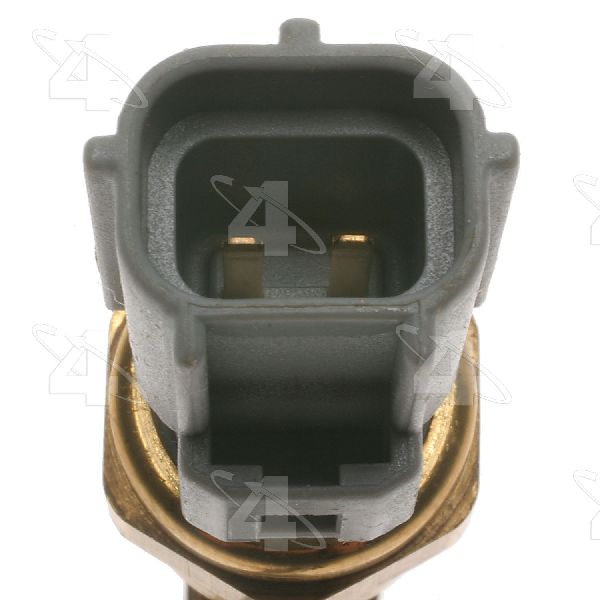
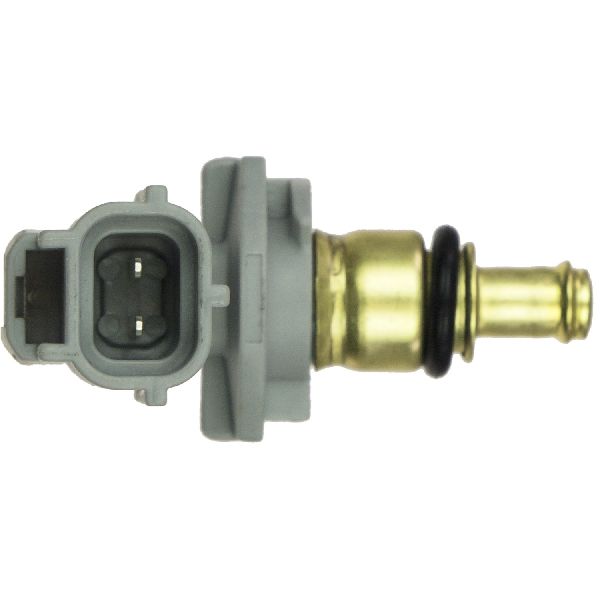
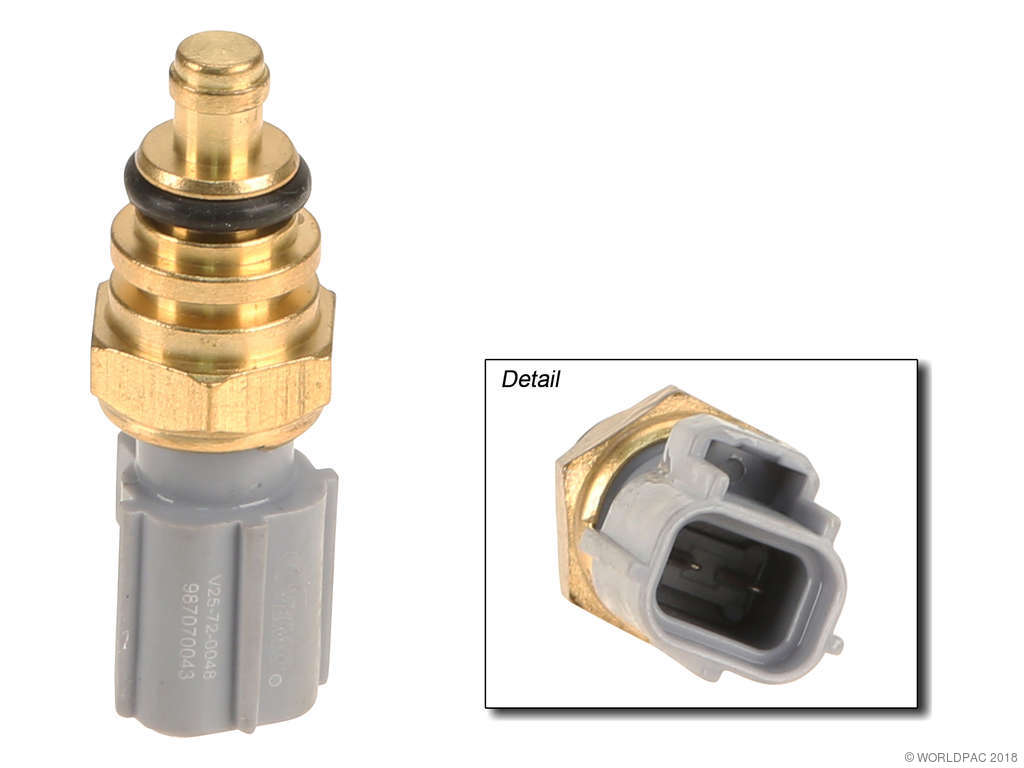
- Engine Coolant Temperature (ECT) Sensor
(OEM #DY1144 (Motorcraft), 3F1Z-12A648-A (Ford Base))— This is the most common component to fail internally, causing the P0118 code. TSB #SSM 48991 recommends its replacement.
Trusted brands: Motorcraft, Bosch, Delphi
OEM price range: $30-$50
Aftermarket price range: $20-$40 - ECT Sensor Connector Pigtail
(OEM #WPT-931 (Motorcraft, check application))— Ford TSBs specifically mention the connector as a high-probability failure point on 2.7L engines due to being loose or damaged.
Trusted brands: Motorcraft, Dorman
OEM price range: $25-$40
Aftermarket price range: $15-$30 - ECT/Knock Sensor Wiring Harness
(OEM #7T4Z-12A699-A (example, verify by VIN))— TSB #SSM 48991 recommends replacing this entire jumper harness along with the ECT sensor on 2.7L engines to resolve the issue. The base part number is 12A699.
Trusted brands: Motorcraft
OEM price range: $70-$150
Related Codes That Often Appear With This One
- P0117 — This is the opposite code, 'ECT Circuit Low Input.' Seeing both intermittently could point to a wiring or connector issue causing the signal to swing between an open and a shorted state.
- P0116 — Indicates 'ECT Circuit Range/Performance.' This suggests the sensor's readings are erratic or not changing as expected, which can be caused by the same wiring or sensor faults as P0118. It is listed in TSB #SSM 48991.
- P1299 — Indicates 'Cylinder Head Overtemperature Protection Active.' A faulty ECT sensor can fail to trigger the cooling fans properly, leading to a genuine overheat condition that sets P1299. This code is specifically mentioned alongside P0118 in TSB #SSM 48991.
- P0330 — Means 'Knock Sensor 2 Circuit Malfunction.' On the 2.7L EcoBoost, the ECT and knock sensors share a short jumper harness. A fault in this harness often triggers codes for both sensors simultaneously, as noted in TSB #SSM 48991.
Technical Service Bulletins (TSBs) & Recalls
- SSM 48991: Addresses an illuminated MIL with various DTCs including P0118 on 2.7L engines, pointing to the ECT sensor or knock sensor wirin
Platform-Specific Known Issues
- For Fusions with the 2.7L EcoBoost engine, TSB #SSM 48991 notes that P0118 (and other codes) may be caused by the ECT sensor or knock sensor wiring harness, and recommends replacing both the sensor (12A648) and the harness (12A699).
- TSB #SSM 47791 and #SSM 46906 also target the 2.7L engine, stating the code can be caused by an ECT sensor connector that is not fully seated or has damaged wiring between connectors C1016 and C1168.
- The physical location of the ECT sensor on the 2.7L engine is in the valley between the cylinder heads, underneath the intake manifold, making it a significantly more labor-intensive repair (3-4+ hours) than on other Fusion engines.
Mechanic-Grade Diagnostic Values
- ECT Sensor Resistance vs. Temperature — expected: ~37,000 Ohms at 32°F (0°C), ~9,420 Ohms at 68°F (20°C), ~2,238 Ohms at 176°F (80°C), ~177 Ohms at 212°F (100°C). Failure: Infinite resistance (open circuit) or values significantly deviating from the temperature chart indicates a bad sensor.
- ECT Sensor Circuit Voltage (at PCM) — expected: Between 0.2V (hot) and 4.8V (cold).. Failure: A voltage reading of 4.9V or higher will trigger P0118, indicating an open circuit.
- ECT Connector Jumper Test — expected: With the sensor disconnected and a jumper wire across the two pins in the harness connector, the scan tool's live data for ECT should read a maximum temperature (e.g., >280°F).. Failure: If the temperature reading does not go to maximum, the fault is in the wiring harness or the PCM, not the sensor.
- Reference Voltage at ECT Connector — expected: With the key on and engine off, one pin of the connector should have a 5V reference signal from the PCM.. Failure: Absence of 5V suggests a wiring issue between the PCM and the sensor, or a faulty PCM.
Scan Tool Commands That Help
- Ford IDS (Integrated Diagnostic System): Datalogger - ECT PID — Used to monitor the live voltage and temperature reading from the ECT sensor. Wiggling the harness while watching this data can help identify intermittent open circuits. IDS may also show related but non-MIL codes that generic scanners miss.
- FORScan: Live Data - ECT PID — A powerful aftermarket tool for Fords that provides access to manufacturer-specific PIDs. It can be used to compare the ECT reading with other temperature sensors (IAT, CHT) to confirm a fault, similar to the dealer tool.
Wiring & Ground Locations
- PCM Ground — On the firewall. There may be one or two ground points depending on the model year and engine.. The ECT sensor circuit relies on a clean ground reference back to the PCM. A corroded or loose PCM ground could potentially cause erratic sensor readings, although it would likely cause multiple other sensor codes as well.
- ECT Sensor Connector (C1168 on Fusion) — On the 2.7L EcoBoost, it is located under the intake manifold, connected to the ECT/Knock sensor jumper harness.. This connector is specifically cited in TSBs #SSM 47791 and #SSM 46906 as a primary point of failure due to not being fully seated or having damaged pins/wires.
Real Owner Repair Stories
- Reddit user in r/Silverado (2014 Silverado 5.3L (similar GM ECT circuit logic)) — Cooling fans on full blast, no temperature reading on the dash, P0118 code.
❌ Tried (didn't work) Replaced the thermostat., Replaced the ECT sensor with an aftermarket part from Advance Auto Parts.
✅ What actually fixed it The prongs on the new aftermarket ECT sensor were accidentally bent during installation. Replacing it a second time with an OEM sensor from the dealership, and ensuring the pins were straight, resolved the issue.
OEM Part Supersession History
7T4Z-12A699-AB→7T4Z-12A699-A— Part revision or manufacturer change.
Heads up: 7T4Z-12A699-AA was also superseded by 7T4Z-12A699-A. This is the ECT/Knock sensor harness for the 2.7L engine.
Helpful Videos
![How to Fix FORD P0118 Engine Code in 3 Minutes [2 DIY Methods / Only $7.33]](https://img.youtube.com/vi/QsygZ_C9NA8/mqdefault.jpg)
Used OEM Parts in Stock


New Aftermarket Parts Available


The information in this article is provided for general reference and educational purposes only. Vehicle specifications, procedures, and part compatibility can vary by production date, trim level, and region. Always consult your vehicle's factory service manual and verify part numbers before purchasing or performing repairs. Safety-critical components such as airbags, seat belts, and braking systems should be installed by a qualified professional.
- Ford FUSION:
- 🎬 Helpful Videos
- 🛍️ Shop This Part
- What's Unique About the 2017-2019 Ford FUSION
- Diagnostic Flowchart
- Symptoms You May Notice
- Most Likely Causes
- Rare But Worth Checking
- Diagnosis Steps
- Parts You'll Likely Need
- Related Codes That Often Appear With This One
- Technical Service Bulletins (TSBs) & Recalls
- Platform-Specific Known Issues
- Mechanic-Grade Diagnostic Values
- Scan Tool Commands That Help
- Wiring & Ground Locations
- Real Owner Repair Stories
- OEM Part Supersession History
- 🎟️ Get 5% Off