

P0118 on 2013-2018 Ford C-Max Hybrid: ECT Sensor Circuit High Causes and Fixes
On a 2013-2018 Ford C-Max Hybrid, code P0118 almost always points to a failed Engine Coolant Temperature (ECT) sensor or a bad connection to it. This is a simple and affordable DIY fix, with a new sensor costing between $20 and $50. The sensor is located on the cylinder head between the 3rd and 4th ignition coils.
- P0118 on your C-Max Hybrid means the computer thinks the engine is freezing cold, even when it's not.
- The most likely culprit is a failed Engine Coolant Temperature (ECT) sensor, which is an inexpensive part.
- Before buying parts, check that the sensor's electrical connector is plugged in securely and is free of corrosion.
- A scan tool showing a temperature of -40°F is a near-certain sign of the open circuit that triggers this code.
- The sensor is located on top of the engine between the 3rd and 4th ignition coils; it's a manageable DIY replacement.
What's Unique About the 2013-2018 Ford C-Max
On the Ford C-Max Hybrid, accurate coolant temperature is crucial for managing the complex interplay between the gasoline engine and the electric drive system. An incorrect temperature reading can disrupt when the gas engine turns on and off, affecting efficiency and drivability. While TSBs for the C-Max are not specific to P0118, Ford has issued bulletins for other popular engines (like the 2.7L EcoBoost) that experience the same family of ECT codes (P0117, P0118, P0119). In some cases, Ford's official fix was to release a kit to relocate the ECT sensor entirely, acknowledging a problematic original placement or harness design. This history suggests a known sensitivity in Ford's ECT circuits.
Symptoms You May Notice
- Check Engine Light is on
- Engine cooling fans run continuously at high speed
- Temperature gauge on the dashboard reads cold or doesn't move
- Reduced fuel economy
- Engine runs rough or hesitates, especially when cold
- Difficulty starting the engine, especially when cold
- Black smoke from the exhaust in some cases
- Replacing the thermostat. A thermostat is a mechanical part that regulates coolant flow. A stuck-open thermostat typically causes a P0128 code (Coolant Temperature Below Thermostat Regulating Temperature), not an electrical circuit code like P0118.
Most Likely Causes
- Failed Engine Coolant Temperature (ECT) Sensor 🔴 High Probability The sensor is a thermistor that changes resistance with temperature. It can fail internally, creating an open circuit which the PCM reads as maximum high voltage (and thus minimum temperature). This is the most common point of failure for P0118.
How to confirm: With a scan tool, check live data. If the ECT reads -40°F, the sensor has almost certainly failed or is disconnected. You can also test the sensor's resistance with a multimeter; it should be around 2,000-3,000 ohms at room temperature (68°F/20°C). An open circuit (infinite resistance) confirms failure.
Typical fix: Replace the ECT sensor. On the C-Max Hybrid, it is located on the cylinder head, tucked between the ignition coils for cylinders 3 and 4. You will need to remove the engine cover for access. Be prepared for a small amount of coolant to spill when removing the old sensor.
Est. part cost: $20-$50 - Damaged or Disconnected ECT Sensor Connector 🟡 Medium Probability Ford has acknowledged connector issues on other platforms (TSB SSM 47791). The connector or its wiring can become loose, corroded, or damaged from engine heat and vibration. The locking tab can become brittle and break.
How to confirm: Visually inspect the connector for a secure fit, corrosion on the pins, or any signs of damage to the wires leading into it. Wiggle the connector and harness while watching live data on a scan tool to see if the -40°F reading flickers or changes, which would indicate a bad connection.
Typical fix: Clean the connector terminals with electrical contact cleaner. If the connector itself is broken or the wires are pulled out, replace it with a new pigtail connector (Motorcraft WPT989).
Est. part cost: $25-$45 for a new Motorcraft pigtail connector - Wiring Harness Issue (Open Circuit) ⚪ Low Probability
How to confirm: If a new sensor and clean connector don't solve the issue, there is likely a break in the signal or ground wire somewhere between the sensor connector and the PCM. Check for continuity on both wires from the ECT connector to the PCM connector using a multimeter.
Typical fix: Find and repair the broken wire in the harness. This can be difficult and may require tracing the wires through the engine bay.
Est. part cost: $5-$25 for wiring repair supplies
Rare But Worth Checking
- Faulty Powertrain Control Module (PCM): This is extremely rare. The PCM should only be considered after all other possibilities (sensor, connector, and wiring) have been exhaustively tested and ruled out.
Diagnosis Steps
- Connect an OBD-II scanner and confirm P0118 is the active code. Check for any other related codes.
- View the live data stream for the Engine Coolant Temperature (ECT). A reading of -40°F (-40°C) or the maximum negative value strongly suggests an open circuit.
- Turn the vehicle off. Locate the ECT sensor on the cylinder head. On the 2.0L Hybrid engine, it is between the ignition coils for cylinders 3 and 4.
- Inspect the sensor's electrical connector for looseness, corrosion, or damaged wires. Ensure it is fully seated.
- If the connector looks good, disconnect it. Use a small jumper wire or paperclip to bridge the two terminals in the harness-side connector.
- Turn the key to the 'On' position (engine off) and check the live data again. The ECT reading should now show a very high temperature (e.g., 250°F or higher).
- If the reading goes from max cold (-40°F) to max hot, the wiring and PCM are good. The problem is a faulty ECT sensor. Replace it.
- If the reading remains at -40°F even with the jumper, there is an open circuit in the wiring between the connector and the PCM. You will need to test the continuity of both wires.
- If the reading was something other than -40°F and did not change when jumped, test for a 5-volt reference on one wire and a good ground on the other at the connector with a multimeter.
Parts You'll Likely Need
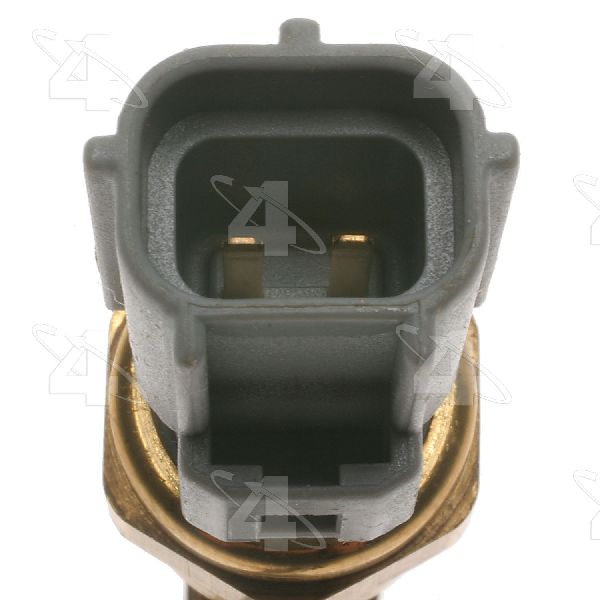
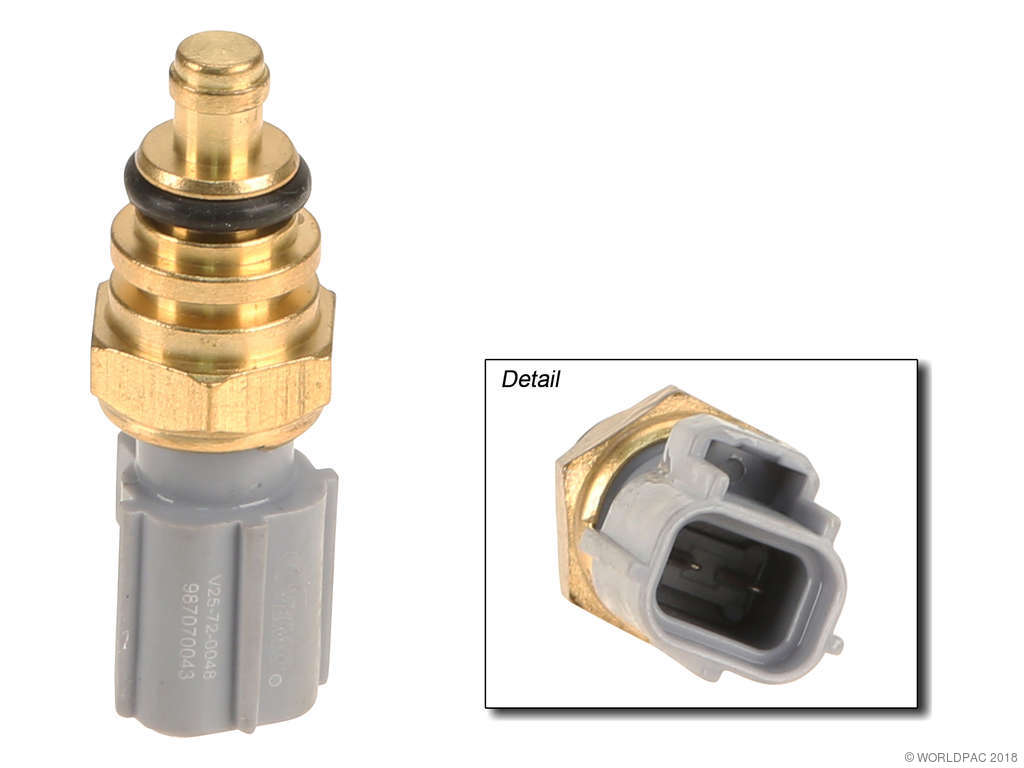
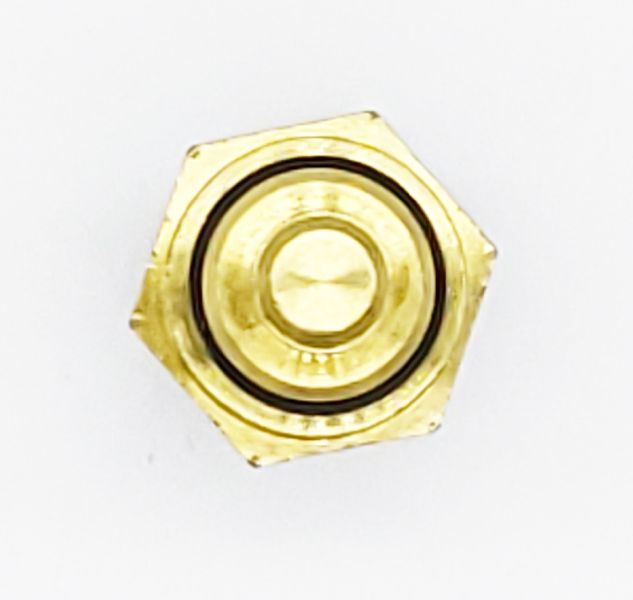
- Engine Coolant Temperature (ECT) Sensor
(OEM #DY1144)— This sensor is the most frequent cause of failure for a P0118 code, as it can fail internally and create an open circuit.
Trusted brands: Motorcraft, Bosch, NTK, Delphi
OEM price range: $30-$50
Aftermarket price range: $20-$40 - ECT Sensor Connector Pigtail
(OEM #WPT989 (3U2Z14S411HYB))— If the connector housing is cracked, the locking tab is broken, or the terminals are corroded beyond cleaning, a new pigtail is required to ensure a solid connection.
Trusted brands: Motorcraft, Dorman
OEM price range: $35-$45
Aftermarket price range: $15-$30
Related Codes That Often Appear With This One
- P0117 — P0117 is 'ECT Circuit Low Input'. Seeing both P0117 and P0118 can indicate an intermittent wiring problem where the circuit is shorting to ground (P0117) and opening (P0118).
- P0116 — P0116 is 'ECT Circuit Range/Performance'. This code can appear alongside P0118 if the sensor's readings are erratic or don't align with other sensor data, as noted in Ford TSBs for other models.
- P0119 — P0119 is 'ECT Circuit Intermittent'. This code specifically points to an unstable signal, which is a common cause of P0118.
Technical Service Bulletins (TSBs) & Recalls
- SSM 47791: Notes that P0118 and related codes on some Ford 2.7L engines can be due to an ECT sensor connector that is not fully seated or has been damaged.
- TSB 21-2168: Pertains to 2018-2020 F-150s with the 2.7L engine. It addresses a group of ECT codes including P0118 caused by intermittent voltage drops. The official fix is a kit that relocates the ECT sensor to a different part of a heater hose, highlighting that Ford is aware of ECT circuit vulnerability.
Platform-Specific Known Issues
- The main ECT sensor (for P0118) is somewhat hidden on the cylinder head between the ignition coils, requiring removal of the engine cover for access.
- Plug-in hybrid 'Energi' models have a second coolant temperature sensor for the heater core circuit, but P0118 almost always refers to the primary engine sensor located on the cylinder head. This second sensor may trigger code P2185 if it fails.
- While no specific TSB exists for P0118 on the C-Max, Ford has issued TSBs for other engines (SSM 47791, TSB 21-2168) that cite damaged connectors or problematic wiring as the cause for this exact code, indicating a known pattern.
Mechanic-Grade Diagnostic Values
- ECT Sensor Resistance vs. Temperature — expected: Approx. 37,000 Ohms at 50°F (10°C), 9,500 Ohms at 104°F (40°C), 2,000-3,000 Ohms at 68°F (20°C), and ~250 Ohms at 212°F (100°C).. Failure: Infinite resistance (open circuit) or readings that do not change with temperature.
- ECT Connector Voltage (Key On, Engine Off) — expected: One wire should have a 5-volt reference from the PCM. The other wire is the signal return (ground) provided through the PCM.. Failure: No 5-volt reference suggests a wiring issue or PCM fault. No ground suggests a break in the signal return wire.
Scan Tool Commands That Help
- FORScan: Live Data PID: 'ECT' — Use this to monitor the temperature reported by the sensor in real-time. A reading of -40°F/-40°C is a definitive sign of an open circuit fault (P0118). Wiggling the harness while watching this PID can help identify intermittent connections.
- FORScan: KOEO (Key On, Engine Off) and KOER (Key On, Engine Running) Self-Tests — Running these self-tests can sometimes reveal related fault codes that are not yet active or stored as continuous memory DTCs, providing a more complete picture of the circuit's health.
Wiring & Ground Locations
- ECT Sensor Wires at PCM — At the Powertrain Control Module (PCM), which is located in the engine bay, in front of the driver's side front wheel well.. For continuity testing, the ECT signal wire (often Yellow) and the signal return/ground wire (often Gray) must have a solid connection back to their respective pins at the PCM. A generic pinout suggests the signal wire may go to pin 74 and the ground to pin 63 on one of the PCM connectors, but a model-specific diagram should be used for confirmation.
- G105 — On the left side of the engine compartment.. This is a major chassis ground point for components in the engine bay. While the ECT sensor grounds through the PCM, a poor main engine or chassis ground can introduce electrical noise and voltage offsets that may affect sensor readings.
- G110 — Located on the left rear of the engine.. This is a primary engine ground. A loose or corroded connection here can cause a variety of sensor and module communication issues, including erratic readings that could potentially contribute to ECT circuit codes.
- S117 (Splice) — Located in the junction box wiring harness, near the breakout to the ECT sensor.. This factory splice connects the signal return wire for the ECT sensor with other sensor grounds. Corrosion or failure at this splice point can cause an open circuit for multiple sensors, leading to a P0118 and other codes.
Real Owner Repair Stories
- Ford Focus owner video (similar platform) (2015 Ford Focus) — Transmission fault codes (P090C), but the diagnostic principle applies to grounding issues causing other electrical faults.
❌ Tried (didn't work) Replacing transmission actuators.
✅ What actually fixed it The owner cleaned the main battery ground and two chassis ground points under the airbox. To prevent future issues, they added two new, direct grounding straps from the battery negative terminal to the chassis ground studs, ensuring a robust ground path. This highlights the importance of checking and improving grounds as a fix for unexplained electrical codes.
Diagnostic Flowchart
Other Known Issues on This Vehicle
Issues unrelated to this code that are worth knowing about as an owner of this generation:
- HF35 Transmission Bearing Failure 🔴 High — Affects vehicles built on or before August 15, 2015. Presents as a thumping, rubbing, or grinding noise while the vehicle is in motion. (Ref: TSB 19-2391)
- Parasitic 12V Battery Drain 🟠 Medium — Widespread owner complaint. The 12V battery dies unexpectedly, often after the car sits for a day or two. Commonly linked to the SYNC infotainment system or vehicle modem remaining active when the car is off. (Ref: SSM 50804 (dealer memo, not a TSB))
- Shifter Cable Bushing Failure 🔴 High — The bushing degrades, preventing the transmission from shifting into the selected gear. This can lead to a rollaway risk if the vehicle is not actually in Park. (Ref: Recall 22S43)
- Electric Power Steering Failure 🔴 High — Some owners report intermittent or total loss of power steering, requiring replacement of the electronic power steering rack.
Used vs. New Parts: Buying Guide for This Vehicle
When a used part is the smart pick: A used connector pigtail (WPT989) from a junkyard is a very smart choice. It's an OEM part, and you can often get a longer section of wire to work with than a new pigtail provides, making the splice easier to perform away from the hot engine block.
Donor-vehicle mileage cap: roughly under 120000 miles for the part to have meaningful remaining life.
What to inspect on the donor part:
- Inspect the connector for any cracks or broken locking tabs.
- Check that the wire insulation is still flexible and not brittle or cracked.
- Ensure the terminals inside the connector are clean and free of green or white corrosion.
- Select a donor vehicle from a dry climate if possible to minimize corrosion risk.
Aftermarket brands forum-validated for this vehicle:
- Motorcraft (OEM)
- Delphi
- NTK
- Bosch
Brands owners have reported issues with on this vehicle:
- No-name, unbranded sensors from online marketplaces should be avoided. While cheap, they have a high failure rate and may not have the correct resistance curve, leading to persistent performance issues even if the code is resolved.
Real Owner Stories
Aggregated from forums and TSBs cited above. Mileages and costs reflect what owners reported in those sources.
2013-2018 Ford C-Max Hybrid 2.0L
Symptoms: The PCM sees a temperature below -39°C (-38°F) for a set period, indicating a high voltage/open circuit fault.
What fixed it: Replacement of the Engine Coolant Temperature (ECT) sensor located between coils 3 and 4.
Source hint: YouTube - Electrical Car Repair LIVE: CODE P0118 COOLANT TEMPERATURE SENSOR FORD C MAX FORD FUSION FORD MONDEO LINCOLN MKZ
Related OBD-II Codes
Frequently Asked Questions
Where exactly is the ECT sensor located on my 2013-2018 Ford C-Max Hybrid?
My C-Max Energi is showing P0118; could this be the heater core sensor instead?
Is there a specific replacement connector if my wiring is damaged?
Does Ford TSB 21-2168 apply to my C-Max?
Why are my cooling fans running at high speed even when the engine is cold?
Can I use a used part to fix the wiring issue on my C-Max?
Used OEM Parts in Stock

New Aftermarket Parts Available


The information in this article is provided for general reference and educational purposes only. Vehicle specifications, procedures, and part compatibility can vary by production date, trim level, and region. Always consult your vehicle's factory service manual and verify part numbers before purchasing or performing repairs. Safety-critical components such as airbags, seat belts, and braking systems should be installed by a qualified professional.
- Ford C-Max:
- 🛍️ Shop This Part
- What's Unique About the 2013-2018 Ford C-Max
- Symptoms You May Notice
- Most Likely Causes
- Rare But Worth Checking
- Diagnosis Steps
- Parts You'll Likely Need
- Related Codes That Often Appear With This One
- Technical Service Bulletins (TSBs) & Recalls
- Platform-Specific Known Issues
- Mechanic-Grade Diagnostic Values
- Scan Tool Commands That Help
- Wiring & Ground Locations
- Real Owner Repair Stories
- Diagnostic Flowchart
- Other Known Issues on This Vehicle
- Used vs. New Parts: Buying Guide for This Vehicle
- Real Owner Stories
- 2013-2018 Ford C-Max Hybrid 2.0L
- Related OBD-II Codes
- Frequently Asked Questions
- 🎟️ Get 5% Off