

P0118 on 2013-2016 Dodge Dart 2.4L: Engine Coolant Temp Sensor Causes and Fixes
This code almost always indicates a failed Engine Coolant Temperature (ECT) sensor or a problem with its wiring. The ECU sees an impossibly high voltage, which it interprets as an extremely low temperature (like -40°F). This causes issues like constant fan operation, poor engine performance, and an inaccurate temp gauge. A new sensor is inexpensive (around $20-$60) and is a common DIY fix, though access is tight.
- P0118 on your Dodge Dart almost certainly means the Engine Coolant Temperature (ECT) sensor has failed or its wiring is damaged.
- Key symptoms are the check engine light, cooling fans running constantly, and an inaccurate temperature gauge reading -40°.
- The most probable fix is to replace the ECT sensor, which is a relatively low-cost part. The Mopar part number is 5149077AB.
- While a DIY-friendly job, access to the sensor is tight. Be prepared to move the PCM (3 bolts) to get clearance.
- Using an OEM Mopar sensor is highly recommended to ensure reliability and prevent repeat issues.
What's Unique About the 2013-2016 Dodge Dart
On the 2.4L MultiAir 'Tigershark' engine used in the Dodge Dart and many other Chrysler/Jeep/Fiat products, the P0118 code is a very common and straightforward issue. The ECT sensor is a frequent failure point. While the issue is typically electrical (the sensor or wiring), these cooling systems can be sensitive to trapped air after service, which can cause other cooling-related symptoms, so proper bleeding is crucial if the system is drained. Some owners and mechanics strongly recommend using an OEM Mopar sensor to avoid repeat failures or inaccurate readings.
Symptoms You May Notice
- Check Engine Light is on
- Cooling fans run constantly at high speed, even when the engine is cold
- Temperature gauge on the dashboard is inaccurate, may read '---', stay on cold, or in some cases, falsely spike to HOT.
- Engine runs rough, hesitates, or stalls, especially at idle
- Difficulty starting the engine, particularly when cold
- Reduced fuel economy
- Black smoke from the exhaust due to a rich fuel mixture
- Replacing the thermostat. A faulty thermostat typically causes a P0128 code (Coolant Temperature Below Thermostat Regulating Temperature) or actual overheating, not a P0118 circuit code.
Most Likely Causes
- Failed Engine Coolant Temperature (ECT) Sensor 🔴 High Probability The sensor is a very common failure item on this platform and its siblings.
How to confirm: Use a scan tool to view live data. If the ECT reading is stuck at -40°F or -40°C, the sensor is the primary suspect. You can also test the sensor's internal resistance with a multimeter. Disconnect the sensor and measure across the two pins. An open circuit (infinite resistance) indicates a failed sensor. At room temperature (~68°F/20°C), the resistance should be between 2,000 and 3,000 ohms.
Typical fix: Replace the ECT sensor. This requires partially draining the coolant. Ensure the system is properly bled afterward to remove any trapped air.
Est. part cost: $20-$60 - Damaged Wiring or Connector 🟡 Medium Probability Engine bay heat and vibration can cause wires to become brittle, break, or connectors to fail over time. The connector has a red locking tab that can become brittle or not be seated correctly after service.
How to confirm: Visually inspect the wiring harness leading to the ECT sensor for any signs of breaks, chafing, melting, or corrosion. Check the connector for a secure fit and clean terminals. Wiggle the connector and wiring while watching live data on a scan tool to see if the temperature reading fluctuates, which would indicate an intermittent connection.
Typical fix: Repair the damaged section of the wire or replace the connector pigtail. Pigtail connectors are readily available (e.g., Standard Motor Products S2442).
Est. part cost: $15-$50
Rare But Worth Checking
- Failed Powertrain Control Module (PCM): This is extremely rare and should only be considered a last resort. The PCM should only be suspected after the sensor and wiring have been exhaustively tested and confirmed to be in good working order.
- Low Coolant Level / Trapped Air: While this doesn't typically cause a 'Circuit High' code, if air gets trapped around the sensor after a coolant service, it can cause erratic readings. This is less likely for P0118 (which points to an open circuit) but can cause other ECT-related codes and symptoms.
Diagnosis Steps
- Connect an OBD-II scanner and confirm the P0118 code is present. Check for any other related codes.
- View the live data stream for the Engine Coolant Temperature. A reading of -40°F or -40°C strongly points to an open circuit (bad sensor or wiring).
- Turn the engine off and let it cool completely.
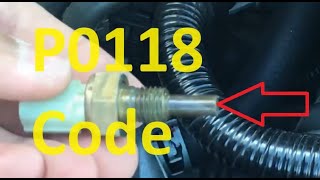
- Locate the ECT sensor. On the 2.4L Dart, it is on the driver's side of the engine, threaded into the thermostat housing.
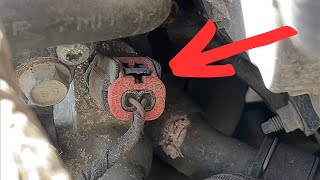
- Inspect the sensor's electrical connector and wiring. Look for damage, corrosion, or a loose connection. Ensure the red locking tab on the connector is fully engaged.
- If the wiring looks good, disconnect the sensor. With a multimeter set to Ohms (Ω), test the resistance across the two pins of the sensor itself. An infinite resistance reading (OL) means the sensor is internally open and has failed. A normal reading at ~68°F (20°C) should be 2k-3k Ω.
- To test the wiring and PCM circuit, use a jumper wire to bridge the two terminals in the electrical connector (with the sensor unplugged). Turn the ignition to 'ON' (engine off) and check the live data on the scan tool. The temperature should now read the maximum possible value (e.g., 250°F+). If it does, the wiring and PCM are good, confirming the sensor is the fault. If the reading remains at -40°F, there is an open in the wiring harness between the connector and the PCM.
- If replacing the sensor, partially drain the coolant, unscrew the old sensor (19mm deep socket or wrench), install the new sensor with its O-ring, and reconnect the harness. Refill and bleed the cooling system to remove air pockets.
- Clear the codes with the scan tool and perform a test drive to ensure the fix is complete.
Parts You'll Likely Need
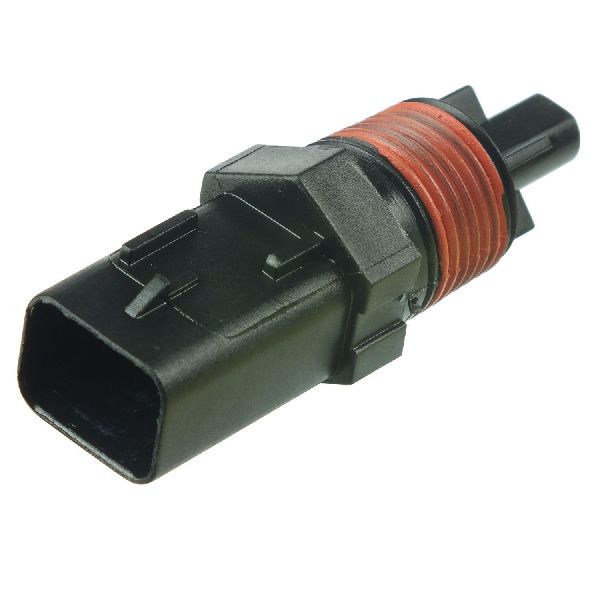
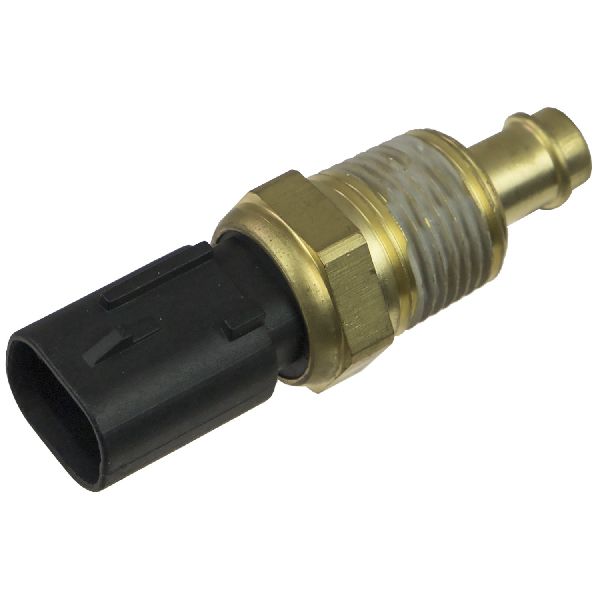
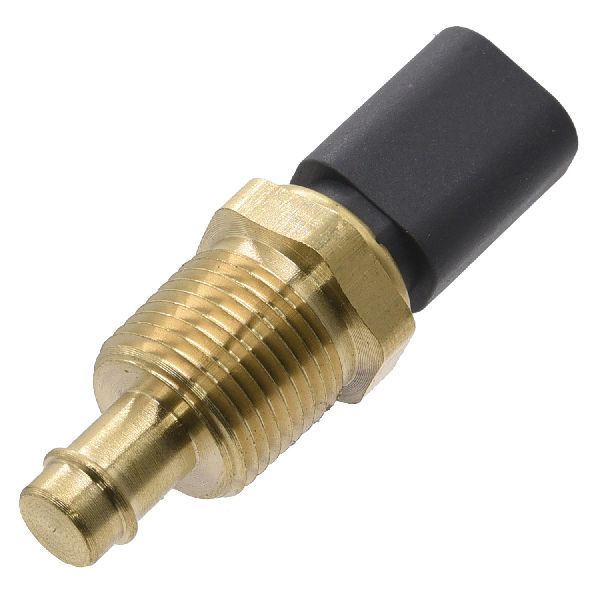
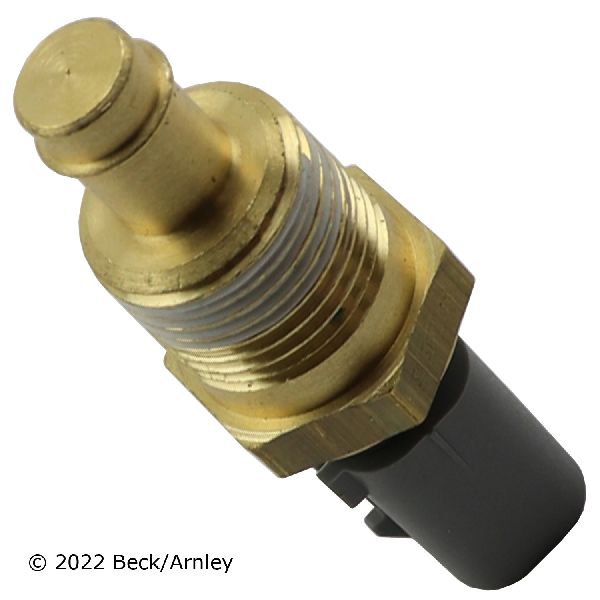
- Engine Coolant Temperature (ECT) Sensor
(OEM #5149077AB (supersedes 5149077AA, 68119586AA))— This sensor is the most common cause for a P0118 code, as it can fail internally, creating an open circuit.
Trusted brands: Mopar, NTK, Delphi, Standard Motor Products
OEM price range: $40-$60
Aftermarket price range: $20-$40 - Engine Coolant Temperature Sensor Connector Pigtail — Needed if the original connector or its wiring is found to be damaged, corroded, or broken.
Trusted brands: Standard Motor Products (p/n S2442), Wells (p/n 1P2227)
OEM price range: N/A
Aftermarket price range: $15-$50
Related Codes That Often Appear With This One
- P0117 — P0117 is 'ECT Circuit Low', the opposite of P0118. Seeing both intermittently could strongly suggest a wiring problem where the circuit is shorting to ground and then opening up.
- P2181 — This code relates to 'Cooling System Performance'. It can appear alongside a P0118 if the PCM cannot get a rational temperature reading to verify the cooling system is working correctly.
- P0128 — If there are intermittent connection issues with the ECT sensor, the PCM might also flag a P0128 because it's not seeing the engine warm up in the expected amount of time, even if the thermostat is fine.
Technical Service Bulletins (TSBs) & Recalls
- While no TSB directly targets P0118, several exist for PCM updates on this platform (e.g., 18-023-16 REV. C) that address various engine codes and improve system performance. It's worth checking if the vehicle's software is up to date.
Platform-Specific Known Issues
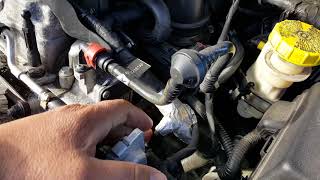
- Access to the ECT sensor on the 2.4L engine is notoriously tight. It is located on the thermostat housing below the PCM. Many technicians and DIYers remove the three 10mm bolts holding the PCM and move it aside to gain necessary clearance for a wrench or socket.
- A 19mm deep socket may not fit over the plastic portion of the sensor. Some mechanics resort to breaking the plastic connector off the old sensor to get a socket on it, then use a 19mm stubby wrench to install the new one.
- Forum users have noted that the 2.4L engine can be sensitive to aftermarket sensors, sometimes leading to repeat failures or slightly inaccurate readings. Using an OEM Mopar sensor (Part No. 5149077AB) is often recommended for best results.
- Real-world owner story: A user on dodge-dart.org reported their 2013 Dart had the P0118 code, constant fan operation, and a dead temperature gauge. They replaced the sensor (noting the tight access) and performed a coolant bleed, which completely resolved the issue.
Mechanic-Grade Diagnostic Values
- ECT Sensor Resistance — expected: 2000-3000 Ω at 20°C (68°F), reducing to 200-300 Ω at 90°C (194°F).. Failure: An infinite resistance (Open Line) reading indicates a failed sensor.
- ECT Sensor Signal Wire Voltage (Key On, Engine Off, Sensor Unplugged) — expected: ~5.0 Volts.. Failure: 0 Volts indicates an open in the signal circuit or a faulty PCM. Voltage significantly less than 5V could indicate a short to ground.
- ECT Sensor Ground Wire (Key On, Engine Off, Sensor Unplugged) — expected: Close to 0 Volts and less than 3.0 Ohms resistance to chassis ground.. Failure: Voltage above 0V or high resistance indicates a bad sensor ground circuit, which is a common cause of sensor codes.
- ECT Sensor Signal Wire Voltage (Cold Engine, Key On) — expected: 2.8V to 3.2V.. Failure: Voltage close to 5.0V indicates an open circuit (P0118), while voltage near 0V indicates a short to ground (P0117).
Scan Tool Commands That Help
- Witech 2.0 (OEM Chrysler Tool): Viewing Live Data & DTCs — The OEM tool provides the most reliable data for ECT sensor voltage and temperature. It can also access all modules to check for related network or body control module codes that generic scanners might miss.
- Witech 2.0 or high-end aftermarket scanner (e.g., Autel, Launch): OBD-II Generic Function - Jumpered Connector Test — After unplugging the sensor, a jumper wire is placed across the two pins of the harness connector. With the key on, the scan tool's live data for ECT should show a maximum temperature (e.g., >250°F). This confirms the wiring from the connector to the PCM is intact. If the temperature remains at -40°F, the open circuit is in the wiring, not the sensor.
Wiring & Ground Locations
- (K2) ECT Signal Circuit — The signal wire running from the ECT sensor connector to the PCM.. An open or short to voltage in this wire is a primary cause of P0118. Diagnostic procedures require testing this wire for continuity (less than 3.0 Ohms) and for shorts.
- (K915) Sensor Ground Circuit — The ground return wire running from the ECT sensor connector to the PCM.. A high-resistance or open ground circuit will prevent the sensor from pulling the 5V reference voltage down, causing the PCM to see high voltage and set a P0118 code.
- G100 / G102 — Main engine compartment grounds located on the left front of the engine compartment, near the battery tray.. While the ECT has a dedicated sensor ground from the PCM, poor main engine or chassis grounds can cause floating voltages and intermittent electrical issues across multiple systems. Ensuring these are clean and tight is a good practice when diagnosing any electrical fault.
Real Owner Repair Stories
- Dodge Dart Forum user 'pjurusov' (2015 Dodge Dart 2.4L SXT) — Check engine light with codes P0301 (Cylinder 1 Misfire), P0118, P1D73 (Grill Shutter), and U0401 (Implausible Data from ECM/PCM).
❌ Tried (didn't work) Replacing all ignition coils and spark plugs., Replacing the thermostat housing.
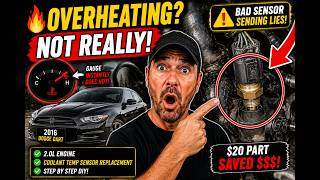
✅ What actually fixed it The user was advised by a forum veteran that P0118 is a circuit code, meaning the thermostat replacement was unnecessary. The final fix required diagnosing the ECT sensor circuit itself (wiring or sensor), as the code points directly to an electrical fault, not a mechanical one. The other codes were likely consequences of the PCM running in a fault mode due to the bad ECT data. - YouTube video by 'Kevin's Mobile Repair' (2016 Dodge Dart 2.0L (similar procedure to 2.4L)) — Temperature gauge instantly spikes to HOT within 30 seconds of starting, even on a cold engine. A 'coolant temperature sensor voltage high' code was present.
✅ What actually fixed it Replacing the faulty ECT sensor resolved the issue. The video highlights the difficult access, requiring removal of the PCM (three 10mm bolts) and using a 19mm stubby wrench for the sensor, as a deep socket would not fit over the new sensor's connector.
OEM Part Supersession History
5149077AA, 68119586AA→5149077AB— Standard part revision and consolidation across multiple vehicle platforms.
Heads up: Part 5149077AB is the current recommended OEM replacement for the 2.4L MultiAir engine in the Dart and is widely cross-compatible with other Chrysler, Jeep, and Dodge vehicles.
Diagnostic Flowchart
Other Known Issues on This Vehicle
Issues unrelated to this code that are worth knowing about as an owner of this generation:
- Excessive Oil Consumption 🔴 High — Widespread issue affecting many 2.4L MultiAir engines. Can start at any mileage but often noted after 30,000 miles. Some engines required replacement under warranty. (Ref: TSB 09-002-17 (and later revisions like 09-006-20) outlines an oil consumption test procedure. A class-action lawsuit was also filed regarding this issue.)
- Transmission Problems (DDCT and Automatic) 🔴 High — Particularly common on 2013-2014 models. The 1.4L Turbo's DDCT (Dual Dry Clutch Transmission) was known for jerky shifting, actuator failures, and complete failure. The 2.4L's 9-speed automatic also had complaints of rough shifting and software glitches. (Ref: Multiple recalls and TSBs were issued for transmission control module (TCM) software updates and bracket replacements.)
- Engine Stalling / Loss of Power 🔴 High — Frequently reported, especially in 2013-2014 models. Owners report the engine stalling unexpectedly while driving, sometimes at low speeds or when turning. (Ref: Often linked to the oil consumption issue (engine stalls when oil is critically low) or transmission problems. PCM software updates were released to address some stalling conditions.)
- Faulty Thermostat (P0128) 🟠 Medium — A common cause for the check engine light, where the thermostat fails to regulate temperature correctly, especially in colder weather.
- Electrical Glitches / Battery Failure 🟠 Medium — 2013 models in particular had numerous complaints of premature battery failure, Uconnect system glitches, and other electrical issues. (Ref: Software updates were released for the Uconnect system. No specific recall for battery failure, but it was a common owner complaint.)
Used vs. New Parts: Buying Guide for This Vehicle
When a used part is the smart pick: For this repair, a used part is almost never a smart choice. The ECT sensor is a common failure item and is inexpensive to buy new. A used wiring connector pigtail from a junkyard is a viable option if the original is damaged, as it is simple copper wire and plastic.
Donor-vehicle mileage cap: roughly under 100000 miles for the part to have meaningful remaining life.
What to inspect on the donor part:
- For a wiring pigtail, ensure the plastic is not brittle or cracked.
- Check that the locking tab is intact and functional.
- Inspect the wire insulation for any signs of cracking, melting, or previous repairs.
- Ensure the metal terminals inside the connector are clean and free of corrosion.
OEM-only on this vehicle (don't cheap out):
- Engine Coolant Temperature (ECT) Sensor
Aftermarket brands forum-validated for this vehicle:
- NTK (often the original OEM supplier)
- Delphi
- Standard Motor Products (SMP)
Brands owners have reported issues with on this vehicle:
- Unbranded, 'white-box' sensors from online marketplaces are frequently reported on forums to have poor accuracy or a short lifespan.
Real Owner Stories
Aggregated from forums and TSBs cited above. Mileages and costs reflect what owners reported in those sources.
2013 Dodge Dart 2.4L
Symptoms: Check engine light with P0118 code, constant fan operation, and a dead temperature gauge.
What fixed it: Replaced the ECT sensor and performed a coolant bleed.
Source hint: dodge-dart.org: Thread titled 'Temperature Sensor issue'
2015 Dodge Dart 2.4L
Symptoms: No-start/no-crank condition accompanied by several codes including P0118 after attempting other sensor replacements.
What fixed it: Investigation of circuit issues that caused cascading sensor codes.
Source hint: Reddit r/DodgeDart: A user with a 2015 Dart 2.4L reported a no-start condition
Related OBD-II Codes
Frequently Asked Questions
Is there a specific Engine Coolant Temperature (ECT) sensor recommended for the 2.4L Dodge Dart?
Why are my cooling fans running at high speed even when my Dart's engine is cold?
I can't get a socket onto the ECT sensor because of the PCM. How do I reach it?
Does TSB 18-023-16 REV. C apply to my P0118 issue?
What should the resistance be on a healthy 2.4L Dart coolant sensor?
Is the P0118 code related to the oil consumption issues on the 2.4L MultiAir?
Helpful Videos
We Have This Part in Stock


The information in this article is provided for general reference and educational purposes only. Vehicle specifications, procedures, and part compatibility can vary by production date, trim level, and region. Always consult your vehicle's factory service manual and verify part numbers before purchasing or performing repairs. Safety-critical components such as airbags, seat belts, and braking systems should be installed by a qualified professional.
- Dodge Dart:
- 🎬 Helpful Videos
- 🛍️ Shop This Part
- What's Unique About the 2013-2016 Dodge Dart
- Symptoms You May Notice
- Most Likely Causes
- Rare But Worth Checking
- Diagnosis Steps
- Parts You'll Likely Need
- Related Codes That Often Appear With This One
- Technical Service Bulletins (TSBs) & Recalls
- Platform-Specific Known Issues
- Mechanic-Grade Diagnostic Values
- Scan Tool Commands That Help
- Wiring & Ground Locations
- Real Owner Repair Stories
- OEM Part Supersession History
- Diagnostic Flowchart
- Other Known Issues on This Vehicle
- Used vs. New Parts: Buying Guide for This Vehicle
- Real Owner Stories
- 2013 Dodge Dart 2.4L
- 2015 Dodge Dart 2.4L
- Related OBD-II Codes
- Frequently Asked Questions
- 🎟️ Get 5% Off