

P0117 on 2017-2019 Ford Fusion: Causes and Fixes for ECT Circuit Low
For a 2017-2019 Ford Fusion, code P0117 is most often caused by a faulty Engine Coolant Temperature (ECT) sensor, a poorly seated connector, or damaged wiring, as highlighted in Ford's Technical Service Bulletins. First, check that the ECT sensor connector is fully seated, especially on 2.7L engines. If that's not the issue, replacing the ECT sensor is the next likely fix, costing around $25-$75 for the part. For 2.7L engines, TSB SSM 48991 recommends replacing both the ECT sensor and the integr
- For the 2017-2019 Ford Fusion, especially the 2.7L model, your first step for a P0117 code should be to check if the Engine Coolant Temperature (ECT) sensor connector is loose or disconnected.
- This code indicates an electrical circuit problem (low voltage/short), not necessarily an actual overheating engine.
- Symptoms include a maxed-out temperature gauge, constant running of cooling fans, and rough engine performance.
- If the connector is secure, the most likely fixes are repairing a damaged wire or replacing the ECT sensor itself.
- Do not immediately assume the engine is overheating; the fault is in how the temperature is being reported to the computer.
What's Unique About the 2017-2019 Ford FUSION
For this generation of Ford Fusion, particularly the Fusion Sport model equipped with the 2.7L EcoBoost V6 engine, Ford issued multiple Technical Service Bulletins (TSBs) regarding code P0117. These bulletins specifically point to the ECT sensor connector not being fully seated or, more significantly, issues with the integrated ECT and knock sensor wiring harness. TSB SSM 48991 recommends replacing both the ECT sensor (base part #12A648) and the knock sensor harness (base part #12A699) as a complete repair. This suggests that before replacing just the sensor, a thorough inspection of the connector and harness is critical, and a harness replacement is a very common fix 🎬 Watch: Two quick DIY methods to fix the P0117 code. on these 2.7L engines.
Diagnostic Flowchart
Tap your situation to follow the diagnostic path that matches what you're seeing on this vehicle.
Symptoms You May Notice
- Check Engine Light is on
- Engine temperature gauge reads excessively high or is maxed out
- "Engine Coolant Over Temperature" warning on the dashboard
- Cooling fans run constantly at high speed, even when the engine is cold
- Engine runs rough, especially when cold
- Hard starting or stalling
- Reduced fuel economy
- Heater may not blow warm air
- Intermittent or non-functional air conditioning
- Replacing the thermostat. While a stuck thermostat can cause overheating, it will not typically cause the specific P0117 'Circuit Low' fault, which points to an electrical short-to-ground condition.
Most Likely Causes
- ECT Sensor Connector Not Fully Seated 🔴 High Probability This is specifically called out in Ford TSBs #SSM 47791 and #SSM 46906 for vehicles with the 2.7L engine. The connector's location can make it difficult to seat properly during assembly or service.
How to confirm: Visually inspect the ECT sensor's electrical connector. Firmly push on it to ensure it is fully clicked into place. Wiggle the connector with the engine running (if safe) and watch live data to see if the reading changes.
Typical fix: Secure the connector. If the locking tab is broken, the connector pigtail may need to be replaced. An aftermarket pigtail is available (e.g., SMP #948AE51 for the 2.7L).
Est. part cost: $0-$30 - Damaged ECT Sensor / Knock Sensor Wiring Harness (2.7L Engine) 🔴 High Probability Ford TSB #SSM 48991 identifies issues with the combined ECT/knock sensor wiring harness as a primary cause for this code on the 2.7L engine. The harness is subject to heat and vibration, leading to internal wire breaks.
How to confirm: Visually inspect the wiring leading to the ECT sensor for any signs of chafing, breaks, or corrosion. Use a multimeter to check for a short to ground in the signal wire. The TSB recommends replacing the harness and sensor as a set if this code is present.
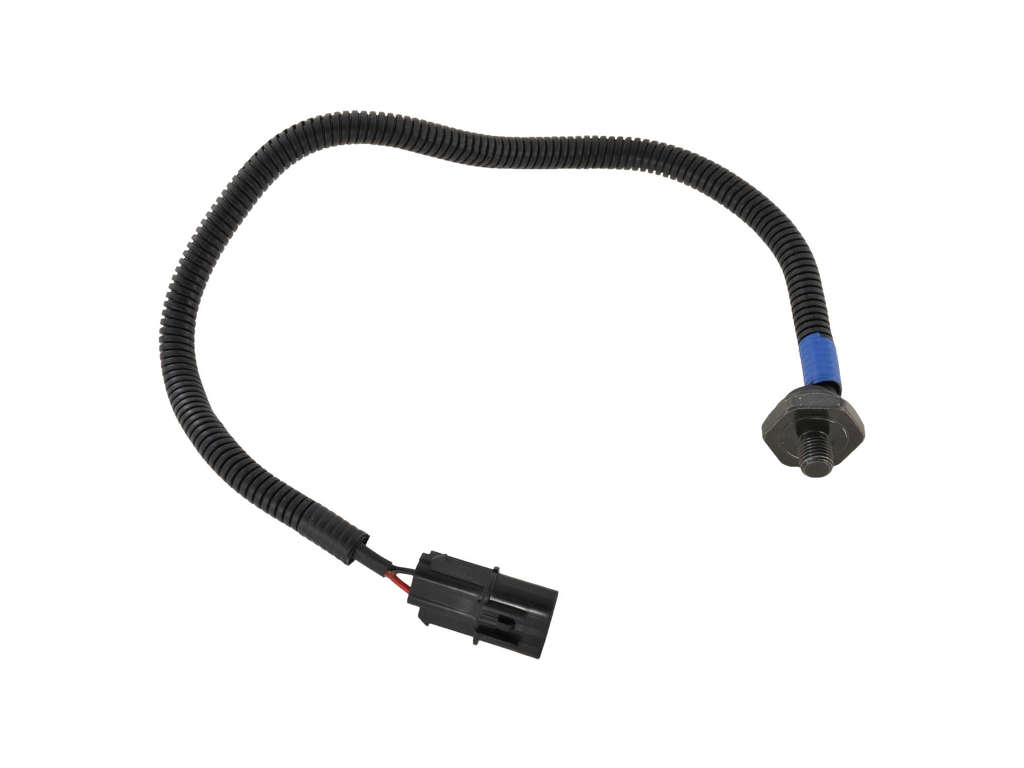
Typical fix: Replace the knock sensor wiring harness (Ford base part #12A699) and the ECT sensor (Ford base part #12A648) together, as recommended by TSB SSM 48991.
Est. part cost: $50-$100 for harness and sensor - Failed Engine Coolant Temperature (ECT) Sensor 🟡 Medium Probability Sensors can fail internally by shorting out. This is a common failure point on many vehicles, not just the Fusion.
How to confirm: With a scan tool, observe the live ECT data. If it reads an impossibly high temperature (e.g., 280°F+) when the engine is cold, the sensor has likely failed internally. You can also test the sensor's resistance with a multimeter; it should be around 2000-3000 ohms at room temperature (68°F/20°C).
Typical fix: Replace the ECT sensor. This often requires partially draining the coolant. The OEM part is Motorcraft DY1323 (Ford part # CM5Z-12A648-A).
Est. part cost: $25-$75 - Low Engine Coolant Level / Air in System ⚪ Low Probability The 1.5L EcoBoost engine in some Fusions had known issues with coolant intrusion into the cylinders, which could lead to low coolant levels. While this causes a genuine overheat, a P0117 is for a circuit fault, so this is a less direct cause.
How to confirm: Check the coolant reservoir to ensure the level is between the MIN and MAX marks. If the system was recently serviced, air may be trapped, which requires proper bleeding.
Typical fix: Top off the coolant with the correct Ford-specified type (e.g., Motorcraft Orange) and bleed the system if necessary. Investigate the source of any leaks.
Est. part cost: $20-$40 for coolant
Rare But Worth Checking
- Faulty Powertrain Control Module (PCM): This is extremely rare and should only be considered after all other possibilities (sensor, wiring, connector) have been exhaustively ruled out. A damaged PCM is a last-resort diagnosis.
Diagnosis Steps
- Check for other stored trouble codes that may provide more context, especially P1299, P0118, and P0330 on 2.7L engines.
- Visually inspect the engine coolant level in the reservoir. Ensure it is at the proper level.
- Locate the ECT sensor. On the 2.7L V6, it is located in the cylinder head, but can be difficult to access. On 1.5L/2.0L engines, it is typically near the thermostat housing.
- Carefully inspect the ECT sensor's electrical connector. Per Ford TSBs for the 2.7L, ensure it is fully seated and the locking tab is engaged. Check for corrosion or pushed-out pins.
- Trace the wiring harness from the sensor as far as possible, looking for any signs of damage, chafing against other components, or melting. On 2.7L engines, pay close attention to the entire 12A699 harness.
- Using a scan tool with live data, monitor the ECT sensor reading with the key on and engine off. If it shows a very high temperature (e.g., >280°F) on a cold engine, the circuit is shorted or the sensor has failed.
- Disconnect the ECT sensor. The scan tool reading should now show a very low temperature (e.g., -40°F) and may set a P0118 code. If the reading stays high, the signal wire is shorted to ground between the connector and the PCM.
- If the wiring is suspected to be shorted, use a multimeter to check for continuity between the signal wire at the ECT connector and a good chassis ground. There should be no continuity (infinite resistance).
- If the circuit tests okay, test the sensor itself. Remove it and use a multimeter to check its resistance. At ~68°F (20°C), it should read between 2,000 and 3,000 ohms. The resistance should drop smoothly as it is heated in a cup of warm water.
Parts You'll Likely Need
- Engine Coolant Temperature (ECT) Sensor
(OEM #CM5Z-12A648-A (Motorcraft DY1323))— This sensor is the most common part to fail or be replaced as part of a harness repair, causing the P0117 code when it shorts internally.
Trusted brands: Motorcraft, Bosch, Delphi, NTK
OEM price range: $40-$75
Aftermarket price range: $25-$50 - Knock Sensor Wiring Harness (for 2.7L Engine)
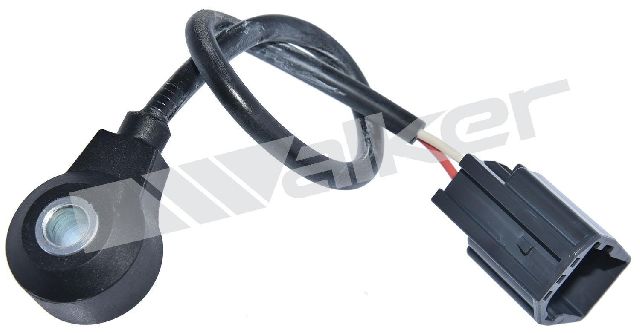
(OEM #12A699 (Base part number))— TSB SSM 48991 identifies this integrated harness as a primary failure point on 2.7L engines and recommends replacing it along with the ECT sensor.
Trusted brands: Motorcraft
OEM price range: $40-$60
Aftermarket price range: N/A
Related Codes That Often Appear With This One
- P0118 — This code for 'ECT Circuit High' can appear if you disconnect the sensor to test the circuit, or if the wiring fault is intermittent, causing the signal to swing between open and shorted.
- P1299 — This Ford-specific code indicates a Cylinder Head Over-temperature Protection event was activated. The PCM triggers this based on the faulty high-temperature signal it receives from the P0117 condition. It is explicitly mentioned in TSB SSM 48991.
- P0116 — This code indicates an issue with the ECT sensor's performance or range, and is often triggered alongside P0117 due to the erratic signal, as noted in Ford TSBs #SSM 48991, #SSM 47791, and #SSM 46906.
- P0330 — This code for 'Knock Sensor 2 Circuit' is often seen on 2.7L engines because the ECT sensor wiring is integrated into the same harness as the knock sensor. A fault in this harness can trigger both codes, as noted in TSB SSM 48991.
Technical Service Bulletins (TSBs) & Recalls
- SSM 48991: Malfunction Indicator Lamp (MIL) with various DTCs including P0117, due to the ECT sensor or knock sensor wiring harness on 2.7L engines. Recommends replacing both sensor and harness.
- SSM 47791: Notes that on 2.7L engines, DTCs including P0117 can be caused by an ECT sensor connector that is not fully seated.
- SSM 46906: Similar to SSM 47791, points to a poorly seated ECT sensor connector on 2.7L engines as a cause for P0117.
Platform-Specific Known Issues
- TSB #SSM 48991 notes that 2017-2019 Fusions with the 2.7L EcoBoost engine may show a P0117 code due to issues with the integrated engine coolant temperature (ECT) and knock sensor wiring harness. The official fix is to replace both the harness (12A699) and the ECT sensor (12A648).
- TSB #SSM 47791 and #SSM 46906 specifically call out that on 2017 Fusions with the 2.7L engine, a P0117 code may be caused by an ECT sensor connector that is not fully seated.
Mechanic-Grade Diagnostic Values
- ECT Sensor Resistance vs. Temperature — expected: Approximately 37,000 Ohms at 50°F (10°C), 9,500 Ohms at 104°F (40°C), and 2,000 Ohms at 176°F (80°C). A common reading at room temperature (68°F/20°C) is 2,000-3,000 Ohms.. Failure: A resistance reading near zero ohms indicates an internally shorted sensor.
- ECT Sensor Signal Voltage (Key On, Engine Off) — expected: The PCM supplies a 5V reference to the circuit. The signal wire voltage should be between 0.5V and 4.5V depending on temperature.. Failure: A voltage reading below 0.2V, and specifically below 0.14V, will trigger the P0117 code, indicating a short to ground.
- ECT Signal Wire Short-to-Ground Test (Sensor Disconnected) — expected: With the sensor unplugged and a multimeter connected between the signal wire in the harness connector and chassis ground, you should see the 5V reference from the PCM.. Failure: A reading of 0V indicates the signal wire is shorted to ground somewhere in the harness between the connector and the PCM.
Wiring & Ground Locations
- Engine Ground Point — On some Fusion models, a dedicated ground post is located on the top of the strut mount tower in the engine bay, which can be used for electrical testing.. When testing the ECT signal wire for a short to ground or checking ground continuity, a clean and reliable ground point is essential for an accurate multimeter reading.
- ECT/Knock Sensor Harness (2.7L) — Located in the hot valley of the V6 engine, under the intake manifold.. This harness, which contains the ECT sensor wiring, is prone to heat degradation, leading to internal shorts that cause P0117. This is the specific subject of TSB SSM 48991.
OEM Part Supersession History
7T4Z-12A699-AB→7T4Z-12A699-A— Part revision by manufacturer.AL3Z-12A699-BA→AL3Z-12A699-A— Part revision by manufacturer for various engines including some EcoBoost models.
Helpful Videos
![How to Fix FORD P0117 Engine Code in 3 Minutes [2 DIY Methods / Only $7.43]](https://img.youtube.com/vi/HE0ShHfUSoI/mqdefault.jpg)

Used OEM Parts in Stock


New Aftermarket Parts Available


The information in this article is provided for general reference and educational purposes only. Vehicle specifications, procedures, and part compatibility can vary by production date, trim level, and region. Always consult your vehicle's factory service manual and verify part numbers before purchasing or performing repairs. Safety-critical components such as airbags, seat belts, and braking systems should be installed by a qualified professional.
- Ford FUSION:
- 🎬 Helpful Videos
- 🛍️ Shop This Part
- What's Unique About the 2017-2019 Ford FUSION
- Diagnostic Flowchart
- Symptoms You May Notice
- Most Likely Causes
- Rare But Worth Checking
- Diagnosis Steps
- Parts You'll Likely Need
- Related Codes That Often Appear With This One
- Technical Service Bulletins (TSBs) & Recalls
- Platform-Specific Known Issues
- Mechanic-Grade Diagnostic Values
- Wiring & Ground Locations
- OEM Part Supersession History
- 🎟️ Get 5% Off