

P0117 on 2011-2017 Chrysler 200: Engine Coolant Temp Sensor Circuit Low Causes and Fixes
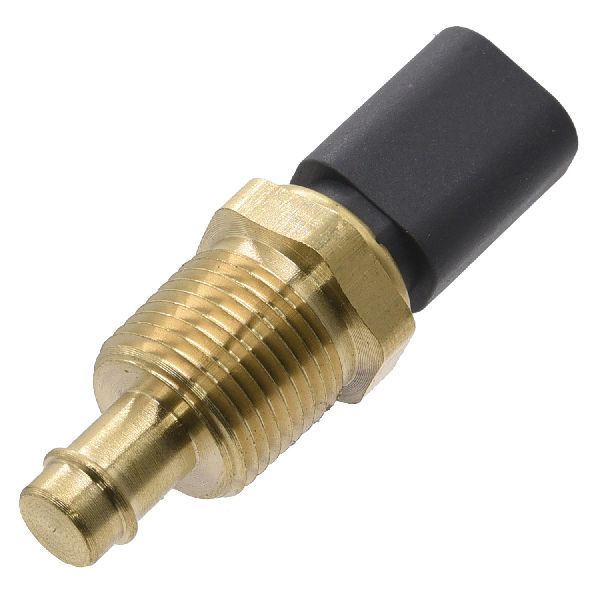
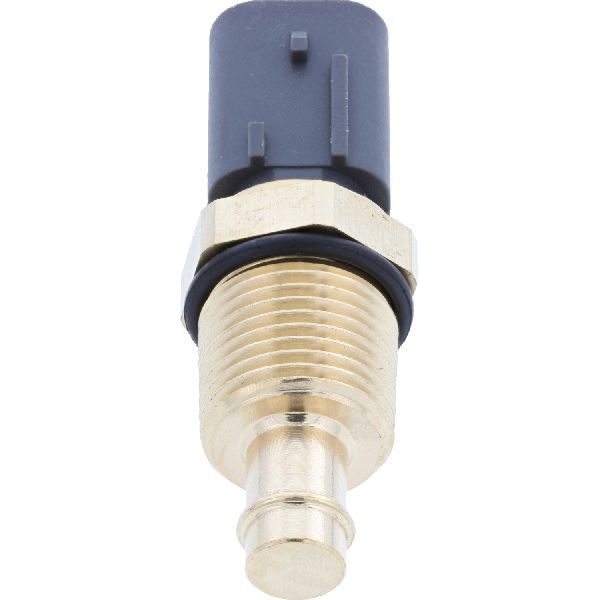
On the Chrysler 200, P0117 is almost always a failed Engine Coolant Temperature (ECT) sensor or a wiring short. The car's computer falsely believes the engine is critically overheating (280°F+), causing the cooling fans to run constantly at max speed. A new Mopar sensor (Part #5149077AB) costs about $45-$70 and is a DIY-friendly fix, though access is tighter on the 3.6L V6.
- P0117 on a Chrysler 200 means the computer thinks the engine is overheating due to a sensor circuit fault.
- The most likely cause is a bad Engine Coolant Temperature (ECT) sensor, which is an affordable and DIY-friendly replacement.
- Your cooling fans will likely run constantly and your temperature gauge will be maxed out until the issue is fixed.
- Verify the sensor's location before you begin: it's on the passenger side for the 2.4L engine and the driver's side for the 3.6L V6.
- Always check the wiring and connector for damage before replacing the sensor, as a short circuit can also cause this code.
What's Unique About the 2011-2017 Chrysler 200
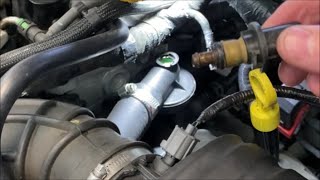
For the Chrysler 200, the P0117 code is a straightforward circuit fault. While the code itself is common, the location of the sensor differs significantly between the 2.4L and 3.6L engines, which is the key platform-specific detail. On the 2.4L, the sensor is easily accessible on the passenger-side thermostat housing. 🎬 See: How to locate and replace the 2.4L sensor On the 3.6L V6, it is tucked away on the driver's side cylinder head, near the front of the engine by the thermostat housing, making access more challenging. While no TSBs exist specifically for P0117, Chrysler has issued software updates for a related code, P0116 (ECT Performance), on these models (TSB 18-080-16 for 2012 models and TSB 18-023-16 for 2015 2.4L models), indicating some sensitivity in the overall coolant temperature monitoring system.
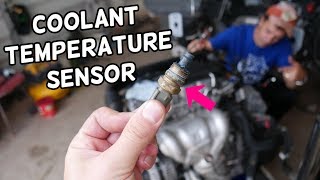
Generation note: The 2011-2017 year range covers two generations of the Chrysler 200: the first generation (2011-2014) 🎬 Watch: First-generation Chrysler 200 coolant sensor replacement walkthrough and the second generation (2015-2017). The causes and fixes for P0117 are largely the same across both generations, with the primary differences being tied to the specific engine (2.4L vs. 3.6L) rather than the vehicle generation itself.
Symptoms You May Notice
- Check Engine Light is on
- Engine cooling fans run constantly at high speed, even when the engine is cold
- Temperature gauge on the dashboard reads maximum hot or doesn't move at all
- Hard starting, especially when the engine is cold
- Rough idle or hesitation
- Reduced fuel economy and a possible smell of unburnt fuel (rich condition)
- Black smoke from the exhaust
- Replacing the thermostat. A thermostat typically fails stuck open (causing P0128 and slow warm-up) or stuck closed (causing a genuine overheat). It will not cause a P0117 circuit code.
- Replacing the water pump. A failing water pump will cause a genuine overheating condition, not a sensor circuit fault code.
Most Likely Causes
- Failed Engine Coolant Temperature (ECT) Sensor 🔴 High Probability The ECT sensor is a common failure point on many vehicles as it ages. It's a thermistor that can fail internally, creating a short circuit that results in the low voltage signal. 🎬 Watch: Understanding P0117 causes and diagnostic steps
How to confirm: With a cold engine, use an OBD-II scanner to check live data. If the ECT reading shows an extremely high temperature (e.g., 280°F or higher), the sensor has likely failed. Alternatively, disconnect the sensor; if the scan tool reading changes to a very low default value (e.g., -40°F), the sensor is bad.
Typical fix: Replace the ECT sensor. It's a relatively simple and inexpensive part to replace, typically requiring a 19mm deep socket.
Est. part cost: $20-$70 - Wiring Harness or Connector Issue (Short to Ground) 🟡 Medium Probability The wiring harness to the ECT sensor can be exposed to heat and vibration, potentially causing wires to chafe and short to ground on the engine block or other components. The two-pin connector itself can also fail or corrode.
How to confirm: Visually inspect the wiring and two-pin connector for any signs of damage, melting, or corrosion. With the sensor and PCM disconnected, use a multimeter to check for continuity between the signal wire at the sensor connector and a good chassis ground. A low resistance reading (e.g., below 100 ohms) indicates a short.
Typical fix: Repair the damaged section of the wiring harness. If the connector is damaged, replace it with a new pigtail connector (e.g., Standard Motor Products S2442).
Est. part cost: $15-$30 for a pigtail - Low Engine Coolant Level ⚪ Low Probability While low coolant more often causes an actual overheat condition (P0217) or a performance code (P0128), if the level is so low that the sensor is exposed to air/steam instead of liquid, it can cause erratic readings that may trigger a circuit code in some instances.
How to confirm: With the engine cold, check the coolant level in the overflow reservoir and the radiator. If it is low, there is a leak that must be found and repaired.
Typical fix: Find and repair the source of the coolant leak (e.g., hoses, radiator, water pump, thermostat housing) and refill the system with the correct Mopar OAT coolant.
Est. part cost: $10-$500+ depending on the leak source
Rare But Worth Checking
- Faulty Powertrain Control Module (PCM): This is extremely rare. The PCM should only be considered after all other possibilities, including sensor and wiring issues, have been exhaustively tested and ruled out.
Diagnosis Steps
- Connect an OBD-II scanner and confirm that P0117 is the active code.
- With the engine cold (off for several hours), turn the key to the 'On' position without starting the engine.
- View live data on the scanner. Check the Engine Coolant Temperature (ECT) reading. If it shows an impossibly high temperature (e.g., 250°F+), the problem is very likely the sensor or its circuit.
- Inspect the engine coolant level in the reservoir and radiator to ensure it is full. A low level indicates a separate leak that must be addressed.
- Locate the ECT sensor. On the 2.4L engine, it is on the passenger side, in the thermostat housing. On the 3.6L V6, it is on the driver's side of the engine, threaded into the cylinder head near the thermostat housing.
- Visually inspect the sensor's electrical connector and wiring for any signs of damage, corrosion, or loose connections.
- Disconnect the ECT sensor connector. The live data reading on your scanner should now drop to a very low default value (e.g., -40°F). If it does, this confirms the wiring to the PCM is likely okay, and the sensor itself is the problem. This is the most common outcome.
- If the temperature reading does not change when disconnected, or remains high, you likely have a short to ground in the signal wire between the sensor and the PCM. Test the signal wire for continuity to ground with a multimeter.
Parts You'll Likely Need
- Engine Coolant Temperature Sensor
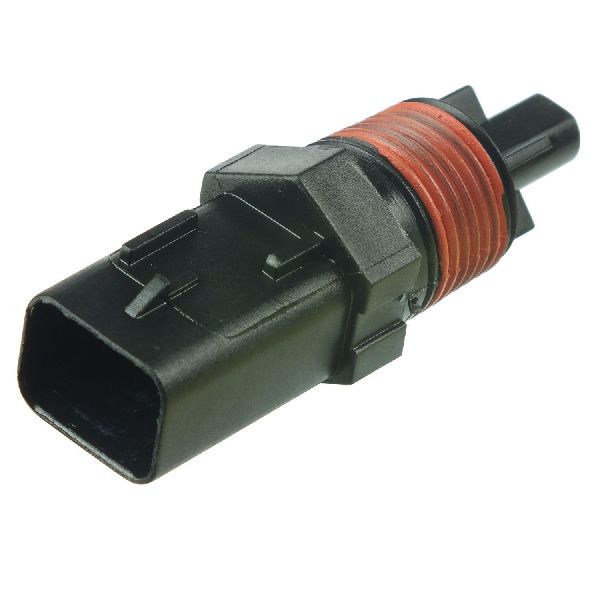
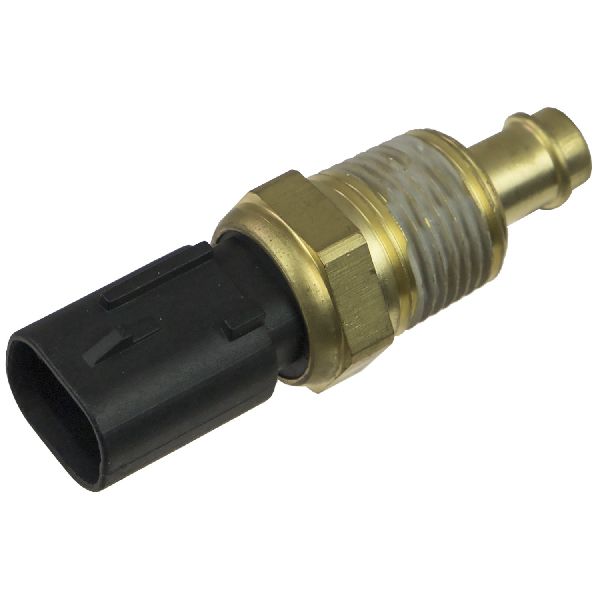
(OEM #5149077AB)— This is the most common cause of a P0117 code. The internal thermistor fails, causing a short in the sensor's internal circuit. This part number is confirmed to fit both the 2.4L and 3.6L engines for the 2011-2017 Chrysler 200.
Trusted brands: Mopar, NTK, Delphi, Standard Motor Products
OEM price range: $45-$70
Aftermarket price range: $20-$40 - Engine Coolant Temperature Sensor Connector Pigtail
(OEM #68064995AA (Mopar reference), S2442 (Standard Motor Products))— Needed if the original connector is melted, corroded, or the locking tab is broken, preventing a secure connection to the new sensor.
Trusted brands: Mopar, Standard Motor Products, Dorman
OEM price range: $25-$40
Aftermarket price range: $15-$30
Related Codes That Often Appear With This One
- P0118 — This is for 'ECT Sensor Circuit High'. If there is an intermittent wiring problem, you might see both codes logged at different times as the circuit shorts and opens.
- P0128 — This code for 'Coolant Temperature Below Thermostat Regulating Temperature' can sometimes appear if the ECT sensor is providing erratic readings, though it's more commonly caused by a faulty thermostat.
Technical Service Bulletins (TSBs) & Recalls
- TSB 18-080-16: 'Flash: Powertrain Diagnostic And System Enhancements' - Involves a PCM software update for 2011-2012 models to address several potential DTCs, including P0116 (ECT Performance) for the 2012 model year.
- TSB 18-023-16 REV. A: 'Flash: 2.4L Powertrain Diagnostic and System Improvements' - A PCM software update for 2015 Chrysler 200 and Dodge Dart models with the 2.4L engine to fix a list of codes, including P0116.
Platform-Specific Known Issues
- While not for P0117, be aware that TSB 18-080-16 was issued for 2012 models to fix a false P0116 (ECT Performance) code with a PCM software update. This highlights a known sensitivity in the temperature monitoring software on this platform.
- Similarly, TSB 18-023-16 REV. A was released for 2015 2.4L models to address several codes, including P0116, via a PCM reflash, further confirming software sensitivity.
Mechanic-Grade Diagnostic Values
- ECT Sensor Resistance — expected: Approximately 2000-3000 Ohms (Ω) at 20°C (68°F), dropping to 200-300 Ohms (Ω) at 90°C (194°F).. Failure: Resistance is infinite (open circuit), near zero (internal short), or does not change smoothly as temperature changes.
- ECT Sensor Signal Voltage (at PCM) — expected: Approximately 2.0V - 3.0V on a cold engine, dropping to around 0.5V when the engine is fully warmed up.. Failure: The PCM will set code P0117 if the voltage is less than 0.078 volts for more than 2.8 seconds.
- ECT Sensor Reference Voltage (at connector, unplugged) — expected: A steady 5 Volts from the PCM on one of the two pins.. Failure: Voltage is significantly below 5V or absent, indicating a problem with the PCM or the wiring between the PCM and the sensor.
- ECT Signal Wire Short-to-Ground Test — expected: Infinite resistance (OL) between the signal wire and chassis ground.. Failure: Resistance is below 100 ohms, indicating a short circuit to ground.
Scan Tool Commands That Help
- wiTECH 2.0 (or equivalent professional scanner): Check for PCM Software Updates / Flashes — While P0117 is a hard circuit fault, related codes like P0116 have known software fixes (TSBs). It is best practice to check for any available powertrain software updates that might improve sensor reading logic before replacing parts, especially if P0116 is also present.
Wiring & Ground Locations
- (K2) ECT Signal Circuit — The wire running from the ECT sensor connector to the PCM. On a 2015 2.4L, this is a Violet/Brown wire going to Pin 11 of the C2 PCM connector.. This is the signal wire the PCM monitors. A short to ground on this wire will directly cause a P0117 code.
- (K900) Sensor Ground Circuit — The dedicated ground return wire running from the ECT sensor connector back to the PCM.. This is not a chassis ground. The sensor is grounded through the PCM. If the (K2) signal wire shorts to this (K900) ground wire, it will also cause a P0117 code.
- ECT Sensor Connector — A 2-pin connector plugging directly into the ECT sensor.. This connector is a common point of failure due to heat, vibration, and potential corrosion. Damage here can cause a short or poor connection, triggering the code.
OEM Part Supersession History
5149096AB→5149077AB— Standard part number update and replacement by the manufacturer.
Heads up: The new part number 5149077AB is the correct and current replacement for the original. No incompatibility is noted; they are interchangeable.
Model Year Variations Within This Range
- 2011-2014 (3.6L V6): The ECT sensor is located on the driver's side cylinder head.
- 2015-2016 (3.6L V6): Some parts diagrams indicate the sensor is located at the oil filter housing assembly, which also contains coolant passages. This is a different location than the earlier 3.6L models.
- 2011-2017 (2.4L): The ECT sensor is consistently located on the passenger side of the engine, in the thermostat housing.
Diagnostic Flowchart
Other Known Issues on This Vehicle
Issues unrelated to this code that are worth knowing about as an owner of this generation:
- ZF 9-Speed Automatic Transmission Faults (2nd Gen) 🔴 High — Very common on 2015-2017 models. Issues include rough/jerky shifting, hesitation, and sudden shifts to neutral. (Ref: Multiple recalls (e.g., NHTSA #15V090000, #16V529000) and TSBs (e.g., 21-013-16) were issued for software updates and component replacements.)
- Excessive Oil Consumption (2.4L Tigershark) 🔴 High — Widespread on 2015-2017 models with the 2.4L engine. Caused by a piston ring design defect, often leading to oil levels dropping by a quart every 1,000-2,000 miles and potential engine stalling. (Ref: TSB 09-006-20 REV. C details the official oil consumption test. A class-action lawsuit led to an extended warranty (XB1) for some owners, potentially covering engine replacement.)
- Rocker Arm Failure / 'Pentastar Tick' (3.6L V6) 🟠 Medium — A known issue across the Pentastar engine family, typically appearing after 50,000 miles. Presents as a distinct ticking noise from the top of the engine that can lead to misfires and, if ignored, camshaft damage.
- Engine Stalling / TIPM Issues (1st Gen) 🟠 Medium — Some 2011-2014 models can experience random engine stalling while driving at low speeds or sudden total power loss. This has been linked to both faulty Powertrain Control Modules (PCMs) and the Totally Integrated Power Module (TIPM). (Ref: A 2012 NHTSA investigation looked into stalling issues linked to the PCM.)
- Clogged Heater Core (1st Gen) 🟡 Low — Common on 2011-2014 models, resulting in poor or no heat, especially on the passenger side. Often caused by casting sand from the engine block or coolant breakdown clogging the heater core.
Used vs. New Parts: Buying Guide for This Vehicle
When a used part is the smart pick: For this repair, a used part only makes sense for the wiring connector pigtail if it is in excellent condition. Never buy a used ECT sensor itself; it is an inexpensive electronic wear item and the risk of premature failure is not worth the minimal savings.
Donor-vehicle mileage cap: roughly under 80000 miles for the part to have meaningful remaining life.
What to inspect on the donor part:
- For a used pigtail: Inspect for non-brittle plastic on the connector body.
- Check that the locking tab clicks securely and is not broken.
- Ensure the wire insulation is flexible and not cracked or heat-damaged.
- Look for clean, corrosion-free metal pins inside the connector.
OEM-only on this vehicle (don't cheap out):
- No parts for this specific repair are strictly OEM-only.
Aftermarket brands forum-validated for this vehicle:
- NTK
- Delphi
- Standard Motor Products (SMP)
Real Owner Stories
Aggregated from forums and TSBs cited above. Mileages and costs reflect what owners reported in those sources.
2012 Chrysler 200 3.6L V6
Symptoms: Engine cooling fans were running on high and the temperature gauge on the dashboard was maxed out.
What fixed it: Replacing the ECT sensor with Mopar part 5149077AB.
Source hint: 200forums.com thread titled 'P0117 code on 2012 Chrysler 200'
2015 Chrysler 200S 3.6L V6
Symptoms: Vehicle triggered a P0117 code; discussion identified the sensor as the likely culprit due to its location near the thermostat housing.
What fixed it: Replacement of the Engine Coolant Temperature (ECT) sensor.
Source hint: 200forums.com thread titled '2015 200S 3.6L P0117'
2011-2014 Dodge Avenger 2.4L / 3.6L
Symptoms: Owners of this platform-mate reported identical P0117 symptoms including failed sensors and wiring issues.
What fixed it: Replacing the ECT sensor or repairing the wiring harness.
Source hint: Platform-mate data for Dodge Avenger
Related OBD-II Codes
Frequently Asked Questions
Where is the ECT sensor located on my 2011-2017 Chrysler 200 with the 2.4L engine?
I have a 2012 Chrysler 200 and I'm getting a temperature-related code. Is there a software update for this?
Where can I find the ECT sensor on my 3.6L Pentastar V6 Chrysler 200?
My 2015 Chrysler 200 2.4L is throwing codes; does TSB 18-023-16 REV. A apply to me?
What specific replacement part is recommended for a P0117 on a 3.6L Chrysler 200?
If my wiring connector is corroded, what part do I need for the repair?
Helpful Videos

Used OEM Parts in Stock

New Aftermarket Parts Available


The information in this article is provided for general reference and educational purposes only. Vehicle specifications, procedures, and part compatibility can vary by production date, trim level, and region. Always consult your vehicle's factory service manual and verify part numbers before purchasing or performing repairs. Safety-critical components such as airbags, seat belts, and braking systems should be installed by a qualified professional.
- Chrysler 200:
- 🎬 Helpful Videos
- 🛍️ Shop This Part
- What's Unique About the 2011-2017 Chrysler 200
- Symptoms You May Notice
- Most Likely Causes
- Rare But Worth Checking
- Diagnosis Steps
- Parts You'll Likely Need
- Related Codes That Often Appear With This One
- Technical Service Bulletins (TSBs) & Recalls
- Platform-Specific Known Issues
- Mechanic-Grade Diagnostic Values
- Scan Tool Commands That Help
- Wiring & Ground Locations
- OEM Part Supersession History
- Model Year Variations Within This Range
- Diagnostic Flowchart
- Other Known Issues on This Vehicle
- Used vs. New Parts: Buying Guide for This Vehicle
- Real Owner Stories
- 2012 Chrysler 200 3.6L V6
- 2015 Chrysler 200S 3.6L V6
- 2011-2014 Dodge Avenger 2.4L / 3.6L
- Related OBD-II Codes
- Frequently Asked Questions
- 🎟️ Get 5% Off