

P0116 on 2015-2020 Ford F-150: Causes and Fixes for ECT Sensor Issues
P0116 on a 2015-2020 F-150 usually points to a faulty Engine Coolant Temperature (ECT) sensor or its connector. On 2.7L EcoBoost engines, it's often a loose connector or a failed sensor buried under the intake manifold. The fix can be a simple connector check or a more involved sensor replacement, costing $25-$150 for the part. For 2018+ 2.7L models, Ford offers a TSB-backed relocation kit (ML3Z-14A411-H) to move the sensor to an accessible hose, avoiding an 8+ hour repair.
- P0116 on a 2015-2020 F-150 is most often related to the Engine Coolant Temperature (ECT) sensor, its connector, or the thermostat.
- If you have a 2.7L EcoBoost, the first step should be to check if the ECT sensor connector is fully seated, as this is a known issue covered by Ford TSBs.
- On 2018-2020 F-150s with the 2.7L engine, the ECT sensor is extremely difficult to access. If it has failed, using Ford's official relocation kit (TSB 21-2168) is the recommended repair strategy.
- Do not ignore this code, as it can lead to poor fuel economy, incorrect engine fan operation, and false overheating warnings.
What's Unique About the 2015-2020 Ford F-150

On the 2015-2020 F-150, especially those with the 2.7L EcoBoost engine, this code is frequently linked to specific, known issues. Ford has issued multiple Technical Service Bulletins (TSBs) for this problem. Some point to a simple fix like an improperly seated ECT sensor connector (SSM 47791, SSM 46906). However, on 2018 and newer 2.7L models, the sensor was relocated to a very inaccessible spot under the intake manifold, making replacement a labor-intensive job estimated at 8.2 hours. This design flaw prompted Ford to release TSB 21-2168, which provides a kit to relocate the sensor to an easier-to-access upper heater hose, acknowledging the difficulty of the original design and reducing the repair time to about 2 hours.
🎬 Watch: How to install the TSB 21-2168 relocation kit.Diagnostic Flowchart
Tap your situation to follow the diagnostic path that matches what you're seeing on this vehicle.
Symptoms You May Notice
- Check Engine Light (Malfunction Indicator Lamp, MIL) is on
- Engine cooling fans running constantly or on high speed, even after shutdown
- "Engine Coolant Over Temperature" warning message on the dash, even when the engine is cold
- Temperature gauge reads cold, fluctuates erratically, or is pegged hot
- Poor fuel economy
- Rough or hesitant engine performance, sometimes described as a 'rumble strip' feeling as the truck enters limp mode
- Hard starting when the engine is cold
- A/C system may not function correctly
- Replacing the thermostat when the actual issue is a faulty sensor or connector, a common point of confusion when P0128 is also present.
- Replacing the sensor when the coolant level is simply low or the connector is not fully seated.
- Confusing the Engine Coolant Temperature (ECT) sensor with the Cylinder Head Temperature (CHT) sensor, which is in a different location.
Most Likely Causes

- Faulty Engine Coolant Temperature (ECT) Sensor 🔴 High Probability The sensor itself is a common failure point. TSBs 21-2168 and 48991 directly mention the sensor as the cause of the issue, especially on the 2.7L EcoBoost.
How to confirm: Use a scan tool to monitor the ECT data. If the reading is irrational (e.g., -40°F on a warm day), doesn't change as the engine warms up, or is stuck at a high value on a cold engine, the sensor is likely bad. A good sensor should have a resistance between 2,000 and 3,000 ohms at 68°F (20°C).
Typical fix: Replace the ECT sensor. On 2018+ 2.7L engines, this is a very difficult job (8+ hours) due to its location under the intake manifold. Using Ford's relocation kit (TSB 21-2168) is the highly recommended and more common fix.
Est. part cost: $25-$75 - Poorly Seated or Damaged ECT Sensor Connector 🔴 High Probability TSBs SSM 47791 and SSM 46906 specifically call out the ECT sensor connector not being fully seated on 2.7L engines as a primary cause. The connector is at the back of the engine and can be difficult to access and see.
How to confirm: Visually inspect the ECT sensor connector. Ensure it is fully plugged in and the locking tab is secure. The connector is located on the driver's side at the back of the valve cover. Check for corrosion or damage to the pins and wiring.
Typical fix: Reseat the connector firmly until it clicks. If the connector or wiring is damaged, it will need to be repaired or replaced. Applying dielectric grease can help prevent future corrosion.
Est. part cost: $0-$30 - Stuck-Open Thermostat 🟡 Medium Probability A thermostat that is stuck open will prevent the engine from reaching its normal operating temperature in a timely manner, which the PCM can interpret as a sensor performance issue, triggering P0116 often alongside P0128.
How to confirm: Monitor the ECT sensor data on a scan tool during warm-up. If the temperature rises very slowly and never reaches the normal operating range (typically 195-220°F), the thermostat is likely stuck open.
Typical fix: Replace the thermostat and gasket. When installing the new thermostat, ensure the jiggle valve is oriented correctly (usually pointed up) to allow air to bleed from the system. 🎬 Watch: Step-by-step guide to replacing the 2.7L thermostat.
Est. part cost: $30-$80 - Low Engine Coolant Level 🟡 Medium Probability If the coolant level is low, the ECT sensor may be exposed to air pockets instead of coolant, leading to inaccurate and erratic readings.
How to confirm: Visually inspect the coolant reservoir and radiator (when the engine is cool) to ensure the coolant is at the proper level.
Typical fix: Top off the cooling system with the correct type of coolant (Ford Motorcraft Orange or Yellow, depending on the model year) and inspect for leaks that may have caused the low level.
Est. part cost: $20-$40
Rare But Worth Checking
- Damaged Wiring Harness: The wiring to the ECT sensor can be damaged by heat, chafing, or rodents, causing a short or open circuit. TSB 48991 notes that the ECT and knock sensor share a harness on some 2.7L engines, and recommends replacing both sensors if a wiring issue is suspected. This can be hard to find and may require tracing the wires from the sensor back to the PCM.
- Powertrain Control Module (PCM) Fault: While extremely rare, the PCM itself can fail or require a software update. This should only be considered after all other possibilities, including sensors, wiring, and connectors, have been thoroughly ruled out.
Diagnosis Steps
- Check for other stored trouble codes to get a complete picture of the problem.
- Check the engine coolant level in the reservoir and radiator (when cool). Top off if low with the correct Motorcraft coolant.
- Visually inspect the Engine Coolant Temperature (ECT) sensor and its electrical connector. On 2.7L engines, pay close attention to ensure the connector is fully seated as per TSBs SSM 47791 and SSM 46906.
- Connect a scan tool and monitor the live data for the ECT sensor. On a cold engine, the ECT reading should be close to the Intake Air Temperature (IAT) and ambient air temperature.
- Start the engine and continue to monitor the ECT data. The temperature should rise steadily as the engine warms up. If it jumps erratically, stays at a fixed value (e.g., -40°F), or rises very slowly, it indicates a problem.
- If the temperature rises very slowly and doesn't reach ~195°F, suspect a stuck-open thermostat.
- If the temperature reading is nonsensical on a cold engine, perform an "unplugged test": disconnect the ECT sensor and observe the live data on the scan tool. The reading should default to a very high or very low value (e.g., -40°F or 250°F+). If it doesn't change, there's likely a wiring issue between the sensor and the PCM.
- If the sensor and thermostat appear to be working, inspect the wiring harness for any signs of damage, chafing, or corrosion, particularly near the back of the engine on 2.7L models.
Parts You'll Likely Need

- Engine Coolant Temperature Sensor
(OEM #DY1144 (Motorcraft), 3F1Z-12A648-A (Ford))— This is the most common part to fail or provide irrational readings, triggering code P0116.
Trusted brands: Motorcraft
OEM price range: $25-$50
Aftermarket price range: $15-$35 - Engine Coolant Thermostat
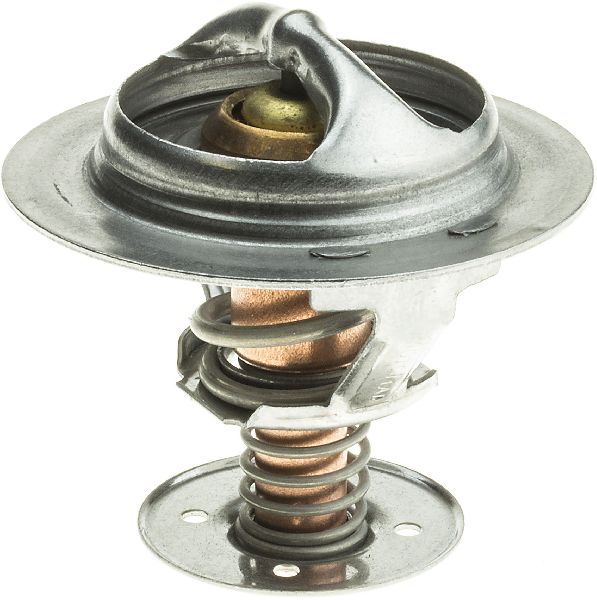
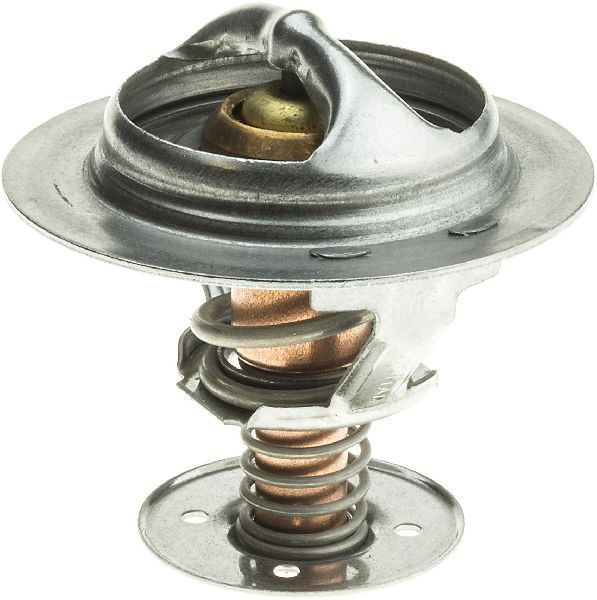
(OEM #RT1234 (Motorcraft, for 2.7L))— A thermostat stuck open will cause the engine to warm up too slowly, which can trigger a P0116 performance code.
Trusted brands: Motorcraft
OEM price range: $40-$80
Aftermarket price range: $25-$50 - ECT Sensor Relocation Kit (for 2.7L)
(OEM #ML3Z-14A411-H)— For 2018+ 2.7L engines with a failed sensor, this Ford kit relocates the sensor to an accessible heater hose, turning an 8+ hour job into a ~2 hour job, per TSB 21-2168.
Related Codes That Often Appear With This One
- P0117 — ECT Sensor Circuit Low Input. Often appears with P0116 as it relates to the same sensor circuit and is listed in the same TSBs.
- P0118 — ECT Sensor Circuit High Input. Also related to the ECT sensor circuit and mentioned in TSBs alongside P0116.
- P0119 — ECT Sensor Circuit Intermittent. This code specifically points to an intermittent signal, which aligns with a loose connector or failing sensor, and is cited in TSBs.
- P0128 — Coolant Thermostat (Coolant Temperature Below Thermostat Regulating Temperature). This code often points to a stuck-open thermostat but can also be triggered by a faulty sensor reading.
- P1299 — Cylinder Head Over Temperature Protection Active. The PCM may trigger this as a protective measure based on the faulty ECT data, putting the truck in limp mode.
Technical Service Bulletins (TSBs) & Recalls
- TSB 21-2168: For MIL and/or Over Temperature warning with DTCs including P0116, may be caused by an intermittent drop in coolant temperature reading.
- SSM 47791: For MIL and/or wrench lamp with DTCs including P0116 on 2.7L engines, may be due to an ECT sensor connector which is not fully seated.
- SSM 46906: Similar to SSM 47791, points to a loose ECT sensor connector on 2.7L engines causing P0116.
- SSM 48991: For MIL and/or Over Temperature warning with DTCs including P0116, may be due to the ECT sensor or knock sensor.
Platform-Specific Known Issues
- TSB 21-2168: For 2018-2020 F-150s with the 2.7L EcoBoost, this TSB provides a complete kit (part #ML3Z-14A411-H) to fix recurring P0116-P0119 codes by relocating the ECT sensor from its original, inaccessible location under the intake to a new heater hose assembly.
- SSM 47791 & SSM 46906: For 2015-2019 F-150s (and other models) with the 2.7L engine, these bulletins highlight that P0116 and related codes can be caused simply by an ECT sensor connector that was not fully seated at the factory or during a previous service.
- SSM 48991: For 2015-2020 F-150s with the 2.7L, this bulletin suggests that if P0116 is present, the issue may be in the shared wiring harness for the ECT and knock sensor, and recommends replacing both sensors (part numbers 12A648 and 12A699 respectively).
Mechanic-Grade Diagnostic Values
- ECT Sensor Resistance (Ohms) — expected: ~37,000 Ohms at 68°F (20°C); ~2,100 Ohms at 212°F (100°C).. Failure: Readings significantly outside the expected range for a given temperature, or an open/short circuit (infinite or zero resistance).
- ECT Sensor Circuit Voltage (Key On, Engine Off) — expected: One pin should show a 5V reference from the PCM. The other pin is the signal return/ground.. Failure: No 5V reference suggests a wiring problem or PCM issue. Voltage on the signal wire should vary with temperature when the engine is running.
- Instrument Cluster Engineering Test Mode - Engine Temperature — expected: Displays the raw temperature data from the CHT/ECT sensor in Celsius. This should match scan tool data and rise steadily.. Failure: A value of -40°C or a wildly inaccurate reading points to a sensor or circuit fault.
Scan Tool Commands That Help

- Ford IDS (Integrated Diagnostic System): Live Data Monitoring (ECT, IAT, CHT PIDs) — This is the primary method for diagnosis. It's used to compare the ECT sensor reading against the Intake Air Temperature (IAT) on a cold soak and to watch the temperature curve as the engine warms up to identify irrational behavior.
- Ford IDS (Integrated Diagnostic System): Wiggle Test — While monitoring live data, wiggling the ECT sensor connector and related wiring harness can expose intermittent connections. If the temperature reading jumps or drops out during the wiggle test, the location of the fault has been found.
Wiring & Ground Locations
- Engine Harness Chafe Point — On some F-150s, the main engine wiring harness can rub against sharp edges on the frame rails or shock towers in the engine bay.. Constant vibration can cause the harness to chafe, eventually exposing and shorting wires within the bundle, including the ECT sensor circuit. This can cause intermittent P0116 codes that are difficult to trace as they may only occur when the engine moves a certain way.
- ECT/Knock Sensor Sub-harness (2.7L) — On 2.7L engines, the ECT and knock sensor often share a small jumper or sub-harness, especially on models where the ECT is under the intake manifold.. TSB 48991 mentions replacing both sensors if a wiring issue is suspected. A break or short in this shared harness can cause codes for both components and is a known failure point, as confirmed in owner repair stories.
Real Owner Repair Stories
- Reddit user 'micpop13' in r/autoelectrical (2005 F-150 (similar CHT/ECT strategy to later models)) — CHT sensor problem, likely similar codes to P0116.
❌ Tried (didn't work) Initial checks of main harness for wear points.
✅ What actually fixed it The root cause was a partially broken wire inside the waterproof grommet of the molex connector on the jumper harness between the sensor and the main engine harness. The break was found by checking continuity while wiggling the jumper harness. The user had to solder in a new section of wire to repair it. - f150forum.com user (2016 F-150 with 109k miles) — Intermittent 'Service Advance Trac' light, limp mode, and communication codes (P2122 initially).
❌ Tried (didn't work) Replacing the accelerator pedal position sensor.
✅ What actually fixed it A dealership technician found that the main wiring harness was chafing against the frame rail. When wet, a wire in the bundle would short to the frame, causing communication issues and warning lights. The fix was to repair the damaged wires and re-route or protect the harness from the sharp edge of the frame.
OEM Part Supersession History
F5AZ-12A648-A, F5AZ-12A648-AB→3F1Z-12A648-A— Standard part revision and consolidation over time.
Heads up: While 3F1Z-12A648-A is listed for many Ford vehicles, its applicability to the 2015-2020 F-150 range is not explicitly confirmed by the search results, which mainly list older models. Always verify the part number with the vehicle's VIN, especially for the 2.7L engine which has known sensor variations.
Model Year Variations Within This Range
- 2018-2020 (2.7L EcoBoost): The ECT sensor was relocated to a position under the intake manifold, making it extremely difficult to access (8+ hour job). This differs from earlier 2.7L models and other engines (3.5L, 5.0L) where the sensor is more accessible. This change is the primary reason Ford issued TSB 21-2168 and the relocation kit (ML3Z-14A411-H).
- 2015-2017 (2.7L EcoBoost): The ECT sensor is generally in a more accessible location at the rear of the engine. For these years, TSBs SSM 47791 and SSM 46906 point to the sensor's electrical connector not being fully seated as a common cause, rather than the sensor itself failing in an inaccessible location.
Helpful Videos
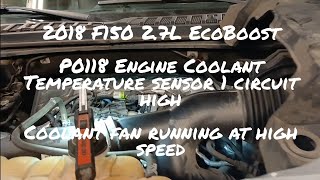



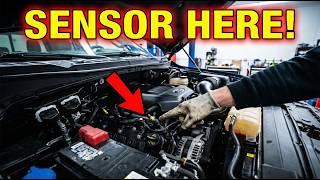
Used OEM Parts in Stock

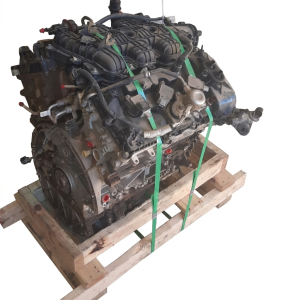
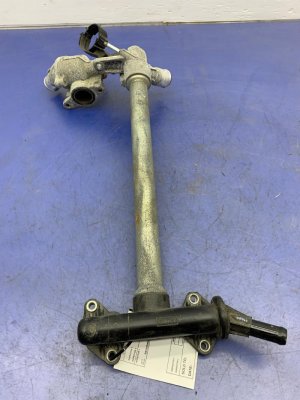
New Aftermarket Parts Available

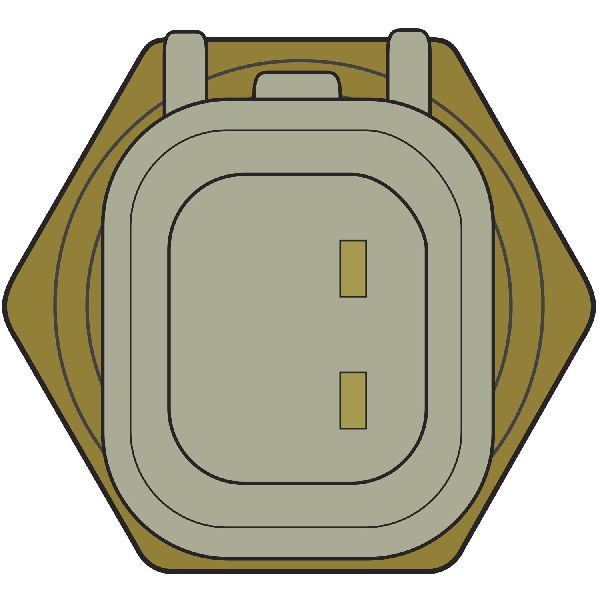


The information in this article is provided for general reference and educational purposes only. Vehicle specifications, procedures, and part compatibility can vary by production date, trim level, and region. Always consult your vehicle's factory service manual and verify part numbers before purchasing or performing repairs. Safety-critical components such as airbags, seat belts, and braking systems should be installed by a qualified professional.
- Ford F-150:
- 🎬 Helpful Videos
- 🛍️ Shop This Part
- What's Unique About the 2015-2020 Ford F-150
- Diagnostic Flowchart
- Symptoms You May Notice
- Most Likely Causes
- Rare But Worth Checking
- Diagnosis Steps
- Parts You'll Likely Need
- Related Codes That Often Appear With This One
- Technical Service Bulletins (TSBs) & Recalls
- Platform-Specific Known Issues
- Mechanic-Grade Diagnostic Values
- Scan Tool Commands That Help
- Wiring & Ground Locations
- Real Owner Repair Stories
- OEM Part Supersession History
- Model Year Variations Within This Range
- 🎟️ Get 5% Off