

P0116 on 2011-2017 Chrysler 200: Engine Coolant Temperature Sensor Causes and Fixes
On a 2011-2017 Chrysler 200, code P0116 is frequently caused by outdated engine computer software. Before replacing any parts, call a dealer with your VIN to check for software updates (TSBs like 18-080-16 for 2012 models or 18-023-16 for 2015 2.4L models). If no updates are needed, the most likely hardware cause is a stuck-open thermostat (often setting P0128 as well) or a faulty engine coolant temperature (ECT) sensor.
- Your first step should be to call a Chrysler dealer with your VIN to check for software updates related to TSBs 18-080-16 or 18-023-16 before buying any parts.
- If the engine warms up extremely slowly, the thermostat is the most likely hardware failure, not the sensor.
- If the temperature gauge is jumping around erratically, the ECT sensor or its wiring is the most likely culprit.
- The ECT sensor is in a different location on the 2.4L engine (passenger side, in thermostat housing) versus the 3.6L V6 (driver's side, in cylinder head).
What's Unique About the 2011-2017 Chrysler 200
The Chrysler 200 of this era is well-known for setting P0116 due to overly sensitive software logic in the powertrain computer, rather than an actual hardware failure. Chrysler released multiple Technical Service Bulletins (TSBs) instructing dealers to reprogram the PCM to fix this issue. TSB 18-080-16 specifically targets the 2012 model year for P0116. TSBs 18-022-17 and 18-023-16 apply to 2015 models with the 2.4L engine, addressing P0116 among a list of other codes fixed by the software update. Therefore, the first diagnostic step for this specific vehicle should always be checking for available software updates.
Generation note: The 2011-2017 range covers two generations of the Chrysler 200: the first generation (JS) from 2011-2014 and the second generation (UF) from 2015-2017. While the causes are similar, specific TSBs for software updates are often year-specific. For example, TSB 18-080-16 applies to 2012 models for P0116 and U0140. TSBs 18-022-17 and 18-023-16 apply to 2015 models with the 2.4L engine.
Symptoms You May Notice
- Check Engine Light is on
- Temperature gauge reading is erratic, incorrect, or stays low
- Reduced fuel economy
- Engine cooling fans run constantly or at the wrong times
- Heater may not blow warm air.
- Engine may hesitate or run rough
- Replacing the ECT sensor when the actual problem is outdated PCM software that requires a dealer reflash.
- Replacing the ECT sensor when the thermostat is stuck open, causing a legitimate slow warm-up condition that is accurately reported by the sensor.
- Replacing the thermostat when the ECT sensor itself is faulty and sending erratic signals unrelated to the actual coolant temperature.
Most Likely Causes
- Outdated Powertrain Control Module (PCM) Software 🔴 High Probability Chrysler issued multiple TSBs because the original software logic was too sensitive and could set a false P0116 code, often with other codes. TSB 18-080-16 for 2012 models and TSBs 18-023-16/18-022-17 for 2015 2.4L models are prime examples.
How to confirm: Call a Chrysler dealership with your VIN. Ask them to check if TSB 18-080-16, 18-022-17, or 18-023-16 are open for your vehicle. A shop with a wiTECH scanner can also check software calibration levels.
Typical fix: A dealership must reprogram (reflash) the PCM with the latest software version. This is not a DIY repair and requires a stable power supply during the procedure.
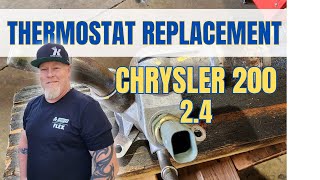
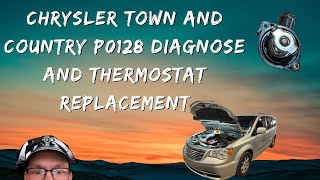
Est. part cost: $0 - Stuck-Open Thermostat 🟡 Medium Probability This is a common failure item on both the 2.4L and 3.6L engines. If stuck open, 🎬 Watch: Step-by-step thermostat replacement for 2011-2014 V6 models coolant circulates constantly, preventing the engine from reaching its proper operating temperature quickly enough, which the PCM flags as a performance issue. This is a very frequent cause of code P0128, which often appears with P0116.
How to confirm: Monitor the live ECT data on a scan tool while the engine warms up. If the temperature rises very slowly and struggles to reach ~195-205°F, the thermostat is likely stuck open. The upper radiator hose will also get warm gradually instead of getting hot suddenly.
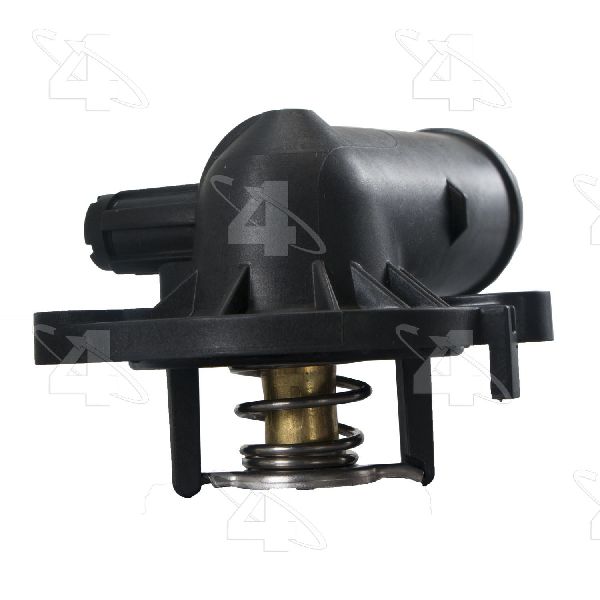
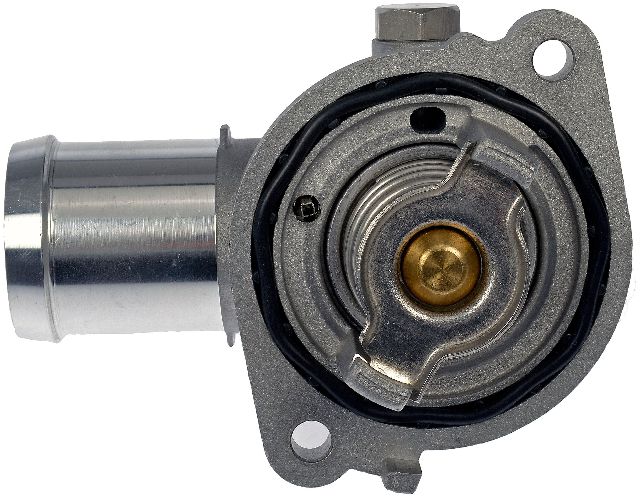
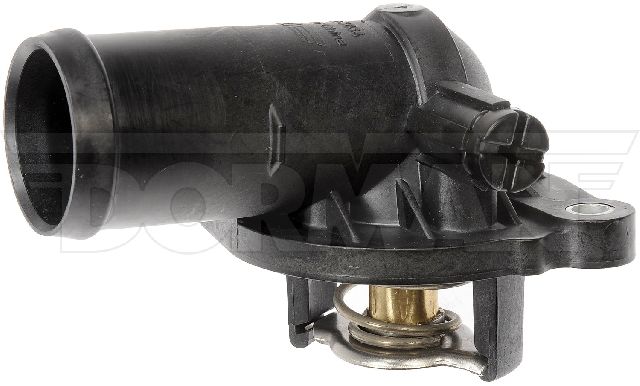
Typical fix: Replace the thermostat and its housing assembly. It's recommended to replace them together as the plastic housing can warp or become brittle. The system must be refilled with the correct OAT coolant and bled of air.
Est. part cost: $30-$80 - Faulty Engine Coolant Temperature (ECT) Sensor 🟡 Medium Probability The sensor is a thermistor that can degrade over time, leading to incorrect or erratic signals that don't align with the PCM's expected values.
How to confirm: With the engine cold, use a scan tool to compare the ECT and IAT readings; they should be within a few degrees of each other. If the ECT reading is illogical (e.g., -40°F or 250°F on a cold engine) or jumps around wildly as the engine warms up, the sensor is bad.
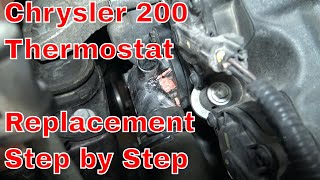
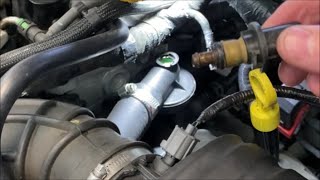
Typical fix: Replace the ECT sensor. On the 2.4L, it is on the passenger side in the thermostat housing. On the 3.6L, it is on the front of the engine, on the driver's side, near the thermostat housing. 🎬 See this walkthrough for replacing the coolant temperature sensor
Est. part cost: $25-$70 - Low Engine Coolant Level ⚪ Low Probability A low coolant level can create air pockets in the cooling system. If an air pocket passes over the ECT sensor, it will send an incorrect, often erratic, reading to the PCM. This is often a symptom of another problem, like a leak.
How to confirm: Visually inspect the coolant reservoir and radiator (when the engine is cool). If the level is low, there is a leak that must be found and repaired.
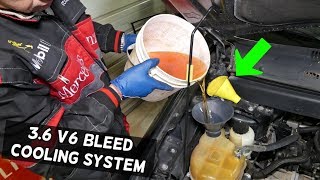
Typical fix: Top off the coolant with the correct type (Mopar OAT 10-year/150,000-mile coolant) and bleed the system to remove air. Find and 🎬 Watch: How to properly bleed the Pentastar cooling system repair the source of the coolant leak.
Est. part cost: $15-$30 for coolant - Wiring or Connector Issue ⚪ Low Probability The 2-wire connector at the ECT sensor can become corroded or the wiring can get damaged from heat and vibration, leading to a poor connection and faulty signal.
How to confirm: Visually inspect the ECT sensor's connector and nearby wiring for signs of corrosion (green crust), looseness, or physical damage. Wiggle the connector with the engine running while watching live data on a scan tool to see if the reading jumps.
Typical fix: Clean the connector terminals or replace the connector pigtail if it's damaged. A common replacement pigtail is Standard Motor Products S2442.
Est. part cost: $10-$40
Rare But Worth Checking
- Leaking Oil Filter Housing (3.6L V6): On the 3.6L Pentastar engine, the oil filter housing assembly, located in the valley of the engine, is a notorious failure point that can leak coolant. This coolant loss, while not a direct cause of P0116, leads to low coolant levels and air in the system, which can trigger the code. If you have a 3.6L and are losing coolant with no obvious external leaks, inspect this area carefully.
- Faulty Powertrain Control Module (PCM): This is extremely rare. All other possibilities, especially software updates, the thermostat, the sensor, and wiring, must be completely ruled out before considering PCM failure.
Diagnosis Steps
- Check for TSBs: This is the most critical first step. Call a Chrysler dealership with your VIN and ask if any software updates or TSBs (like 18-080-16 for 2012 or 18-023-16 for 2015 2.4L) related to P0116 are open for your car.
- Check Coolant Level: Ensure the engine is cool. Check the coolant level in the overflow reservoir and radiator. A low level indicates a leak that must be addressed.
- Scan Live Data (Cold Engine): Connect an OBD-II scanner. After the car has sat for several hours ('cold soak'), compare the Engine Coolant Temperature (ECT) and Intake Air Temperature (IAT) readings. They should be within 5 degrees of each other. A major difference points to a sensor or wiring issue.
- Scan Live Data (Warm-Up): Start the engine and watch the ECT reading on the scanner. It should rise smoothly and steadily. If it jumps around erratically, the sensor or wiring is likely bad. If it rises very slowly and has trouble reaching operating temperature (~195°F), the thermostat is likely stuck open.
- Inspect Sensor and Connector: Visually inspect the ECT sensor and its electrical connector for any signs of green corrosion, damage, or loose pins.
- Test Thermostat: If the engine warms up slowly, feel the upper radiator hose. It should remain relatively cool until the engine reaches operating temperature, at which point it should get hot quickly. If it gets warm gradually, the thermostat is likely stuck open.
Parts You'll Likely Need
- Engine Coolant Temperature (ECT) Sensor
(OEM #5149077AB)— This sensor provides the temperature reading. It can fail and send erratic or irrational signals. - Thermostat Housing Assembly
(OEM #68253514AF (2.4L) / 5184977AE (3.6L))— The thermostat can stick open, causing a slow warm-up condition that triggers P0116. It is often replaced as a complete housing assembly. - PCM Software Update — A very common cause for this specific vehicle is overly sensitive software logic, which is corrected by a dealer-installed update per multiple TSBs.
Related Codes That Often Appear With This One
- P0128 — This code means 'Coolant Temperature Below Thermostat Regulating Temperature' and is very commonly seen with P0116 when the cause is a thermostat stuck in the open position.
- U0140 — TSB 18-080-16 for 2012 models specifically notes that P0116 and U0140 ('Lost Communication With Body Control Module') can appear together and be resolved by a single PCM software update.
Technical Service Bulletins (TSBs) & Recalls
- 18-080-16: Addresses P0116 on 2012 models with a PCM software update.
- 18-023-16 REV. C / 18-022-17 REV. A: Addresses P0116 on 2015 models with the 2.4L engine via a PCM software update.
Platform-Specific Known Issues
- A primary issue for the 2011-2017 Chrysler 200 is the high likelihood of the P0116 code being triggered by a software glitch rather than a hardware failure, requiring a PCM reflash from a dealer.
- For the 2012 model year, TSB 18-080-16 was released specifically to correct a false P0116 code.
- For the 2015 model year with the 2.4L 'Tigershark' engine, TSB 18-023-16 REV. C was released to fix P0116 via a software update.
Mechanic-Grade Diagnostic Values
- ECT Sensor Resistance — expected: Approx. 2,000-3,000 Ω at 20°C (68°F) and 200-300 Ω at 90°C (194°F).. Failure: Resistance is infinite (open circuit), near zero (short circuit), or does not decrease smoothly as the sensor is heated in water.
- ECT Sensor Signal Voltage (at sensor connector) — expected: Approx. 2.0V - 3.5V on a cold engine (20°C/68°F), dropping smoothly to around 0.5V - 1.3V when the engine is at full operating temperature (80-90°C).. Failure: Voltage is stuck at 5V (open circuit), near 0V (short to ground), or jumps erratically instead of decreasing smoothly as the engine warms.
- PCM 5V Reference (at sensor connector, unplugged) — expected: A steady 5V on one of the two pins with the key on, engine off.. Failure: Voltage is significantly below 5V or is not present, indicating a problem with the PCM or the wiring between the PCM and the sensor.
Scan Tool Commands That Help
- wiTECH (or equivalent high-level scanner): Live Data Graphing (ECT vs. IAT vs. Ambient Temp) — On a cold-soaked engine, graph all three temperature PIDs. They should start within a few degrees of each other. This is the primary data the PCM uses to run the rationality check that sets P0116. A significant deviation in the ECT reading at startup immediately points to a sensor/wiring issue.
- wiTECH (or equivalent high-level scanner): View Freeze Frame Data — Always review the freeze frame data for the P0116 code. It captures the exact engine conditions (coolant temp, IAT, engine run time, etc.) when the fault was set. This can provide crucial clues, such as the fault setting after only a few minutes of runtime, which might point towards a slow-to-warm-up thermostat.
Wiring & Ground Locations
- ECT Sensor Connector (2.4L) — On the thermostat housing, passenger side of the engine.. This 2-pin connector is the primary point of failure for wiring issues. One pin is the 5V reference from the PCM, the other is the signal return. Corrosion or a loose connection here will directly cause the P0116 code.
- ECT Sensor Connector (3.6L) — On the driver's side cylinder head, towards the back of the engine. Access is often tight, and may require removing the driver's side wheel and inner fender liner.. Due to its location, the wiring harness can be subject to heat and vibration. A wiggle test on this connector while monitoring live data is crucial. Be careful not to confuse it with the nearby oil temperature sensor, which can look similar.
- G103 (2.4L Engine) — A primary engine ground point located on the front of the cylinder head.. The ECT sensor relies on a clean ground path back to the PCM. A loose or corroded G103 ground can create a floating ground, causing erratic voltage readings from the sensor and triggering a performance code like P0116.
- PCM Location (2015-2017 2.4L) — Located on the right (passenger) side of the engine bay, near the battery and under-hood fuse block.. For advanced diagnostics, such as checking for continuity or shorts in the harness, testing must be done at the PCM connectors. Knowing its location is key. Technicians may need to disconnect the battery and PCM connectors to clean them if corrosion is suspected.
Real Owner Repair Stories
- Jeep Wrangler Forum User (2016 Jeep Wrangler 3.6L (Same engine and similar sensor behavior as Chrysler 200)) — Engine running slightly hot, but no specific codes mentioned. General preventative maintenance.
❌ Tried (didn't work) An AutoZone (aftermarket) brand ECT sensor was installed previously.
✅ What actually fixed it The owner reported that Pentastar engines are very particular and prefer Mopar parts. He replaced the aftermarket sensor with a genuine Mopar brand sensor to resolve concerns about inaccurate temperature readings, highlighting a common belief among enthusiasts that OEM sensors perform more reliably on these engines.
OEM Part Supersession History
5149096AB→5149077AB— Standard part number update and consolidation across multiple FCA platforms.
Heads up: The part is also listed under various names including 'Fluid Temperature Sensor' and 'Oil Temperature Sensor', which can cause confusion. Ensure the part is being ordered for the ECT application.
Model Year Variations Within This Range
- 2015-2017 (UF Generation): These models may be equipped with Active Grille Shutters. A malfunction in this system can affect engine warm-up times, potentially contributing to a P0116 code by causing the engine to warm up slower or faster than the PCM's programmed expectation.
- 2011-2014 (JS Generation) vs 2015-2017 (UF Generation): The PCM location and some wiring harness routing differ between the two generations. For example, on the 2015+ 2.4L, the PCM is located in the engine bay near the battery, making access for testing different than on earlier models.
Diagnostic Flowchart
Used vs. New Parts: Buying Guide for This Vehicle
When a used part is the smart pick: A used thermostat housing assembly from a low-mileage donor vehicle can be a cost-effective option, as the main failure is often the plastic becoming brittle or warping. However, it's wise to install a new thermostat and ECT sensor into the used housing.
Donor-vehicle mileage cap: roughly under 60000 miles for the part to have meaningful remaining life.
What to inspect on the donor part:
- Inspect the plastic housing for any hairline cracks, especially around the bolt holes and hose connections.
- Ensure the sealing surfaces are flat and not warped.
- Check the electrical connector pigtail (if included) for corrosion, brittleness, or damaged locking tabs.
OEM-only on this vehicle (don't cheap out):
- Engine Coolant Temperature (ECT) Sensor
Aftermarket brands forum-validated for this vehicle:
- NGK/NTK
- Delphi
Brands owners have reported issues with on this vehicle:
- Unbranded, 'white-box' sensors from online marketplaces are frequently reported to be inaccurate out of the box or fail prematurely. Given the history of software sensitivity on this vehicle, using a sensor with reliable performance is critical.
Real Owner Stories
Aggregated from forums and TSBs cited above. Mileages and costs reflect what owners reported in those sources.
2015 Chrysler 200 2.4L
Symptoms: Check Engine Light on for code P0116, with no other noticeable running issues.
What fixed it: A dealership performed a PCM reflash (software update) according to TSB 18-023-16, which resolved the false code.
Source hint: TSB 18-023-16 REV. C
2016 Chrysler 200s
Symptoms: Coolant temperatures were reading too low on the gauge and the heater was not blowing warm air.
What fixed it: The problem was a stuck-open thermostat, which was fixed by replacing the thermostat and housing assembly.
Source hint: Chrysler Forum '2016 200s Coolant Issues'
2016 Chrysler 200
Symptoms: A coolant hose had popped off, causing a loss of coolant and subsequent temperature issues.
What fixed it: After reattaching the hose, the system was refilled with the correct OAT coolant and bled ('burped') to remove air pockets that were causing erratic temperature readings.
Source hint: Reddit r/MechanicAdvice '2016 Chrysler 200 issues'
Related OBD-II Codes
Frequently Asked Questions
My 2015 Chrysler 200 2.4L has a P0116 code. Is there a software update for this?
What's the first thing I should check for a P0116 code on my Chrysler 200 before replacing parts?
I have a 2012 Chrysler 200 with P0116. Does a TSB apply to my car?
Where is the Engine Coolant Temperature (ECT) sensor located on my Chrysler 200?
What part number do I need for a new thermostat on my 3.6L V6 Chrysler 200?
My coolant level is low. What type of coolant should I use to top it off?
Helpful Videos
Used OEM Parts in Stock


New Aftermarket Parts Available


The information in this article is provided for general reference and educational purposes only. Vehicle specifications, procedures, and part compatibility can vary by production date, trim level, and region. Always consult your vehicle's factory service manual and verify part numbers before purchasing or performing repairs. Safety-critical components such as airbags, seat belts, and braking systems should be installed by a qualified professional.
- Chrysler 200:
- 🎬 Helpful Videos
- 🛍️ Shop This Part
- What's Unique About the 2011-2017 Chrysler 200
- Symptoms You May Notice
- Most Likely Causes
- Rare But Worth Checking
- Diagnosis Steps
- Parts You'll Likely Need
- Related Codes That Often Appear With This One
- Technical Service Bulletins (TSBs) & Recalls
- Platform-Specific Known Issues
- Mechanic-Grade Diagnostic Values
- Scan Tool Commands That Help
- Wiring & Ground Locations
- Real Owner Repair Stories
- OEM Part Supersession History
- Model Year Variations Within This Range
- Diagnostic Flowchart
- Used vs. New Parts: Buying Guide for This Vehicle
- Real Owner Stories
- 2015 Chrysler 200 2.4L
- 2016 Chrysler 200s
- 2016 Chrysler 200
- Related OBD-II Codes
- Frequently Asked Questions
- 🎟️ Get 5% Off