

P0113 on 2013-2018 Nissan Altima 2.5L: IAT Sensor Circuit High Causes and Fixes
On a 2013-2018 Nissan Altima, code P0113 is almost always caused by a failed Intake Air Temperature (IAT) sensor, which is integrated into the Mass Airflow (MAF) sensor. The fix is to replace the entire MAF sensor assembly. Expect to pay $70-$120 for an aftermarket part (Hitachi is the OEM manufacturer) or around $220-$250 for a genuine Nissan part. It's a simple DIY fix requiring only a Phillips screwdriver.
- P0113 on your Altima means the engine computer sees a problem with the Intake Air Temperature sensor circuit, usually an open connection.
- The IAT sensor is part of the Mass Airflow (MAF) sensor on the main air intake tube, not a separate part.
- The most common fix is to replace the entire MAF sensor assembly, which is a simple 10-minute job with a Phillips screwdriver.
- Before buying a new sensor, check that the connector is plugged in securely and the wiring isn't damaged, paying special attention to the purple wire.
- Stick to a genuine Nissan or Hitachi (part MAF0031) replacement sensor, as cheaper aftermarket versions are known to cause issues.
- Do not confuse the engine's IAT sensor with the ambient air temp sensor behind the bumper, which is for the climate control display.
What's Unique About the 2013-2018 Nissan Altima

For the fifth-generation (L33) Nissan Altima with the 2.5L QR25DE engine, the Intake Air Temperature (IAT) sensor is not a separate, standalone part. It is integrated directly into the Mass Airflow (MAF) sensor housing located on the engine's air intake duct, right after the air filter box. This is a common design, but it often confuses owners who may look for a separate IAT sensor to replace. Because of this integration, the solution for a P0113 code on this vehicle is almost always the replacement of the complete MAF sensor assembly.
Symptoms You May Notice
- Check Engine Light is on
- Reduced fuel economy
- Engine hesitation or stumbling on acceleration
- Difficulty starting the engine, or engine stalls immediately after starting
- Rough idle
- Failed emissions test
- Vehicle enters 'limp mode' with reduced power and won't accelerate properly
- Black smoke from exhaust (due to rich fuel mixture) 🎬 See: Common symptoms of a bad MAF sensor
- Replacing the ambient air temperature sensor. The ambient sensor is located behind the front bumper/grille and is used for the climate control and external temperature display. A P0113 code is specifically for the engine's IAT sensor, which is part of the MAF.
- Replacing the oxygen sensors. While a bad IAT sensor can affect the air-fuel ratio and cause symptoms similar to a bad O2 sensor, the code P0113 points directly to the IAT input circuit, not the O2 sensors.
Most Likely Causes

- Failed Mass Airflow (MAF) / IAT Sensor Assembly 🔴 High Probability The integrated MAF/IAT sensor is a known sensitive component on this platform. An internal failure of the IAT thermistor is common, creating an open circuit that triggers the P0113 code. Many owners report that replacing the MAF assembly is the definitive fix.
How to confirm: With a scan tool, observe the IAT sensor reading. If it shows an extremely low temperature (e.g., -40°F/°C), it confirms the ECM is seeing the default value for an open circuit. This points directly to a sensor failure. This is the most common scenario described by owners in forums.
Typical fix: Replace the entire MAF sensor assembly. It is located on the air intake tube just after the air filter box and is held in by two Phillips-head screws. 🎬 Watch: Step-by-step MAF sensor replacement walkthrough It is highly recommended to use the OEM part or the Hitachi-branded equivalent (Hitachi is the original manufacturer) as some aftermarket sensors are known to fail or not be recognized by the ECM.
Est. part cost: $70-$250 - Damaged Wiring or Connector 🟡 Medium Probability Wiring can become brittle over time due to engine heat cycles. The connector's locking tab can also break, leading to a poor connection.
How to confirm: Visually inspect the MAF sensor connector and its wiring harness for any signs of corrosion, bent pins, or frayed/broken wires. With the key on and sensor unplugged, use a multimeter to check for a 5-volt reference signal and a good ground at the connector terminals. The IAT signal wire on this harness is typically purple.
Typical fix: Repair the damaged section of wiring or replace the connector pigtail. A user on YouTube fixed both P0113 and P0118 codes by repairing a single broken purple wire at the connector.
Est. part cost: $15-$40 - Dirty MAF/IAT Sensor ⚪ Low Probability An excessively dirty or over-oiled aftermarket air filter can allow debris or oil to coat the sensor elements, potentially interfering with its reading. While this more commonly causes a P0101 (MAF performance) code, it can sometimes contribute to IAT faults.
How to confirm: Remove the MAF sensor and visually inspect the small wires or thermistor inside. If they are coated with dirt or oil, this could be the cause.
Typical fix: Clean the sensor using only a dedicated Mass Airflow Sensor cleaner spray. Do not use brake cleaner, as it can damage the plastic and electronics. Do not touch the internal elements. Allow it to dry completely before reinstalling.
Est. part cost: $10-$15
Rare But Worth Checking
- Faulty Engine Control Module (ECM): This is extremely rare. The ECM should only be considered after all other possibilities, including sensor and wiring issues, have been definitively ruled out by testing signal continuity directly at the ECM connector.
Diagnosis Steps

- Connect an OBD-II scanner and confirm P0113 is the active code. Note any other codes present, especially P0101, P0102, or P0112.
- View the live data stream for the Intake Air Temperature (IAT). A reading of -40°F or a similarly extreme low temperature strongly suggests an open circuit.
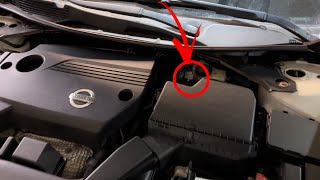
- Turn the vehicle off and locate the MAF sensor on the air intake duct between the air filter housing and the throttle body.
- Inspect the MAF sensor's electrical connector for damage, corrosion, or loose pins. Ensure it is seated securely and the locking tab clicks into place.
- Inspect the wiring harness leading to the connector for any visible signs of damage, fraying, or melting. Pay close attention to the purple wire (IAT signal).
- If wiring looks good, unplug the sensor. Turn the key to 'ON' (engine off). Use a multimeter to probe the connector terminals. You should find a 5V reference wire, a ground wire (check for continuity to chassis ground), and the signal wire.
- If wiring and connector are confirmed good, the most likely cause is a failed sensor. You can try cleaning it with dedicated MAF cleaner as a low-cost first step.
- If cleaning does not resolve the issue, replace the MAF sensor assembly. It is recommended to use a genuine Nissan part or the Hitachi OEM equivalent.
- After replacement, clear the codes with the scanner and start the engine. Verify that the IAT live data now shows a plausible ambient temperature and that the code does not return. An idle air volume relearn procedure may be necessary if the idle is erratic after replacement. 🎬 Watch: How to perform the idle air volume relearn
Parts You'll Likely Need
- Mass Airflow (MAF) Sensor
(OEM #22680-1MG0A (for 2013-2015), 22680-5RB0A (for 2016-2018))— The IAT sensor is built into the MAF sensor for this vehicle. A P0113 code is most often caused by an internal failure of this integrated component.
Trusted brands: Nissan (OEM), Hitachi (OEM supplier, part MAF0031)
OEM price range: $220-$250
Aftermarket price range: $70-$120
Related Codes That Often Appear With This One
- P0101 — This code indicates a problem with the Mass Airflow (MAF) sensor performance. Since the IAT is integrated with the MAF, a single faulty sensor assembly, dirty sensor, or wiring issue can trigger both codes simultaneously.
- P0112 — This code for 'IAT Sensor Circuit Low' can appear intermittently with P0113 if there is a loose connection or failing sensor causing the voltage to fluctuate between open (high) and shorted (low) states.
- P0102 — This code for 'Mass Air Flow (MAF) Circuit Low' can also appear alongside P0113, pointing strongly to a failure of the integrated sensor unit or its connector.
Platform-Specific Known Issues
- Some owners report that using non-OEM or non-Hitachi brand MAF sensors can fail to fix the code or cause other driveability issues, making it crucial to use the correct part.
- The issue is often accompanied by code P0101. There is a Nissan TSB (NTB15-043) for P0101 on some models that involves checking the PCV valve and reprogramming the ECM, but P0113 is more directly tied to a hard electrical fault in the sensor circuit.
Mechanic-Grade Diagnostic Values
- IAT Sensor Resistance (disconnected) — expected: Approximately 2.0 kΩ to 5.2 kΩ at room temperature (around 20°C / 68°F). Resistance should be high when cold and low when hot. For example: ~16.4 kΩ at 0°C (32°F) and ~0.37 kΩ at 100°C (212°F).. Failure: Infinite resistance (open circuit) or zero resistance (short circuit) at any temperature. A reading that does not change as the sensor warms up also indicates failure.
- IAT/MAF Connector Voltage (Key On, Engine Off, Connector Unplugged) — expected: Approximately 4.6V to 5.0V on the reference wire and 12V on the ground wire when tested against the battery positive terminal.. Failure: No voltage on the reference wire indicates a wiring issue or ECM fault. No voltage on the ground wire test indicates a bad ground connection.
- Live Data IAT Reading (Scan Tool) — expected: A temperature reading close to the ambient air temperature when the engine is cold.. Failure: A static reading of -40°F or -40°C. This is the ECM's default value for an open circuit and strongly points to a failed sensor or broken wire.
Scan Tool Commands That Help
- Nissan CONSULT or professional-grade scan tool: Idle Air Volume Learning (IAVL) — This procedure is required after replacing the MAF/IAT sensor assembly or disconnecting the battery. Failure to perform the IAVL can result in an erratic, high, or unstable idle. The function is typically found under 'Work Support' or 'Special Functions' in the Engine Control Module menu.
- Manual Procedure (No Scan Tool): Idle Air Volume Learning 'Pedal Dance' — If a compatible scan tool is not available, a specific sequence of key turns and accelerator pedal presses can be performed to trigger the IAVL. This procedure is time-sensitive and requires precise steps involving warming the engine, turning the key, and pressing the pedal 5 times in 5 seconds, followed by waiting and holding the pedal until the Check Engine Light blinks and goes solid.
Wiring & Ground Locations

- MAF Sensor Connector — On the air intake tube, immediately after the air filter housing. It is a 5-pin connector.. This is the primary connection point for the IAT sensor. Corrosion, moisture, or bent pins in this connector are a common cause of the P0113 code.
- Engine Bay Body Ground — A common body ground point for the engine harness is located on the driver's side inner fender, near the headlight and air filter box.. A corroded or loose main ground for the engine harness can cause erratic voltage readings on multiple sensors, including the IAT, leading to a P0113 code even if the sensor and its direct wiring are good.
Real Owner Repair Stories
- Synthesized from multiple owner forums and YouTube repair videos (2016 Nissan Altima 2.5L) — Check Engine Light on with code P0113 and sometimes P0101. Car had a rough idle, would hesitate on acceleration, and occasionally stall right after starting.
❌ Tried (didn't work) Cleaning the MAF/IAT sensor with dedicated cleaner spray. The code returned within a day., Clearing the code without any repairs. The light came back on during the next drive cycle.
✅ What actually fixed it Replacing the entire MAF sensor assembly with a new Hitachi (OEM manufacturer) unit, part number MAF0031. After replacing the part, the codes were cleared, and an Idle Air Volume Learning (IAVL) procedure was performed. The car's idle smoothed out, acceleration returned to normal, and the codes did not return.
Documented NHTSA Reports
- In a cross-manufacturer reference, an owner reported that a vehicle was taken to an independent mechanic who retrieved DTC codes P0113, P0101, P0102, and P0420, as described in NHTSA ODI #11633951.
OEM Part Supersession History
22680-1MG0A→N/A— Original part for early models.
Heads up: This part is for pre-facelift models.22680-BV80B→22680-5RB0A— Part was updated for facelift models and later superseded.
Heads up: Use 22680-5RB0A for all 2016-2018 models. Do not use the earlier 22680-1MG0A part.
Model Year Variations Within This Range
- 2013-2015: Uses MAF sensor part number 22680-1MG0A.
- 2016-2018: Coinciding with the L33 facelift, these models use a different MAF sensor, part number 22680-5RB0A. The two parts are not interchangeable.
Diagnostic Flowchart
Other Known Issues on This Vehicle
Issues unrelated to this code that are worth knowing about as an owner of this generation:
- Catastrophic CVT Transmission Failure 🔴 High — Very common, often occurring between 60,000 and 90,000 miles. Symptoms include shuddering, whining, and loss of power. (Ref: Multiple class-action lawsuits led to warranty extensions, but no permanent fix or recall was issued by Nissan.)
- Excessive Engine Oil Consumption 🟠 Medium — A known issue with the QR25DE engine where bad piston rings can cause the engine to burn up to 1 quart of oil per 1,000 miles.
- Failing Camshaft/Crankshaft Position Sensors 🟠 Medium — A common problem across many Nissan models, including the Altima, causing stalling, rough running, and no-start conditions. (Ref: Recalls were issued for this problem on earlier model years, but it remains a frequent failure point.)
- Faulty A/C Compressor 🟡 Low — The A/C compressor clutch is known to fail, resulting in the air conditioning only blowing warm air. This is a frequent complaint for this generation.
- Faulty Hood Latch 🔴 High — A widespread issue where the secondary hood latch can fail to engage, potentially allowing the hood to fly open while driving. (Ref: Nissan issued recalls (e.g., NHTSA Campaign ID: 16V029000) to address this safety-critical problem.)
Used vs. New Parts: Buying Guide for This Vehicle
When a used part is the smart pick: For this specific repair, a used part from a junkyard is NOT recommended. The MAF/IAT sensor is a sensitive electronic component with a finite lifespan and a known failure rate. The risk of getting a part that is already failing or will fail soon is high.
Donor-vehicle mileage cap: roughly under 60000 miles for the part to have meaningful remaining life.
What to inspect on the donor part:
- If buying used is unavoidable, source from a low-mileage, front-end collision vehicle to reduce the chance of heat-cycle fatigue.
- Inspect the connector pins for any signs of green or white corrosion.
- Ensure the plastic housing is not cracked or damaged.
OEM-only on this vehicle (don't cheap out):
- Mass Airflow (MAF) / IAT Sensor
Aftermarket brands forum-validated for this vehicle:
- Hitachi (This is the Original Equipment Manufacturer; part MAF0031 is identical to the Nissan-branded part)
Brands owners have reported issues with on this vehicle:
- Generic, unbranded, or 'white-box' sensors sold on auction sites. Forum and video evidence suggests these parts often fail to meet ECM calibration standards, leading to persistent codes, poor performance, or premature failure.
Real Owner Stories
Aggregated from forums and TSBs cited above. Mileages and costs reflect what owners reported in those sources.
2016 Nissan Sentra 1.8L
Symptoms: Simultaneous codes P0111, P0102, and P0113 along with a no-acceleration condition.
What fixed it: Replacement of the integrated MAF/IAT unit (Part 22680-1MG0A).
Source hint: Reddit r/nissansentra thread titled 'nissan sentra 2016'
2014 Nissan Altima 2.5L
Symptoms: P0113 and P0118 codes appearing together.
What fixed it: Repairing a single broken purple wire at the sensor connector.
Source hint: YouTube comment on P0101 video
2019 Nissan Kicks
Symptoms: Recurring P0101 code that triggered collision and stability control warnings, causing acceleration problems.
What fixed it: Replaced the MAF with a Hitachi unit.
Source hint: Reddit r/Nissan thread titled 'dreaded p0101 code any helpinfo would be'
Related OBD-II Codes
Frequently Asked Questions
Does the Nissan TSB NTB15-043 apply to my P0113 code on my Altima?
Can I use an aftermarket MAF sensor from a local parts store to fix P0113?
Why is my Altima showing -40°F on the scanner when it's warm outside?
Is there a specific wire I should check for the IAT signal on the 2.5L QR25DE?
Could a dirty air filter cause this code on my 2013-2018 Altima?
Do I need to do anything special after replacing the sensor?
Helpful Videos



Used OEM Parts in Stock
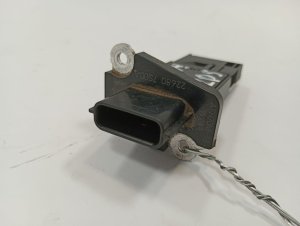


New Aftermarket Parts Available


The information in this article is provided for general reference and educational purposes only. Vehicle specifications, procedures, and part compatibility can vary by production date, trim level, and region. Always consult your vehicle's factory service manual and verify part numbers before purchasing or performing repairs. Safety-critical components such as airbags, seat belts, and braking systems should be installed by a qualified professional.
- Nissan Altima:
- 🎬 Helpful Videos
- 🛍️ Shop This Part
- What's Unique About the 2013-2018 Nissan Altima
- Symptoms You May Notice
- Most Likely Causes
- Rare But Worth Checking
- Diagnosis Steps
- Parts You'll Likely Need
- Related Codes That Often Appear With This One
- Platform-Specific Known Issues
- Mechanic-Grade Diagnostic Values
- Scan Tool Commands That Help
- Wiring & Ground Locations
- Real Owner Repair Stories
- Documented NHTSA Reports
- OEM Part Supersession History
- Model Year Variations Within This Range
- Diagnostic Flowchart
- Other Known Issues on This Vehicle
- Used vs. New Parts: Buying Guide for This Vehicle
- Real Owner Stories
- 2016 Nissan Sentra 1.8L
- 2014 Nissan Altima 2.5L
- 2019 Nissan Kicks
- Related OBD-II Codes
- Frequently Asked Questions
- 🎟️ Get 5% Off