

P0108 on 2018-2019 Ford Taurus 3.5L EcoBoost: MAP Sensor Causes and Fixes
On a 2018-2019 Ford Taurus with the 3.5L EcoBoost engine, code P0108 is almost always caused by a faulty Manifold Absolute Pressure and Temperature (MAPT) sensor. Ford issued a Technical Service Bulletin (TSB 19-2212) for this exact problem. Replacing the sensor is a simple DIY fix requiring only a T20 Torx driver, with the OEM part costing around $90-$190.
- The P0108 code on a 2018-2019 Taurus 3.5L EcoBoost is almost certainly a failed MAPT sensor.
- Ford has issued a TSB (19-2212) that confirms this is a known issue and provides the diagnostic procedure.
- Symptoms are severe and include a major loss of power, a wrench light, and stability control warnings.
- The repair is very simple, requiring only basic tools (a T20 Torx driver) and can be done in under 30 minutes.
- The correct OEM replacement part is Motorcraft part number AA5Z-9F479-E.
What's Unique About the 2018-2019 Ford Taurus
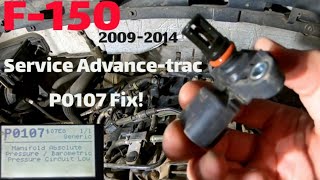
For this specific vehicle and engine combination, the diagnosis for P0108 is unusually straightforward. Ford issued Technical Service Bulletins (TSB 19-2183, later superseded by TSB 19-2212) that directly identify a faulty Manifold Absolute Pressure and Temperature (MAPT) sensor as the cause for this code. This known issue, affecting the Taurus, Flex, Explorer, and MKT with the 3.5L EcoBoost, makes the MAPT sensor the primary culprit. The failure often triggers secondary warnings like 'Service AdvanceTrac' because the PCM can no longer trust the engine's torque calculations, which are a necessary input for the stability control system, 🎬 See how a faulty sensor triggers the AdvanceTrac warning light. so it disables the system as a precaution.
Symptoms You May Notice
- Significant lack of power or sluggish acceleration, may feel like a transmission issue.
- Check Engine Light (Malfunction Indicator Lamp) is on.
- Powertrain Malfunction (Wrench) light is on.
- "Service AdvanceTrac" message on the dashboard.
- "Hill Start Assist Not Available" message.
- Rough or unstable idle.
- Hesitation, surging, or stalling, especially when accelerating from a stop.
- Poor fuel economy.
- Black exhaust smoke or a strong smell of gasoline.
- Transmission problems: The severe lack of power and sluggishness from a stop can be mistaken for a transmission slipping or failing to shift.
- Throttle body issues: While a dirty throttle body can cause performance problems, it is not the typical cause for a P0108 code on this specific vehicle and would not be covered by the TSB.
- Mass Airflow (MAF) Sensor issue: The MAF sensor also measures air, but a failure there would typically set different codes (P0100-P0104).
Most Likely Causes
- Faulty Manifold Absolute Pressure and Temperature (MAPT) Sensor 🔴 High Probability This is a widely known failure point for the 3.5L EcoBoost engine, as documented by Ford in TSB 19-2212. The sensor is located on the intake manifold and is subject to heat, vibration, and potential contamination which can cause internal failure.
How to confirm: Use a scan tool with the Key On, Engine Off (KOEO). Compare the Manifold Absolute Pressure (MAP) PID value to the Barometric Pressure (BARO) and Turbocharger Boost Pressure (TCBP) PID values. If the MAP reading is not within 1.5 psi (10.35 kPa) of the other sensors, the MAPT sensor is faulty. Alternatively, check the MAP sensor voltage; a reading at or above 4.4V indicates a failed sensor.
Typical fix: Replace the MAPT sensor located on top of the intake manifold, on the driver's side. The engine cover must be removed for access. The sensor is held in by a single T20 Torx screw. After disconnecting the electrical connector, twist and pull the old sensor out. 🎬 Watch: This video shows the exact MAP sensor replacement process. It is recommended to apply a small amount of clean engine oil or silicone lubricant to the new sensor's O-ring before installation.
Est. part cost: $90-$190
Rare But Worth Checking
- Wiring or Connector Issue: While the sensor itself is the most common failure, always visually inspect the wiring harness and connector for damage, corrosion, or loose pins before replacing parts. A short in the 5-volt reference, ground, or signal wire can mimic a failed sensor.
- Clogged Catalytic Converter: A severely clogged catalytic converter can cause an increase in manifold pressure, potentially triggering a P0108 code. This is less likely and would typically be accompanied by other exhaust-related codes and more severe, progressive performance loss.
- PCM Malfunction: In very rare cases, the Powertrain Control Module itself may be faulty, but this should only be considered after all other possibilities, including the sensor and wiring, have been exhaustively ruled out.
Diagnosis Steps
- Connect an OBD-II scanner and confirm the presence of the P0108 code. Note any other codes, especially P0107 or P0109, which are covered by the same TSB.
- Using the scanner's live data function with the Key On, Engine Off (KOEO), monitor the PIDs for MAP (Manifold Absolute Pressure), BARO (Barometric Pressure), and TCBP (Turbocharger Boost Pressure).
- Verify if the MAP pressure reading is within 1.5 psi (10.35 kPa) of the BARO and TCBP readings. If it is not, the MAPT sensor has failed according to Ford's diagnostic procedure.
- As a secondary check, monitor the MAP sensor voltage PID. A reading of 4.4V or higher points to a faulty sensor.
- If the diagnosis points to the sensor, locate the MAPT sensor on top of the intake manifold. Remove the plastic engine cover by first removing the oil cap, pulling the cover up, and then replacing the oil cap to prevent debris from entering the engine.
- Visually inspect the sensor's electrical connector and wiring for any signs of damage, melting, or corrosion.
- If the wiring appears intact and the PID data confirms a sensor fault, replace the MAPT sensor. Use a T20 Torx driver to remove the single retaining screw. Gently twist and pull the sensor to remove it.
- Apply a small amount of lubricant to the O-ring of the new sensor, install it, and tighten the screw. Reconnect the electrical connector.
- After replacement, clear the codes with the scanner and take the vehicle for a test drive to ensure all symptoms and warning lights are gone.
Parts You'll Likely Need
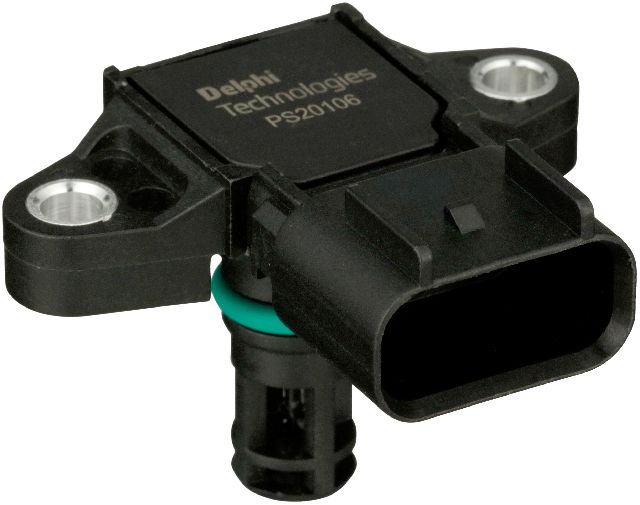
- Manifold Absolute Pressure and Temperature (MAPT) Sensor
(OEM #AA5Z-9F479-E)— This is the direct cause of the P0108 code in the vast majority of cases for this vehicle, as identified by Ford's own Technical Service Bulletin 19-2212.
Trusted brands: Motorcraft
OEM price range: $90-$190
Aftermarket price range: $50-$120
Related Codes That Often Appear With This One
- P0107 — This code for 'MAP Sensor Circuit Low' can also be triggered by the same faulty MAPT sensor, as noted in Ford's TSB 19-2212.
- P0109 — This code for 'MAP Sensor Circuit Intermittent' is also listed in the Ford TSB as being caused by the same faulty MAPT sensor.
- P0069 — This code for 'Manifold Absolute Pressure - Barometric Pressure Correlation' can occur if the MAP sensor reading does not match the BARO sensor reading at KOEO, which is a primary symptom of this failure.
Technical Service Bulletins (TSBs) & Recalls
- TSB Bulletin #TSB-2212: This manufacturer bulletin notes that a faulty MAPT sensor may cause a (wrench) lamp, Service AdvanceTrac message, Hill Start Assist Not Available message, and/or lack of power with DTCs P0107, P0108 and/or P0109 present.
- 19-2212: 3.5L EcoBoost - Various Warning Indicators/Lack Of Power - DTCs P0107, P0108 And/Or P0109.
- 19-2183: (Superseded by 19-2212) 3.5L EcoBoost - Various Warning Indicators/Lack Of Power - DTCs P0107, P0108 And/Or P0109.
Platform-Specific Known Issues
- Ford TSB 19-2212 (superseding 19-2183) was issued for 2018-2019 Ford Taurus, Explorer, Flex, and Lincoln MKT models with the 3.5L EcoBoost engine due to a high failure rate of the MAPT sensor, causing DTCs P0107, P0108, and/or P0109.
Mechanic-Grade Diagnostic Values
- MAP Sensor Signal Voltage (KOEO) — expected: ~4.5 - 5.0 V (at sea level, matching BARO). Failure: A reading of 4.4V or higher when the engine is running, or a reading that does not match the BARO sensor reading at KOEO, strongly indicates a faulty sensor per TSB 19-2212.
- MAP Sensor Signal Voltage (at idle) — expected: 1.4 - 1.8 V. Failure: Voltage stuck high near 4.4V or higher.
- MAP Sensor 5V Reference Wire Voltage — expected: ~5.0 V. Failure: No voltage or significantly lower voltage indicates a wiring issue or a PCM fault.
- Wiring Harness Continuity Test — expected: < 0.5 Ohms. Failure: A reading of O.L. (Open Loop) indicates a break in the wire. A reading higher than 0.5 Ohms indicates high resistance in the circuit.
Scan Tool Commands That Help
- FORScan: Live Data PID Monitoring — Use to monitor and graph the 'MAP', 'BARO', and 'TCBP' PIDs simultaneously. With Key On, Engine Off, all three should read nearly identically. A MAP reading that is significantly different points directly to a faulty sensor as described in TSB 19-2212.
Wiring & Ground Locations
- MAP Sensor Connector — On the MAPT sensor itself, located on the top, driver's side of the intake manifold.. This is the primary point for checking for corrosion, damage, and performing voltage/resistance tests. It is a 4-pin connector as it integrates the Intake Air Temperature sensor.
- Connector C139 (Probable) — Likely located at the front of the engine, near the PCM. This is a major engine harness junction connector.. On similar Ford platforms like the F-150 with the same engine, the MAP sensor wiring passes through this connector. If wiggling the sensor connector has no effect but the problem is intermittent, inspecting C139 for corrosion or pushed-out pins is a valid next step.
- Ground G102 or G103 (Probable) — On the platform-sharing Explorer, G102 is at the right front corner of the engine compartment and G103 is at the left front corner.. The MAP sensor requires a clean ground reference to provide an accurate signal. A corroded or loose ground at one of these primary engine bay locations could potentially cause erratic sensor readings, although a direct sensor failure is far more common for this specific DTC.
When the Usual Fixes Don't Work
- For this specific vehicle, engine, and trouble code, the evidence is overwhelmingly one-sided. The root cause is almost exclusively a failed MAPT sensor, as documented by Ford's TSB 19-2212. Searches for owner experiences where replacing the sensor did *not* fix the P0108 code yielded no specific, verifiable examples. This suggests that deviating from the TSB's recommendation to replace the sensor (Part No. AA5Z-9F479-E) as the primary fix is highly likely to be a waste of diagnostic time.
OEM Part Supersession History
AA5Z-9F479-A / -C→AA5Z-9F479-E (Motorcraft CX-2420)— The original sensors had a high failure rate, prompting Ford to issue TSB 19-2212. The -E revision is an updated design intended to be more durable and resolve the internal failures that cause the P0107/P0108/P0109 codes.
Heads up: While older revisions may physically fit, only the latest 'E' revision or newer should be used to ensure the updated, more reliable design is installed.
Model Year Variations Within This Range
- 2018-2019: No significant variations related to the P0108 fault have been documented between the 2018 and 2019 model years for the 3.5L EcoBoost Taurus. Both are explicitly covered by the same TSB (19-2212) and use the same revised MAPT sensor part number.
Diagnostic Flowchart
Real Owner Stories
Aggregated from forums and TSBs cited above. Mileages and costs reflect what owners reported in those sources.
2018-2019 Ford Taurus (3.5L EcoBoost V6)
Symptoms: Illuminated malfunction indicator lamp (MIL), powertrain malfunction (wrench) lamp, Service AdvanceTrac message, Hill Start Assist Not Available message, and/or lack of power.
What fixed it: Replace the Manifold Absolute Pressure and Temperature (MAPT) sensor, Ford part number AA5Z-9F479-E.
Cost: $90-$190
Source hint: NHTSA TSB 19-2212
Ford 3.5L EcoBoost
Symptoms: Experienced symptoms matching TSB 19-2212, triggering P0107, P0108, and P0109 codes.
What fixed it: Replaced the MAP sensor using a T20 Torx tool.
Source hint: YouTube - 'Big Ben's Cars & Cycles'
Related OBD-II Codes
Frequently Asked Questions
Does Ford TSB 19-2212 apply to my 2018-2019 Ford Taurus?
Why is my Taurus displaying 'Service AdvanceTrac' and 'Hill Start Assist Not Available' messages?
How can I confirm the MAPT sensor is causing the P0108 code on my 3.5L EcoBoost?
Where is the MAPT sensor located on the 2018-2019 Ford Taurus?
What is the exact part number needed to fix the P0108 code under TSB 19-2212?
What tools do I need to replace the MAPT sensor myself?
Helpful Videos

We Have This Part in Stock




The information in this article is provided for general reference and educational purposes only. Vehicle specifications, procedures, and part compatibility can vary by production date, trim level, and region. Always consult your vehicle's factory service manual and verify part numbers before purchasing or performing repairs. Safety-critical components such as airbags, seat belts, and braking systems should be installed by a qualified professional.
- Ford Taurus:
- 🎬 Helpful Videos
- 🛍️ Shop This Part
- What's Unique About the 2018-2019 Ford Taurus
- Symptoms You May Notice
- Most Likely Causes
- Rare But Worth Checking
- Diagnosis Steps
- Parts You'll Likely Need
- Related Codes That Often Appear With This One
- Technical Service Bulletins (TSBs) & Recalls
- Platform-Specific Known Issues
- Mechanic-Grade Diagnostic Values
- Scan Tool Commands That Help
- Wiring & Ground Locations
- When the Usual Fixes Don't Work
- OEM Part Supersession History
- Model Year Variations Within This Range
- Diagnostic Flowchart
- Real Owner Stories
- 2018-2019 Ford Taurus (3.5L EcoBoost V6)
- Ford 3.5L EcoBoost
- Related OBD-II Codes
- Frequently Asked Questions
- 🎟️ Get 5% Off