

P0107 on 2007-2014 Mercedes-Benz C-Class: MAP Sensor Circuit Low Causes and Fixes
This code almost always points to a faulty Manifold Absolute Pressure (MAP) sensor (Bosch P/N: 0261230191), a cracked vacuum hose connected to it, or a corroded connector. Expect to pay around $30-$80 for a new sensor and tackle this as a simple 1/5 difficulty DIY job.
- P0107 means the MAP sensor's voltage signal is too low, usually under 0.5V.
- The most likely cause on a W204 C-Class is either the MAP sensor itself has failed or the small vacuum hose connected to it has cracked.
- Always inspect the vacuum hose for cracks before buying a new sensor. It's a cheap and very common point of failure.
- Diagnosis is straightforward with a multimeter to check for 5V reference, ground, and a valid signal voltage.
- This is a DIY-friendly repair, but be aware you might need a special 5-point Torx bit (TS25) for the sensor's mounting screws.
What's Unique About the 2007-2014 Mercedes-Benz C-Class
On the W204 C-Class, the MAP sensor is not always directly mounted to the intake manifold but is often connected via a small rubber vacuum hose. This hose is prone to cracking and deteriorating from engine heat, creating a vacuum leak that is a very common cause for this code, sometimes even more so than the sensor itself. Additionally, some owners report confusion because these engines can have two similar-looking pressure sensors in the engine bay: the MAP sensor (also called a boost pressure sensor) and a separate barometric pressure sensor often on the air filter housing. A generic scan tool might not specify which one is at fault, leading to misdiagnosis. This is particularly common on diesel models but can affect gasoline engines as well.
Generation note: The 2007-2014 model years primarily cover the W204 generation of the C-Class. However, the 2007 model year was a changeover period, and some early 2007 vehicles may still be the previous W203 generation. The information here is primarily focused on the W204, which has been explicitly verified with this code in owner forums and repair videos.
Symptoms You May Notice
- Check Engine Light is on
- Rough or uneven idle, potentially stalling at stops.
- Hesitation or sluggish acceleration.
- Noticeable decrease in fuel economy.
- Lack of engine power, especially under load.
- Black smoke from the exhaust in some cases, indicating a rich fuel condition.
- Replacing the Mass Air Flow (MAF) sensor. The MAF and MAP sensors work together but are different parts. P0107 specifically points to the MAP sensor circuit.
- Replacing the wrong pressure sensor. Some Mercedes engines have a barometric pressure sensor on the air filter housing and a separate MAP (boost) sensor on the intake. Ensure you are diagnosing the correct one, which is connected to intake manifold vacuum.
Most Likely Causes
- Faulty Manifold Absolute Pressure (MAP) Sensor 🔴 High Probability The MAP sensor is a sensitive electronic component that operates in a high-heat engine bay and can fail internally over time, causing its voltage output to drop below the 0.5V threshold.
How to confirm: After confirming wiring and vacuum lines are intact, test the sensor's signal wire with a multimeter. With the key on and engine off, the voltage should be around 4.5-5.0V. At idle, it should be around 1.0-1.5 volts. If the voltage is stuck below 0.5V, the sensor is bad.
Typical fix: Replace the MAP sensor. This is typically held on by one or two small bolts and has a single electrical connector.
Est. part cost: $30-$80 - Cracked, Leaking, or Disconnected MAP Sensor Vacuum Hose 🔴 High Probability The small rubber hose connecting the sensor to the intake manifold is exposed to significant engine heat, causing it to become brittle and crack over time, creating a vacuum leak that directly affects the sensor's reading.
How to confirm: Visually inspect the entire length of the small vacuum hose that attaches to the bottom of the MAP sensor. Bend it slightly to reveal hidden cracks. Look for splits or loose connections at both ends. A smoke test can also definitively identify a leak.
Typical fix: Replace the damaged vacuum hose. This is often a simple piece of rubber tubing that can be purchased by the foot and cut to size.
Est. part cost: $5-$20 - Wiring Harness or Connector Issue 🟡 Medium Probability Engine vibration and heat can cause wires to chafe or the electrical connector pins to corrode or lose contact. Oil from other leaks (like cam sensors) can also wick through the harness and contaminate the connector.
How to confirm: Inspect the MAP sensor connector for corrosion (green or white powder), damage, or oil contamination. With the connector unplugged and key on, use a multimeter to check for a 5-volt reference signal on one wire and a good ground on another. Wiggle the harness while testing to check for intermittent breaks.
Typical fix: Clean the connector pins with electrical contact cleaner. If corrosion is severe or wires are broken, replace the connector pigtail.
Est. part cost: $10-$50
Rare But Worth Checking
- Faulty Engine Control Module (ECM): This is extremely rare. Before condemning the ECM, all other possibilities (sensor, wiring, vacuum) must be exhaustively ruled out by a professional.
- Major Engine Vacuum Leak: A large vacuum leak from a source other than the MAP sensor hose (e.g., a cracked intake manifold, bad gasket, or torn PCV diaphragm) could theoretically cause pressure readings to be abnormal, but would typically present with other codes as well.
- Clogged Catalytic Converter: A severely restricted exhaust can increase pressure in the intake manifold, causing the MAP sensor readings to be out of range, although this would usually be accompanied by other exhaust-related codes and a significant loss of power at higher RPMs.
Diagnosis Steps
- Read the code with an OBD-II scanner and confirm P0107 is present. Note any other codes, like P0106 or P0108.
- Pop the hood and locate the MAP sensor. On many W204 engines (like the M272 V6), it's on the front of the engine, connected by a small vacuum hose and an electrical connector.
- Carefully inspect the vacuum hose attached to the sensor. Check for cracks, brittleness, or loose connections. This is a very common failure point. 🎬 See how a simple hose fix can save you money.
- Inspect the electrical connector and wiring harness going to the sensor. Look for any signs of damage, corrosion, or loose pins. A user on mbworld.org found corrosion in the connector was the true cause.
- With the key on, engine off, unplug the sensor. Use a multimeter to verify you have a 5V reference voltage on one pin and a good ground on another pin at the connector.
- If power and ground are good, plug the sensor back in. Backprobe the signal wire with a multimeter. The voltage should be below 5V and above 0.5V (typically 1.0-1.5V at idle). If it's stuck below 0.5V, the sensor or its connection to the manifold (the hose) is faulty.
- If possible, use a scan tool to view live MAP sensor data while the engine is running. The pressure reading should change smoothly as you apply and release the throttle. A stuck low value confirms the fault.
- If the sensor and wiring test good, perform a smoke test to find a vacuum leak elsewhere in the intake system.
Parts You'll Likely Need
- Manifold Absolute Pressure (MAP) Sensor
(OEM #A0061539928, A0051535028, A0061531428)— This is the most common part to fail internally, causing the 'Circuit Low' condition.
Trusted brands: Bosch (OEM supplier), Hella, VEMO
OEM price range: $60-$100
Aftermarket price range: $30-$80 - MAP Sensor Vacuum Hose — The rubber hose connecting the sensor to the intake manifold frequently cracks from heat, creating a vacuum leak that triggers the code.
Trusted brands: Genuine Mercedes-Benz, CRP Automotive
OEM price range: $15-$30
Aftermarket price range: $5-$15
Related Codes That Often Appear With This One
- P0106 — P0106 indicates a 'MAP/Barometric Pressure Circuit Range/Performance' problem. It can appear alongside P0107 if the sensor's signal is erratic or intermittent before failing completely low.
- P0108 — This code is for 'MAP Circuit High Input', the opposite of P0107. Seeing them intermittently could suggest a severe wiring short or a failing sensor that is fluctuating wildly.
Platform-Specific Known Issues
- Some models may require a 5-point (not 6-point) tamper-proof Torx bit, specifically a TS25, to remove the sensor, which is not included in many standard tool kits.
- Oil leaks from other engine components (e.g., camshaft position sensors) can travel through the wiring harness and contaminate the MAP sensor connector, causing a poor connection and triggering the P0107 code.
Mechanic-Grade Diagnostic Values
- MAP Sensor Signal Voltage (with vacuum pump) — expected: KOEO: ~4.5V. With 5 in-Hg vacuum: ~3.75V. With 20 in-Hg vacuum: ~1.0V.. Failure: Voltage stuck below 0.5V regardless of vacuum, or does not respond linearly to vacuum changes.
- MAP Sensor Signal Voltage (engine running) — expected: At idle: 1.0V - 1.5V. Rises when throttle is applied.. Failure: Voltage remains static or below 0.5V when the engine is running and throttle is applied.
- Sensor Circuit Wiring Continuity — expected: Less than 0.5 ohms of resistance from end-to-end on the signal, reference, and ground wires.. Failure: A reading of O.L. (Open Loop) indicates a break in the wire. A reading higher than 0.5 ohms indicates high resistance.
- Sensor Ground Wire Integrity — expected: Less than 10 ohms between the sensor's ground wire at the connector and the chassis ground.. Failure: Resistance above 10 ohms indicates a poor ground path, which can cause low voltage readings.
Hidden / Shadow Codes Worth Checking
- 20B6-003: Short circuit to ground or open circuit to component B28/5 (pressure sensor downstream of air cleaner). This is a manufacturer-specific code providing more precise information than the generic P0107. (see via Requires a Mercedes-specific scanner like iCarsoft MB or a professional XENTRY/DAS system.)
Scan Tool Commands That Help
- XENTRY/DAS: Resetting of adaptation data — After replacing the MAP sensor or fixing a major vacuum leak, it is best practice to reset the engine's fuel trim and other learned adaptations. The path is typically: Control Units > Drive > [Engine Control Module] > Control Unit Adaptations > Resetting of adaptation data. This forces the ECU to relearn values with the new, correct sensor inputs, which is a more robust fix than the common 'pedal dance' reset.
Wiring & Ground Locations
- B28 — This is the Mercedes component designation for the MAP sensor (pressure sensor). On M272 engines, it's on the front of the engine. On diesel models, it may be designated B28/5 and located downstream of the air cleaner.. Searching for 'B28' in service information is more precise than searching for 'MAP sensor' and helps differentiate it from the barometric sensor.
- W11 — The ground point for the Engine Control Module (ECM/ECU) wiring assembly, typically located in the engine bay near the firewall or strut tower.. A corroded or loose W11 ground can cause a floating ground for the entire engine sensor suite, leading to incorrect voltage readings, including a P0107, even if the sensor and its direct wiring are good.
- W10 — The main battery ground point, often found on the front strut tower.. While less direct than the ECU ground, a compromised main ground can introduce electrical noise and voltage drops throughout the vehicle's electrical system, potentially affecting sensor readings.
Real Owner Repair Stories
- MBWorld.org & Mercedes-Benz Owners' Forums General Experience (Multiple W204 C-Class models, typically C300/C350 with M272 engine.) — P0107 code, rough idle, poor acceleration.
❌ Tried (didn't work) Replacing the easily accessible pressure sensor on top of the air filter housing.
✅ What actually fixed it After seeking advice, owners were directed to the *correct* MAP sensor (Component B28), which is connected to the intake manifold. On M272 engines, this is often on the front of the engine near the valve cover. The fix was replacing this correct sensor or its associated vacuum hose, resolving the P0107 code. This highlights a very common misdiagnosis.
OEM Part Supersession History
A0061531528→A0061539928— Standard part revision, likely for improved reliability or manufacturing process.
Model Year Variations Within This Range
- 2007-2011 (Pre-Facelift): These models primarily use the M272 V6 engine. The MAP sensor (B28) is typically located on the front of the engine, mounted to a bracket and connected to the intake manifold via a small vacuum hose.
- 2012-2014 (Facelift): These models introduced the M276 direct-injection V6 engine. The MAP sensor on the M276 is typically a push-in style sensor mounted directly on the intake manifold itself, rather than being remote with a hose. Its location is different and the part number may vary from the M272's sensor.
Diagnostic Flowchart
Used vs. New Parts: Buying Guide for This Vehicle
When a used part is the smart pick: A used MAP sensor from a reputable salvage yard can be a cost-effective tool for diagnosis. If swapping a used sensor temporarily resolves the code, it confirms the original sensor was faulty, and you can then proceed to buy a new part for the permanent repair with confidence.
Donor-vehicle mileage cap: roughly under 80000 miles for the part to have meaningful remaining life.
What to inspect on the donor part:
- Inspect the plastic housing for heat-related cracks or brittleness.
- Ensure the electrical connector pins are straight, clean, and free of corrosion.
- Check that the vacuum nipple (if applicable) is not broken, clogged, or cracked.
- If possible, choose a donor vehicle that appears to have been well-maintained and is free of major engine oil leaks.
Aftermarket brands forum-validated for this vehicle:
- Bosch (OEM supplier, highly recommended)
- Hella
- Denso
- VEMO
Brands owners have reported issues with on this vehicle:
- Unbranded, ultra-low-cost sensors from online marketplaces often have questionable accuracy and longevity and may fail prematurely or not perform to OEM specifications.
Real Owner Stories
Aggregated from forums and TSBs cited above. Mileages and costs reflect what owners reported in those sources.
Mercedes-Benz C-Class (M272 V6)
Symptoms: The owner had a Check Engine Light with a P0107 fault code. After initially suspecting the sensor itself, further diagnosis was needed.
What fixed it: The actual cause was corrosion found inside the MAP sensor's electrical connector. Cleaning the connector pins resolved the issue without needing to replace the sensor.
Source hint: mbworld.org - 'P0107 Fault MAP sensor location'
Related OBD-II Codes
Frequently Asked Questions
Where is the MAP sensor located on my 2007-2014 C-Class?
Could an oil leak from another part of the engine cause the P0107 code?
Do I need a special tool to replace the MAP sensor on my Mercedes?
What is the most common reason for a P0107 code on this C-Class?
What voltage readings should I expect when testing the MAP sensor circuit?
Which aftermarket brands are recommended for a replacement MAP sensor?
Helpful Videos

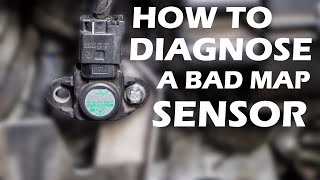

We Have This Part in Stock


The information in this article is provided for general reference and educational purposes only. Vehicle specifications, procedures, and part compatibility can vary by production date, trim level, and region. Always consult your vehicle's factory service manual and verify part numbers before purchasing or performing repairs. Safety-critical components such as airbags, seat belts, and braking systems should be installed by a qualified professional.
- Mercedes-Benz C-Class:
- 🎬 Helpful Videos
- 🛍️ Shop This Part
- What's Unique About the 2007-2014 Mercedes-Benz C-Class
- Symptoms You May Notice
- Most Likely Causes
- Rare But Worth Checking
- Diagnosis Steps
- Parts You'll Likely Need
- Related Codes That Often Appear With This One
- Platform-Specific Known Issues
- Mechanic-Grade Diagnostic Values
- Hidden / Shadow Codes Worth Checking
- Scan Tool Commands That Help
- Wiring & Ground Locations
- Real Owner Repair Stories
- OEM Part Supersession History
- Model Year Variations Within This Range
- Diagnostic Flowchart
- Used vs. New Parts: Buying Guide for This Vehicle
- Real Owner Stories
- Mercedes-Benz C-Class (M272 V6)
- Related OBD-II Codes
- Frequently Asked Questions
- 🎟️ Get 5% Off