

P0107 on 2014-2015 Kia Sorento 3.3L V6: Causes and Fixes for MAP Sensor Low Input
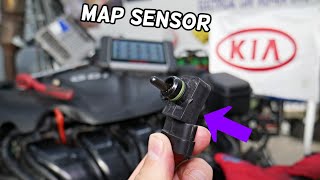
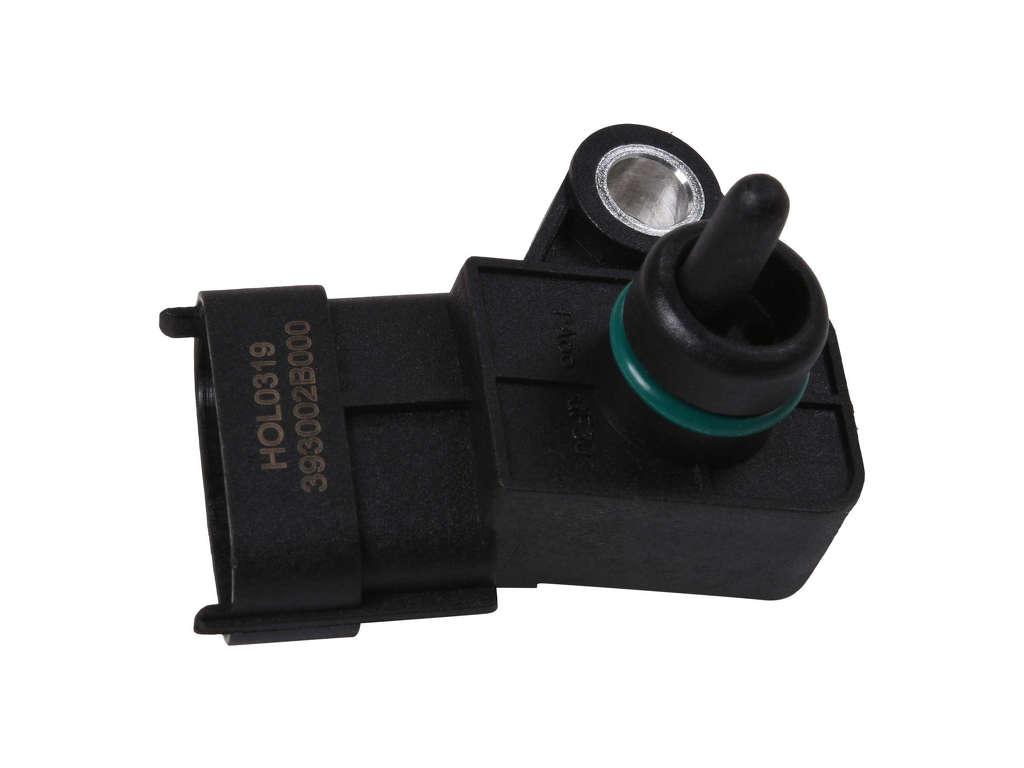
This code almost always points to a faulty Manifold Absolute Pressure (MAP) sensor. On the 2014-2015 Sorento 3.3L, this is a relatively easy and inexpensive DIY fix, with the part costing between $40 and $105. The sensor is located on the intake manifold and is simple to replace.
- P0107 on a 2014-2015 Sorento 3.3L almost always means you need a new MAP sensor.
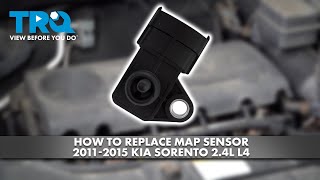
- The MAP sensor is located on top of the intake manifold and is very easy to access and replace with basic tools.
- Before replacing the sensor, do a quick visual check of the connector and wiring for any obvious damage.
- Driving with this code can cause stalling, poor fuel economy, and potential long-term engine damage.
What's Unique About the 2011-2015 Kia Sorento
The 3.3L Lambda GDI V6 engine was available in the Sorento from the 2014 model year onward. For this engine, the P0107 code is straightforward and most commonly caused by a failed MAP sensor itself. Unlike some vehicles where wiring is a frequent problem, owners of these Sorentos report a high success rate simply by replacing the sensor. The MAP sensor is conveniently located on top of the intake manifold, making it very accessible for diagnosis and replacement. On this engine, the MAP, Barometric Pressure Sensor (BPS), and Intake Air Temperature (IAT) sensor all operate using a single 5-volt power feed and a single sensor-ground wire from the ECM.
Symptoms You May Notice
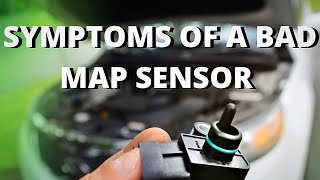
- Check Engine Light is on
- Rough or unstable idle
- Engine hesitation or stumbling during acceleration
- Reduced engine power or entering 'limp mode'
- Poor fuel economy
- Engine may stall, especially at idle
- Black smoke from the exhaust
- Backfiring during acceleration
- Replacing the Mass Airflow (MAF) sensor. This engine uses a MAP sensor for load calculation, not a MAF sensor. Cleaning or replacing the MAF sensor will not resolve a P0107 code.
Most Likely Causes
- Faulty MAP Sensor 🔴 High Probability The sensor is the most common failure point for this circuit for this vehicle, often due to internal failure or contamination.
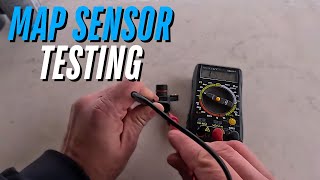
How to confirm: With the key on and engine off, use a scan tool to check the MAP sensor reading; it should match the local barometric pressure. With the engine idling, the reading should be a steady, low pressure (high vacuum). If the reading is stuck at a very low voltage (under 0.5V) or doesn't change with engine RPM, the sensor is likely bad. 🎬 See how to test your MAP sensor with a multimeter Visually inspect the sensor port for oil or carbon buildup when removed.
Typical fix: Replace the MAP sensor. It is typically held in by a single 10mm bolt and has one electrical connector. Ensure the O-ring is seated correctly on the new sensor.
Est. part cost: $40-$105 - Wiring or Connector Issue 🟡 Medium Probability Engine bay heat and vibration can degrade wiring and connectors over time, causing a short to ground or an open circuit. The pigtail connector itself can become brittle and fail.
How to confirm: Visually inspect the wiring harness and connector for any signs of damage, corrosion, or loose pins. Use a multimeter to check for 5-volt reference and a good ground at the connector with the key on. Wiggle the connector and harness while monitoring the live data on a scan tool to see if the reading fluctuates.
Typical fix: Repair the damaged section of wire or replace the pigtail connector.
Est. part cost: $15-$30 - Major Vacuum Leak ⚪ Low Probability
How to confirm: A major vacuum leak would typically cause a P0108 (High Input) code, but a cracked hose right at the sensor port could cause erratic readings. Visually inspect all vacuum lines connected to the intake manifold for cracks, breaks, or disconnections. A smoke test is the most effective way to find hidden leaks.
Typical fix: Replace the cracked or broken vacuum hose.
Est. part cost: $5-$25
Rare But Worth Checking
- Clogged Catalytic Converter: A severely clogged catalytic converter can cause a lack of vacuum in the intake manifold, which might lead to a P0107 code. This would typically be accompanied by a significant loss of power, especially at higher RPMs.
- Faulty Powertrain Control Module (ECM): This is extremely rare. The ECM should only be considered after all other possibilities, including the sensor and its entire circuit, have been thoroughly tested and proven to be good.
Diagnosis Steps
- Scan for Codes: Use an OBD-II scanner to confirm P0107 is present and check for any other related codes.
- Visual Inspection: Inspect the MAP sensor, its electrical connector, and the surrounding vacuum hoses for any obvious damage, cracks, or loose connections. The sensor is located on the top of the intake manifold.
- Check Live Data: With the key on and engine off (KOEO), view the MAP sensor data on your scan tool. The pressure reading should be close to your local atmospheric (barometric) pressure. The voltage should be around 4.5V.
- Check Idle Data: Start the engine. At idle, the MAP sensor voltage should drop to around 1.4-1.8V. If the voltage stays very low (e.g., below 0.5V) and doesn't change when you rev the engine, the sensor or its circuit is faulty.
- Test the Circuit: Disconnect the sensor. With the key on, use a multimeter to test the connector terminals. You should find a 5-volt reference wire, a ground wire (near 0 volts, less than 100mV is ideal), and a signal wire.
- Test for Shorts/Opens: If the 5V reference or ground is missing, you'll need to trace the wiring back to the ECM to find the break. If the reference and ground are good, the problem is most likely the sensor itself.
- Replace the MAP Sensor: If the circuit tests good, replace the MAP sensor. Ensure the new sensor's O-ring is properly seated to prevent a vacuum leak.
- Clear Code and Test Drive: After replacement, clear the code with your scanner and perform a test drive to ensure the problem is resolved.
Parts You'll Likely Need
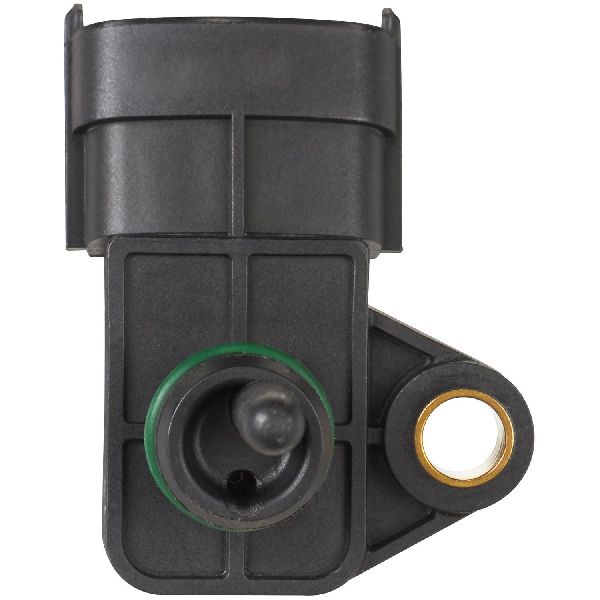
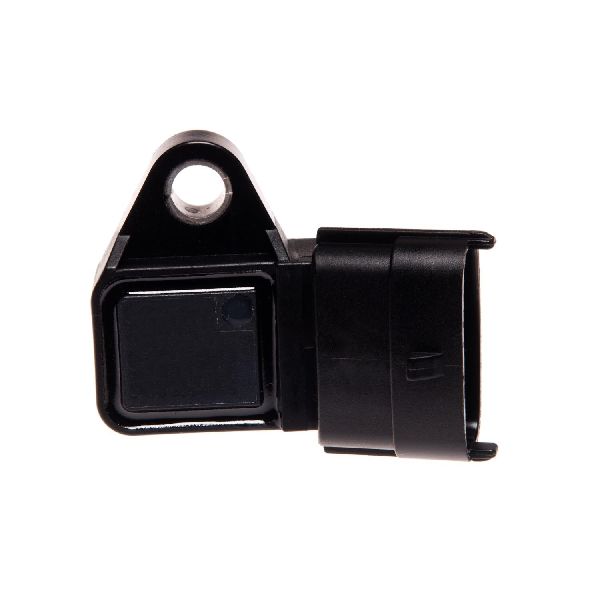
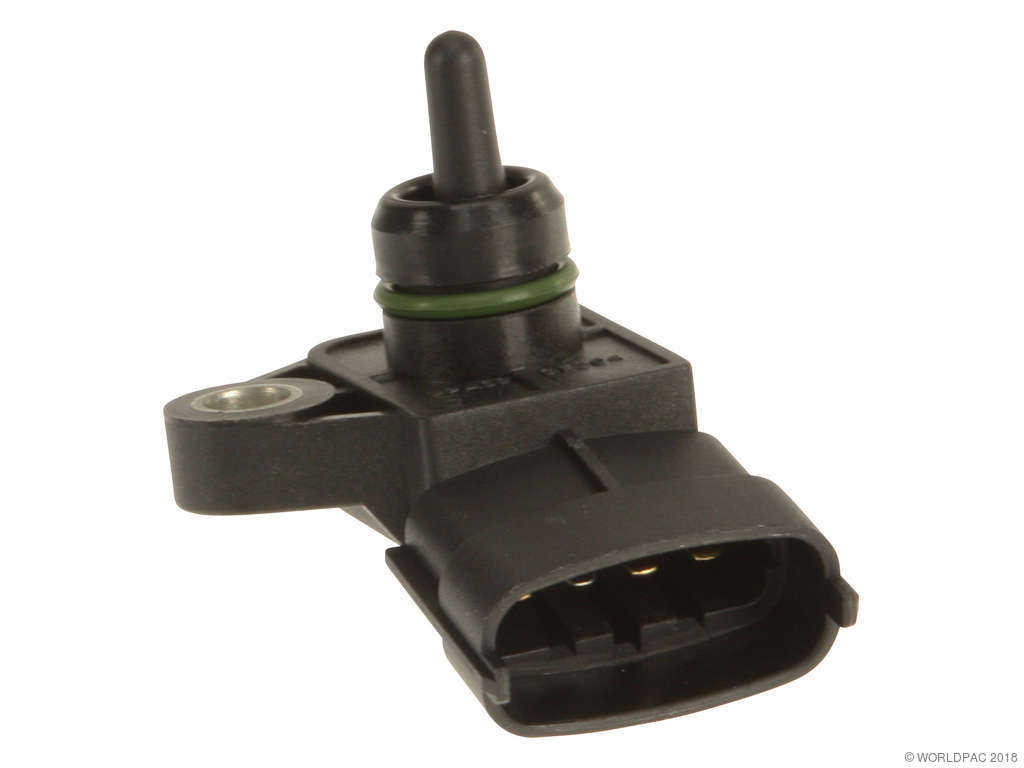
- Manifold Absolute Pressure (MAP) Sensor
(OEM #39300-2B100)— This is the most frequent failure point for a P0107 code on this vehicle. This part number is also used on a wide variety of Hyundai and Kia vehicles.
Trusted brands: Kia (Genuine OEM), Hyundai (Genuine OEM), Bosch, Delphi, Standard Motor Products (AS417T)
OEM price range: $75-$105
Aftermarket price range: $20-$70
Related Codes That Often Appear With This One
- P0106 — This code indicates a MAP sensor performance issue, which can occur alongside a P0107 if the sensor's signal is erratic before failing completely low.
- P0172 — If the ECM interprets the low MAP signal as a very high vacuum (low engine load), it may command less fuel. If the actual engine load is higher, this can lead to a lean condition, but sometimes the default fuel map can cause a rich condition (P0172) as the system tries to compensate for the faulty reading.
- P0113 — On some Kia/Hyundai models, a faulty sensor can trigger both P0107 and P0113 (Intake Air Temperature Sensor Circuit High) simultaneously, pointing towards a failure of the sensor assembly or shared wiring.
Platform-Specific Known Issues
- Owner Experience: Simple Sensor Swap: Multiple owners on forums for Kia and Hyundai vehicles with the 3.3L engine report that a P0107 code was resolved simply by replacing the MAP sensor. The job is considered very easy, taking only a few minutes with a single bolt and electrical connector to access.
Mechanic-Grade Diagnostic Values
- MAP Sensor Signal Voltage (Key On, Engine Off) — expected: Approx. 4.5V (should correspond to barometric pressure). Failure: Voltage is stuck below 0.5V.
- MAP Sensor Signal Voltage (Engine at Idle) — expected: 1.4V - 1.8V. Failure: Voltage is stuck below 0.5V and does not change with RPM.
- MAP Sensor Signal Voltage (Under 20 in-Hg Vacuum) — expected: Approx. 1.0V. Failure: Voltage does not drop accordingly when vacuum is applied with a hand pump.
- MAP Sensor Ground Wire Voltage — expected: < 0.10V (100 millivolts). Failure: Voltage significantly higher than 0.10V indicates a poor ground connection.
- MAP Sensor Ground Circuit Resistance — expected: < 10 Ω. Failure: Resistance greater than 10 Ω between the sensor's ground wire and chassis ground indicates a bad ground path.
Wiring & Ground Locations
- MAP Sensor Connector — On the top of the intake manifold, typically near the throttle body.. This 4-pin connector is the primary interface for the sensor. Damage or corrosion here will directly cause a P0107.
- MAP/BPS/IAT Shared Power and Ground — The wiring runs from the ECM to the respective sensors.. On the 3.3L Lambda II GDI, the MAP, BPS, and IAT sensors share a single 5V power feed and a single sensor ground wire from the ECM. A fault in this shared circuit could potentially cause issues with multiple sensors, not just the MAP.
Real Owner Repair Stories
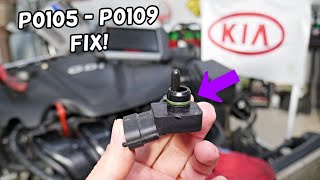
- YouTube Channel 'World Mechanics' (Hyundai Sonata (similar powertrain and sensor design)) — Check Engine Light with MAP sensor codes (P0105-P0109).
✅ What actually fixed it The video highlights a common failure pattern where the plastic clip holding the MAP sensor wiring harness to the intake manifold breaks. This allows the harness to fall and get damaged by the radiator fan, causing a short or open in the circuit that mimics a bad sensor.
OEM Part Supersession History
39300-2B000→39300-2B100— Part update/revision by the manufacturer.
Heads up: While 39300-2B100 is the correct part for this vehicle, the older 39300-2B000 may be found in parts catalogs and should be cross-referenced to the newer number to ensure the latest revision.
Model Year Variations Within This Range
- 2014-2015: The 3.3L Lambda V6 engine was introduced to the Sorento as part of the 2014 model year facelift. Earlier second-generation models (2011-2013) used different engines (2.4L I4 or 3.5L V6) which may have different sensor locations or part numbers.
Diagnostic Flowchart
Other Known Issues on This Vehicle
Issues unrelated to this code that are worth knowing about as an owner of this generation:
- Premature Engine Bearing Wear / Seizure 🔴 High — Affects a large number of 2012-2014 Sorento models. Machining errors during manufacturing can cause bearings to wear and the engine to seize. (Ref: NHTSA Campaign: 17V224000 (Kia Recall SC147).)
- Engine Compartment Fire Risk (HECU) 🔴 High — Affects 2011-2014 Sorento models. The Hydraulic Electronic Control Unit (HECU) can short circuit, potentially causing a fire while parked or driving. (Ref: NHTSA Campaign: 23V652000 (Kia Recall SC284).)
- Peeling / Flaking Exterior Paint 🟡 Low — Common on vehicles with 'Snow White Pearl' paint. The paint can bubble and peel off in large sheets, exposing the primer or bare metal. (Ref: No official recall, but Kia has been known to cover repainting costs on a case-by-case basis after customer complaint.)
- Faulty Door Lock Actuators 🟠 Medium — A spring inside the door lock actuator is known to break, preventing the door from being opened from the outside.
- Notchy or Sticking Steering Feel 🟠 Medium — Some 2016-2018 models experienced a 'notchy' or sticking feeling in the steering wheel. (Ref: TSB CHA060 (Rev 4) provided a software update for the MDPS ECU to correct the logic.)
Used vs. New Parts: Buying Guide for This Vehicle
When a used part is the smart pick: For this repair, buying a used MAP sensor is not recommended. It is an electronic component with a high failure rate and a relatively low cost for a new aftermarket part. The risk of getting a part that is already failing or will fail soon outweighs the small potential cost savings.
What to inspect on the donor part:
- Not applicable as used part purchase is not advised.
OEM-only on this vehicle (don't cheap out):
- Powertrain Control Module (ECM) - should only be replaced with an OEM unit after exhausting all other possibilities, as it is very rarely the cause of this code.
Aftermarket brands forum-validated for this vehicle:
- Standard Motor Products (SMP) - Part number AS417 or AS417T is widely available and cross-references to the OEM part.
- Bosch
- Delphi
Brands owners have reported issues with on this vehicle:
- No specific brands were consistently reported as problematic in research, but ultra-low-cost, unbranded sensors from online marketplaces may have questionable quality control and are best avoided.
Real Owner Stories
Aggregated from forums and TSBs cited above. Mileages and costs reflect what owners reported in those sources.
2014 Kia Sorento 3.3L V6
Symptoms: Check Engine Light on with P0107 code present.
What fixed it: Simple replacement of the MAP sensor on top of the intake manifold.
Source hint: vehicle_specific_issues: Owner Experience: Simple Sensor Swap
2013-2018 Hyundai Santa Fe 3.3L V6
Symptoms: P0107 code triggered on the shared Lambda II GDI platform.
What fixed it: Replacement of the MAP sensor (PN 39300-2B100).
Source hint: platform_mates: 2013-2018 Hyundai Santa Fe 3.3L V6
Related OBD-II Codes
Frequently Asked Questions
Is there a specific part number I should look for when replacing the MAP sensor on my 3.3L Lambda V6?
I'm seeing P0107 on my 2014 Sorento; could this be related to the major engine recalls I've heard about?
How difficult is it to replace the MAP sensor on the 2011-2015 Sorento 3.3L?
My Sorento is idling rough and stalling; could a vacuum leak cause P0107?
What voltage should I see at the MAP sensor on my Kia 3.3L engine?
Does the 2013-2018 Hyundai Santa Fe have this same P0107 issue?
Helpful Videos
We Have This Part in Stock


The information in this article is provided for general reference and educational purposes only. Vehicle specifications, procedures, and part compatibility can vary by production date, trim level, and region. Always consult your vehicle's factory service manual and verify part numbers before purchasing or performing repairs. Safety-critical components such as airbags, seat belts, and braking systems should be installed by a qualified professional.
- Kia Sorento:
- 🎬 Helpful Videos
- 🛍️ Shop This Part
- What's Unique About the 2011-2015 Kia Sorento
- Symptoms You May Notice
- Most Likely Causes
- Rare But Worth Checking
- Diagnosis Steps
- Parts You'll Likely Need
- Related Codes That Often Appear With This One
- Platform-Specific Known Issues
- Mechanic-Grade Diagnostic Values
- Wiring & Ground Locations
- Real Owner Repair Stories
- OEM Part Supersession History
- Model Year Variations Within This Range
- Diagnostic Flowchart
- Other Known Issues on This Vehicle
- Used vs. New Parts: Buying Guide for This Vehicle
- Real Owner Stories
- 2014 Kia Sorento 3.3L V6
- 2013-2018 Hyundai Santa Fe 3.3L V6
- Related OBD-II Codes
- Frequently Asked Questions
- 🎟️ Get 5% Off