

P0107 on 2013-2017 Honda Accord: MAP Sensor Circuit Low Causes and Fixes
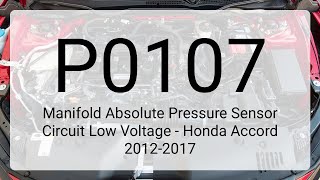
On a 2013-2017 Honda Accord, P0107 is almost always caused by a failed Manifold Absolute Pressure (MAP) sensor. It's a simple, 15-minute DIY replacement with the part costing between $30 for aftermarket and $70 for a genuine Honda part. Be aware of a notoriously soft screw on V6 models.
- P0107 on a 2013-2017 Accord almost always means you need a new MAP sensor.
- This is a very simple DIY fix for both the 4-cylinder and V6 engines.
- V6 owners must be careful not to strip the soft Phillips head screw holding the sensor.
- Always use a quality OEM or Denso replacement part; avoid ultra-cheap online parts.
- If a new sensor doesn't fix it, the problem is in the wiring harness between the sensor and the PCM.
What's Unique About the 2013-2017 Honda Accord
For the 9th generation Honda Accord, the P0107 code is a very common and straightforward issue, almost always pointing directly to the MAP sensor itself. While the cause is the same for both the 2.4L and 3.5L V6 engines, the sensor's location and the fastener that holds it are different. Owners of the V6 model should be particularly cautious, as the Phillips head screw securing the sensor is notoriously soft and easily stripped during removal. This is a well-documented complaint in owner forums.
Symptoms You May Notice
- Check Engine Light is on
- Rough or uneven idling
- Engine stalling, especially at stops
- Poor acceleration or hesitation
- Decreased fuel economy
- Black smoke from the exhaust
- Hard starting
- Replacing the throttle body when the issue is the MAP sensor.
- Replacing oxygen sensors due to poor fuel economy symptoms before checking MAP sensor codes.
Most Likely Causes
- Faulty MAP Sensor 🔴 High Probability The MAP sensor is a common failure point on many vehicles, including this generation of Accord, due to age and constant exposure to engine heat and vibration.
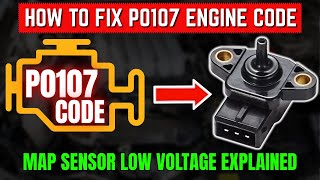
How to confirm: After verifying the wiring is intact, replacing the sensor is the most direct way to confirm. A scan tool can also monitor the sensor's voltage; a reading consistently below 0.5V with the key on and engine off points to a failed sensor. 🎬 See a detailed explanation of MAP sensor low voltage codes. At idle, a healthy sensor should read between 0.2 and 1.0 volts.
Typical fix: Replace the MAP sensor and its O-ring. Clear the code with a scanner after replacement.
Est. part cost: $30-$90 - Wiring or Connector Issue 🟡 Medium Probability Wires in the engine bay are exposed to heat and vibration, which can cause them to fray, short to ground, or break over time. The connector pins can also corrode, leading to a poor connection.
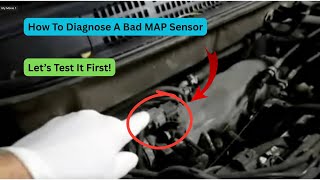
How to confirm: Visually inspect the MAP sensor connector and harness for damage. Use a multimeter to check for 5V reference voltage and a good ground at the connector with the key on. Check the signal wire for a short to ground. The connector is a 3-pin setup; testing for power, ground, and signal continuity is key. 🎬 Watch: How to diagnose P0107 circuit issues on your Accord.
Typical fix: Repair the damaged section of wiring or clean/replace the connector.
Est. part cost: $5-$50 - Vacuum Leak ⚪ Low Probability Rubber vacuum hoses can become brittle and crack with age, as can intake manifold gaskets.
How to confirm: A large vacuum leak would cause a higher-than-normal idle and a hissing sound. A smoke test is the most effective way to find the source of a vacuum leak. While a vacuum leak can affect MAP readings, it's less likely to cause a persistent 'Circuit Low' code compared to a direct electrical fault.
Typical fix: Replace the cracked vacuum hose or leaking gasket.
Est. part cost: $10-$100
Rare But Worth Checking
- Faulty Powertrain Control Module (PCM): This is extremely rare. The PCM should only be considered after all other possibilities (sensor, wiring, vacuum leaks) have been exhaustively tested and ruled out. A failed PCM driver circuit can cause it to misinterpret the sensor's signal.
Diagnosis Steps
- Read the code with an OBD-II scanner and check for any other related codes like P0106 or P0108.
- Visually inspect the MAP sensor's electrical connector and wiring harness for any signs of damage, corrosion, or loose connections.
- With the key on and engine off (KOEO), use a scan tool to view live data. The MAP sensor reading should be close to the barometric pressure (typically reading around 4.5-5V). If it's stuck low (e.g., under 0.5V), the sensor or its circuit is faulty.
- Disconnect the MAP sensor. With the key on, use a multimeter to test the connector terminals. You should find: one pin with ~5 volts (reference voltage), one pin with 0 volts (ground), and a third signal pin. The signal wire on many Hondas is red.
- If the 5V reference or ground is missing, there is a wiring issue between the PCM and the sensor that needs to be traced and repaired.
- If reference voltage and ground are present, the issue is almost certainly the MAP sensor itself.
- As a final check, inspect for any large, obvious vacuum leaks (cracked hoses, etc.), although this is a less common cause for a circuit low code. A mechanic's trick is to spray carb cleaner near suspected leak areas with the engine running; a change in idle indicates a leak.
- If the sensor and wiring are confirmed to be good, the final, though very rare, possibility is a faulty PCM.
Parts You'll Likely Need
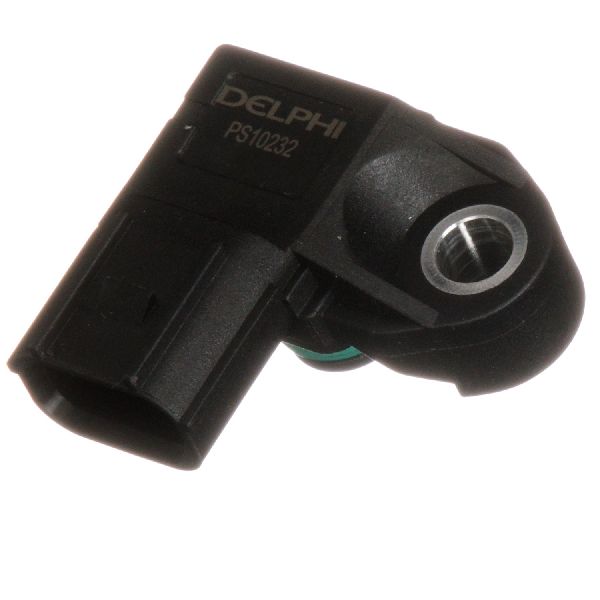
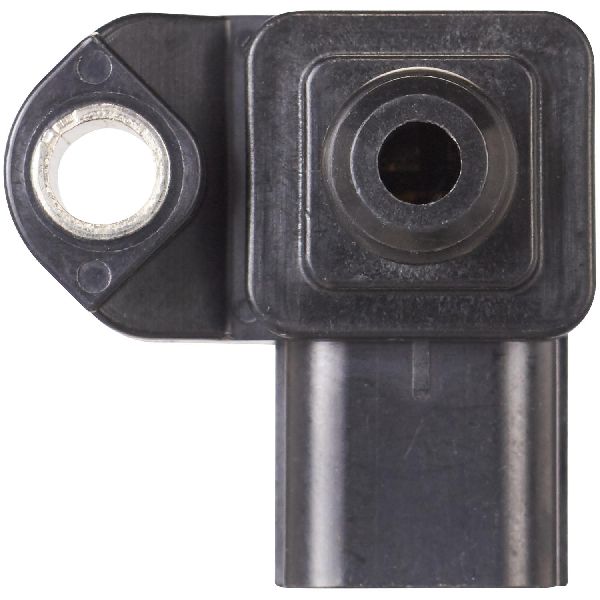
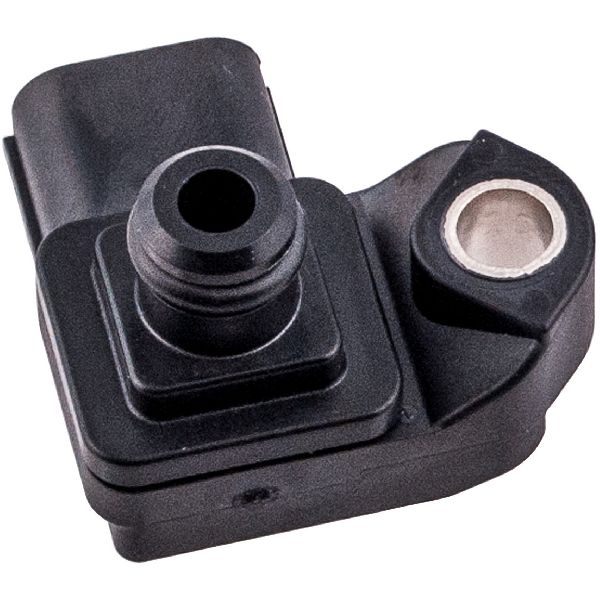
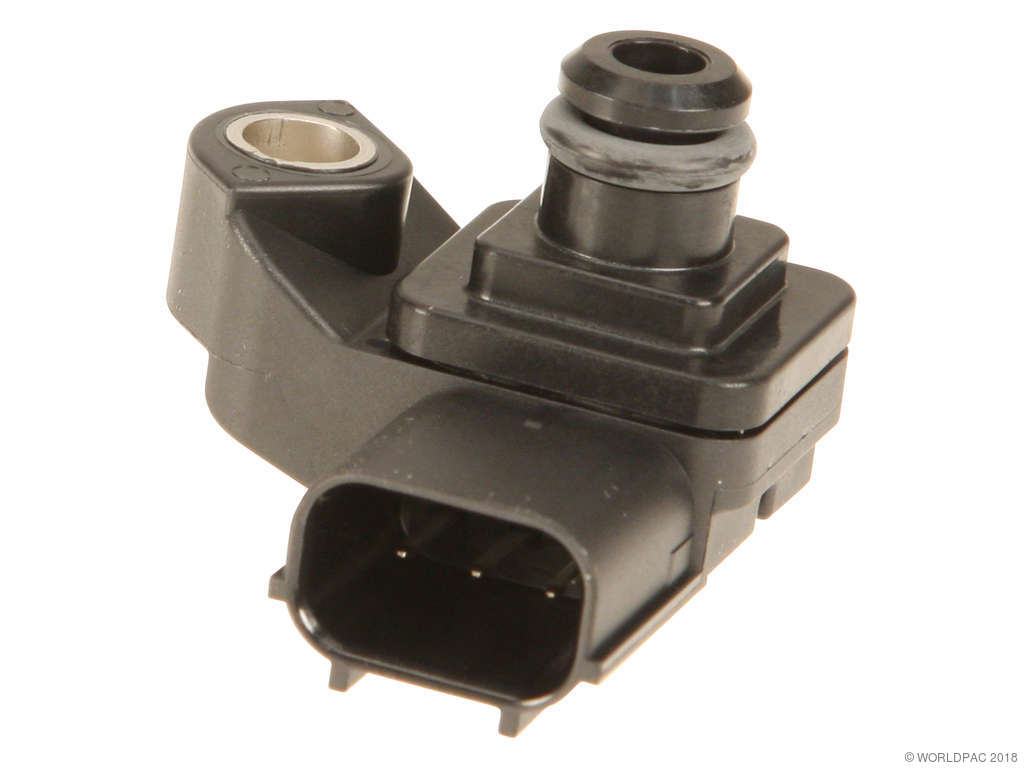
- Manifold Absolute Pressure (MAP) Sensor
(OEM #2.4L: 37830-5A2-A01; 3.5L V6: 37830-R70-A02; Widely Compatible Alternative: 37830-RNA-A01)— This is the most common failure point for the P0107 code on this vehicle. The sensor fails internally from age and heat, causing it to send an incorrect low voltage signal.
Trusted brands: Honda Genuine, Denso (OEM supplier), Bosch
OEM price range: $60-$90
Aftermarket price range: $30-$60
Related Codes That Often Appear With This One
- P0108 — P0108 is 'MAP Sensor Circuit High Input'. Seeing both P0107 and P0108 intermittently can point to a wiring short or a completely failed sensor sending erratic signals.
- P0106 — P0106 is 'MAP Sensor Circuit Range/Performance'. This can occur alongside P0107 if the sensor is failing erratically rather than being stuck low.
Technical Service Bulletins (TSBs) & Recalls
- TSB 16-002: Addresses starter motor to torque converter clearance, a common no-start issue for 2013-2016 models.
- TSB 16-088: Details diagnosis and replacement of the VTC actuator for the 2.4L engine's cold start rattle.
- TSB 17-017 / 17-018: Pertains to a torque converter judder, fixed by a software update and transmission fluid flush.
Platform-Specific Known Issues
- Stripped MAP Sensor Screw on 3.5L V6: On the 3.5L V6 engine, the MAP sensor is held in by a Phillips head screw that is notoriously soft and prone to stripping. Owners on forums recommend using a high-quality, perfectly-sized screwdriver with firm downward pressure. If it strips, common solutions include using a screw extractor, carefully cutting a slot with a Dremel tool for a flathead screwdriver, or gripping the screw head with locking pliers.
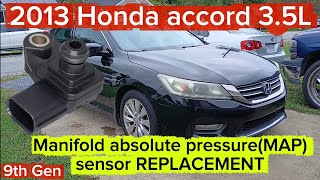
- MAP Sensor Location: On the 2.4L 4-cylinder engine, the sensor is located on the intake manifold near the firewall, typically secured with an 8mm or 10mm bolt, which is less problematic. On the 3.5L V6, it is on top of the throttle body. 🎬 Watch this walkthrough for replacing the sensor on V6 models.
Mechanic-Grade Diagnostic Values
- 5V Reference Voltage at Connector — expected: 4.5 - 5.0 Volts DC. Failure: 0V or significantly less than 4.5V indicates an open in the power wire from the PCM.
- Ground Circuit Verification at Connector — expected: Approx. 12 Volts (Battery Voltage). Failure: 0V indicates an open in the ground wire back to the PCM.
- Signal Voltage at Idle — expected: 0.2 - 1.0 Volts DC. Failure: Voltage stuck below 0.2V or near 0V. The P0107 code specifically triggers when voltage is below a threshold like 0.23V for more than 2 seconds.
- Signal Voltage (Key On, Engine Off) — expected: Approx. 4.5 - 5.0 Volts DC. Failure: Voltage is stuck low (under 1.0V), indicating a faulty sensor or a short to ground on the signal wire.
Hidden / Shadow Codes Worth Checking
- Freeze Frame Data: While Honda does not use proprietary 'shadow codes' in the same way as some German brands, the dealer-level Honda Diagnostic System (HDS) provides critical Freeze Frame data. This snapshot shows all key engine parameters (RPM, engine temp, vehicle speed, etc.) at the exact moment the P0107 code was triggered, which is invaluable for diagnosing intermittent faults. (see via Honda Diagnostic System (HDS) or a high-end professional scan tool with manufacturer-specific data capabilities.)
Scan Tool Commands That Help
- Honda Diagnostic System (HDS): MAP Sensor Data List — Used to monitor the live voltage or pressure reading from the MAP sensor. A key diagnostic step is to disconnect the MAP sensor with the ignition on and verify the HDS reading drops to a default low value (e.g., ~0.23V or 3 kPa), which confirms the wiring to the PCM is likely intact.
Wiring & Ground Locations
- MAP Sensor Ground Path — The ground for the MAP sensor is not a chassis ground. It is a dedicated sensor ground provided internally by the Powertrain Control Module (PCM).. A common mistake is to test for ground continuity to the chassis. The ground wire must be tested for continuity back to its specific pin at the PCM. A failure in this wire will cause P0107 but won't be found by checking for a connection to the vehicle body.
- PCM Location (2.4L) — In the engine bay, near the firewall, on the passenger side. It is typically uncovered and easily accessible.. Knowing the PCM location is necessary for advanced diagnostics, such as checking for power, ground, and signal continuity directly at the PCM connectors if a wiring fault is suspected.
- MAP Sensor Connector Pins — The 3-pin connector on the MAP sensor itself.. Testing must be done at the correct pins. Pin 1 is typically the signal wire, Pin 2 is the ground, and Pin 3 is the 5V reference, though wire colors can vary. Always use a wiring diagram for the specific year/engine to confirm.
When the Usual Fixes Don't Work
- While replacing the MAP sensor is the most common fix, a 'Circuit Low' code is fundamentally an electrical code. There are documented cases (on other vehicles, but the principle applies) where a new MAP sensor does not resolve the issue because the fault lies in the wiring harness or the PCM. In one instance, a shop replaced a sensor, but the code returned immediately, and the issue was suspected to be an electrical fault in the harness that required more in-depth tracing. If a new, quality sensor doesn't fix the P0107 code, the next step must be a thorough continuity and voltage drop test of the signal, power, and ground wires between the sensor connector and the PCM.
OEM Part Supersession History
37830-5A2-A01 (2.4L) / 37830-R70-A02 (V6)→N/A, these remain the primary PNs.— N/A
Heads up: The part number 37830-RNA-A01, originally for the 2006-2011 Civic, is widely listed by Honda and aftermarket suppliers as a compatible service replacement for the 9th gen Accord 2.4L engine. It is a known-good, cross-compatible part.
Model Year Variations Within This Range
- 2016-2017: The Accord received a significant cosmetic and technology facelift for the 2016 model year. However, the core 2.4L and 3.5L powertrains did not change in any way that affects the diagnosis or parts needed for a P0107 code. The sensor part numbers and locations remain the same as the 2013-2015 models.
Diagnostic Flowchart
Other Known Issues on This Vehicle
Issues unrelated to this code that are worth knowing about as an owner of this generation:
- Premature Starter Motor Failure 🔴 High — Very common on 2013-2015 models, often failing between 30k-70k miles. Symptoms include a grinding/whining noise without engine crank or intermittent no-start. (Ref: Honda TSB #16-002 addresses improper clearance between the starter gear and torque converter ring gear, recommending starter replacement and gear repositioning.)
- VTC Actuator Rattle on Cold Start (2.4L Engine) 🟠 Medium — Common on the 2.4L K24W1 engine. A brief, loud rattle lasting 1-3 seconds upon cold startup is the primary symptom. (Ref: Honda TSB #16-088 and #09-010 describe a defective VTC actuator lock pin and provide a procedure for replacement.)
- Variable Cylinder Management (VCM) Related Issues (3.5L V6) 🟠 Medium — VCM-3 on the 9th gen V6 is less problematic than prior versions but can still contribute to fouled spark plugs (especially on cylinder 4), engine vibrations, and potential oil consumption. (Ref: While no direct recall exists for this generation's VCM, many owners proactively install aftermarket VCM disabling devices.)
- Excessive Oil Consumption 🟠 Medium — More prevalent on early 9th gen models (2013-2014). The use of thin 0W-20 oil is a contributing factor, leading to oil burning between changes.
- Torque Converter Judder (Automatic Transmission) 🟡 Low — A shudder or judder may be felt between 20-60 mph. Honda identified this as being caused by deteriorated transmission fluid rather than a faulty torque converter. (Ref: Honda TSB #17-017 and #17-018 provide a software update to better manage transmission fluid temperature and a fluid flush procedure to resolve the issue.)
- LED Daytime Running Light (DRL) Burnout 🟡 Low — The LED light strips on the headlights, particularly on 2016-2017 models, are known to fail. This requires replacing the entire headlight assembly, which is costly. (Ref: A class-action lawsuit was filed regarding this issue, but no official recall was issued by Honda.)
Used vs. New Parts: Buying Guide for This Vehicle
When a used part is the smart pick: A used OEM MAP sensor from a reputable salvage yard is a viable budget-friendly option, as it's a non-mechanical electronic part. It's a good choice if the donor vehicle has reasonably low mileage.
Donor-vehicle mileage cap: roughly under 80000 miles for the part to have meaningful remaining life.
What to inspect on the donor part:
- Inspect the plastic connector housing for cracks or broken locking tabs.
- Ensure the O-ring is present and pliable, though replacing it with a new one for a few cents is highly recommended.
- Avoid parts from engines that are covered in oil or show signs of severe sludge, as this could indicate poor maintenance and harsh operating conditions.
OEM-only on this vehicle (don't cheap out):
- For this specific P0107 repair, no parts are strictly 'OEM-only'.
Aftermarket brands forum-validated for this vehicle:
- Denso (often the original OEM supplier for Honda electronics)
- Bosch
Brands owners have reported issues with on this vehicle:
- Unnamed, generic, or 'white-box' sensors from major online retailers. While tempting due to their very low price, they often have incorrect calibration or fail prematurely, causing the code to return.
Real Owner Stories
Aggregated from forums and TSBs cited above. Mileages and costs reflect what owners reported in those sources.
2013-2017 Honda Accord 2.4L
Symptoms: Check engine light on, but the car runs like new after the fix.
What fixed it: Replaced the MAP sensor (Part 37830-5A2-A01). The repair took about 10 minutes.
Source hint: driveaccord.net - Thread: 'P0107 Code, MAP Sensor?'
2013-2017 Honda Accord 3.5L V6
Symptoms: The owner struggled with a stripped Phillips head screw while trying to access the sensor on the J35 engine.
What fixed it: Used an impact driver on the lowest setting or cut a slot into the screw head for a flathead screwdriver to remove the sensor.
Source hint: v6performance.net - Thread: 'Stripped MAP sensor screw on J35... help!'
2013-2017 Honda Accord 3.5L V6
Symptoms: Stripped the soft MAP sensor mounting screw on the throttle body.
What fixed it: Used a hacksaw blade to cut a slot into the screw head to allow removal with a flathead screwdriver.
Source hint: youtube.com - Video: 'How to CLEAN your MAP Sensor (EASY TUNE UP)' by 'DIYCarRepair'
Related OBD-II Codes
Frequently Asked Questions
I have a 2014 Accord 2.4L; what is the specific part number for the MAP sensor to fix P0107?
I'm trying to replace the MAP sensor on my Accord V6 but the screw won't budge. Any tips?
Where is the MAP sensor located on my 2015 Accord 2.4L?
Does TSB 16-088 relate to my P0107 code on my 2013 Accord?
Could my P0107 code be caused by a vacuum leak on this generation of Accord?
What voltage should I see at the MAP sensor on my Accord with the engine idling?
Helpful Videos
We Have This Part in Stock


The information in this article is provided for general reference and educational purposes only. Vehicle specifications, procedures, and part compatibility can vary by production date, trim level, and region. Always consult your vehicle's factory service manual and verify part numbers before purchasing or performing repairs. Safety-critical components such as airbags, seat belts, and braking systems should be installed by a qualified professional.
- Honda Accord:
- 🎬 Helpful Videos
- 🛍️ Shop This Part
- What's Unique About the 2013-2017 Honda Accord
- Symptoms You May Notice
- Most Likely Causes
- Rare But Worth Checking
- Diagnosis Steps
- Parts You'll Likely Need
- Related Codes That Often Appear With This One
- Technical Service Bulletins (TSBs) & Recalls
- Platform-Specific Known Issues
- Mechanic-Grade Diagnostic Values
- Hidden / Shadow Codes Worth Checking
- Scan Tool Commands That Help
- Wiring & Ground Locations
- When the Usual Fixes Don't Work
- OEM Part Supersession History
- Model Year Variations Within This Range
- Diagnostic Flowchart
- Other Known Issues on This Vehicle
- Used vs. New Parts: Buying Guide for This Vehicle
- Real Owner Stories
- 2013-2017 Honda Accord 2.4L
- 2013-2017 Honda Accord 3.5L V6
- 2013-2017 Honda Accord 3.5L V6
- Related OBD-II Codes
- Frequently Asked Questions
- 🎟️ Get 5% Off