

P0106 on 2008-2011 Saab 9-3: MAP Sensor and Vacuum Leak Guide
For a 2008-2011 Saab 9-3, code P0106 is most often caused by a vacuum leak from a cracked hose (especially the brake booster line) or a faulty Manifold Absolute Pressure (MAP) sensor. Expect to pay $40-$90 for a quality aftermarket MAP sensor and around $150 for an OEM-branded one.
- P0106 on a Saab 9-3 specifically points to a slow pressure drop in the intake manifold after throttle closure.
- The most likely causes are a vacuum leak from an old hose or a failing MAP sensor.
- Always perform a smoke test to check for vacuum leaks before replacing the MAP sensor to avoid misdiagnosis.
- If a new sensor and a leak-free intake system don't fix the code, the issue could be mechanical, such as incorrect camshaft timing, which is a known but rare cause on these cars.
What's Unique About the 2008-2011 Saab 9-3
Unlike many cars where P0106 is a straightforward sensor or vacuum leak issue, on the Saab 9-3 it has a unique and potentially misleading cause. The Saab Workshop Information System (WIS) explicitly notes that if a vacuum leak or faulty sensor cannot be found, the cause may be incorrect camshaft timing. Mistimed intake valves can push air back into the manifold during the compression stroke, which artificially raises pressure and prevents it from dropping as expected, triggering the P0106 code. This makes a thorough diagnosis more critical on these engines.
Symptoms You May Notice
- Check Engine Light is on
- Engine enters 'Limp Home' mode with reduced power and torque.
- Cruise control is disabled.
- Engine RPM drops more slowly than usual when releasing the accelerator.
- Rough or unstable idle
- Hesitation or stumbling during acceleration
- Increased fuel consumption
- Difficulty starting the vehicle
- Black smoke from the exhaust, indicating a rich fuel mixture
- Replacing the Mass Airflow (MAF) sensor. While MAF issues can cause performance problems, P0106 is specific to the MAP sensor circuit and manifold pressure, not airflow volume.
- Replacing the throttle body. While a dirty throttle body can cause idle issues, it is unlikely to be the root cause of a P0106 code unless it is causing a significant vacuum leak at the gasket.
Most Likely Causes
- Vacuum Leak 🔴 High Probability The complex network of vacuum hoses on the B207 engine becomes brittle with age. The brake booster vacuum hose is a very common failure point, often cracking at the check valve or connectors. PCV hoses are also a frequent source of leaks.
How to confirm: Visually inspect all vacuum lines connected to the intake manifold for cracks, splits, or disconnections. Pay close attention to the hard plastic line running to the brake booster and its integrated check valve. A smoke test is the most effective way to find small, hard-to-see leaks. A simple test for a large leak is to listen for a hissing sound with the engine running.
Typical fix: Replace the cracked or broken vacuum hose(s) or intake gaskets. The brake booster hose often needs to be replaced as a complete assembly.
Est. part cost: $10-$80 - Faulty Manifold Absolute Pressure (MAP) Sensor 🔴 High Probability The sensor itself can fail or become slow to respond over time, which is one of the primary conditions the ECU monitors for this code. Oil contamination from the PCV system can also foul the sensor, leading to inaccurate readings.
How to confirm: With a scan tool, monitor the MAP sensor reading with the Key On, Engine Off (KOEO). It should read close to barometric pressure (approx. 101-102 kPa at sea level). Start the engine and observe the reading at idle (it should be low, around 40-60 kPa). When snapping the throttle, it should change instantly. If the readings are sluggish, stuck, or don't make sense, the sensor is likely faulty.
Typical fix: Replace the MAP sensor. It is located on the intake manifold, near the throttle body, and is held in by a single Torx screw.
Est. part cost: $40-$150 - MAP Sensor Wiring or Connector Issue 🟡 Medium Probability Engine bay heat and vibration can cause wiring to become brittle or connectors to become loose or corroded over time. The connector lock tab can become brittle and break.
How to confirm: Inspect the MAP sensor's electrical connector for corrosion or loose pins. Check the wiring harness for any visible signs of damage, chafing, or breaks. Use a multimeter to check for proper 5V reference voltage, ground, and signal wire integrity at the connector. Wiggle the harness while monitoring live data to check for intermittent connection issues.
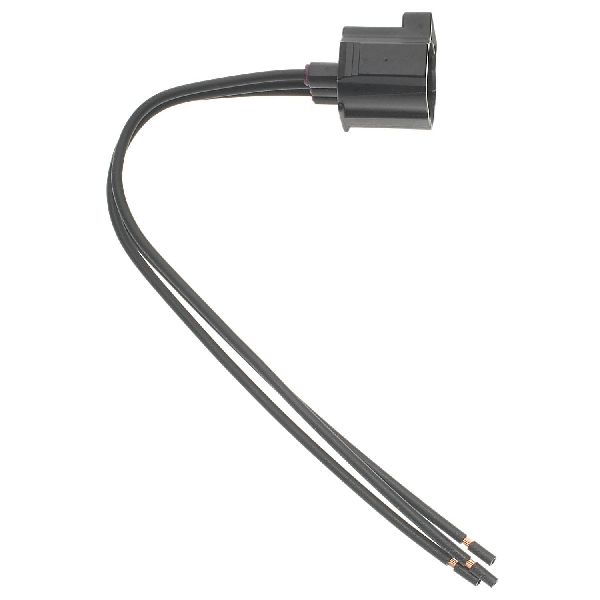
Typical fix: Repair the damaged wiring or clean/replace the connector pigtail.
Est. part cost: $5-$30
Rare But Worth Checking
- Incorrect Camshaft Timing: The official Saab diagnostic guide specifically mentions this as a cause if no vacuum leaks or sensor faults are found. If the intake camshaft is not timed correctly, intake valves won't close at the right moment, pushing air back and causing the slow pressure drop that triggers P0106. This is a complex mechanical issue requiring professional diagnosis, often related to a stretched timing chain.
- Clogged Catalytic Converter: A severely restricted exhaust can create backpressure that affects intake manifold pressure readings. This would typically be accompanied by other codes (like catalyst efficiency codes) and a significant loss of power, especially at high RPM.
- Faulty PCV or Purge (N80) Valve: While less common on Saabs than on some other brands, a stuck-open canister purge valve (N80) or a failed PCV check valve can introduce unmetered air or pressure fluctuations into the intake manifold, potentially triggering a P0106 code. A quick test for a bad PCV system is to check for excessive vacuum at the oil fill cap when the engine is running.
Diagnosis Steps
- Read all stored fault codes with an OBD-II scanner. Note any other codes that may be present, especially P0171 or P030x.
- With the engine off (KOEO), view live data from the MAP sensor. The reading should be close to the barometric pressure (BARO) reading (approx. 102 kPa at sea level). If they differ significantly, the MAP sensor is likely faulty.
- Start the engine and observe the MAP sensor reading at idle. It should drop to a low pressure (high vacuum), typically 40-60 kPa.
- Perform a thorough visual inspection of all vacuum hoses. Pay special attention to the hard plastic brake booster vacuum line for cracks, especially near the check valve and firewall grommet.
- If no obvious leaks are found, perform a smoke test on the intake system to pinpoint any hidden leaks. This is the most reliable method.
- Inspect the MAP sensor's electrical connector and wiring for any damage, corrosion, or loose connections. Ensure the connector is securely latched.
- If no leaks or wiring issues are found, and the sensor's static readings seem plausible, the sensor itself may be slow to respond and is the most likely culprit.
- If a new sensor and confirmed leak-free intake do not resolve the code, investigate the possibility of incorrect camshaft timing, as noted in Saab's service information.
Parts You'll Likely Need
- Manifold Absolute Pressure (MAP) Sensor (2.0L I4)
(OEM #95522269)— This sensor is a primary cause of the fault, either by failing outright or becoming slow to respond to pressure changes.
Trusted brands: Bosch, ACDelco, NTK, Genuine Saab
OEM price range: $120-$160
Aftermarket price range: $40-$90 - Brake Booster Vacuum Pipe/Hose
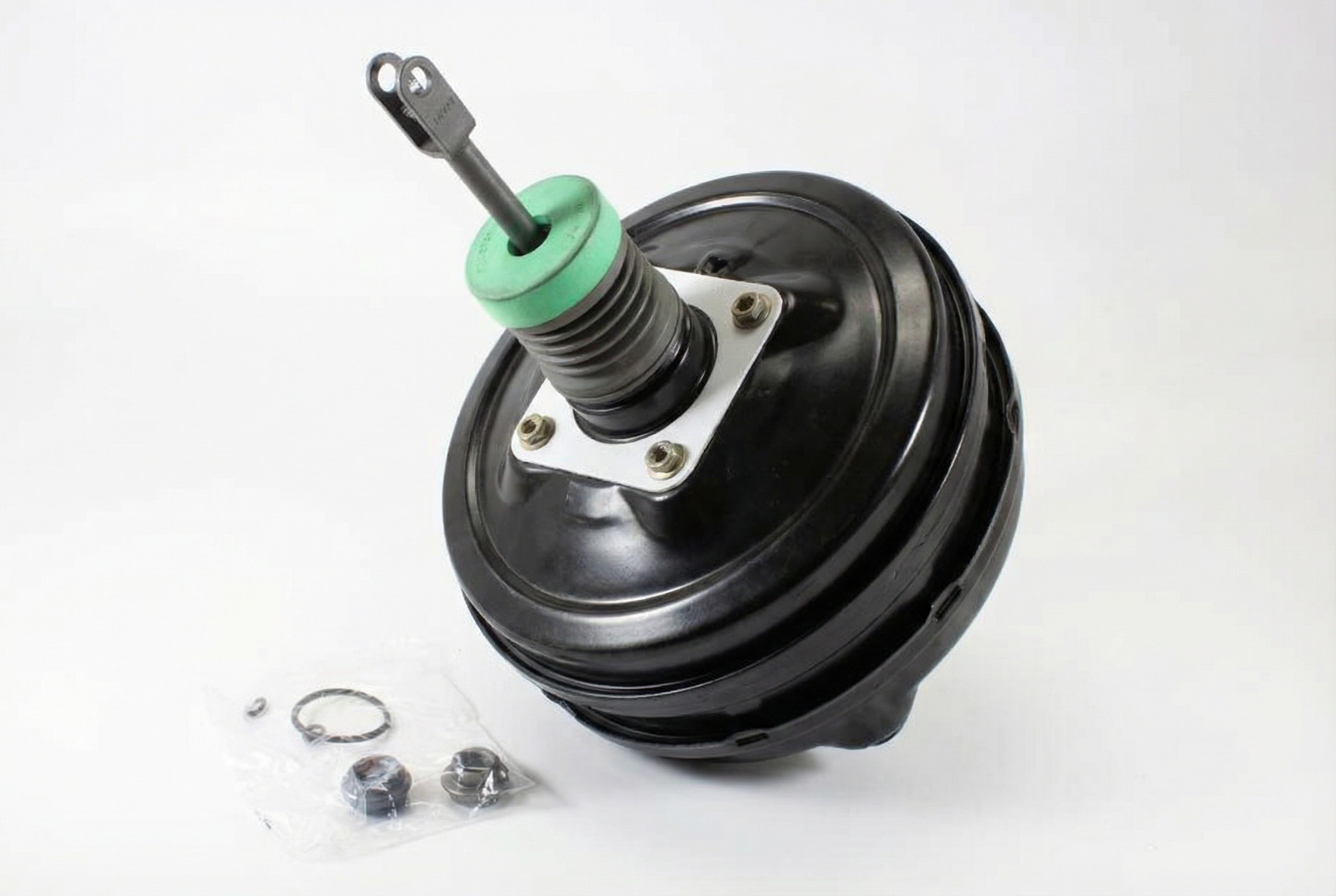
(OEM #12766023 (supersedes 12793462))— A very common failure point. The plastic becomes brittle and cracks, causing a significant vacuum leak that directly triggers P0106. A failing hose can also cause a hard brake pedal or cause the engine to stall when the brakes are applied.
Trusted brands: Genuine Saab, VNE
OEM price range: $60-$90
Aftermarket price range: $40-$60 - PCV / Crankcase Ventilation Hoses
(OEM #55561200 (Renovation Kit))— Aged and oil-saturated rubber hoses in the PCV system are a common source of vacuum leaks that can trigger this code. Saab issued service bulletins for older models regarding PCV updates.
Trusted brands: Genuine Saab, Proparts
OEM price range: $20-$70
Aftermarket price range: $15-$50
Related Codes That Often Appear With This One
- P0171 — If a vacuum leak is the cause of P0106, the unmetered air entering the engine will cause a lean condition, triggering a 'System Too Lean' code.
- P030x — A significant vacuum leak or poor MAP sensor data can disrupt the air/fuel mixture enough to cause misfires in one or more cylinders.
- P1181 — This Saab-specific code often relates to fuel trim issues that can be triggered by the same vacuum leaks that cause P0106. A Reddit user reported seeing both codes together due to a broken vacuum valve.
Technical Service Bulletins (TSBs) & Recalls
- Saab TSB 210-2418 ed. 4 (April 2006): While this TSB specifically addresses oil leaks on older 9-3s (M99-M03) due to inadequate crankcase ventilation, it highlights the importance of the PCV system and provides part numbers for an updated kit, some components of which are relevant to diagnosing vacuum leaks on later models.
Platform-Specific Known Issues
- Brake Booster Vacuum Hose Failure: The rigid plastic vacuum hose that runs from the intake manifold to the brake booster is a notoriously common failure item. It often develops cracks at the integrated check valve or at the connection points, causing a large vacuum leak that is a primary cause of P0106 on these cars. A failing hose can also cause a hard brake pedal or cause the engine to stall when the brakes are applied.
- PCV System Issues: The crankcase ventilation (PCV) system on the B207 engine involves multiple hoses and check valves. Over time, these components can become clogged with oil sludge or crack, leading to vacuum leaks.
Mechanic-Grade Diagnostic Values
- MAP Sensor Voltage - Key On, Engine Off (KOEO) — expected: ~5.0 Volts on signal wire (pull-up design). Failure: Voltage significantly lower than 5V suggests a wiring issue or faulty sensor.
- MAP Sensor Voltage - Engine Idling — expected: 1.0 - 2.0 Volts. Failure: Voltage outside this range, or not dropping immediately from the KOEO reading, indicates a faulty sensor or vacuum leak.
- MAP Sensor Pressure - Key On, Engine Off (KOEO) — expected: ~102 kPa (at sea level, should match BARO). Failure: A difference of more than 15 kPa from the BARO sensor will set the code.
- MAP Sensor Pressure - Engine Idling — expected: 40 - 60 kPa. Failure: Pressure significantly higher than this range at idle points to a large vacuum leak or incorrect camshaft timing.
- MAP Sensor Pressure - Rapid Throttle Closure — expected: Pressure must drop below 50 kPa within a set time.. Failure: If pressure does not drop quickly enough, it triggers P0106, indicating a slow sensor, vacuum leak, or incorrect cam timing.
- MAP Sensor Wiring - Resistance — expected: < 0.5 Ohms on signal, power, and ground wires.. Failure: A higher reading indicates high resistance in the wire; an 'OL' or infinite reading indicates a break in the wire.
Scan Tool Commands That Help
- Saab Tech2: Data Display / Output Control -> Manifold Absolute Pressure — This is the factory-level method to view live MAP sensor data in kPa to compare against specified values at KOEO and idle.
- Saab Tech2: Read/Clear Vehicle DTCs — A generic OBD-II scanner may not read all manufacturer-specific codes. A Tech2 ensures all codes from all modules are read and can clear them after a repair.
- Generic OBD-II Scanner / Tech2: Throttle Body Relearn/Reset — This may be necessary if the code P0106 appeared after the battery was disconnected or the throttle body was cleaned. The ECU may need to relearn the throttle plate's idle and closed positions.
Wiring & Ground Locations
- G7 — On the engine control module's (Trionic T8) upper right-hand attachment lug/eyelet, at the front of the engine.. This is a primary grounding point for multiple engine sensors, including the Mass Airflow (MAF) sensor. While the MAP sensor has its own ground wire in the harness, a poor G7 connection can cause widespread electrical noise and erratic sensor behavior that could indirectly affect MAP sensor plausibility checks.
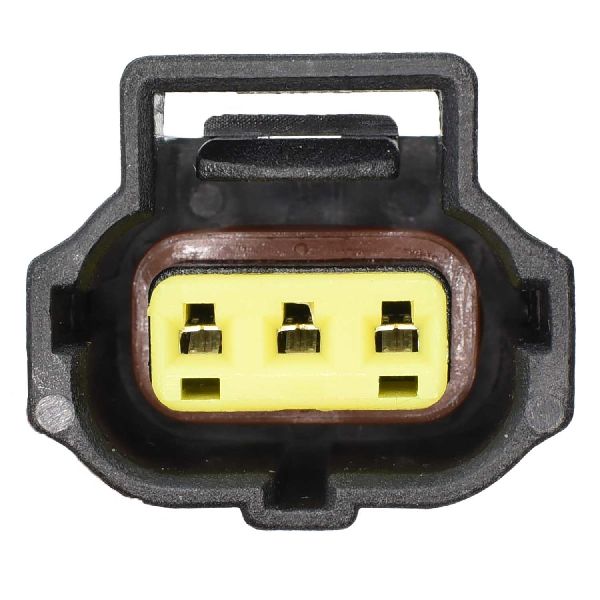
- MAP Sensor Connector (B207) — On the intake manifold, near the throttle body.. The connector itself or the pigtail can become brittle and fail. The typical 3-pin connector has a +5V supply, a signal wire, and a sensor ground. Verifying voltage and ground at this connector is a key diagnostic step.
Real Owner Repair Stories
- GM Forum user 'Hassan1981' (2013 Chevy Malibu 2.4L Ecotec (Note: Different vehicle, but same code and illustrates a similar diagnostic path)) — Hesitation, rough idle, stalling, "Service ESP" message, codes P0106 and P2227.
❌ Tried (didn't work) Replaced MAP sensor, Replaced intake manifold gaskets, Replaced throttle body gasket, Replaced air filter, Replaced MAF sensor, Replaced spark plugs
✅ What actually fixed it The final cause was a clogged catalytic converter and dirty O2 sensors. Using multiple canisters of a catalytic converter cleaner additive in the fuel tank and driving on the highway resolved the issue. - Reddit user r/MechanicAdvice (Unknown make/model) — P0106 code appeared immediately after the battery died and was replaced. The car initially had a very hard idle and stalled, but it eventually relearned its idle.
❌ Tried (didn't work) Replacing the MAP sensor
✅ What actually fixed it The user's next planned step was to clean the throttle body, as the issue started after a complete power loss which can cause the ECU to lose its throttle body calibration. This is a common scenario where a throttle body relearn procedure is required.
"I Checked Everything" — The Actual Cause
- If a smoke test reveals no vacuum leaks and the MAP sensor and its wiring test good, the cause is likely more complex. The Saab Workshop Information System (WIS) specifically points to incorrect camshaft timing as a potential culprit. The mistimed intake valves effectively create an internal 'leak' by pushing air back into the manifold during the compression stroke, which prevents the pressure from dropping as expected on throttle lift-off, triggering P0106.
OEM Part Supersession History
12787705→95522269— Standard part update/revision by the manufacturer (Bosch/GM).
Heads up: The original part number 12787705 is still referenced by many aftermarket suppliers, but the current OEM part is typically 95522269. Both are physically and functionally compatible for this application.
Model Year Variations Within This Range
- 2007-2011: A Technical Service Bulletin regarding hard starting and low compression due to worn intake valves specifically calls out 2007-2008 models as the primary concern, but notes the condition could also occur on 2009-2011 B207 engines. This can be an edge-case cause for P0106 if it affects manifold pressure dynamics.
Diagnostic Flowchart
Real Owner Stories
Aggregated from forums and TSBs cited above. Mileages and costs reflect what owners reported in those sources.
Saab 9-3
Symptoms: Experienced the P0106 code immediately following hard acceleration.
What fixed it: Replaced a cracked vacuum hose.
Source hint: SaabCentral Forums - 'P0106 code'
Saab 9-3
Symptoms: Triggered a P0106 code and used a Tech2 scanner to check live data against Saab WIS diagnostic criteria.
What fixed it: Investigated camshaft timing as a root cause after confirming the MAP sensor and vacuum lines were clear.
Source hint: UKSaabs - 'P0106 - Manifold Absolute Pressure'
2003 Saab 9-5 Aero
Symptoms: Persistent P0106 code that would not clear despite multiple repair attempts.
What fixed it: Replaced all vacuum lines and the MAP sensor without success, indicating a more complex underlying issue.
Source hint: Reddit r/saab - 'My 2003 9-5 aero gets the code p0106... that won't go away'
Related OBD-II Codes
Frequently Asked Questions
Does TSB 210-2418 ed. 4 apply to my 2008-2011 Saab 9-3?
Why does my brake pedal feel hard when I get the P0106 code on my Saab 9-3?
My cruise control stopped working at the same time the check engine light came on. Is this related to P0106?
What should the MAP sensor read on a scan tool for my Saab 9-3?
I replaced the MAP sensor and checked for vacuum leaks, but P0106 keeps coming back. What else could it be?
Are there other vehicles that share this exact P0106 issue with the Saab 9-3?
Used OEM Parts in Stock
New Aftermarket Parts Available



The information in this article is provided for general reference and educational purposes only. Vehicle specifications, procedures, and part compatibility can vary by production date, trim level, and region. Always consult your vehicle's factory service manual and verify part numbers before purchasing or performing repairs. Safety-critical components such as airbags, seat belts, and braking systems should be installed by a qualified professional.
- Saab 9-3:
- 🛍️ Shop This Part
- What's Unique About the 2008-2011 Saab 9-3
- Symptoms You May Notice
- Most Likely Causes
- Rare But Worth Checking
- Diagnosis Steps
- Parts You'll Likely Need
- Related Codes That Often Appear With This One
- Technical Service Bulletins (TSBs) & Recalls
- Platform-Specific Known Issues
- Mechanic-Grade Diagnostic Values
- Scan Tool Commands That Help
- Wiring & Ground Locations
- Real Owner Repair Stories
- "I Checked Everything" — The Actual Cause
- OEM Part Supersession History
- Model Year Variations Within This Range
- Diagnostic Flowchart
- Real Owner Stories
- Saab 9-3
- Saab 9-3
- 2003 Saab 9-5 Aero
- Related OBD-II Codes
- Frequently Asked Questions
- 🎟️ Get 5% Off